
I’ve straightened out my fair share of floppy houseplants, and I’ve learned that drooping usually signals one of six fixable problems: weak stems needing stakes, uneven light demanding weekly rotation, waterlogged roots crying for drainage, insufficient brightness requiring a window move, cramped roots begging for repotting, or leggy growth that wants a strategic prune. Each fix targets a specific cause, and understanding which problem your plant faces will help you restore its upright growth.
Stake Weak Stems to Hold Plants Upright
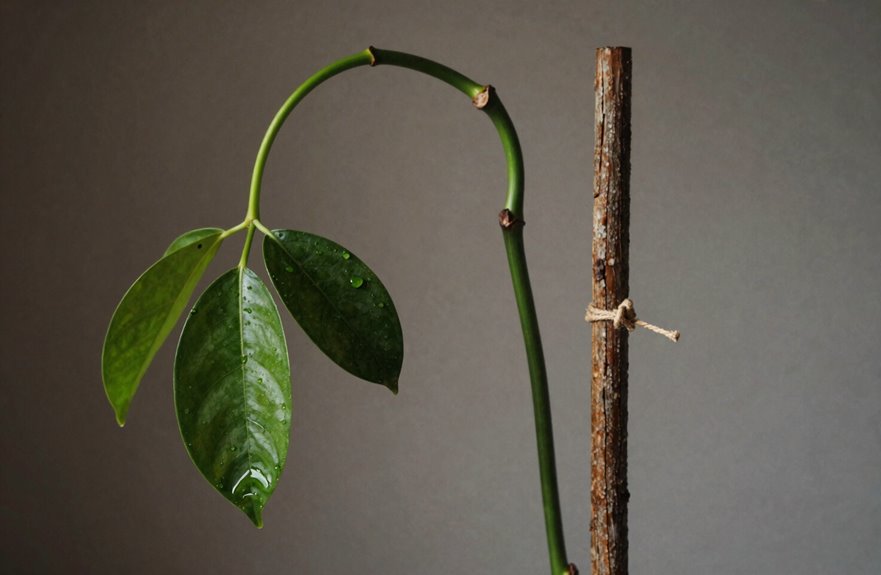
When your plant starts leaning, staking gives it the support needed to stand upright again. Inserting a supportive stake into the pot and securing the stem with plant-safe ties transforms a droopy plant into one that grows stronger.
Position a moss pole or bamboo stake near the base, giving climbing stems something to reach for. Tie loosely in multiple spots, never tight enough to restrict growth, since constriction stunts development. For taller, top-heavy plants, add a second stake higher up to support new growth and prevent swaying.
Check ties regularly and loosen them as stems thicken. Monitor your plant as it stretches toward the light, ensuring nothing pinches or restricts its progress.
Rotate Pots Weekly for Even, Straight Growth
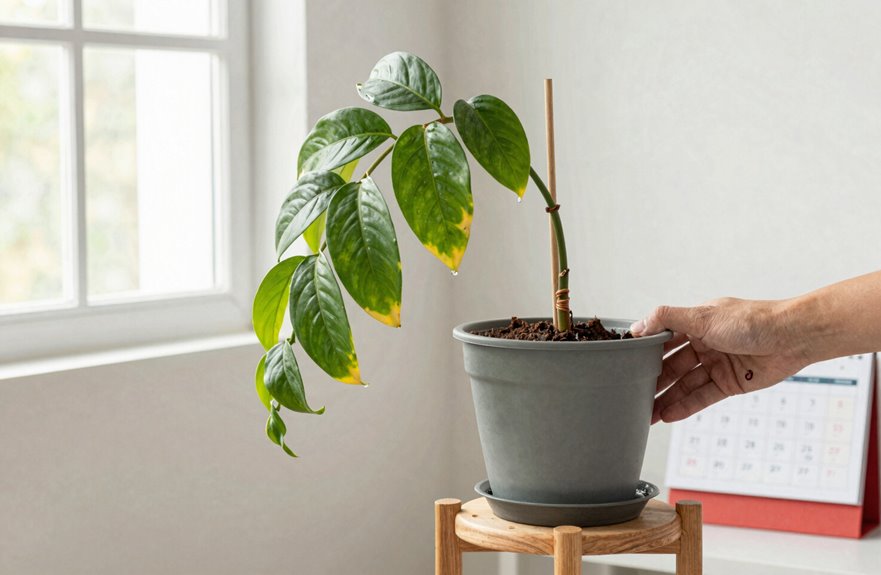
I rotate my pots 90 degrees every couple of weeks to fix uneven light distribution that’s making my plants lean toward windows. This balanced growth rotation pushes shaded sides to grow more vigorously and straighten the whole plant over time. You’ll see fewer lopsided stems and a more upright habit once you make this a regular practice.
Uneven Light Distribution
Why does your plant seem to lean toward the window like it’s yearning for something? Uneven light distribution tricks our green companions into stretching toward their single food source. One side grows faster, the stem tilts, and suddenly we’re both frustrated.
I fix this with simple plant rotation. Every couple of weeks, I turn my pots 90 degrees. This small habit creates light direction balance, letting each side soak up its fair share. I’ve noticed my plants stand taller with thicker, more confident stems.
I also reassess my setup regularly. Sometimes I shift a pot closer to the glass, sometimes I add a grow light. When we pay attention to light exposure, our plants develop the upright, balanced growth we’re seeking.
Balanced Growth Rotation
Plant rotation is my covert tool against lopsided growth. I rotate my pots 90 degrees every couple of weeks, ensuring balanced light exposure reaches every side of the foliage. This simple habit counters the natural tendency plants have to lean toward their light source, encouraging upright growth instead of persistent tilting.
Weekly rotation creates a predictable rhythm my plants respond to well. When I pair this practice with steady light intensity, whether from an east-facing window or supplemented grow lights, I maximize symmetric development and reduce stem weakness.
I always check for new growth after each rotation, confirming my plant’s posture is improving. If I notice lingering lean, I adjust my rotation frequency. This approach results in straighter, stronger plants that maintain their intended placement.
Dry Out Soggy Soil So Stems Stand Strong
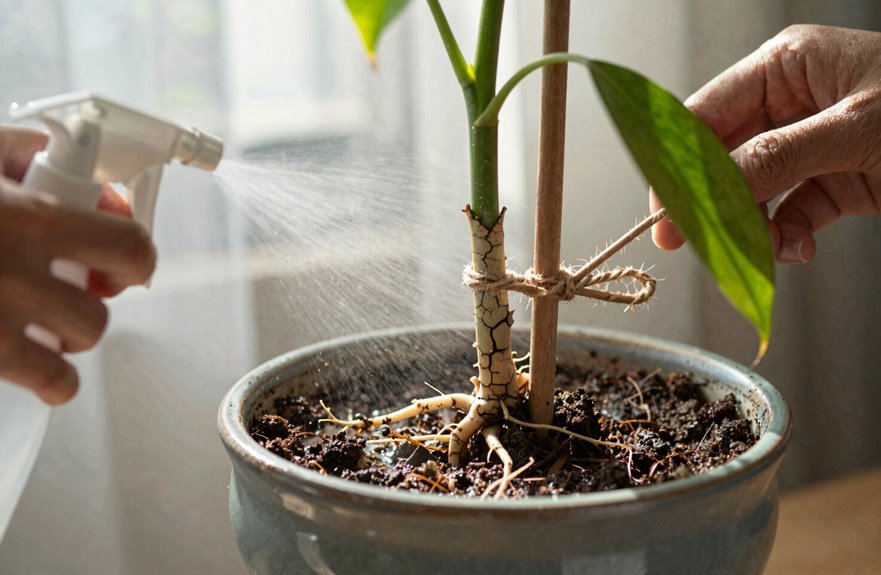
How often have you lifted a drooping stem only to find the soil beneath still wet from yesterday’s watering? Overwatering weakens roots faster than you’d think. When soil stays soggy, stems lose their backbone and problems develop.
What works:
| Problem | Quick Fix | Prevention |
|---|---|---|
| Wet feet | Let top inch dry completely | Check before watering |
| Poor drainage | Add perlite to soil mix | Use pots with holes |
| Slow drying | Move to warmer spot | Match pot to plant size |
Wait for drying soil before watering again. Good drainage prevents root damage. If drooping continues after the soil dries, gently check the roots. Sometimes damage runs deeper than visible symptoms suggest.
Move Plants Closer to Bright Windows
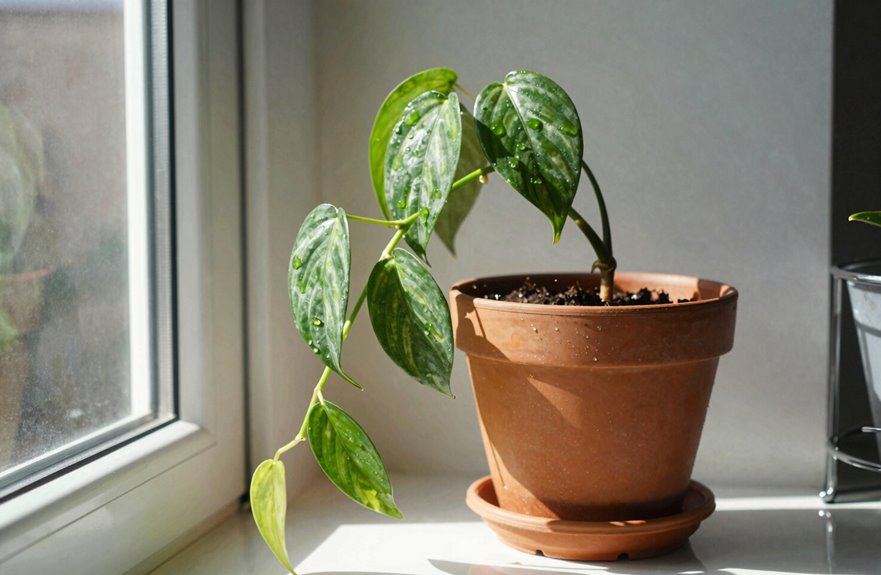
I move my plants closer to bright windows when I notice them stretching and leaning toward distant light sources. East-facing spots provide the best results, since gentle morning rays help stems thicken and grow upright without scorching leaves. I also rotate my pots weekly so every side gets equal exposure, keeping growth balanced and straight rather than lopsided.
Light Distance Matters
Why do your houseplants keep slouching like they’re tired of living on your windowsill? Light distance makes all the difference between perky stems and sad, drooping foliage.
When your plant stretches toward distant light, stems elongate and weaken, sabotaging vertical growth. Moving plants closer to bright windows produces noticeably sturdier stems and compact development without constant staking.
Here’s how distance affects your plants:
| Light Distance | Plant Response |
|---|---|
| 3+ feet from window | Stems stretch and lean heavily |
| 2-3 feet from window | Moderate stretching, weak upright habit |
| 1-2 feet from window | Balanced growth, some self-support |
| Under 1 foot from window | Strong vertical growth, minimal droop |
| Supplemental grow lights | Controlled close light, maximum stability |
Positioning your plants within one to two feet of a light source produces measurably stronger, more stable growth.
Window Position Counts
Where exactly you place your plant matters just as much as how much light it gets. I’ve watched my own plants struggle when I tucked them too far into a room’s corner, and I bet you’ve seen the same drooping stems. When we reduce the distance between our plants and bright windows, we give them the light they crave for upright growth.
Phototropism pulls plants toward their light source, so positioning matters deeply. What I’ve learned about finding plants’ perfect spots:
- East-facing windows gift gentle morning light that builds sturdier stems
- Every foot away from the window drops light intensity dramatically
- Closer placement means more even light distribution on all sides
- A few feet from glass often transforms struggling plants into thriving ones
Plant positioning directly affects growth quality and stem strength.
Rotate for Balance
Although I’ve already nudged my plants closer to the glass, I’ve learned that proximity alone isn’t enough. Rotation completes the picture. I rotate each plant 90 degrees every couple of weeks so every side soaks up light evenly. This prevents the lopsided leaning that happens when one side stretches toward the window while the other languishes in shadow.
Finding balance means no single stem dominates; instead, growth stays uniform and upright. My plants stand straighter when I stay consistent with this habit. If natural light still falls short, I add grow lights at plant height to fill the gaps. Combining brighter exposure with gentle rotation keeps plants stable and promotes thriving growth.
Repot Root-Bound Plants, Not Just Crowded Ones
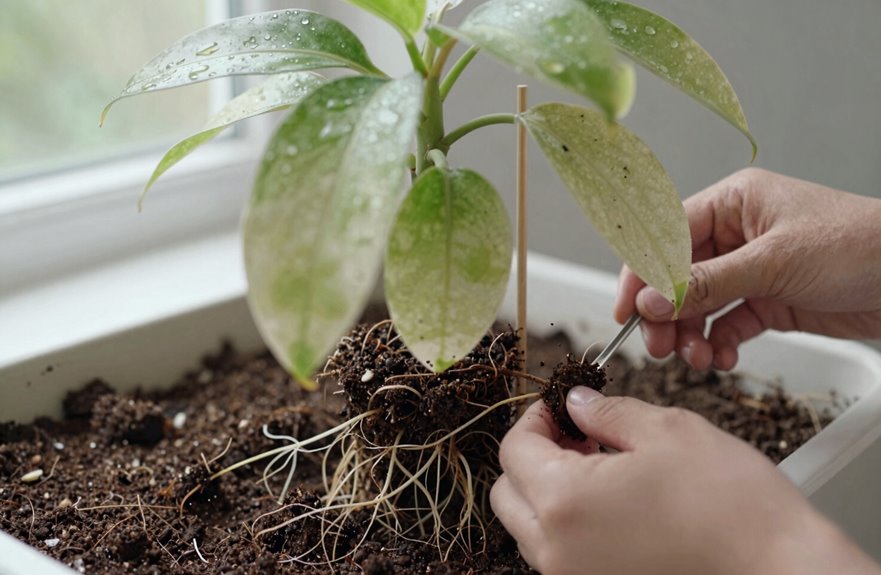
How often have you lifted a pot only to find a dense coil of roots circling the bottom, with the plant’s posture already showing its struggle? I repot root-bound plants into containers just 1–2 inches wider, giving roots room without encouraging top-heavy growth that topples easily.
- Loosen compacted roots gently – you’re restoring their ability to drink and feed, reconnecting them to life.
- Choose well-draining mix and heavier pots – stability matters while they find their footing again.
- Trim circling, girdling roots – you’re freeing them from invisible chains that keep them bent.
- Water sparingly at first, then resume drip-watering gradually – patience prevents re-waterlogging and protects soil aeration.
Plants struggling in root-bound conditions recover measurably when given proper space and care. These steps restore their function and growth.
Prune Leggy Growth for Straighter Structure
Why let stretched, spindly stems keep pulling your plant off balance? Pruning leggy growth transforms floppy specimens into thriving, upright structure. When you trim just above healthy nodes, you trigger dense, vertical branching that fills the center and steadies the whole plant.
| Pruning Task | What I Cut | Result |
|---|---|---|
| Trim leggy growth | Stems above healthy nodes | New lateral shoots emerge |
| Remove weak tissue | Floppy, spaced-out sections | Reduced weight, better balance |
| Shape for density | Overly long branches | Fuller, upright structure |
| Time it right | During active growth | Faster recovery, stronger form |
| Follow up wisely | Avoid heavy watering | Prevents repeat legginess |
Pair your cuts with a moss pole or stake so fresh growth hardens vertically. This combination builds plants with stable, architectural form. The result is upright growth without drooping.