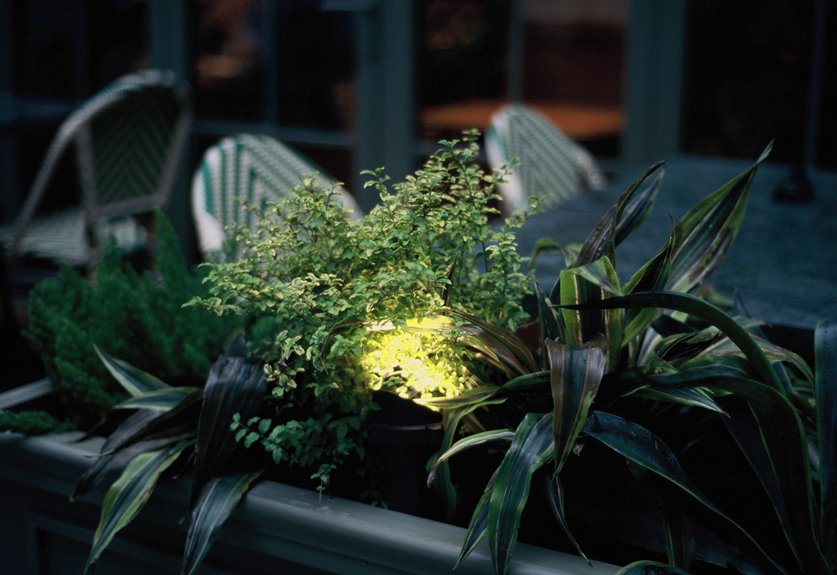
Any light won’t cut it. I’ve seen seedlings stretch into pale, spindly messes under regular bulbs that simply can’t deliver what plants need. Standard lights lack the blue and red wavelengths that drive photosynthesis, so foliage stays sparse and stems grow leggy.
Grow lights solve this by mimicking sunlight’s spectrum, with LEDs offering precise control and energy efficiency. The difference between surviving and thriving comes down to spectrum, intensity, and placement. Each of these factors requires careful attention to optimize plant growth.
Why Regular Bulbs Can’t Replace Grow Lights
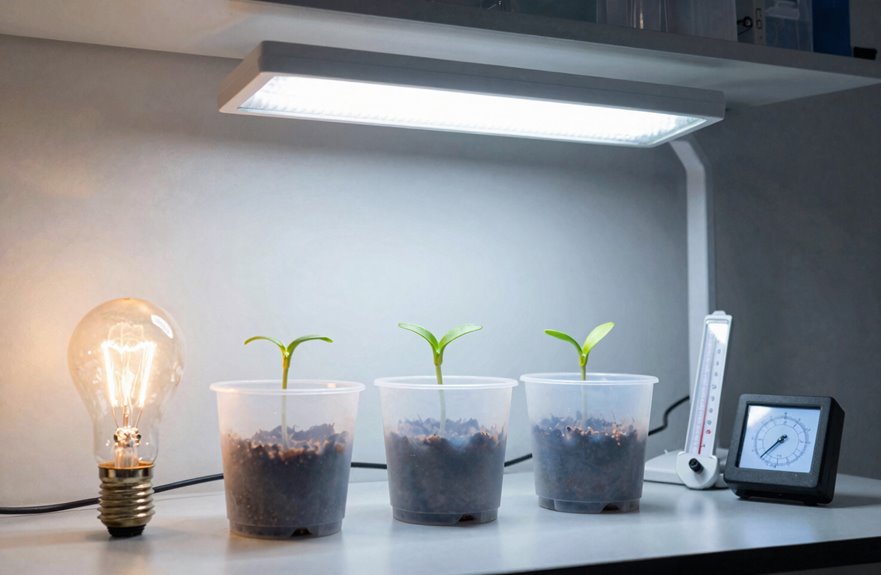
Why do regular bulbs fall short when I’m trying to keep my plants thriving? They simply don’t deliver what’s needed.
Regular bulbs might keep a plant alive, but they struggle with growth. They lack the proper light spectrum for sturdy photosynthesis. Without adequate blue light and red light, foliage stays sparse and stems grow leggy. The intensity proves too weak for anything beyond low-light survivors.
Then there’s the heat. Incandescent bulbs nearly cook seedlings while still failing to energize growth. LED and fluorescent grow lights perform differently. Superior energy efficiency, minimal heat, and targeted wavelengths transform growing conditions. Grow lights deliver the specific light wavelengths plants need to thrive.
How Grow Lights Copy Sunlight for Plants
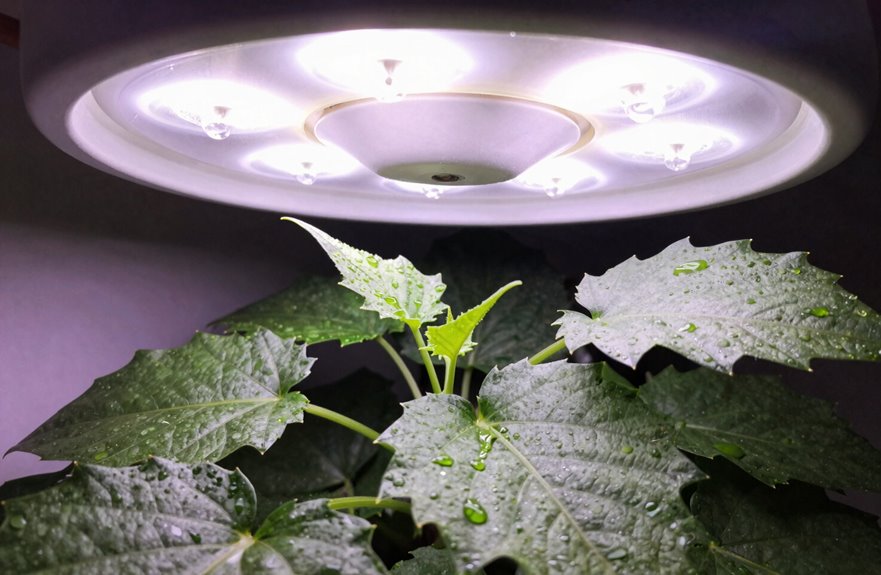
How exactly do grow lights replicate what the sun offers? It’s all about spectrum control and smart design.
Grow lights achieve sunlight mimicry by delivering full spectrum output or targeted red and blue wavelengths. This matters because plants need specific light colors for different growth stages. Blue drives leafy development, while red triggers flowering and fruiting.
Grow lights mimic sunlight through full spectrum or targeted red and blue wavelengths, matching what plants need for each growth stage.
LED grow lights offer energy efficiency, cool operation, and the ability to dial in exact wavelengths. The intensity and distance from plants work together; LEDs can be positioned just six inches above seedlings without causing leaf damage.
True full spectrum options blend multiple wavelengths, supporting complete plant growth cycles. Red-blue combinations and full-spectrum white lights each serve specific growing purposes. Selecting the right light type directly improves indoor gardening results.
How to Choose Between LED, Fluorescent, and HID Grow Lights
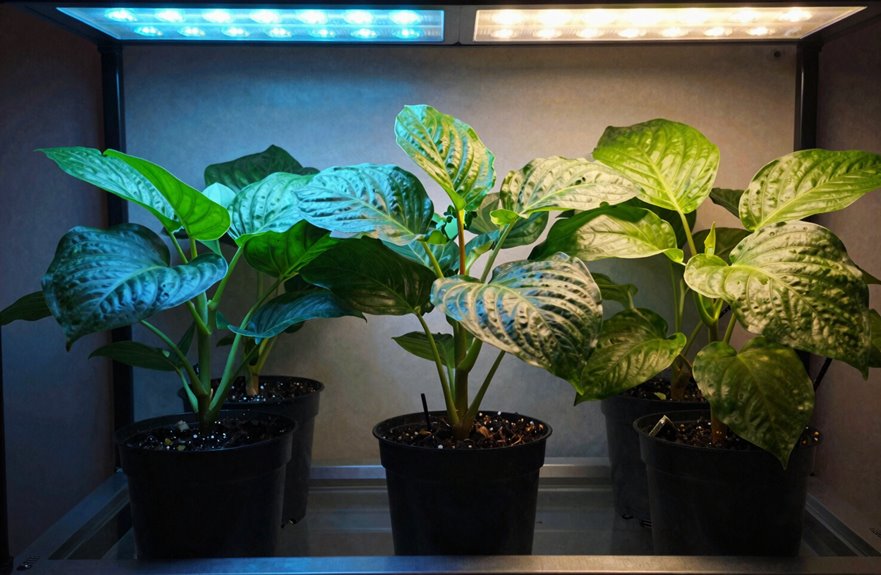
What distinguishes the three main grow light technologies when you’re standing in the aisle making a decision? LED grow lights dominate the selection for efficiency and spectrum control; you can switch wavelengths between growth stages without battling heat. Fluorescence serves well for low-heat, budget-friendly setups, though you’re limited by bulkier fixtures and less tailored output. HID, whether metal halide for vegetative growth or high-pressure sodium for flowering, delivers raw intensity that’s difficult to match with other technologies, but it requires serious ventilation challenges. Your space and growth stage determine everything. Choose LED when prioritizing efficiency and customization, fluorescence for gentle ambient coverage, and HID when you’re fully committed to extraction systems. The right grow lights distinguish serious growers from those using household bulbs.
How to Hang Grow Lights at the Right Height and Schedule
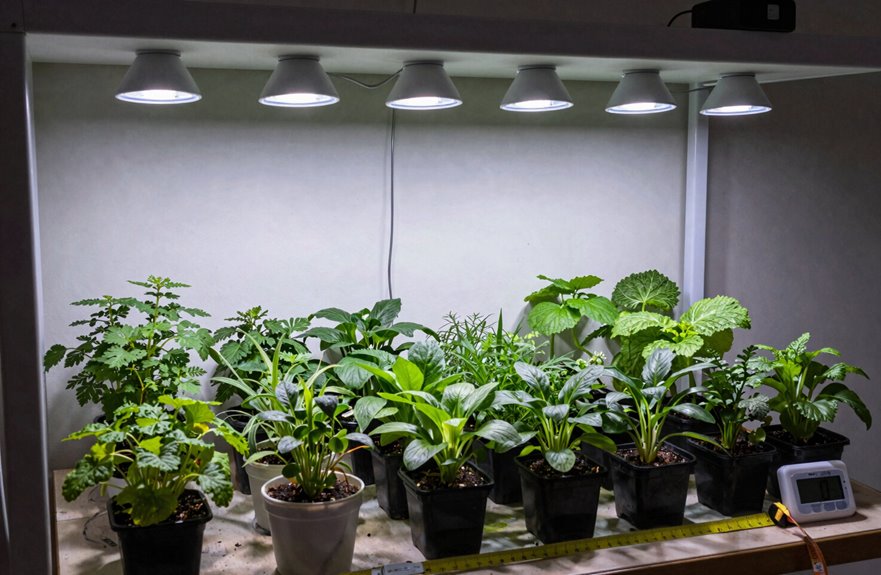
Where you position your lights determines whether your plants thrive or struggle. Getting the distance and height right makes all the difference for healthy growth.
For seedlings, position incandescent bulbs about 24 inches away. LED grow lights can be positioned as close as 6 inches since they run cooler. Adjust height as plants grow to maintain proper light intensity without burning leaves.
Getting even coverage matters. When space is limited, mount artificial lighting on top or sides of shelves to reach every plant.
The photoperiod is equally important as placement. Run lights 16 hours daily for seedlings, with a minimum of 8 hours darkness. A timer ensures consistency; set it for 7am with 12 hours on. This eliminates guesswork and prevents light stress.
How to Spot and Fix Light Problems in Your Plants
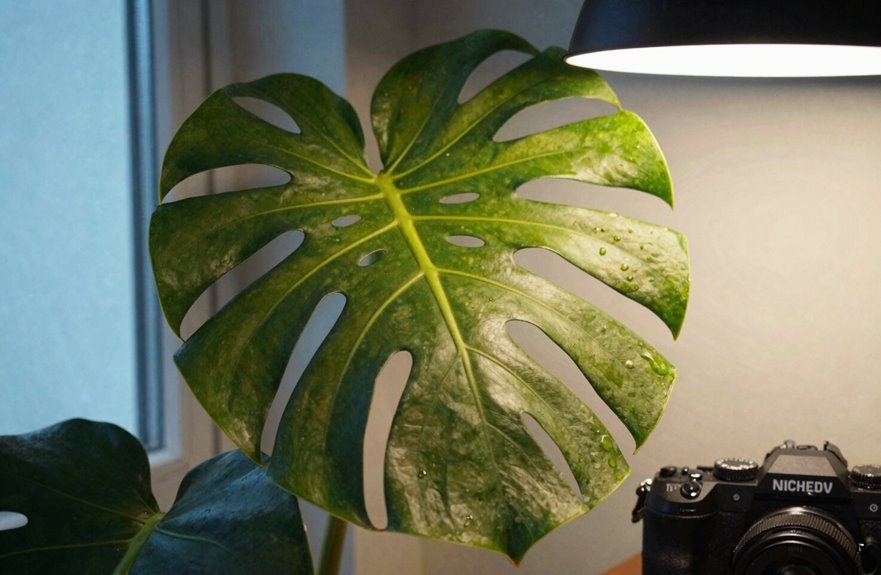
Why wait until leaves yellow or stems stretch beyond recognition? I’ve learned to read my plants’ signals before crisis hits. Mid-green foliage indicates proper light exposure, while leggy growth and pale leaves signal a light problem.
I check distance from light constantly. Seedlings need blue spectrum about 60 cm from T5 HO tubes, while mature growth stages tolerate different positioning. Too much light causes scorched, bleached leaves, especially on tender seedlings.
My fix sequence starts with light measurement, then I adjust positioning: 4–6 inches for seedlings, 12–24 inches for foliage. I set timers to maintain proper photoperiods, typically 16 hours daily for young plants. Correct light exposure ensures consistent plant growth based on measurable conditions rather than guesswork.