

I store my backpack leaf blower in a dry, sheltered spot away from direct sunlight to prevent moisture damage and battery degradation. I mount it on wall hooks positioned at the center of gravity to keep it level and secure, or use a heavy-duty wall rack fastened into studs when I need extra support. When wall space fills up, I install ceiling racks with heavy-duty anchors into joists. I also use sturdy shelves with the engine facing down, and always winterize by draining fuel or removing batteries and cleaning the unit first. Proper storage extends equipment lifespan and maintains performance.
Find the Best Storage Location for Your Leaf Blower
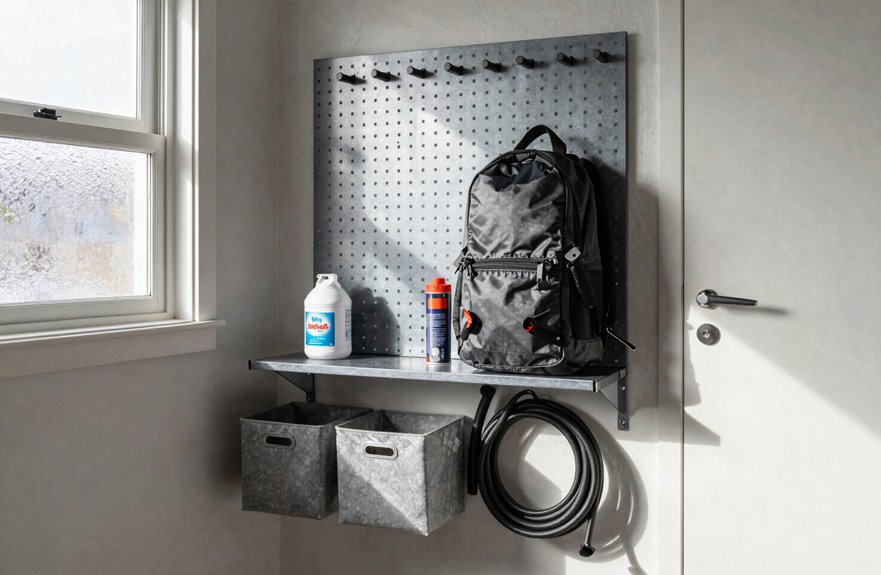
Where should you store your backpack leaf blower when the yard work’s done? Mounting your blower on the wall frees up precious floor space and keeps it safely off the ground. This prevents trips, protects against damage, and puts your equipment right where you need it.
Store your blower in dry, sheltered spots away from direct sunlight to prevent moisture damage and battery degradation. Whether you’re working with a compact shed or spacious garage, evaluate shelf space, wall mounts, or ceiling racks based on your blower’s size and accessories. The right storage setup protects your investment and extends equipment lifespan.
Use Simple Hooks to Hang Your Blower on the Wall
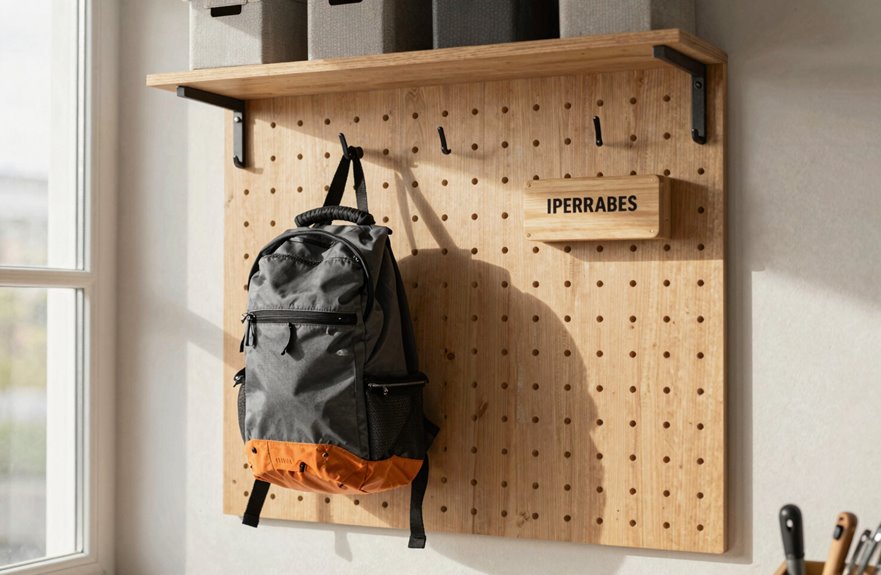
How can you keep your backpack leaf blower accessible yet out of the way? Wall hooks provide an effective storage solution for your space.
Wall mounting keeps your blower off the floor, eliminating tripping hazards and protecting both your floors and your equipment. Position sturdy rake or shovel hooks, or dedicated blower hooks, at a height where the unit stays level and secure. Proper hook placement matters: align yours near the blower’s center of gravity or along the middle section of the tube to maintain balance and prevent tipping.
This approach preserves air circulation around your blower, shielding it from ground moisture and rust. Ensure your mounting surface can handle the weight and remains accessible for quick grab-and-go convenience.
Install a Wall Rack for Heavy-Duty Storage
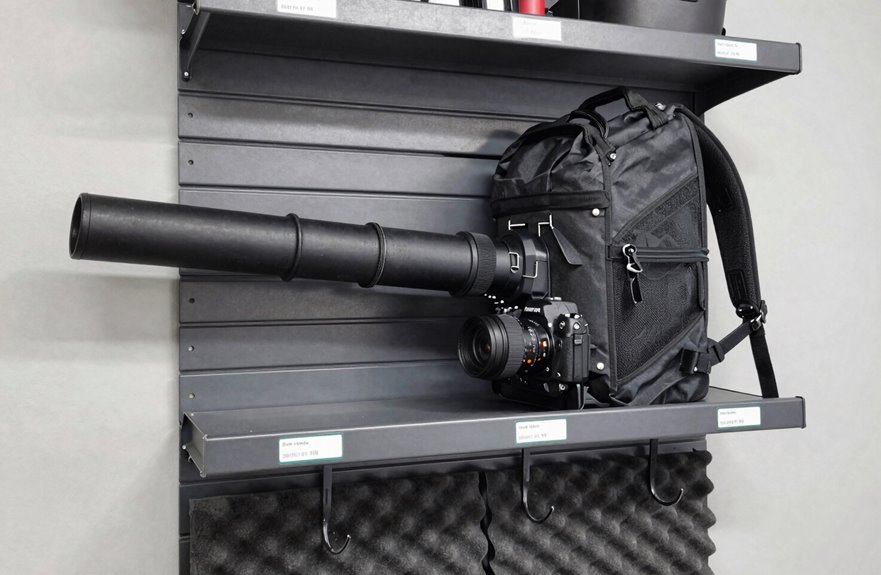
I’ll show you how a wall rack maximizes your garage space while keeping your blower secure. Mounting one requires a drill, positioning at a comfortable height, and fastening firmly to studs. You’ll free up valuable floor area and create a safer, more organized storage solution.
Space-Saving Design
Why let a bulky backpack blower consume precious floor space when you can reclaim every square foot. Mount yours on a wall rack and transform your garage from cluttered chaos to organized storage.
A wall rack designed for heavy-duty equipment keeps your blower secure and protected from accidental kicks or falls. Choose racks with reinforced frames and protective coatings that resist moisture and rust in damp storage areas. Position yours at a comfortable height for easy access, and use integrated hooks to manage cords and hoses. By lifting your gear off the ground, you create room for your workspace, your projects, and additional storage capacity.
Easy Installation Process
Where exactly should you mount your wall rack? I choose a spot at chest to shoulder level so I can grab my backpack leaf blower without straining. This height keeps it accessible and protects it from accidental kicks.
I use a heavy-duty rack built for large equipment and drive multiple fasteners directly into wall studs. This ensures the mount holds firm under the blower’s weight.
I position the rack so the blower’s handle and nozzle align naturally, keeping vents and tubes unobstructed. This prevents damage and maintains airflow integrity.
After securing the rack, I add nearby hooks for cords and accessories. Everything stays organized and within reach. This storage system keeps your equipment secure and your space functional.
Try Ceiling Storage If Wall Space Is Full
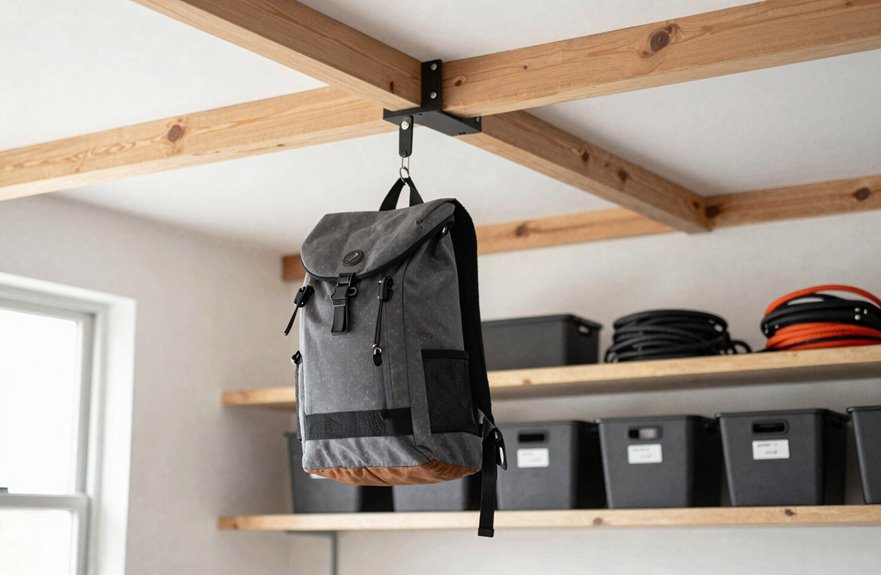
I’ve found that ceiling storage lets me maximize vertical space when my garage walls are already packed with tools and equipment. Installing a sturdy overhead rack is straightforward. I secure it to ceiling joists and complete the installation in under an hour. My blower stays accessible enough to grab when I need it, yet it’s completely out of the way the rest of the year.
Maximize Vertical Space
When wall space runs out, looking up reveals one of the most underused storage opportunities in any garage or shed. Ceiling-mounted racks transform dead overhead space into prime real estate for your gear. Sturdy hooks or specialized racks keep backpack leaf blowers suspended safely above work zones, eliminating floor clutter and trip hazards.
Secure everything with heavy-duty anchors rated for your equipment’s weight to prevent dangerous sagging. Distributing weight evenly reduces structural stress on mounting systems. For complete leaf blower storage systems, run hoses and extension cords along ceiling tracks to keep them organized and separated from walkways. This vertical approach maximizes every square foot while protecting equipment from accidental damage below.
Easy Installation Method
Since my walls are already packed with tools, I’m turning to the ceiling for storage. Ceiling racks and joist-mounted hooks convert wasted overhead space into secure storage for my backpack blower, keeping floors clear and eliminating tripping hazards.
I install brackets directly into ceiling joists, ensuring even weight distribution to prevent structural stress. I position the blower with its tube and handles accessible, making one-handed lifting safe and straightforward. My system accommodates the blower’s full dimensions plus any attached hoses, so nothing snags during retrieval.
I add quick-release hooks and clear labeling to speed up the process. This setup protects my backpack blower from wear while keeping my workshop organized. Tool enthusiasts maximize every inch of available space, building workshops that function efficiently and support consistent work output.
Tool Accessibility Benefits
Where do I turn when every wall’s already crammed with gear? I look up. Ceiling storage transforms wasted overhead space into prime [leaf blower storage](https://www.example.com/leaf-blower-storage) real estate, and this solution addresses a common storage challenge.
| Ceiling Storage Benefit | What It Means for Us |
|---|---|
| Extra vertical layer | Frees wall and floor space |
| Off-ground mounting | Cuts tripping and damage risks |
| Load-bearing design | Handles larger equipment safely |
I secure racks to ceiling joists and keep cords tidy with hooks to stop tangling. This approach maximizes every inch of available garage space. Ceiling options complement wall mounts perfectly, especially when garage space runs tight. The combination of vertical storage methods provides comprehensive coverage for tool organization.
Store Your Blower on a Shelf or the Floor
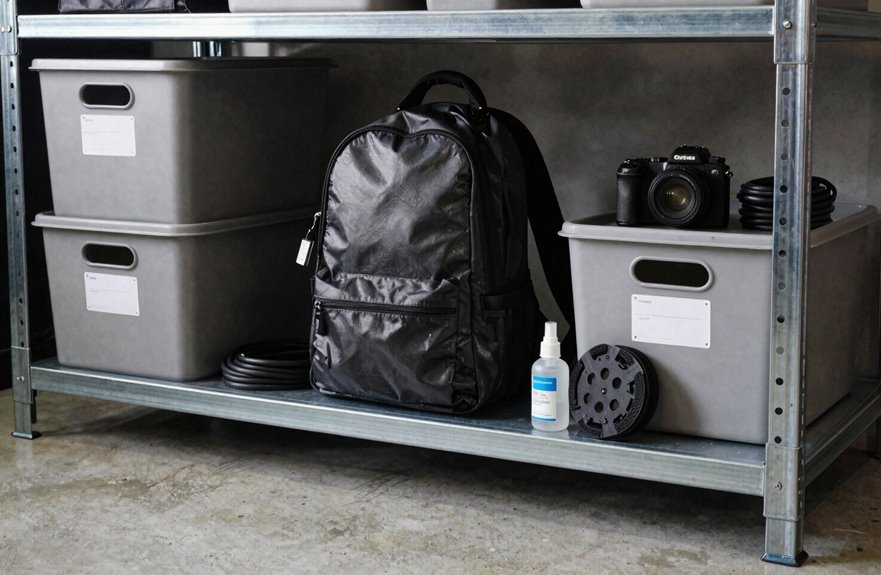
How should you position your backpack leaf blower when shelf storage is your best option? I place mine engine-facing down on a sturdy, wide shelf to keep gasoline blowers stable and secure. You’ll want to check that your shelf isn’t too tall or crowded; tight spaces lead to tipping and damage when grabbing tools in a hurry.
Effective leaf blower storage requires thinking beyond just the unit itself. Maximize your shelf space by tucking accessories and related tools right alongside your blower. Position everything so you can retrieve your blower easily without shifting heavy items or creating clutter that risks injury.
Winterize Your Leaf Blower Before Off-Season
Proper off-season preparation keeps your backpack leaf blower running smoothly when spring arrives. I drain fuel from gas models before storage when the manual allows. This prevents gum buildup and leaks that can cause problems later. For electric models, I remove batteries per manufacturer guidance to avoid degradation during long-term storage.
I wipe the blower clean of dust and debris, focusing on flywheels and air vents where buildup causes trouble. Storage in a dry, sheltered spot like a shed or garage protects against moisture and UV damage. Keep it away from direct sunlight.
Before finishing, I ensure my storage bag is clean and dry, checking seals to guard against rust and clogs. Proper winterization prevents costly repairs and ensures reliable performance when you need the blower again.