
I keep my indoor plants alive by matching them to my home’s light first. Snake plants and ZZ plants handle my darker corners, while pothos thrives nearly anywhere. I always choose pots with drainage holes and well-draining soil, then water only when the top inch dries out. I fertilize lightly in spring and summer, and check monthly for pests or problems. These basics create a foundation for keeping plants healthy as you adjust your approach over time.
Pick Indoor Plants for Your Light Conditions
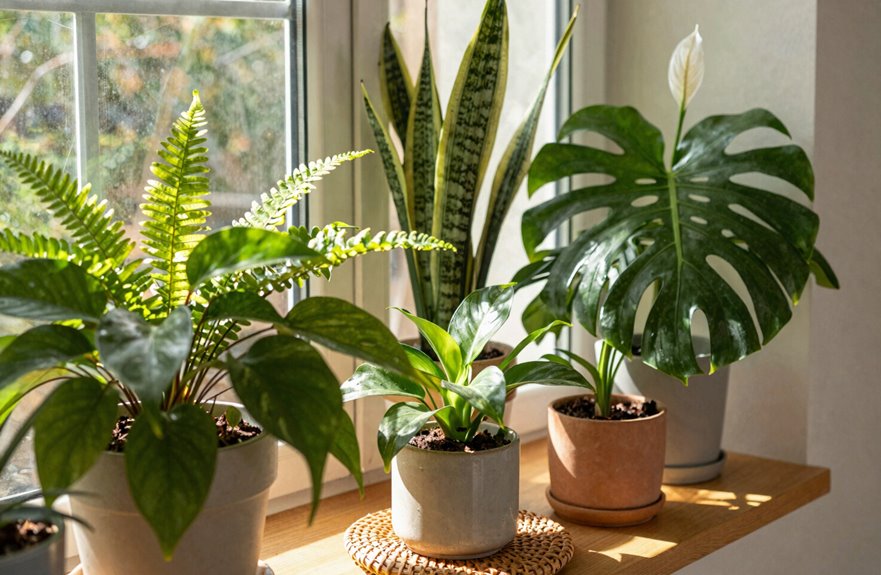
Where do you even begin with houseplants? Start with an honest assessment of your light conditions. Matching species to your space isn’t optional; it’s everything.
My north-facing apartment taught me to embrace shade-tolerant varieties. Low light corners welcome snake plants and ZZ plants, while my brighter windows host fig trees craving bright indirect light. Lanky growth and pale foliage reveal signs of insufficient light, and sunburn on leaves results from sudden southern exposure.
When you need green in impossible spots, deploy grow lights. Rotate plants gradually between zones to prevent shock and leaning. Learning your home’s unique rhythms takes observation and willingness to adjust.
Start With These 4 Hard-to-Kill Varieties
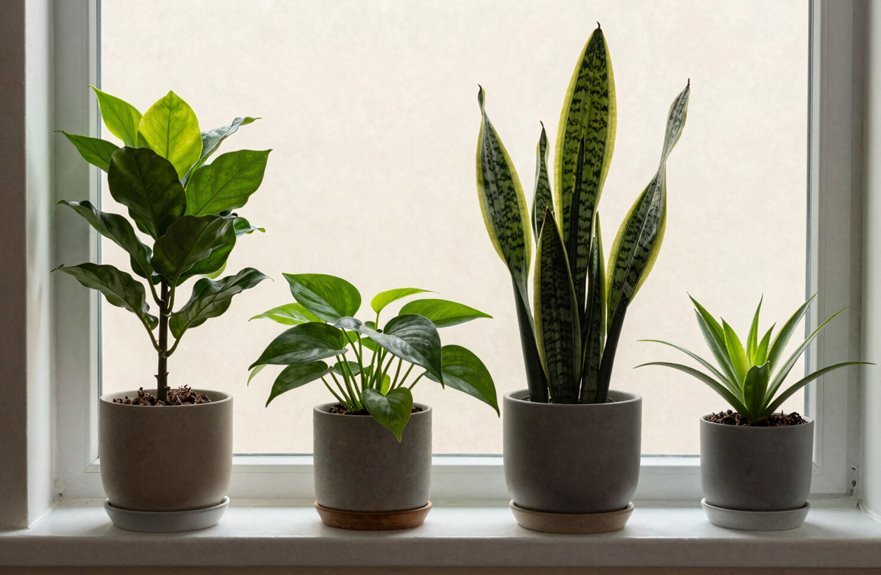
I’ll start you off with four nearly indestructible varieties that build confidence fast. Snake Plants forgive weeks of neglect and thrive anywhere from dim corners to bright windows. ZZ Plants shrug off irregular watering and low light, while Pothos adapt to almost any spot and trail beautifully with minimal fuss.
Snake Plant Benefits
Why struggle with finicky houseplants when snake plants practically thrive on neglect? I discovered this gem early in my plant journey, and it’s become my go-to recommendation for anyone wanting to join the plant parent community without the stress.
Snake plant care fits effortlessly into busy lives. I place mine in indirect light, though they handle brighter spots too. Their drought tolerance means I water only when the top inch of soil dries, typically every two to three weeks. I always use well-draining soil, which supports root rot prevention by letting excess moisture escape quickly.
Their thick, sword-shaped leaves store water, forgiving occasional forgetfulness. Low maintenance doesn’t mean boring; these sculptural beauties elevate any room. You’ll develop confidence in plant care with minimal effort, which creates a foundation to expand your collection.
ZZ Plant Care
ZZ plants quickly earned their spot as my second-favorite beginner plant after I watched one survive a three-week vacation without wilting. If you’re just starting your plant journey, ZZ plant care is forgiving.
I place mine anywhere from dim corners to bright, indirect light, and it adapts well. For watering, I follow the “soak and dry” method: I drench thoroughly, then let the soil dry completely. This prevents root rot, the main killer that trips up new plant parents. I check soil moisture with my finger; in brighter spots, I water every 2–3 weeks, less in darker areas.
I always use well-draining soil and pots with proper drainage holes. Standing water suffocates roots quickly. A quick leaf wipe keeps those glossy leaves absorbing light efficiently.
Pothos Versatility
Pothos plants are an excellent choice for beginners seeking something more adaptable than a ZZ. These indoor plants tolerate irregular watering and thrive in various conditions, from dim corners to sunny shelves.
| Variety | Best Feature |
|---|---|
| Golden | Classic reliability |
| Marble Queen | Stunning variegation |
| Neon | Electric color pop |
| Jade | Deep green simplicity |
| Cebu Blue | Silvery-blue sheen |
Pothos needs bright indirect light for fastest growth, though low light conditions are acceptable. Propagation is straightforward: snip a stem, place it in water, and roots will emerge within days. As low-maintenance, air-purifying plants, Pothos should be part of any plant parent’s collection.
Choose Pots With Drainage That Still Look Good
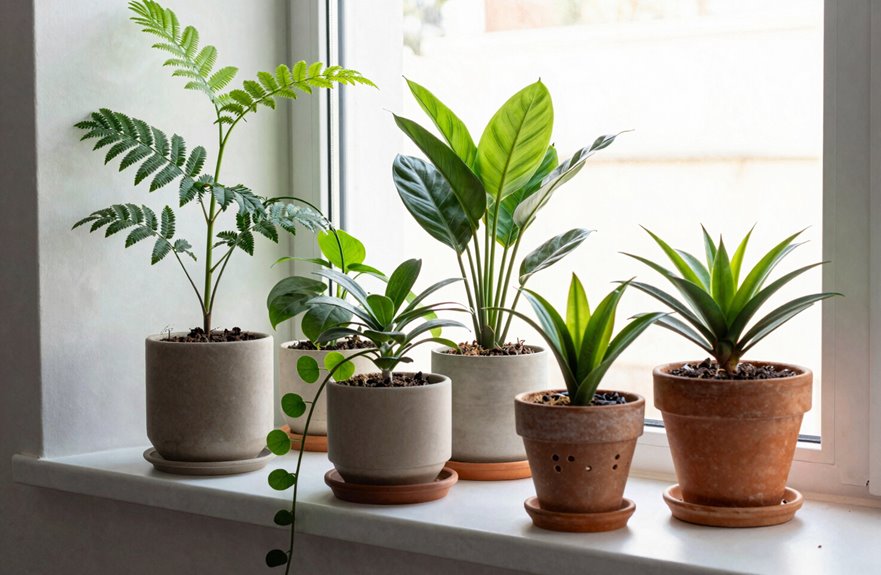
I won’t compromise on drainage just because a pot looks pretty. Trapped water kills roots faster than almost anything else. I’ve learned to hunt for containers that pair smart engineering with solid aesthetics, such as designs with holes hidden in clever spots or those that accommodate inner pots. You’ll find plenty of options that keep your plants alive without cluttering your shelves with ugly plastic saucers.
Why Drainage Matters
Why do so many indoor plants meet an untimely end? When pots lack drainage holes, waterlogging suffocates roots and triggers root rot. This outcome is preventable.
Here’s what works:
- Add a drainage layer of pebbles or lava rocks to keep excess water away from your potting mix
- Amend soil with perlite or sand so moisture flows freely
- Never let pots sit in standing water; empty that drainage tray promptly
I drill holes in pots I love, or I hunt for beautiful options with built-in drainage trays. Plants thrive when you provide escape routes for excess water.
Stylish Pot Options
Finding pots that actually drain shouldn’t mean settling for ugly plastic saucers. We can absolutely have aesthetic containers that keep our plants healthy.
I always check for drainage holes first. Without them, water sits stagnant, causing root rot. When I find a pot I love without holes, I drill them myself or create a drainage layer with lava rocks at the bottom. This stops soil from sitting in water while still allowing moisture movement.
I pair my pots with matching trays, but I never let water linger. I dump excess after thirty minutes to prevent waterlogging. Self-watering and slightly elevated options keep consistent moisture without sacrificing style. Beautiful homes and thriving plants aren’t mutually exclusive.
Water Indoor Plants Only When Soil Dries
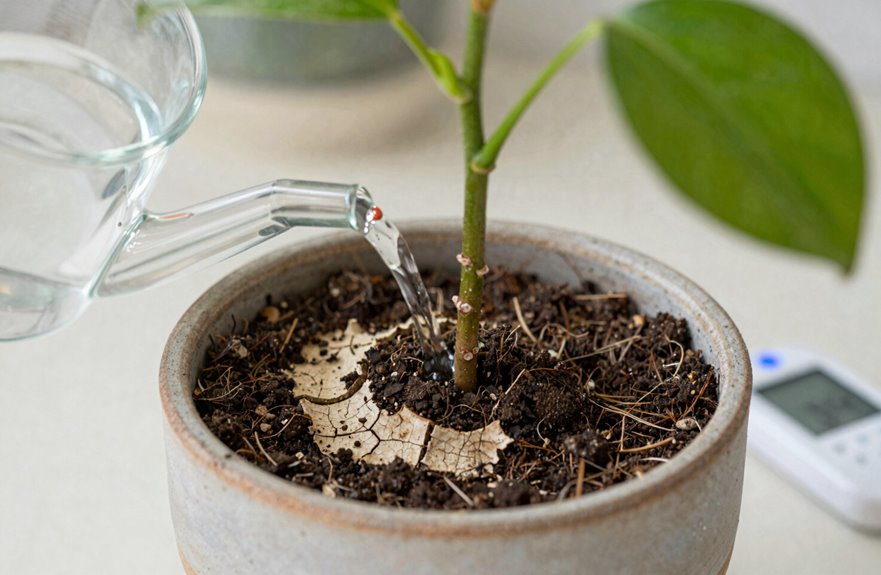
Although I’ve killed more plants with kindness than neglect, I’ve learned that restraint beats routine whenever it comes to watering. I check the top inch of soil before reaching for my watering can. Dry means go, damp means wait.
My soil test is simple:
- I stick my finger in to feel soil moisture
- I use a meter when I’m unsure
- I watch my plants’ leaves for thirst signals
My watering technique soaks thoroughly until drainage flows from the bottom, then I dump excess water after thirty minutes. This protects root health and prevents rot. Water when dry isn’t universal; my tropicals need more frequent attention than my succulents, but even they prefer breathing room between drinks. Proper drainage prevents root rot.
Fertilize Indoor Plants Seasonally, Not Weekly
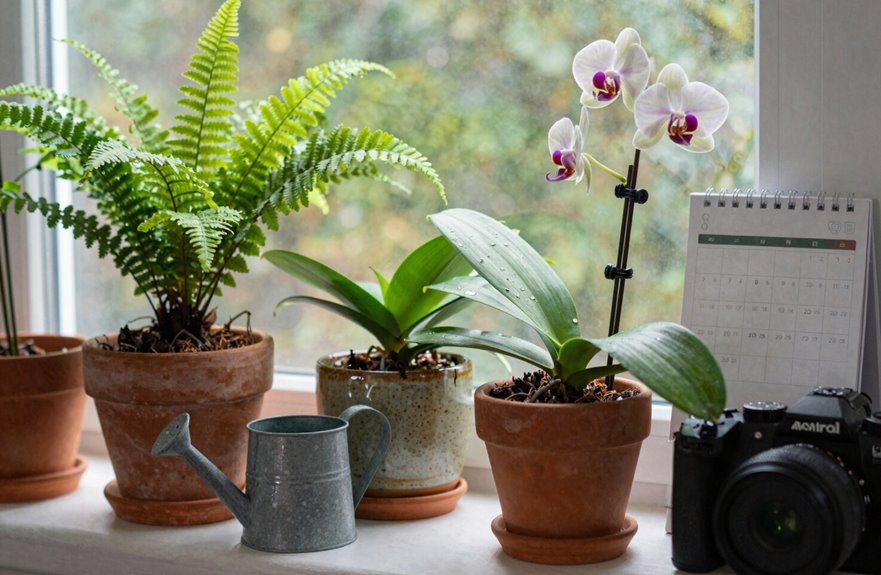
When exactly should I feed my plants? I fertilize my indoor plants seasonally, not weekly, and this rhythm keeps them thriving. I feed during spring and summer when growth rate surges, then I pause in late fall and winter when my plants rest.
I choose a balanced fertilizer type with a 3-1-2 NPK ratio, mixing about 1/8 teaspoon per quart for proper dilution. Liquid, water-soluble pellets, or time-release spikes all work. I match the method to each plant’s needs. I watch for soil salts building up; if I spot trouble, I flush the soil or repot before roots burn. Staying attentive to your plants’ condition prevents nutrient deficiency and root damage.
Check Plants Monthly to Catch Problems Early
Since small problems become big ones fast, I set aside the first Sunday of each month for a thorough plant checkup. I check soil moisture with the finger test, watering only when the top inch feels dry, and peek at drainage holes to prevent root rot. I wipe leaves for better light exposure and spot pests before they spread to my plant family.
Small problems become big ones fast, so I set aside the first Sunday of each month for a thorough plant checkup.
My monthly routine covers essentials:
- Test soil moisture and verify drainage isn’t blocked
- Inspect leaf health for pale or brown edges signaling trouble
- Apply pest control immediately, isolating affected plants
This habit keeps us connected. Tending plants regularly and adjusting light exposure or humidity early prevents problems that would otherwise separate us into different growth patterns.