
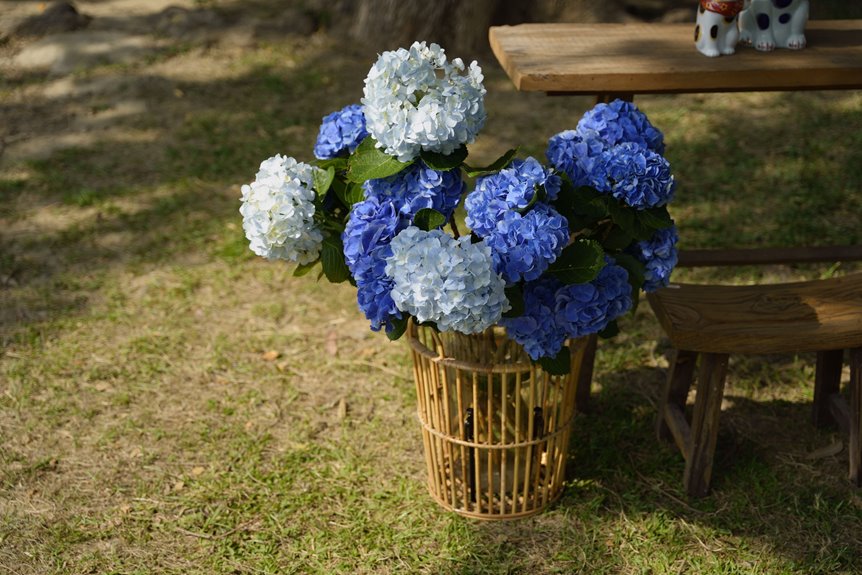
I start by gathering bamboo poles, tools, and sketching my design with labeled pieces. I measure and cut carefully, scoring lines first to prevent splits, then sanding edges smooth. I dry-fit everything before assembly, checking that joints align properly. I build the frame with glued and screwed connections, adding shelves and checking they’re level. Finally, I seal all surfaces for protection and position the stand on stable ground. Each step includes specific techniques to avoid common mistakes like improper joint alignment, uneven shelving, and moisture damage.
Gather Materials and Plan Your Bamboo Plant Stand Build
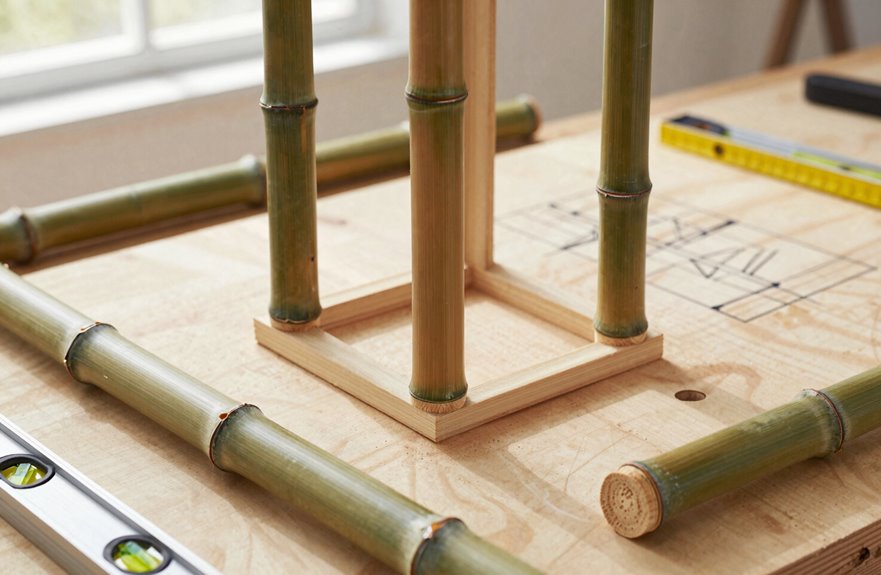
Before I start cutting or drilling anything, I get everything organized and mapped out. I gather bamboo poles of the right thickness and length, plus my saw, sandpaper, wood glue, drill with bits, screws, measuring tape, pencil, and level.
I sketch a rough design on paper showing how many tiers I want and the overall height. This becomes my roadmap and helps me label pieces for easier assembly later. I plan where horizontal supports will attach to vertical poles so my indoor plants sit securely.
I also think about finishes now: stain or sealant protects bamboo and helps it match my space. Good planning results in sturdy, stylish bamboo plant stands that will last through regular use and maintain their appearance over time.
Measure and Cut Bamboo Poles Without Splitting
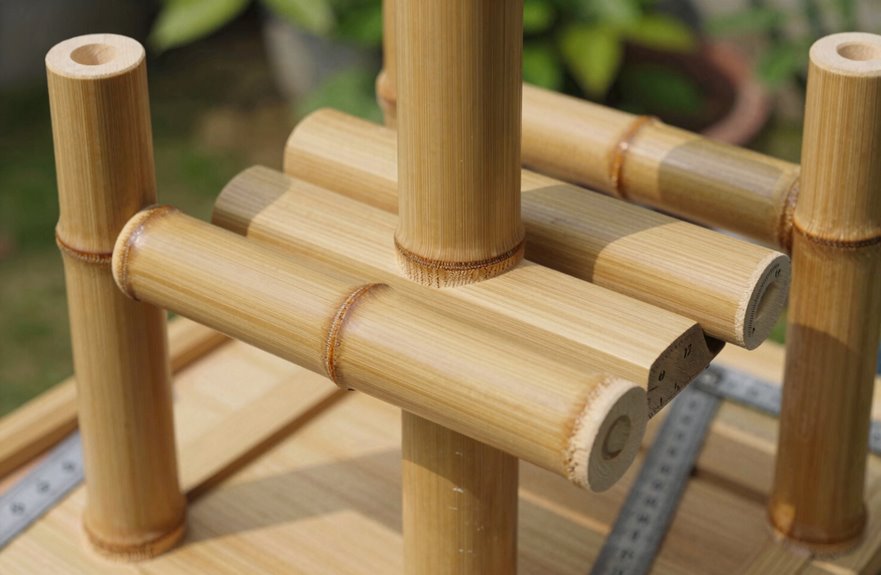
With my materials organized and design sketched out, I’m ready to start shaping the bamboo. I’ll grab my sharp handsaw and mark each pole with a pencil, double-checking measurements before committing to the cut. I score lightly along my line first, then support the bamboo firmly to stop any wobble. Clean, straight cuts mean snug joints later.
| Step | Action | Purpose |
|---|---|---|
| Mark | Pencil measurement lines | Ensures precision |
| Score | Light cut along line | Prevents wandering blade |
| Support | Brace pole securely | Eliminates wobble |
| Cut | Saw with steady pressure | Clean, straight edges |
| Finish | Sand with 220–320 grit | Removes splinters, stops cracks |
I’m choosing uniform-diameter sections from the same culm family, avoiding any cracked culms. I’ll cut slightly oversize, dry-fit everything, then trim and re-sand for smooth transitions that resist splitting.
Assemble the Frame and Vertical Supports
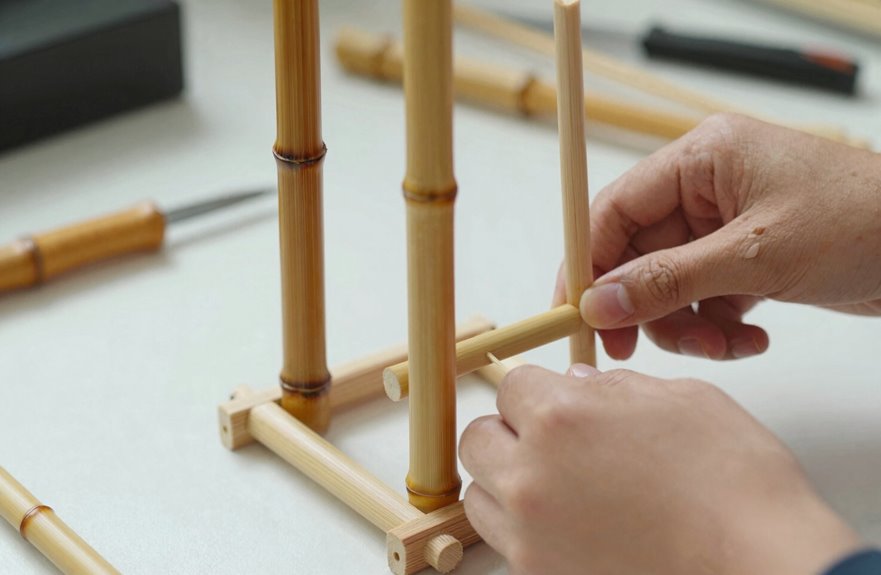
Lay out the vertical supports first, spacing them evenly to create a stable footprint for the frame. Apply wood glue generously at every joint where poles meet, then drive screws through for rock-solid connections that will hold plants secure. Sand all cut edges smooth to prevent splinters, and label each piece to avoid confusion. Drill optional holes in the uprights for hanging hooks to allow for flexibility in plant placement. Check alignment with a level constantly, catching any wobbles before they become structural problems. The resulting stand will securely support your plants.
Add Shelves and Make Sure Everything’s Level
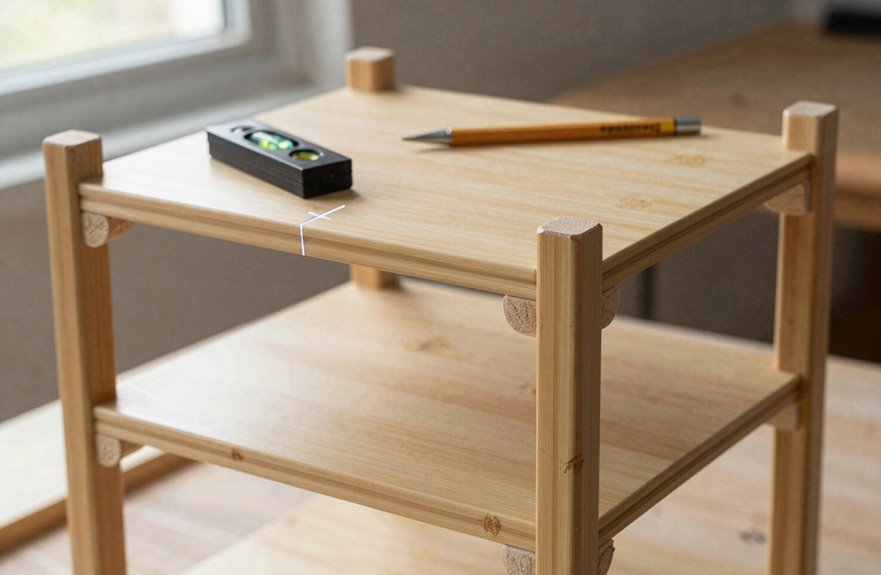
Once you’ve got your frame standing solid, measure and mark exactly where each shelf needs to sit. Keep in mind that more shelves mean more weight, so space them to keep the center of gravity low. Cut bamboo poles to length, smooth edges with sandpaper, and build something functional for your space.
Apply wood glue at joints, then reinforce with screws to connect vertical supports to brackets. Check each shelf with a level as you install them horizontally, adjusting spacing for even gaps so the stand feels balanced and true. Drill small guide holes if needed, and your shelves will be ready for whatever comes next.
Seal, Protect, and Position Your Finished Stand
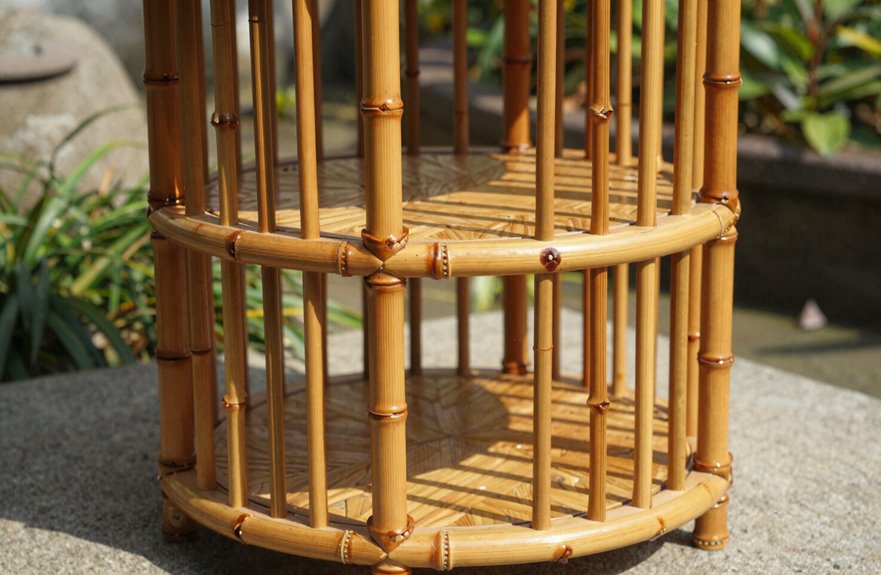
How do you keep bamboo looking good year after year. I seal every surface with a protective varnish to guard against moisture, stains, and UV damage, especially if I’m placing it outdoors. I let the sealant cure fully before loading it up with plants.
I built this stand to last, so I use waterproof adhesive and galvanized hardware that won’t corrode in humid conditions. When I position it, I check for level ground and add anti-slip pads if my floor’s uneven. A wobbly display defeats the purpose.
I inspect joints and shelves regularly, tightening screws or adding wood glue when things loosen. This stand becomes part of my space and my routine. With proper care, it will serve your plant collection reliably for years.