Carpet for a bedroom ranges from firm loop pile that resists furniture dents to plush shag that feels soft underfoot, and the right one depends on how much traffic the room sees and whether you prioritize comfort or durability.
If the bedroom doubles as a dressing area or home office, loop pile stays flat and cleans fast, while high pile traps warmth in rooms with cold subfloors.
[link-whisper-related-posts]1. Textured Neutral Carpet
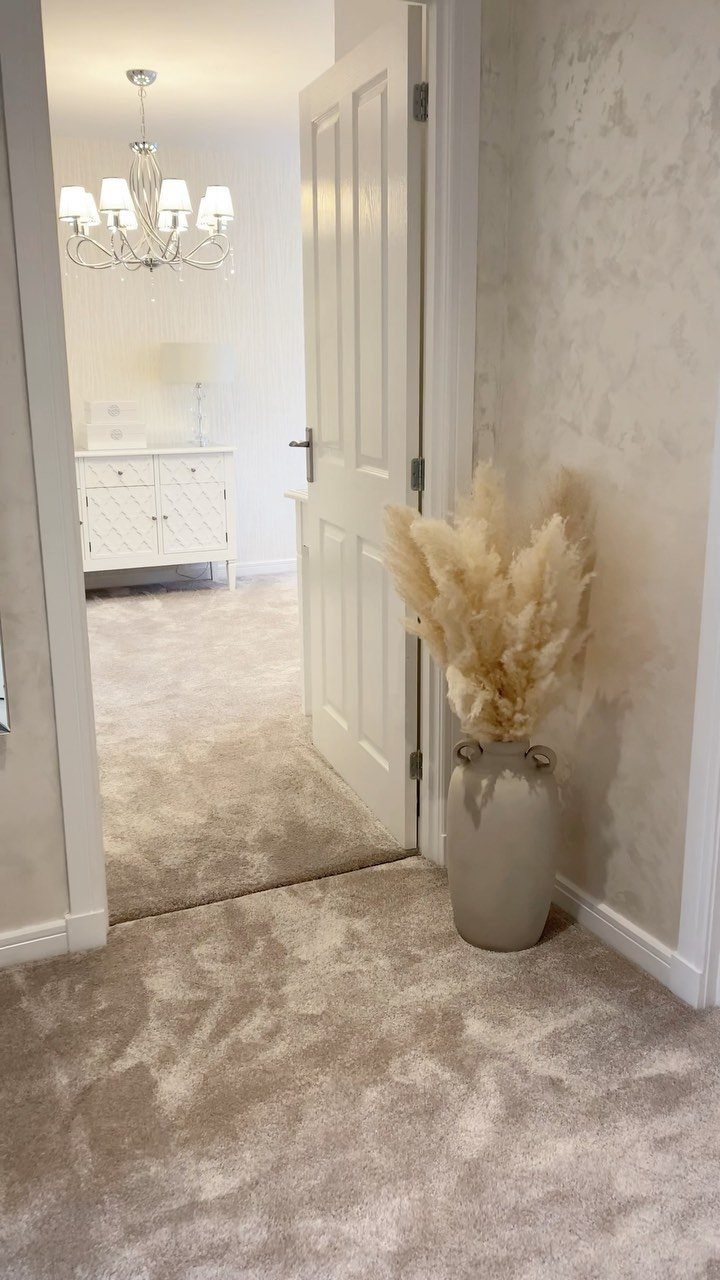
Beige or cream carpet with a subtle texture adds dimension to a bedroom without demanding attention. The pattern sits in the fibers themselves, so the floor gains interest while the walls and furniture still direct the eye.
This approach works well in rooms where the bedding, art or window treatments carry the main color. The texture shows best in natural light and hides minor wear better than a flat surface.
Pick one with a tighter pattern repeat if texture needs to read from the doorway. Wider, irregular textures read softer up close but fade into neutral at a distance.

New & Improved Area Rug With More Cushioning – Our new inner layer is 25% thicker than the previous material, giving this 5x7 area rugs a softer, more cushioned feel underfoot. Made for families who spend time on the floor, it adds extra comfort for playing with the kids, reading, relaxing, or simply walking barefoot at home

Premium 4x6 Area Rug: Memory foam rug is made of Shu cotton pile, which is very soft and has good warmth retention; Inside the indoor rug is a memory foam pad that has good cushioning; Walking on this bedroom rug can give you comfort and peace of mind

Beautiful Design Abstract Rug:The 5x7 rug design is unique and trendy, the colors blend with nature, the abstract design complements the modern tones, it blends perfectly with your home decor, adding more warmth and comfort to your home. Suitable for living room, bedroom, dining room, study, home office, etc
2. Plush High-pile Carpet
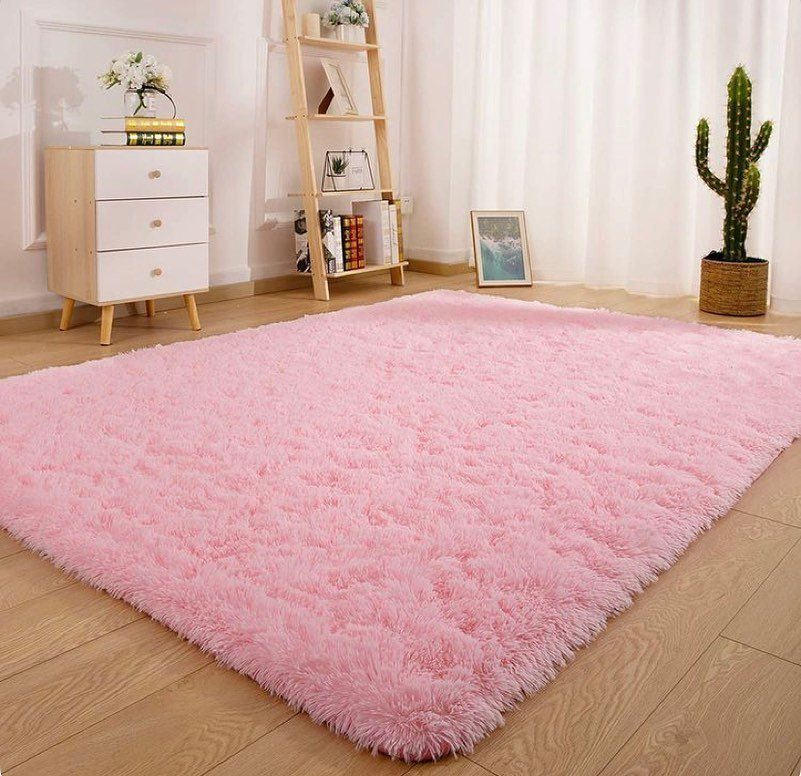
The depth makes it feel softer than shorter styles, and it holds warmth better in rooms with poor insulation or cold subfloors.
High pile does trap dust and pet hair more than low options, so plan to vacuum at least twice a week. A beater bar can damage the fibers, so use suction only or a vacuum designed for shag.
Pink and other saturated colors show dirt less than pale neutrals in this style. The dense pile hides the base fabric completely, which keeps the color consistent wall to wall.

Medallion Heritage Series - Vintage Farmhouse Decor Rug:Featuring worn antique medallion motifs and layered muted hues, this area rug delivers enduring vintage charm throughout your home. A wide range of sizes and colorways are offered to suit assorted interior styling plans. Perfect for living rooms, bedrooms, kitchens, entryways and many other indoor spaces

【Printed 5x8 Area Rug】-- Our brown rugs for living room printed with modern abstract style and an understated, luxurious color scheme. This style is an out-of-the-box choice that easily matches and brightens up your modern or rustic decor. Add a high-class feeling and personalized touch to your living room, dining area, or bedroom.

WASHABLE RUG: This is a fully machine washable area rug for extra convenience. machine wash this living room rug in cold water alone for a deeper clean. regular vacuuming and spot cleaning will keep the rug looking fresh while the colors stay vibrant and won't fade, perfect for busy households with kids and pets
3. Textured Plush Carpet
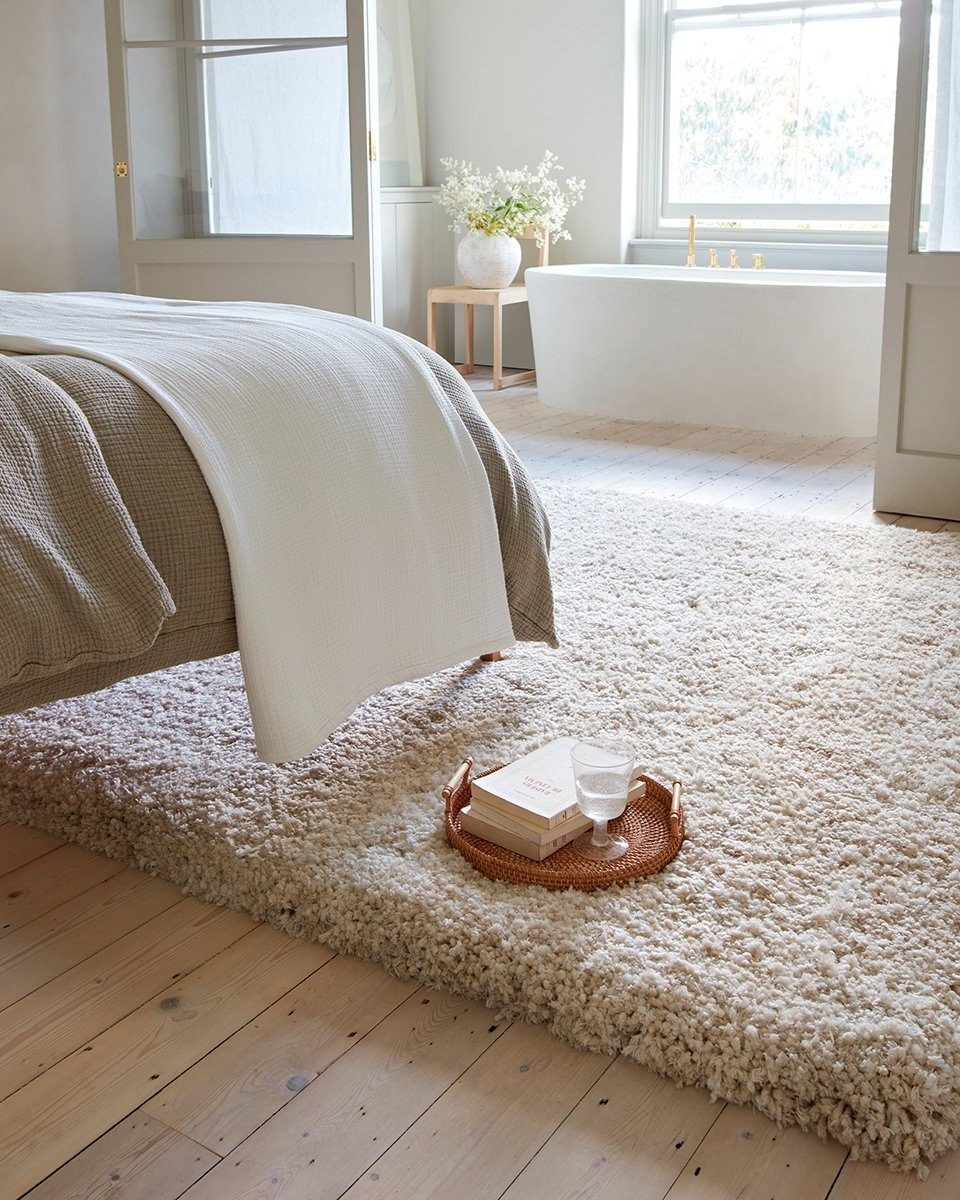
Plush carpet with a textured surface catches light unevenly, which softens footprints and vacuum lines. The fibers bend in multiple directions instead of standing uniformly upright, so the floor looks less tracked even in high-traffic bedrooms.
This style costs about the same as smooth plush but holds up better visually over time. Spills still need immediate attention, since the texture does not protect the fibers themselves.
Cream and oatmeal tones work well in rooms with warm wood or brass fixtures. Cooler grays suit spaces with chrome, white trim or blue-leaning paint.

[COLOR & PATTERN]: SAFAVIEH's Natural Fiber rug features marble grey sisal fibers with a beige cotton border; as an authentic plant fiber, color and tone variations are expected and may vary with lighting.

DURABILITY: Our jute rugs are the perfect solution for any busy family; They are handmade yet their heavy natural fibers make them durable and resistant to slippage; Their rough cross-weave textures mean they're built to last

SIZE: This handwoven jute area rug is 8 Feet Round. We have many more sizes for you to choose from.
4. Saxony Carpet
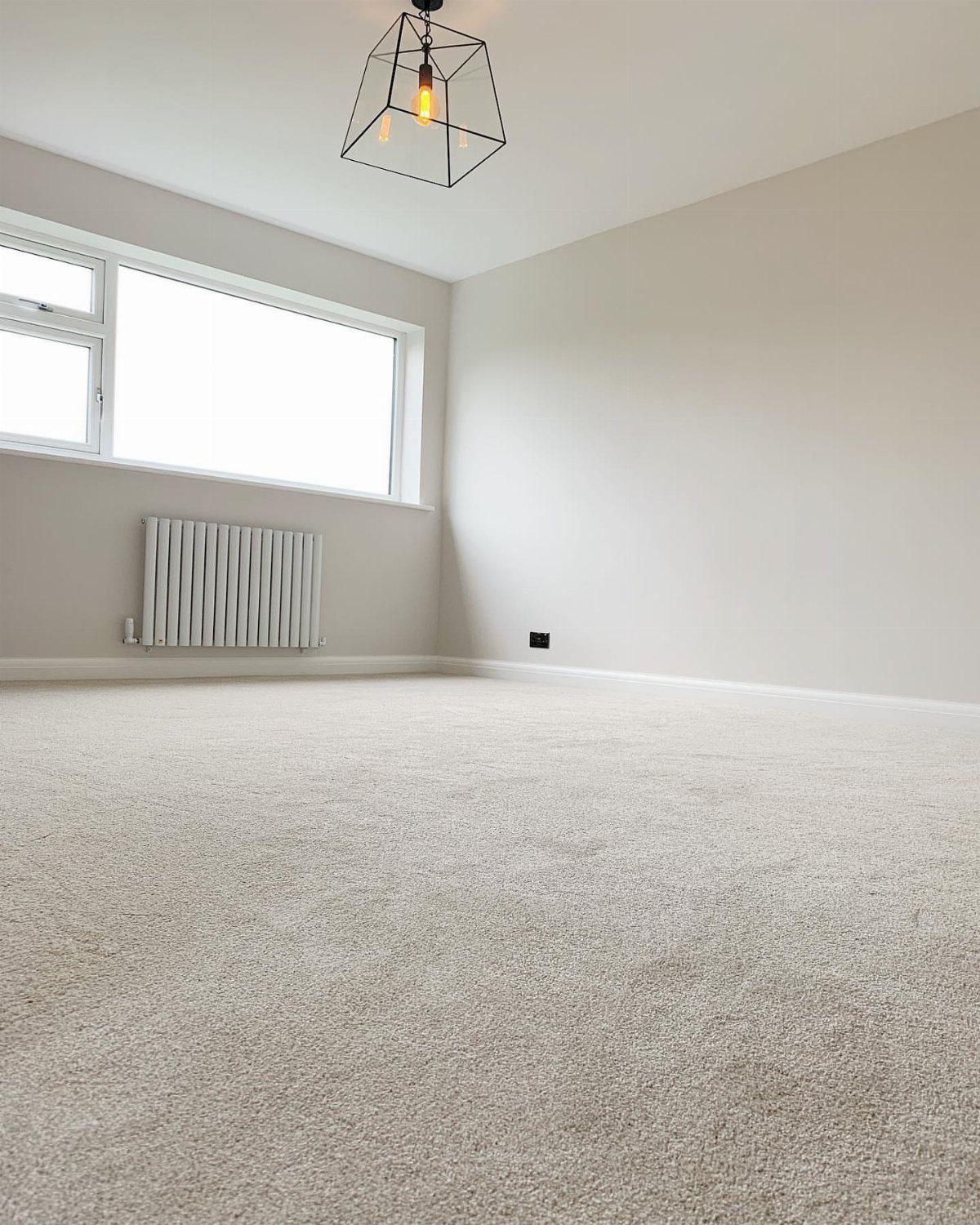
Saxony uses densely packed cut fibers that stand upright, creating a smooth surface with slight texture from the individual tufts. The finish feels formal without looking stiff, and it works in bedrooms that need a polished base without pattern.
Footprints and vacuum marks show clearly on Saxony, so it suits low-traffic spaces better than hallways or entries. A good pad underneath helps the fibers hold their shape longer and slows compression.
Light beige hides dust better than white or very dark shades. If the room gets bright afternoon sun, test a sample for a week to check for fading.

Size: each artificial grass table runner is 12 x 36 inches /30 x 92 cm, which is suitable for most tables and can be placed on the floor as a carpet, you can cut it according to your needs

VALUE SYNTHETIC GRASS RUG:Designed and made according to the real fescue-like grass, with the blade around 0.4'' in length, safe for kids and pets - all for a very economical price.

【Ultra Thick & Soft Door Mat】 Featuring 1.97" / 50mm high-density grass blades, this artificial grass door mat feels soft underfoot and looks lush and realistic. Perfect for a cozy front door or entrance mat
5. Jute Carpet
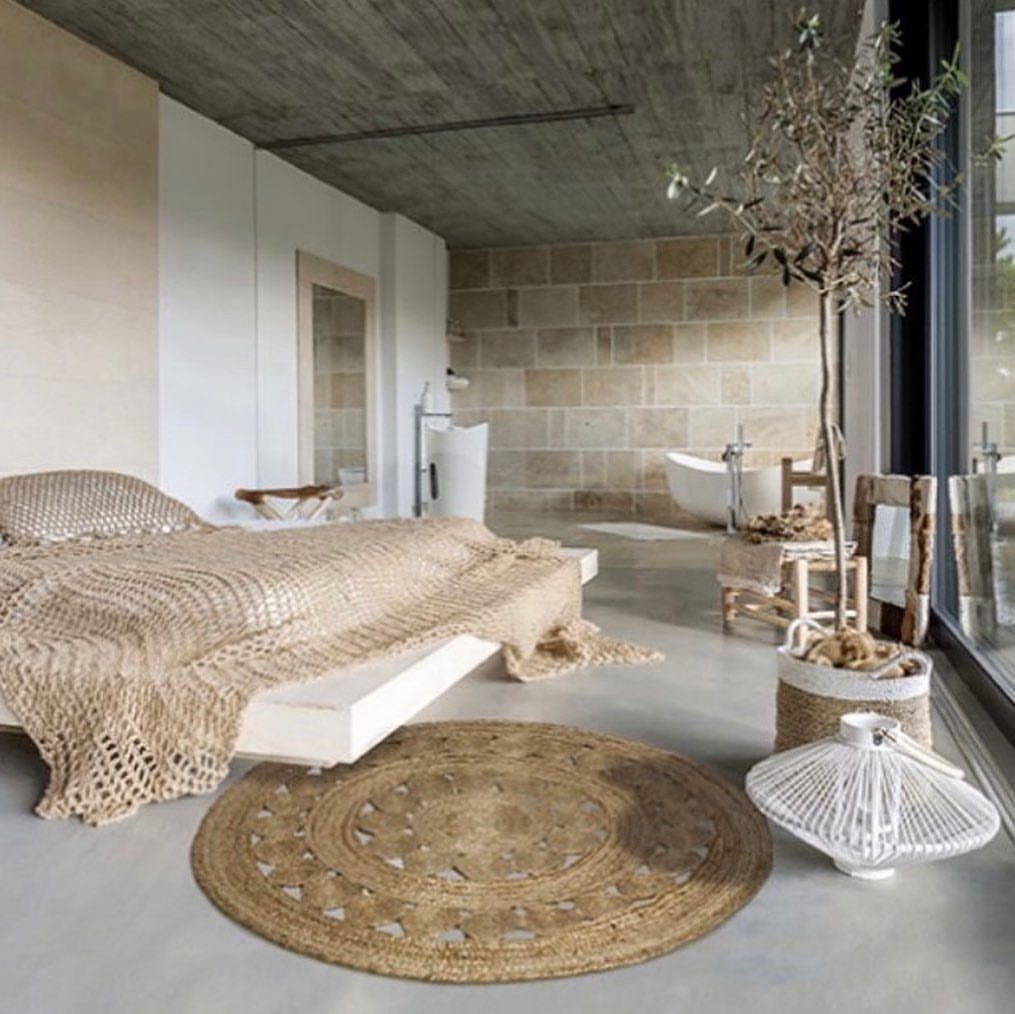
Jute carpet brings in the coarse, uneven texture of natural plant fiber. It feels rough underfoot compared to synthetic or wool pile, so it suits bedrooms where you wear slippers or prefer a tactile contrast to smooth linens.
This material does not hold dye evenly, so the color stays in shades of tan, brown and gold. Jute absorbs moisture and can stain permanently, which makes it a poor fit for humid climates or rooms near bathrooms.
Round jute rugs layer well over concrete or wood when wall-to-wall coverage feels too permanent. The woven texture pairs with stone, linen and unfinished wood.

Material and Dimension of Faux Fur Rug: The fluffy rug made of 100% polyester. About 24x35 inches (2x3ft). It is great choice for cute room, teen room, nursery, living room and chair cushion, etc. Feel the softness with your feet!

Pet Supplies Mat: 47.2x78.7in Rabbit cage liner made of crystal fleece, soft and comfortable pet friendly, perfect habitat for most pet critters to play and rest

【Unique Bedding】The rabbit chewing mat adopts a unique and exquisite weaving method,straw mats for bunny is safe and durable,and woven grass for rabbits is made of natural straw.rabbit straw hay mats are more attractive to your little pet.Your little pet can chew, grind its teeth, sharpen its claws, rest and play on the straw woven mat for rabbits.You can put the small rabbit grass mats inside or outside the cage
6. Geometric Carpet
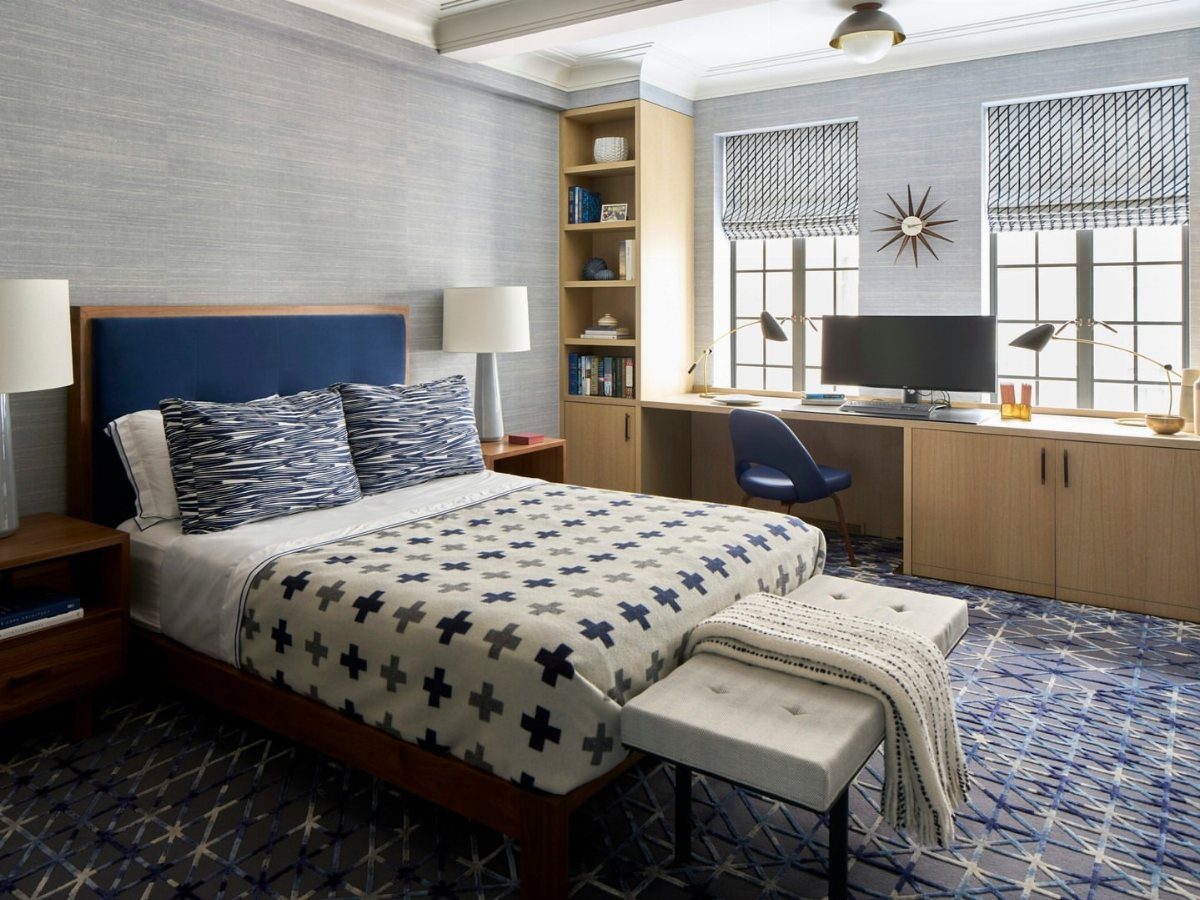
A geometric carpet turns the floor into a deliberate design element. The pattern draws attention, so it works best in rooms where the walls stay neutral and the furniture keeps simple lines.
Blue and white patterns suit coastal or modern bedrooms, while black and cream versions lean contemporary. The repeating shapes create visual rhythm, which can make a smaller bedroom feel more spacious if the pattern scale matches the footprint.
Geometric carpet hides stains better than solid colors, but high contrast shows wear along traffic paths. If the pattern includes multiple colors, pick bedding that pulls one of them rather than introducing new shades.

STYLISH DESIGN: This trendsetting striped area rug design in a rich warm color palette combination can be perfectly paired with a variety of home décor styles.

VINTAGE FLORAL MEDALLION: The distressed center motif, ornamental border and layered earth tones create an antique-inspired, collected look for boho, farmhouse and traditional interiors. The printed pattern keeps fine visual detail consistent across the rug.

[WASHABLE RUG]: The 8x10 area rugs are completely machine washable and robot-vacuum friendly. The stain-resistant fabric resists common spills like water, coffee, and pet accidents. For daily upkeep, simply vacuum or spot clean; for a thorough refresh, toss the washable rugs 8x10 in the washing machine.(Warm tip: Use cold water with mild detergent. Avoid bleach and fabric softener.)
7. Abstract Patterned Carpet
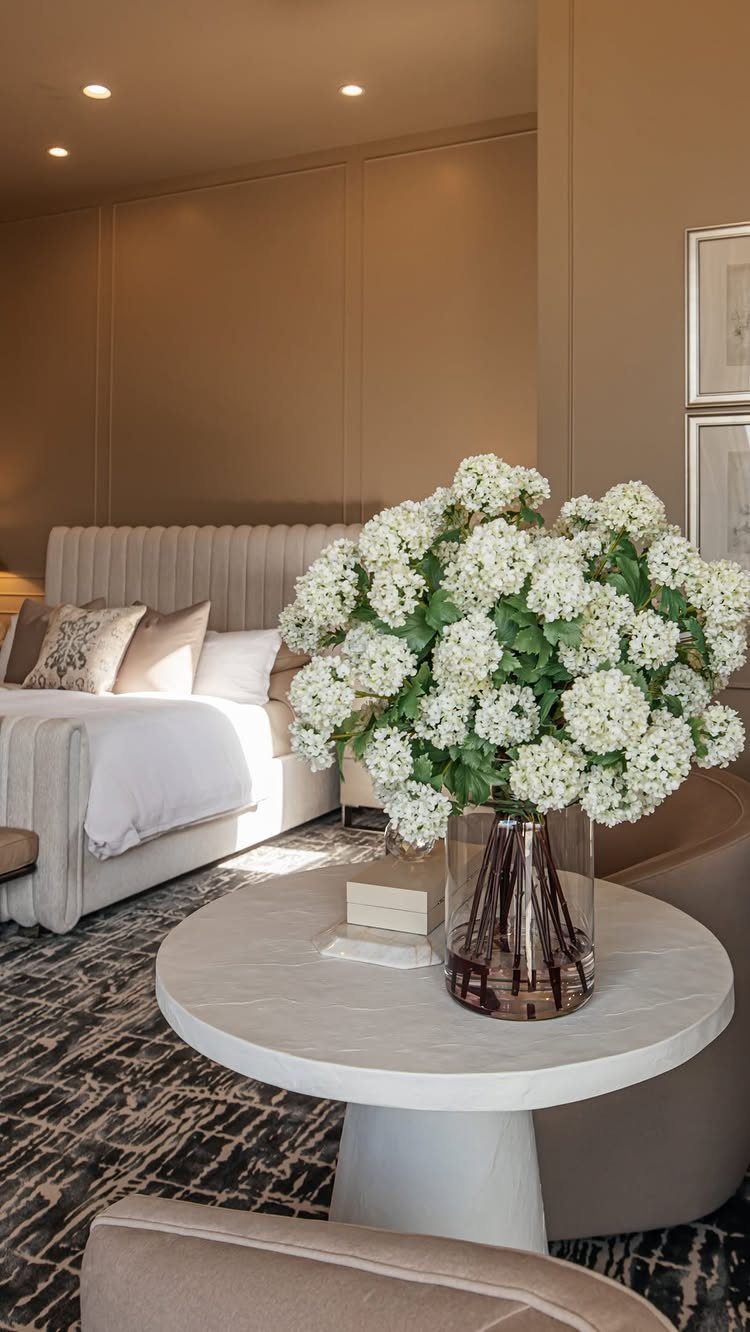
An abstract pattern in two or three tones keeps the floor interesting without locking you into one style. The irregular shapes read as texture from a distance, so the carpet adds depth without competing with bedding or wall color.
Grey and beige combinations suit rooms with both warm and cool accents. Darker patterns hide dirt and wear better than light solid carpet, and the varied tones make stains less obvious between cleanings.
If the pattern includes curves or organic shapes, keep furniture lines simple. Geometric bedframes and straight-edged nightstands balance the softer floor.

Vintage Botanical Elegance: Echoing the refined artistry of 19th-century textile traditions, this area rug showcases a graceful botanical design brimming with timeless charm. Bright gold and brown, yellow and orange red bloom across the surface in delicately balanced symmetry, forming a serene floral tapestry. Inspired by Victorian-era aesthetics, the rug’s intricate vines and oriental motifs evoke a fresh, spring-like feel, infusing your home with elegance, lightness, and sophistication

【Abstract Neutral Area Rug】--Our 8 x 10 area rug has modern abstract style, understated &low key neural gray and white tones. This style is an out-of -the-box. Easily match/brighten up your modern/rustic decor. Add high class feeling& personalized vision for your home living space

[Soft & Low Pile] Our boho living room rug is made of low-pile faux wool material, featuring a soft fuzzy high-density surface, that kids and pets would love laying on. Also, low-pile allows for high-traffic areas and will not obstruct doorways
8. Loop Pile Carpet
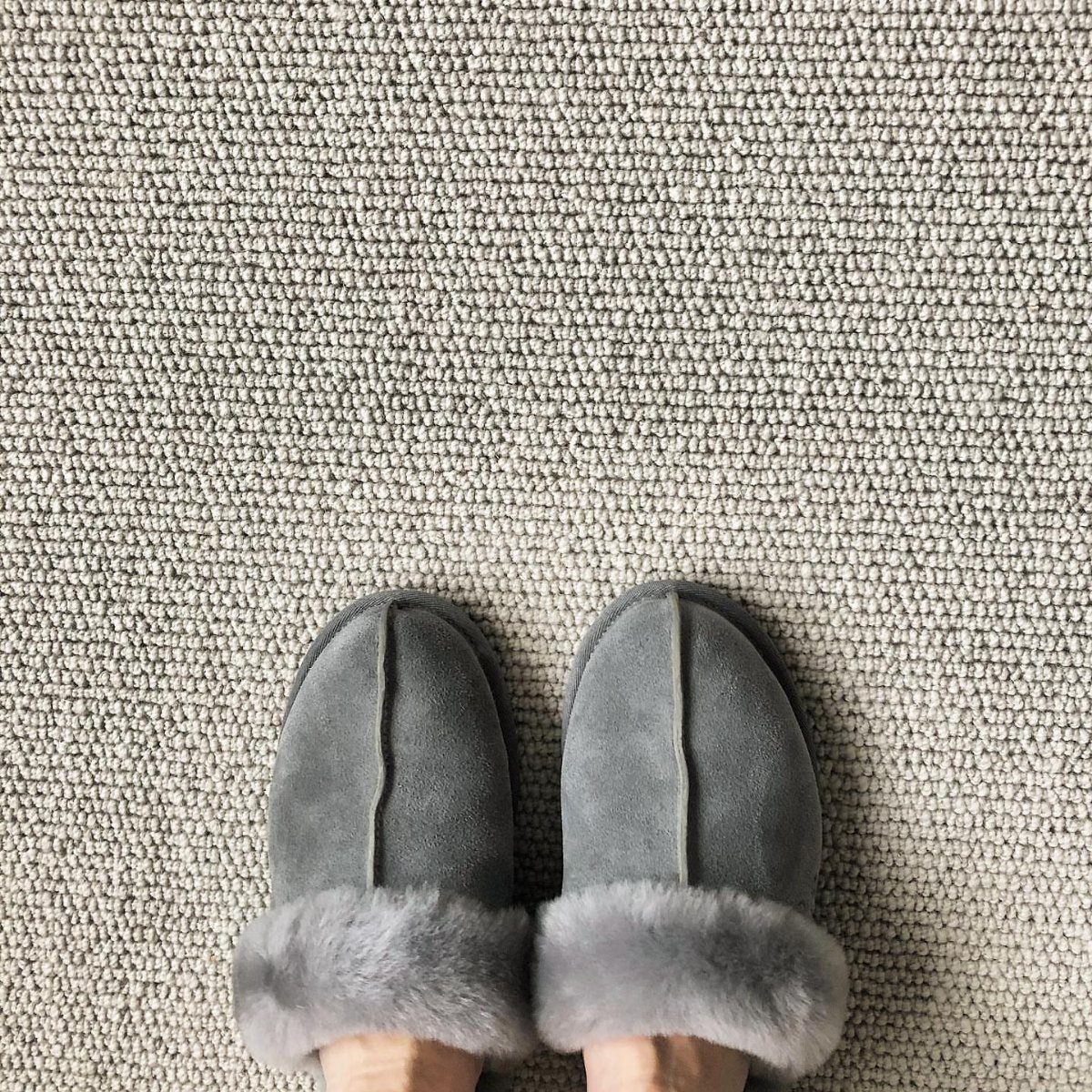
Loop pile keeps the fibers low and tight, so furniture legs do not leave permanent dents and vacuum marks disappear fast.
The surface feels firm underfoot, closer to a flat weave than plush, which makes it a practical choice for bedrooms that double as dressing areas or home offices.
Beige loop pile hides dust and light soil well. The looped construction gives it a firm surface that works well in rooms where kids play on the floor.
This style costs less by the yard than high-pile options and lasts longer in moderate traffic.

These rugs are made of Natural materials such as jute, Sisal, and sea grass

Design: A natural tan ground subtly contrasts with soft aqua accents across the tonal field. The color comes from the plant itself and shifts a little with each harvest, so the tone can differ from the photo

{ INDOOR & OUTDOOR USE } Enhance bedrooms, kitchens, entryways, and patios with this versatile Natural jute-style rug in 4x6. Natural woven look offers rustic charm and warmth to both modern and classic living environments effortlessly.
9. Bold Color Carpet
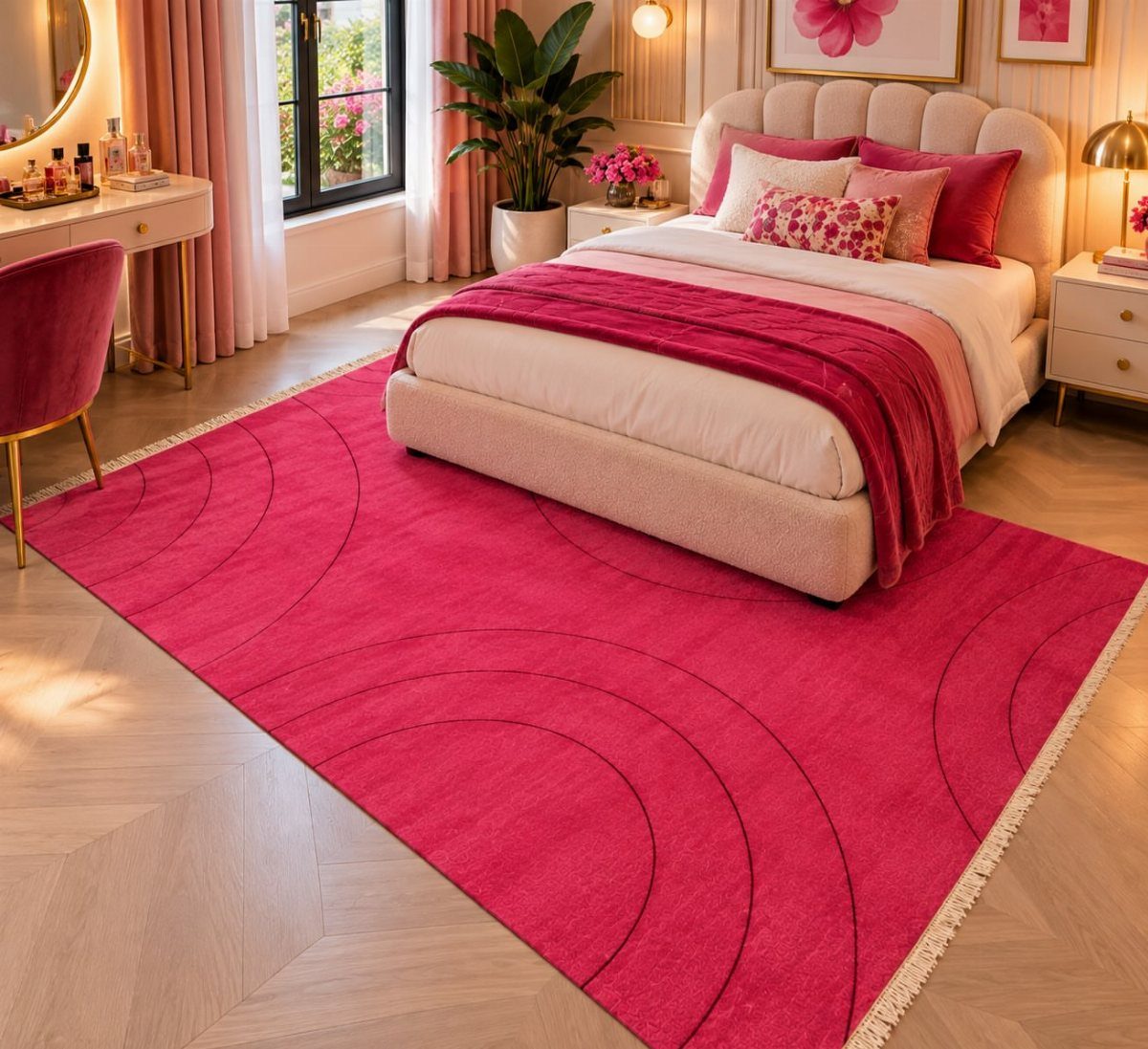
A saturated carpet color fills the room with warmth and makes pale bedding and walls feel deliberate instead of plain. Pink, deep blue or rust tones work well in bedrooms with neutral furniture, where the floor can carry the personality.
Bright colors show less dirt than beige or grey, and small stains blend into the shade more easily.
Patterned carpet in a bold color adds even more interest, though it limits your bedding choices. Solid bold carpet gives you more flexibility with textiles.

PREMIUM QUALITY: Our Artificial Turf is made of premium synthetic material.UV proof, fire and corrosion resistant.Eco-friendly, safe for Kids and Pets.

Premium Quality:Our artificial grass turf is made of high quality synthetic material, Superior resilience and durability.UV, fire and corrosion resistant.The grass rug is eco-friendly and non-toxic, safe for children and pets.

Premium Quality: Our artificial grass are UV-proof, weather resistant, low-maintenance and eco-friendly, made of super-strong high density polyethylene that's soft to the touch and water resistant latex backing with drainage holes for water pass through, easy to clean and can be dry quickly.
10. Toffee Carpet
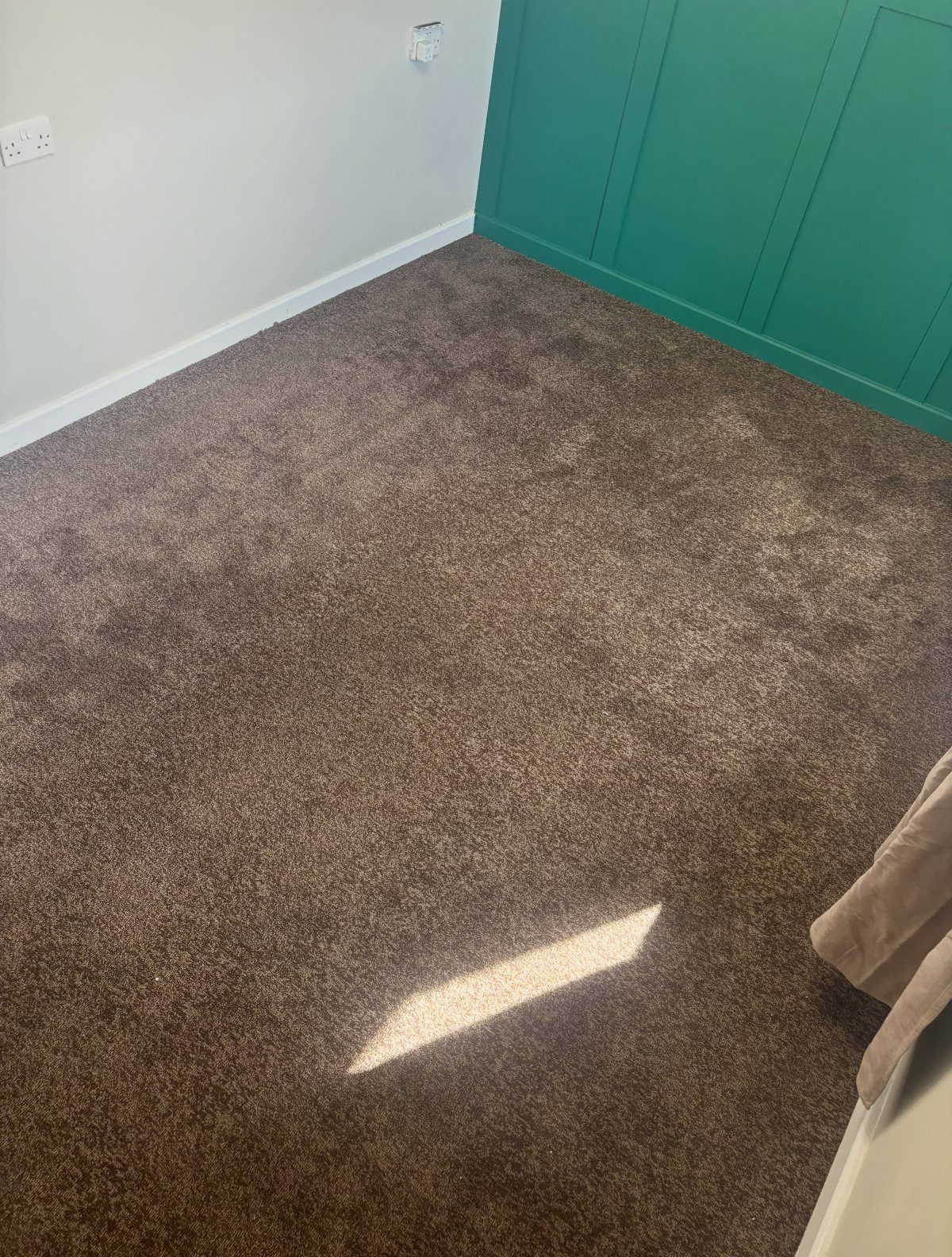
Toffee sits between tan and brown, warm enough to feel cozy but light enough to keep a bedroom from looking dim. The shade pairs well with white trim, cream bedding and wood furniture in any finish.
This color hides pet hair and dust better than pale neutrals, and it does not show wear as fast as darker browns. Plush toffee carpet feels soft underfoot and reads as a deliberate choice rather than a builder-grade default.
If the walls lean cool or grey, toffee carpet warms the space without needing extra rugs or throws.

Your furry animals will like this product very much. They can nap on it, and spends a lot of time chewing on it. The product will take a lot of abuse from your pet. I know a lot of people out here are rabbit purists and want safe sturdy products so we sell this safe grass mat and recommend this one

Material and Dimension of Rug: The fluffy rug made of 100% polyester: About 24x71 inches (2x6ft). It is great choice for cute room, teen room, nursery, living room and chair cushion, etc. Feel the softness with your feet!

Ultra Soft Rug: Faux wool makes this floor easter rug so soft that you'll feel like you're stepping on a cloud. This rabbit rug will add warmth and relaxation to your home
11. Sisal-style Carpet
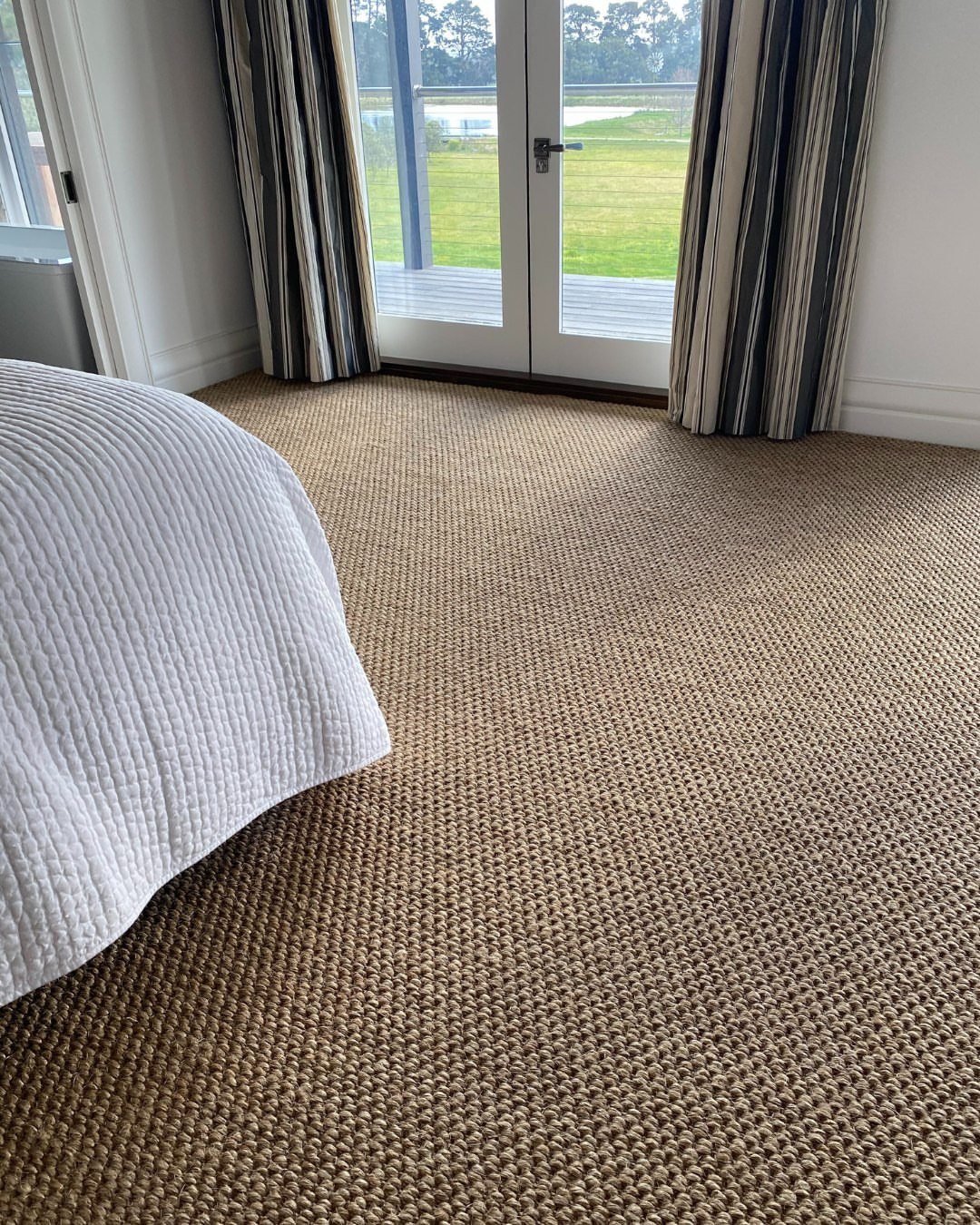
Sisal-style carpet mimics the woven texture of natural fiber but uses synthetic materials that resist moisture and staining. The tight weave feels firm underfoot and adds a tailored, structured look to bedrooms with traditional or coastal decor.
Brown and tan shades work with wood furniture and linen bedding. The texture hides footprints and vacuum lines better than smooth carpet, so the floor looks clean longer.
Real sisal stains easily and holds moisture, but synthetic versions clean with standard carpet shampoo. Pick this style if natural fiber appeals but the maintenance limits do not.
12. Oatmeal Carpet
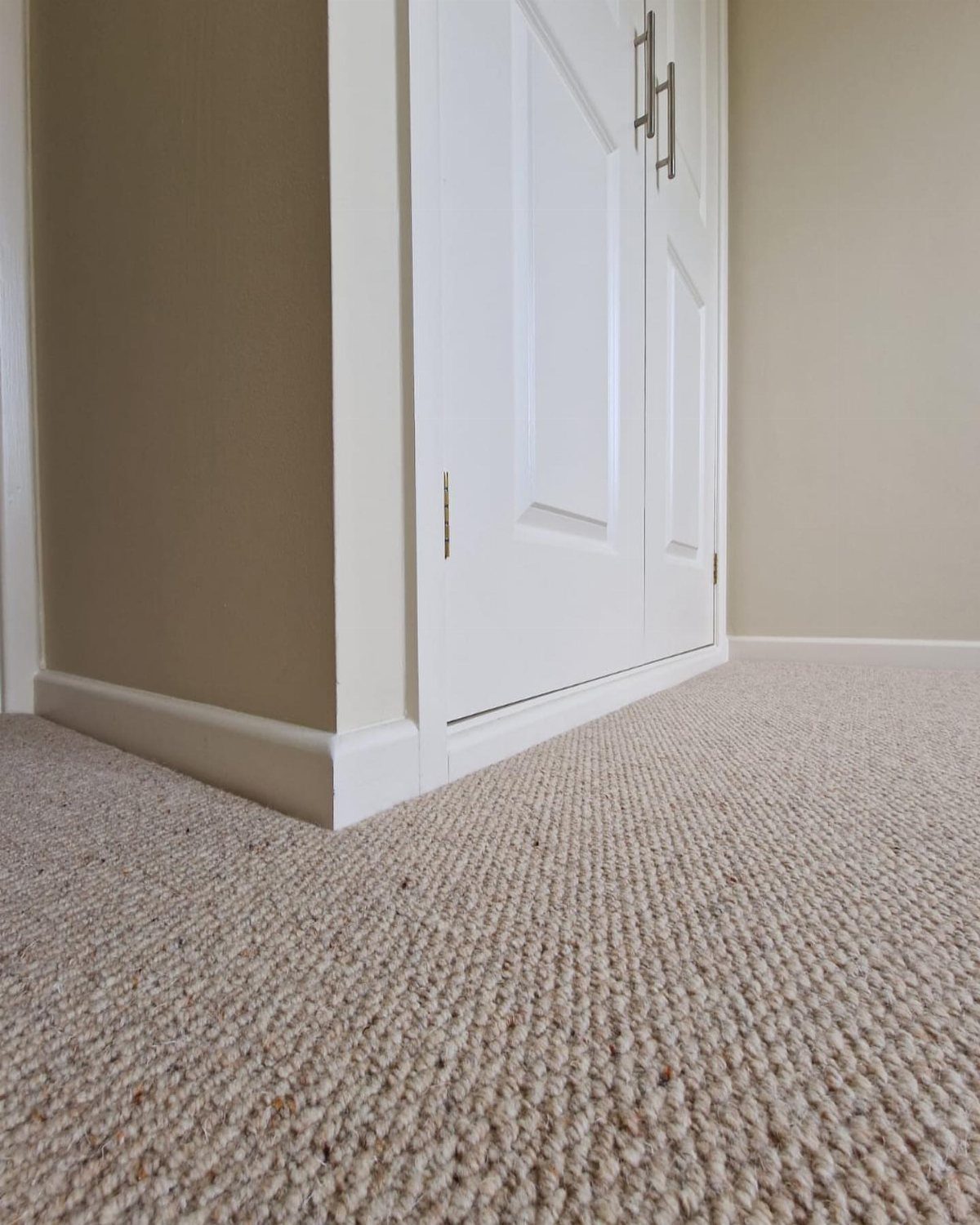
Oatmeal sits just darker than cream, so it keeps a bedroom light without showing every speck of dirt. The muted tone works with beige, grey or white walls and does not clash with warm or cool accent colors.
Textured oatmeal carpet adds subtle dimension without pattern. The neutral base lets you change bedding and decor without worrying about the floor.
This shade reflects enough light to make a small bedroom feel larger, but it still needs regular vacuuming. If you have pets, a slightly darker neutral hides hair better.
13. Grey Wall-to-wall Carpet
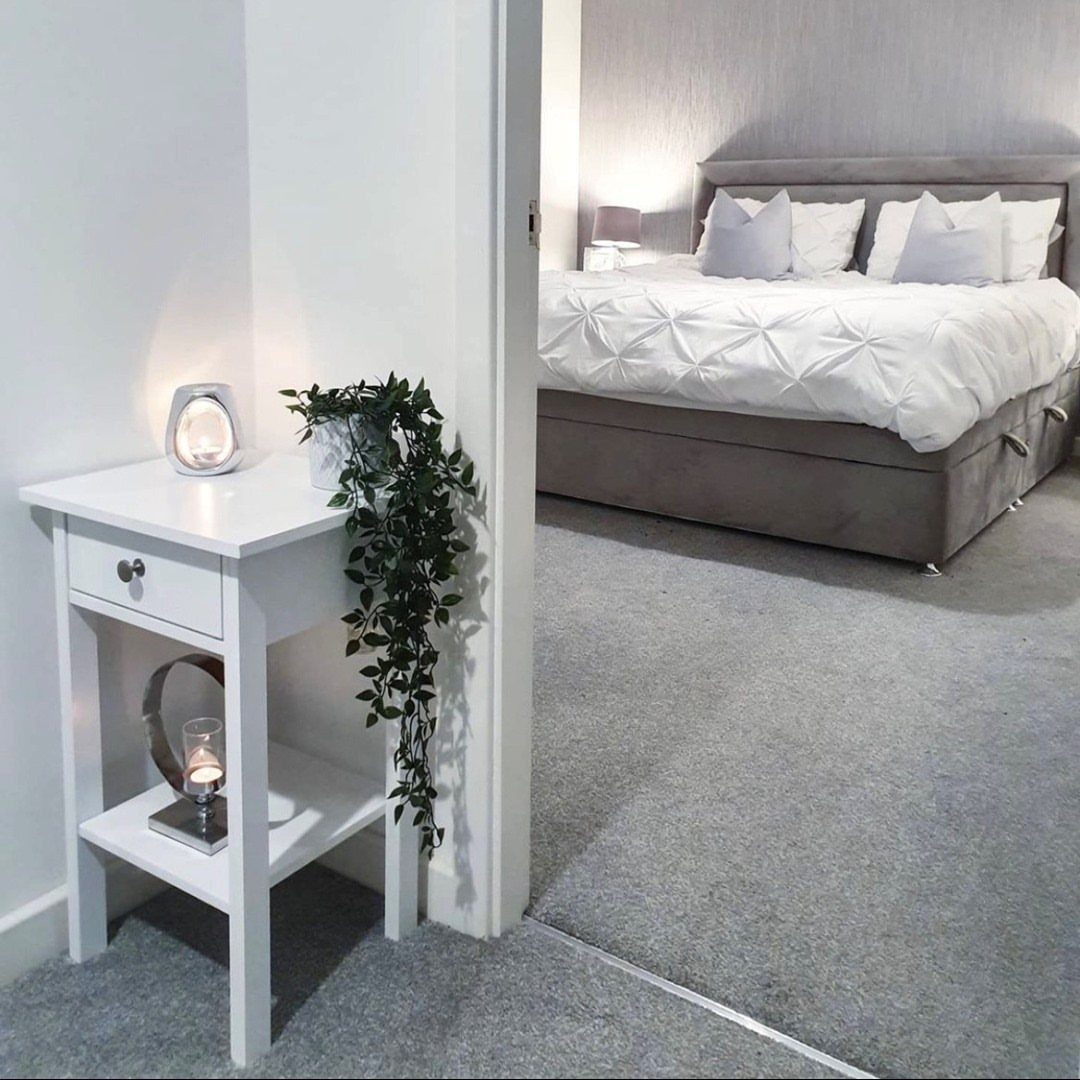
Grey wall-to-wall carpet keeps a bedroom calm and works with nearly any bedding color. White baseboards and pale oak pieces sit cleanly against it, leaving wall art and bedding to carry the room’s character.
This shade hides light dust better than cream but shows dark pet hair more clearly. A medium grey balances both concerns without leaning too warm or too cold.
If the walls are already grey, pick carpet a few shades lighter or darker to create separation. Matching the bed frame keeps the palette cohesive.
14. Floral Patterned Rug
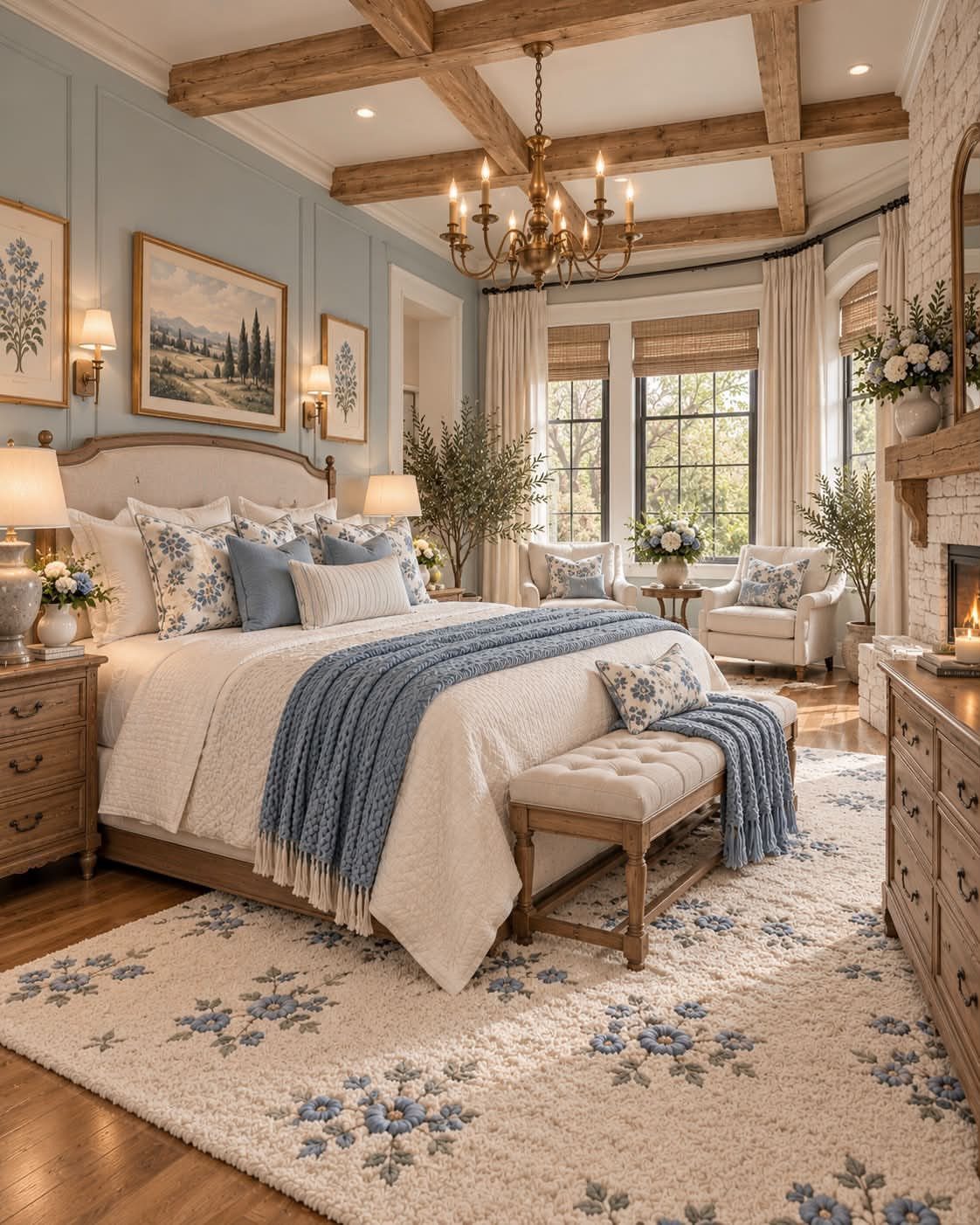
A floral rug over hardwood or light carpet brings pattern to the floor without committing to wall-to-wall installation. Patterns in blue and cream fit rooms where dark wood frames and quilted coverlets already set the tone.
The pattern hides small stains better than solid rugs, and the cream background keeps the space feeling light. Larger florals read clearly from the doorway, while smaller prints need closer viewing.
Place the rug so at least the front legs of the bed sit on it. That anchors the furniture and makes the room feel intentional.
15. Checkered Carpet Tiles
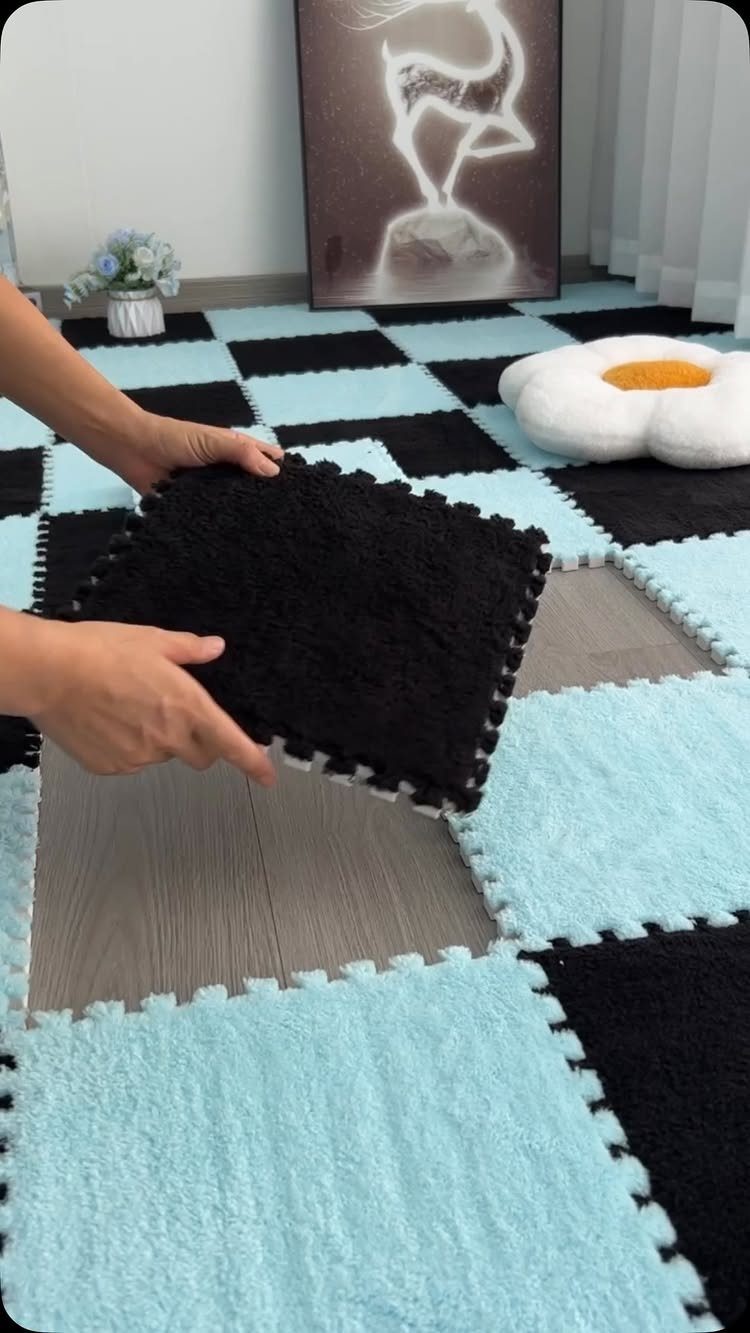
Interlocking carpet tiles let you build coverage piece by piece and replace damaged sections without redoing the whole floor. A checkered pattern in 2 colors adds visual interest and hides wear along traffic paths.
Most tiles snap together without adhesive, so they work well in rentals or rooms where you want a temporary solution. The seams stay flat if the subfloor is level.
Light and dark squares show dirt differently, so vacuum both shades regularly. If one tile stains, lift it out and swap in a spare.
16. Checkered Faux-fur Runner
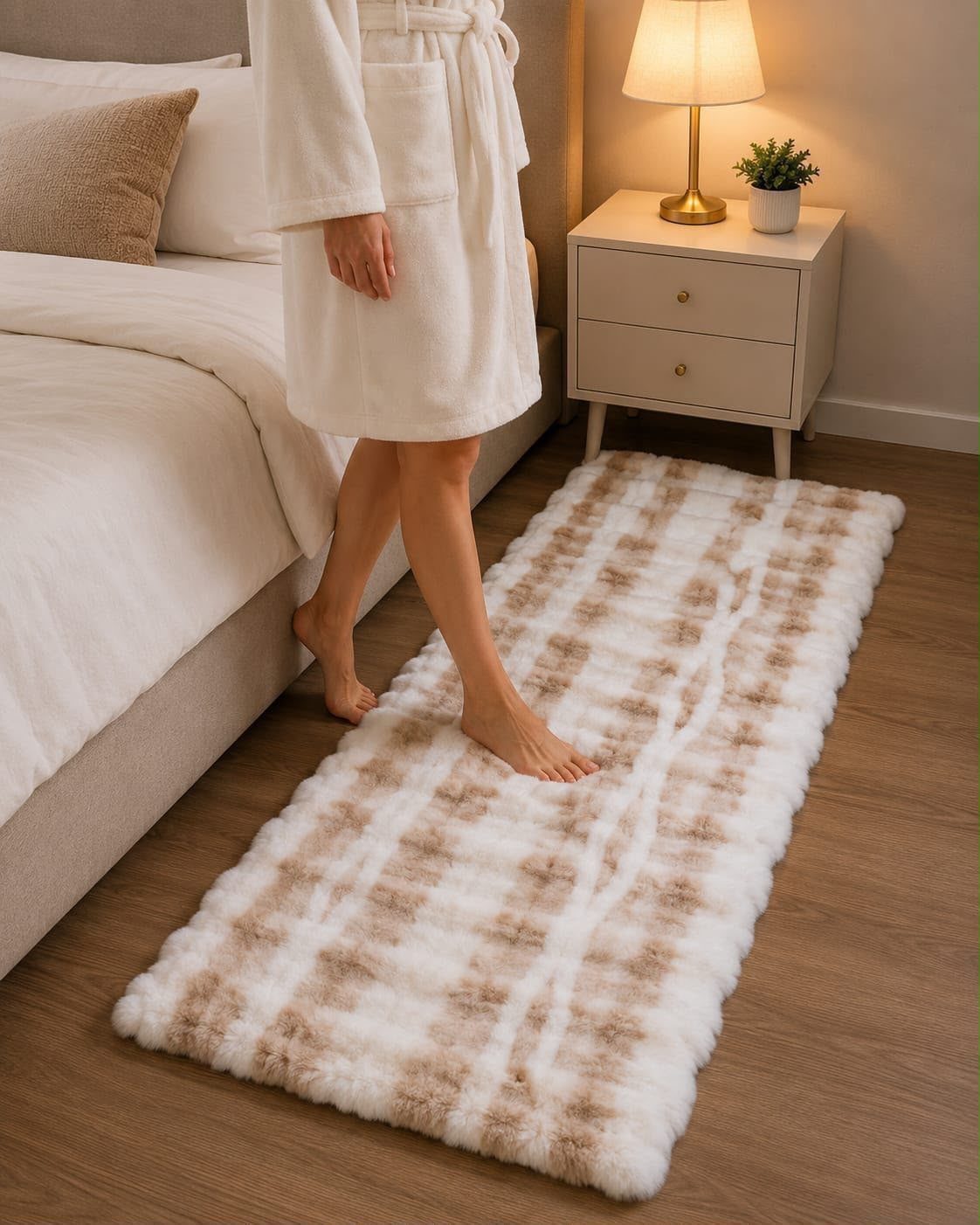
A faux-fur runner next to the bed adds softness where your feet land in the morning. The checkered pattern keeps it from reading too precious, and the plush texture feels warmer than flat rugs on cold floors.
Faux fur sheds at first, so vacuum it several times in the first week. After that, it holds up well to light traffic and cleans with a handheld or upholstery attachment.
Pick a runner long enough to extend past the nightstand. That keeps the proportions balanced and gives you more soft surface.
17. Pink Shag Carpet
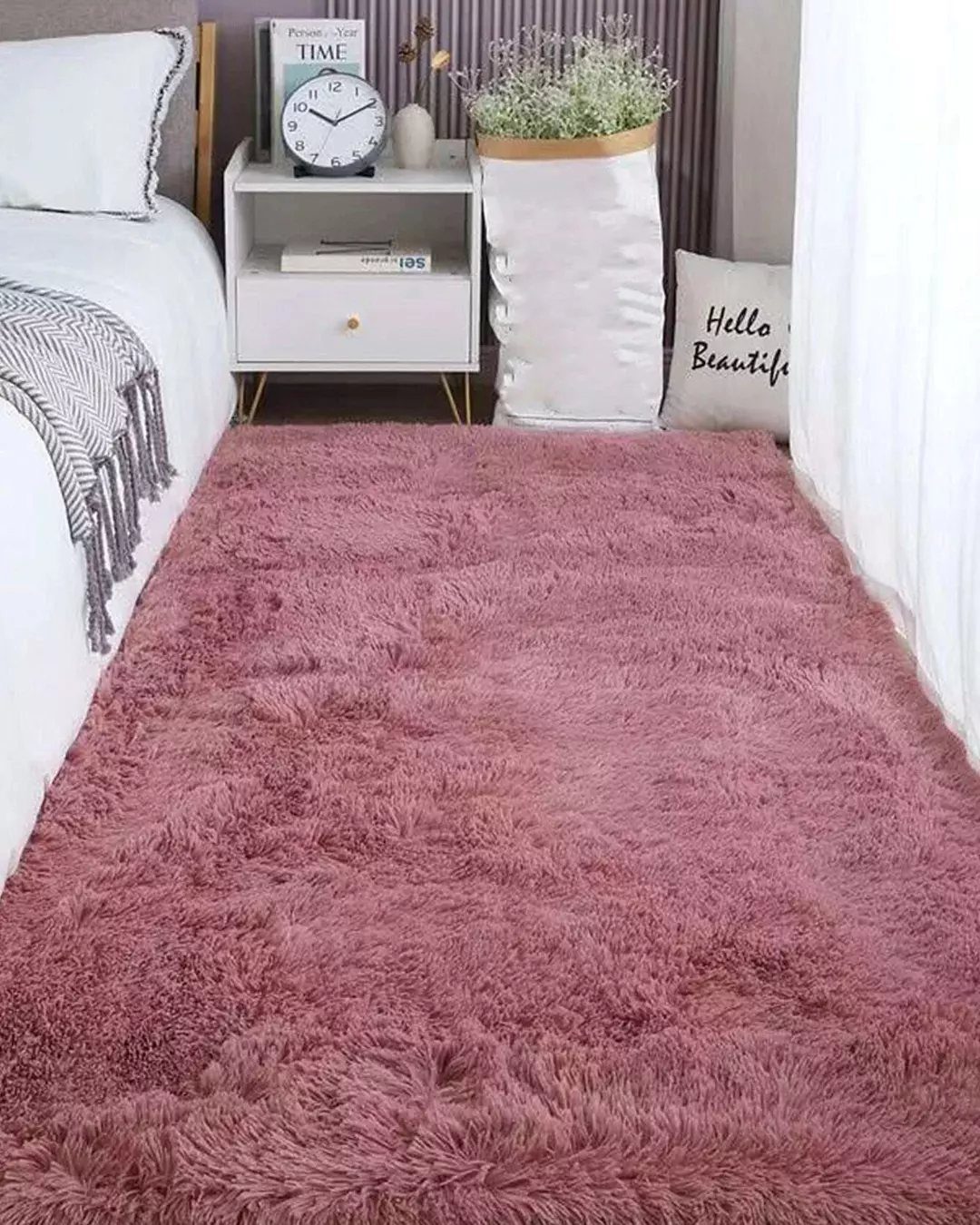
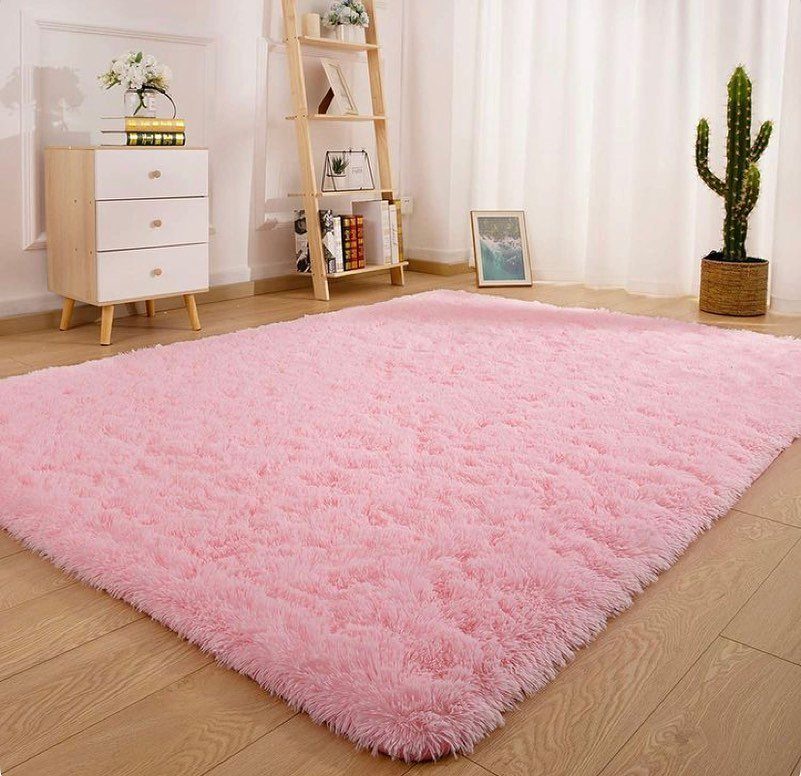
Pink shag carpet softens a bedroom visually and physically. The long fibers feel plush underfoot and add warmth in rooms with minimal rugs or bedding layers.
Shag shows footprints and needs regular vacuuming with a suction-only setting.
Avoid beater bars, which can pull fibers loose. The color hides light dust well but shows darker dirt.
Pair pink shag with white or cream furniture to keep the look clean. Too many saturated colors make the room feel busy.
18. Concentric Curved Patterned Rug
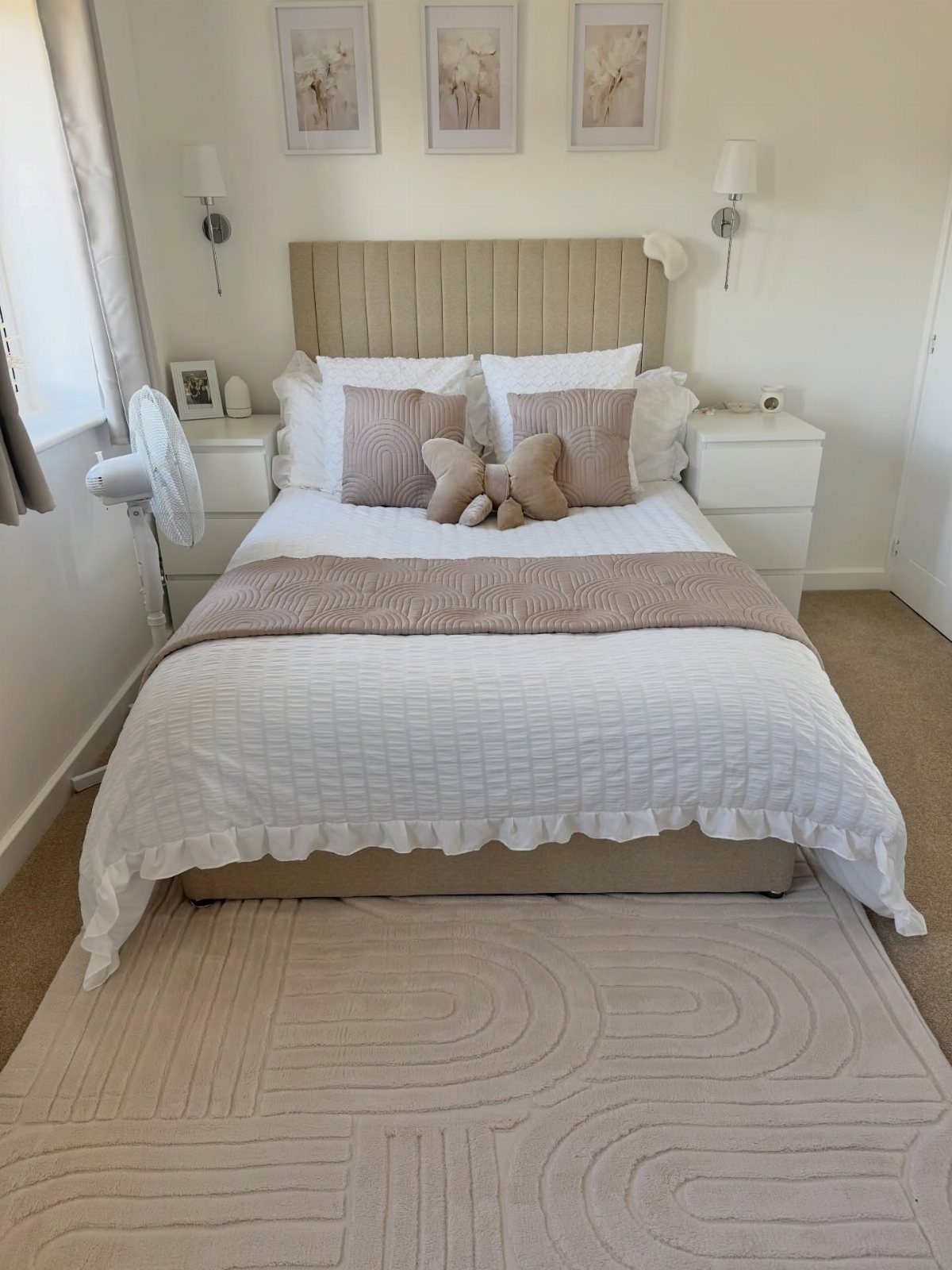
Carved patterns in a solid-color rug add texture without introducing new colors. The concentric curves in beige create subtle movement on the floor and pair well with neutral bedding and furniture.
The carved lines sit lower than the surrounding pile, so they show best in natural light or angled lamplight. Flat overhead lighting washes the pattern out.
A rug this style works under the bed or centered in front of it. Either placement keeps the pattern visible and the room balanced.
19. Blue and Grey Patterned Rug
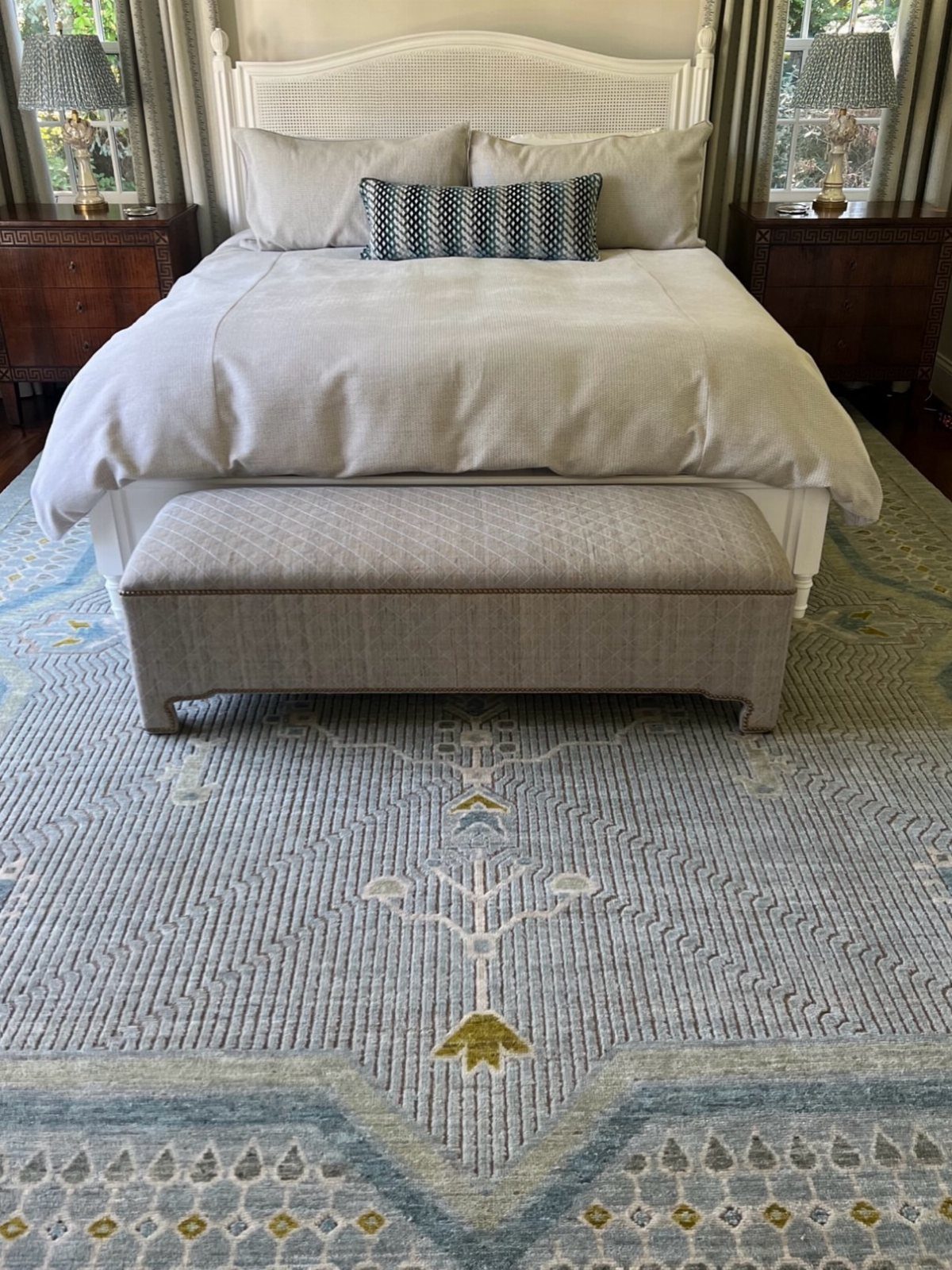
A large rug in blue and grey adds color to the floor and still leaves the rest of the room open.
The muted tones work with white bedding and neutral furniture, and the pattern adds visual interest to a space that might otherwise read too plain.
If the walls are already grey, the blue in the rug keeps the palette from feeling too monochrome.
20. Brown Wall-to-wall Carpet
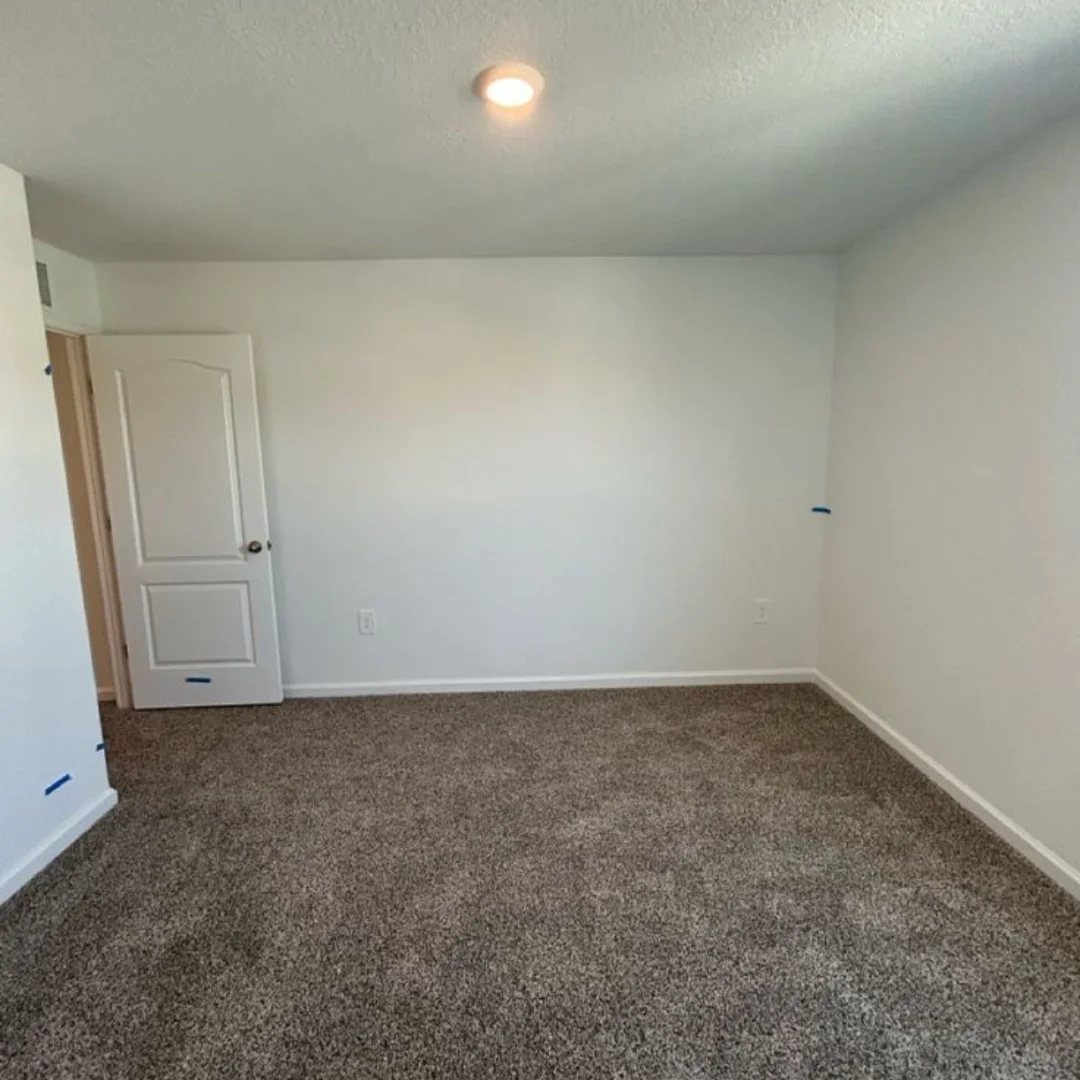
Brown textured carpet warms a bedroom and pairs cleanly with white trim and doors. The texture breaks up the solid color and adds dimension without pattern.
This shade hides dirt and pet hair better than beige or grey, and it feels grounded in rooms with minimal furniture or wall color.
Medium brown works with most furniture finishes and does not limit your bedding choices the way very dark or very light shades can.
21. Brown Faux-fur Bedside Rug
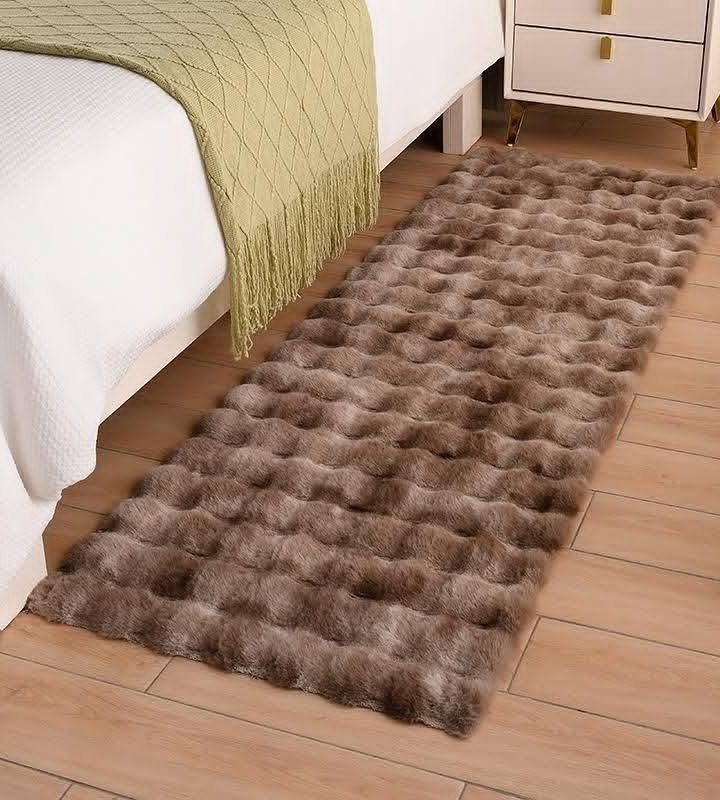
A faux-fur rug next to the bed adds warmth over wood floors and gives you a soft surface to step onto. Brown works with most wood tones and keeps the look neutral enough to pair with any bedding color.
The pile feels plush but sheds for the first week or two. Vacuum it with a handheld attachment until the loose fibers stop coming up.
Place the rug so it extends past the nightstand.
Carpet Fiber and Household Use
Nylon holds up best where you walk the same path every day, from the door to the closet or around the bed.
The fibers resist crushing, so the pile does not flatten into permanent traffic lanes the way softer materials do. It runs more expensive than polyester but holds up longer when foot traffic is moderate to heavy.
Polyester feels softer underfoot and cleans up well from spills, but it compresses more easily under repeated weight. If the bedroom sees light traffic or you prioritize a plush feel over long-term resilience, polyester delivers good value.
Triexta resists stains better than either one, which makes it practical in homes with pets or young children. The fiber holds its shape better than polyester and costs less than nylon in most product lines.
Match the fiber to how much traffic the room actually sees, not how durable it sounds.
Carpet Padding and Maintenance
Thicker padding also cuts down on noise, which helps in upstairs bedrooms or houses where sound travels easily between rooms.
Allergens and Indoor Air
Carpet holds dust, pet dander, and pollen in the pile until you vacuum, so those particles stay out of the air you breathe.
Green Label Plus certification limits the volatile organic compounds released into the room as the carpet off-gases after installation.
Frequently Asked Questions
What kind of carpeting is popular right now?
High-pile plush carpet in soft nylon or polyester dominates bedroom trends, offering a sink-in feel and immediate comfort underfoot.
Natural fibers like wool and jute also appeal to homeowners seeking sustainable, organic texture. The emphasis sits on tactile luxury and warm neutral tones rather than flat, industrial finishes.
What are the benefits of wool carpet?
Wool carpet offers durability, natural insulation, and a soft feel that makes bedrooms feel luxurious without excess maintenance.
Wool holds warm air in winter and wicks moisture in summer, and its dense fibers dampen footsteps and block sound from traveling through the floor. Wool is also biodegradable and holds up well over time with regular care.
What carpet color goes with everything?
Lighter neutrals like oatmeal, cream, and medium grey work with most furniture finishes and wall colors without limiting your bedding or decor choices. Test samples in your actual bedroom lighting before committing, since showroom conditions rarely match home conditions.
What is the most luxurious carpet?
Plush high-pile carpet in nylon or wool delivers the most luxurious feel, with deep fibers that sink underfoot and add warmth to cold floors.
Saxony carpet offers a formal, polished surface with densely packed upright fibers that feel substantial without reading too casual. Both styles pair best with neutral tones like grey, beige, or cream to keep the focus on texture.
What fiber works best in a bedroom?
Nylon resists crushing under repeated foot traffic and holds its shape longer, making it worth the higher cost in moderate-traffic bedrooms. Polyester feels softer and costs less, and it handles spills well in rooms with light use.
How much does padding matter in a bedroom?
Padding thickness changes how carpet feels underfoot more than any other factor, which is why I put more attention on it in bedrooms than I do in hallways or entryways.
Padding at 7/16 inch with the right density protects the carpet backing from repeated compression, which adds years to its life, and it cuts down on noise that travels to the room below.
Quality padding makes a noticeable difference in comfort and sound control.
How do you choose the right color for a bedroom?
Lighter neutrals make bedrooms feel more open and restful, while warmer tones add coziness without making the space feel smaller.
Dark colors give a room weight and mood, but they show lint and dust faster than lighter shades, so they need more passes with the vacuum.
Bring samples home and view them in your bedroom’s actual light for at least a day, since showroom lighting rarely matches how the color will read in your space.