

The steps run from a daily tidy to a monthly decluttering session, and the one you start with is the one your household will actually keep up.
A pretty setup that collapses in 2 weeks leaves you worse off than before, so the plan builds 5 small habits over about 30 days instead.
[link-whisper-related-posts]1. Get Rid of Clutter
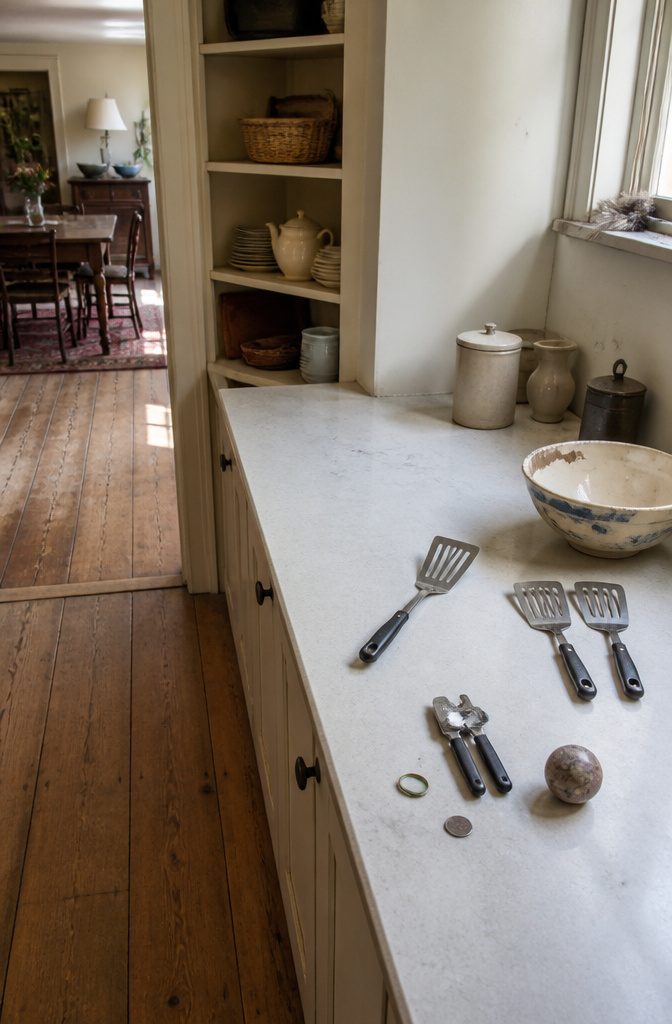
Organized clutter is still clutter, so sorting comes before any bins, baskets or shelf dividers.
Go through one room at a time and pull out whatever you neither use nor love. Otherwise you are just giving unneeded things a tidier home.
Duplicates go first because they are the easiest decision. If you own three spatulas or two can openers, keep the best one and release the rest.
For everything else, ask three questions: do I use it, do I like it, and does it have a place to go? An item that gets a no on all three leaves the house.
The "place to go" question catches the most. If an object has no home after you have cleared the room, it is usually clutter.
2. Deep Clean Each Room
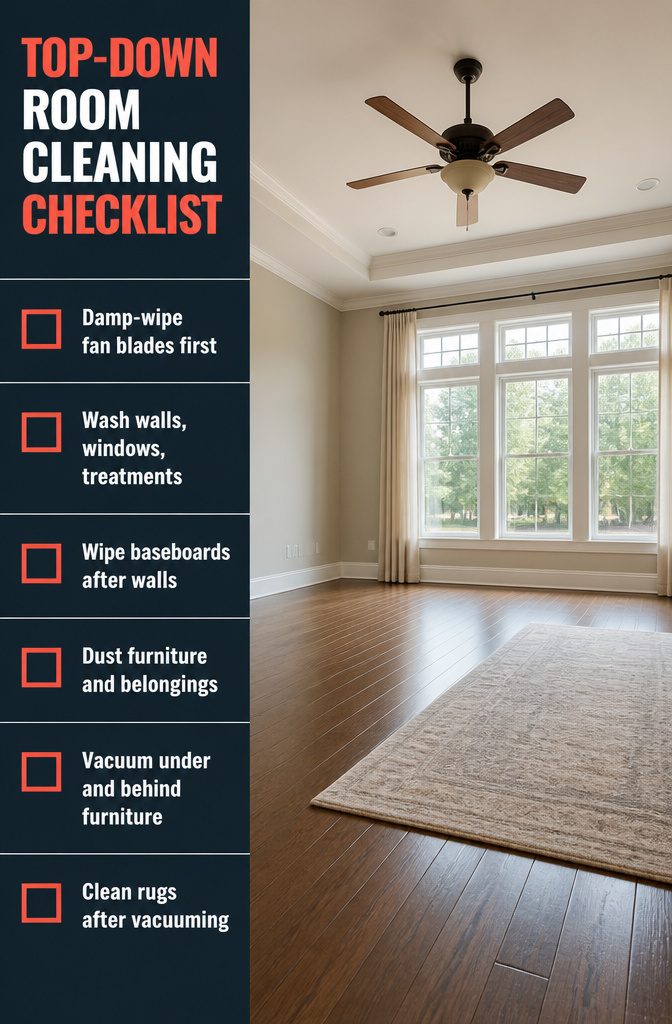
A freshly decluttered room is the easiest it will ever be to clean, because the floors and surfaces are finally reachable. Work from the top down so falling dust lands on areas you haven’t done yet:
- Ceiling fans and light fixtures come first. I’d use a damp cloth on the blades so the dust stays on the cloth instead of drifting down.
- Wash the walls next, then the windows and window treatments.
- Wipe the baseboards after the walls, since drips and dust end up there.
- Dust all furniture and belongings.
- Vacuum last and thoroughly, including behind and under furniture, where dust has been building unseen.
- Clean carpets and rugs once the vacuuming is done.
3. A System for Each Room
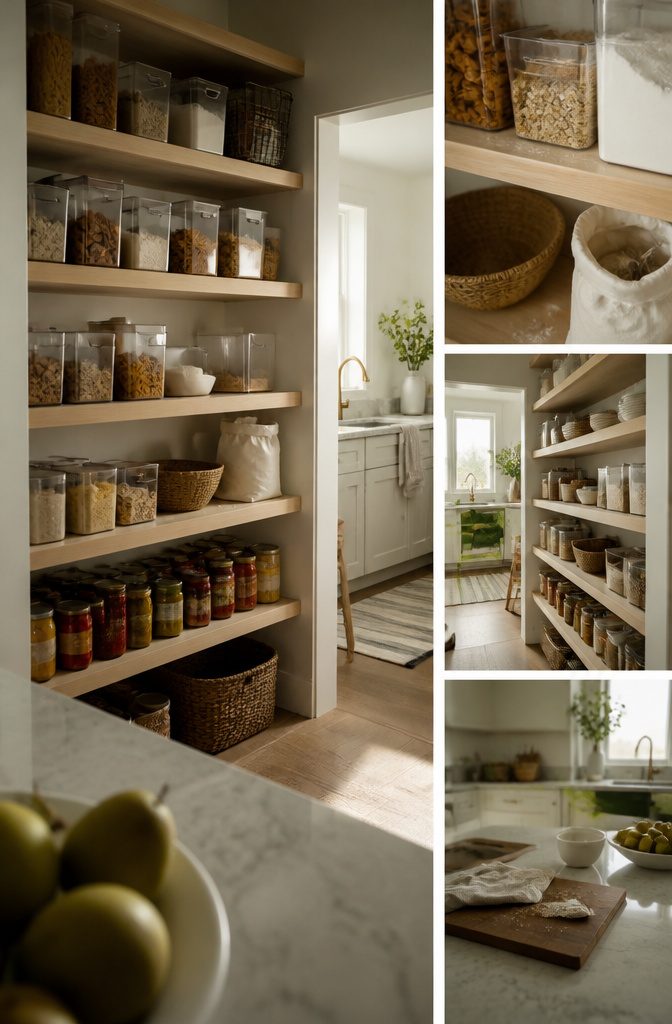
Every item needs its own spot, and that spot should match how the room is used.
In the pantry, labeled bins keep snacks, baking supplies and canned goods from blending into one pile. In the bathroom, give each family member a bin or shelf of their own.
The living room does well with a media cabinet for movies and games, plus bins or baskets that hide toys but stay easy for small hands to reach.
Under-bed boxes suit things you rarely use, and the garage or shed needs a set home for tools and garden supplies.
Start with what you already own, then list what is missing. Pick storage you can keep up with, even when a fancier system looks better.
One household caps itself at six towels in the master bath and four in the guest bath, but those are one family’s choices, not targets. Count your own.
4. Put the System to Work
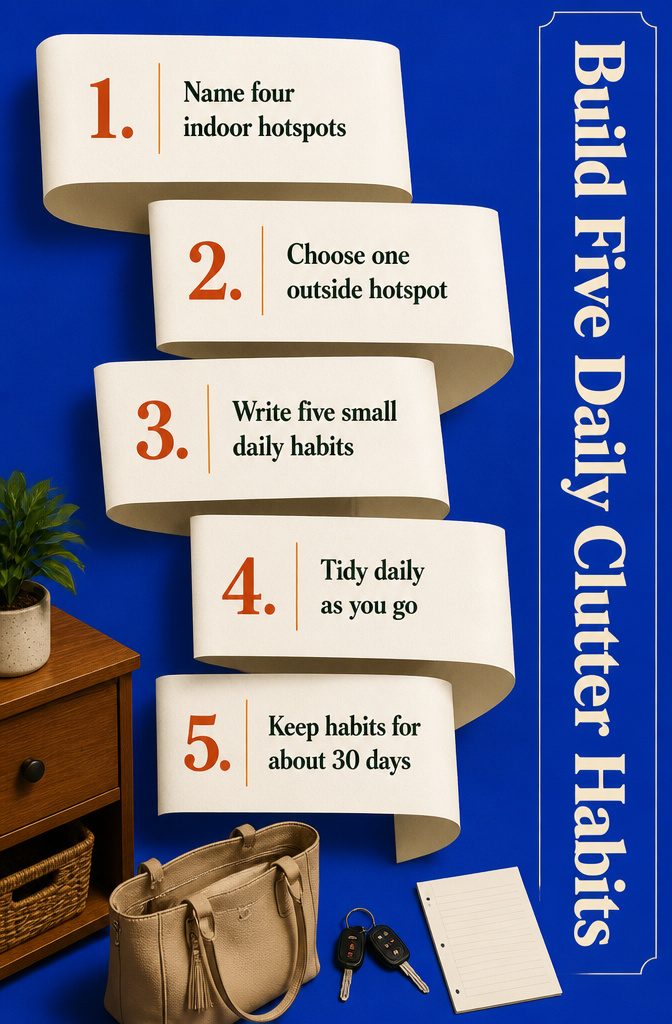
- Name your 4 worst indoor clutter hotspots, the spots that fill up again within days of being cleared.
- Pick 1 outside hotspot, such as your purse, car or front porch. Take the worst daily offender and leave the rest for later, because fixing everything at once is how this plan stalls.
- Write one daily habit for each of those 5 areas on a single sheet of paper. Make each one small enough that you will actually do it.
- Do a quick tidy every day and put things back in their place as you go. Owners on Reddit say it turns into a game once your brain learns where everything lives, and a stray item rides along when you head to that room anyway.
- Keep all 5 habits going for about 30 days, the time a new routine takes to form.
5. Monthly Decluttering Sessions
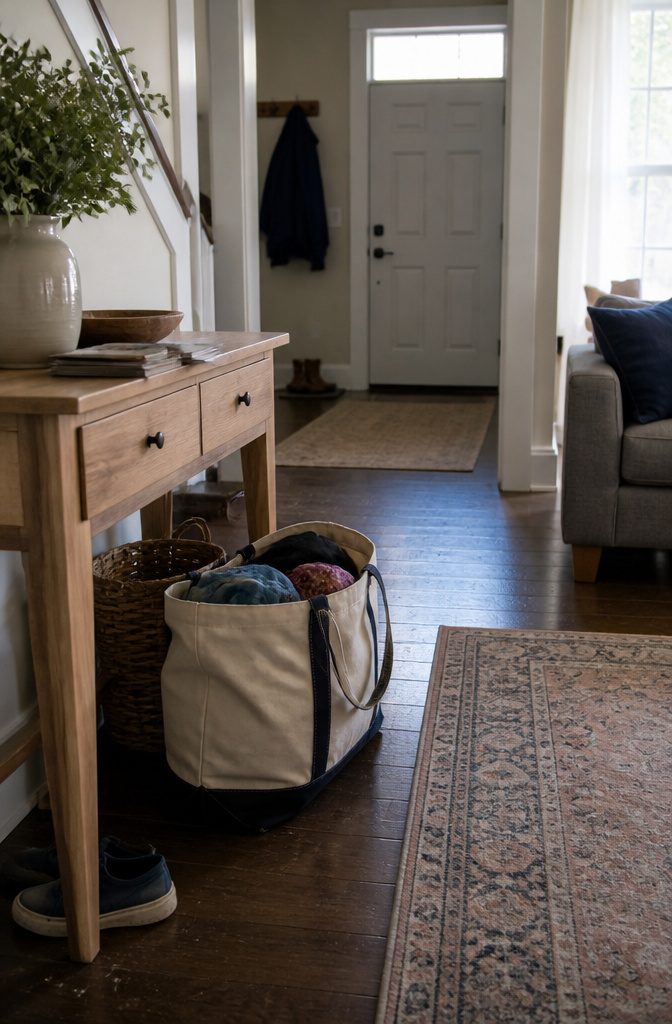
Once a month, walk through each room and pull out whatever you no longer need or use. Put the date on the calendar like any other appointment, because nobody feels like decluttering on a random Tuesday.
Stuff keeps finding its way in, especially in a house with kids: school papers, outgrown clothes, party favors. Editing what you own is a never-ending task, so I treat it as upkeep rather than a project with a finish line.
A room you cleared out in March will have collected a new layer by April, and that is normal.
Keep a bag or box by the door for the monthly haul, and carry it out before the session ends. Otherwise the pile just migrates to the garage or the hallway.
6. Set a Cleaning Routine
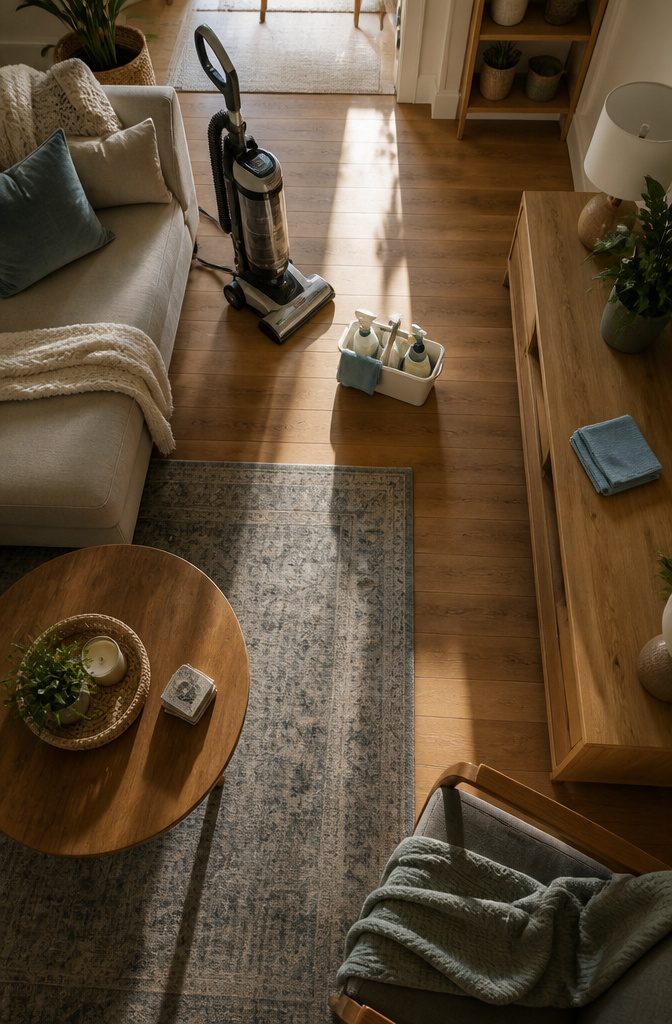
Here are example frequencies for a routine that builds on the daily habits from the previous step. Adjust them to your household:
- Daily: the small habits from the last step, done in minutes so nothing piles up into a big job.
- Weekly, vacuuming: once a week, whatever day suits your schedule.
- Weekly, dusting: once a week as well. Giving it its own day keeps vacuuming from turning into a two-hour chore.
- Monthly, deep clean: one longer block each month for the jobs the weekly passes skip.
The pattern is vacuum weekly, dust weekly, deep clean monthly, with the daily habits holding it together.
I’d choose a schedule you can keep over a stricter one you’ll drop in a few weeks. Put it on the fridge or your phone calendar, then stick to it.
7. Get the Family Involved
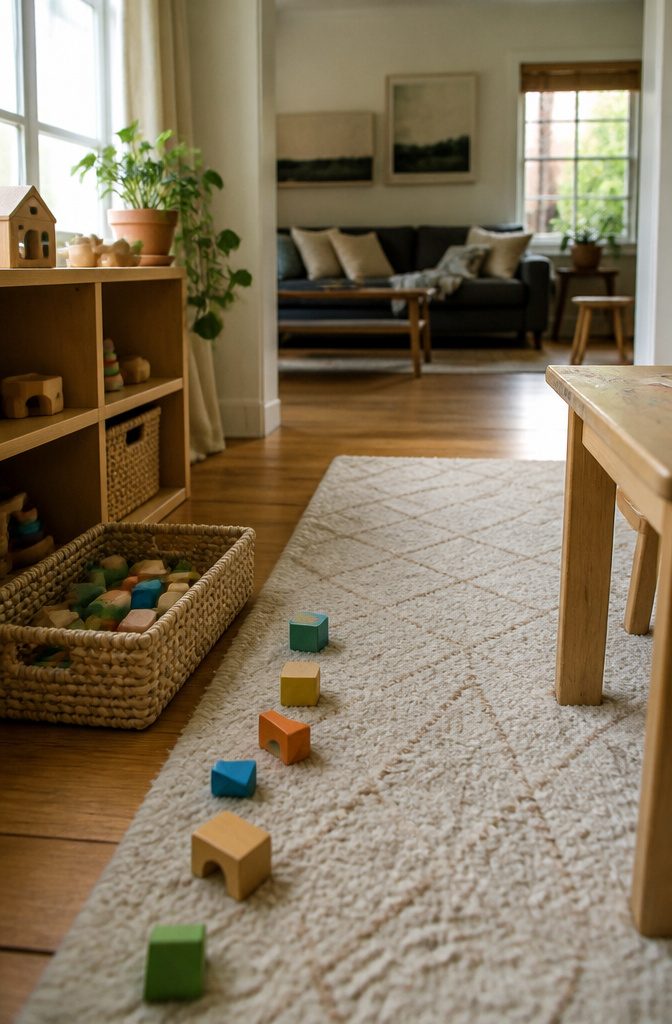
A clean and organized home falls apart fastest when one person does all the upkeep. Talk through the plan together, then assign chores by name, since "whoever notices" usually means nobody.
Children can take real jobs too. Give toys a low bin or shelf a child can reach alone, and make it a rule that play-set pieces go back where they live after use.
Loose pieces scatter fast, and a habit is easier to teach than a weekend of hunting. I’d keep each child’s job small and the same every day.
Benefits of a Tidy Home
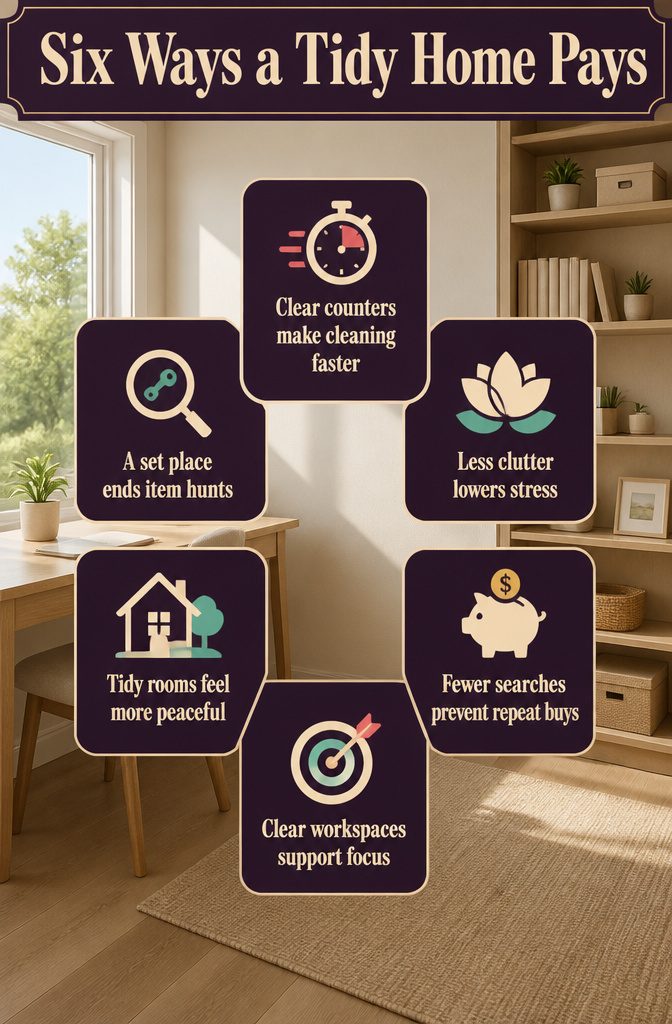
A tidy home pays you back in small ways, and most show up within days of clearing a surface:
- Cleaning gets faster. With counters and shelves clear, you wipe once instead of lifting and replacing everything.
- Things turn up. One Reddit poster describes constantly hunting for stuff with boxes stacked on the floor. A set place for each item ends that.
- Stress drops. Clutter keeps tugging at your attention, and a clear room stops doing it.
- The house feels peaceful. The same poster notes how calm tidy relatives’ homes feel, and that calm is available in yours.
- You save time and money. Less searching, and fewer repeat purchases of things you couldn’t find.
- You get more done. A clear workspace gives you fewer reasons to stop and look for something.
Think Before You Buy
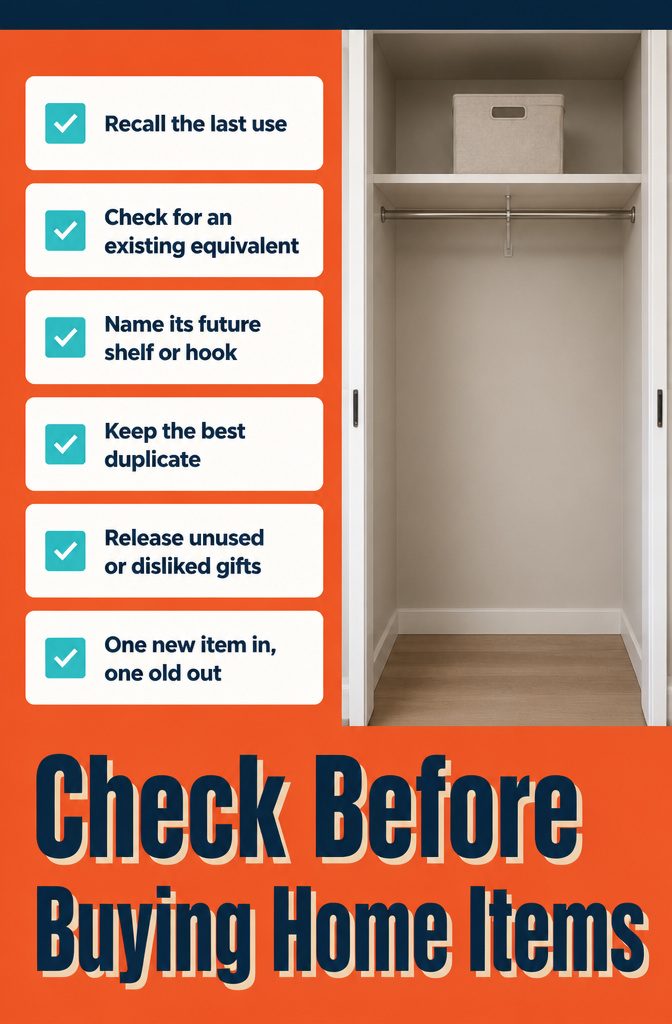
New purchases refill a cleared closet faster than anything else, so run every item through these questions before it comes home:
- Will I use it? Think of the last time you used whatever it would replace. A "someday" buy usually becomes next year’s clutter.
- Do I already own something like it? Check the drawer, the garage shelf and the closet before buying another spatula, throw blanket or storage bin.
- Where will it go? If you can’t name the shelf, hook or bin, it will end up on a counter.
- Keep duplicates to a minimum: keep the best one, donate the rest.
- Let go of what you never use or never liked, gifts included. When something new comes in, something old goes out, or the space you just cleared fills right back up.
Accept an Imperfect Home
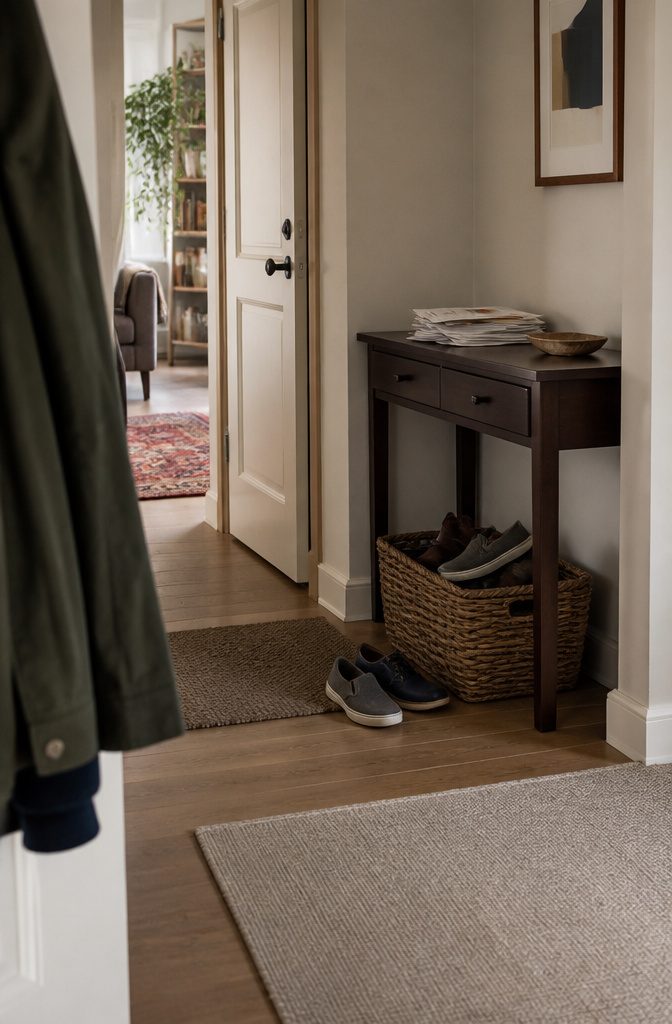
A lived-in home has a mail pile by Thursday and a few shoes that miss the rack.
Build the system around that. If it demands that everyone sort socks, toys and papers into tidy categories, it will fall apart, and a pretty setup that collapses in two weeks leaves you worse off than before.
I’d take the plainer system your household will actually keep up every time: an open basket by the door beats a closed cabinet nobody bothers to open.
When one spot keeps getting ignored, that’s a flaw in the system, not in the people.
Move the spot closer to where the stuff lands. Aim for a home that is simple and easy to relax in, not one ready for a photo.
Frequently Asked Questions
Does a clean and organized home really reduce stress?
For many people, yes.
Clutter competes for your attention, and clearing a room removes that pull. One home blogger says a messy house hurts both her emotional well-being and her productivity, and that daily routines keep it in check.
Where do I start building habits to keep my home organized?
Start by naming 4 indoor clutter hotspots and 1 outside spot, such as your purse, car or front porch.
Write one small daily habit for each of those 5 areas on a single sheet of paper. Stick with all 5 for about 30 days, which is how long a new routine takes to settle in.
How do I clean a home like a professional?
Declutter first, then clean each room from the top down: ceiling fans and light fixtures, walls, windows, baseboards, furniture, and the vacuuming, with carpets and rugs last.
Going in that order means falling dust lands only on areas you haven’t cleaned yet.
How often should I clean my house?
A simple pattern is to vacuum once a week, dust once a week and deep clean once a month, with a few minutes of daily tidying holding it together.
Adjust the schedule to your household, and pick one you can keep over a stricter one you’ll drop. A monthly decluttering session handles the stuff that keeps coming in.