

Home cleaning and organizing is two jobs, not one: clearing out items with no reason to be there, then removing dust and dirt from the surfaces underneath.
Do them in that order, because piles on counters and shelves block the wipe-down. Disorganization, not lack of space, causes 80% of household clutter, so a bigger house won’t fix it.
[link-whisper-related-posts]Clear Clutter First
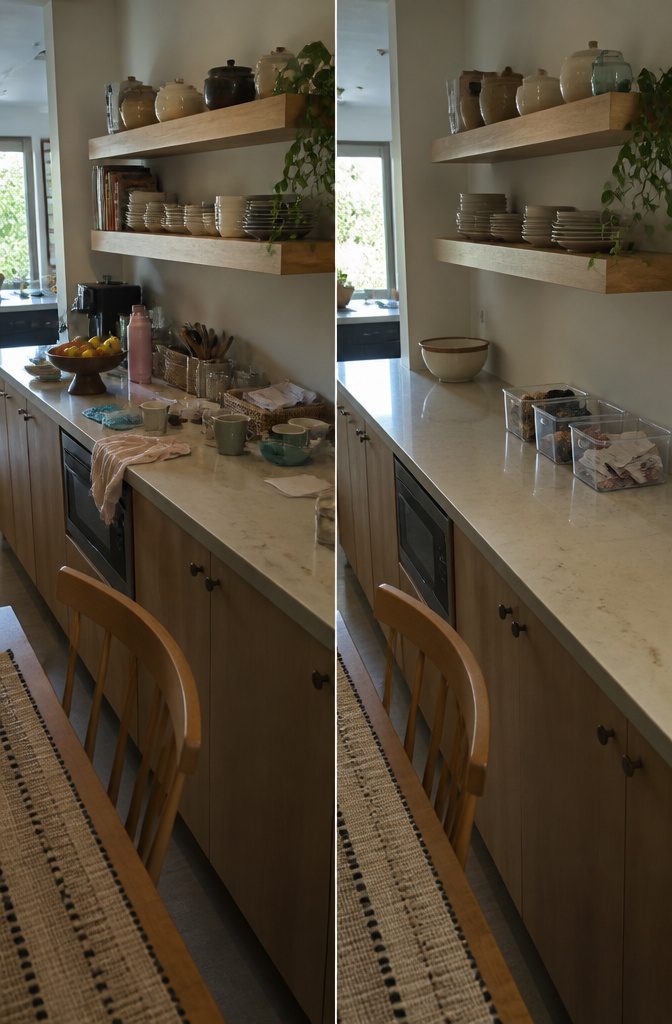
Decluttering and cleaning are separate jobs. One removes items that have no reason to be there; the other removes dirt, dust and bacteria.
Piles on counters and shelves block access to the surfaces, so dust builds up in hidden spots and the wipe-down never gets finished. I’d hold off on any heavy deep cleaning until the area is cleared.
Work one room at a time, starting with high-traffic spaces like the kitchen or living room, and sort everything into three piles: keep, donate, toss.
Anything unused in the past six months goes in the donate or toss pile. Sentimental pieces can stay, but keep that group small.
A bigger house won’t fix this either. Disorganization, not lack of space, causes 80% of household clutter.
Pick an Organizing Approach
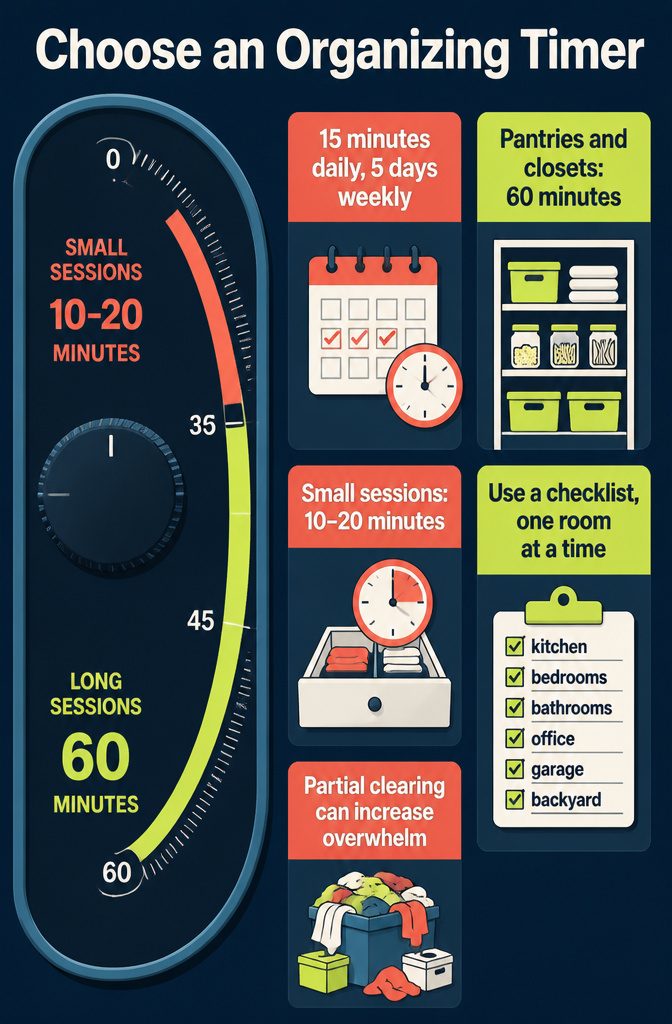
Short timers suit most people: 10 or 15 minutes on one drawer or shelf, or 15–20 minutes as a starting point.
For a steady routine, 15 minutes a day, 5 days a week is easy to keep. Big jobs break that rule:
If you want to declutter an entire linen closet or pantry, 20 minutes won’t get you very far. In fact, clearing out a fraction of your stuff can make you feel even more overwhelmed.
Pantries and closets want a 60 minute block instead, which works well for people who dread starting. Whatever the timer, go one room at a time, with a checklist for each: kitchen, bedrooms, bathrooms, office, garage, backyard.
Give Everything a Place
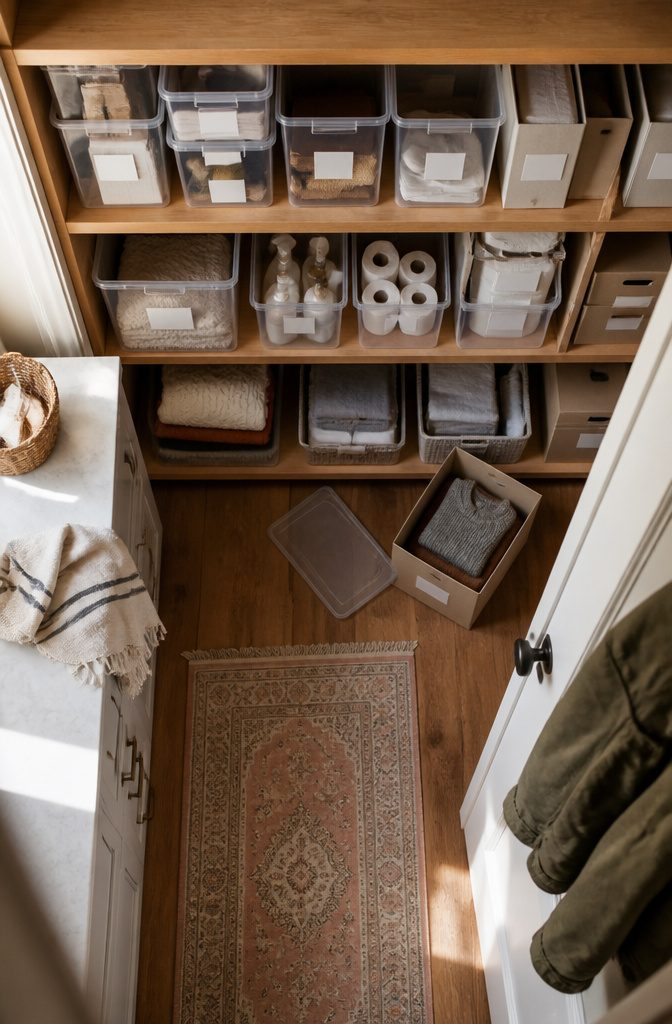
Skip the label maker. Inexpensive blank labels and a marker work just as well, and you should write what’s inside, not the category: "business receipts" beats "paper."
The container matters less than whether you like using it, so choose clear acrylic, plain cardboard boxes, or folders based on your own habits.
If lids annoy you, you’ll leave them off and the system will slip. Whatever you pick, every item needs one set place it returns to after each use, or the labels stop meaning anything.
Off-season clothes belong in labeled bins or vacuum-sealed bags, stored somewhere clean and dry, with an inventory list so you can find things later.
When the house runs out of room, a self-storage unit can take holiday decorations or summer pool gear. For electronics or antique furniture, pay for a climate-controlled unit.
Set a Cleaning Rhythm
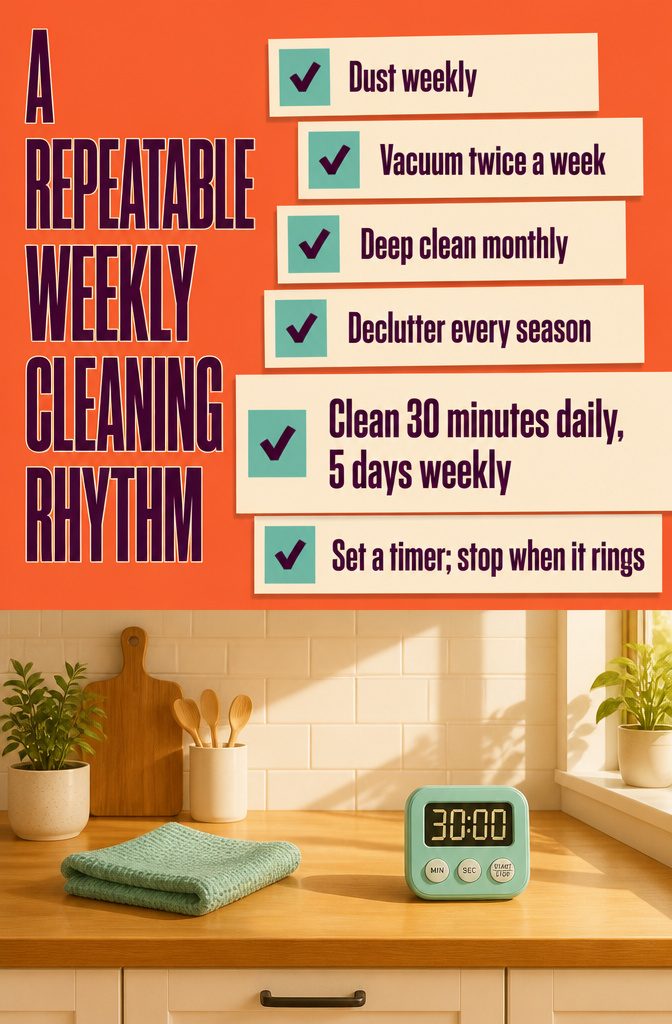
A home cleaned once a week or less gets dirty, however hard that one day goes, so small repeated passes win over a big weekend push.
- Dust weekly.
- Vacuum twice a week.
- Deep clean monthly.
- Declutter every season.
- Clean for 30 minutes a day, 5 days a week. Start anywhere, stop when the time is up, and pick up there the next day.
- Give each day a room: kitchen on Monday, bedroom and closet on Tuesday, kids’ rooms and playroom on Wednesday. Laundry, bathrooms, and floors plus the home office can fill Thursday through Saturday.
- Set a timer. A time limit makes a room feel doable, and I’d take that over an open-ended afternoon.
Maintain and Adjust
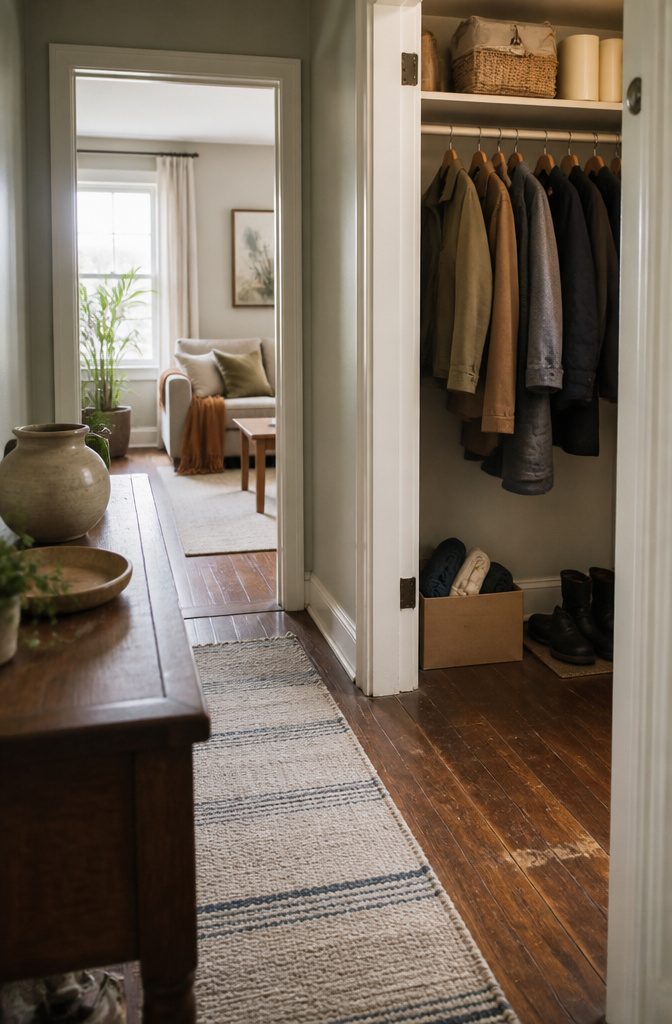
A 30 minute check-in once a month on a single area keeps a tidy house from sliding back.
Pick the spot that has drifted most, like the hall closet or kitchen drawers, and reset only that. Storage spaces get a fuller look every 3 or 6 months: pull out whatever hasn’t been touched and move it along.
Emergency kits run on their own clock. Donate food and supplies 1–2 months before the expiration date, while a pantry can still use them.
Partial progress counts. One inbox dropped from 48,000-plus unread emails to 19,123, still far from empty and far easier to live with.
When the routine stops fitting your week, change it: swap the day, shorten the task, or switch areas.
Cleaning Supplies and Tools
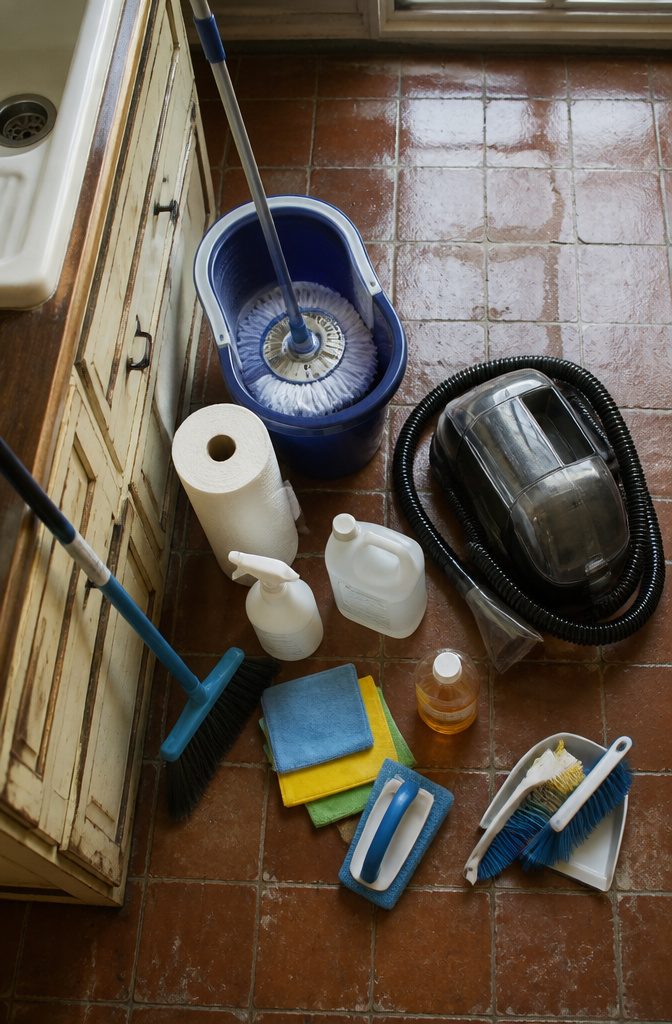
Start with a mop, a broom, paper towels and a disinfectant for high-touch surfaces. The picks below come from an apartment with 100-year-old tile, so adjust them to your own floors.
- Worth buying: a Dyson V15, which can replace a daily broom, plus a mop with hands-free wringing and a telescoping handle, microfiber cloths, and a scrub sponge with a handle.
- The Little Green Machine handles rug stains. Empty the water after every use, or it smells.
- Comet and Barkeeper’s Friend (bleach-free) cover tile and sinks. The Pink Stuff is the backup, and Wet & Forget cuts shower scrubbing.
- Dawn does dishes, Castile soap does nearly everything else, and vinegar cleans windows.
- Optional: the Swiffer extended duster, a deep-clean brush set, a power grout brush, and shower spray.
- Skip all-purpose cleaner on real wood. It’s too wet and can damage the finish, so use a wood cleaner.
Hiring a Cleaner or Organizer
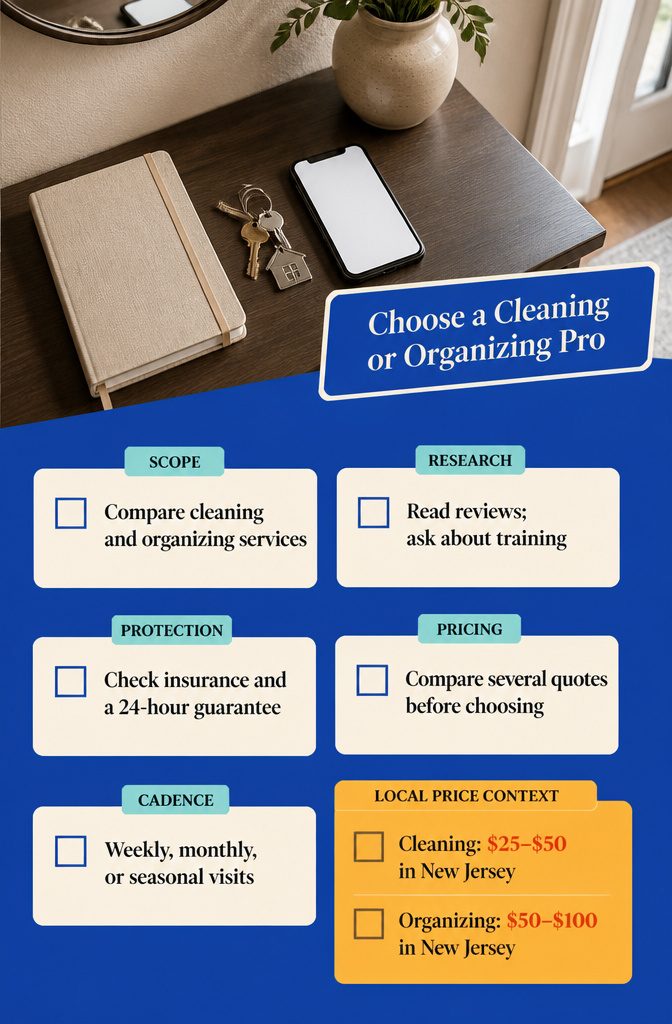
Cleaning comes in four common forms: one-time visits, recurring plans, deep cleans, and move-in or move-out jobs.
Organizing is its own service and usually costs more. For recurring plans, weekly suits a busy household, monthly keeps things from slipping, and seasonal visits handle the big resets.
Start by writing down what you actually need done, then read reviews and ask how the crew is trained.
Ask about insurance too; some companies cite a $1 million policy, and a guarantee like a 24 hour make-it-right window is worth requesting. Compare several quotes, then go with the company that listens to your answers.
Prices vary by location and home size.
In New Jersey, residential cleaning runs $25–$50 and home organizing $50–$100, while one Albuquerque organizer charges $70 per hour. The cheapest quote is rarely the best one.
Frequently Asked Questions
How much does it cost to hire someone to clean or organize your house?
It depends on where you live and how big the home is.
In New Jersey, residential cleaning runs $25–$50 and home organizing $50–$100, and one Albuquerque organizer charges $70 per hour. Organizing usually costs more than cleaning, and the cheapest quote is rarely the best one.
Does house cleaning include organizing?
No.
Organizing is a separate service from cleaning and usually costs more. A cleaner removes dirt and dust, while an organizer sorts belongings and gives each item a place.
How often should I schedule cleaning and organizing services?
Match the schedule to how much needs doing. Weekly visits suit a busy household, monthly visits keep things from slipping, and seasonal visits cover the big resets.
How do I choose the right cleaning service?
Write down what you need done first, then read reviews and ask how the crew is trained.
Ask about insurance (some companies cite a $1 million policy) and request a guarantee, such as a 24 hour make-it-right window. Compare several quotes and pick the company that listens to your answers.
What are the best ways to keep a home clean and tidy?
Short, repeated sessions work better than one big weekend push.
Clean for 30 minutes a day, 5 days a week, giving each day its own room, and do a 30 minute monthly check-in on the area that has drifted most. Give every item one set place to return to so the system holds.