Woven landscape fabric uses interlaced polypropylene tapes that create durability and load-bearing strength but restrict drainage, while non-woven fabric relies on needle-punched fibers for superior permeability and filtration.
Woven fabric blocks nearly all sunlight through its tight weave, making it effective for weed suppression. Non-woven requires higher weight to match that performance.
Woven fabric suits driveways and heavy traffic areas, while non-woven works better for French drains and raised beds where water flow is critical.
Overlap woven seams twelve inches versus six for non-woven, and always secure edges before adding gravel.
Your specific project needs will determine which fabric is most suitable.
Which Landscape Fabric Do You Actually Need?
Why does choosing the right fabric feel so confusing? Staring at rolls in the garden center makes it difficult to know which one belongs in your project.
Standing in the garden center aisle, staring at endless rolls of fabric, wondering which one actually belongs in your project?
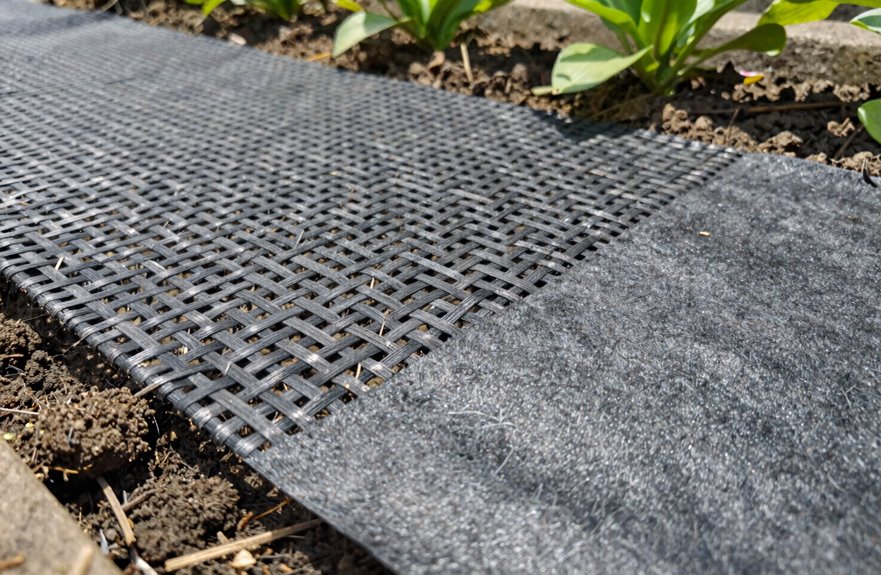
Woven landscape fabric delivers serious durability and load-bearing strength for driveways and pathways where stabilization matters most. Its lower permeability makes it ideal for long-term weed control around trees and shrubs.
Non-woven landscape fabric excels when drainage and filtration dominate your needs. Its higher permeability works well beneath gravel, rock, or French drains where water must flow freely. Non-woven options handle soil separation effectively while preventing clogging.
Choose woven for load-bearing situations demanding structural integrity. Select non-woven when water movement, soil separation, and superior drainage take priority. Matching fabric to function ensures your projects perform as designed.
How These Fabrics Are Made (And Why It Matters)
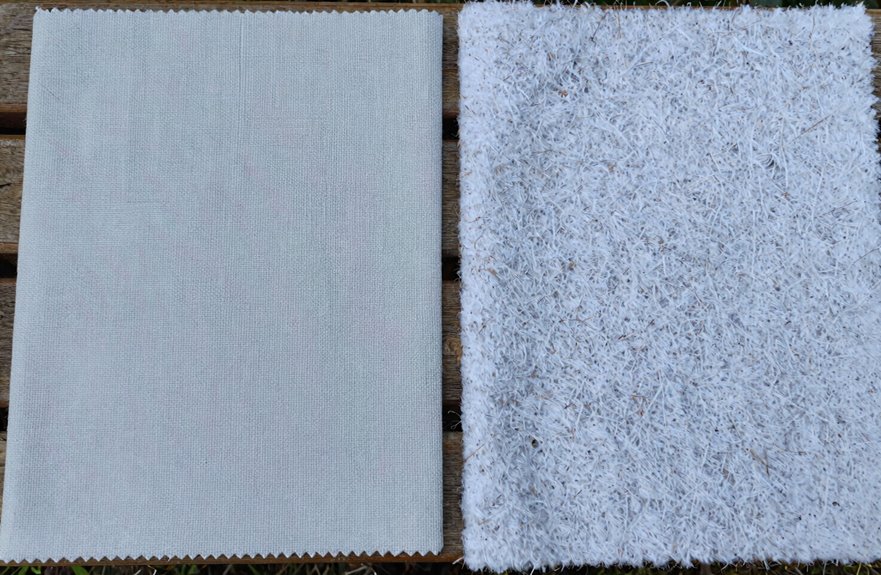
How exactly do two fabrics with such similar ingredients end up behaving so differently? The answer lies in manufacturing. Woven landscape fabric is created through interlacing polypropylene tapes into a tight crisscross pattern. This weaving process delivers strength and lower permeability. Non-woven landscape fabric is made using needle-punching or bonding techniques on polypropylene fibers, creating that familiar felt-like texture. This approach trades some strength for superior permeability and drainage. The woven option builds a sturdy grid suitable for heavy loads, while the non-woven version prioritizes water movement and filtration. With the same basic ingredient, the manufacturing method determines performance characteristics, and your project’s needs should guide which option you select.
Weed Control: Which Fabric Blocks Growth Better?
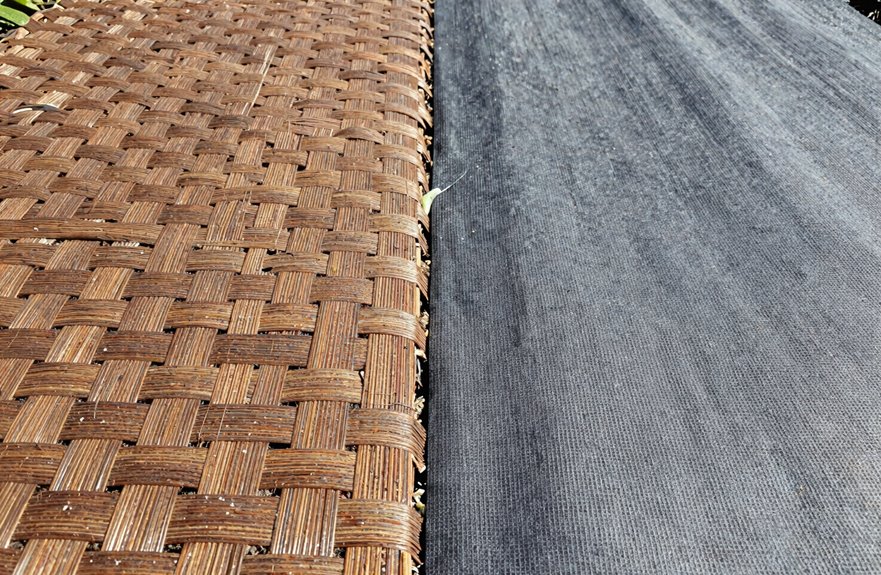
I want to compare how woven and non-woven fabrics stack up at blocking sunlight and stopping roots from punching through. Each type uses a different approach to light suppression, which directly impacts how well they stop weeds from establishing. I’ll also look at which fabric gives you better resistance when aggressive roots try to penetrate the barrier.
Sunlight Blocking Efficiency
When you’re standing in the garden aisle comparing terrain fabrics, the real question isn’t just which one feels tougher, but which one actually stops weeds from sprouting.
Woven terrain fabric delivers superior sunlight blocking efficiency through its tight yarn interlacing, creating near-complete light exclusion. Non-woven terrain fabric depends on fiber density and needle-punch bonding, leaving more porosity that increases light transmission.
Key differences include:
- Woven fabrics use dense crisscross networks for consistent weed control
- Non-wovens need higher fabric weight to match blocking performance
- Weed suppression varies with each material’s transpiration control capabilities
- Extra mulch over non-woven options compensates for lower blocking efficiency
For tree beds, woven fabric provides superior reliability due to its tight construction and consistent light exclusion properties.
Root Penetration Resistance
Why does root penetration resistance matter in weed control. When aggressive roots breach your weed barrier, they compromise everything you’ve built. Woven fabric delivers superior protection here. Its tight weave creates a formidable shield against root penetration, leveraging higher tensile strength and lower permeability to maintain soil stability over seasons. Non-woven fabric, while excellent for drainage, sometimes allows trouble. Its breathable, felt-like structure permits more moisture and can allow persistent roots to eventually push through. As a geotextile choice, woven fabric’s load-bearing capacity proves essential under heavy rock or mulch where pressure concentrates. You’re investing in long-term performance, not quick fixes. For root-resistant, durable weed control that delivers lasting results, woven fabric’s impenetrable architecture provides measurable protection against root intrusion over multiple growing seasons.
Water Flow: How Permeable Is Each Fabric?
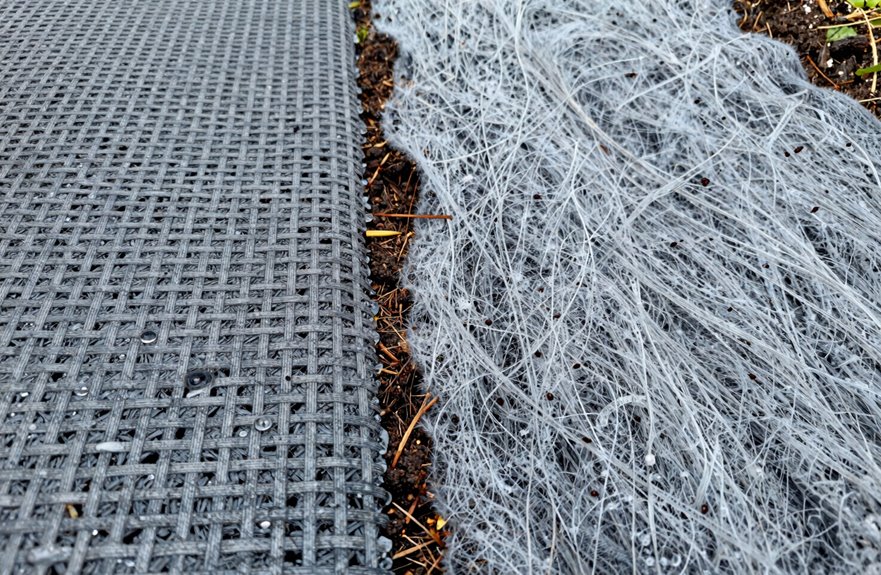
How differently do these fabrics handle water once they’re in the ground? Woven landscape fabric restricts water flow due to its tight yarn interlacing, making it semi-impermeable with lower permeability. Non-woven landscape fabric, however, offers superior porosity and drainage through its bonded or needle-punched fiber structure.
When choosing geotextile for drainage-focused projects, consider these factors:
- Woven fabrics prioritize stabilization over water movement
- Non-woven fabrics maximize filtration and drainage capacity
- Permeability directly impacts soil health beneath the fabric
- Drainage fabric selection shapes long-term project success
Non-woven options work best where water infiltration matters most, while woven fabric works where ground stability is needed. This distinction determines appropriate material selection for specific site conditions.
Heavy Loads: Which Fabric Handles Driveways and Paths?
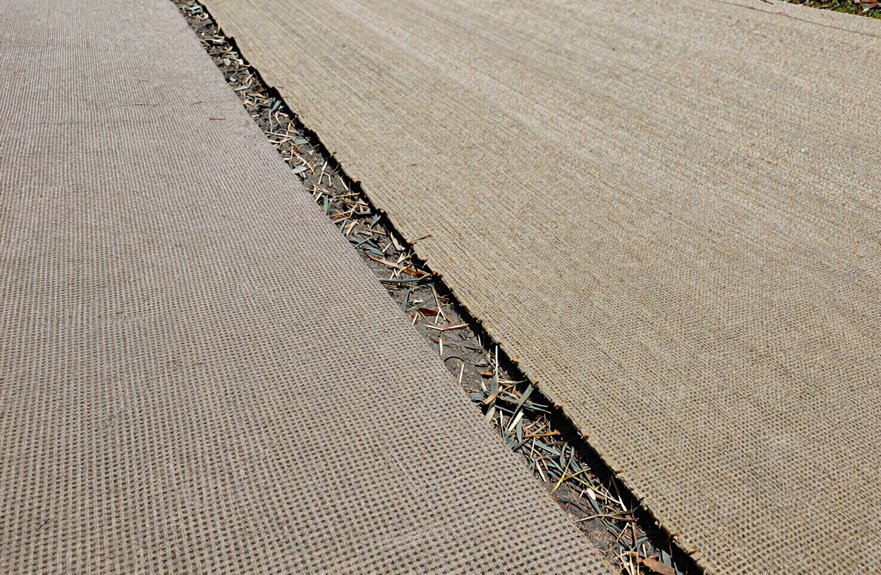
I know you’re wondering which landscape fabric truly belongs beneath your driveway. I’ve faced this choice too, and woven landscape fabric delivers the tensile strength and load capacity needed for heavy loads. Its reinforcement properties prevent rutting and deformation where vehicles pass repeatedly.
Non-woven fabric offers superior permeability and drainage, but lacks the structural integrity for driveways. I use it for lighter garden paths instead.
When you need both stabilization and water management, layering woven fabric for reinforcement above non-woven material balances performance. This pairing combines load-bearing strength with moisture control, extending the functional life of your installation.
Matching Fabric to Project: 6 Specific Use Cases
Woven fabric works best for garden bed weed control since its durability blocks roots without tearing. Non-woven material is the better choice for gravel paths because its superior permeability prevents washouts while keeping stone separated from soil. For drainage projects like French drains or underground catchment systems, non-woven’s filtration capability protects the subgrade without clogging.
Garden Bed Weed Control
Since I’ve tackled countless garden projects over the years, I’ve learned that matching the right landscape fabric to your specific use case makes or breaks your weed control success.
- Woven landscape fabric excels around trees and shrubs, offering durability and load stability where less permeable drainage suits established plantings.
- Non-woven landscape fabric dominates raised-bed gardens, delivering superior drainage and permeability that vegetable roots require.
- Your soil moisture retention improves significantly with non-woven options under rock mulch, where filtration keeps beds breathing properly.
- Woven solutions work well when combating compaction in high-traffic garden beds needing maximum reinforcement.
Each application demands its own balance of permeability, filtration, and durability. Different garden conditions require different fabric types based on specific drainage and structural needs.
Gravel Path Stabilization
Gravel paths present a different challenge than garden beds. Instead of nurturing roots, you’re managing shifting stone under constant pressure. Choosing the right landscape fabric for gravel path stabilization depends on what matters most to your project.
When drainage and permeability top your list, non-woven fabric is the choice. It filters effectively, keeping your sub-base clean while letting water escape, preventing soggy paths after storms. When building something that will see heavy boots or wheelbarrows daily, woven fabric wins with its superior tensile strength. It locks gravel in place, distributing loads so your path stays level for years.
For either type, overlap seams properly: six inches for non-woven, twelve for woven. Secure edges before gravel goes down. A weed barrier beneath keeps maintenance manageable and reduces ongoing upkeep.
Drainage Project Separation
Beneath every successful drainage project lies the right separation layer. When you’re tackling drainage-focused installations, your fabric choice makes or breaks water management.
For true drainage projects, non-woven geotextile delivers superior performance. Its highly permeable structure lets water flow freely while maintaining critical soil separation. This is what separates experienced installers from those facing repeated failures:
- Wrap perforated pipes with non-woven fabric to prevent clogging
- Line French drains with this permeable barrier for lasting filtration
- Layer beneath stone overlays to create clear drainage paths
- Secure overlaps properly so soil never invades your system
Woven landscape fabric cannot match this performance; it blocks too much water. When building drainage projects, materials must work with your system’s hydraulic requirements, not against them.
Cost, Lifespan, and Final Selection Guide
How do you weigh upfront investment against long-term performance when choosing between these two fabric types? Woven landscape fabric demands higher cost upfront but rewards you with extended lifespan and unmatched durability for heavy loads. Non-woven landscape fabric fits your budget better initially, though you’ll trade some longevity for superior permeability and drainage. Your final selection should match needs to properties: choose woven when you need reinforcement under driveways, accepting lower water flow for strength. Pick non-woven for garden beds where weed control and filtration matter most. Understanding these trade-offs allows you to make informed decisions that produce projects built to last.