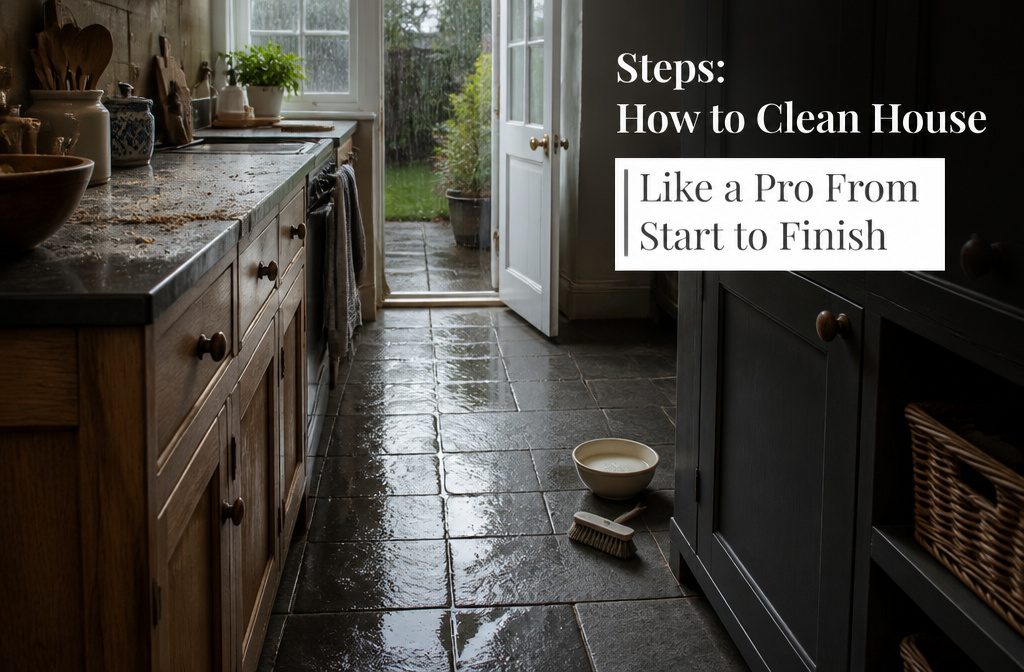
A full house clean runs 6 steps, and the one that trips most people isn’t scrubbing, it’s sequence. Dust before you vacuum, or every pass drops debris onto a floor you already mopped.
The same logic runs through the whole job: spray grout cleaner and let it sit 20 minutes before scrubbing, then mop from the far corner toward the exit so you never walk on a wet floor.
[link-whisper-related-posts]1. Plan and Gather Supplies
Two layouts work: clean one room at a time, or run a single task, like dusting, through the whole house.
For a first big clean I lean toward room by room, because each finished room is a visible win and a natural place to stop if the day falls apart.
Write the list down, then rank it by importance so the jobs that matter most get done even if you run out of steam.
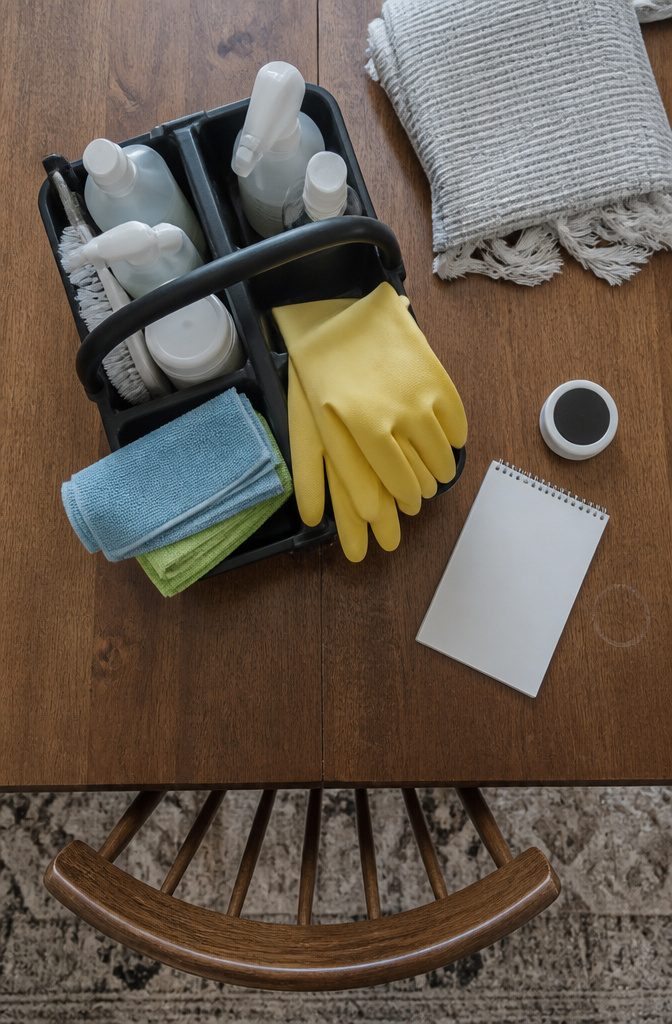
Hand out chores to everyone in the house, kids included. Load every supply into one caddy or tote so you never walk back to the closet and lose your rhythm.
Set a timer for 15–30 minutes per area and take a break after each block. Kids often work faster when the timer becomes a race to beat their own time.
2. Tidy and Clear Surfaces
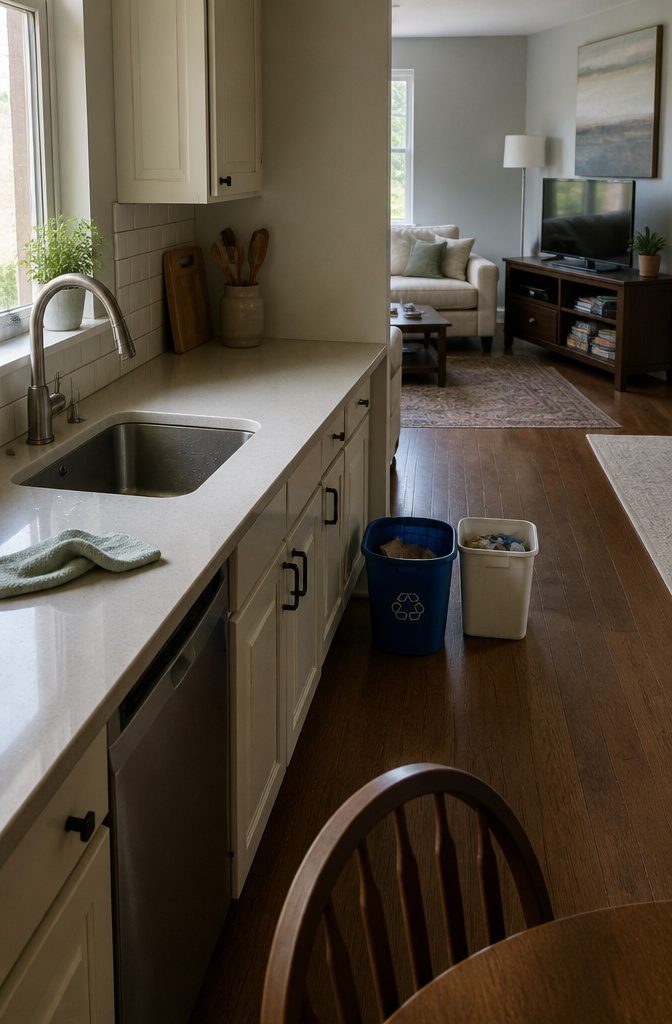
Clutter slows wiping down, because every mug, magazine and pair of shoes has to be lifted, cleaned around and set back.
Clear the surface first and a cloth can run the full length of a counter or shelf in one pass.
Sort as you go into two piles: one for trash, one for donation or recycling. Books, magazines, newspapers, DVDs, outgrown toys, old clothes and shoes are the usual suspects.
Use a one-touch rule, so each item is handled once and goes straight to a pile or straight to its home. Whatever you keep goes back where it belongs: loose books on a shelf, board games in the TV cabinet.
Sorting first beats wiping around a pile every time, and a clear surface is one you can actually finish.
3. Dust High to Low
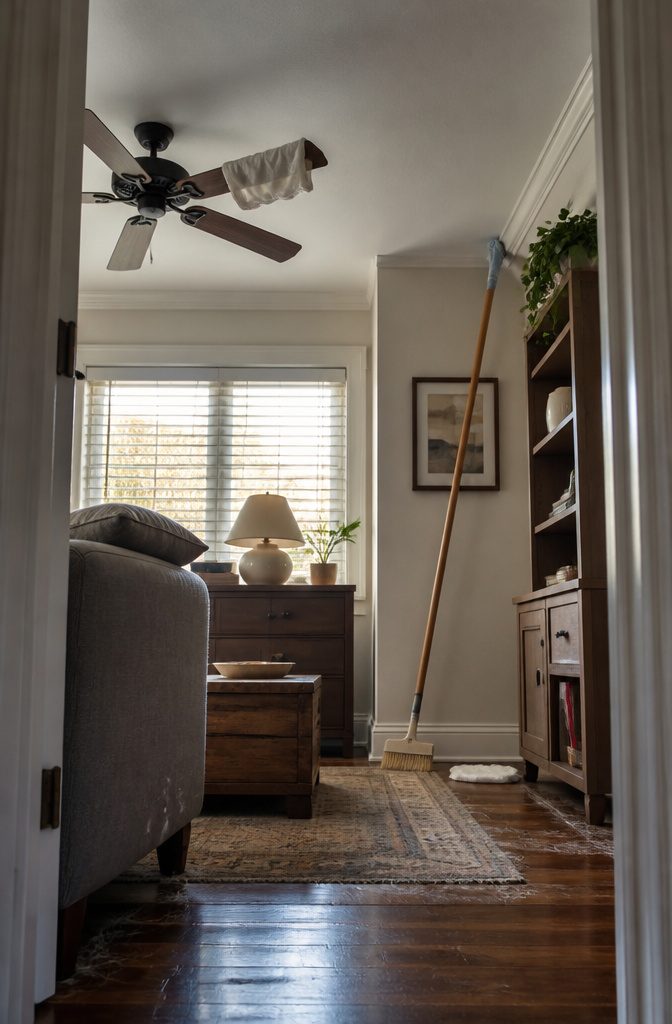
Start with the ceiling fan and light fixtures. Slide an old pillowcase over each blade, press gently, and pull back, so the dust stays in the fabric instead of drifting onto the sofa.
A damp cloth tied to a broom handle takes down cobwebs. For slatted blinds, close them one way and dust, then close them the other way and repeat.
From there, work down through door tops, picture frames, shelves, and furniture, finishing at the baseboards so falling dust lands only on areas you haven’t cleaned yet.
A dry sheet wiped along the baseboards repels pet hair and dust for weeks. Some pros work bottom to top in sections, so the order is a choice, but I stick with top-down because you never repeat a step.
A firm angled paint brush reaches wood corners. Light switches, doorknobs, and the space under furniture are the spots most people skip.
4. Clean Rooms and Details
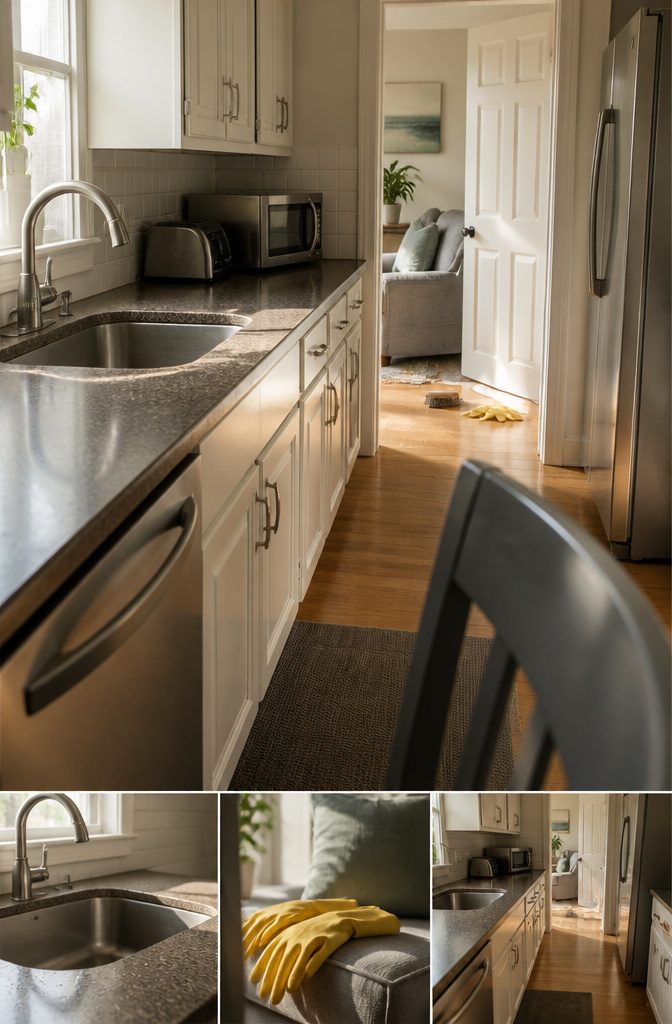
Run each room through the same four moves: move, empty, clean, replace.
- Kitchen: Move small appliances off the counter, empty the sink, wipe top to bottom, and put back only what you use daily.
- Handles and edges: Cabinet pulls, fridge handles and door edges get touched most and wiped least, so hit them on every pass.
- Bathroom: Spray grout cleaner and let it sit 20 minutes before you scrub. Scrubbing right away cuts the work the cleaner does for you.
- Appliances: Slide the toaster and microwave forward and clean the gap behind them.
- Corners: Spray wood cleaner on the bristle tips of a firm, angled paint brush, then flick dirt out of cracks, corners and paneled doors.
- Furniture: Pull on rubber gloves and rub down upholstery. The rubber builds static that gathers the pet hair a vacuum leaves behind. Rinse the gloves under running water and the hair slides off.
5. Vacuum, Sweep, and Mop
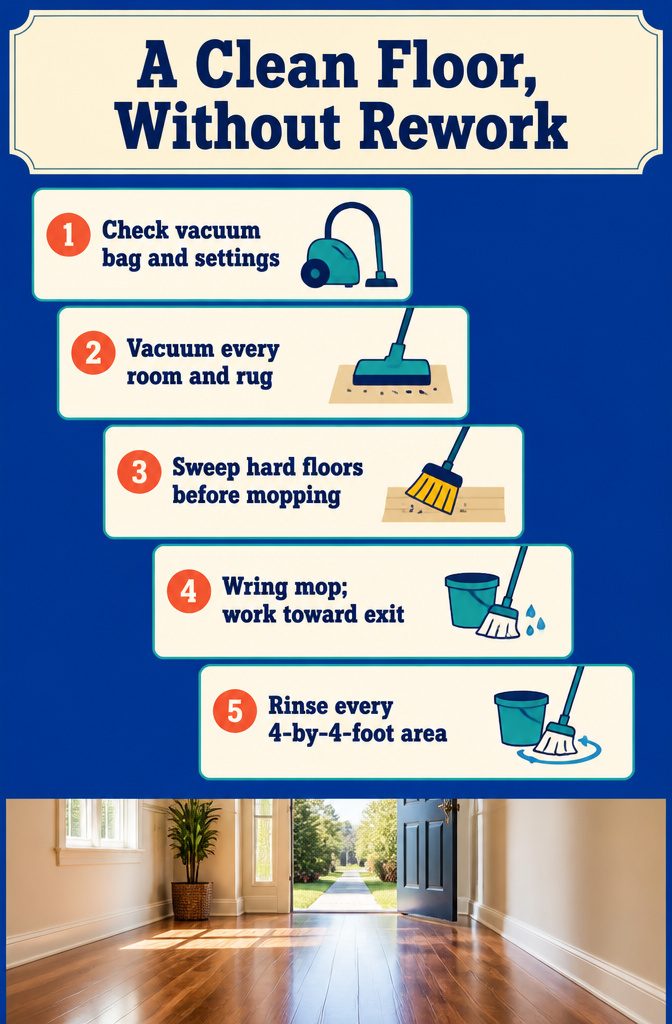
- Check that the vacuum bag or canister isn’t full, and use the recommended settings and attachments.
- Vacuum floors and rugs in every room. Use attachments for corners, behind toilets, and under furniture, and pull the couch and chair cushions to get the crumbs underneath.
- Sweep the hard floors with a broom before the mop touches them.
- Mix warm water and floor cleaner in a bucket, dip the mop, and wring it thoroughly so no excess water stays on the floor.
- Start at the farthest corner and mop toward the exit door, so you never walk on wet floor.
- Rinse the mop after each 4-by-4-foot area, and change the water when it gets too dirty. Let the floor air dry.
Most homes only need mopping every two weeks.
6. Keep It Clean Weekly
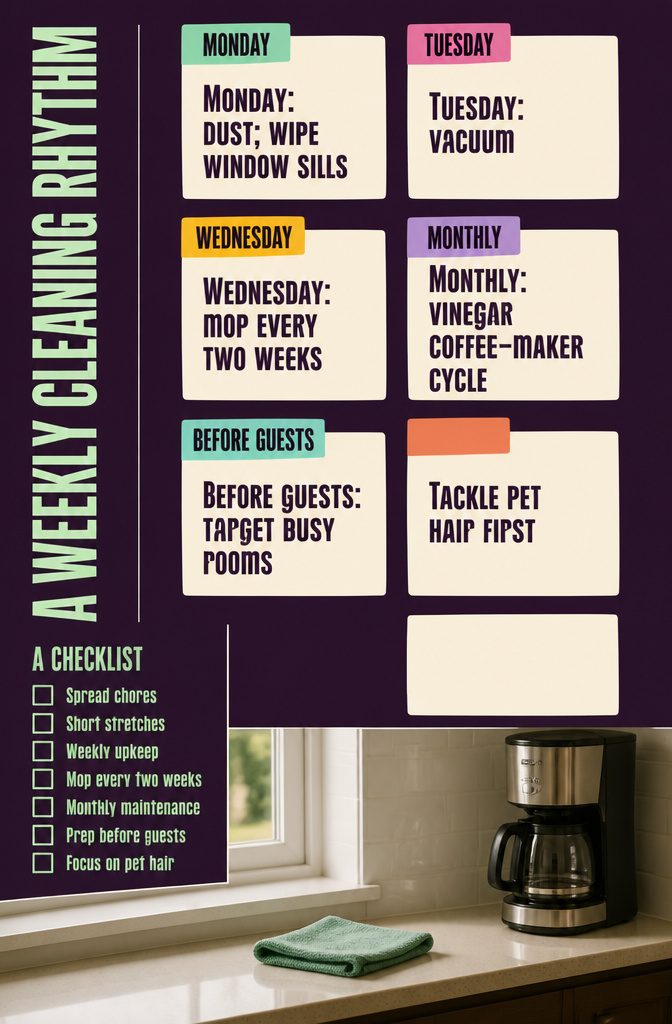
Spreading chores across the week keeps the big clean from piling back up. A rotation that works:
- Give each chore its own day: dusting Monday, vacuuming Tuesday, mopping Wednesday. Each takes a short stretch, so Saturday stays free.
- Mop at least once every two weeks. Most homes don’t need it more often unless the floor takes constant spills, so I’d mop every other Wednesday.
- Wipe the window sills weekly, in the same pass as your dusting.
- Once a month, run the coffee maker with 1/4 cup white vinegar mixed with water. Then run a second cycle with plain water to clear the smell.
- Before guests arrive, hit the high-traffic areas and the room where you’ll entertain. Go after recurring messes like pet hair first, since that’s what people notice.
Tools and Products
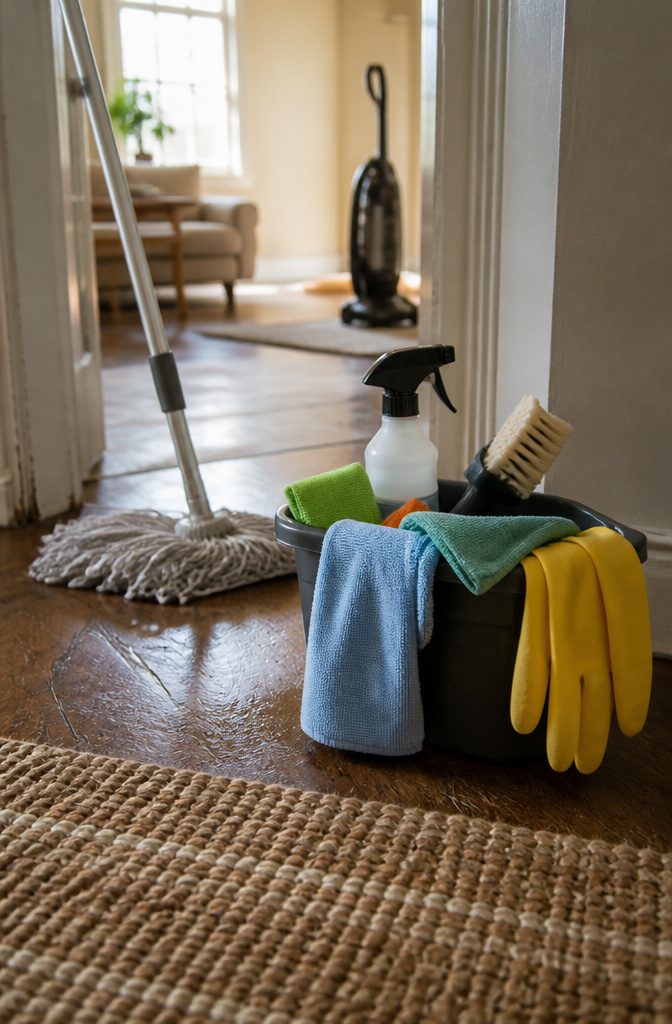
A small kit covers most rooms, and it all fits in one caddy:
- Several microfiber cloths for wiping and dusting.
- A vacuum and a mop for floors.
- One good all-purpose cleaner, plus gloves and rags.
- A firm, angled paint brush. A little wood cleaner on the bristle tips reaches cracks, corners and panel doors that cloths skip.
- A caddy, or an apron with pockets for cloths and loops for bottles, so you stop retracing your steps for the spray.
No single product works on every surface, so patch test in a hidden spot before using anything new. Many cleaners work best if they sit for an hour or more, which cuts the scrubbing.
Bar Keeper’s Friend and other abrasives are the exception, so don’t leave those on. I’d skip harsh cleaners unless a job truly needs one.
Appliance and Stain Hacks
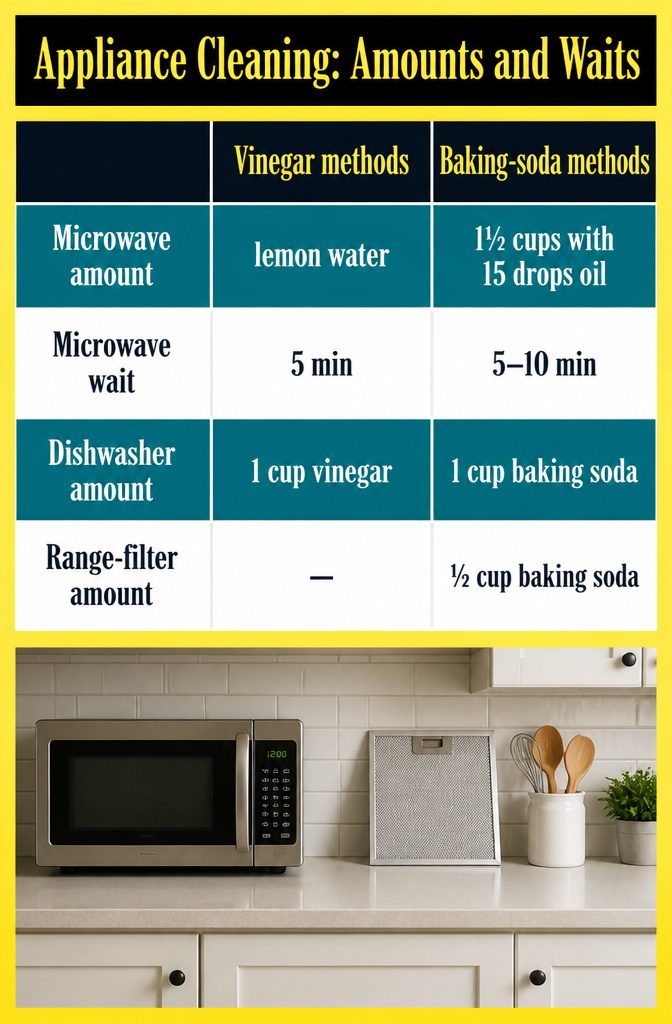
Soaking beats scrubbing on small jobs.
| Spot | Amount | Wait |
|---|---|---|
| Microwave | Lemon in water, or 15 drops lemon oil in 1½ cups | 5 min; oil 5–10 |
| Dishwasher | 1 cup vinegar, then 1 cup baking soda | n/a |
| Burners | 1/4 cup ammonia in a bag | Overnight |
| Showerhead | Bag of vinegar | Overnight |
| Carpet stain | 1 part vinegar to 3 parts water | 10 sec steam |
| Mattress | Baking soda, then vacuum | 1+ hour |
| Range filter | 1/2 cup baking soda | 15 min |
Shower floors get a paste instead:
Sprinkle powdered Comet and granular dishwasher soap on the floor of your shower. Add enough water to make a paste… let it sit for about 30 minutes.
— BuzzFeed
Add a little water, scrub again, then rinse. Never mix ammonia with bleach; the fumes are dangerous.
Frequently Asked Questions
How do you clean your house like a pro?
Follow a fixed order so no step gets repeated: clear clutter first, dust from the ceiling fan down to the baseboards, clean each room, then vacuum, sweep and mop last, working toward the exit door.
Set a timer for 15–30 minutes per area to keep the pace up, and use quality supplies like microfiber cloths and a multi-surface cleaner.
Give extra attention to spots people skip, such as light switches, doorknobs, cabinet pulls and the gaps behind small appliances. A weekly schedule, like dusting Monday, vacuuming Tuesday and mopping Wednesday, keeps the big clean from piling back up.