Creating a garden space can be a fulfilling project, especially when it involves building your own brick raised garden beds. The timeless charm of bricks adds a classic touch to any outdoor setting. Whether you’re a gardening novice or a seasoned pro, the structure of a raised bed brings both style and practicality. This post is crafted for those who are eager to enhance their outdoor living spaces with unique and beautiful garden bed designs.
If you’re into DIY garden projects or simply love outdoor landscaping, you’re in the right place. Many people appreciate the benefits of raised garden beds, such as improved drainage, better soil management, and easier access for planting and harvesting. I’ve compiled 17 creative brick garden ideas that inspire you to transform your backyard into a rustic paradise filled with life and color. Each concept is designed to suit different tastes and needs, ensuring you find the perfect fit for your home.
In this post, you’ll discover diverse ideas that range from classic rectangular beds to more elaborate designs like multi-level gardens and built-in seating. You’ll gain insight into how these structures can enhance not just the beauty of your garden, but also its functionality. So grab your gardening gloves and let’s dive into these brick raised garden beds that will elevate your outdoor experience!
Key Takeaways
– Explore various designs: Discover a range of brick raised garden beds from classic shapes to multi-level structures that cater to different gardening styles.
– Understand practical benefits: Learn about the advantages of raised garden beds, including improved soil health, easier maintenance, and enhanced aesthetics.
– Get inspired by creativity: Find innovative brick garden ideas that incorporate unique features such as seating, pathways, and mixed materials.
– DIY advice: Access practical tips for constructing your own brick raised beds, making your gardening project manageable and enjoyable.
– Enhance your landscape: Use these ideas to transform your outdoor space, creating a charming and functional garden that reflects your personal style.
1. Classic Rectangular Beds
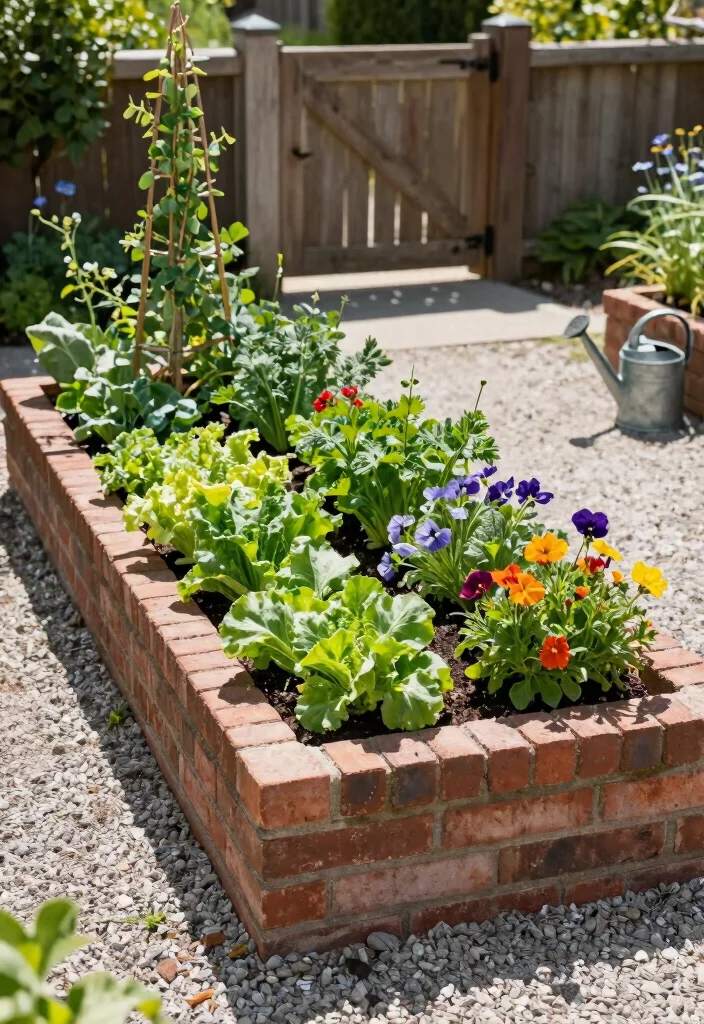
Classic rectangular brick raised garden beds offer a timeless choice that harmoniously fits into various landscapes. Their clean lines and simple geometry create organized planting spaces, making them ideal for neat rows of leafy greens or colorful flowers.
These beds can be tailored to your specific gardening needs, with adjustable heights and widths. The sturdy bricks provide excellent structure, keeping the soil intact while allowing easy access for planting and maintenance.
Consider these ideas to enhance your rectangular beds:
– Pair raised beds with a layer of mulch to retain moisture.
– Install stone pathways alongside for rustic charm.
– Use gravel borders to define your garden area.
This design creates an inviting atmosphere while ensuring easy upkeep. The combination of textures and materials adds depth and character to your garden space.
2. Curved Brick Edges
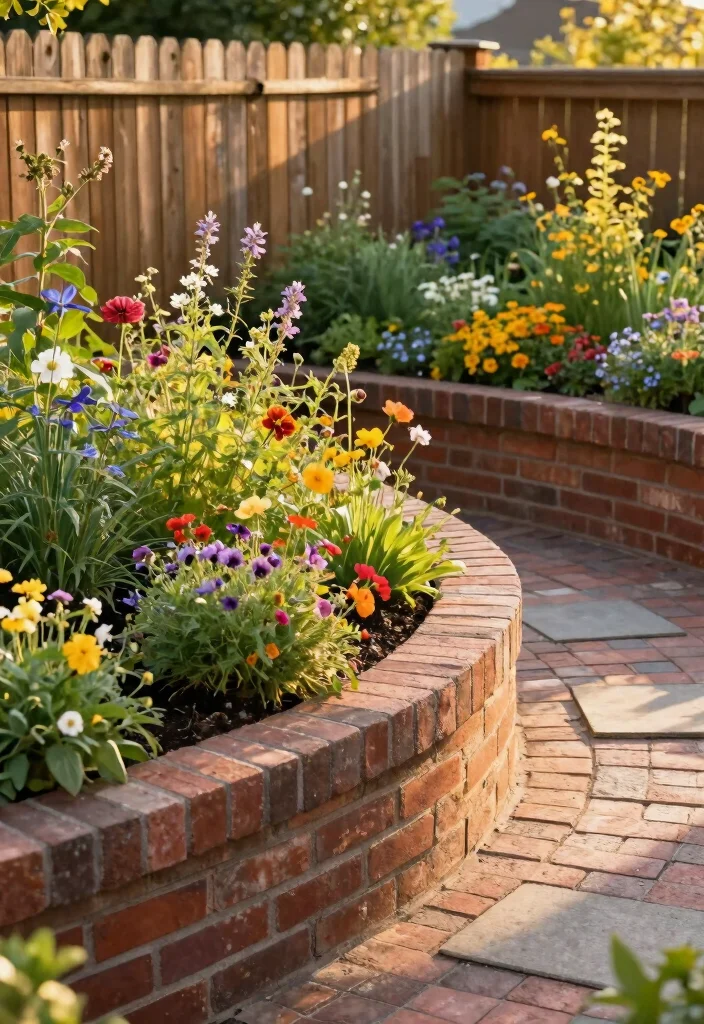
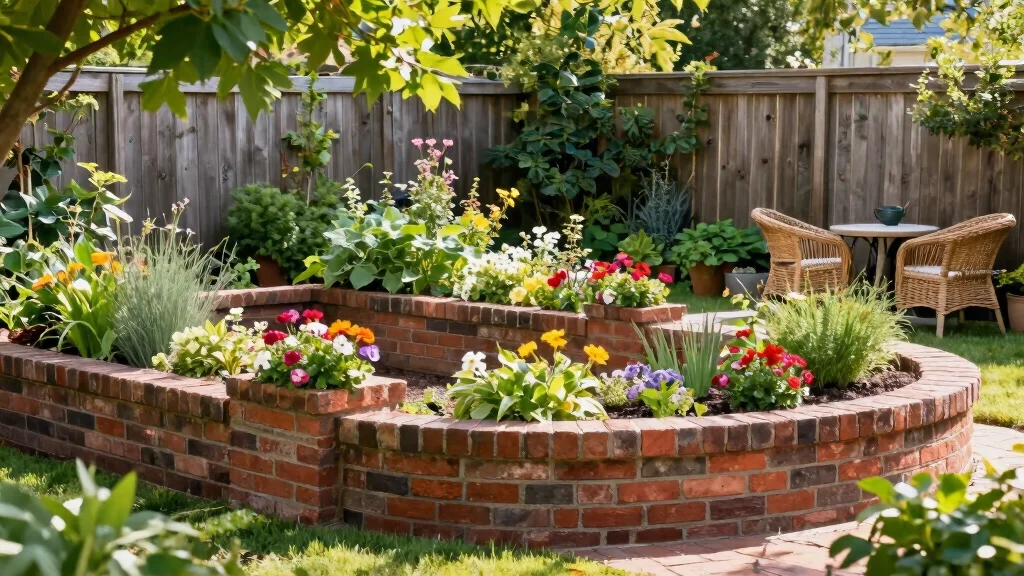
Curved brick raised garden beds introduce a gentle softness that enhances your outdoor space. Unlike the rigidity of straight edges, these flowing lines create a more organic and welcoming feel, making them perfect for naturalistic gardens.
These beds allow for a varied planting scheme, encouraging a mix of flower heights that produce a lovely cascading effect. The curves also help guide foot traffic, inviting exploration throughout your garden.
Incorporate these elements to make the most of your curved beds:
– Use perennial and annual plants for year-round beauty.
– Create pathways that complement the curves to enhance navigation.
– Use landscape fabric beneath the soil to control weeds.
This design not only beautifies but also creates a whimsical and inviting atmosphere. The rounded edges and varied plantings foster a sense of tranquility in your garden.
Fun fact: Curved brick raised garden beds can visually expand a small yard by up to 25%. The curves soften the space and guide foot traffic, inviting you to plant a cascading mix of flowers and greens.
How To Choose the Right Brick Raised Garden Bed
Choosing the perfect brick raised garden bed can transform your outdoor space into a beautiful and functional area. Here are some key points to consider to help you make the best choice for your needs.
1. Size Matters
Consider the size of your garden bed before making your choice. A standard raised garden bed is typically 4 feet wide and 6-8 feet long, but you can customize it based on your available space. If you have a smaller yard, a compact design might be best. Make sure it’s deep enough (at least 12-24 inches) to accommodate the roots of your plants.
2. Material Selection
When selecting bricks, think about the material type. Traditional clay bricks are durable and offer a classic look, while concrete bricks can provide a more modern aesthetic. Each material has its own appeal, so choose based on your desired style and how it will blend with your outdoor decor. Also, ensure that the bricks are untreated and safe for growing food if you aim to plant herbs or vegetables.
3. Design and Aesthetics
The visual appeal of your garden bed can enhance your outdoor space. Think about the design that fits your style. Classic rectangular beds are simple yet elegant, while curved brick edges can create a softer look. You might also consider multi-level designs for depth and interest. Choose colors and patterns that complement your home and landscape to make an inviting atmosphere.
4. Accessibility and Maintenance
Accessibility is crucial when installing a raised garden bed. You want to ensure that you can easily reach the plants for watering, harvesting, and maintenance. Consider how high you want the bed to be, especially if you have mobility concerns. Raised beds can be built higher to reduce bending and back strain. Also, think about drainage; ensure your design allows for water to flow away easily to prevent root rot.
5. Budget Considerations
Set a budget before starting your project. Brick raised garden beds can vary widely in cost based on material and design complexity. Simple designs made with inexpensive bricks might cost less, while more intricate designs with decorative bricks can add up quickly. Don’t forget to factor in additional costs like soil, plants, and any tools you might need for installation.
6. Purpose of the Garden Bed
Think about what you want to grow in your raised garden bed. Are you planting flowers, vegetables, or herbs? Different plants may require different soil depths and sunlight. Ensure your design meets the specific needs of your chosen plants, enhancing their growth and health. For example, a bed for deep-rooted vegetables will need to be deeper than one for shallow-rooted herbs.
Pro Tip: Consider incorporating a border or pathway around your garden bed to make maintenance easier and to visually separate the garden from other areas in your yard. This not only enhances accessibility but also adds a polished look to your outdoor space.
Choose wisely, and your brick raised garden bed will not only serve as a beautiful focal point in your yard but also provide you with fresh produce or stunning flowers to enjoy!
3. Multi-Level Garden Beds
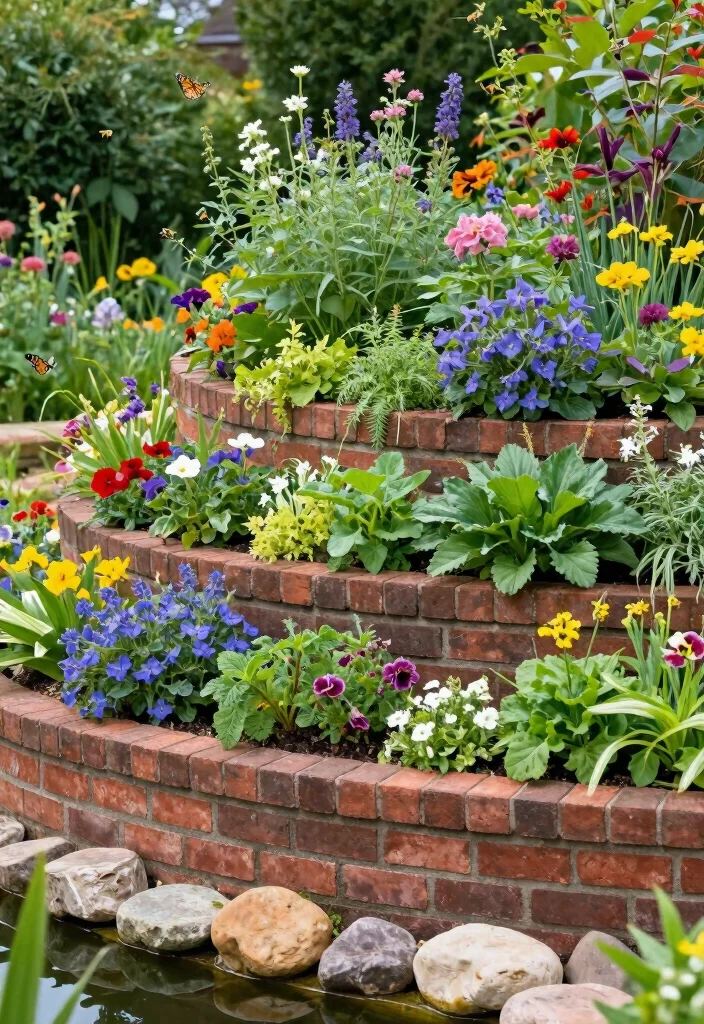
Multi-level brick raised garden beds elevate your gardening game by introducing visual interest and depth. Tiers allow for effective use of vertical space, making them especially valuable in smaller yards.
With different levels, you can grow a variety of plants suited for each tier. For example, place herbs on the top level and larger vegetables below, creating a stunning display.
Consider these tips when designing your multi-level beds:
– Maximize space by planting varying heights of plants.
– Incorporate a water feature between levels for added aesthetics.
– Ensure drainage is adequate to prevent waterlogging.
This approach enhances your garden’s functionality while providing diverse micro-environments for different plants. The structured levels add visual appeal, making your outdoor space more dynamic.
4. Pathway-Integrated Design
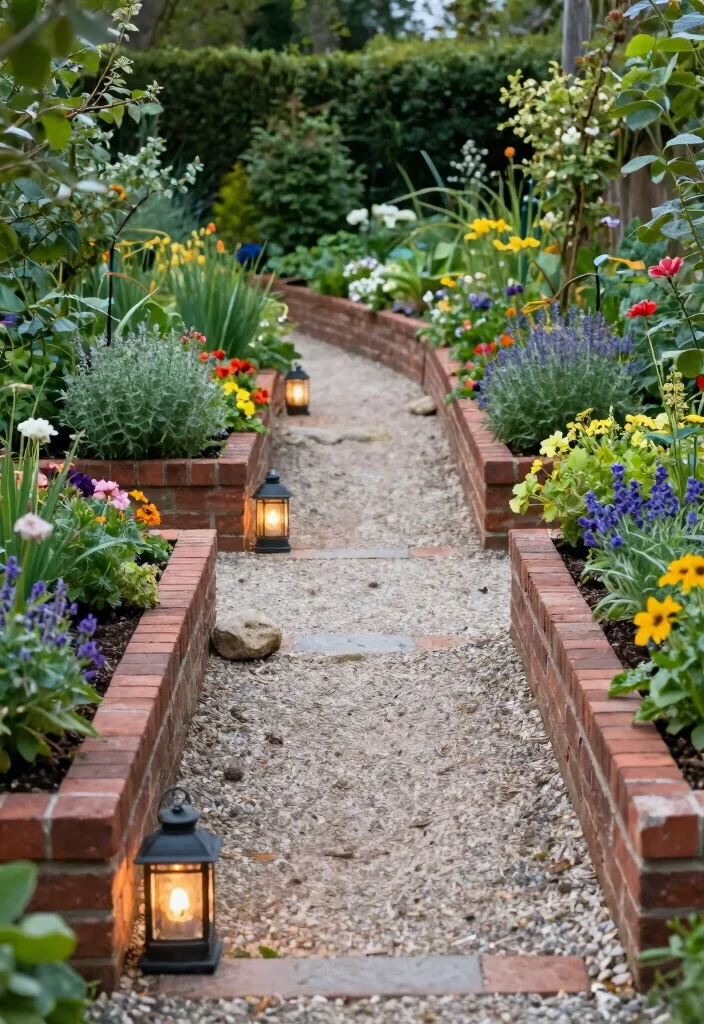
Combining pathways with your brick raised garden beds enhances both function and beauty. By positioning beds around or alongside paths, you create a cohesive and inviting gardening experience.
This design encourages visitors to stroll through your garden, appreciating its beauty from various angles. Use bricks to create bordered paths, seamlessly transitioning between walking and planting areas.
Utilize these strategies for an effective pathway integration:
– Create winding paths that encourage exploration.
– Use contrasting materials like gravel for a striking look.
– Regularly clear paths of debris to maintain accessibility.
This layout not only promotes ease of movement but also enhances the overall aesthetic of your garden. Pathways add structure while showcasing your beautiful plants.
5. Raised Bed with Gravel Fill
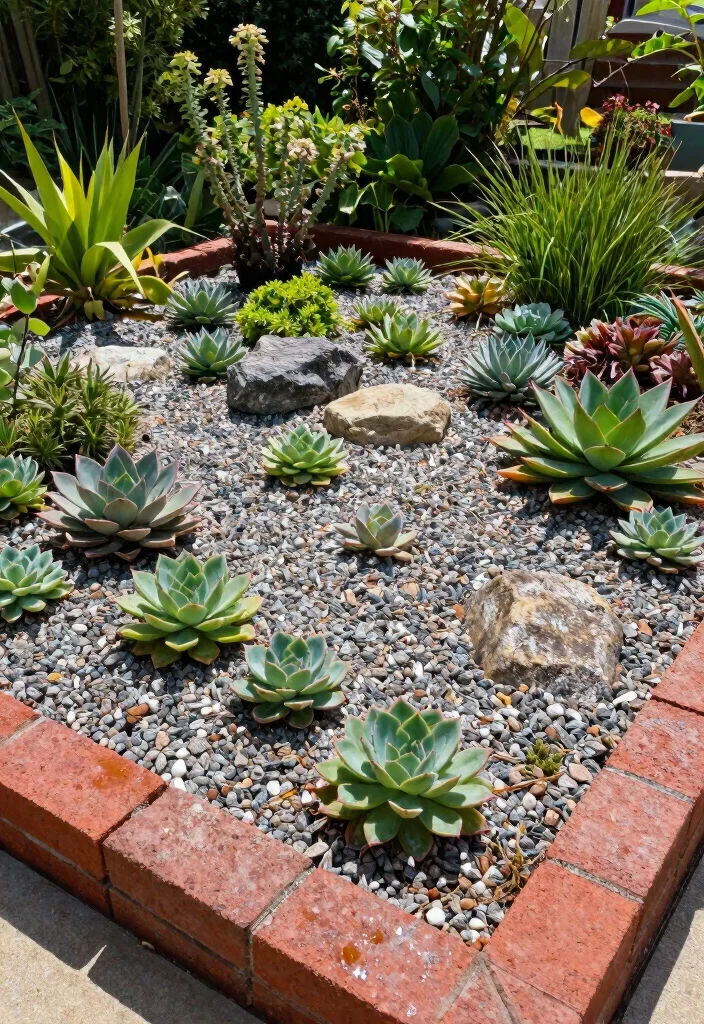
Opting for a raised garden bed filled with gravel rather than traditional soil offers a stylish and functional approach to gardening. This setup allows for excellent drainage, making it ideal for succulents and drought-resistant plants.
The gravel creates a visually appealing aesthetic reminiscent of Mediterranean gardens, beautifully paired with brick borders. This style promotes a low-maintenance garden that still showcases vibrant blooms.
Implement these ideas to enhance your gravel-filled beds:
– Incorporate a drip irrigation system for optimal moisture control.
– Mix in ornamental gravel for added texture and color.
– Regularly check for any weeds that may infiltrate.
This approach effectively highlights the unique beauty of succulents while ensuring minimal upkeep. The combination of materials creates a stunning visual display in your garden.
6. Vertical Brick Planters
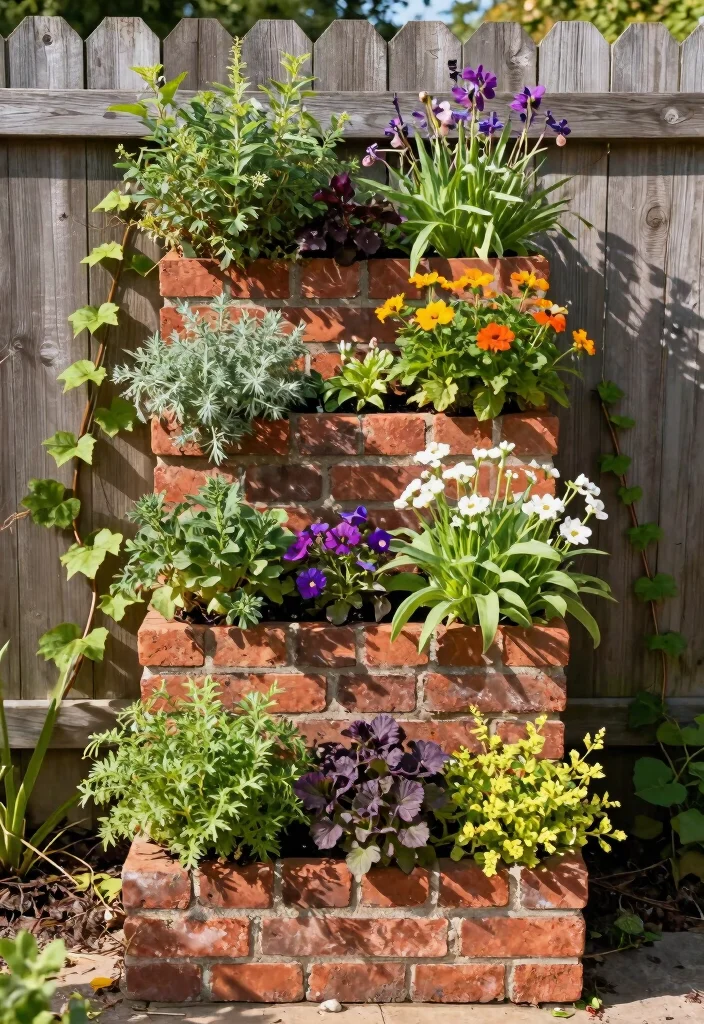
Vertical brick planters are an excellent way to maximize gardening potential in smaller spaces. By stacking bricks, you can create small columns for herbs, flowers, or even small vegetables like tomatoes.
This vertical design not only saves space but also introduces a modern touch to your outdoor area. Encourage plants to grow upward, adding an exciting visual dynamic to the garden.
Consider these elements when designing vertical planters:
– Use a variety of plant heights for visual interest.
– Attach trellises for vines to climb and enhance aesthetics.
– Ensure sunlight access for taller plants.
This innovative design elevates your gardening experience while maximizing space. The vertical growth showcases the beauty of your plants in a unique way.
7. Bordering a Patio
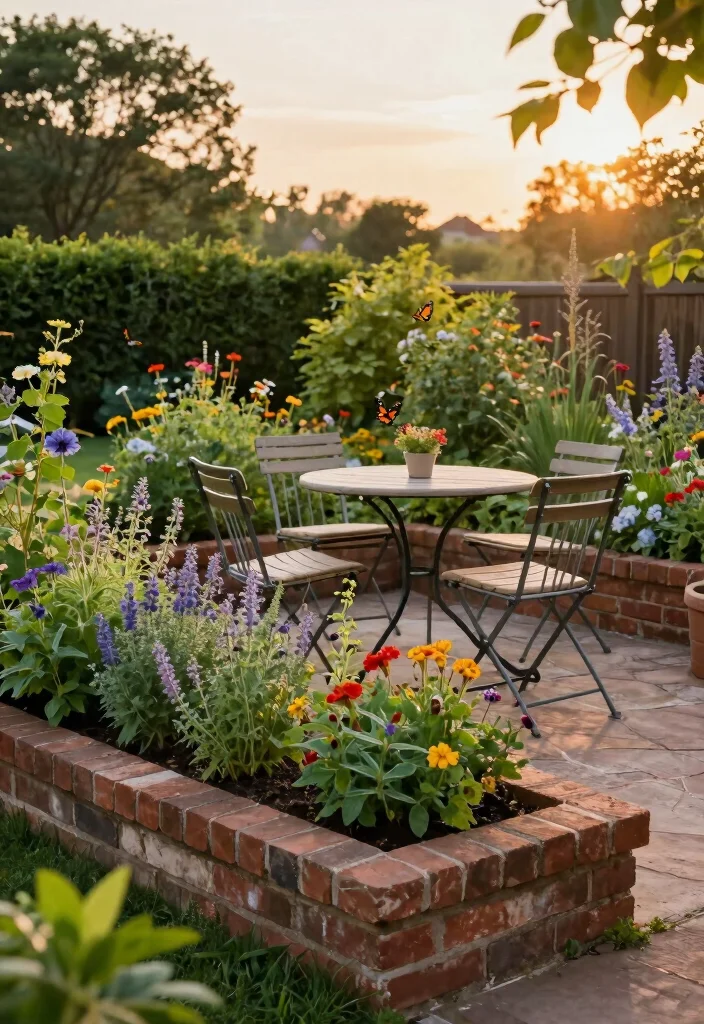
Creating brick raised garden beds that border your patio establishes a smooth transition between your outdoor living area and garden. This design enhances the natural flow, adding lush greenery just a step away from relaxation.
Consider planting aromatic herbs or vibrant flowers that can be enjoyed from both the patio and garden. This not only beautifies your space but also provides fresh ingredients for cooking or cocktails.
Enhance your patio border with these tips:
– Use taller plants at the back and shorter in front for depth.
– Incorporate seasonal blooms for year-round interest.
– Regularly prune plants to maintain shape and health.
This design creates a seamless connection between relaxation and gardening, making the space feel more inviting. The lush borders enhance your outdoor living experience beautifully.
8. Mix of Brick and Wood
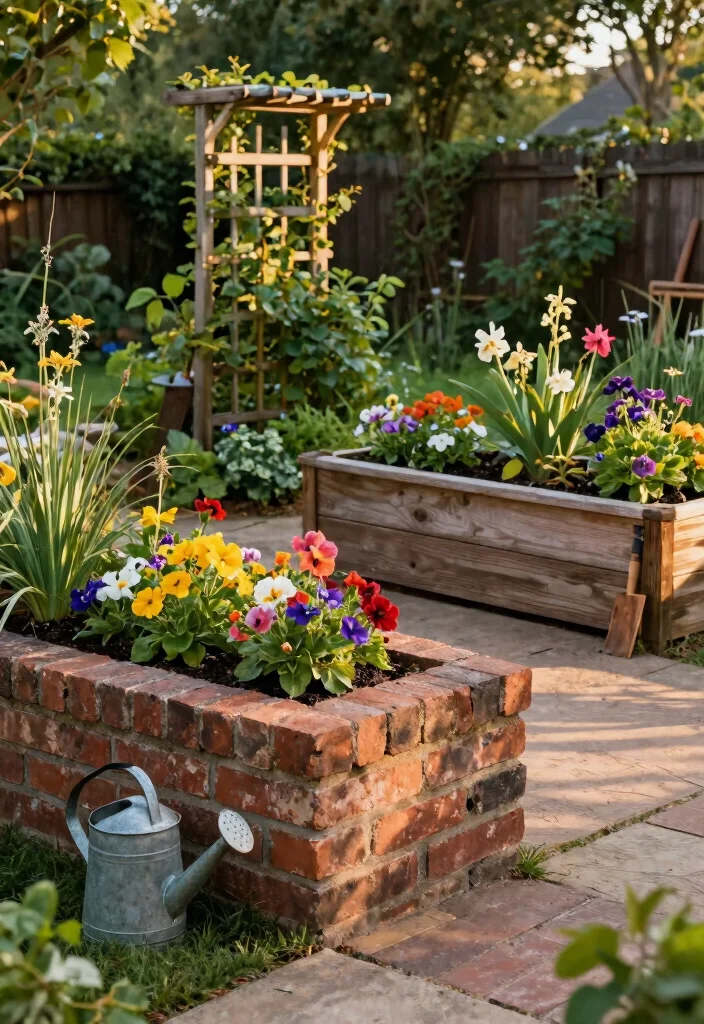
Combining brick with wooden elements adds rustic charm and functional benefits to your garden beds. Wooden planters can be integrated into brick structures, creating a visually interesting contrast.
This mixed-material approach allows for creative designs, like brick walls with wooden tops that serve as seating or decorative accents. The wood naturally ages, enhancing the garden’s character while the brick provides durability.
Consider these ideas for a successful mix of materials:
– Use reclaimed wood for an eco-friendly touch.
– Create seating areas with wooden tops on brick walls.
– Regularly check wood for signs of wear or rot.
This combination of textures enhances the overall aesthetic, making your garden feel warm and inviting. The interplay between brick and wood adds depth to your outdoor space.
9. Built-in Seating
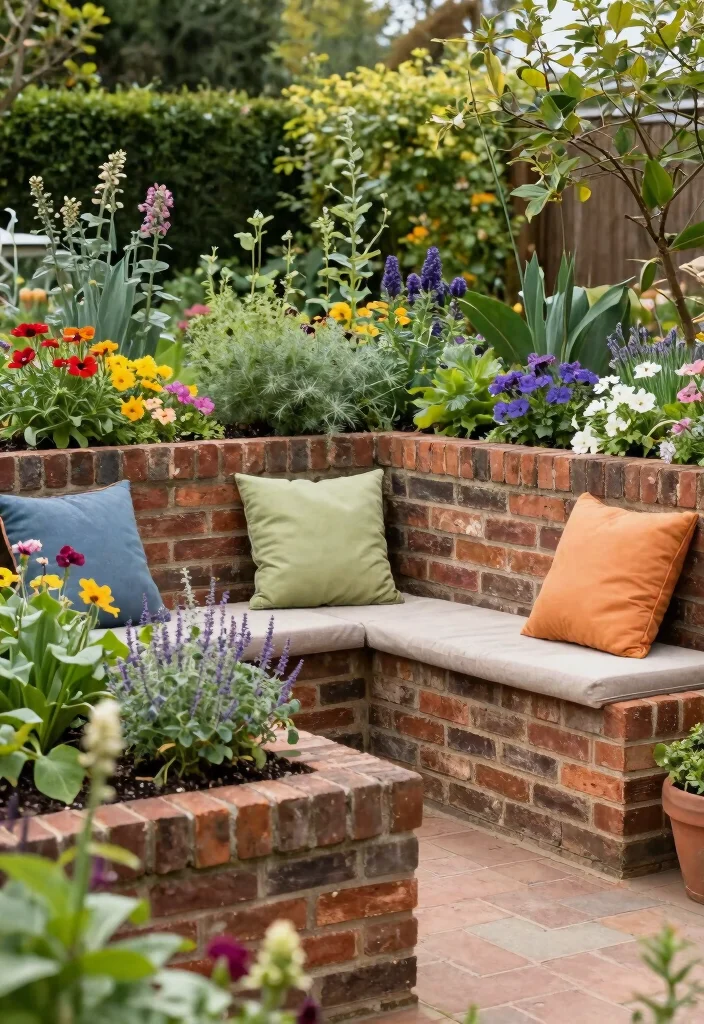
Incorporating built-in seating into your brick raised garden beds transforms your garden into a comfortable retreat. Designing a brick wall that doubles as seating maximizes space and invites relaxation amid your plants.
Adding cushions can create a cozy atmosphere, allowing you to enjoy the beauty and serenity of your garden while easily accessing your plants for care.
Enhance your garden seating with these tips:
– Use weather-resistant cushions for durability.
– Create nooks for intimate gatherings among plants.
– Regularly clean the seating area to maintain its inviting appearance.
This feature not only maximizes your garden’s utility but also fosters a sense of community. The combination of seating and greenery encourages enjoyment of your outdoor space.
10. Herbal Spiral Garden
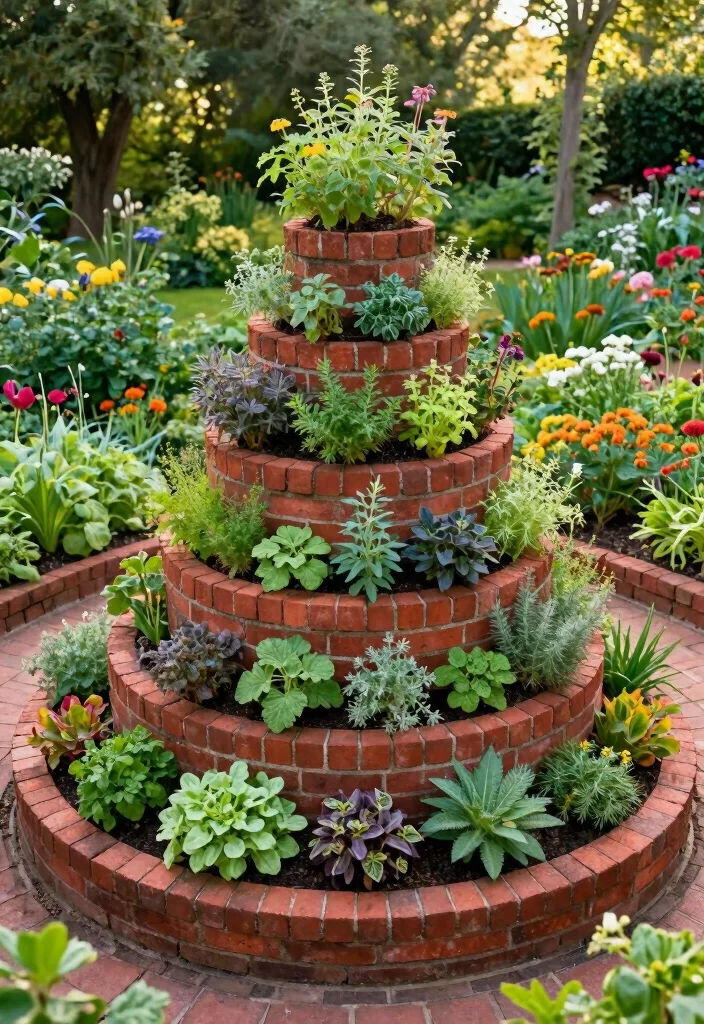
Creating a spiral garden bed made of bricks is an innovative way to cultivate herbs in a compact space, maximizing sunlight exposure. This design allows for microclimates within the spiral, catering to diverse growing conditions for various herbs.
The upward spiral promotes drainage and ensures easy access to all areas of the bed. By planting herbs like basil, thyme, and rosemary at different levels, you can enjoy fresh ingredients while adding beauty to your garden.
Consider these elements for your spiral garden:
– Use colorful bricks for a striking visual effect.
– Plant herbs that thrive at different heights for diversity.
– Regularly check moisture levels at various points for optimal growth.
This design not only saves space but creates a vibrant and functional garden. The spiral shape enhances both beauty and accessibility.
11. Edible Flower Garden
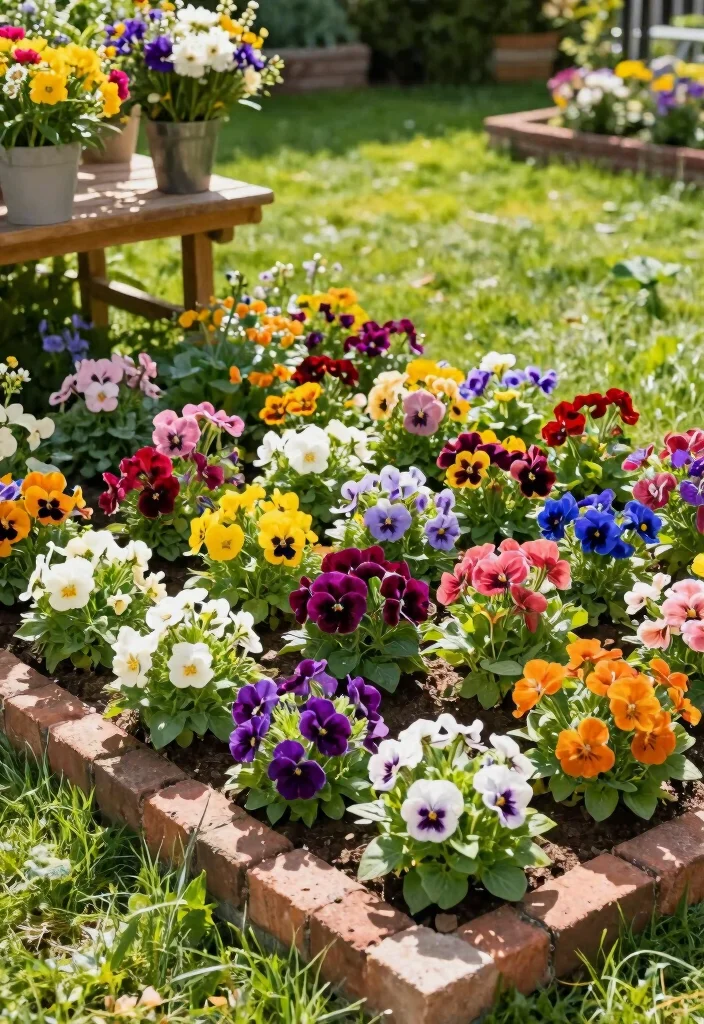
Designing a brick raised garden specifically for edible flowers combines beauty with practicality. Flowers like nasturtiums, pansies, and marigolds add vibrant colors and can be used in salads, teas, and desserts.
A dedicated garden bed allows for experimentation with different varieties, ensuring a continuous display of color and flavor throughout the growing season.
Enhance your edible flower garden with these tips:
– Plant taller blooms in the back and shorter in front for harmony.
– Incorporate companion plants to improve flavor.
– Regularly deadhead to promote new blooms and maintain aesthetics.
This approach beautifully marries culinary use with ornamental appeal, enriching your garden’s character while attracting beneficial insects.
12. Formal Garden Layout
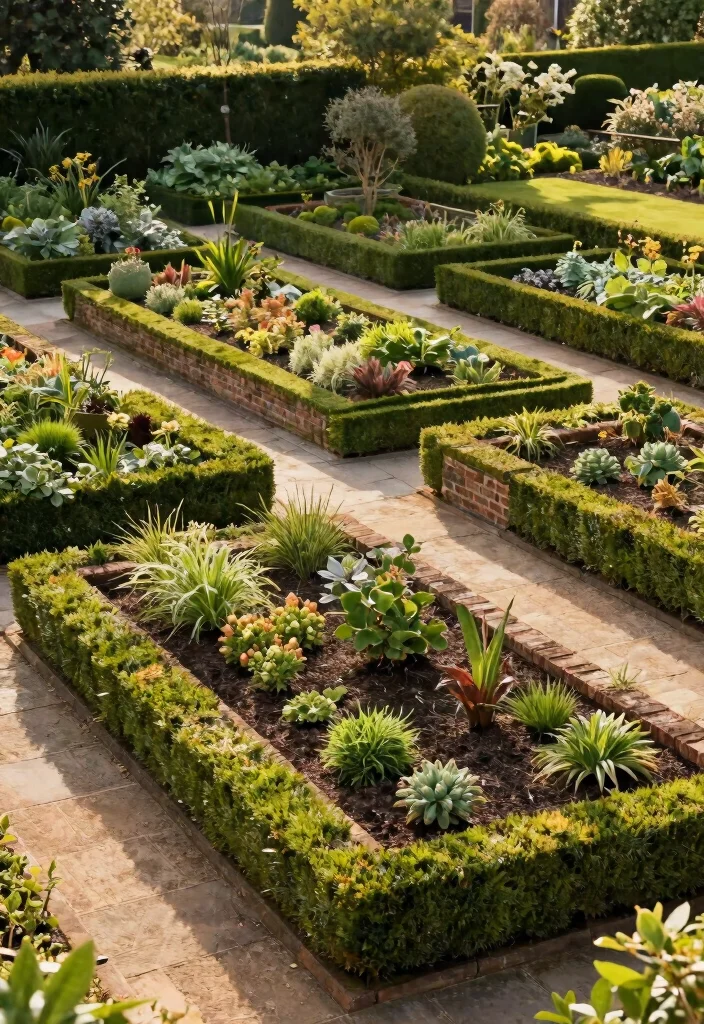
For a structured and elegant look, consider a formal garden layout with your brick raised beds. Symmetrical designs and well-defined pathways create a timeless outdoor space that exudes sophistication.
Planting rows of similar plants or flowers maintains the formal aesthetic, perfect for those who appreciate neatness and order in their gardens.
Maximize this design with these ideas:
– Use topiary plants to add a refined touch.
– Incorporate benches or seating areas for relaxation.
– Regularly prune plants to keep the garden looking polished.
This layout provides a sense of elegance and easy navigation, making your garden a peaceful retreat. The consistency in design creates a serene atmosphere.
13. Colorful Brick Patterns
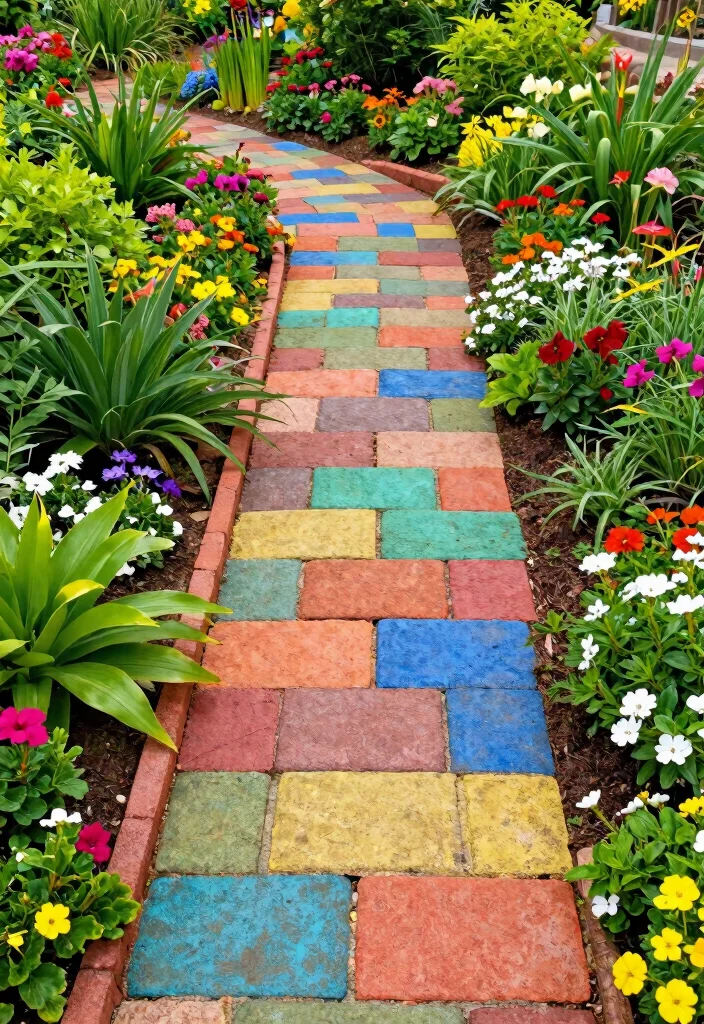
Incorporating various colored bricks to create patterns in your raised garden beds can add a playful touch to your outdoor space. Mixing different shades of bricks, such as reds, browns, and whites, creates eye-catching designs that enhance visual appeal.
This creative approach turns a functional garden into a work of art, allowing endless design possibilities. Arrange the bricks in alternating colors or unique geometric shapes to captivate attention.
Consider these ideas for colorful patterns:
– Use contrasting colors to highlight specific areas.
– Create geometric designs for added intrigue.
– Regularly check for shifting bricks to maintain your patterns.
This playful design not only attracts the eye but also adds character to your garden, making it a truly unique space.
Did you know color patterns can boost curb appeal by up to 20%? Mix reds, browns, and whites to create playful geometric layouts in your brick raised beds. It’s approachable, affordable, and turns a functional corner into a garden art piece.
14. Rustic Farmhouse Style
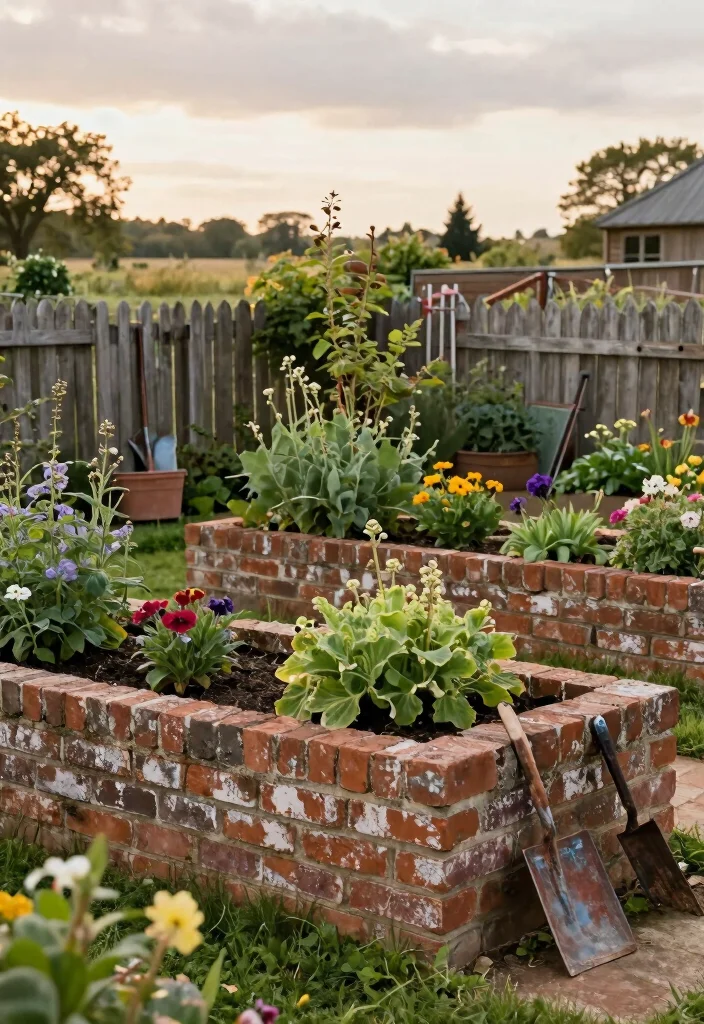
Embracing a rustic farmhouse style with your brick raised garden beds creates a warm and inviting atmosphere. Using weathered bricks or those with a distressed finish enhances the charm, bringing a touch of nostalgia to your garden.
Integrate elements like wooden fences, vintage tools, and farmhouse decor to enrich the overall aesthetic. This style encourages a connection with nature and traditional gardening practices.
Enhance your rustic garden with these tips:
– Add decorative items like old watering cans or garden signs.
– Use heirloom plants for authenticity and beauty.
– Regularly check bricks for gaps to maintain soil retention.
This approach fosters a cozy and inviting garden space, celebrating the beauty of simplicity and tradition.
Rustic farmhouse style turns brick raised garden beds into cozy, working art. Pair weathered bricks with wooden fences and vintage tools for instant warmth, then layer herbs along the edge to blend practicality with nostalgia.
15. Succulent Paradise
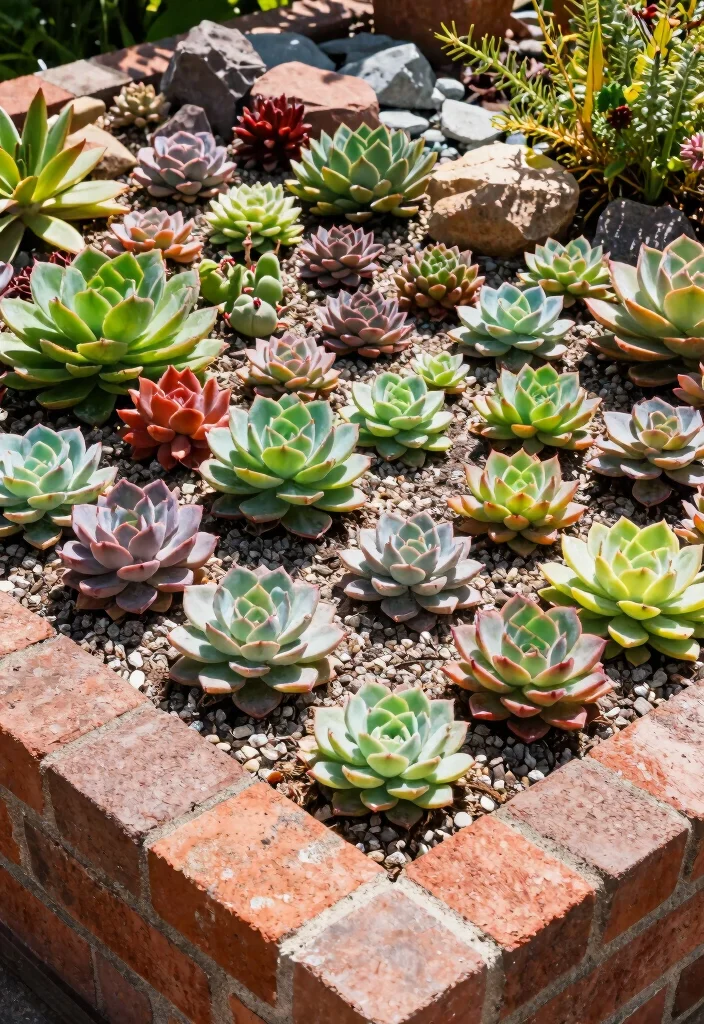
Creating a brick raised garden bed dedicated to succulents showcases these beautiful, low-maintenance plants. Arrange bricks to provide ample sunlight and airflow, ensuring your succulents thrive.
Using gravel as a base promotes excellent drainage, essential for these drought-resistant plants. By integrating various succulent species, you can create a stunning visual display with unique colors and textures.
Implement these tips to enhance your succulent garden:
– Use various sizes and colors of succulents for depth.
– Incorporate decorative stones for added interest.
– Water sparingly, allowing soil to dry between watering.
This design highlights the beauty of succulents while ensuring minimal upkeep. The unique textures and colors add a striking visual element to your outdoor space.
16. Seasonal Color Displays
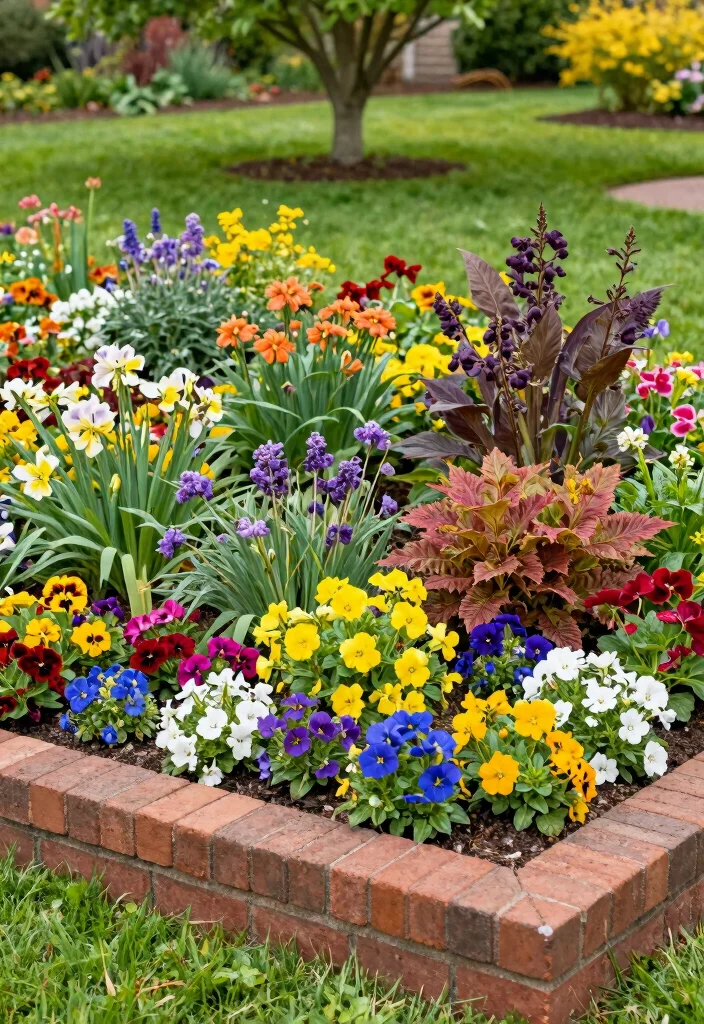
Utilizing brick raised garden beds for seasonal color displays keeps your garden vibrant throughout the year. Planning your planting around different seasons ensures there’s always something blooming, from spring bulbs to summer annuals to fall foliage.
A mix of perennials and annuals allows for continuous color changes, creating dynamic visual interest. Align your plant choices to bloom at staggered times for seamless transitions.
Consider these strategies for seasonal displays:
– Plant early bloomers alongside late bloomers for continuity.
– Use colorful foliage for visual impact in off-seasons.
– Regularly deadhead flowers to maintain freshness.
This approach fosters a lively and ever-changing garden landscape, celebrating the beauty of nature through each season.
17. Wildlife-Friendly Garden
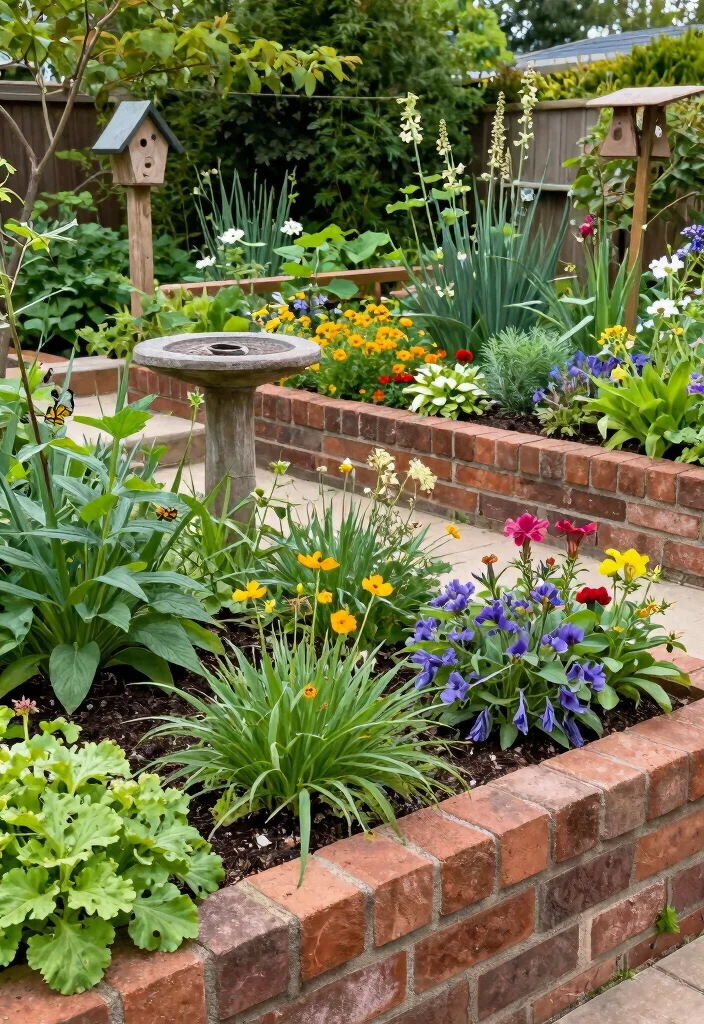
Designing a wildlife-friendly brick raised garden bed enhances biodiversity in your outdoor space. By incorporating native plants, you can attract beneficial insects, birds, and other wildlife, enriching your garden’s ecosystem.
In addition, leaving some areas wild provides shelter and food sources for local fauna. Consider adding features like small water sources or birdhouses to encourage animal visits while maintaining plant health.
Implement these ideas for a wildlife-friendly garden:
– Choose plants that attract bees and butterflies.
– Create sheltered areas for local wildlife.
– Monitor plant health to ensure positive wildlife interactions.
This approach not only supports the environment but also creates a lively and engaging garden, full of dynamic interactions with nature.
Conclusion
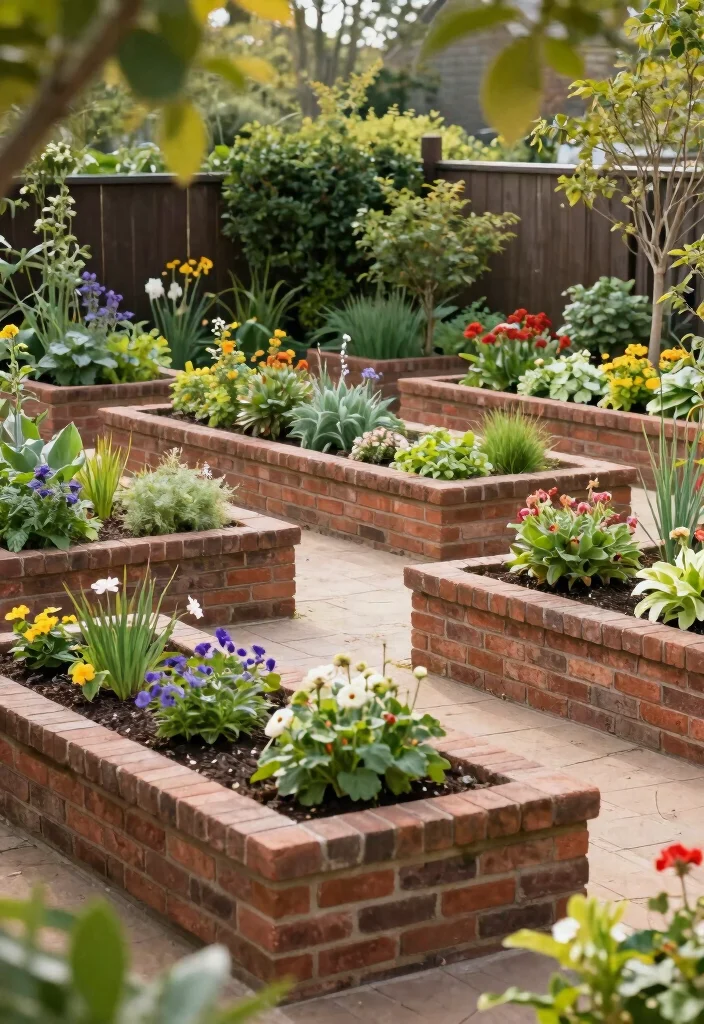
Brick raised garden beds offer an incredible way to enhance your outdoor living space, combining aesthetics with functionality. With countless design options available, you can tailor your garden to reflect your personal style and gardening preferences.
From classic, structured designs to whimsical setups that embrace nature, there’s something for every gardener. Experimenting with different themes and plant types will bring new life to your yards, inviting relaxation and creativity.
So, which of these ideas speaks to you? Let the charm of brick raised garden beds inspire your next gardening project!
Note: We aim to provide accurate product links, but some may occasionally expire or become unavailable. If this happens, please search directly on Amazon for the product or a suitable alternative.
This post contains Amazon affiliate links, meaning we may earn a small commission if you purchase through our links, at no extra cost to you.
Frequently Asked Questions
What are the key benefits of brick raised garden beds for outdoor landscaping and garden bed designs?
Brick raised garden beds offer durability and a classic look that suits rustic outdoor living spaces.
They define borders for garden bed designs and improve drainage and soil warmth, boosting raised garden bed benefits.
Brick is weather resistant and low maintenance, and you can customize height and length to fit your yard and budget.
With the right care, brick garden ideas can last for decades while adding character to your landscape.
How can I choose brick garden ideas that fit my yard and style while keeping it practical for DIY garden projects?
Start by measuring the space and deciding on a bed height that matches how you work in the garden.
Pick brick colors and patterns that complement your home and landscape to get the look you want in brick garden ideas.
Decide between mortar and dry-stack methods to keep it budget-friendly for DIY garden projects.
Map irrigation and drainage so the beds stay functional and easy to maintain year after year.
What are some beginner-friendly DIY garden projects to build brick raised garden beds on a budget?
Start with a simple rectangular plan built on a compacted gravel base for stability.
Use reclaimed bricks to cut costs, and choose a dry-stack or minimal-mortar method for easier assembly.
Fill with a smart soil mix (see Q4) and layer in compost, then plant according to season.
Add edging or a simple border path to finish the look and keep DIY garden projects achievable.
What soil mix and plant choices maximize the raised garden bed benefits of brick raised garden beds?
For best results, fill beds with a lightweight, nutrient-rich mix: about 60% quality topsoil, 30% compost, and 10% perlite or coarse sand for drainage.
Top up with compost and mulch seasonally to keep fertility steady and moisture balanced.
Choose plants suited to your climate and sun exposure; leafy greens, herbs, and compact vegetables perform well in brick raised garden beds.
Consider drip irrigation or soaker hoses to maximize the raised garden bed benefits and water efficiency.
How should I maintain brick raised garden beds to extend their life and keep them looking timeless?
Inspect mortar joints regularly and reseal or repoint as needed to prevent water damage.
Keep drainage clear, brush off algae, and clean bricks to preserve their look in outdoor landscaping.
Seal bricks sparingly if at all to avoid trapping moisture, and recheck annually after harsh weather.
Prepare for winter by protecting edges and addressing any cracks before spring planting to extend the life of your brick garden ideas.
Related Topics
home decor
brick raised garden beds
outdoor landscaping
rustic style
DIY garden projects
garden bed designs
beginner friendly
seasonal gardening
brick garden ideas
raised bed benefits
backyard transformation
easy gardening