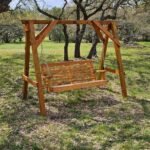

Patio lighting here runs from floating pool spheres and solar lanterns that need no wiring to eave lanterns and sconces that call for a proper electrical install.
A pergola or an eave gives string, globe and pendant lights something to hang from, but if you can’t drill, candles, solar lights and lanterns still light the space.
A covered patio or pergola takes strands overhead, an open yard needs posts set in barrels, and a rental rules out anything wired until the landlord says okay.
[link-whisper-related-posts]1. String Lights
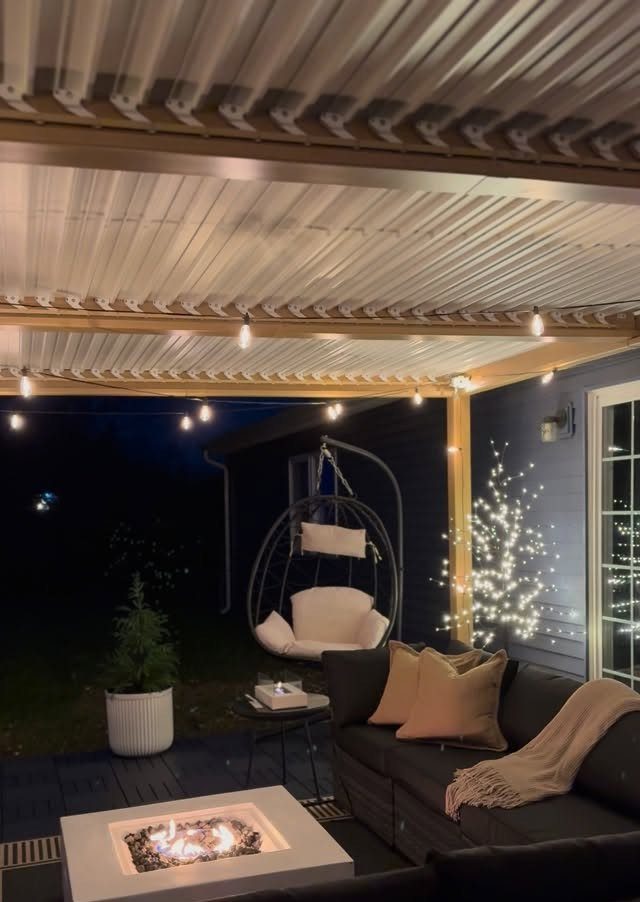
Under a covered patio like this one, a strand of warm white bulbs along the roofline puts light overhead, where it spreads over the sofa, the fire pit and the hanging chair at once.
Hooks along a beam or rafter make the easiest anchor points.
Leave a little slack between hooks so the strand drapes in soft swags. A pulled-tight line looks stiff, and I prefer the loose version.
2. Pergola Lighting
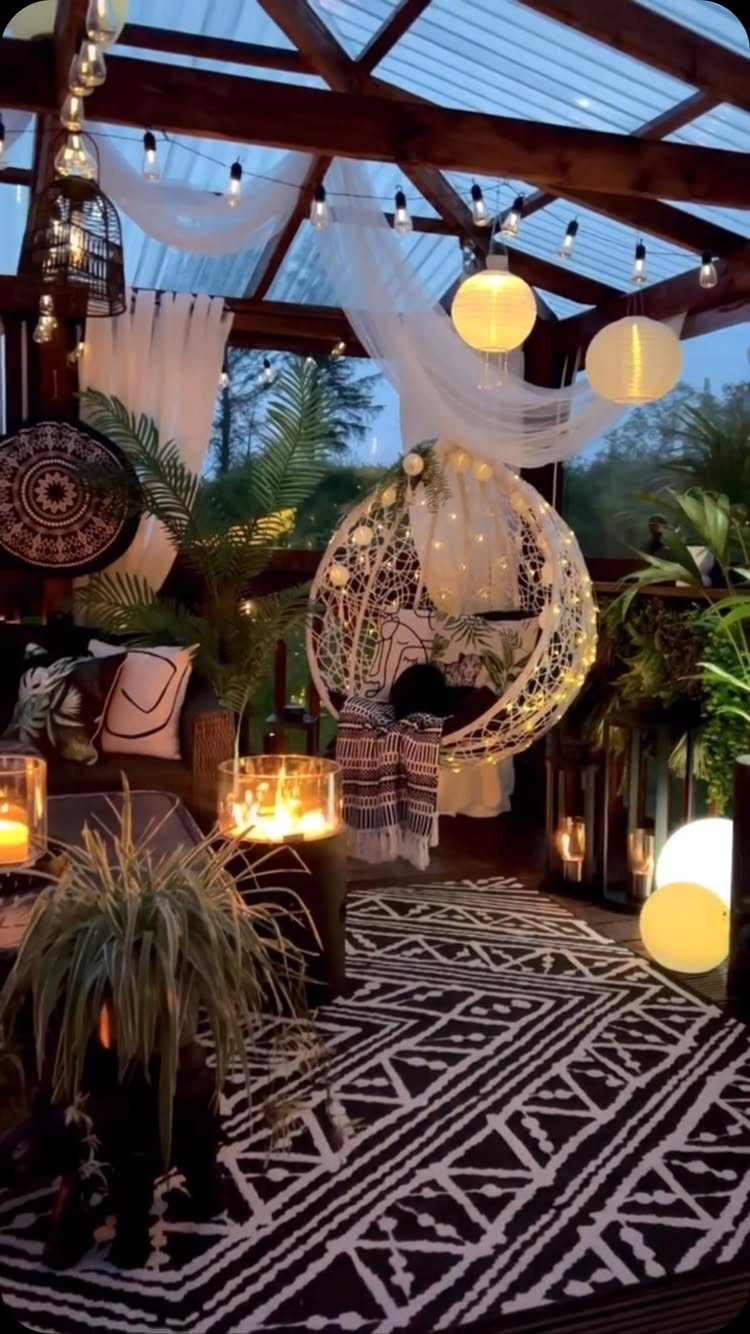
A pergola already has the posts and crossbeams that most patios lack, so lighting can go up and over in several layers.
Run strands along the beams, wrap one around each column, and hang lanterns from the crossbeams at different heights.
Uneven drops look better than a single straight row. White fabric draped across the top is a separate option: it softens the glow and adds a sense of enclosure, though it takes more hanging hardware.
3. Lanterns
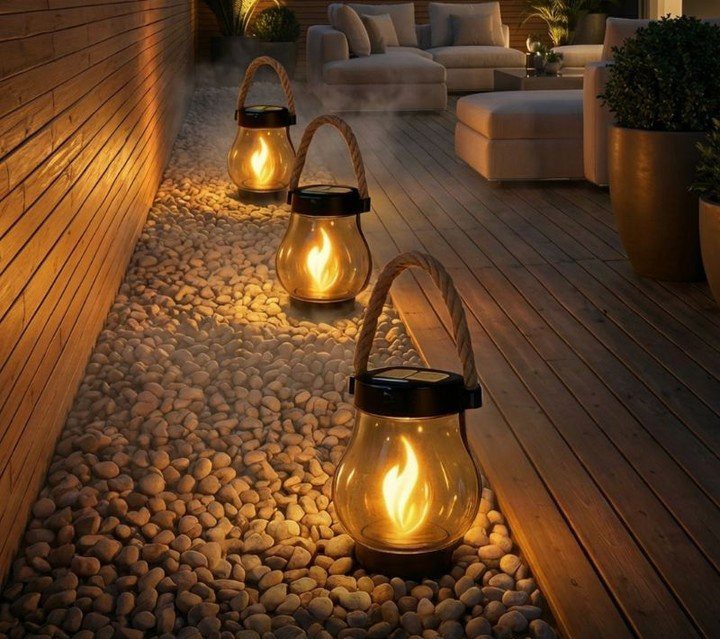
Light that carries anywhere is the real draw of a lantern, since there is no cord to route and no outlet to hunt for. Set one on a tabletop, in a dark corner, or along the edge of a deck.
Solar versions need a sunny spot during the day to recharge, so park them in the open before dusk.
I like them in groups of three, and a rope handle lets you hang one from a hook when the table fills up.
4. Path Lighting
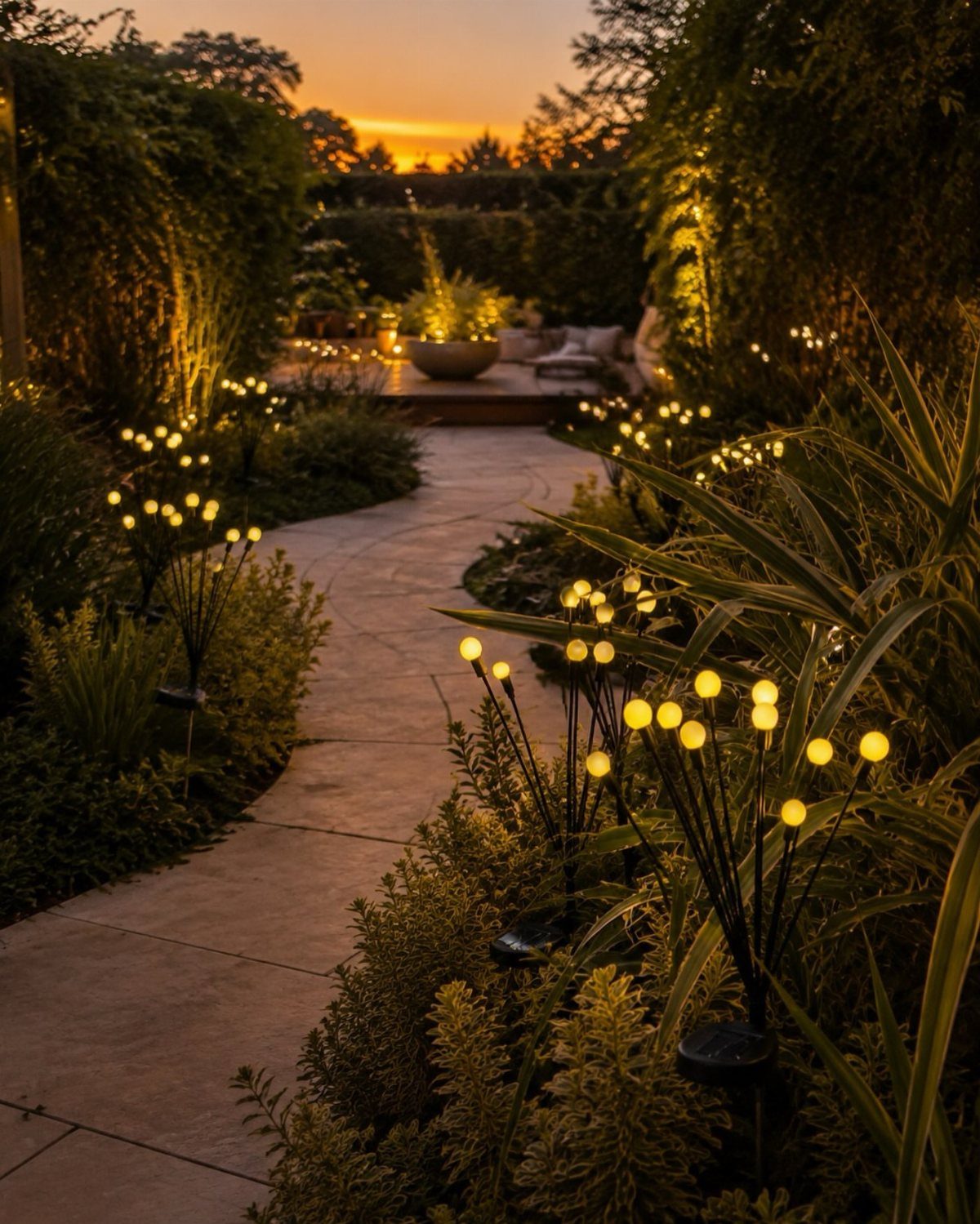
Low orbs set along the edge of a stone path give walkers a clear line to the patio and put a soft glow on the plants beside it.
Space them so each pool of light nearly touches the next; gaps leave dark patches where footing is hardest to see.
Keep them on the planting side of the stones so they stay out of the way of feet. Warm yellow bulbs suit a garden better than cool white.
The amount of lights you use in your outdoor space will largely depend on the size and location of the area you’re lighting. “Aim for bulbs with a warm tint, ideally a 2700-degree temperature,” Hulcher Tollett says.
5. Tree Lighting
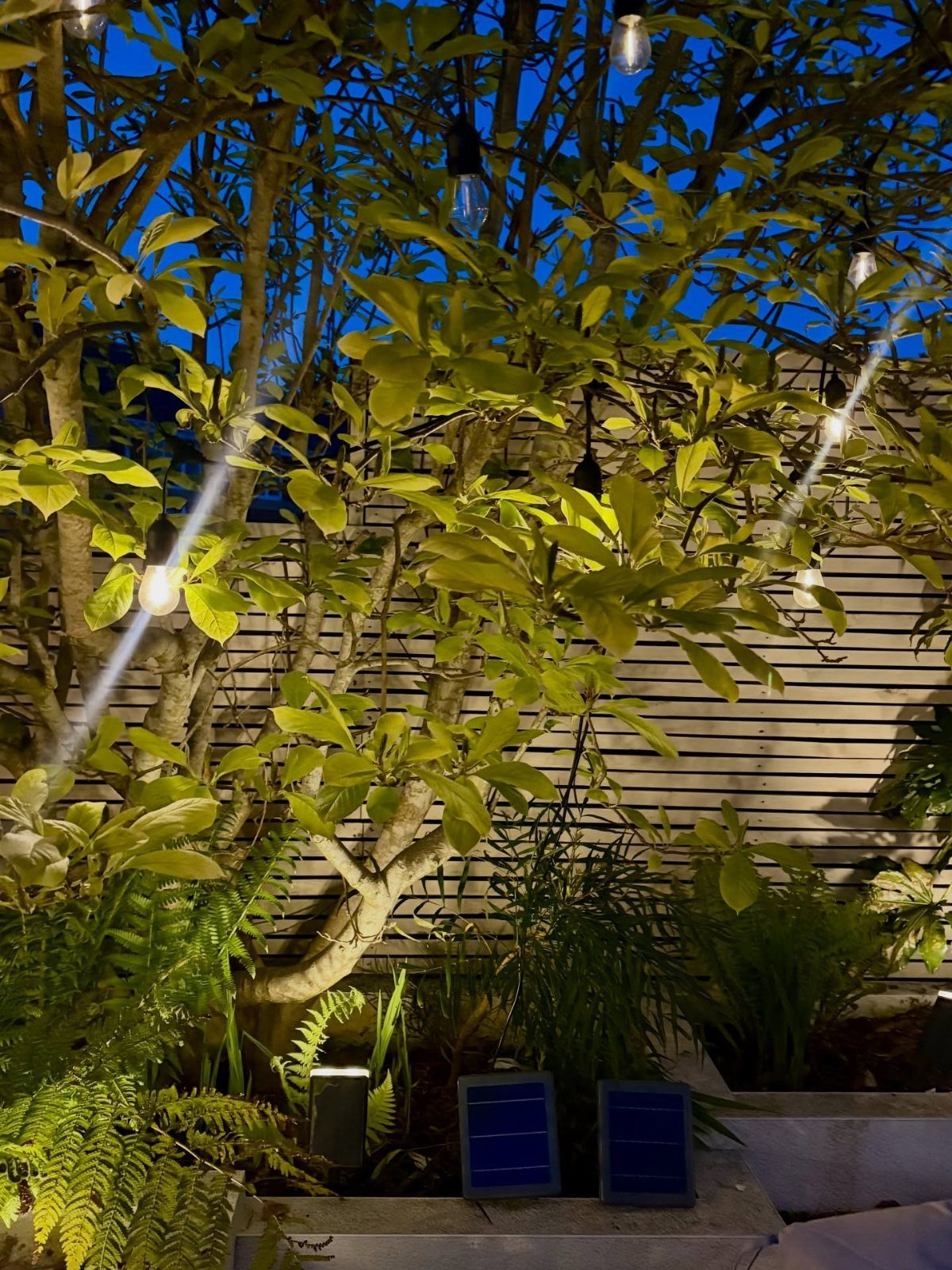
Two jobs fit one tree: it can hold strands in its branches, or it can be the thing that gets lit.
Doing both gives the best result. Spotlights at the base, aimed up, turn the leaves into a glowing canopy, while bulbs hung overhead add sparkle.
Drape the strands loosely instead of cinching them tight, so branches have room to grow. Solar spotlights skip the wiring but need a few hours of sun, which a shady tree may not give them.
6. Pool Lighting
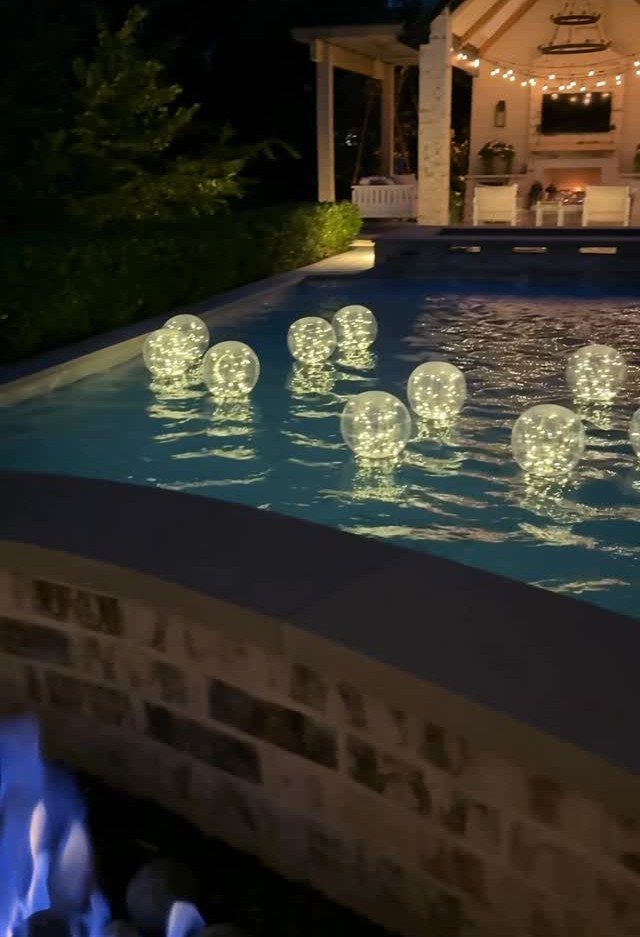
Floating spheres light a pool with no wiring at all. Drop them on the surface and they drift, so the glow shifts around as the water moves.
A cluster of different sizes looks more natural than evenly spaced singles.
Because they sit on top of the water, they also throw light onto nearby patio furniture, which helps tie the pool and seating area together. Check that any set you buy is made for water.
7. Outdoor Fans
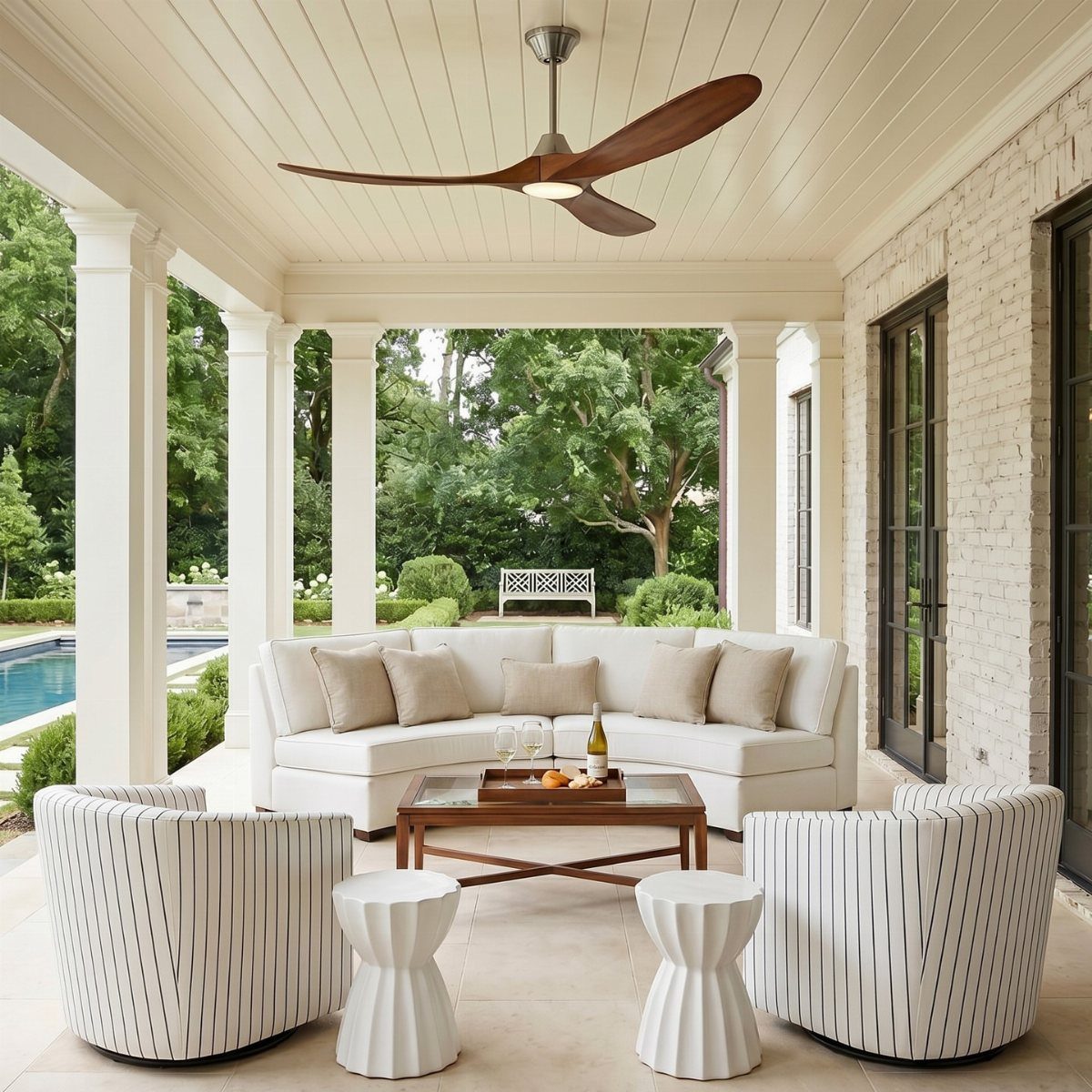
A ceiling fan with a built-in light does two jobs from one mount, which leaves the rest of the ceiling clear.
Over a seating group like this one, it moves air across the sofa and chairs and lights the coffee table below.
Fans need a ceiling to hang from, so this fits covered patios best. Check that the fan is rated for damp or wet locations before you buy.
8. Fireplaces
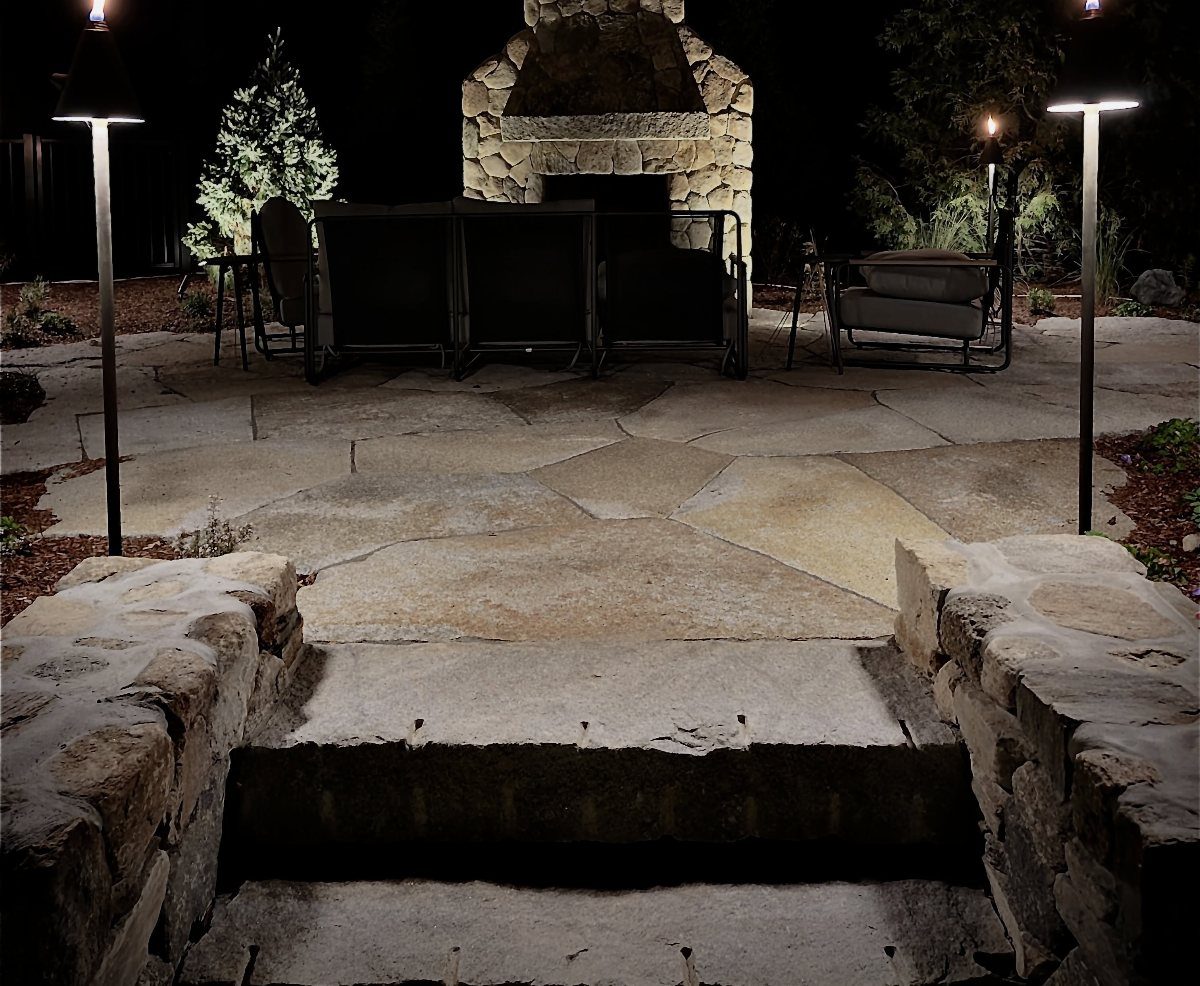
Seating turned toward a stone fireplace gives a patio a center, and the flames supply light and heat together. Tall torches set at the edges of the seating area push a little glow out past the circle of chairs.
I would keep the torches a few steps back from the seats and let the fire do most of the work.
A fireplace is a bigger build than any other idea here, so price out the materials, permits and labor first.
9. Candles
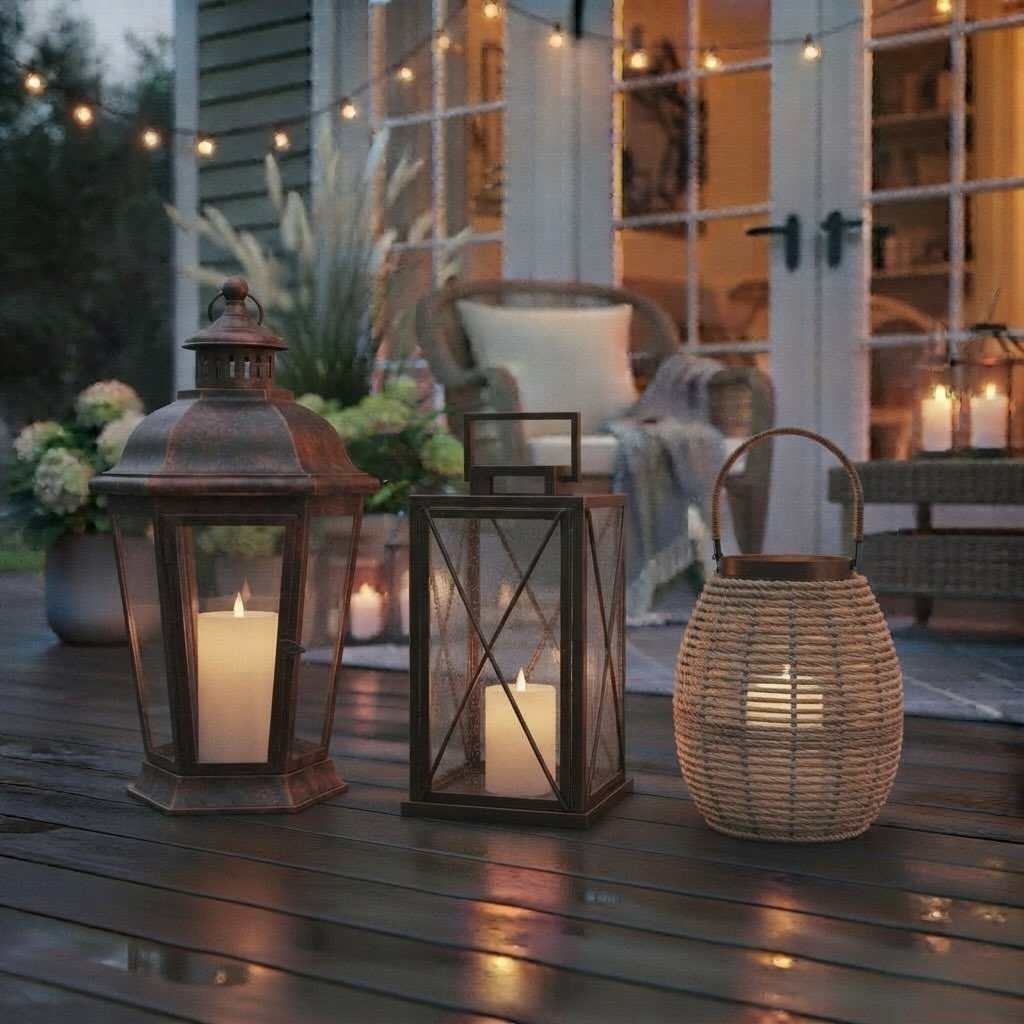
Lanterns hold candle flames steady and keep them from blowing out, which makes them a good fit for a deck table or the floor beside a chair. Real wax gives a warmer, flickering light than any battery version.
I like 3 lanterns in different sizes grouped together. Put them on a steady surface, and never leave a flame burning when no one is outside.
10. Sconces
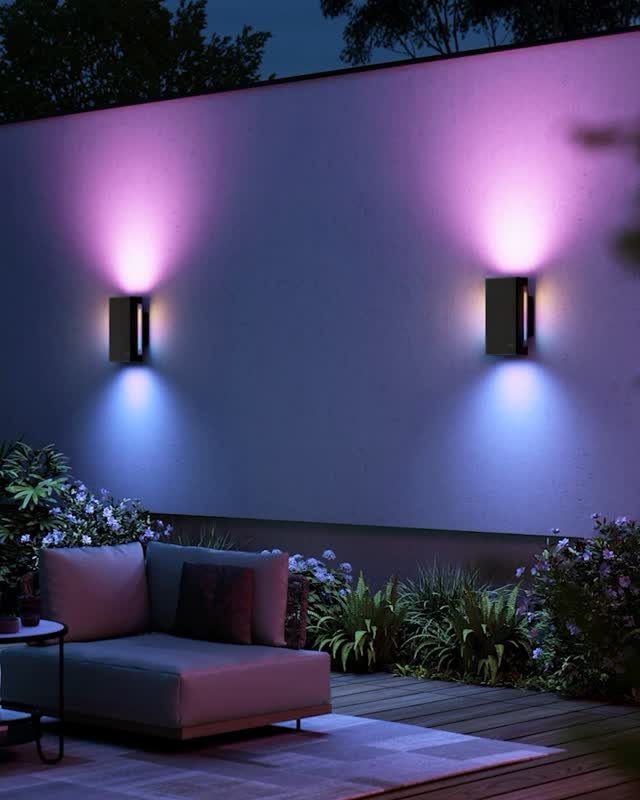
Mounted on a wall, a sconce lights a patio without taking up any floor or table space, which helps on a balcony or a narrow porch.
A pair set at the same height on one wall looks balanced, and fixtures that throw light up and down wash the wall itself.
Colored light, like the purple and blue here, makes a stronger mood than plain white. Hardwired sconces are a bigger job than plug-in lighting, and renters should ask the landlord first.
11. Solar Lights
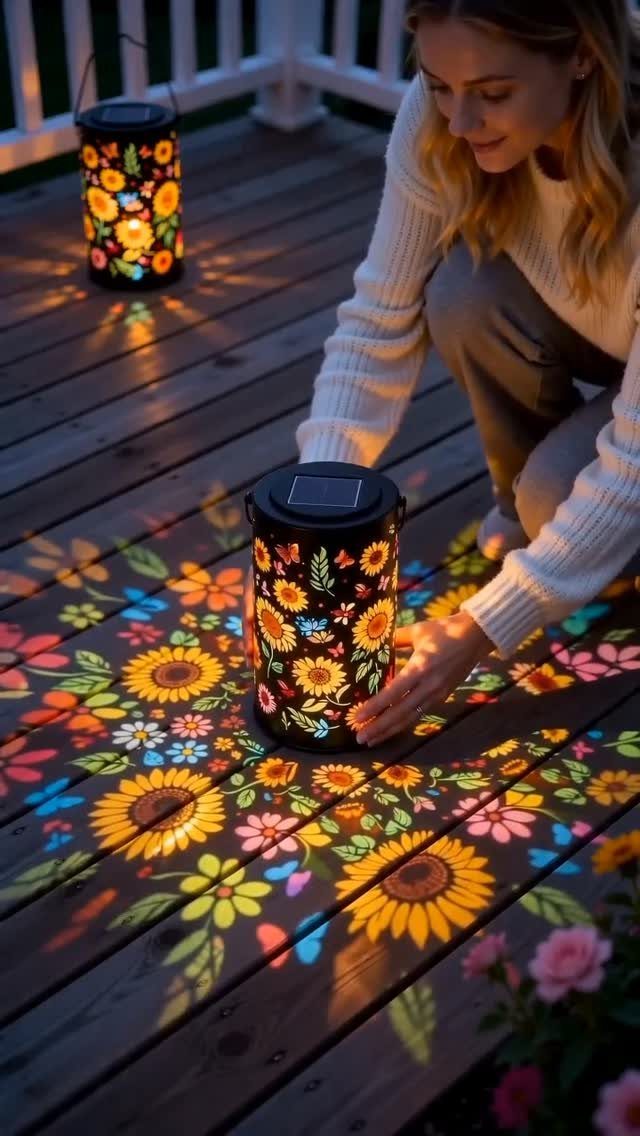
Because solar fixtures need no outlet and no cord, they go wherever the evening goes. Carry one to the deck table for dinner, then move it to a corner or beside the steps the next night.
A lantern that casts a pattern on the floor adds decoration as well as light, though it will not brighten a whole seating area. Pair it with a brighter source if you read or eat outside.
12. Globe Lights
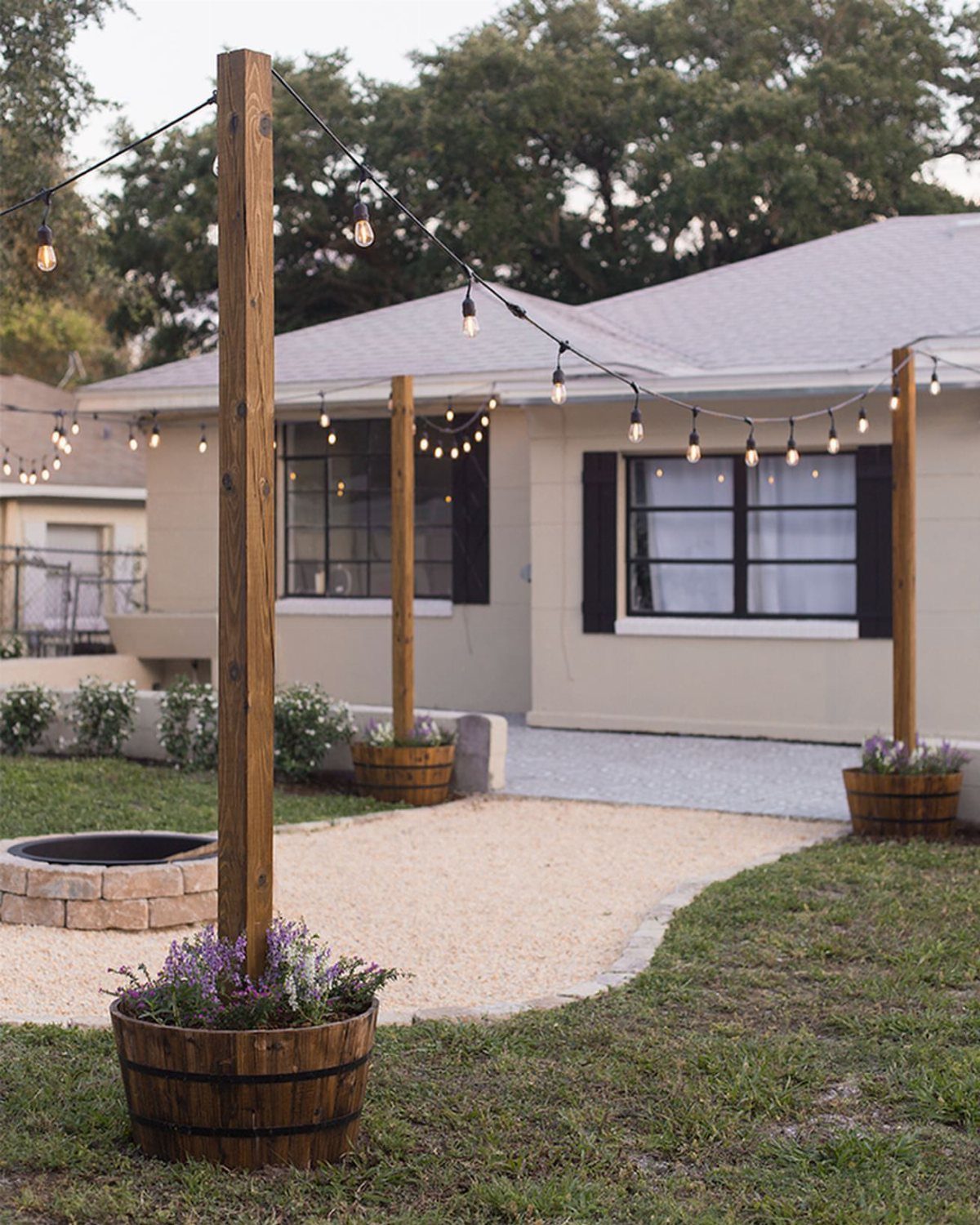
Round bulbs on a long string suit open yards, where there is no roof or beam to hang from. Posts set in barrels, as in this yard, give the strand its anchor points without drilling into the house or fence.
Globe lights also work along a fence line or over a dining table. I would pick warm white bulbs, since they flatter faces and food better than cool white.
13. Curtain Lights
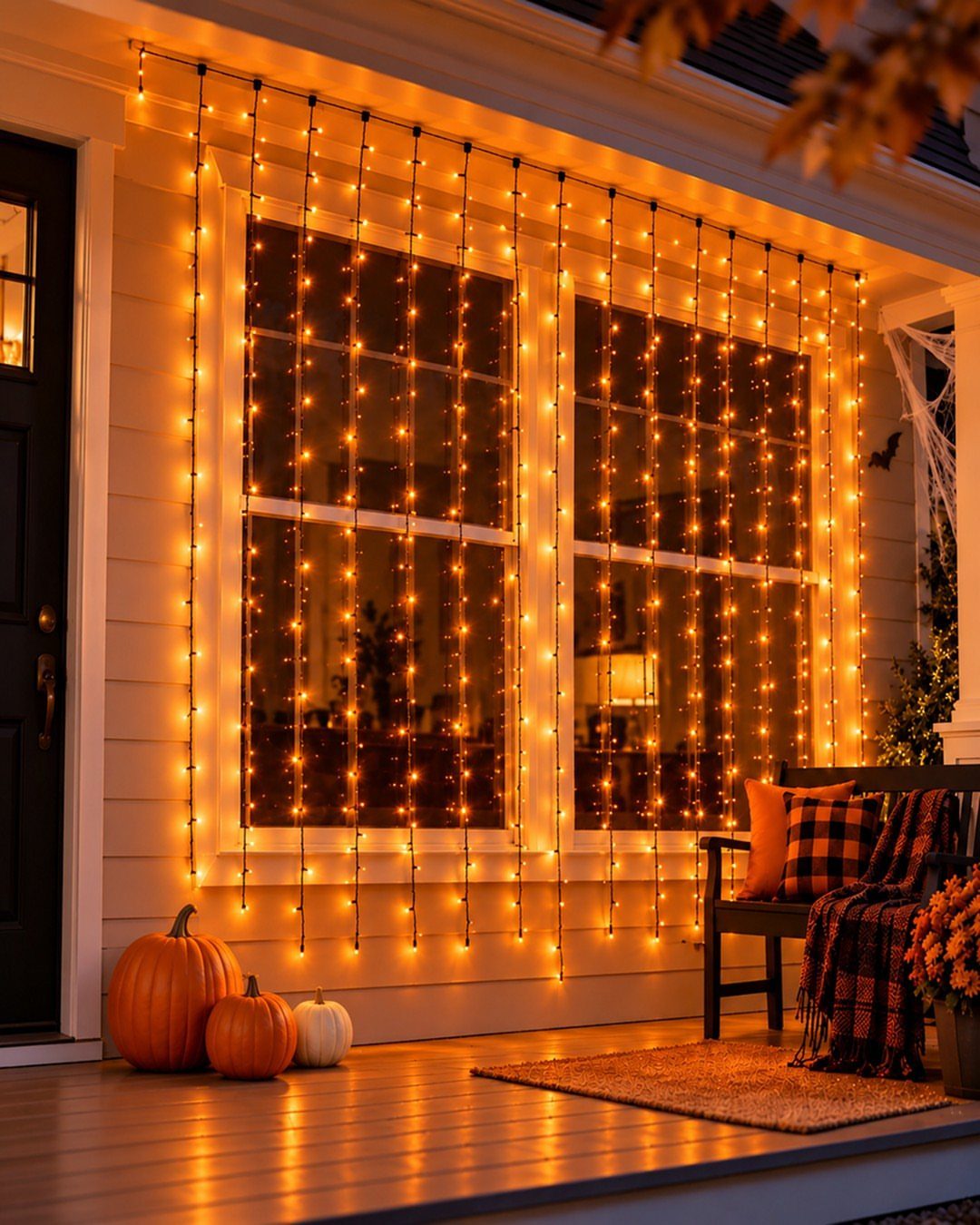
Vertical strands hung from a rod or hooks turn a plain window or wall into a glowing backdrop. Curtain lights in a warm orange tone suit a porch in fall, and they read as décor even when switched off.
A porch with a bench nearby gets a cozy corner out of it, with no overhead hardware at all.
14. Pendant Lights
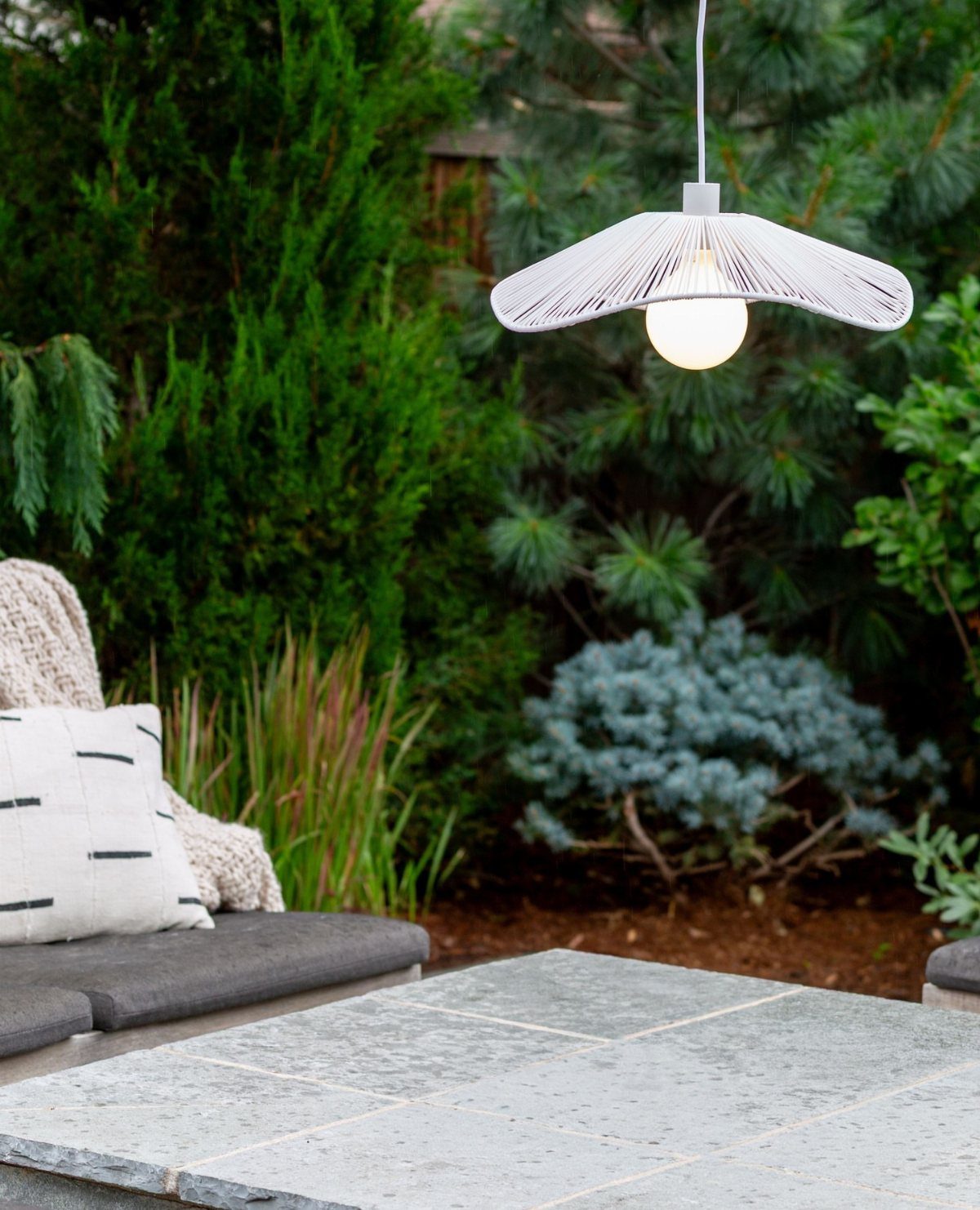
A wide-brimmed pendant gives a patio a ceiling where none exists, and hung low over a table it pools light right where people sit.
I would pick a shade with a generous brim, since it hides the bulb from seated eyes and keeps glare down. Hang it above the table’s center, not above a single chair, so the light reaches everyone.
15. Deck Lighting
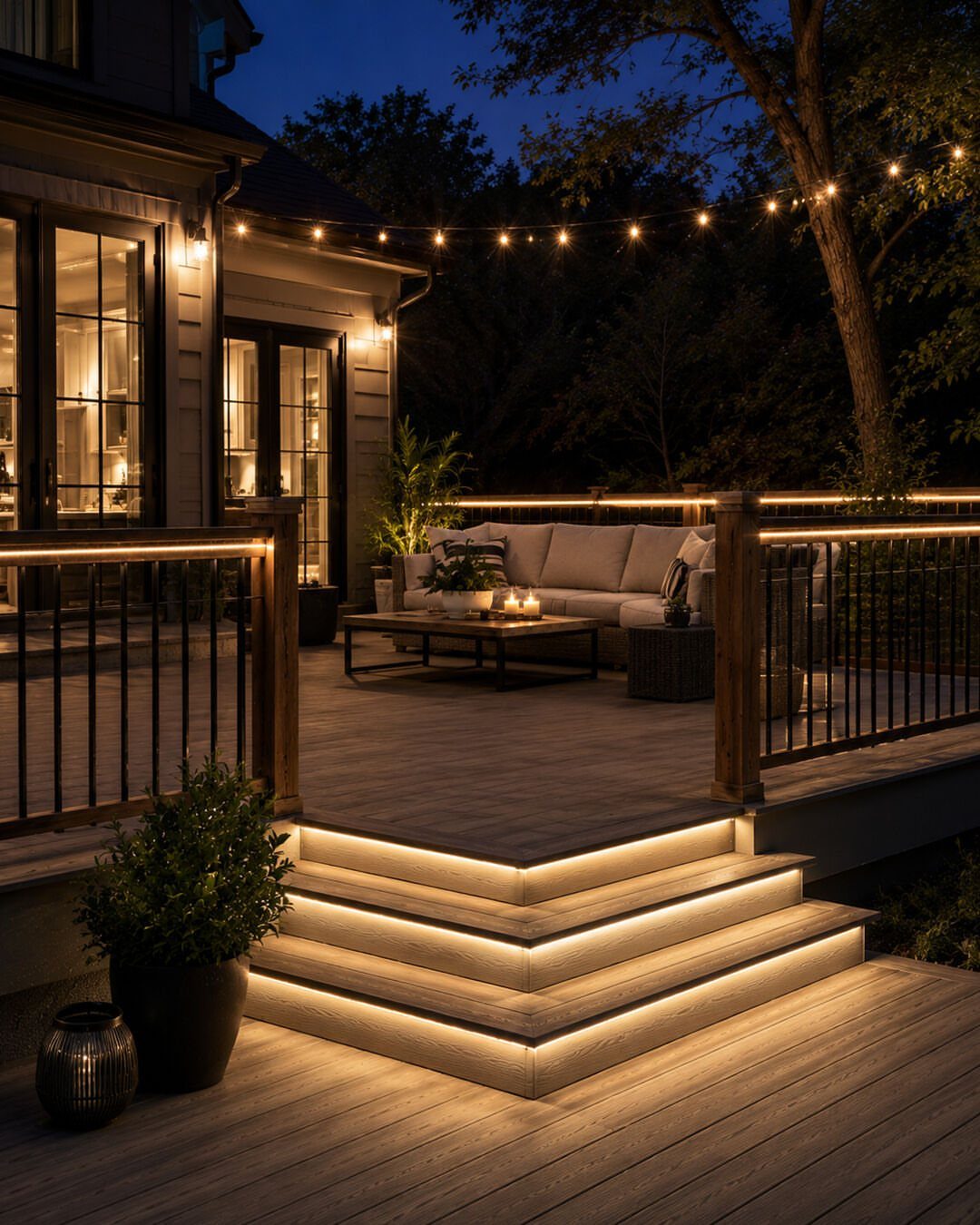
LED strips tucked under stair edges and railing caps mark every step and rail line without a single lamp standing in the way.
Pair them with a strand of overhead string lights, and the deck gets light at both foot level and head height.
Stairs are where I would spend first, since a lit tread edge is easy to see in the dark. Planning the wiring before the boards go down is far simpler than fishing cable afterward.
16. Chandeliers
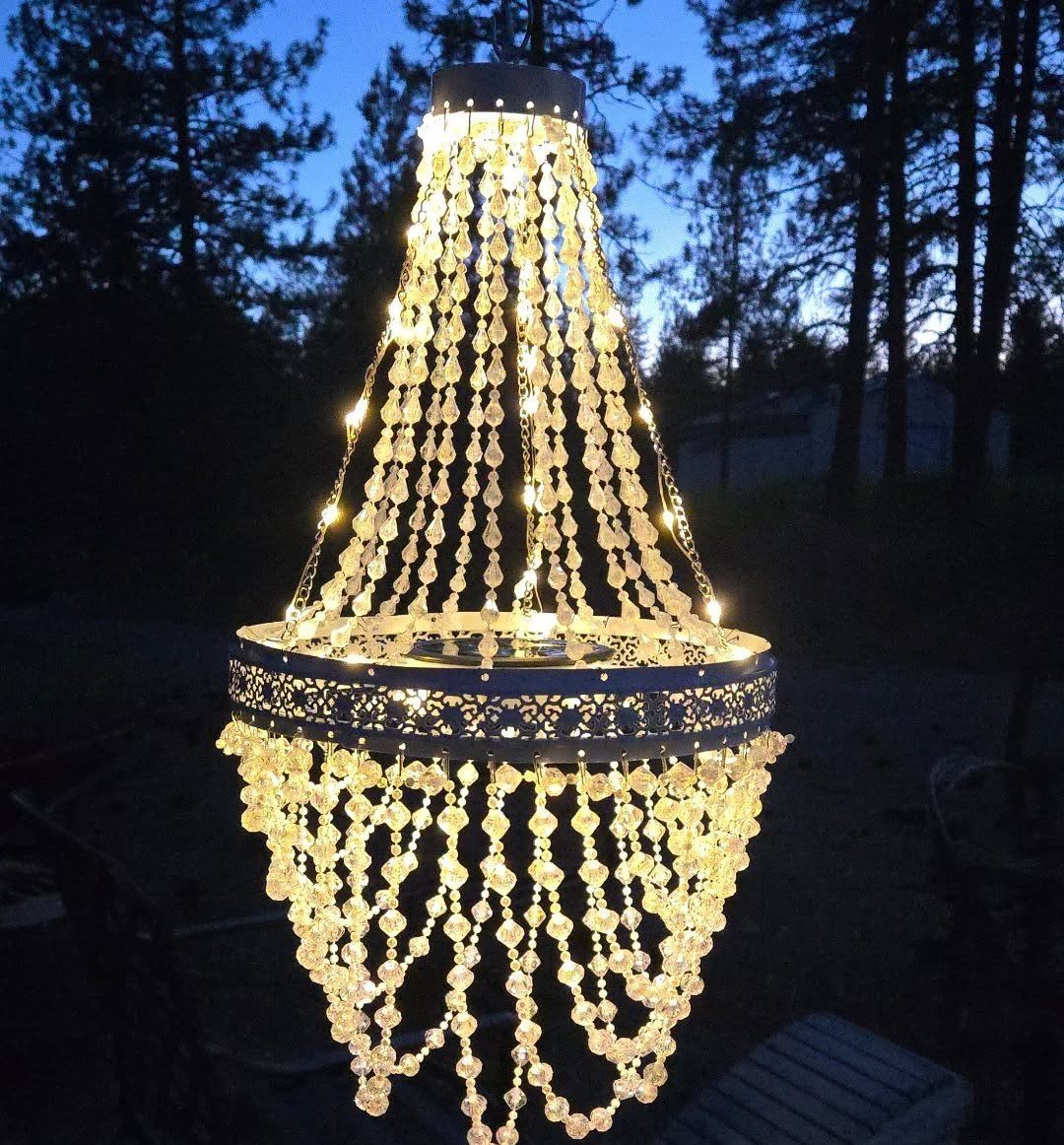
Hung from a pergola beam or a tree limb, a crystal-beaded chandelier brings a formal, dinner-party feel to an otherwise casual yard. At dusk the beads catch the glow and scatter small sparks around it.
Pick a fixture made for outdoor use, and give it a covered spot if you can. This is a statement piece, so I would let it hang alone as the center of the space and keep everything around it simple.
17. Spotlights
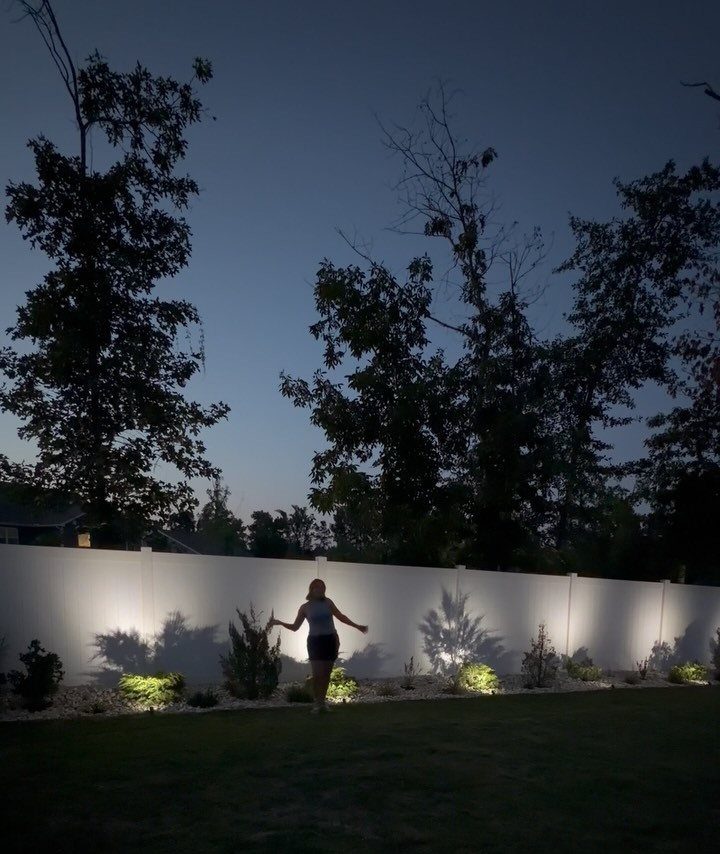
Aimed low at a fence or a cluster of shrubs, spotlights light a surface instead of a space. A white fence works especially well because it bounces the beam back and brightens the whole yard edge.
Angle each fixture so the beam grazes the surface, then walk the yard at night and adjust. Place them behind plants, not in front, so the glare stays hidden and only the glow shows.
18. Lighted Umbrella
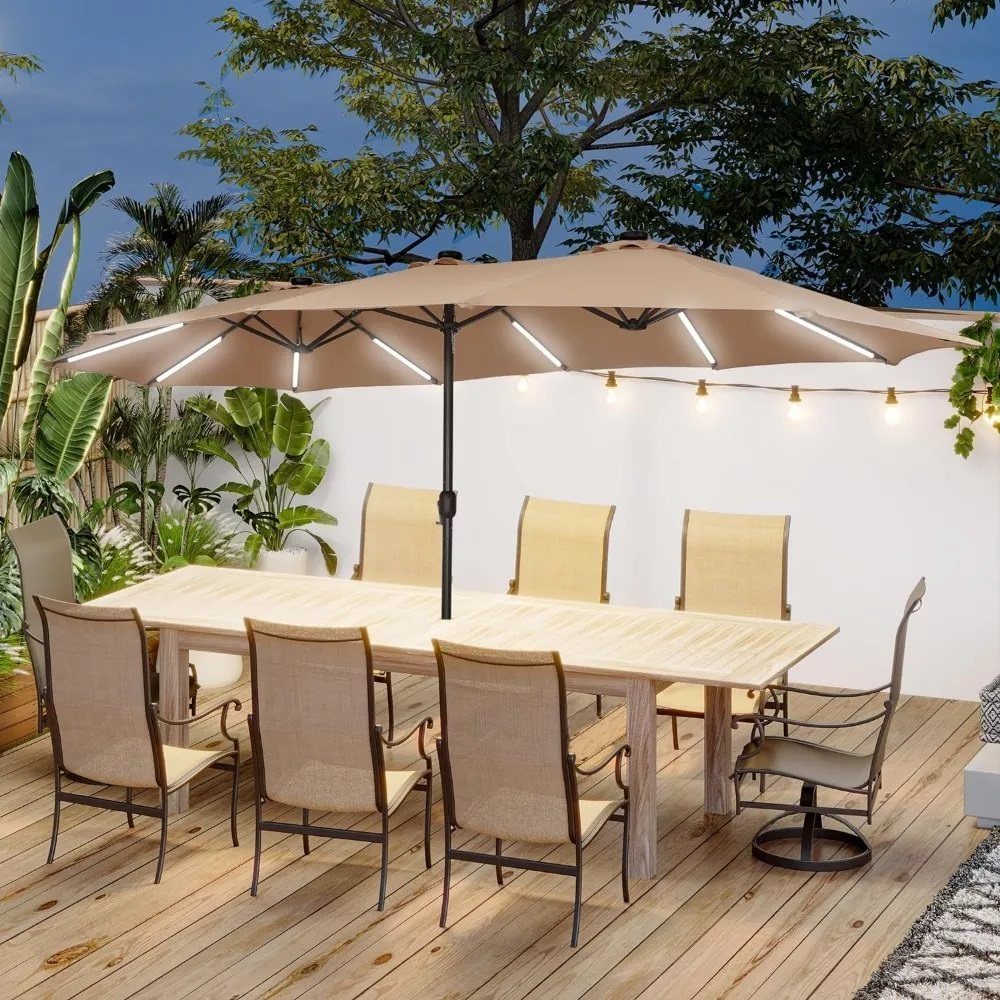
Shade by day and a lamp by night come from one pole when the umbrella has LEDs built into its frame. Over a dining table, the light sits right above the plates, which is where it matters most.
This suits a deck or small patio where a hardwired fixture isn’t practical. A tan canopy keeps the glow warm, and I would choose that over white for evening meals.
19. Lighted Jars
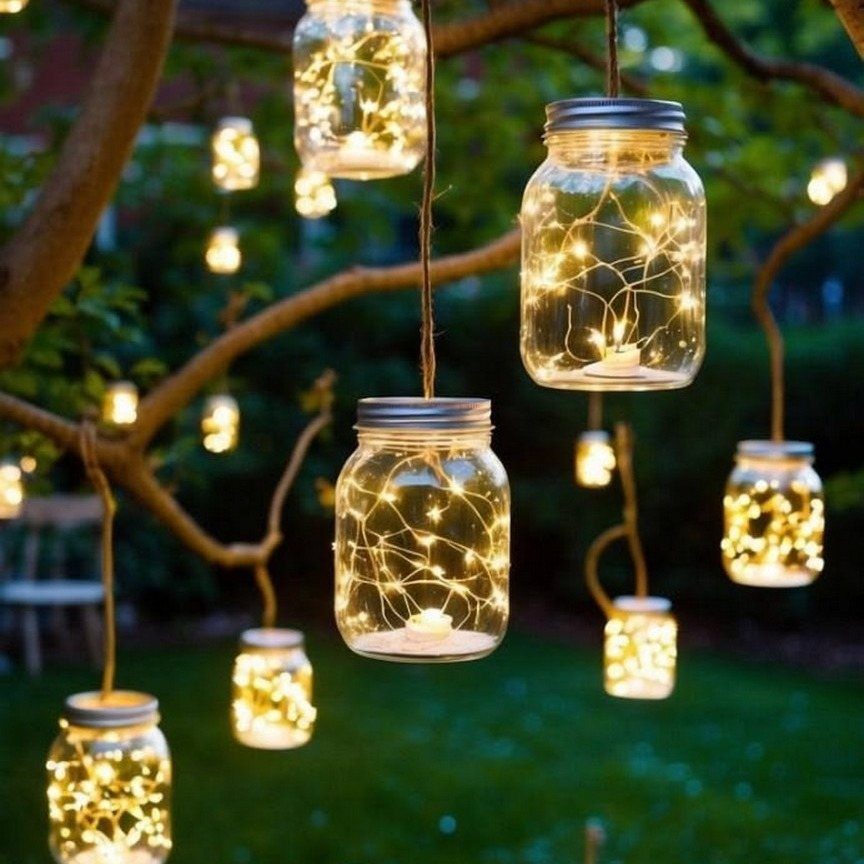
Mason jars with fairy lights inside add a second layer of glow next to the main strands, and they hang at a different height from anything strung overhead.
Tie each jar from a branch at its own length so the cluster looks scattered, not lined up.
From across a yard, a string of warm white bulbs glows the way a row of candle flames does, soft and a little amber.
I would hang an odd number, 5 or 7, and keep them clear of the trunk so they swing freely.
20. Colorful Light Projections
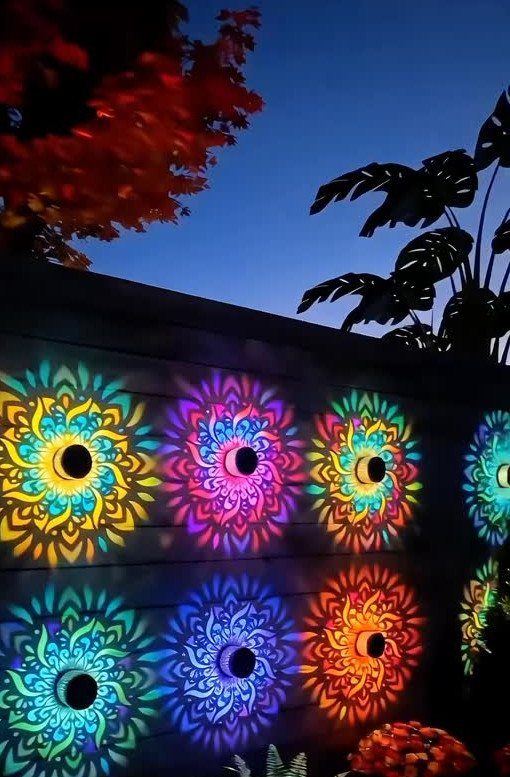
A projector aimed at a plain fence paints it with color, with no hanging, no wiring along the boards and no ladder. Mandala patterns suit a dark fence best, because a dark surface lets the colors stand out at dusk.
The maker of this setup said it made the backyard 10x better, and a dark backdrop is a big part of why it works.
Set the unit on a stake or low table, then nudge the angle until the pattern fills the fence.
21. Integrated Step Lighting
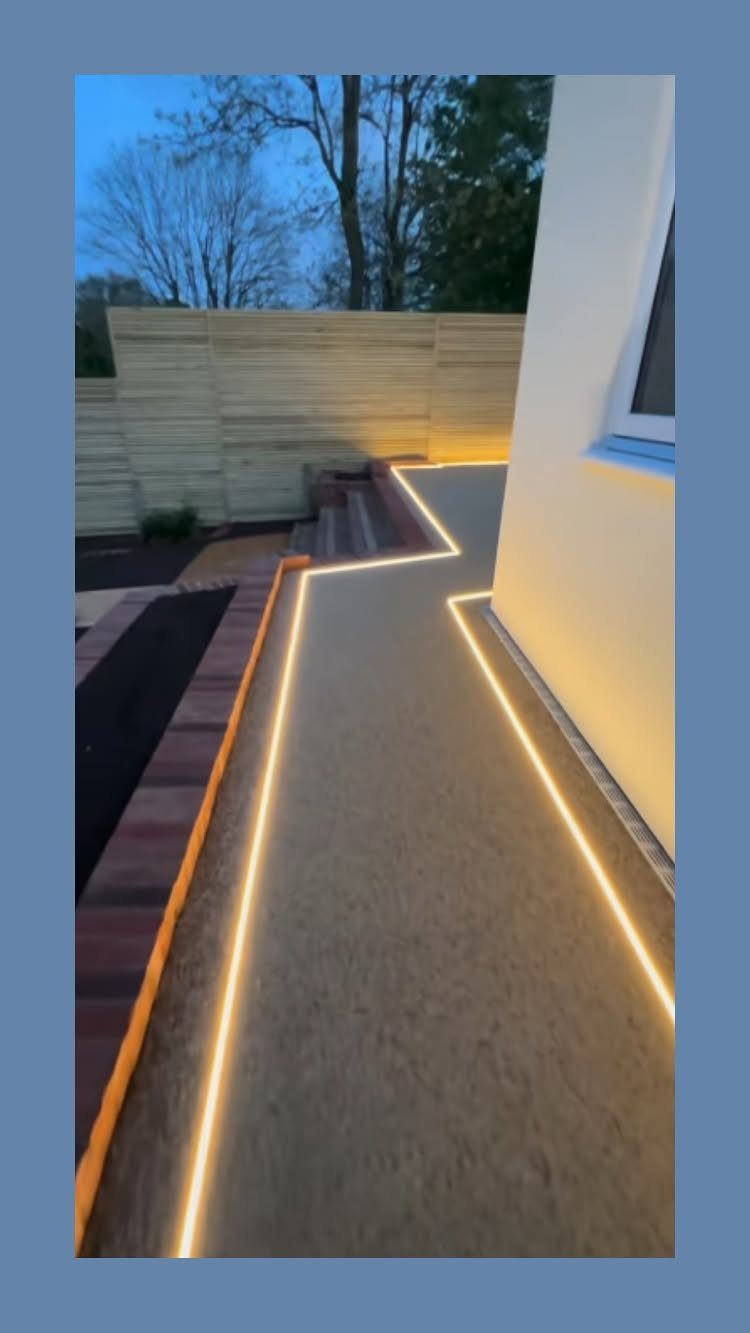
Warm LED strips run along a patio edge and under each wooden step, so the outline of the walkway shows up before your foot finds it.
Tuck them under the lip of the tread or along the border where they stay out of sight and only the glow reaches the ground.
Pick a warm tone, which flatters wood and concrete alike. Stick-on strips make this a weekend job, though the surface needs to be clean and dry first.
22. Deck Railing Lights
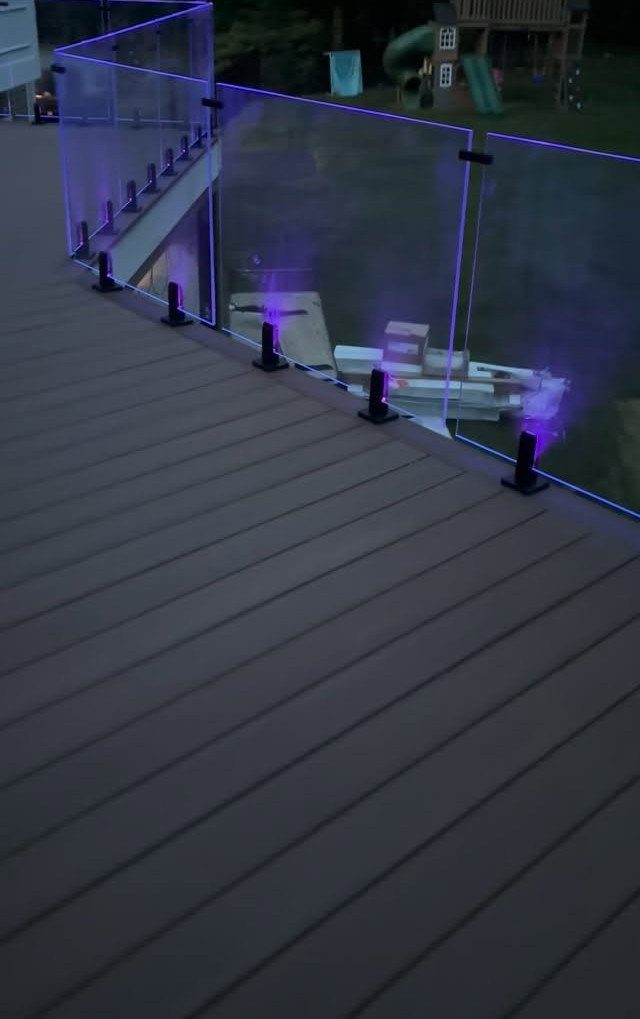
Small LEDs set at the base of each glass panel light the deck edge from the floor up, and the glass lets that glow carry outward instead of blocking it.
Purple gives the deck a moody, club-lounge feel, while warm white keeps it calmer.
One light per panel keeps the spacing even. Since the lights sit low, they mark where the deck ends without shining into anyone’s eyes.
23. Outdoor Movie Setup
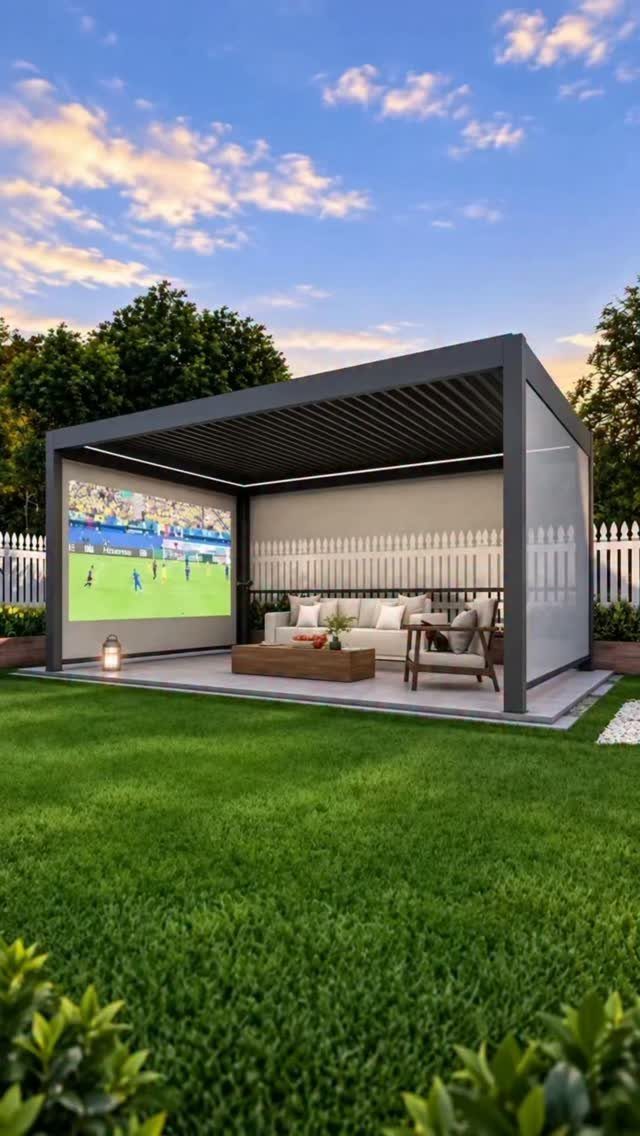
A pergola gives an outdoor screen a natural home: seating sits under the beams, and the screen stands across the lawn. Put the sofa and a coffee table in a group facing it, so drinks and snacks stay within reach.
Dusk is when the picture looks best, because the sky is dim enough for the screen to read clearly. I would keep the lights around the seating low and warm, so they don’t wash out the image.
24. Wicker Outdoor Pendants
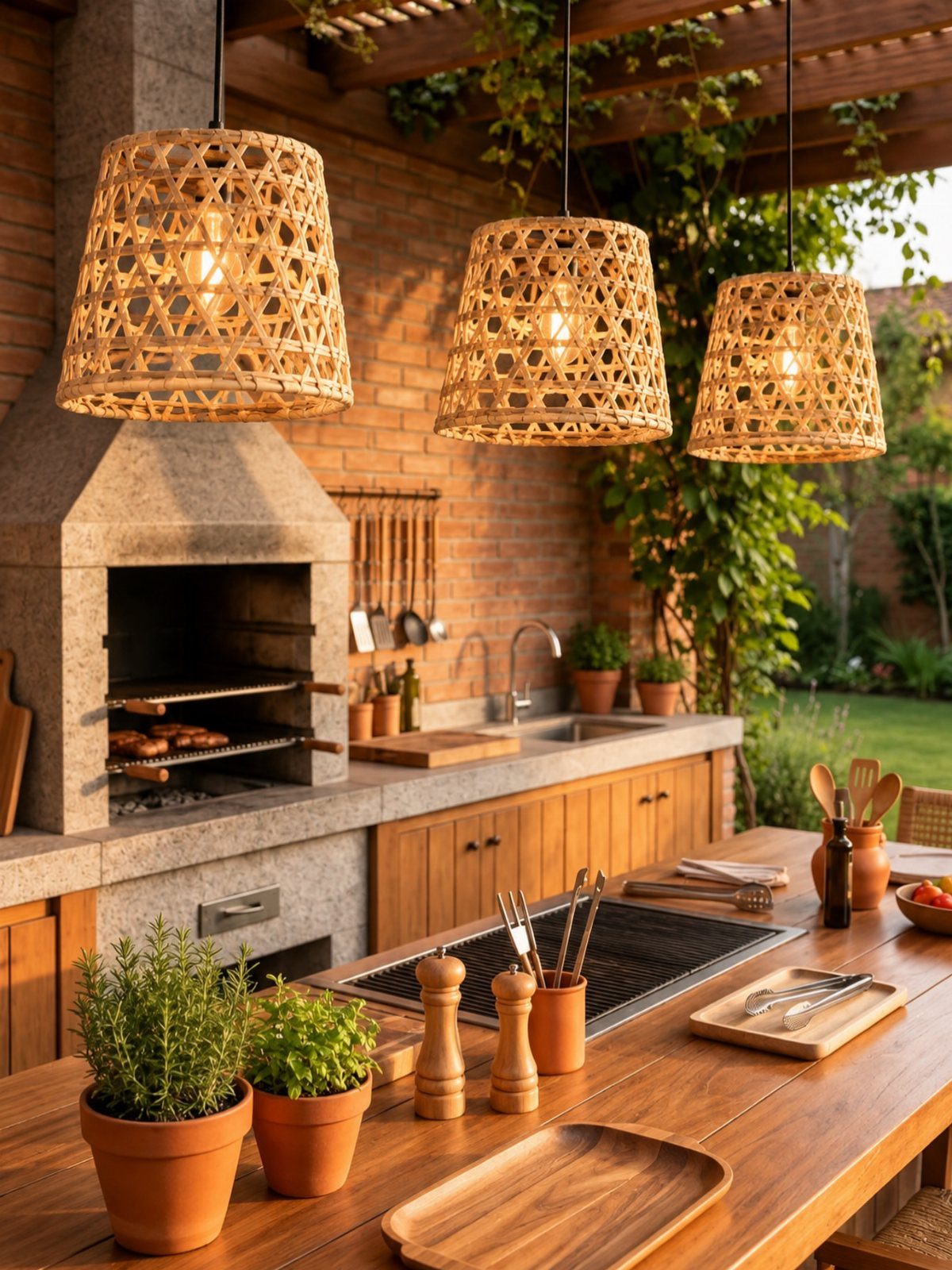
Woven wicker pendants hung in a row over an outdoor kitchen counter give the cook light exactly where the chopping happens. The open weave scatters the glow into soft patterns, which suits a rustic brick-and-stone setting.
Pick fixtures rated for outdoor use, and hang them at an even height over the counter. I like three in a line, spaced to match the counter’s length.
25. Eave-mounted Lantern Lights
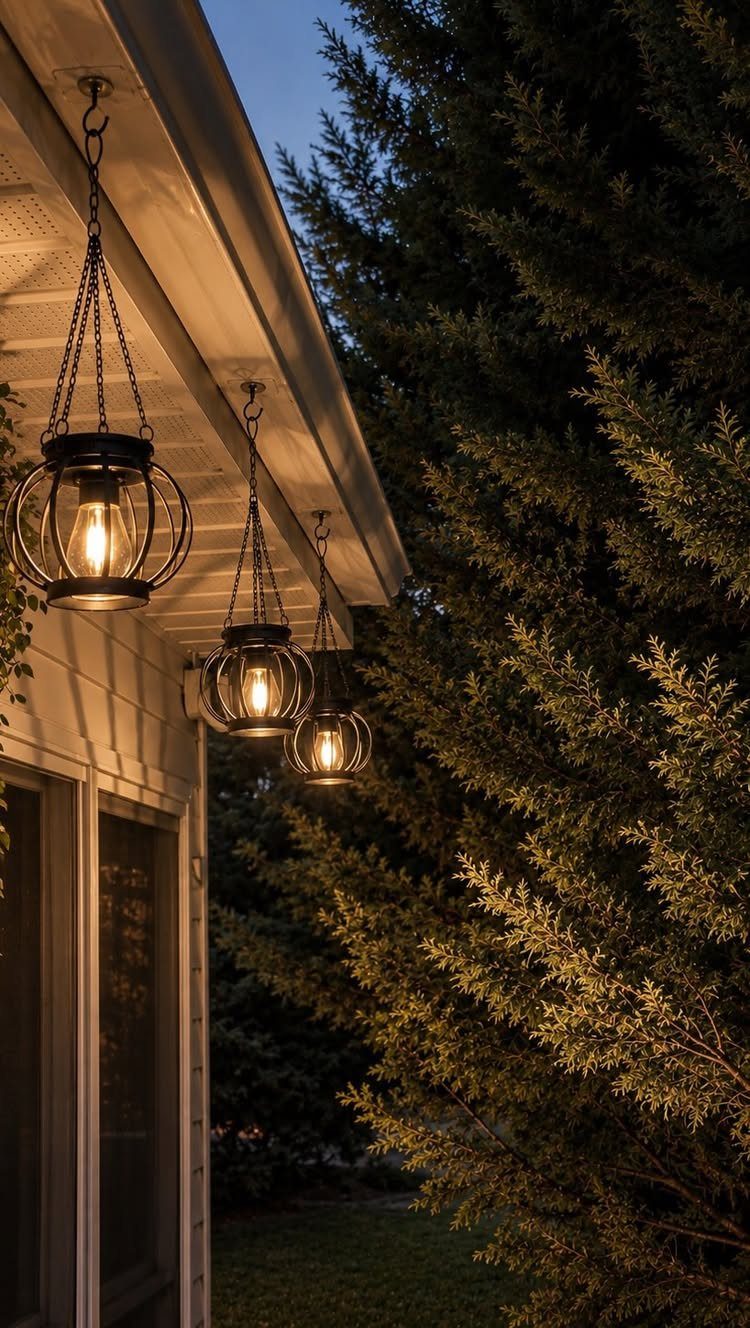
Black lanterns hung from white eaves give a house front a crisp contrast, and the glow reads best against a twilight sky.
Placed beside a sliding glass door, they light the threshold and the foliage next to it, so the way out to the patio never sits in the dark.
I would hang them in a set of three, spaced evenly along the eave. Black against white also keeps the fixtures looking intentional even when switched off.
Anything wired into the house, like these eave lanterns, calls for a proper electrical install, and a rental means getting the landlord’s okay before you drill a single hole.
Frequently Asked Questions
What is the best type of lighting for a patio?
A mix beats any single type: string lights overhead for general glow, low path lights for safe footing, and a spotlight or two aimed at a fence or shrubs for accent.
Warm white gives skin tones and dinner plates a better glow than cool white does. Solar lanterns fill in where no outlet reaches, and wall sconces save floor and table space on a narrow porch or balcony.
What are the newest outdoor lighting trends for 2026?
Smart string lights are being called the leading trend of 2026: LEDs you control from a phone app, with each bulb able to show its own color and preset scenes to pick from.
Outdoor fireplaces land on the same trend lists, whether you hire someone to build one in or buy a prefab unit and set it up yourself.
A fireplace costs more and takes longer than a string of lights, so add up materials, permits and contractor hours first.
How many string lights do you need for a backyard?
It depends on the size of the space and what you want lit. One strand is usually enough for a small patio, while a dining area or a canopy needs more.
Measure the run from anchor point to anchor point first, and add a bit of length for the slack that makes the strand drape.