
Which idea fits depends on whether you can install raised beds and decking or need to stick with containers and hanging baskets.
A renter can stick to pots and a pencil layout sketch, while raised decking can trigger permits and a canopy or fire pit may need a landlord’s approval.
The range runs from hanging baskets and tiered planters to raised decking with a curved pathway and a small water feature.
Match plants to the sun and conditions the spot actually gets, and check your lease or local rules before you build anything permanent.
[link-whisper-related-posts]1. Vertical Gardening
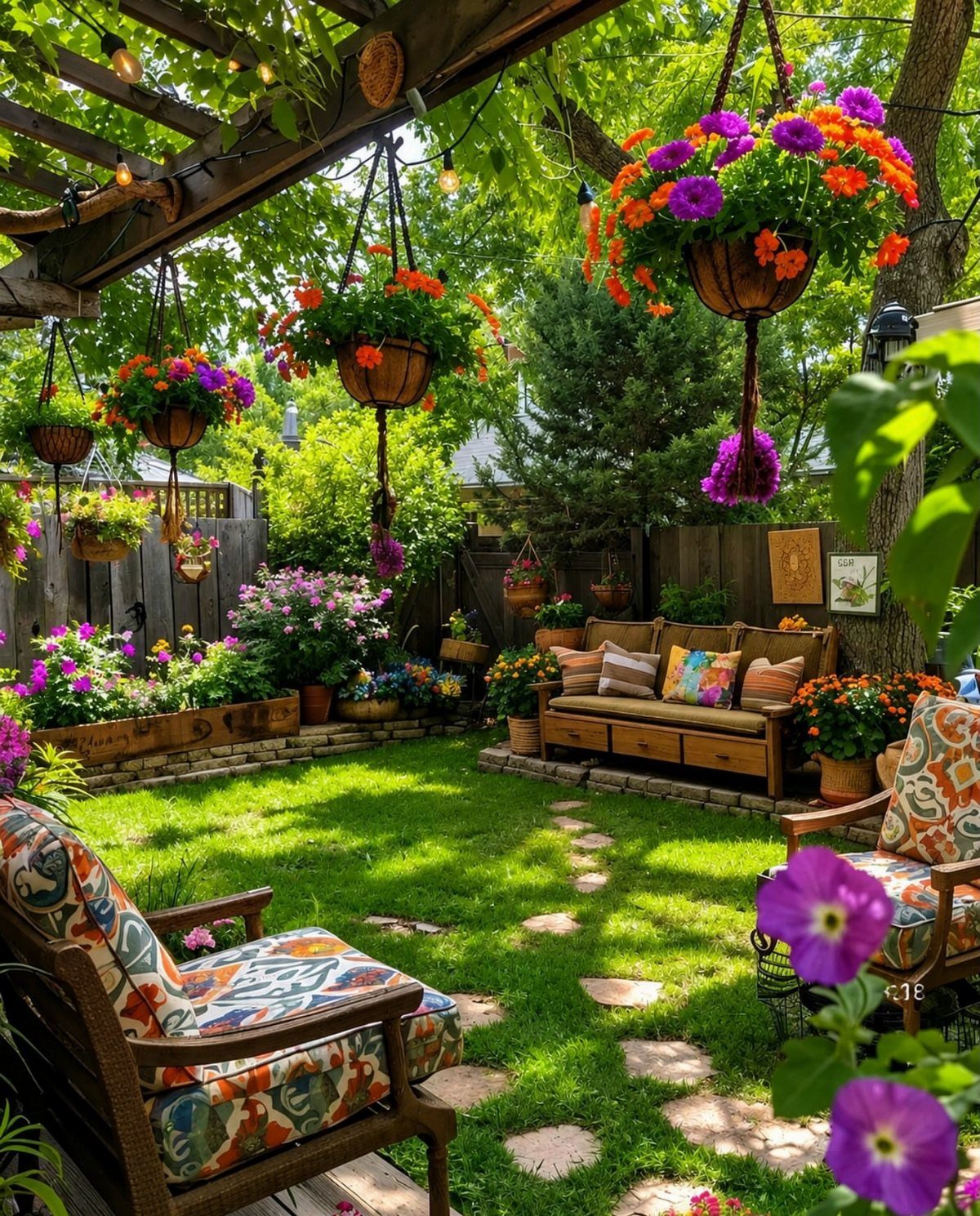
Walls, fences, trellises and shelves hold more plants than most small yards could ever fit on the ground. Going up is the cheapest way to add growing space, because the floor stays open for a chair or a walking path.
Hanging planters work well at different heights, so the eye travels up instead of stopping at the fence line.
A pergola or overhead beam gives you something sturdy to hang from. I would start with one wall and fill it before adding another.
2. Container Gardening
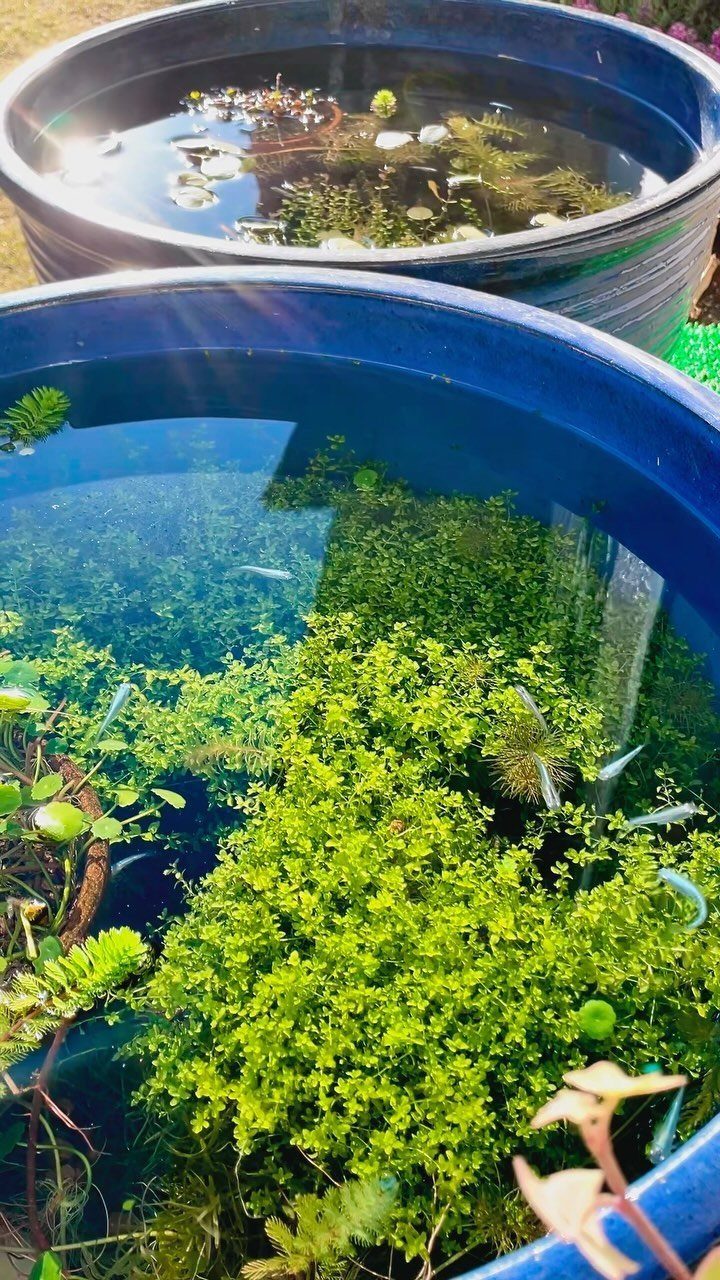
Pots, tubs and planters give you a garden that moves when you do. That matters for renters, and for anyone who wants to rearrange a patio on a whim.
Containers also aren’t limited to soil plants. Large plastic tubs can hold water, aquatic plants and small fish, which gives a tiny yard a pond-like feature without digging anything.
Plastic pots cost the least of any container type and turn up at every hardware store, though dark ones soak up heat in afternoon sun and can cook the roots.
I like starting with 2 or 3 big containers rather than a dozen small ones. Fewer pots mean less fuss.
3. Raised Garden Beds
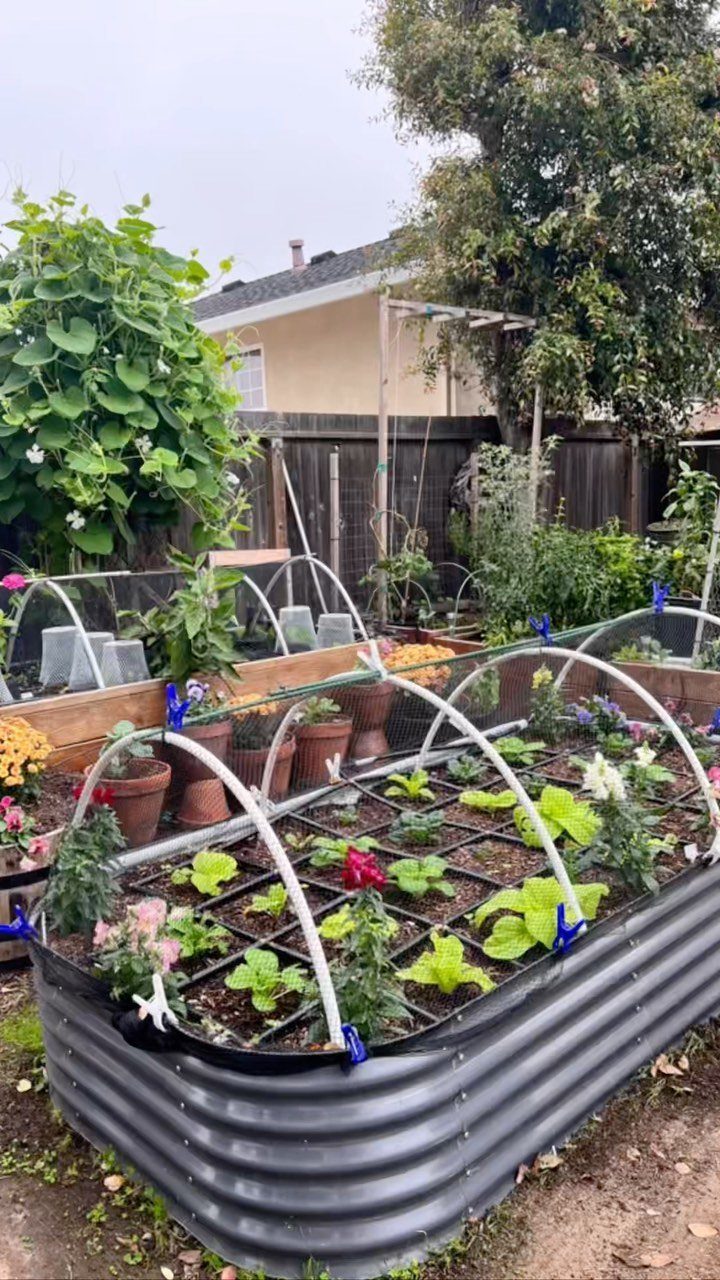
A raised bed turns a loose patch of ground into a defined growing area, and the edges make the space easier to weed, water and reach.
Corrugated metal and wood are both good choices; metal looks clean and modern, while wood suits a more traditional yard.
Hoops over the top, with a cover stretched across them, let you protect what you plant. They are simple to add and simple to remove.
Keep each bed narrow enough to reach into from the side, so you never have to step on the soil.
4. Small-space Vegetables
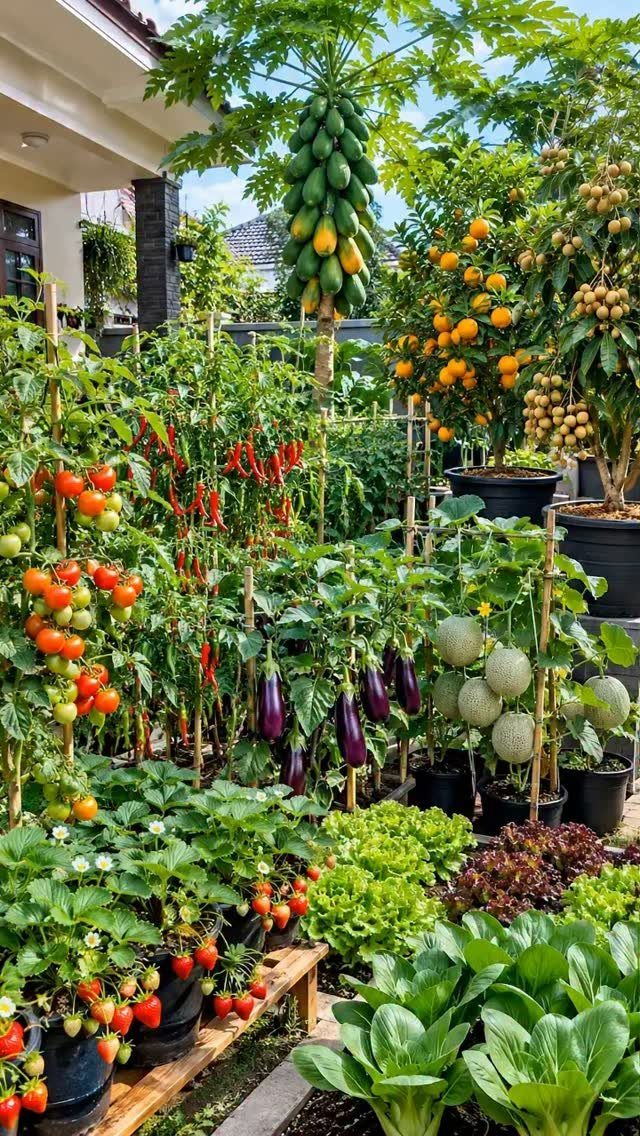
Tomatoes, chilies, eggplants and strawberries all grow in pots, which means a patio or balcony can produce real food. Packing containers close together makes a small space feel full and productive.
Choose crops you will actually eat. A few pots of leafy greens or peppers earn their spot faster than something you only grow for novelty.
Strawberries are a nice edge plant because they spill over the rim of a container.
Tomatoes, pole beans and other tall crops belong along the back, with lettuce and herbs in front, so the shorter plants still get a full day of light.
5. Hanging Baskets
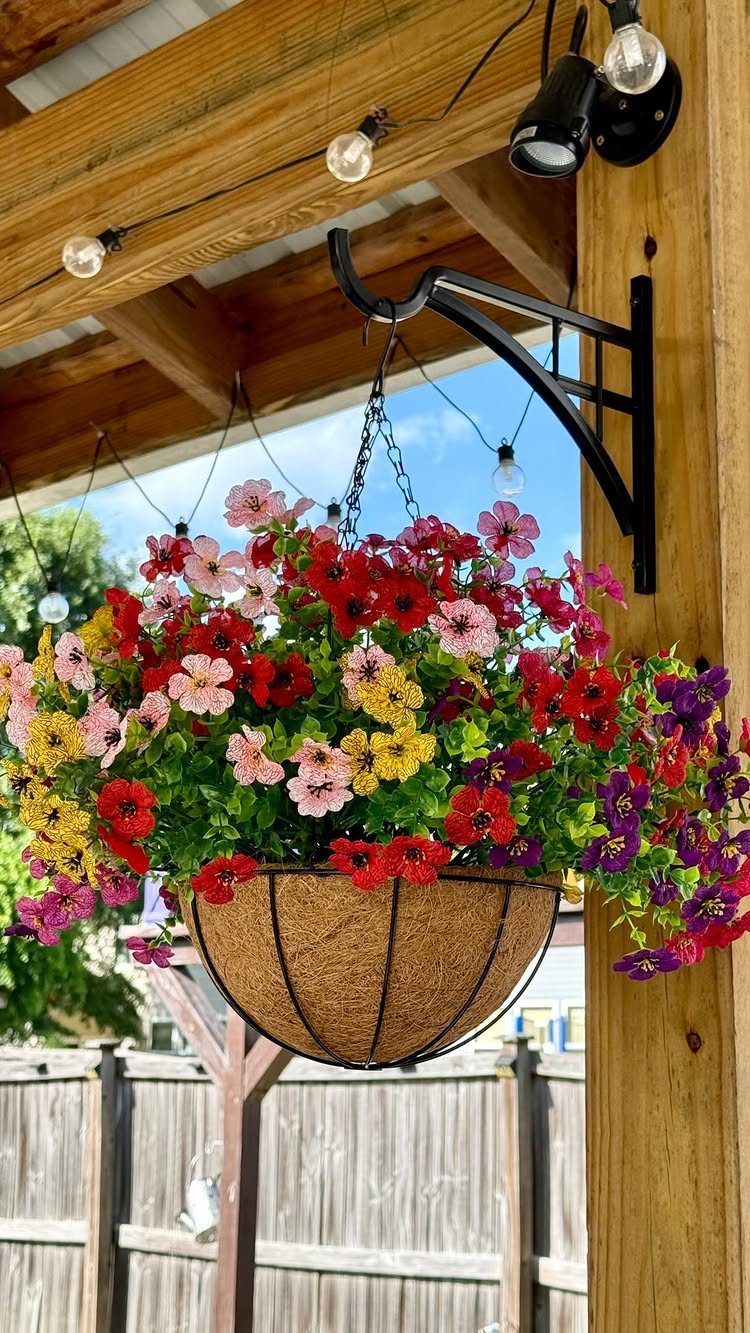
Coconut-fiber baskets are my pick for hanging flowers: the liner looks natural, and the basket holds a full, rounded shape of petunias. Mix colors or stick to one; either works when the basket is full.
Hang them from a sturdy beam or a metal bracket, and check that the support can handle a wet, heavy basket. Dry soil weighs far less than soil right after watering.
Baskets dry out quickly, so plan on watering often. Hang them where you can reach them without a stool.
6. Tiered Planters
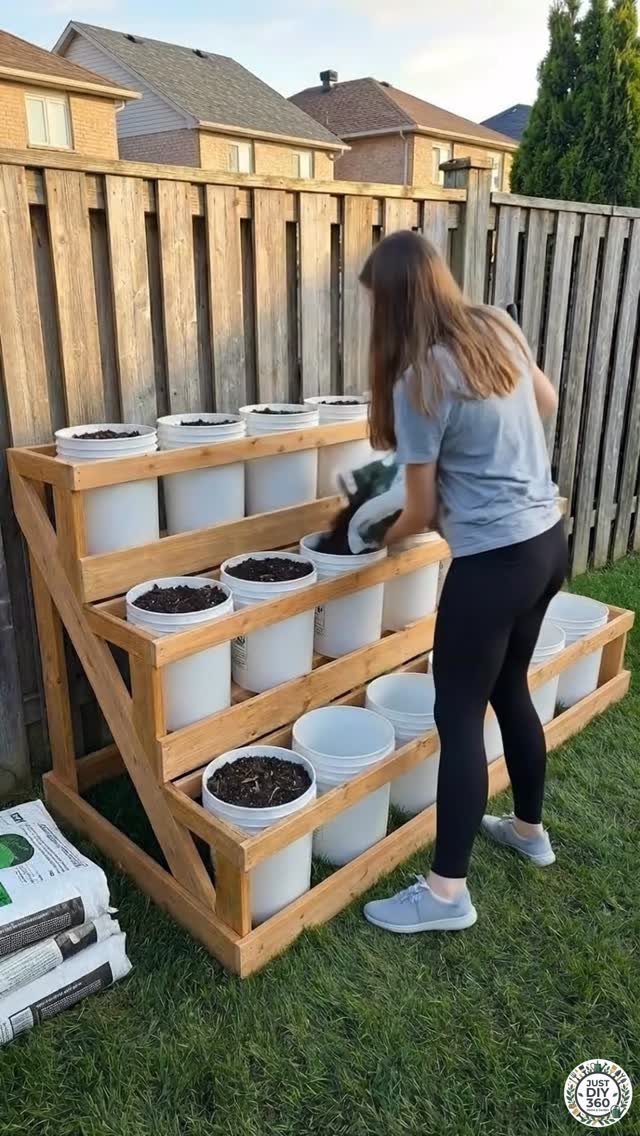
Three shelves of buckets in one wooden frame give you three planting levels in the footprint of a single pot. That is a lot of growing room for a spot along a fence.
Plain white buckets are an easy, low-cost choice, and a wooden tiered frame holds them at different heights so every plant gets light.
Fill the lower levels with plants that tolerate a bit of shade, and put sun lovers on top.
You can build the frame yourself over a weekend, or buy a ready-made stand if tools aren’t your thing.
7. Small Garden Lighting
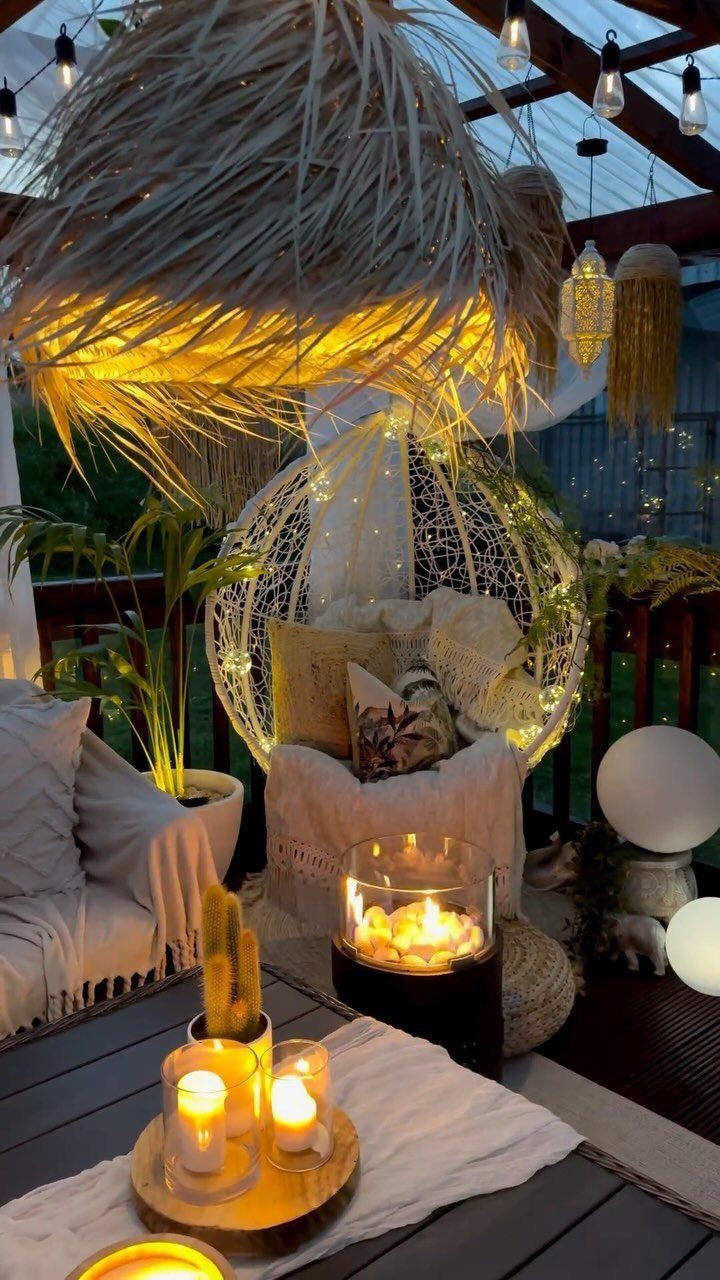
String lights, lanterns and candles layer a small garden’s light low and warm, so the space stays inviting after dark.
Use them to pick out one feature, like a seating corner or a plant you’re proud of, and let the rest fall into shadow.
Several soft sources look better than one bright one. Keep them at different heights, with strings overhead and lanterns or candles closer to the table.
Skip the harsh floodlight; it flattens everything and makes a small yard feel exposed.
8. Bench in a Garden Arch
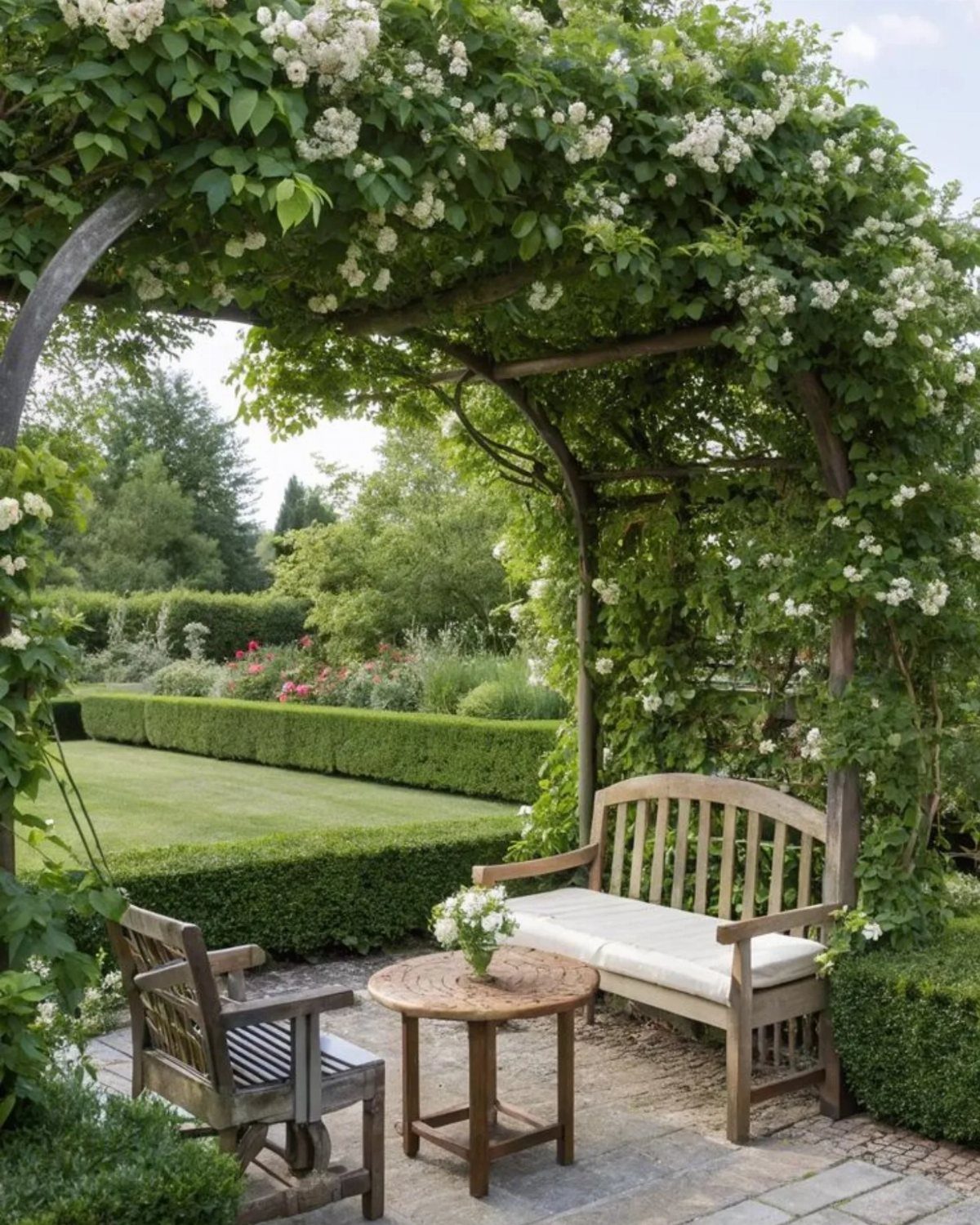
A bench tucked under a metal arch gives a small garden a destination instead of just a view. Add a climbing rose or another white-flowering vine over the frame, and the seat gets its own ceiling of blooms.
Choose a bench sized to the opening so it sits snug rather than crowded, and leave room for a small round table beside it for a cup of coffee.
Wood suits the look best, and it pairs nicely with the clipped hedges and open lawn around it.
9. Mirrors in the Garden
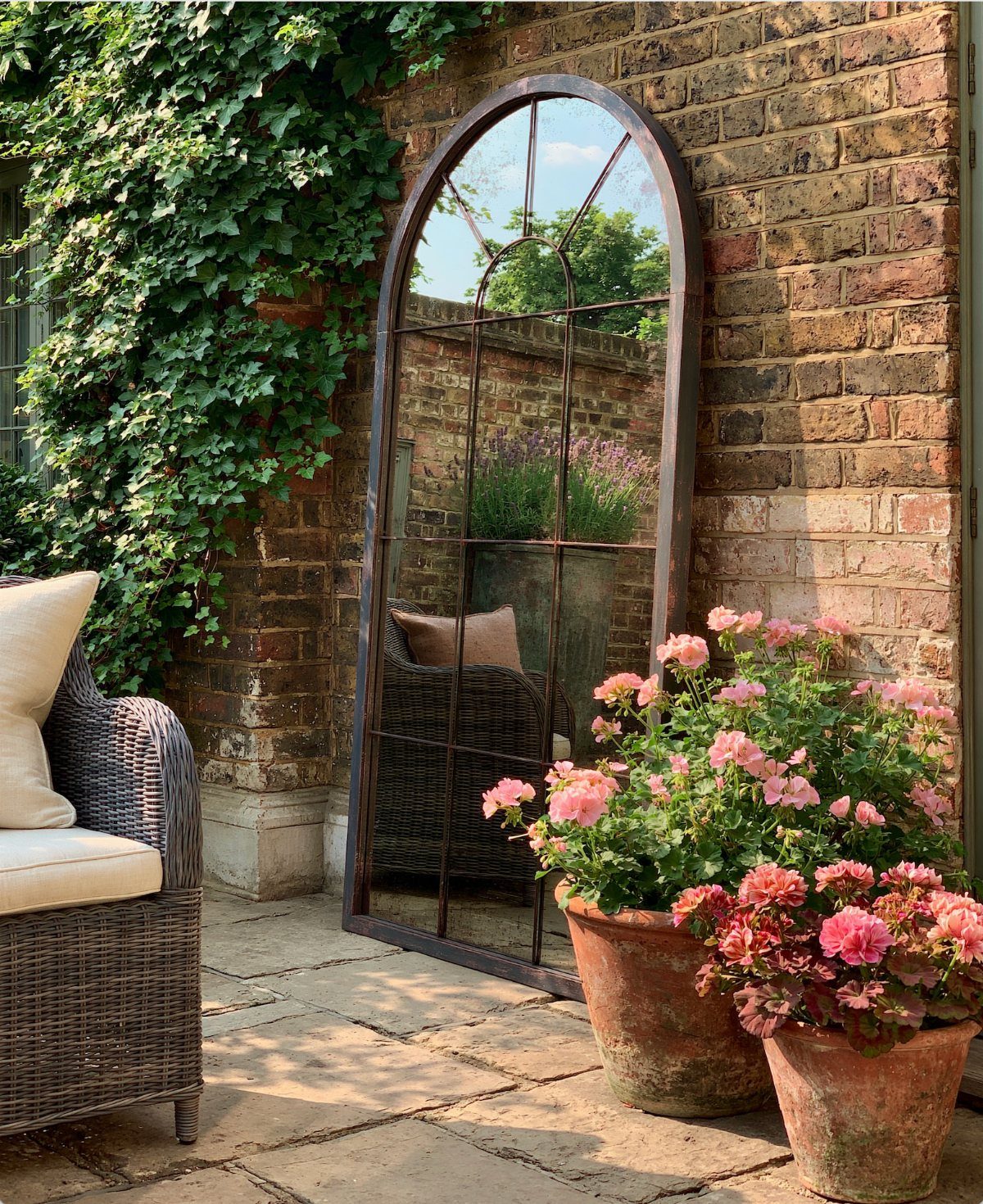
A mirror leaned against a brick wall bounces daylight back into a patio and makes the garden look deeper than it is. An arched, window-style frame reads like a doorway to a second garden, which suits a tight space.
Place it so it reflects plants or a chair rather than a blank wall; whatever it faces gets doubled. Leaning it, instead of mounting it, lets you shift it around until the reflection looks right.
I would pick a frame made for outdoor use, since this one will sit in weather.
10. Raised Decking
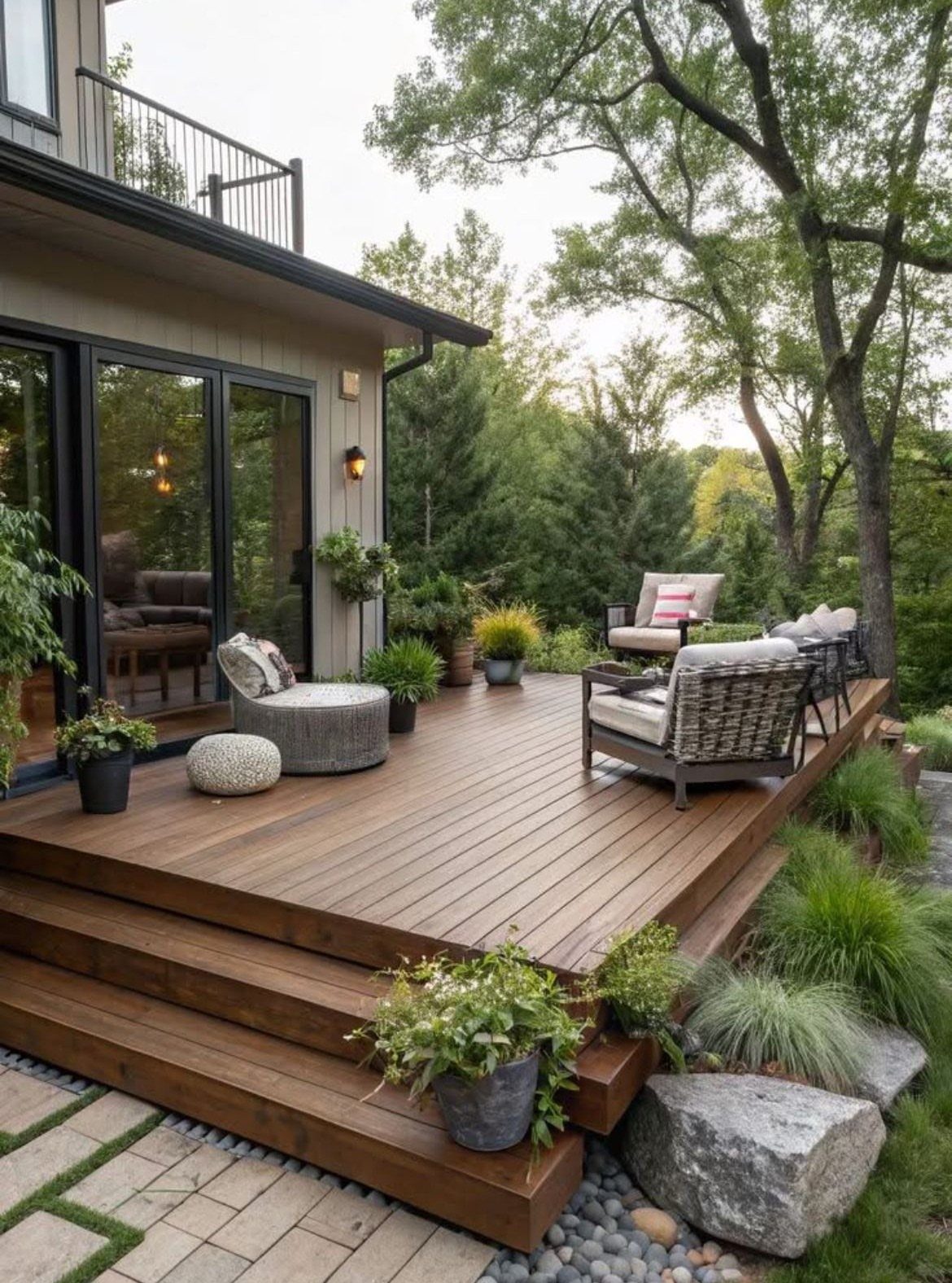
Lifting a deck off the ground gives you a defined outdoor room and leaves the soil around it free for planting. Steps down to a stone path tie the 2 levels together.
Pots on the deck add greenery without using floor space, and the beds below can handle the plants that need real ground.
Raised decking is a bigger project than a weekend of pots, so check local building rules before you start, since height often triggers permits and railing requirements.
11. Coordinated Garden Colors
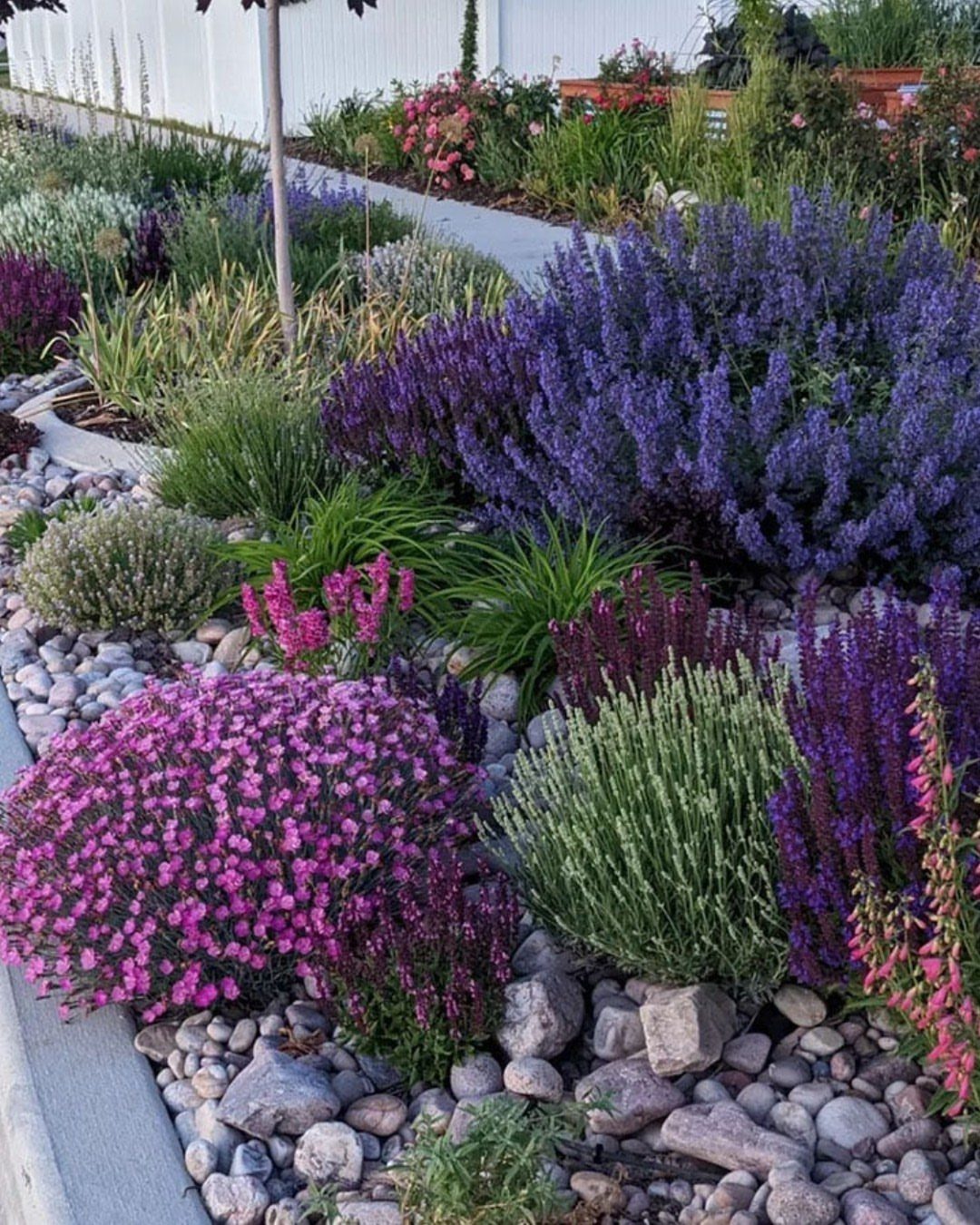
Sticking to one color family, like the purples and pinks in this bed, makes a small garden look planned rather than crowded. Fewer colors give the eye somewhere to rest.
Pick two or three shades, repeat them across the beds, and let green do the rest of the work. Grey river stones and a plain border suit this approach because they stay neutral and let the flowers lead.
Resist buying one of everything at the nursery. That’s how a tidy palette falls apart.
12. Small Garden Pathways
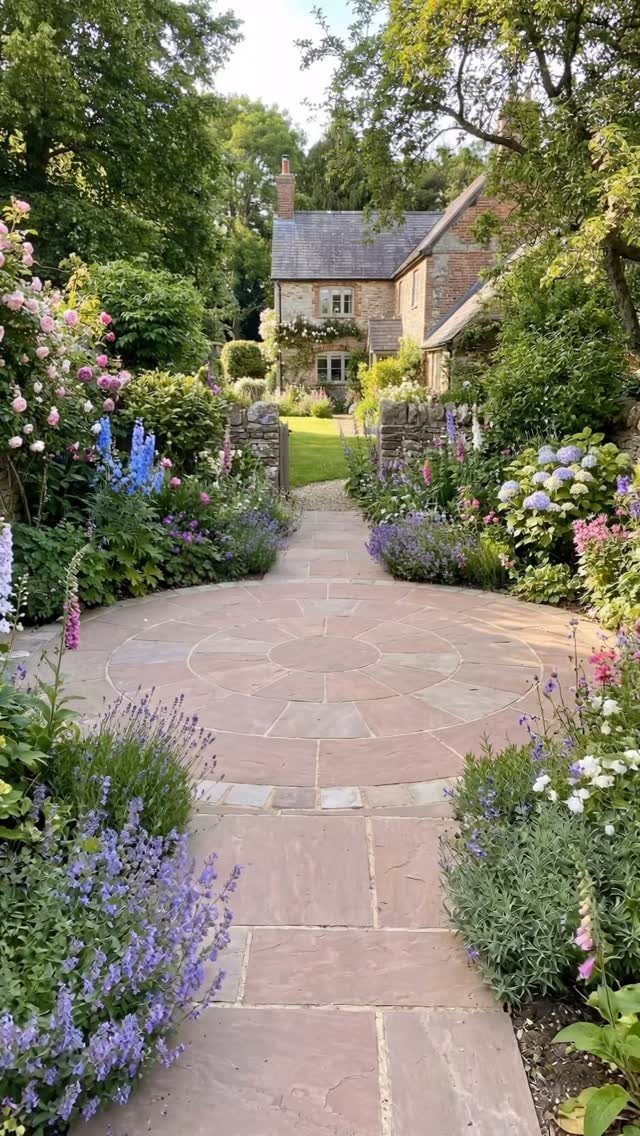
A path decides where people walk and how the garden unfolds, so a small yard gains a lot from even a short one.
A circular stone pattern at the end turns the route into a small patio, a place to stop instead of just pass through.
The builder of this piece wrote that it was built with high quality materials meant to look good years down the line, which is worth copying.
Cheap pavers crack and shift, and a path is hard to redo once the beds grow in around it.
13. Small Water Feature
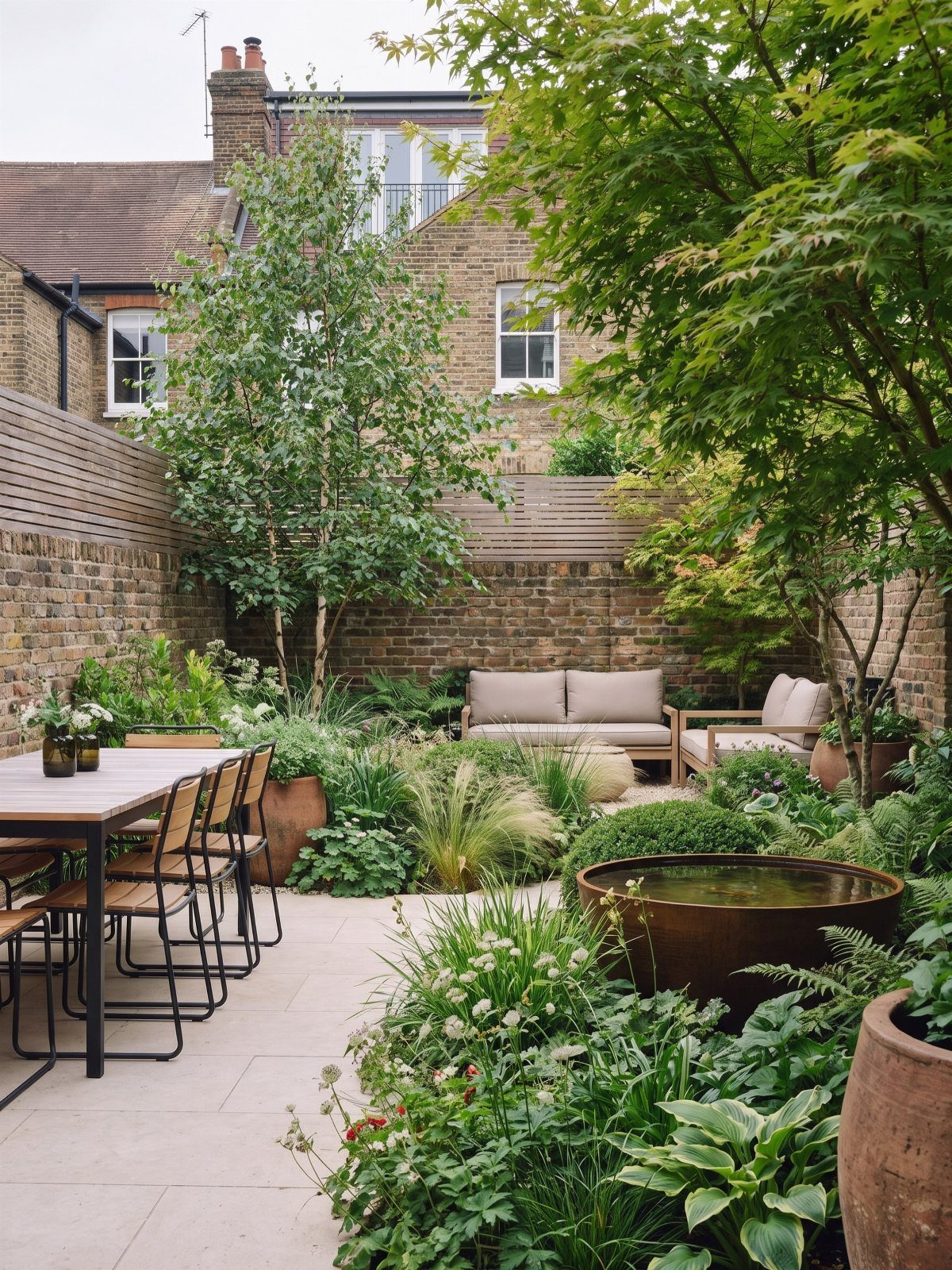
A single round metal basin does the work of a whole water garden on a patio this size. A small fountain placed where the dining area meets the seating area gives both zones something to face.
I would choose one wide, shallow basin over several small bowls, which tend to look scattered. Keep it low enough that the greenery around the rim can soften the edge.
Pick the spot before you buy, and sit in each chair to see how the basin looks from there.
14. Garden Fire Pit
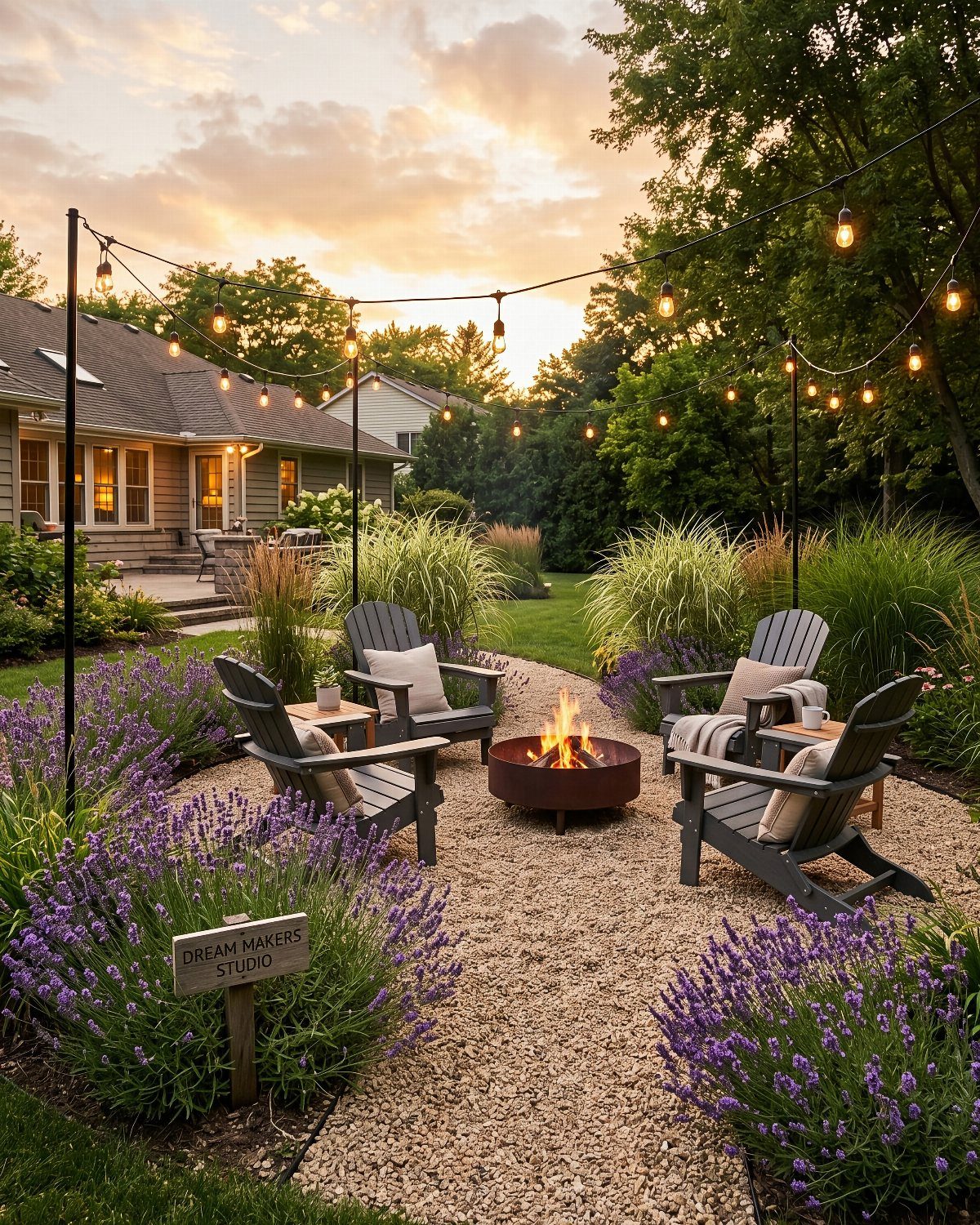
4 chairs in a ring around a metal fire pit make a small yard feel like a gathering place. Gravel underfoot keeps the area tidy and defines where the seating stops.
I like Adirondack chairs here because the wide arms hold a mug.
Check your lease and local rules about open flames before you buy, especially if you rent.
15. Small Garden Layout Sketch
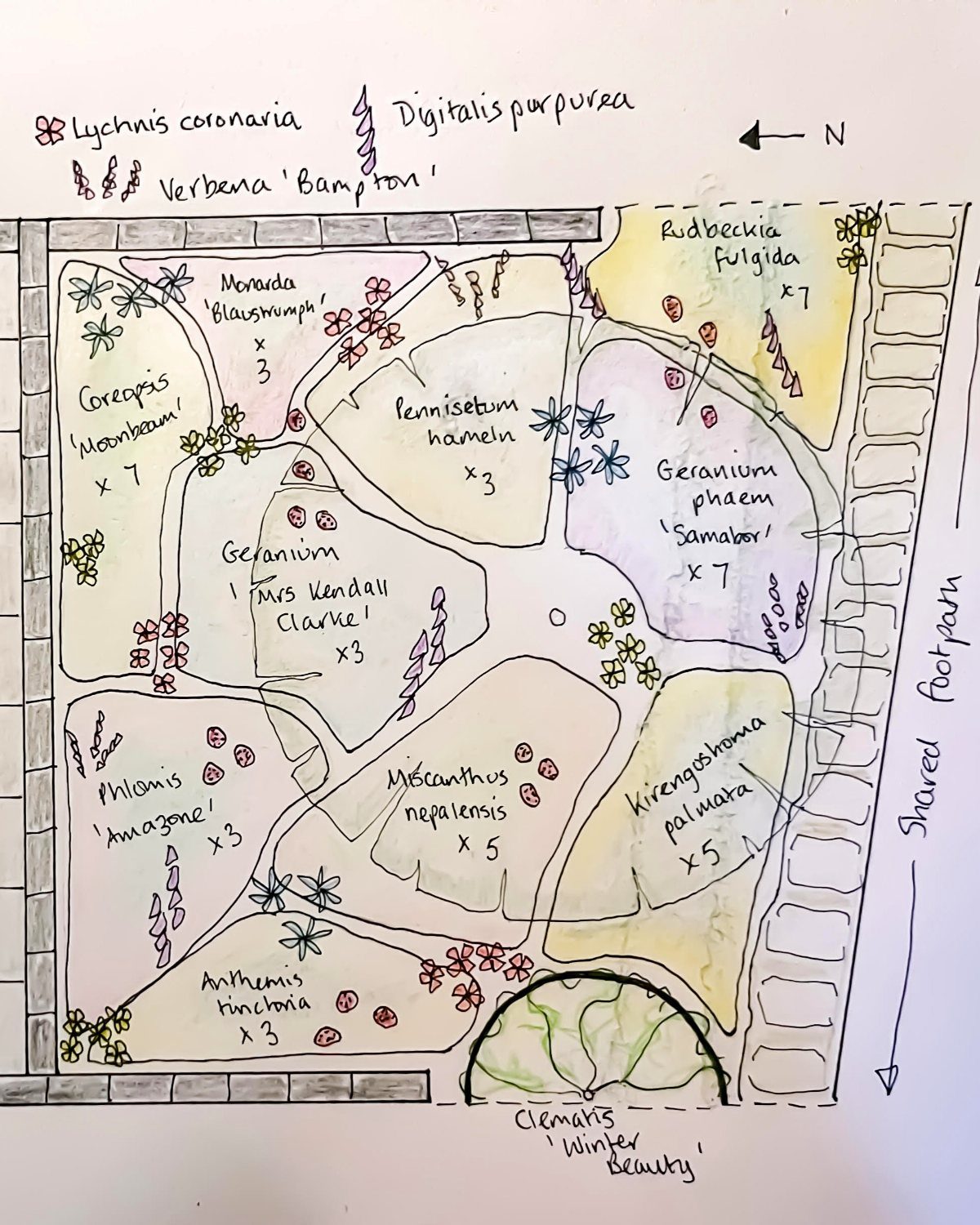
Before anything goes in the cart, draw the yard on paper. Start with a north arrow, so you know where the sun falls, then block out zones for sitting, growing and walking.
Color-code a legend and write plant names inside each section, the way this sketch does. Geraniums in one block and tall grasses in another is easier to judge on paper than in the dirt.
Erasing a pencil line costs nothing, while moving a mature plant costs a weekend.
16. Small Garden Greenhouse
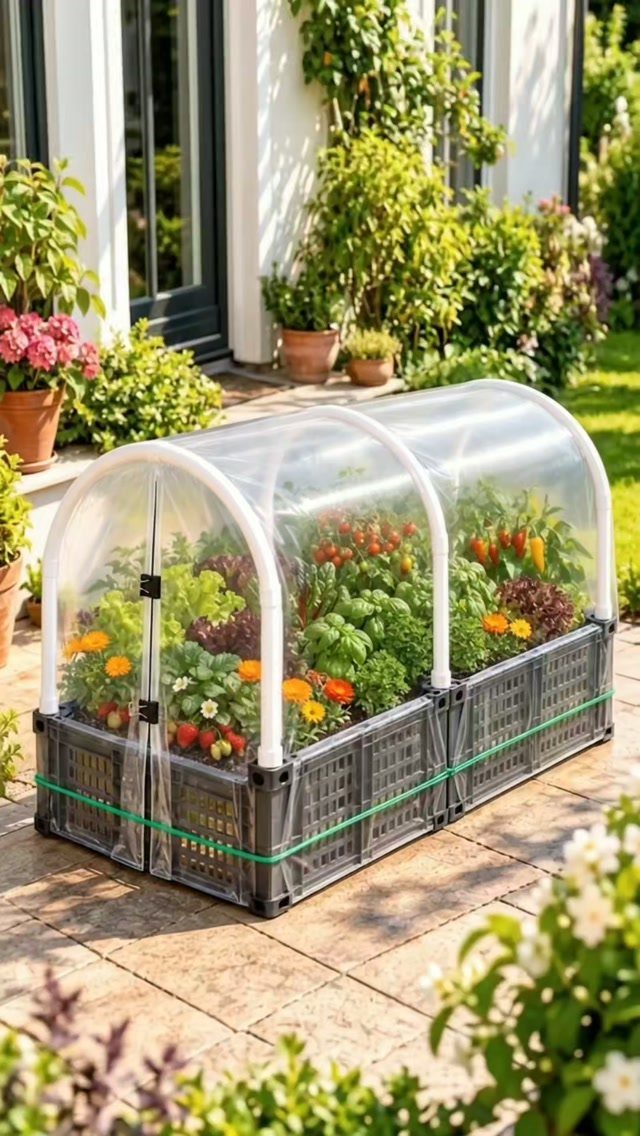
A clear plastic cover stretched over white arches gives seedlings and potted vegetables a sheltered corner of the patio. It’s portable, so you can shift it as the sun moves or tuck it away.
If you’d rather build than buy, one maker turned 2 plain plastic crates into a tiny greenhouse, which is a good option for a renter with a small budget.
I’d keep it close to the back door so checking on it becomes a habit.
17. Retractable Canopy
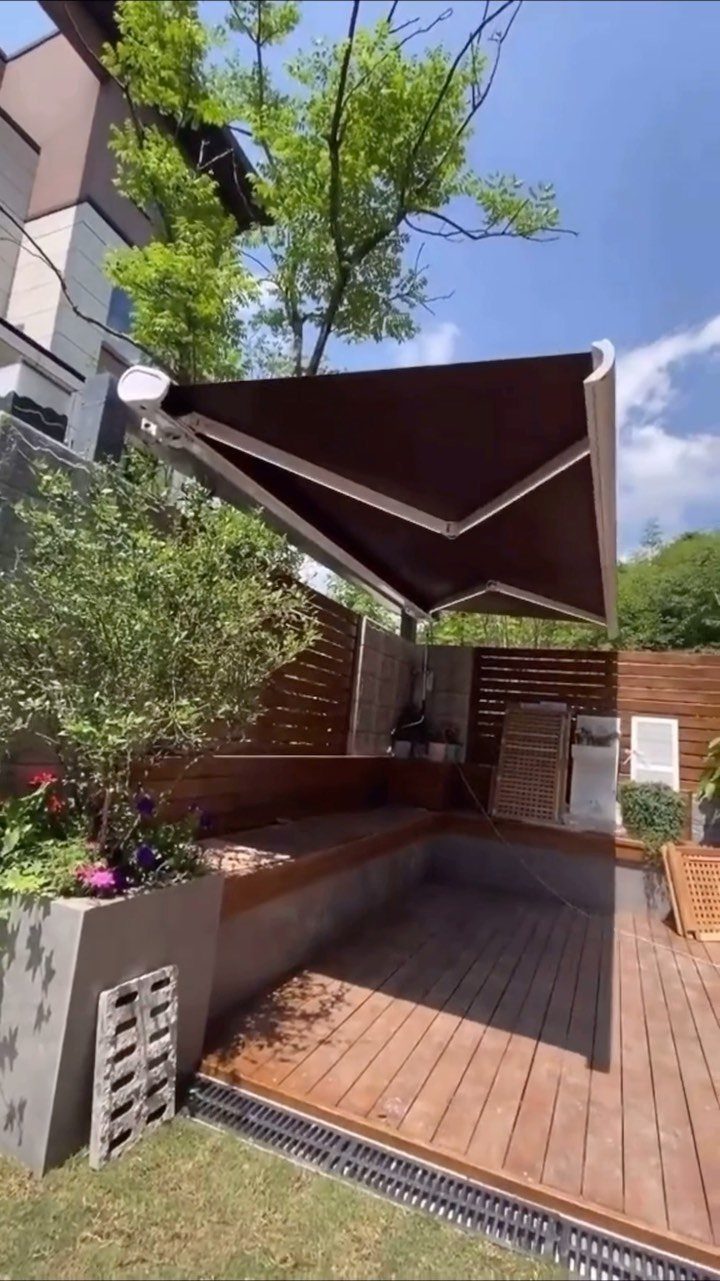
Shade you can pull back is the best argument for a retractable canopy: full cover for a summer afternoon, open sky the rest of the time.
Over a small deck, a canopy makes the whole corner usable in midday sun and light drizzle.
A fixed pergola is the sturdier alternative, though I find a canopy feels lighter in a tight yard. Pick a fabric close to your fence color, such as brown against wood, and the canopy fades into the background.
Renters should ask the landlord before fastening anything to the house.
18. Curved Pathway
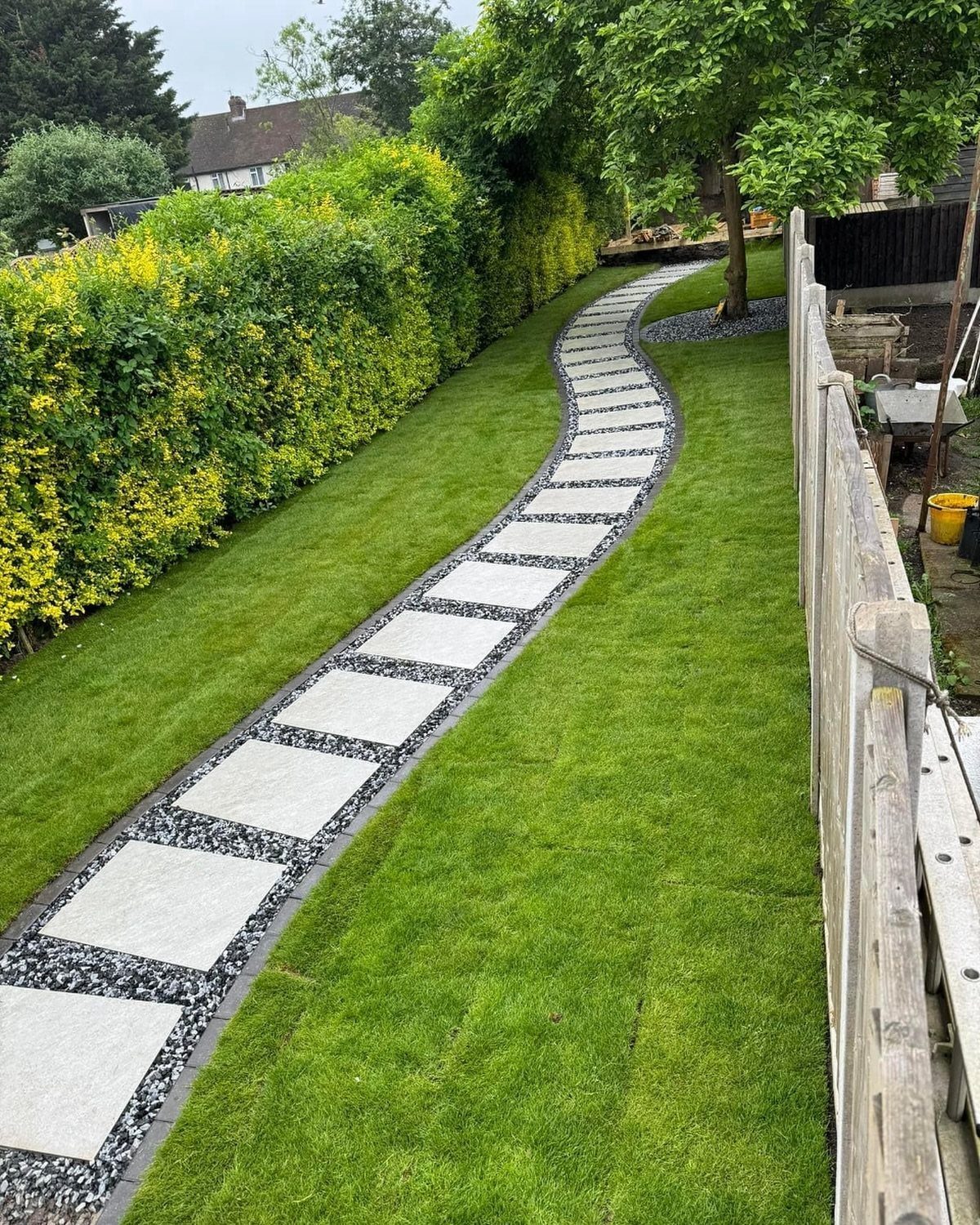
Square white pavers set in dark grey gravel make a path that bends through the lawn instead of cutting straight across it. The curve hides the far end, so the yard feels bigger than it is.
Keep the bends wide and gentle; tight wiggles look fussy in a small space. Lay a garden hose on the grass first and adjust it until the line feels natural, then dig along it.
A hedge on one side gives the curve a clean edge to follow.
19. Rock Garden
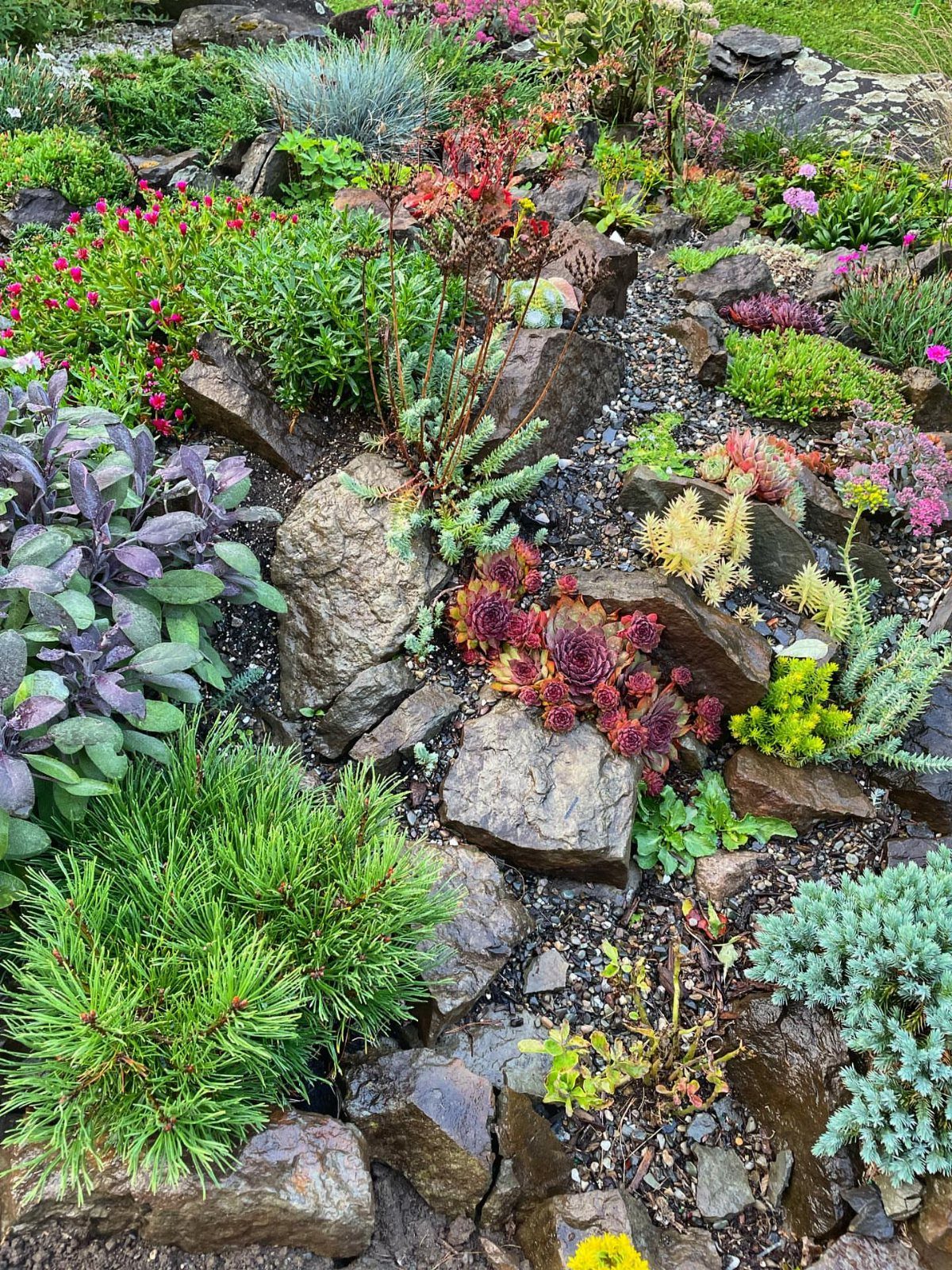
Jagged brown stones, grey pebbles and low plants make a bed that asks for very little once it’s set. Succulents and alpine plants suit it because they stay compact and sit comfortably between rocks.
Place the largest stones first, then fill the gaps with plants and finish with pebbles around them. I’d group the plants in small clusters rather than spacing them evenly, which looks more natural.
Mixed colors against the brown rock hold the eye better than a single green.
20. Outdoor Room
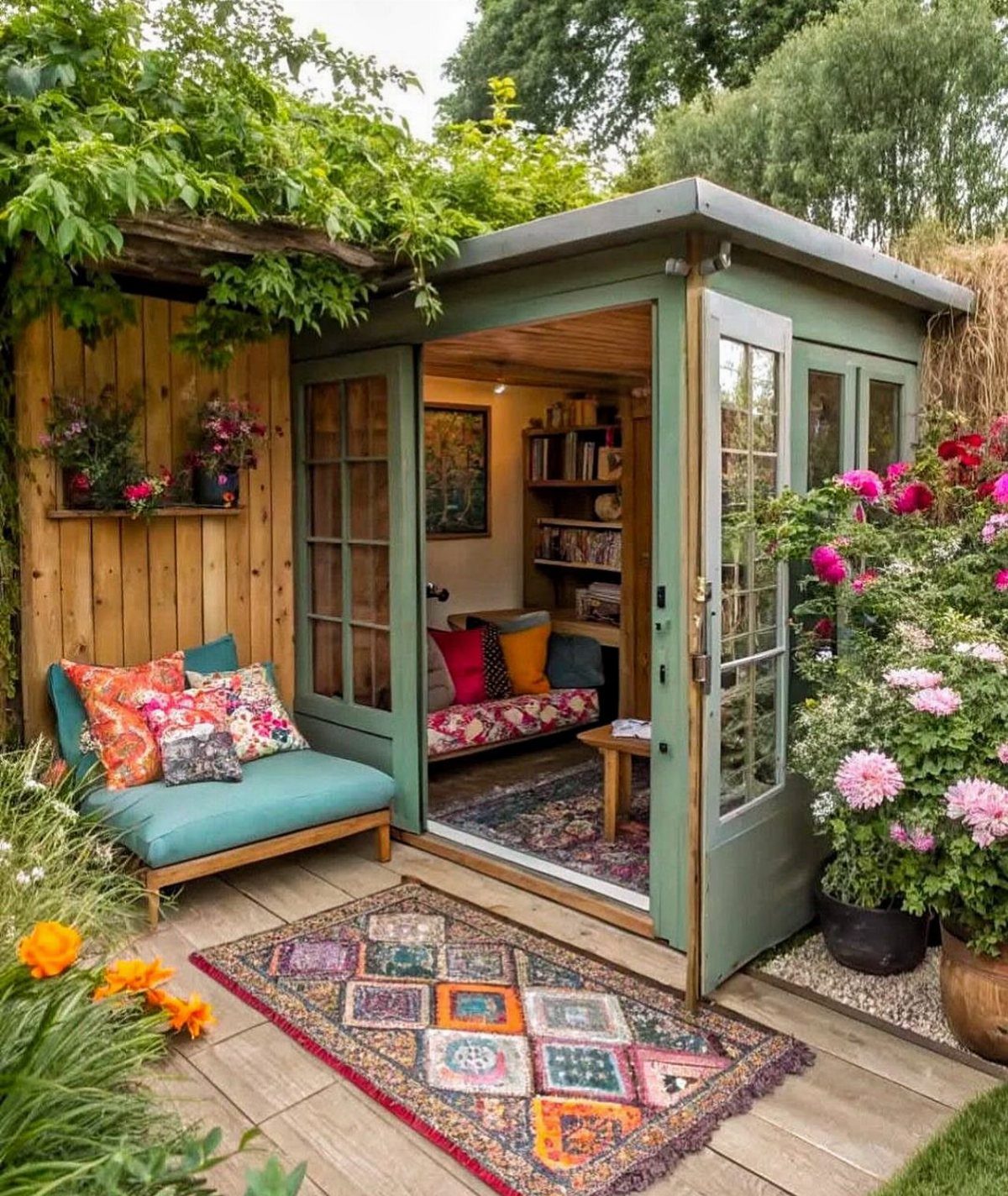
A small garden shed turns into a reading room once it has wall-mounted shelves, a washable rug and a few cushions, and it gives you a quiet corner without taking up extra yard space.
It gives a small outdoor space a purpose beyond growing: somewhere to sit, with a door to close behind you.
Treat it like a living room. Layer a rug, a few cushions and shelves for books, and let the colorful textiles do the decorating.
A wooden deck underneath keeps the floor level and dry, and flowering plants along the fence soften the walls. A shed you already own is the cheapest place to start.
Match Plants to Growing Conditions
Check your planting zone, the sun the spot actually gets, your local climate, the soil and the drainage before you buy anything. A plant that suits the wrong spot fails no matter how good it looked at the nursery.
Layer a bed by height.
Mexican orange and hydrangeas anchor the middle of the bed. Low, spreading, fragrant plants like thyme or camomile belong at the front.
If the bed backs onto a boundary, train a climber up a trellis. In an open bed, use a freestanding frame instead.
Container plants need nutrient-rich soil, fertilizer during the growing season, and steady watering that never leaves the roots sitting in water.
Planters of different heights and shapes give the corner layers, so the eye has something to travel across instead of one flat row.
On a terrace, zinc planters holding colorful annuals next to structured plants like box or bay give you something green all year.
Keep Layouts Uncluttered
Proportion and flow decide whether a small garden feels open or packed. Oversized shrubs, extra decoration and plants set too close to a path all shrink the space, so leave each plant room to reach its full size.
Prune trees and shrubs regularly. Open sight lines across the garden make it feel larger than it is.
A keyhole bed is worth a look.
The U-shaped bed lets me reach every plant from either the outer edge or the inside, and if the opening is wide enough, a bird bath fits in the center. A straight-sided version fits a tight nook just as well.
If you prefer order, a traditional plot with standard-width aisles and set planting areas lets you and your tools move in and out easily.
I’d pick the layout you’ll want to walk into every day, since that’s the one you’ll keep up.
Small Garden Design Priorities
Decide what the garden is for before you plan it: relaxing, entertaining, play or growing food. One main purpose gives you a way to say yes or no to every plant and piece of furniture.
Then check the conditions around that purpose. Look at where the sun lands, how much wind comes through, how private the spot feels, and how much upkeep you’ll realistically do.
Also think about how the garden connects to the house, since a spot you can reach easily gets used more.
A small garden also doesn’t have to be finished in one season, so change the design as your needs change.