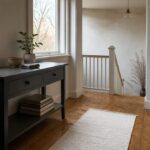
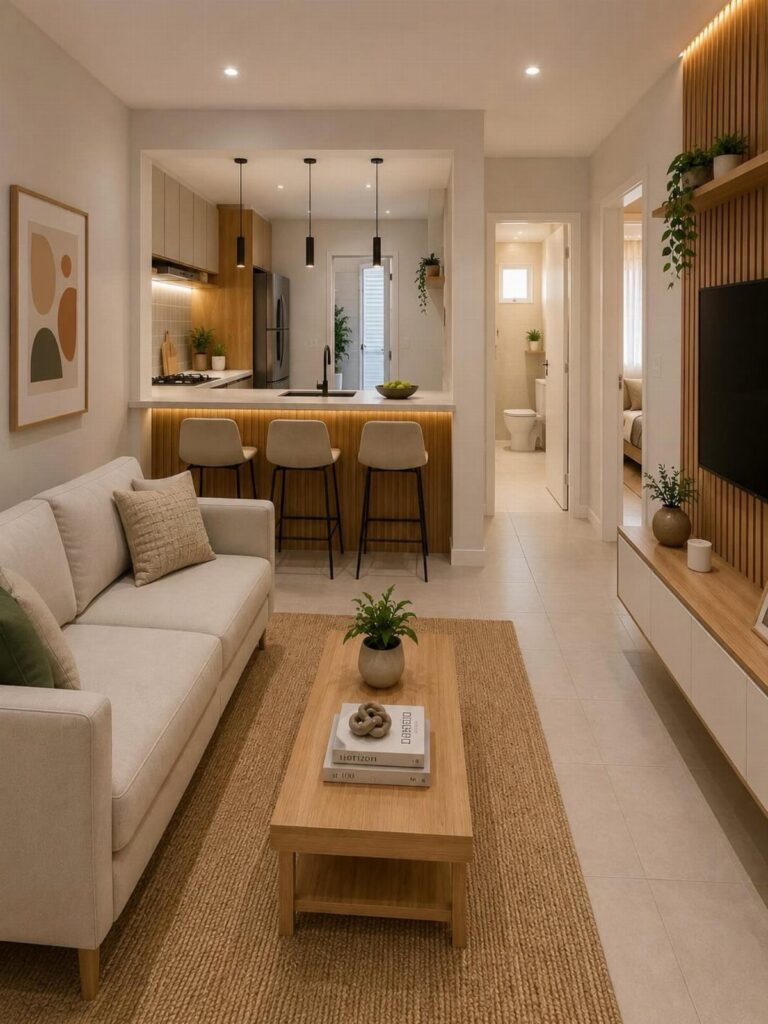
Whether a rental lets you touch the walls sorts this list faster than budget or style: the floating console, the Murphy bed and the vertical storage need anchors or cabinetry, while the storage trolleys, the nesting tables and the small side tables need nothing but floor space.
The ideas run from a colorful bathmat to a Murphy bed, and the one that fits is usually the one your lease allows. Even the lighting suggestions stay flexible, like an LED strip in 2700K under each shelf edge.
[link-whisper-related-posts]1. Vertical Storage
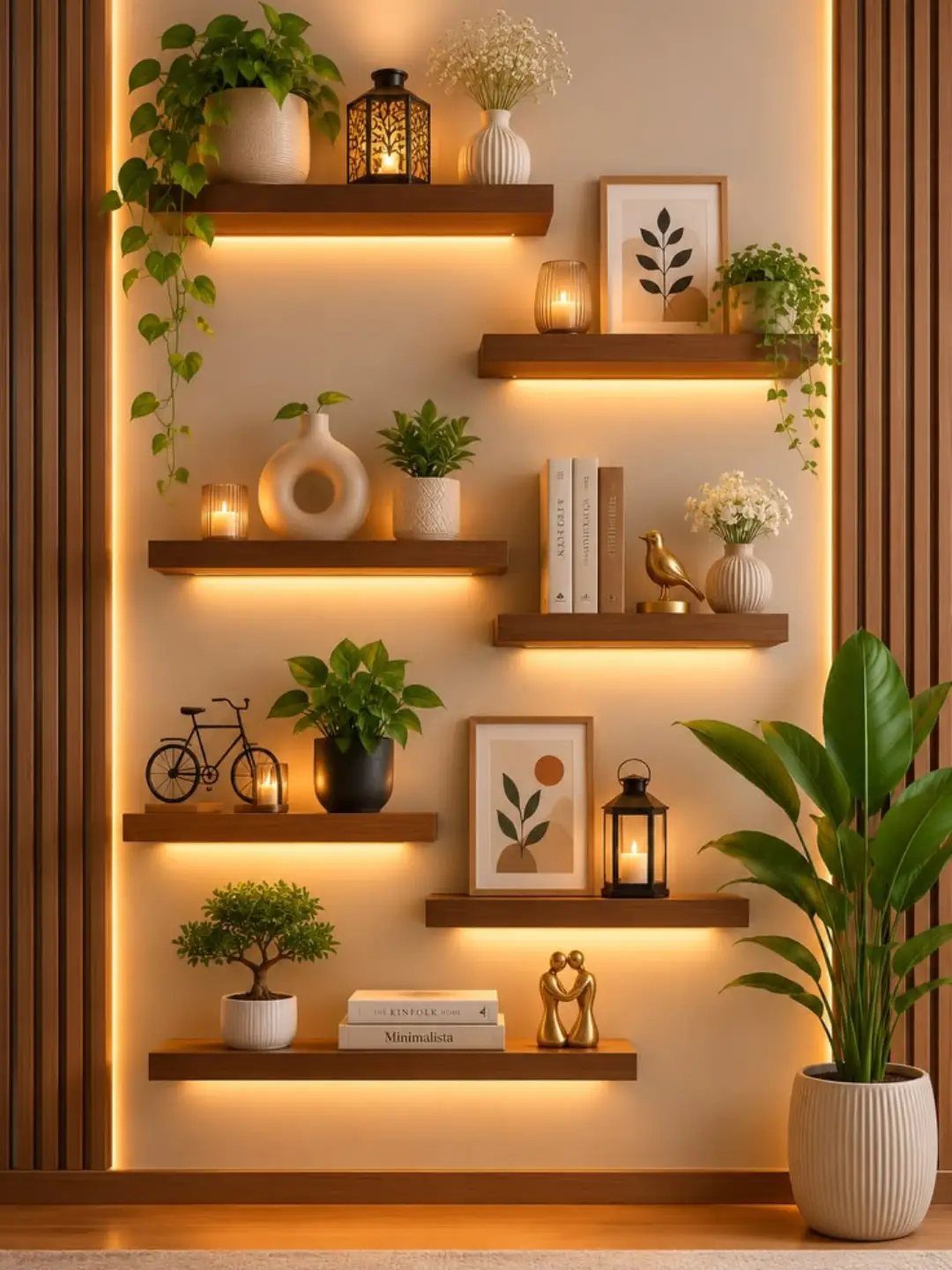
Floating shelves stacked up a wall give plants, books, candles and art a home without costing a single inch of floor.
In a small apartment, that is the whole appeal: the room keeps its open feel while the storage climbs toward the ceiling.
Warm integrated lighting along the shelves, such as an LED strip in 2700K tucked under each edge, turns the stack into a lamp as well as storage.
Mixing objects of different heights keeps it from looking like a shelf of stuff.
2. Textile Accents
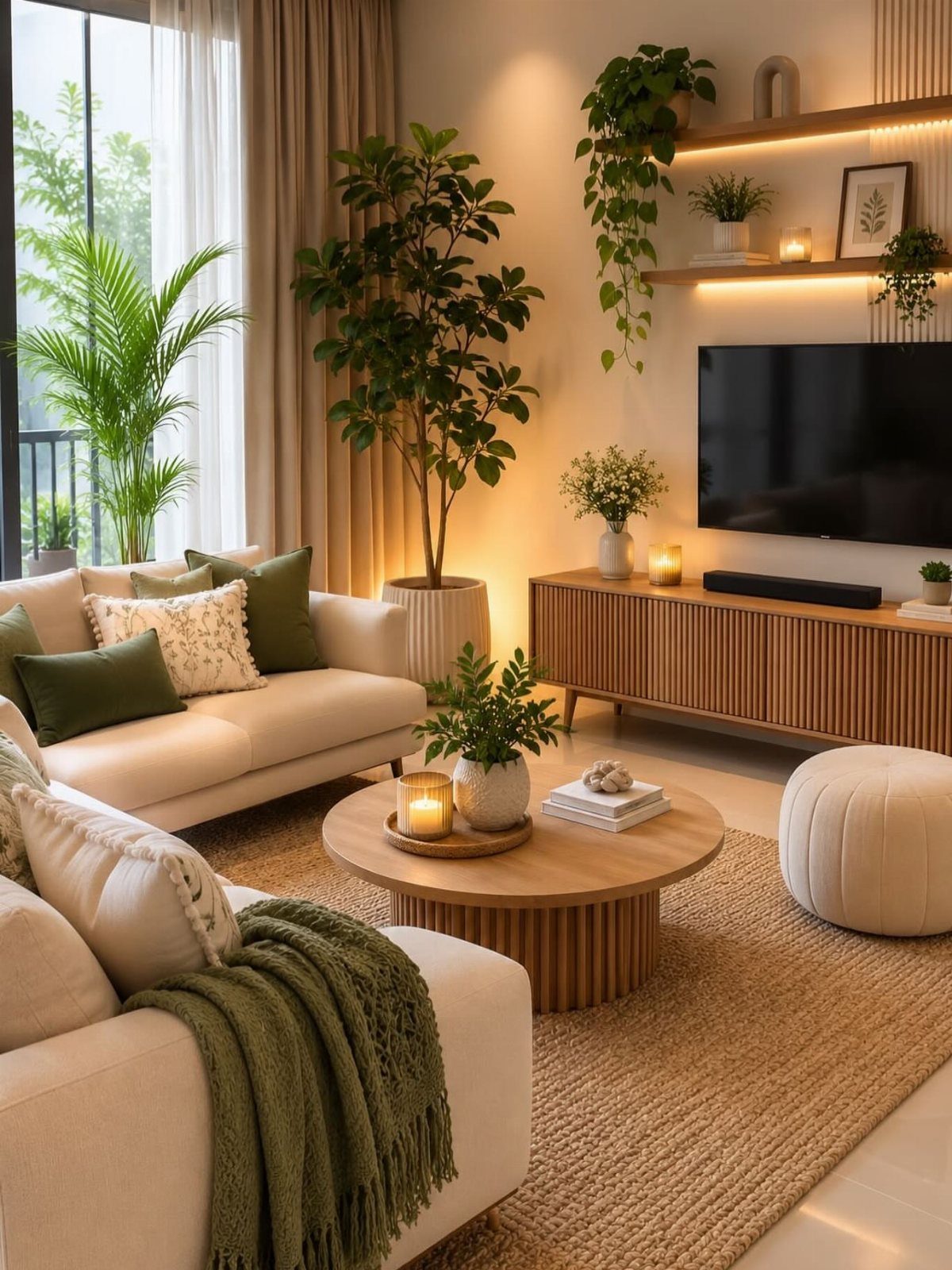
Texture does a lot of the work in a room full of neutral furniture, and cheap textiles are the easiest way to add it.
Pillows and a throw in one accent color, green here, tie a white sofa to the plants and wood around it.
A jute rug brings a rough, natural weave that contrasts nicely with soft pillow fabric.
I would pick one color and vary the materials rather than matching everything. All of it is renter-friendly, since nothing gets attached to a wall.
3. Small Dining Set
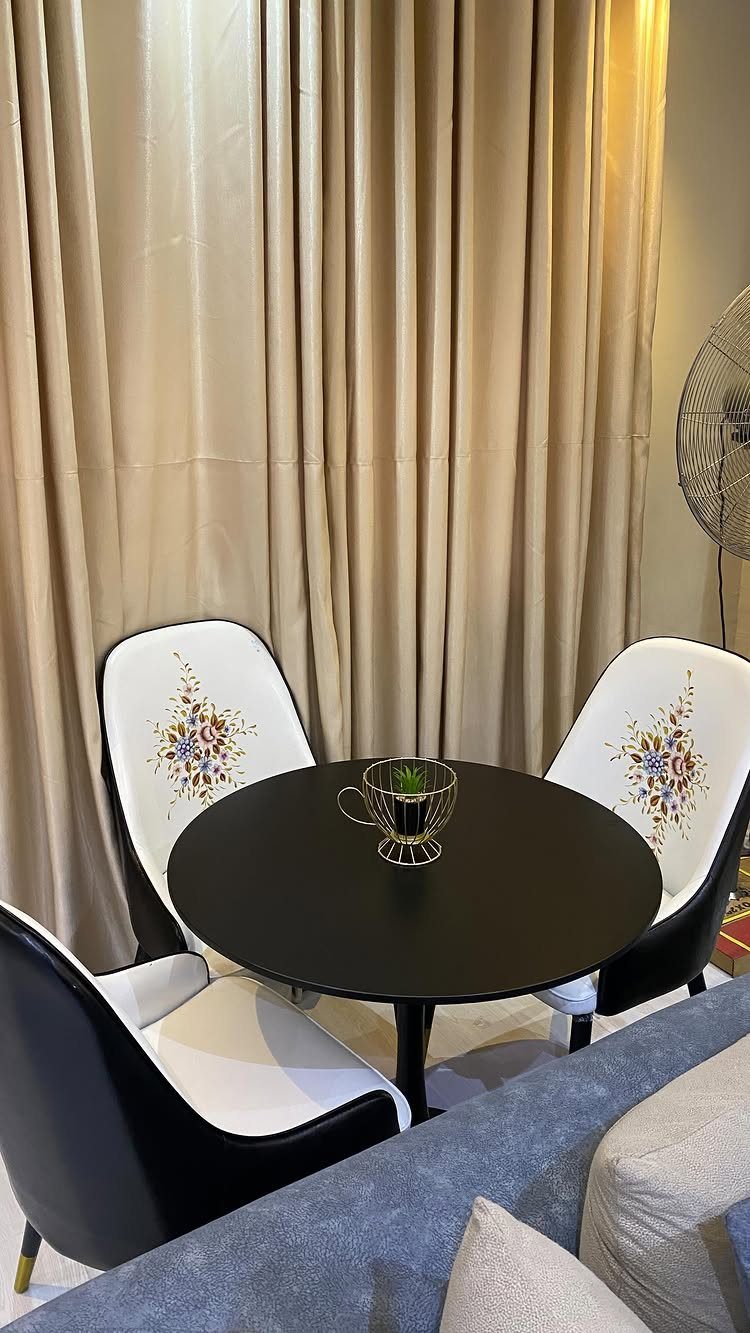
A small round table with 2 chairs fits in a corner where a real dining room never could. Round tops have no sharp corners to bump, and the black finish reads as a graphic anchor against light curtains.
Mismatched or patterned chairs make a bistro set feel chosen rather than bought as a pack.
Add a plant holder beside it and the corner starts to look like its own room, which is what a meal spot in a studio needs to feel like.
4. Statement Headboard
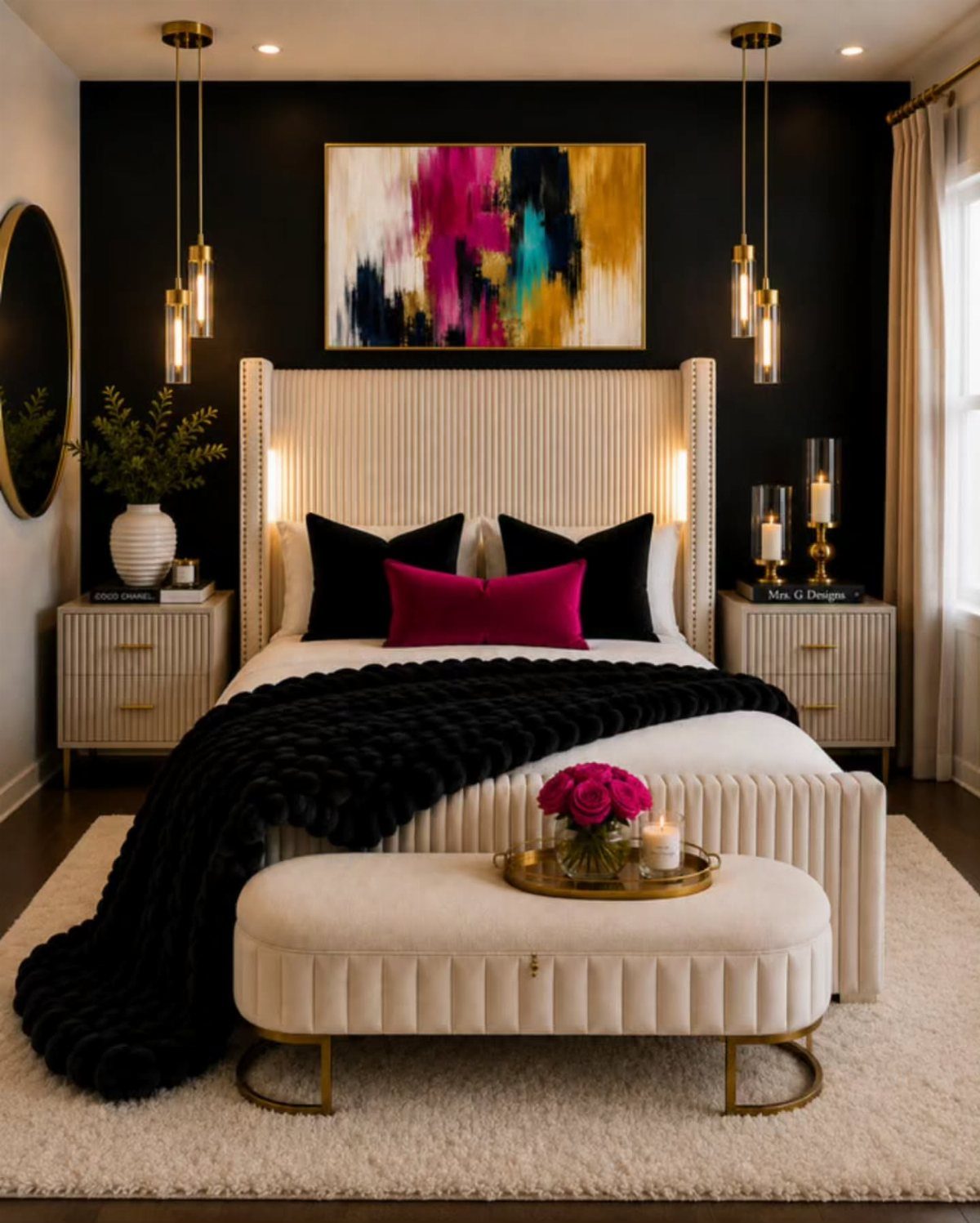
A bed is usually the largest thing in a bedroom, so styling it beats hunting for wall space that is not there.
A tall, ribbed headboard in cream adds height and shadow lines, and it stands out sharply against dark walls.
I like pairing a pale headboard with deep wall color: the contrast does the decorating. Black bedding with one bright pillow, magenta here, keeps the look bold without piling on extras.
5. Colorful Bathmat
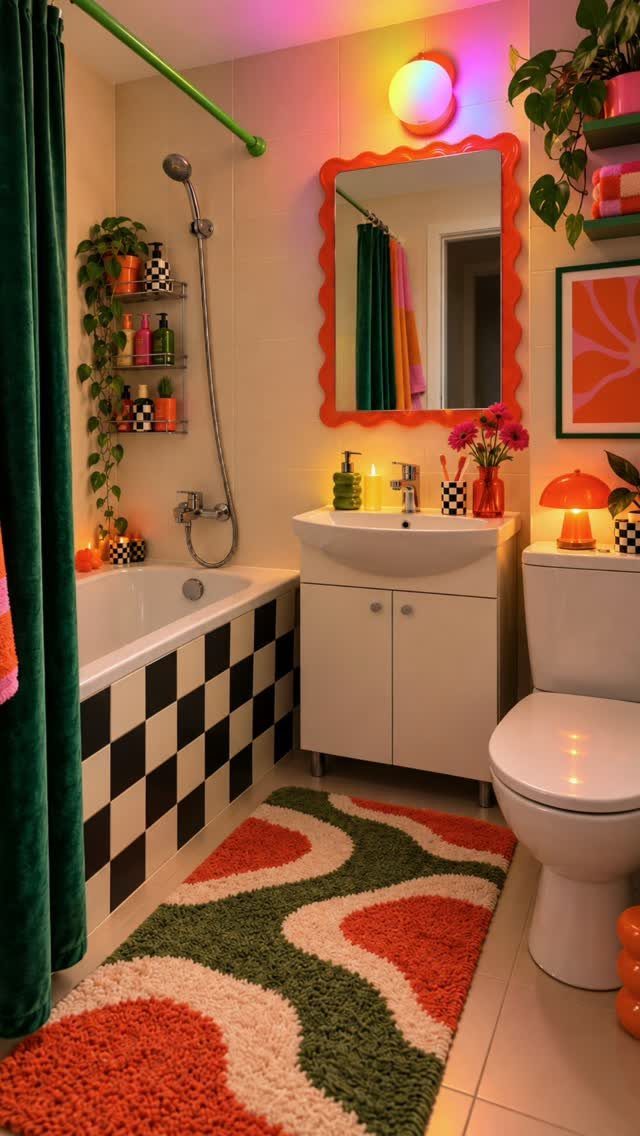
White tile is a blank page, and a bathmat is the cheapest way to write on it.
A bathmat is also easy to swap, which suits renters who cannot touch the fixtures.
The maker of this one points out that a few small lights can give the room a soft, cozy glow in the evening instead of relying only on the main light.
6. Clothes Storage
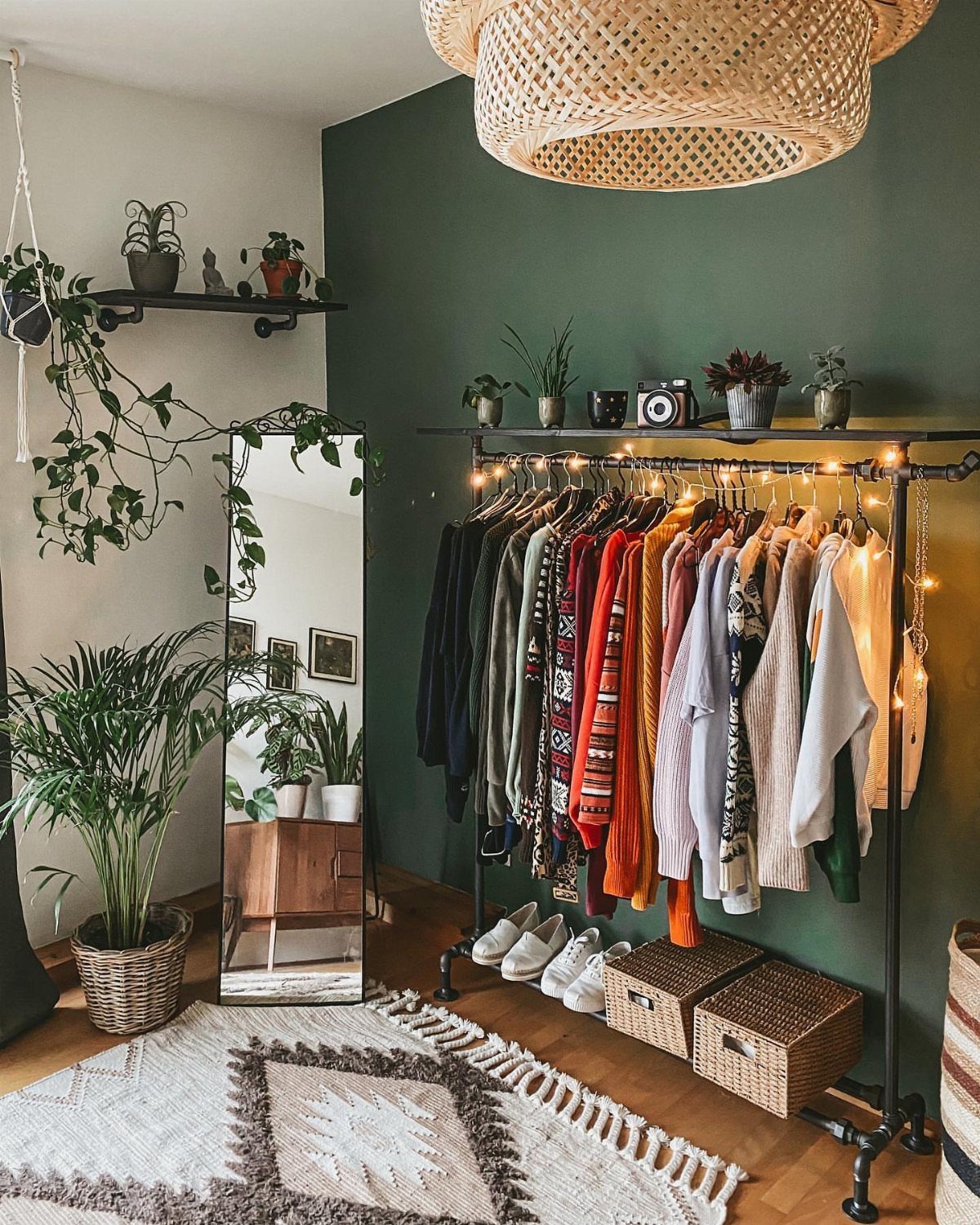
An open clothing rack replaces a wardrobe when a bedroom has no closet worth the name. Industrial-style metal frames look tidy because everything hangs in plain view, so the clothes become part of the decor.
Dust and visual clutter are the downsides of an open rack, so keep it edited to what you actually wear.
7. Lightweight Coffee Table
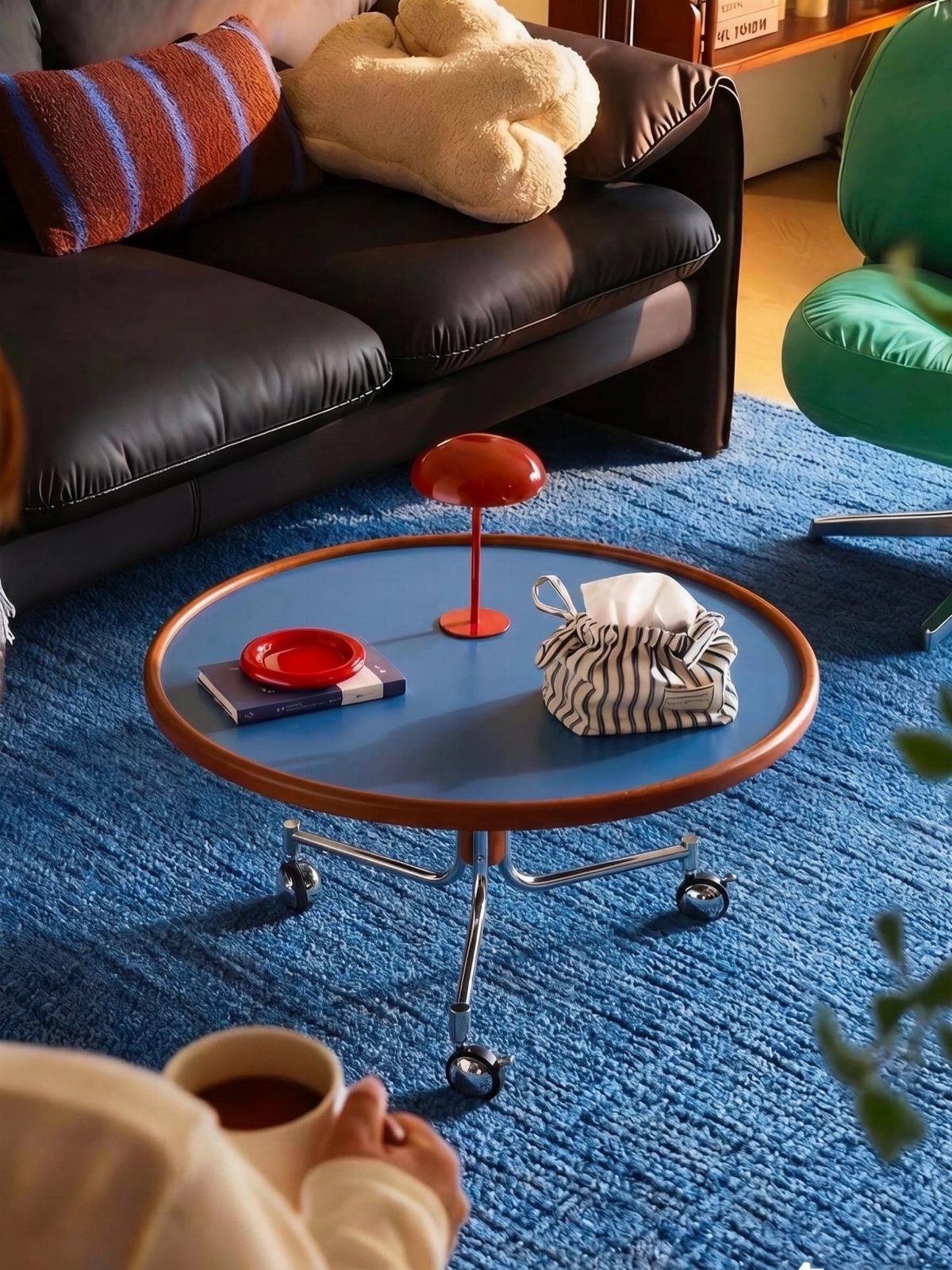
Wheels turn a coffee table into something you can push aside when floor space is needed, which a studio asks for daily. A round blue top on casters also has no corners to catch a hip on the way past.
Matching the table to the rug, as in this blue-on-blue setup, makes the pair read as one block instead of two separate pieces. Just keep the top clear enough that a rolling table does not send a cup sliding.
8. Storage Trolleys
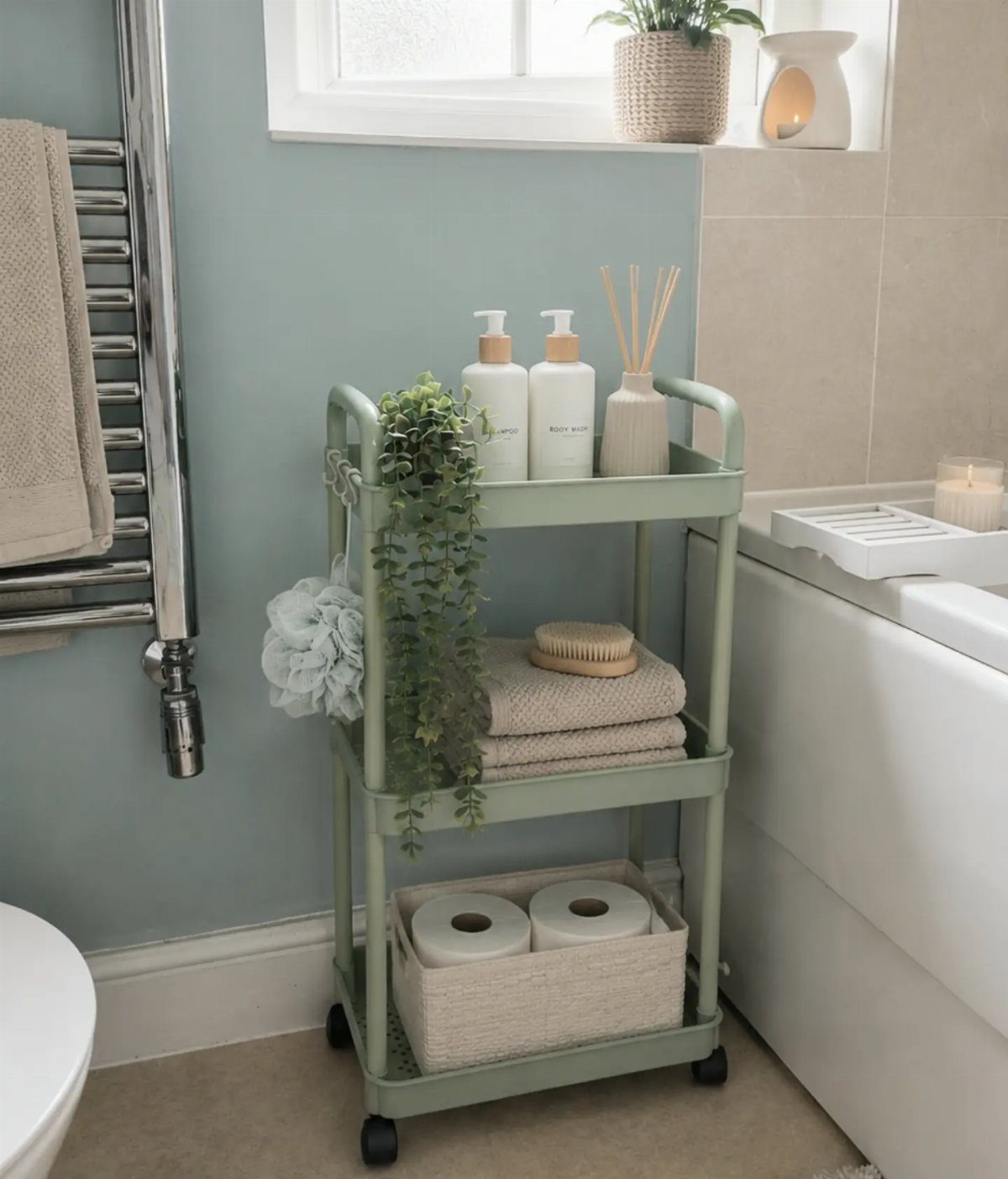
A three-tier cart on wheels is storage that follows the job.
Toiletries sit on one shelf, towels on the next and spare toilet paper on the bottom, and the whole stack rolls out of the way when the bathroom needs the floor.
Light green keeps it soft against white fixtures, and a trailing plant on top softens the metal frame.
Later the same cart can move to the kitchen or beside a desk. Nothing is drilled, so it suits a rental.
9. Small Side Tables
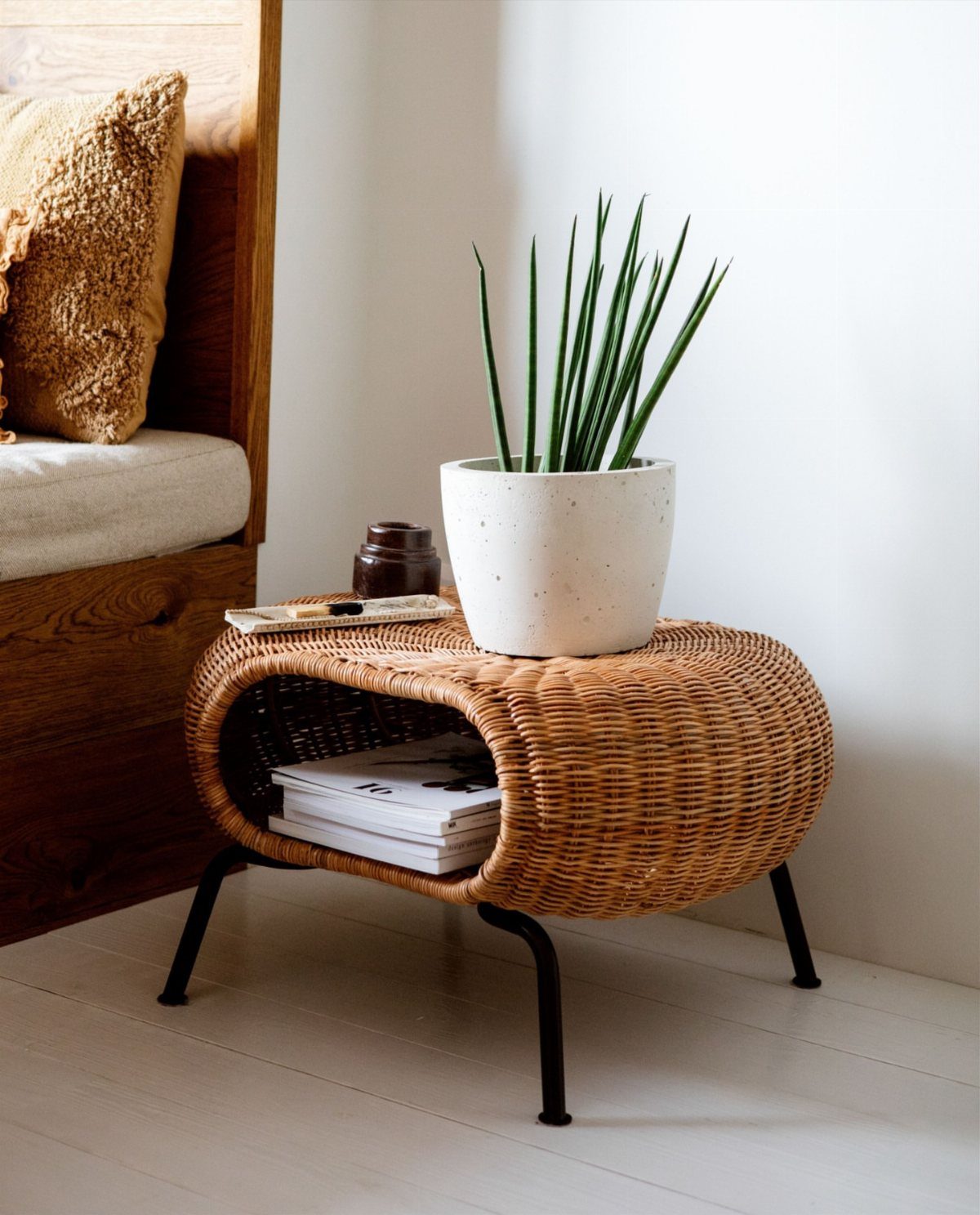
Hollow-bottomed side tables do two jobs in the footprint of one. A woven rattan table with black legs holds a plant and a notebook on top while magazines tuck inside the base, out of sight but within reach.
Beside a bench or sofa arm, it keeps clutter off the surface without adding a cabinet.
I would pick a woven finish over a plain box: the texture adds warmth when floor space is tight, and the black legs keep it from looking too country.
10. Nesting Tables
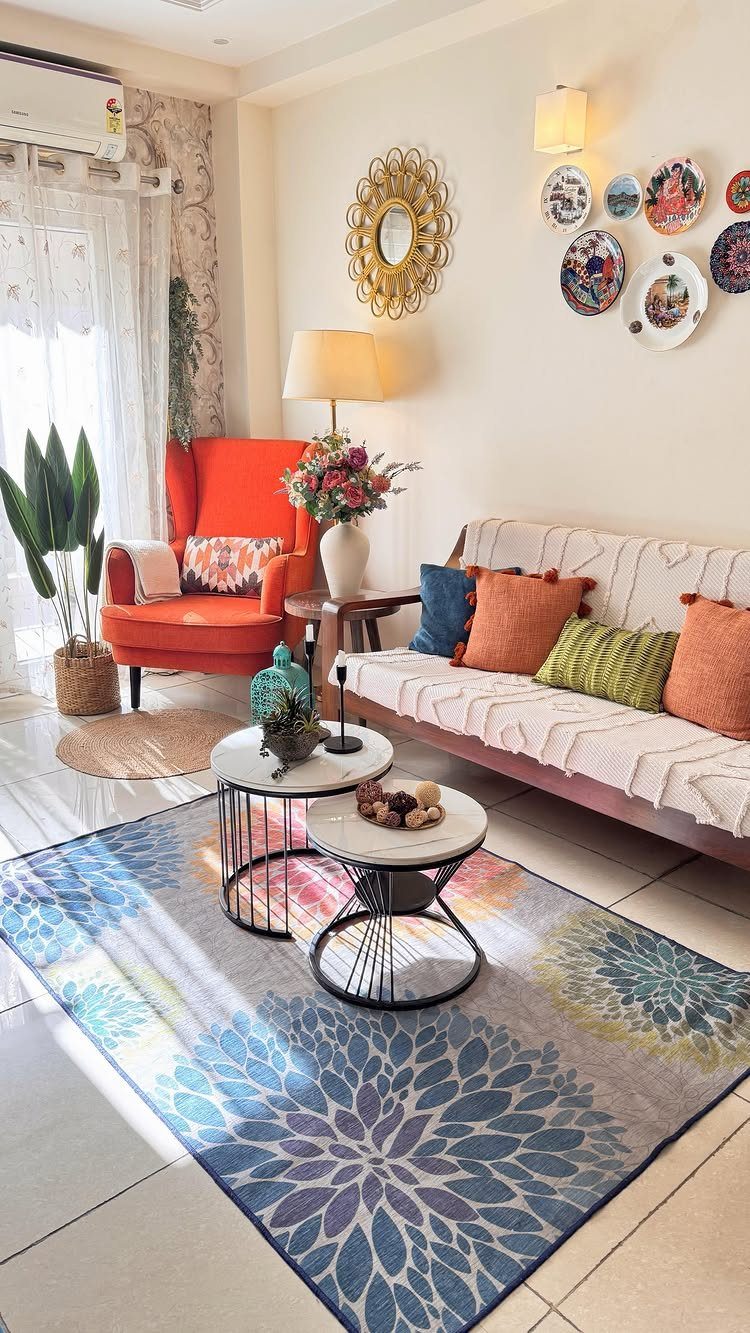
Two round marble-look tables in different heights slide together into one footprint, then pull apart when guests arrive and everyone needs a place for a drink.
White tops keep nesting tables looking light, even beside a patterned rug or a bold-colored chair.
I would buy a set over single tables, since the sizes are made to fit. Park the pair beside the sofa day to day, and separate them only when you need the extra surface.
11. Murphy Bed
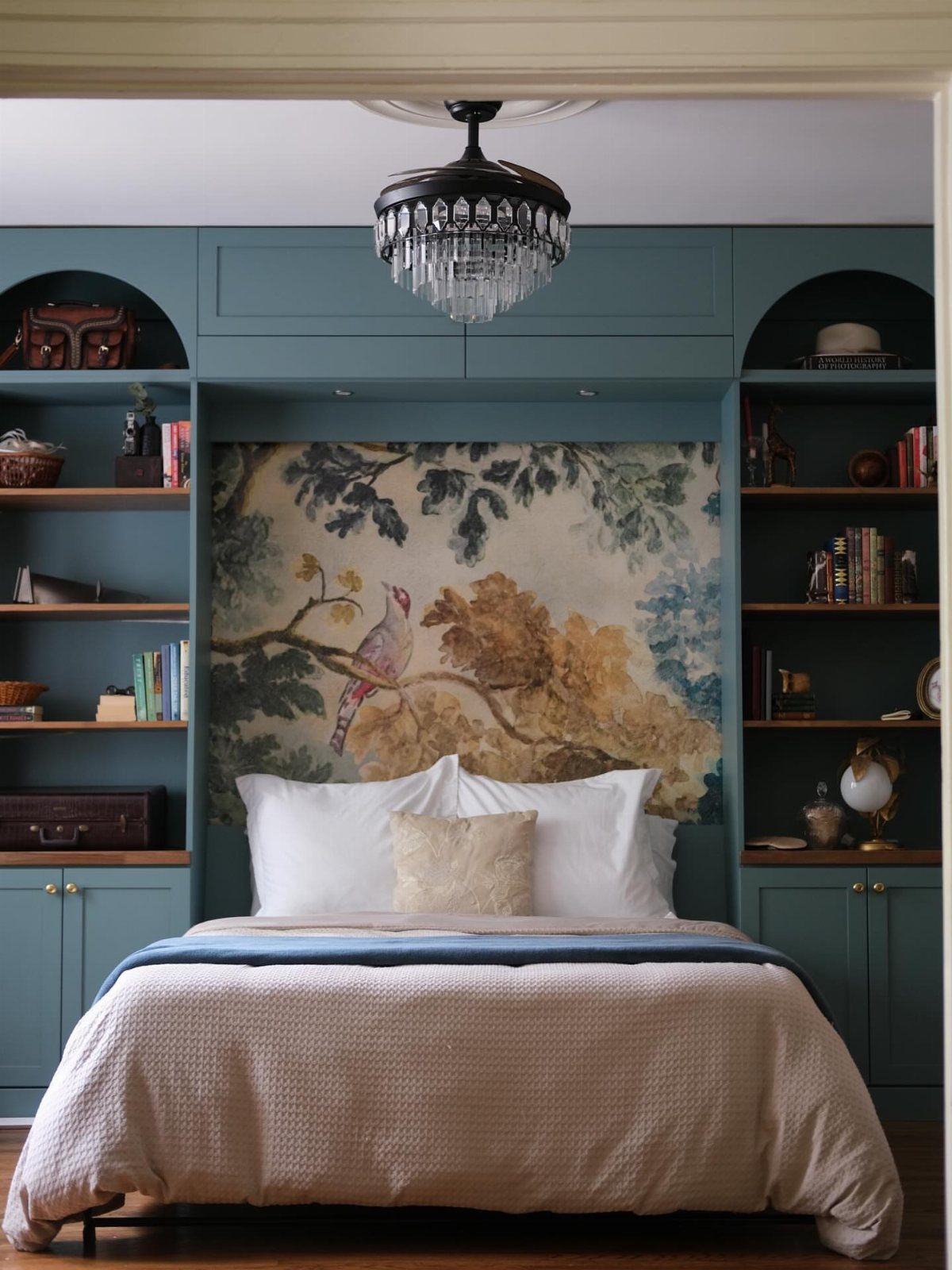
A Murphy bed folds into the wall so a bedroom can double as a living room by day. Built into a wall unit with bookshelves, as here, the bed becomes part of the shelving instead of the main event.
A built-in Murphy bed suits owners better than renters, since a landlord is unlikely to approve cabinetry bolted to the walls.
A wall painted in one deep color, like this teal, helps the whole unit read as a single piece of furniture.
12. Storage Entry Bench
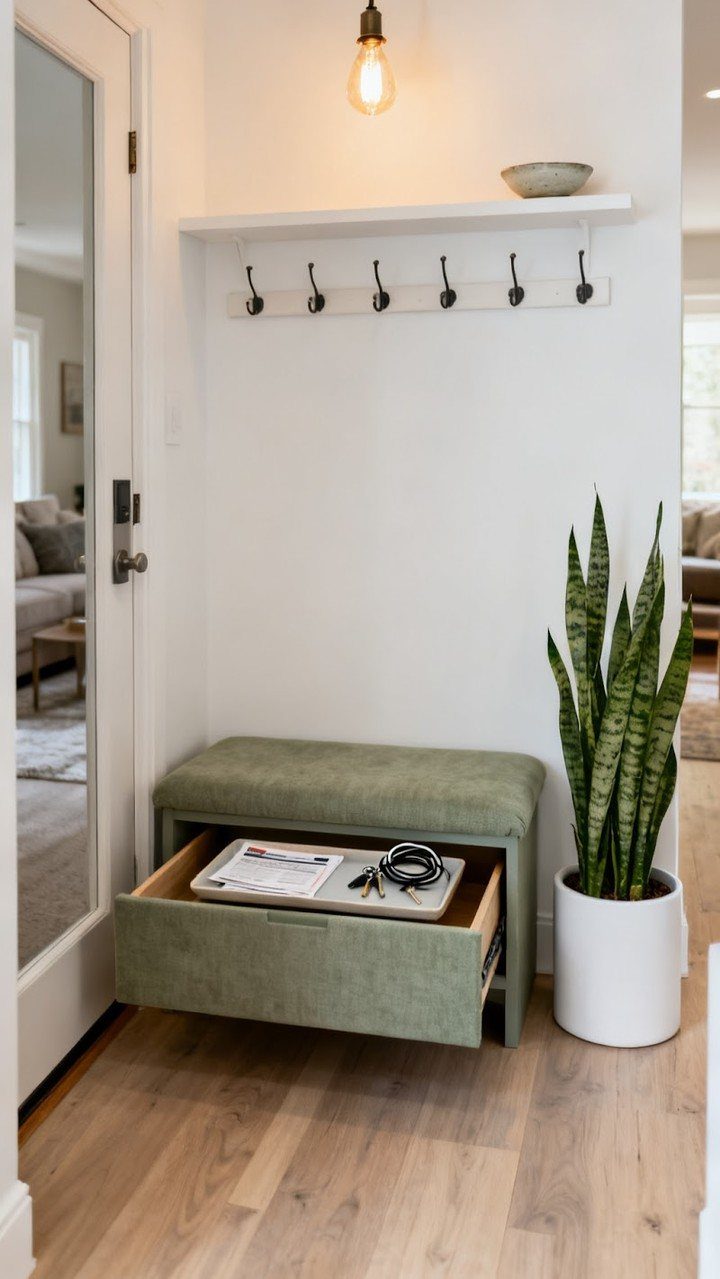
Keys, mail and shoes land somewhere the moment you walk in, and a bench with a drawer gives them a place that is not the floor.
A green upholstered seat adds color to an all-white entry, and the drawer hides the pile.
Hang a coat rack above it and add a snake plant in a white pot beside it, and a bare hallway turns into a proper entry. Pick a cushioned top if you want to sit and pull on boots.
13. Floating Console
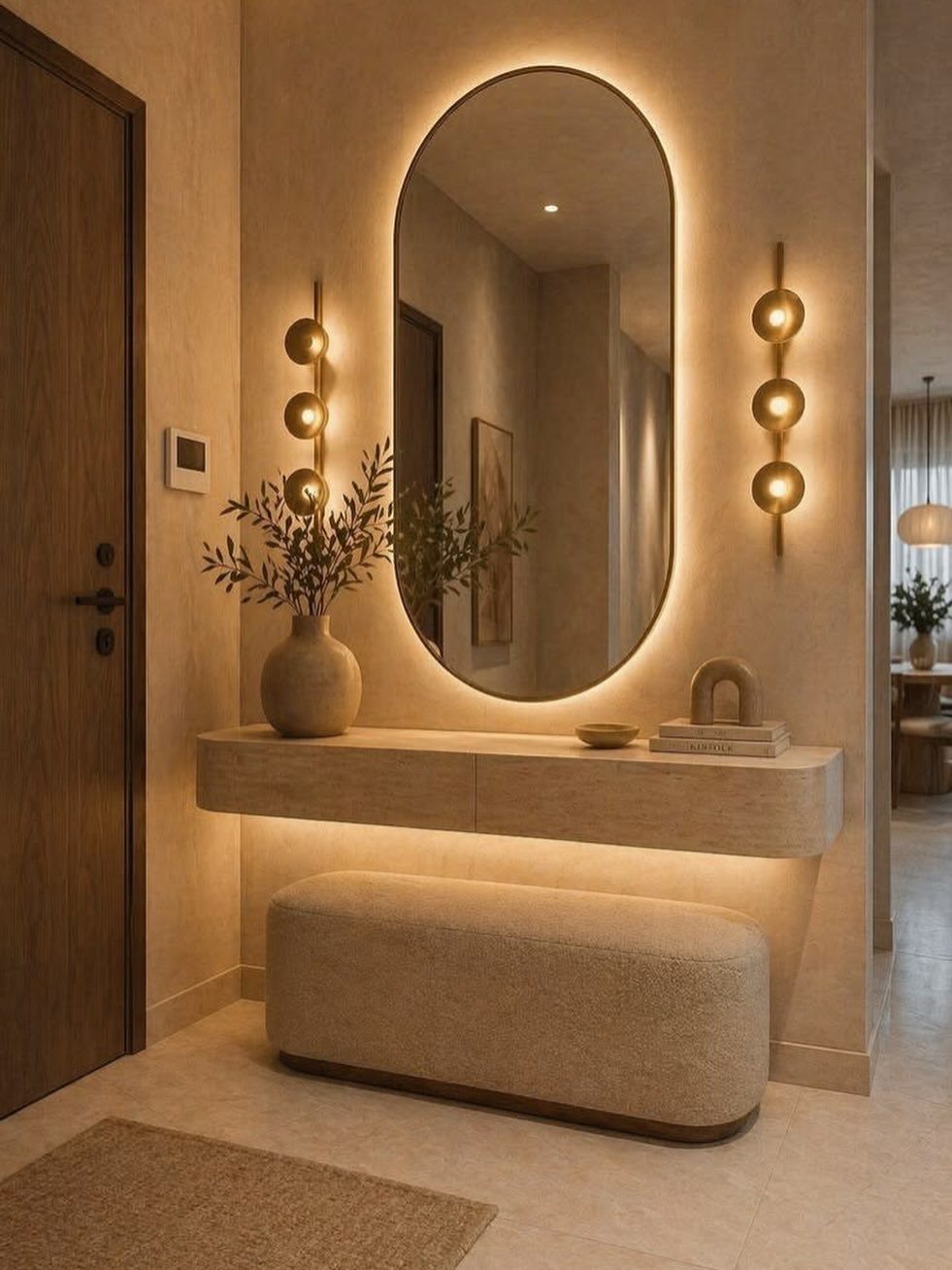
Wall-mounting a console leaves the floor beneath it clear, and in a narrow entry that visible floor makes the space feel wider.
Under-lighting makes the shelf appear to hover, and a backlit oval mirror above it softens the hard line of the top.
Keep the surface light: one vase of greenery and a book, as here, is plenty.
A bench in the same beige can tuck underneath, so the console and seat read as one built piece. Check with your landlord before drilling, since a floating shelf needs solid anchors in the wall.
14. Radiator Cover
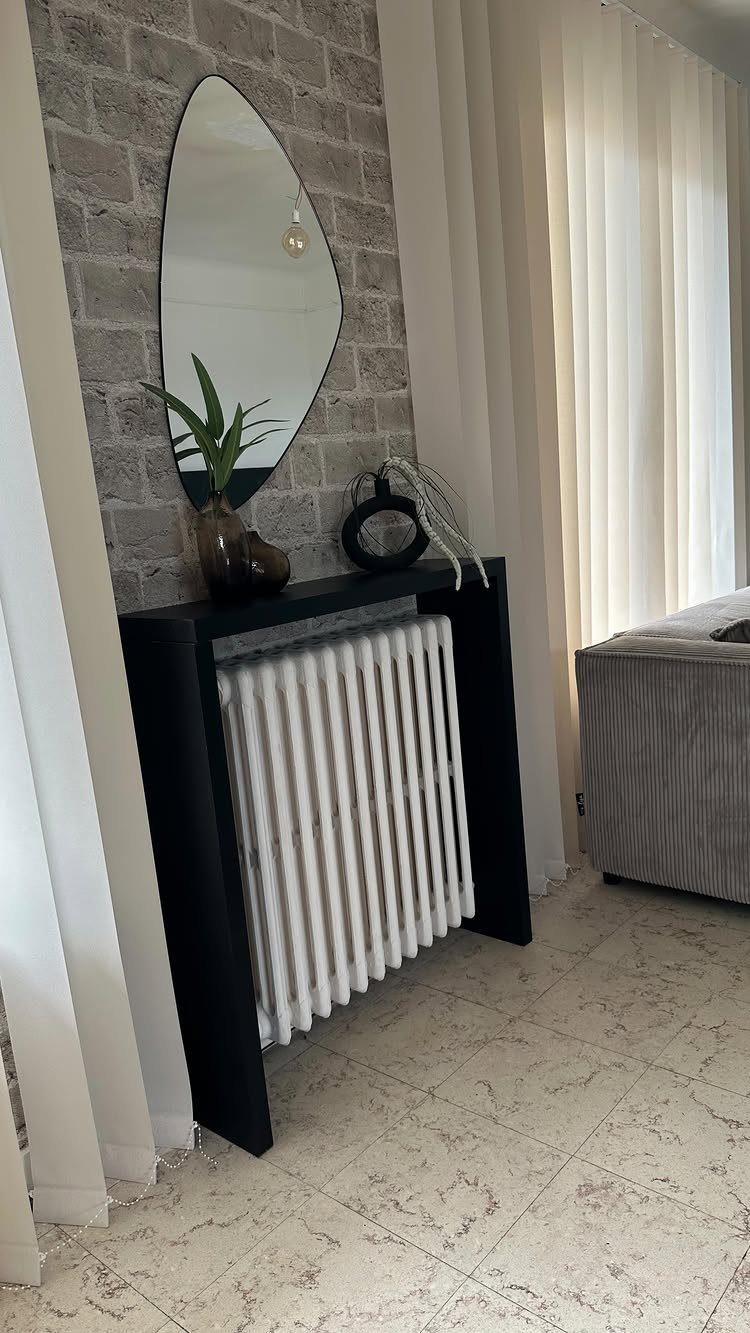
Radiators rarely sit where furniture wants to go, so a cover that doubles as a console table solves 2 problems at once.
A cover with a flat top and open slats hides the bulky metal fixture and gives you a shelf for a mirror, a plant or a small sculpture.
I would choose a cover dark enough to contrast with the wall, which makes it look chosen rather than hidden.
Leave the front slatted or open so heat can still reach the room. Anything you set on top should handle warmth, so plants that dislike dry air belong elsewhere.
15. Low Bed
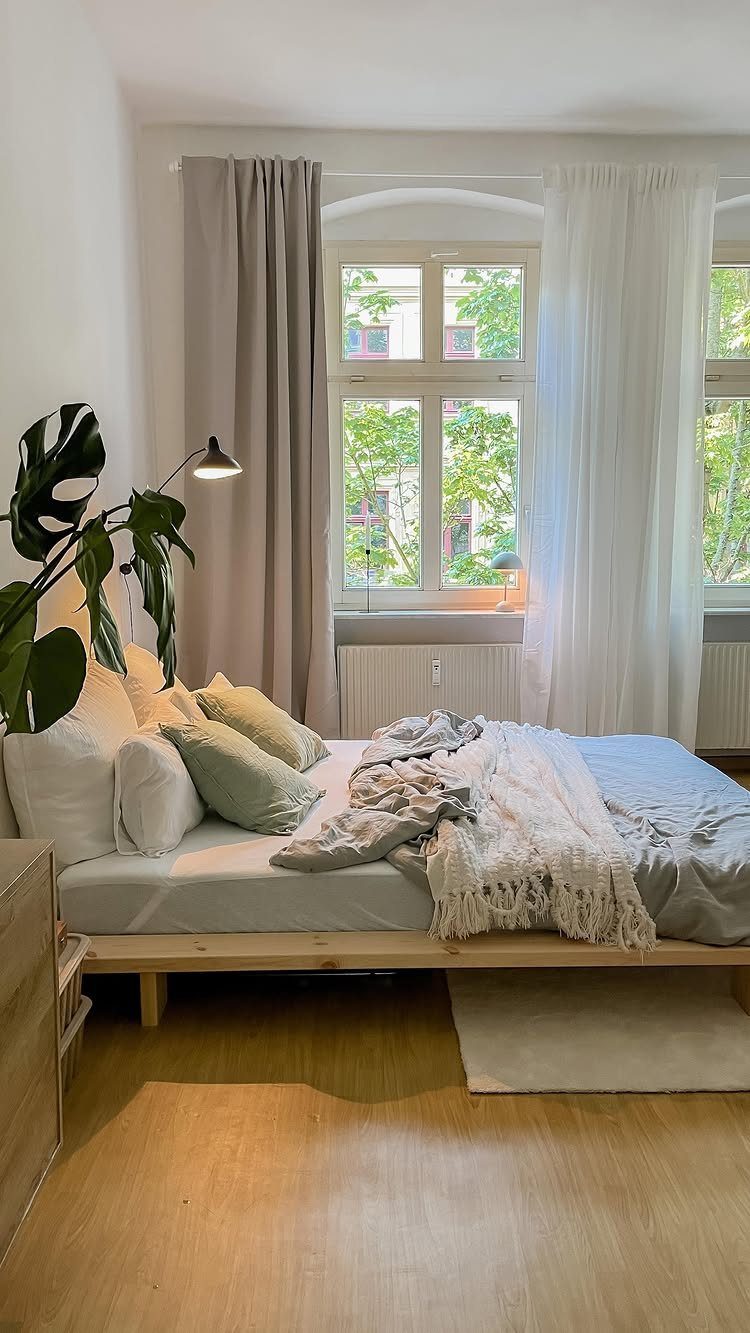
Lowering the bed lowers the whole room’s visual weight, and that opens up sightlines to the window. A wooden platform frame sits close to the floor, and pale linens in white and grey keep it from feeling heavy.
A studio gains the most, since the bed is the biggest object in view.
Skipping the frame and setting the mattress straight on the floor goes lower still, though getting in and out takes more effort. A tall plant like a Monstera beside it fills the empty height above the bed.
Most studio apartments in the United States are between 400 and 600 square feet. In 2024, the average size of a newly built studio apartment was 457 square feet, according to RentCafe.
Keep Surfaces and Decor Edited
Clutter comes in 2 kinds. Unopened mail and a drift of magazines on the coffee table or dining table are the clutter everyone spots first.
Then there’s the kind people stop noticing: a toaster, blender and coffee maker all parked on the counter, or more chairs at the table than the room can hold.
Keep surfaces clear, or at least edited down to a few things.
Buy only what the room needs, and leave some space open so your taste can change without a clear-out. Avoid making every piece intricate; one busy object looks better beside plain ones.
Wall-to-wall curtains solve the empty-wall problem. Run the curtains the full width of the wall, even when the window sits off-center; the fabric covers the lopsided spacing, and the bare patches stop begging for decor.
One unbroken stretch of fabric also dampens echo and rounds off hard edges, which helps most when the bed sits along an outside wall.
Mount the track on the ceiling and the curtain reads as one piece, with no strip of bare wall above it.
Lighting Should Suit Activities
A ceiling fixture handles overall brightness, but on its own it flattens surfaces. Build the lighting in layers instead, starting from what each spot is used for.
Walk through the apartment and list the activities: reading, cooking, eating, working, getting dressed. Give each one a light that lands where the task happens, then let the ceiling fixture fill in the rest.
Three lamps in three different styles work fine if each one shows what it needs to show.
Layers do other jobs too.
Separate lights mark off zones in an open room, set a mood in the evening and pick out a feature you like. They can also draw attention away from a corner you would rather not look at.
Frequently Asked Questions
How can I maximize my apartment space?
Build up the walls and pick pieces that do more than one job.
Wall-mounted shelves running up toward the ceiling give plants, books and framed art a place to sit without using an inch of floor, and a Murphy bed swings up flat against the wall so one room can be a bedroom at night and a living room by day.
Lift-top coffee tables and storage ottomans add hidden storage, and dividers mark off zones without crowding the room.
How can I decorate my apartment kitchen?
Self-stick vinyl wall tiles are an easy, affordable way to add character to a small kitchen, and they work in bathrooms too.
Keep the counters edited as well. Leaving the toaster, blender and coffee maker on the counter all day eats up prep space and makes a small kitchen look busier than it is.
What is the best design tip for decorating a studio apartment?
Edit what you own so the space feels cozy without tipping into clutter. Every person has a balance point where belongings add warmth, and past it the room just feels crowded.
A studio looks best with bare surfaces or just a few chosen pieces on them, and I’d only bring in what the room has a real use for.
How should you arrange furniture in a studio apartment?
Put the largest pieces against the longest wall so the middle of the floor stays open, and keep walkways and sightlines clear.
Rugs or dividers can mark zones, and seating or dining works well near the windows with the bed farther back. Lightweight pieces that move easily, like nesting tables, let you reconfigure the room as needed.