
You can finish a room in one weekend or in daily 20-minute sessions on one zone, then hold it with 10–15 minutes of chores a day.
Most people go wrong at the clearing stage: a half-emptied room abandoned by dinnertime is worse than one small area finished, so empty it in parts.
[link-whisper-related-posts]1. Pick a Starting Area
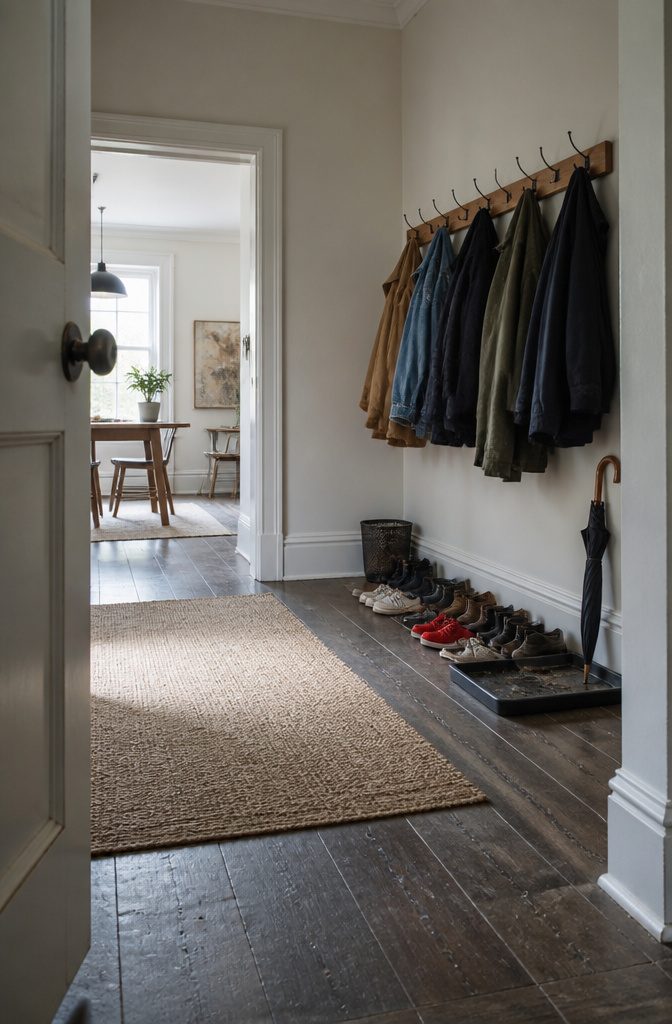
Start with the spot that frustrates you most, the one you dig through or step around several times a week: a closet where you can’t find anything to wear, say, or a pile of shoes and coats by the door.
Pick one spot, even a single drawer, and finish it before moving on.
If the whole room feels like too much, split it into smaller areas and take them one at a time.
Trash goes first in any area. It’s easy to spot, nobody is attached to it, and removing it frees up space to work.
A daily 20-minute session on one small zone suits a busy week, and a full weekend push suits anyone who wants it done fast. Both work.
2. Clear the Space
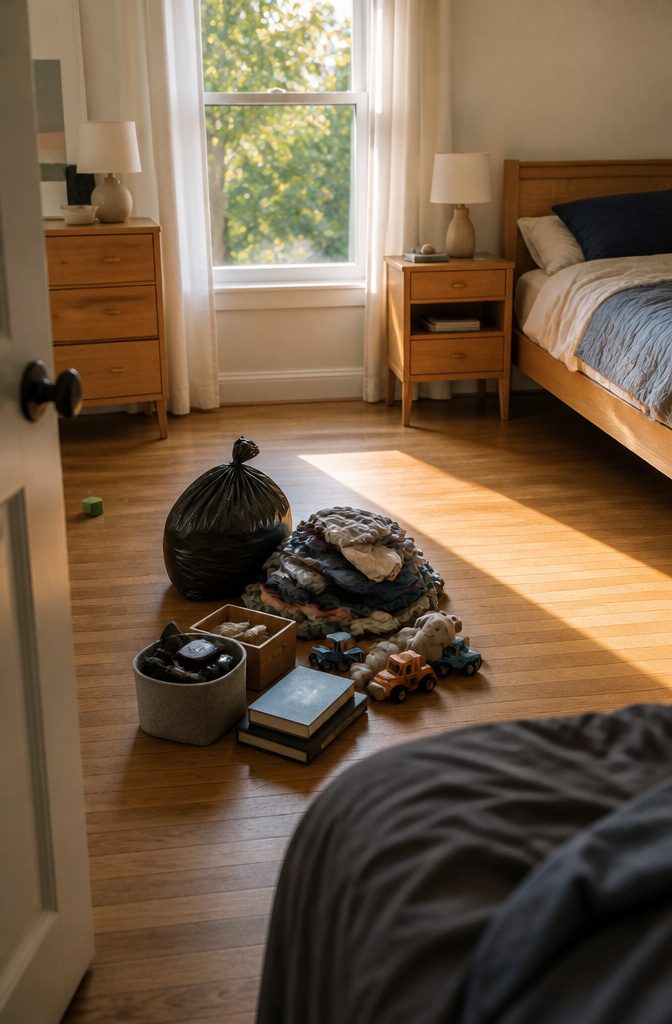
Pull everything off the floor first, then the dresser, desk and nightstand, and carry it all to one spot. Check under the bed, on the closet floor and on top of furniture, where forgotten things collect.
If the room is too full to empty in one go, work in parts: clothes, then nightstands, then the floor and other surfaces. A half-emptied room you abandon by dinnertime is worse than a small area finished.
When the mess feels overwhelming, start with the trash: wrappers, old papers, food. One bag makes a visible dent and gives you the momentum to keep going.
Toys are the exception to a single heap.
A giant dump-it-all pile buries you, so gather them by category, one or two groups at a time, like building toys or arts and crafts. Seeing one category together shows what your kids actually have.
3. Declutter With Five Piles
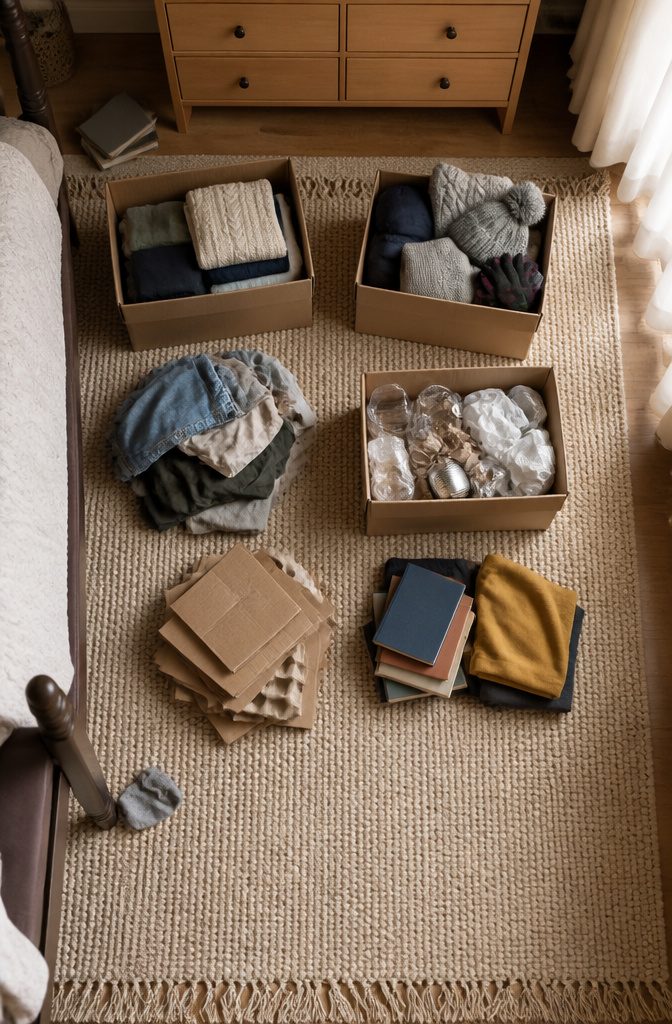
Set out five labeled boxes or floor spots before you open a drawer:
- Keep: what you use or love, and nothing more.
- Seasonal or rarely used: moves to storage elsewhere, out of daily reach.
- Trash: anything broken, stained or worn out. I don’t give these a second look.
- Recycling: paper, cardboard and whatever your curbside program takes.
- Donation: items in decent shape that you haven’t used or worn in over a year.
Pull out what’s hiding under the bed and behind the nightstand too, since those spots hold the "someday" items.
In a shared room, sort your own things first. Your half is the only half you get to decide, and a finished pile of yours makes the conversation about theirs much easier.
4. Sort Into Groups
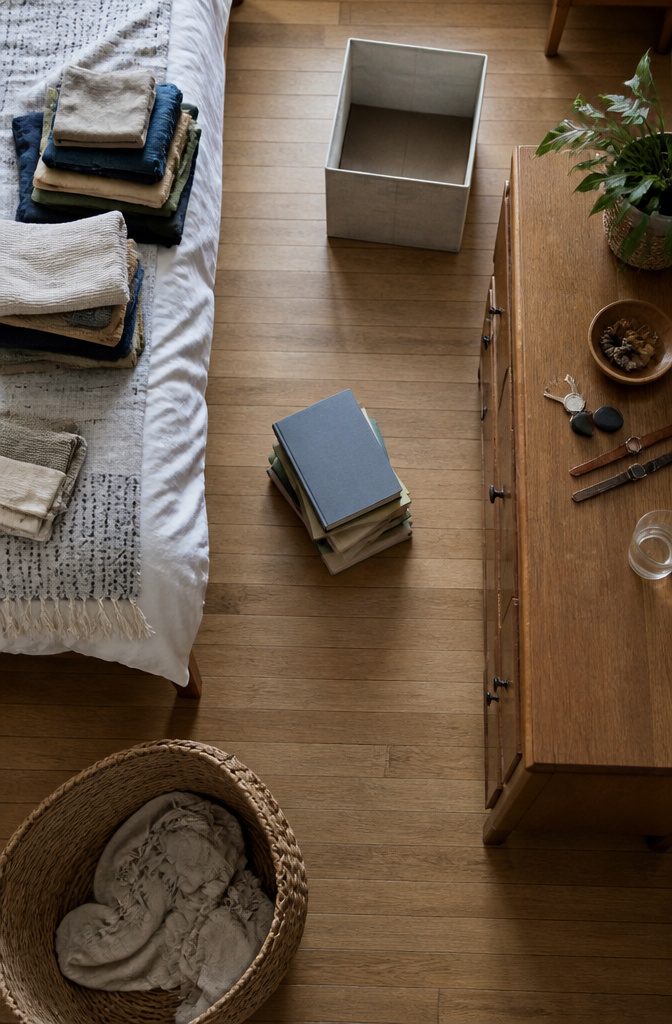
Once the obvious clutter is gone, group what remains by type: clothes with clothes, books with books.
A category laid out together exposes doubles and triples fast, and extras are easy to let go of when they sit side by side.
Work on one or two groups at a time, because dumping the whole room into a single pile just swaps one mess for another.
Grouping also shows what is living in the wrong place. If a whole category fits better in another room, move it out now instead of boxing it up here.
Then write a quick inventory of each group.
It feels tedious, but it tells you what you own and where it is, and it tells you what size bin each group needs. Label every container as you fill it.
5. Give Everything a Home
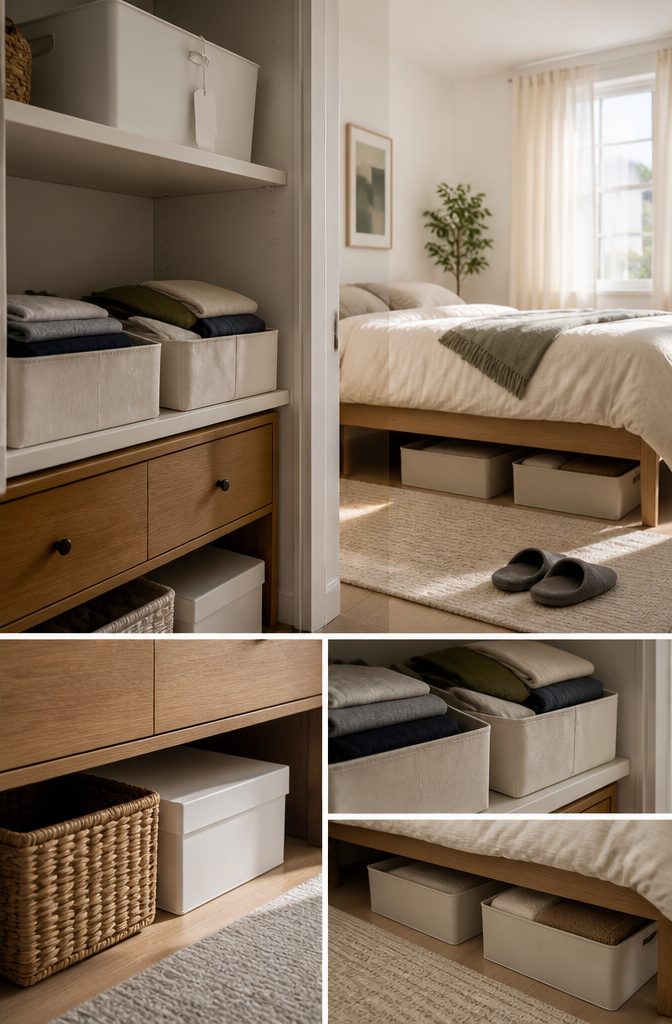
Group like with like: clothes with clothes, books with books, one container per group. Baskets, shoeboxes and bins you already own come first, and anything left homeless afterward is what justifies a purchase.
Daily items belong at arm’s height, in the closet section or top dresser compartment. Rarely used things go on high shelves or at the back.
A printed tag, a label maker, a handwritten chalkboard label or a thermal printer sticker all work, so pick whichever you will actually use.
A system that looks neat but is annoying to open will not last, so keep daily items in open bins instead of ones with lids.
I lean toward clearing under the bed. If you need it, limit it to labeled bins of out-of-season clothes, extra bedding or shoes.
6. Clean After Clearing
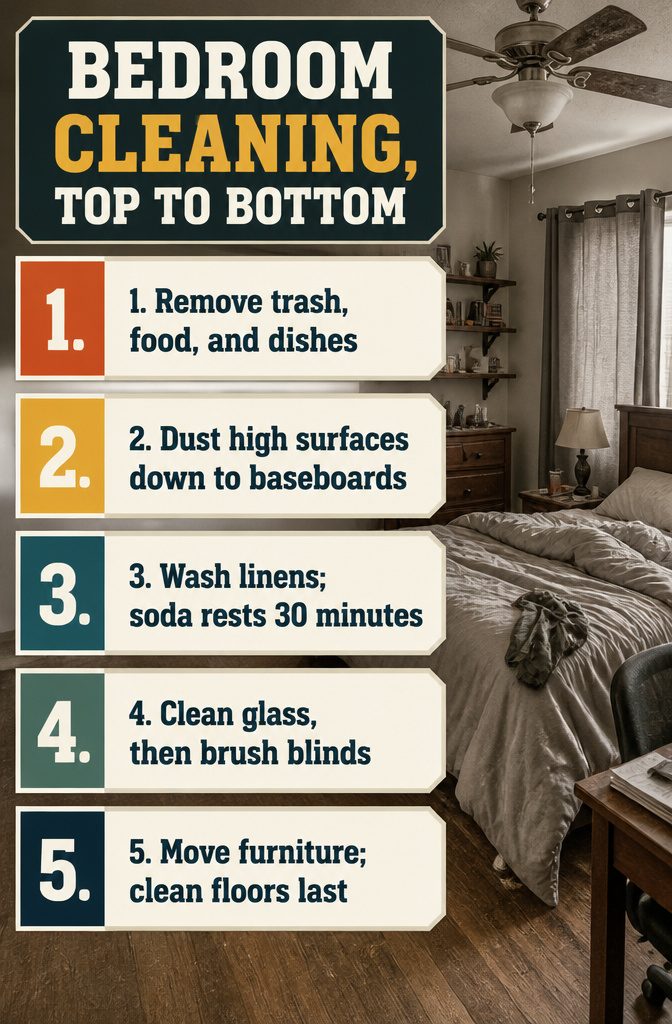
- Take out trash, old food and dirty dishes first. They cause most stale smells, and no cleaner covers them.
- Dust from the top down with a microfiber cloth: ceiling fan, light fixtures, shelves, then baseboards. Lift lamps to dust under them.
- Wash bedding and machine-washable curtains by the care labels; use a lint roller on the rest. With the mattress bare, sprinkle on baking soda, leave it 30 minutes, then vacuum.
- Clean windows and mirrors with glass cleaner or 1 part vinegar to 1 part water. Wipe dry, and run a brush attachment over blinds.
- Do floors last, since everything above drops dust down. Move the bed, dresser and desk, vacuum or sweep, then mop. A steam cleaner or carpet cleaner handles carpet stains.
7. Build Upkeep Habits
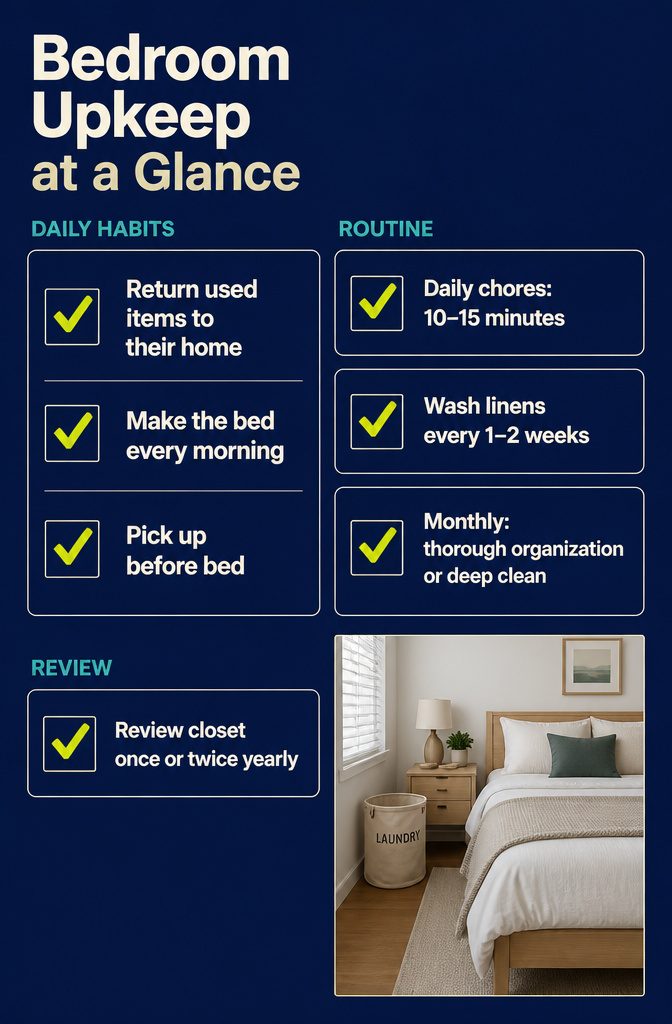
Three daily habits do most of the work:
- Return each item to its home after you use it.
- Make the bed every morning.
- Pick up stray items before bed.
Organization strategist Kristin MacRae sums up the morning rule:
Make your bed every morning when you get up, and toss dirty clothes in the hamper when you take them off.
— wikiHow
Those two moves keep the bed and the floor from turning into the pile.
Then set a pace:
- Daily: 10–15 minutes of chores
- Weekly: declutter
- Every 1–2 weeks: wash the linens
- Monthly: thorough organization or deep clean
- Once or twice a year: review the closet
Change any system that proves impractical for your schedule.
Shared Rooms and Zones
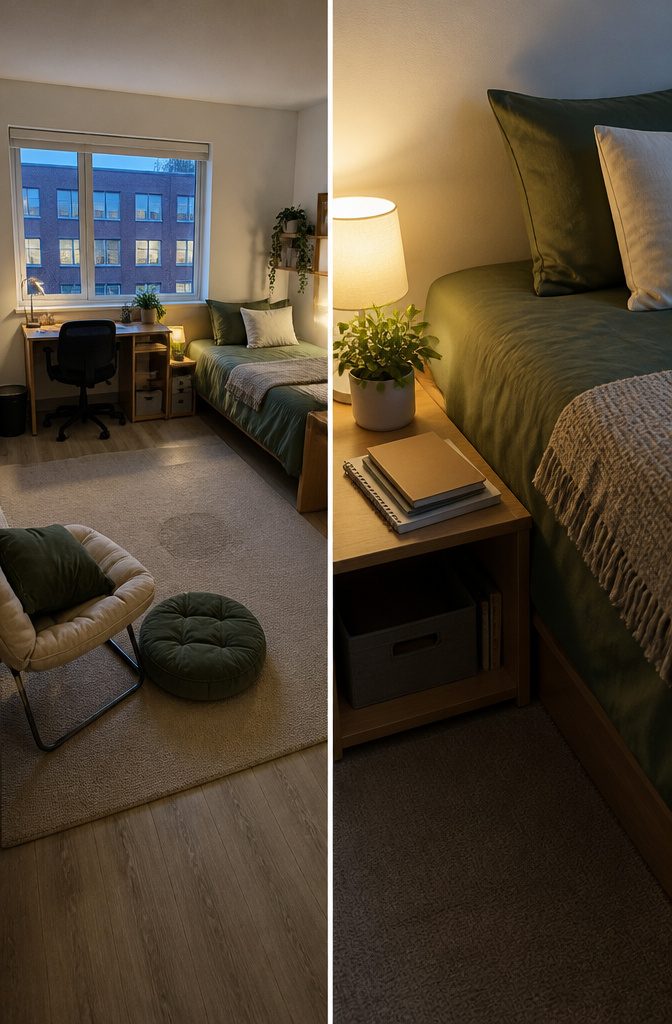
A college room works best split into 3 zones: study, sleep and relaxation. Keep the desk and its supplies together, keep the bed for sleeping, and give the chair or floor-cushion corner to whatever you do to unwind.
Once each zone has a job, a stray item has an obvious place to go back to.
Shared dorm cleaning holds up better when the chores are handed out instead of left to whoever notices the mess first. Split floors, trash and surfaces by person or by week so one roommate doesn’t become the default cleaner.
In a shared bedroom, I’d start with your own belongings: your nightstand, your dresser drawers, your half of the closet.
Telling a partner what to purge starts an argument. A visibly tidy side makes the case quietly, and it gives them time to adjust at their own pace.
Keep Clutter Out of the Bedroom
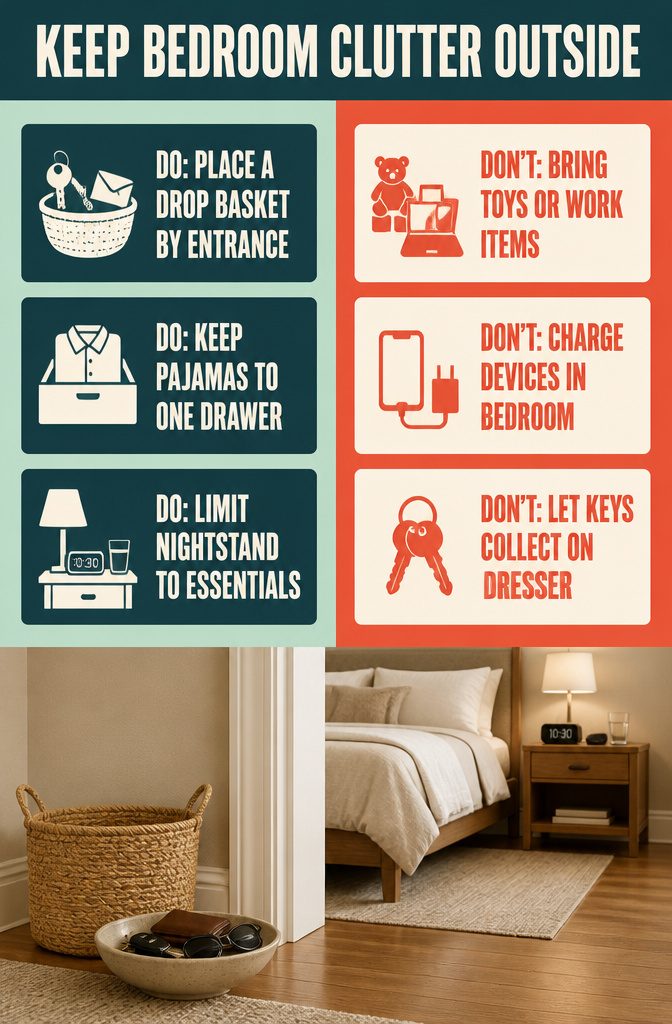
Most bedroom clutter gets carried in by hand, so stop it at the door and keep the nightstand short.
- Drop spot by the entrance: put a basket or bowl near the front door or garage for keys, wallet, sunglasses and mail. Nothing fancy is required, and the dresser stops collecting keys.
- No toys or work items: the bedroom is for rest, so both stay in other rooms.
- Charging elsewhere: I’d move the charging station out of the bedroom, at minimum for work devices. The work will still be there in the morning.
- Pajamas: give them one drawer, two at most if the drawers are small.
- Nightstand: a small clock radio, a lamp, water and your phone. A current book goes in the drawer or under the bed on your side.
Furniture and Wall Storage
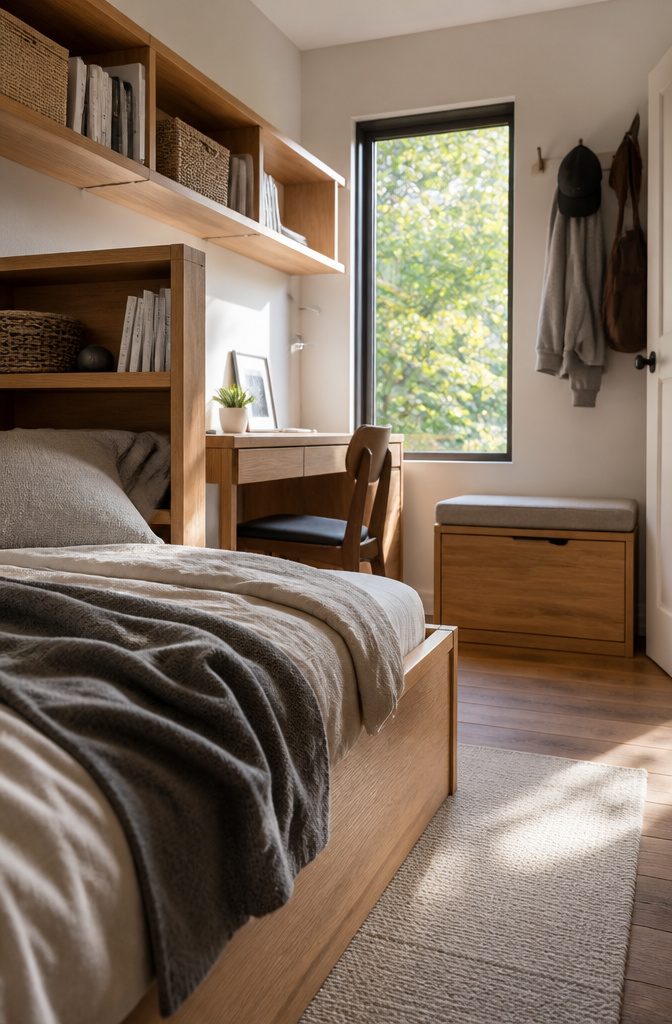
A king-sized bed takes up about 40 square feet, so in a small room the walls and the furniture have to carry the storage. Floating shelves hold books, decor or bins and free up desk and floor space.
Hooks beat shelves for anything that slides: a hooded sweatshirt left on a closet shelf ends up on the floor, but on a hook it stays put.
I’d add hooks at the door and inside the closet first, where bags, hats and jewelry stay within reach.
For furniture, choose pieces that store something before anything else: a headboard with a built-in bookcase, a chest with a seat on top, a dresser that holds linens.
A dressing table you already own works too if you add a fabric skirt to hide what sits underneath. The space under a chair counts as storage as well.
Frequently Asked Questions
Where should I start when cleaning and organizing a room?
Start with the spot that frustrates you most, even if it’s a single drawer, and finish it before moving on.
If the whole room feels overwhelming, begin by bagging the trash: wrappers, old papers and food. One full bag makes visible progress quickly and builds momentum.
How do I get ruthless when decluttering?
Use a one-year test: anything you haven’t used or worn in over a year goes in the donation pile.
Sorting into five piles (keep, seasonal or rarely used, trash, recycling, donation) turns each item into a quick decision. Decluttering gets easier with practice, and a tidy space makes letting go feel worthwhile.
How can I keep my bedroom smelling fresh?
Take out trash, old food and dirty dishes first, since they cause most stale smells and no cleaner covers them. Then wash the bedding, sprinkle baking soda on the bare mattress for 30 minutes before vacuuming, and clean the floors last.
How much does it cost to clean and organize a room?
It can cost close to nothing.
Use baskets, shoeboxes and bins you already own first, and buy containers only for the groups left without one. Your total depends on how many groups that turns out to be.