What you plan to keep under the deck decides which skirt is yours: an empty gap can stay open behind lattice or river stone, while storage calls for double doors and a bigger build that takes more than one weekend.
The ideas range from wood lattice you cut with a saw and fix with a staple gun to composite boards that cost more up front but skip the repainting.
Whatever you pick, leave room for airflow, because a sealed skirt traps damp that feeds rot and mildew.
[link-whisper-related-posts]1. Wood Lattice
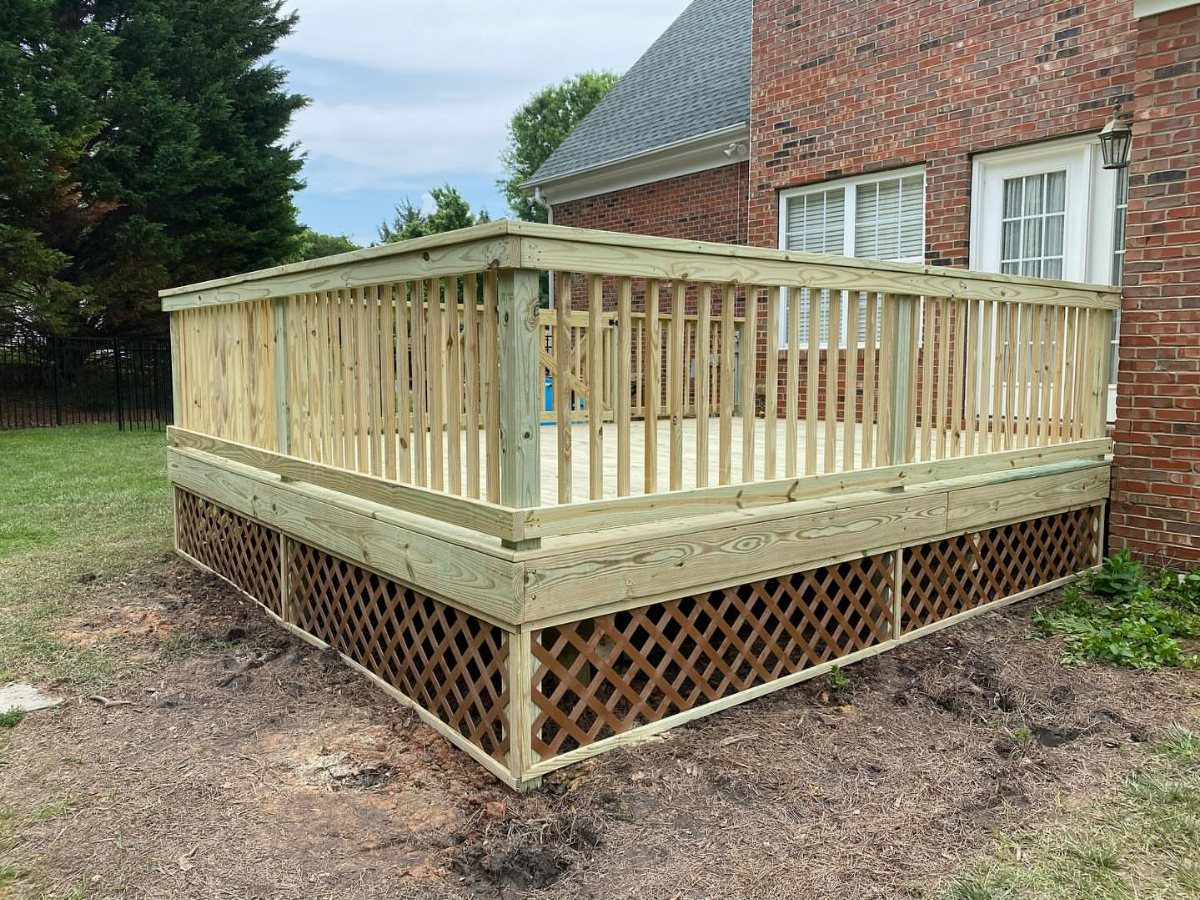
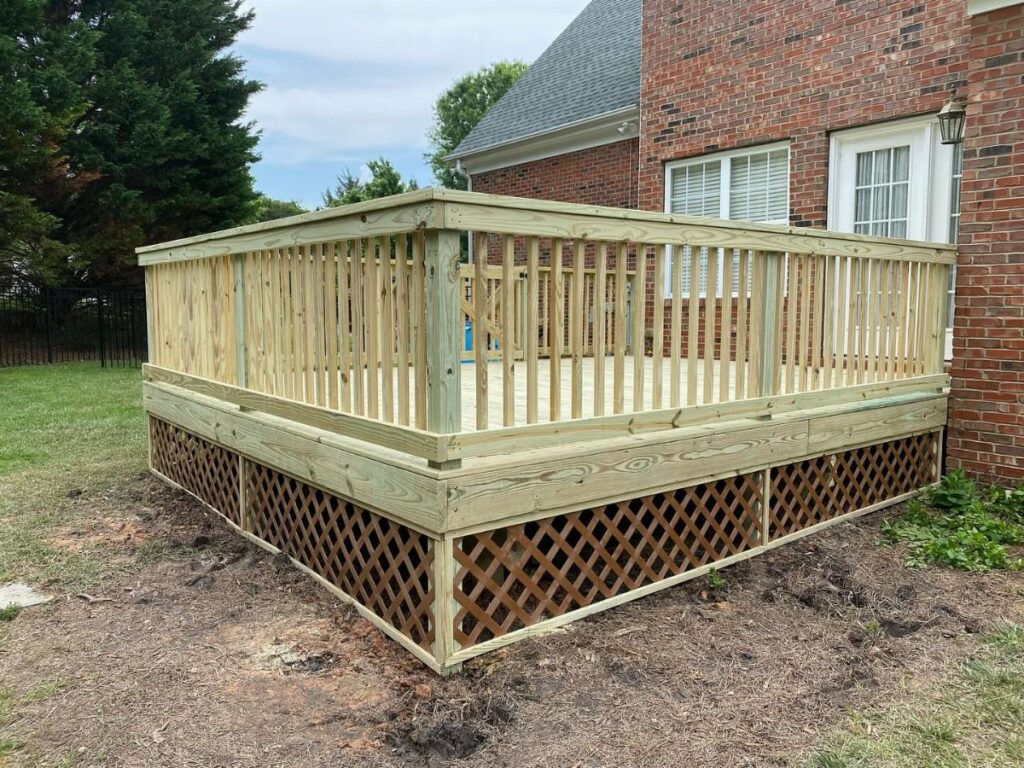
Diamond lattice is the classic way to close in a deck, and it earns that reputation by doing 2 jobs at once: it hides the clutter below while letting air move through.
That airflow matters under a deck, where trapped damp air is never welcome.
Wood suits renters-turned-owners on a tight budget who can handle a saw and a staple gun. Paint or stain the panels to match the deck rail so the skirt reads as part of the build, not an afterthought.
2. Composite Skirting
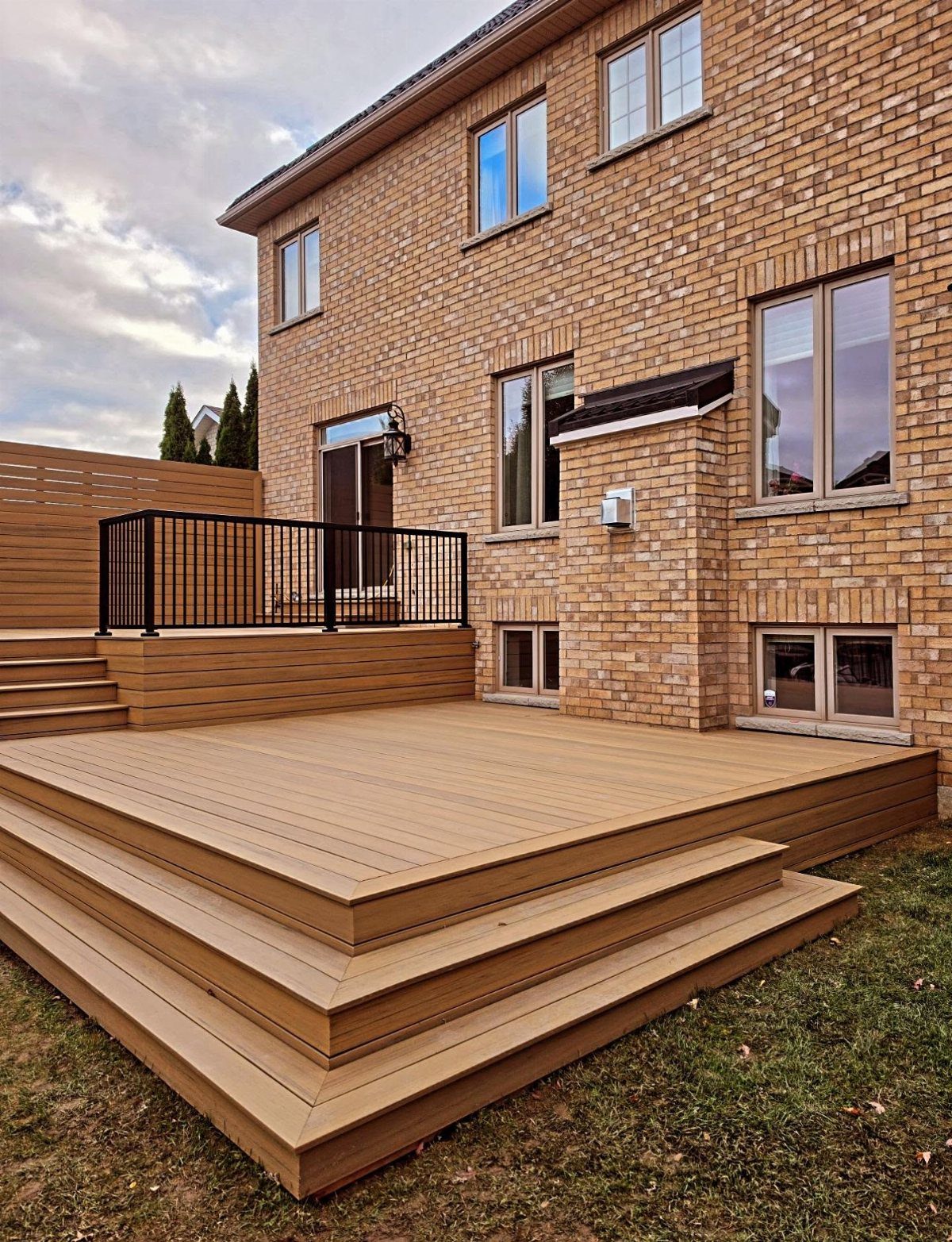
Matching the skirt to the deck itself is what makes this version look finished.
Composite boards run horizontally along the edge, and because they come in the same color family as the decking, the deck reads as one solid structure instead of a platform on legs.
Composite asks little of you after install, which suits anyone who would rather spend weekends on the yard than on a paintbrush.
Expect to pay more up front than for lattice, and I think that is a fair swap for skipping the upkeep.
3. Horizontal Boards
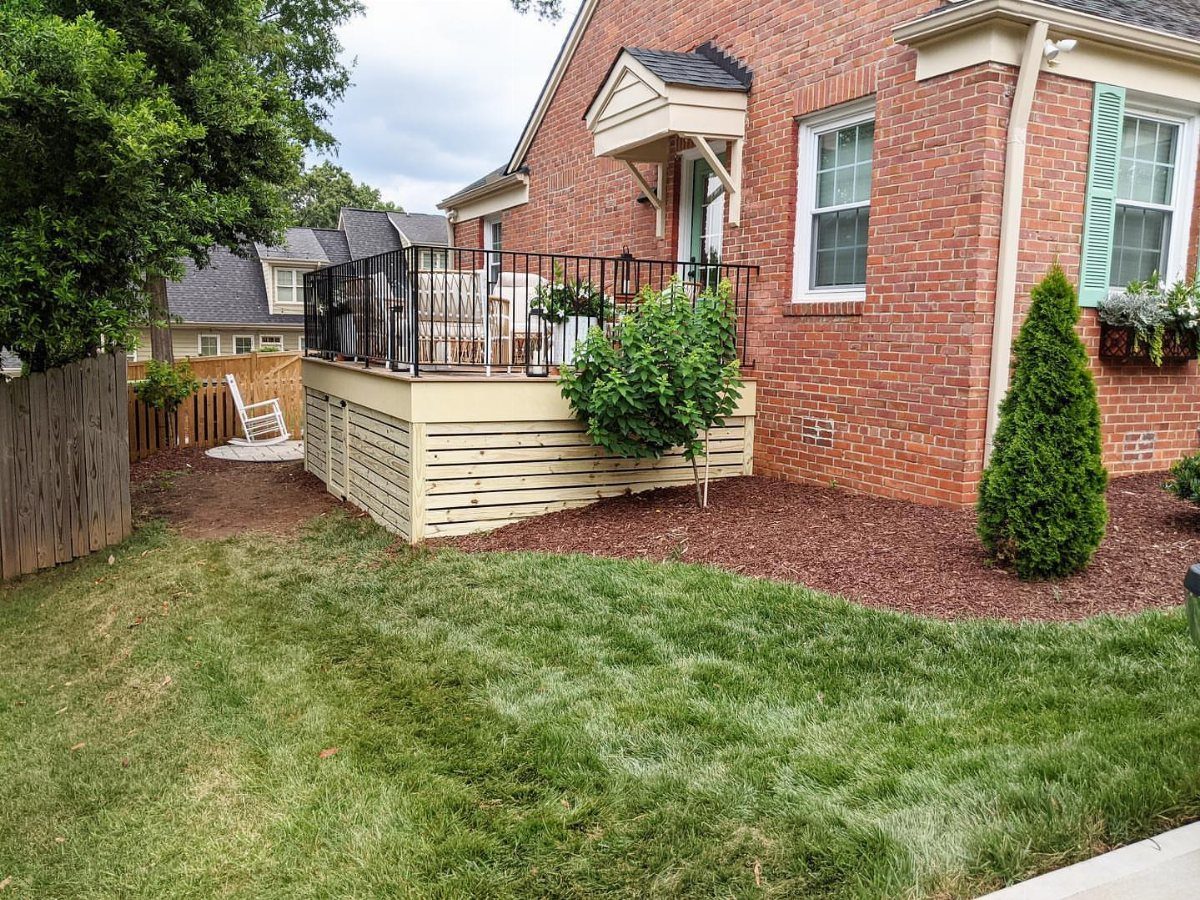
Running boards sideways gives a deck a long, calm line that suits modern houses. Horizontal slats also pair well with a brick or siding backdrop, since the stripes echo the rows already there.
I like a light neutral board against red brick; it softens the contrast without fighting the masonry.
Choose a color close to the deck surface so the whole edge looks planned. A shrub or a strip of mulch along the base finishes the line and hides the spot where board meets ground.
4. Vertical Boards
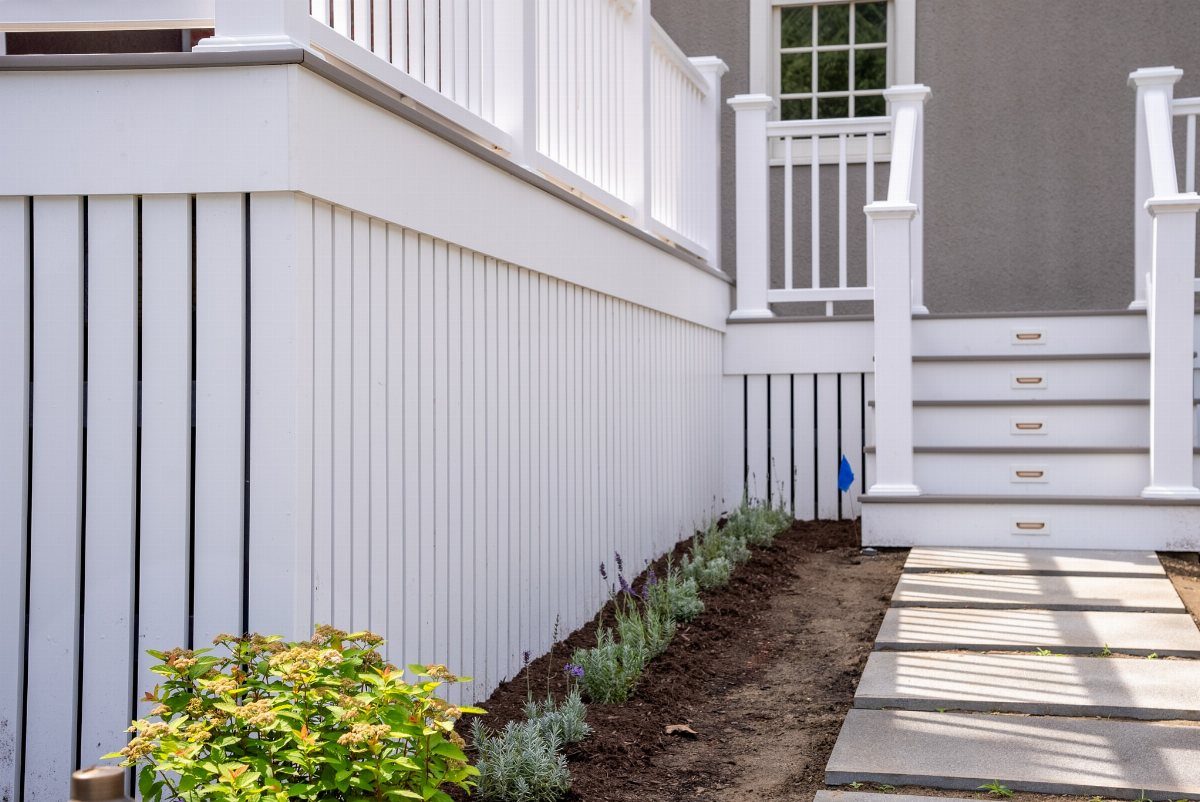
Upright boards pull the eye downward and make a short deck look taller than it is. That is a handy illusion on a low platform that otherwise looks squat against the house.
Painting the skirt the same white as the railings and trim keeps the look clean, and a stone path or small bed beside the stairs gives it a tidy edge.
On a deck that already sits high, I would pick horizontal boards, since vertical ones stretch the look upward and add height the structure has no use for.
5. Vinyl Lattice
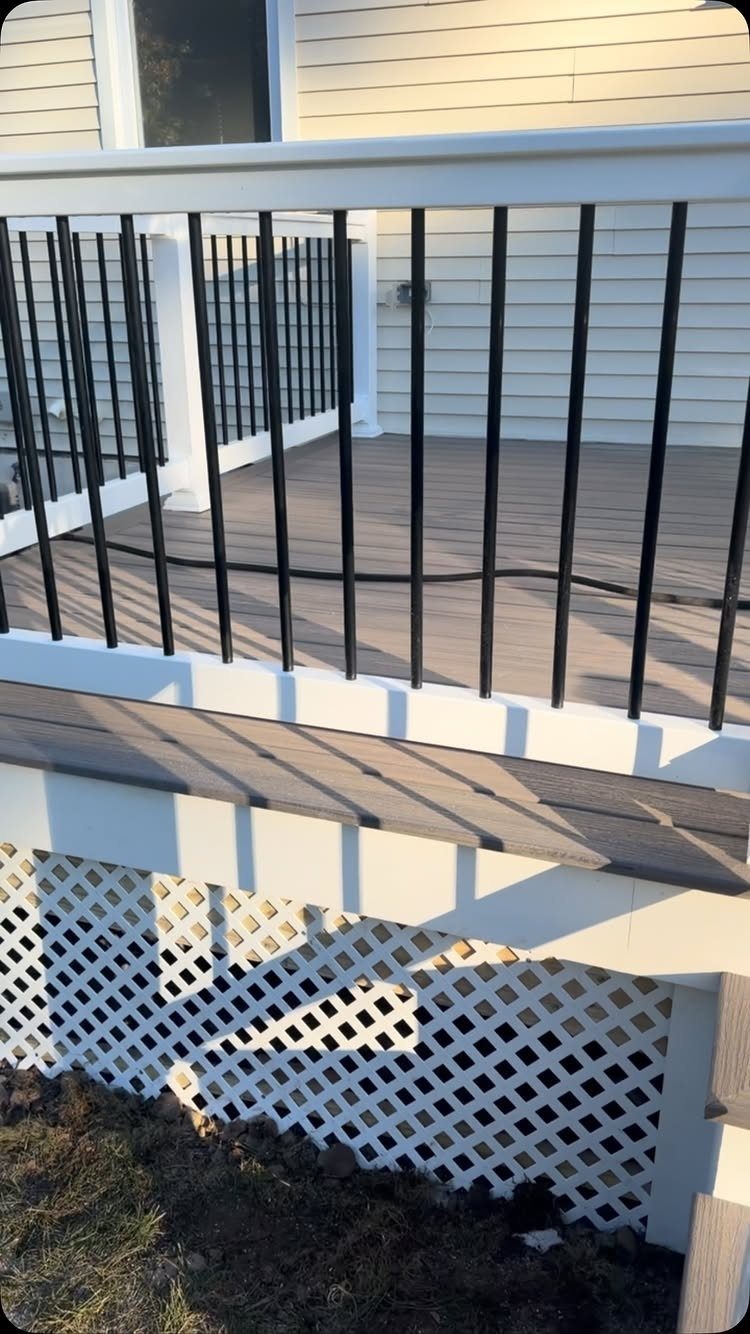
Vinyl lattice gives you the crisscross pattern of wood without the repainting. White panels are especially easy to live with: they match white railings, brighten the shadows under a deck, and never need a coat of anything.
For a renter or a first-time owner who dislikes maintenance, I would pick vinyl over wood lattice every time.
Expect to spend a bit more per panel, and keep the color matched to the trim so the skirt blends into the house.
6. Under-Deck Shed
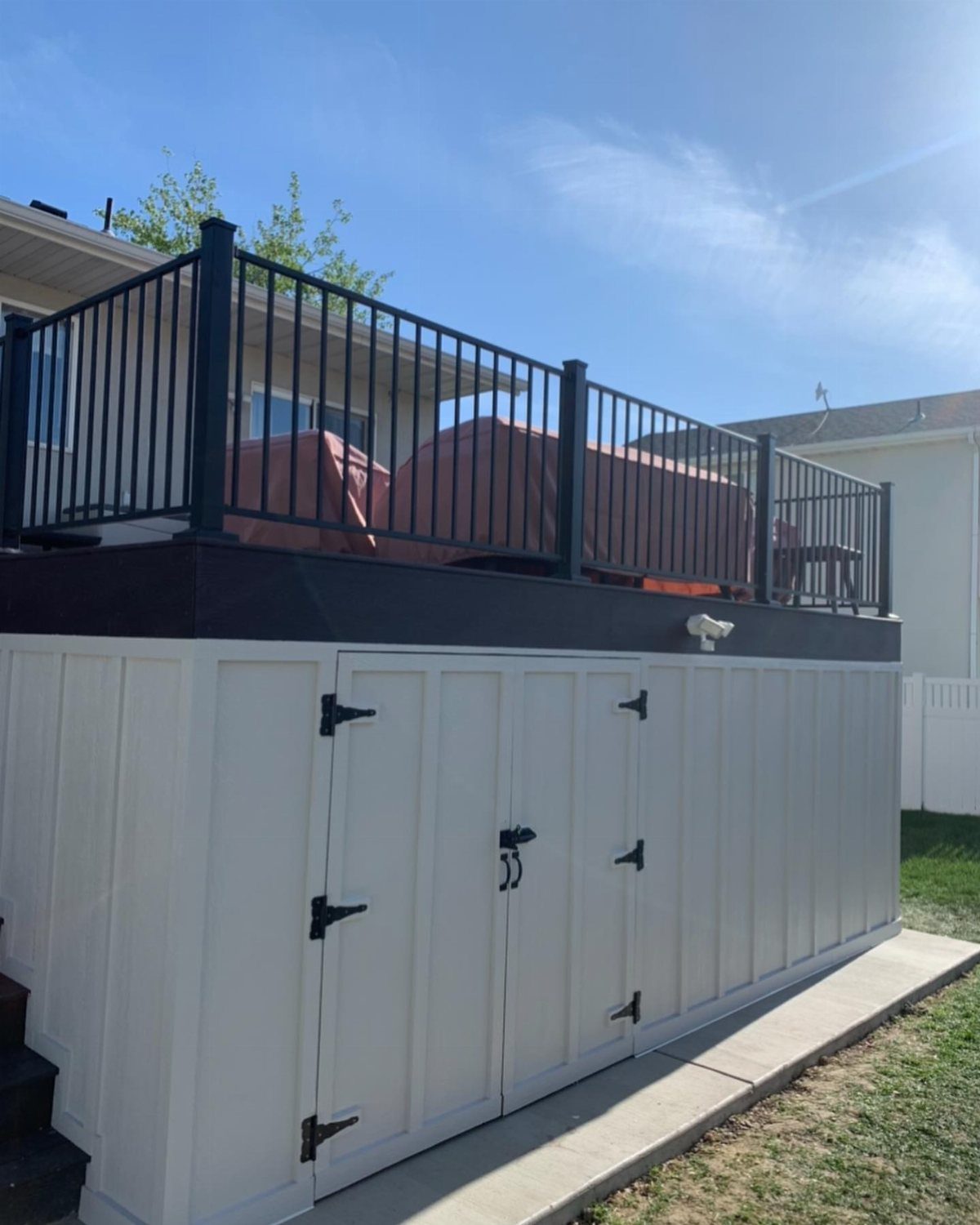
A raised deck leaves a lot of dry, shaded space going to waste, and enclosing it with a proper door turns that gap into storage for mowers, tools, and patio gear.
Double doors make it easy to roll bulky items in and out.
Paint the shed the same white as the house or trim so it disappears into the structure.
This is a bigger build than a skirt, so plan on more than one weekend, and decide on door size before you frame anything.
Don’t be afraid to get creative with your under-deck skirting ideas. For example, adding skirting along just one or two sides of your deck can help create an all-new use for that space.
— Bob Vila
7. Black Vinyl Lattice
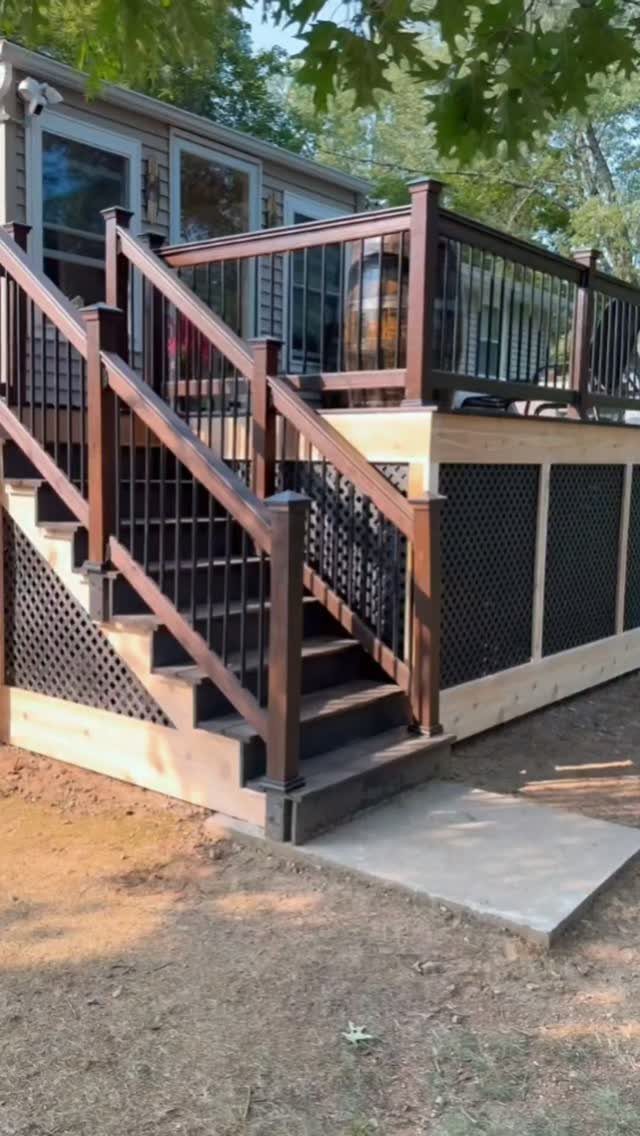
Black lattice turns the gap under a deck into shadow, and that suits a dark brown deck well. The panels sit in the same tone as the dark railing, so the base looks like part of the original design.
Against a light house, the dark skirt gives the deck a clear outline.
In a wooded yard like this one, it also fades into the tree line behind it. I would choose black over white whenever the deck boards run dark.
8. Board-and-batten Skirting
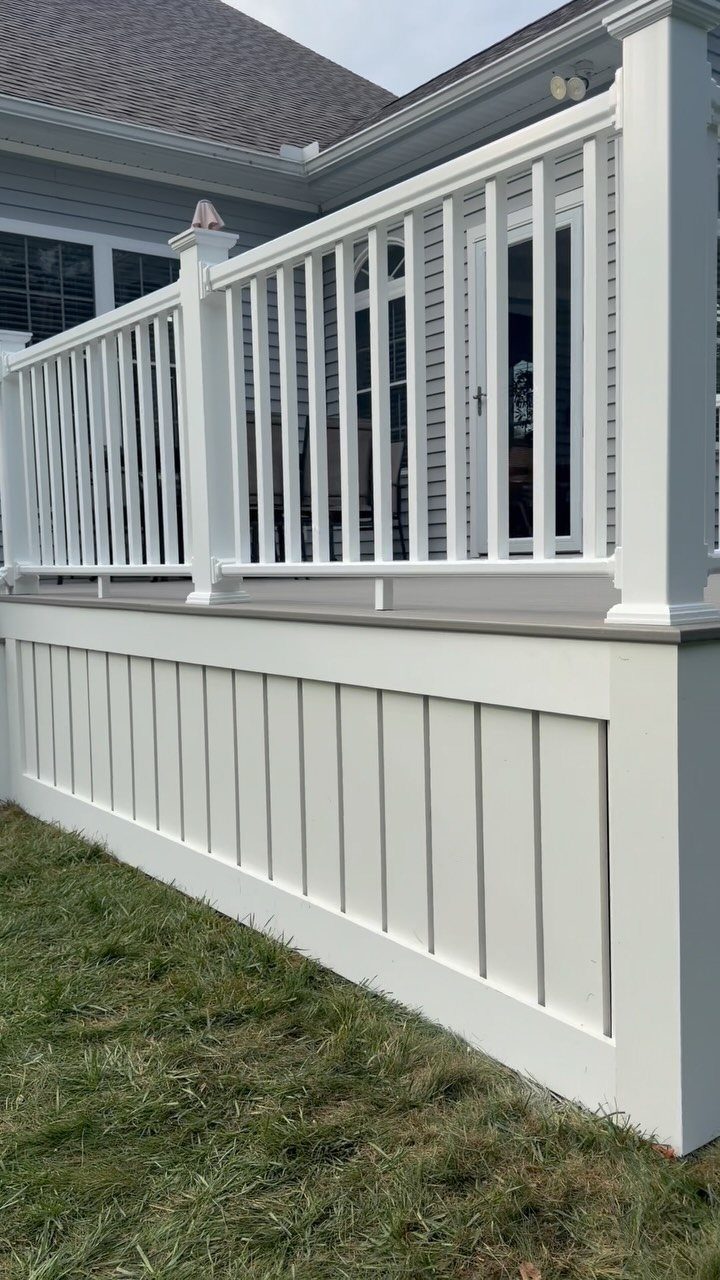
Wide boards with narrow strips over the seams give this skirt a tailored, cottage look. Painting the panels the same white as the railing ties the top and bottom of the deck together.
A flat, solid face like this reads cleaner than a patterned skirt, so it works best where the lawn runs right up to the deck.
I would keep the battens evenly spaced and the paint a true match to the railing, since white shows any mismatch fast.
9. Decorative Panel Skirting
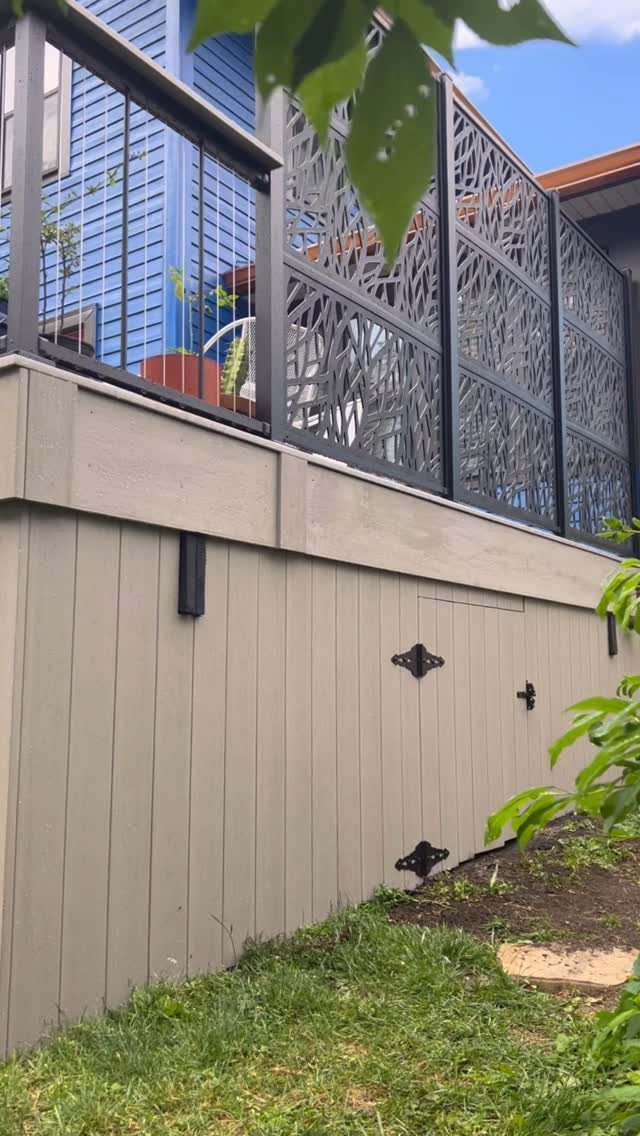
Black hardware does the talking here. Grey vertical boards wrap the base of the deck, and the dark hinges add a detail most skirts never get.
I would repeat that black in only one or two places, so the hinges stay a feature and don’t turn into clutter.
10. Deck Storage Enclosure
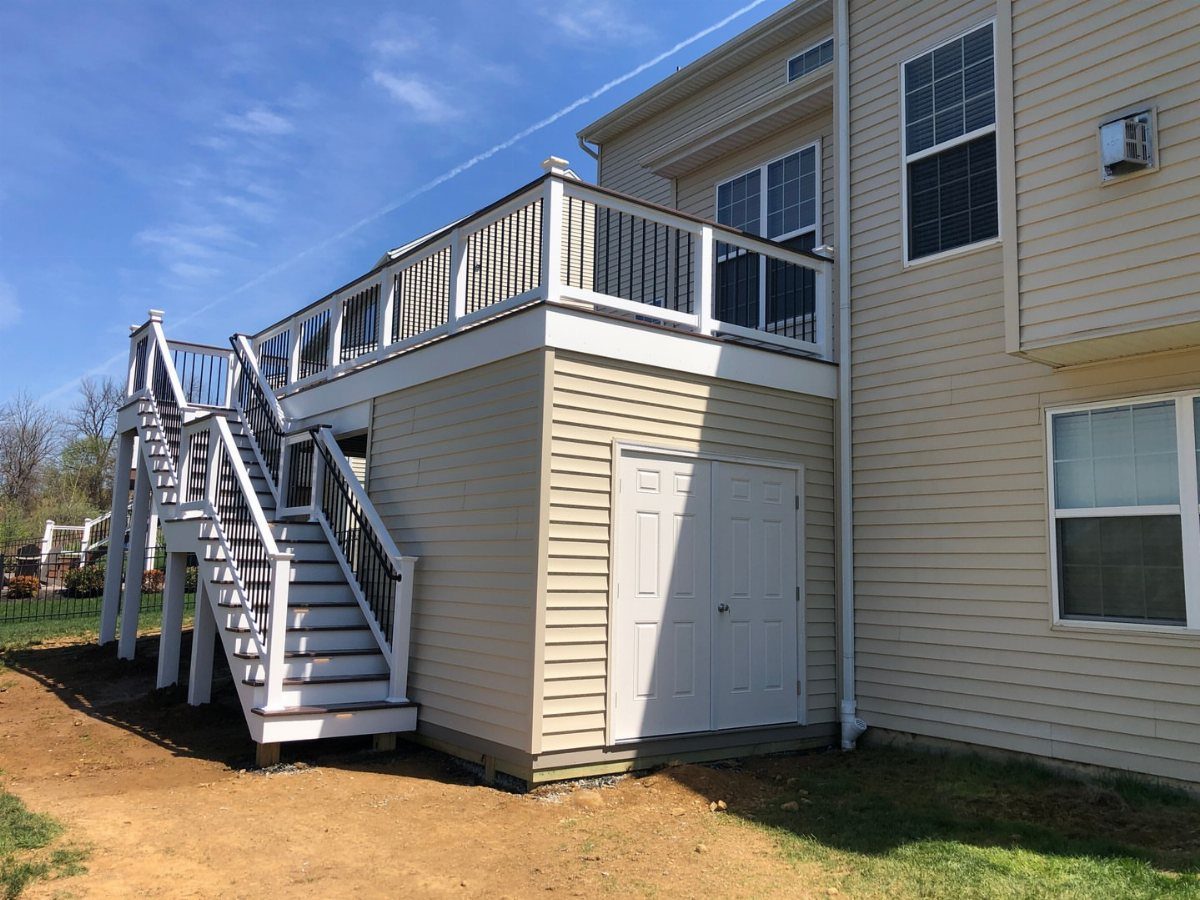
Siding that matches the house makes this enclosure look like it was built with the deck. Beige walls, white double doors, and white railings and stairs keep the palette to 2 colors.
Take the siding color from the house itself and the doors from the trim. Then the storage space under the deck reads as part of the home, not an add-on.
11. River Stone Underpinning
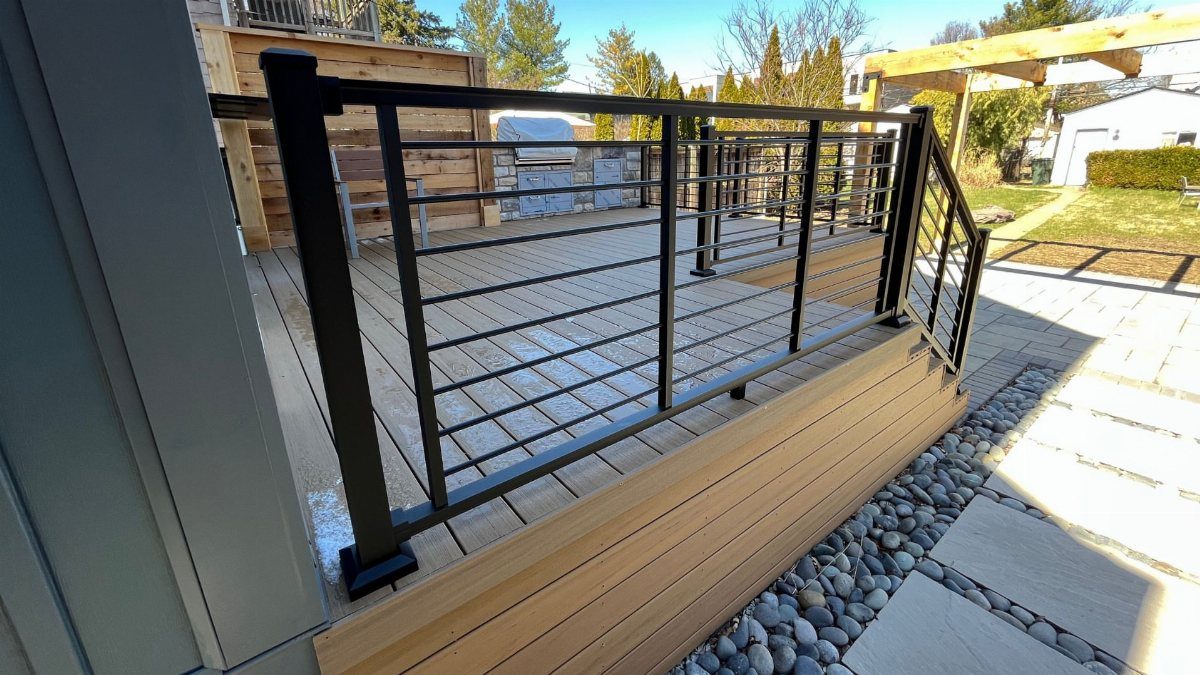
No panels at all in this one. Grey river stones fill the ground under a low deck, with rectangular pavers set in among them to give the bed some structure.
I like how the cool grey plays against the wooden fascia and black railings. Choose a stone close to the paver color so the two read as one surface, and the open ground stays neat instead of patchy.
12. White Panel Skirting
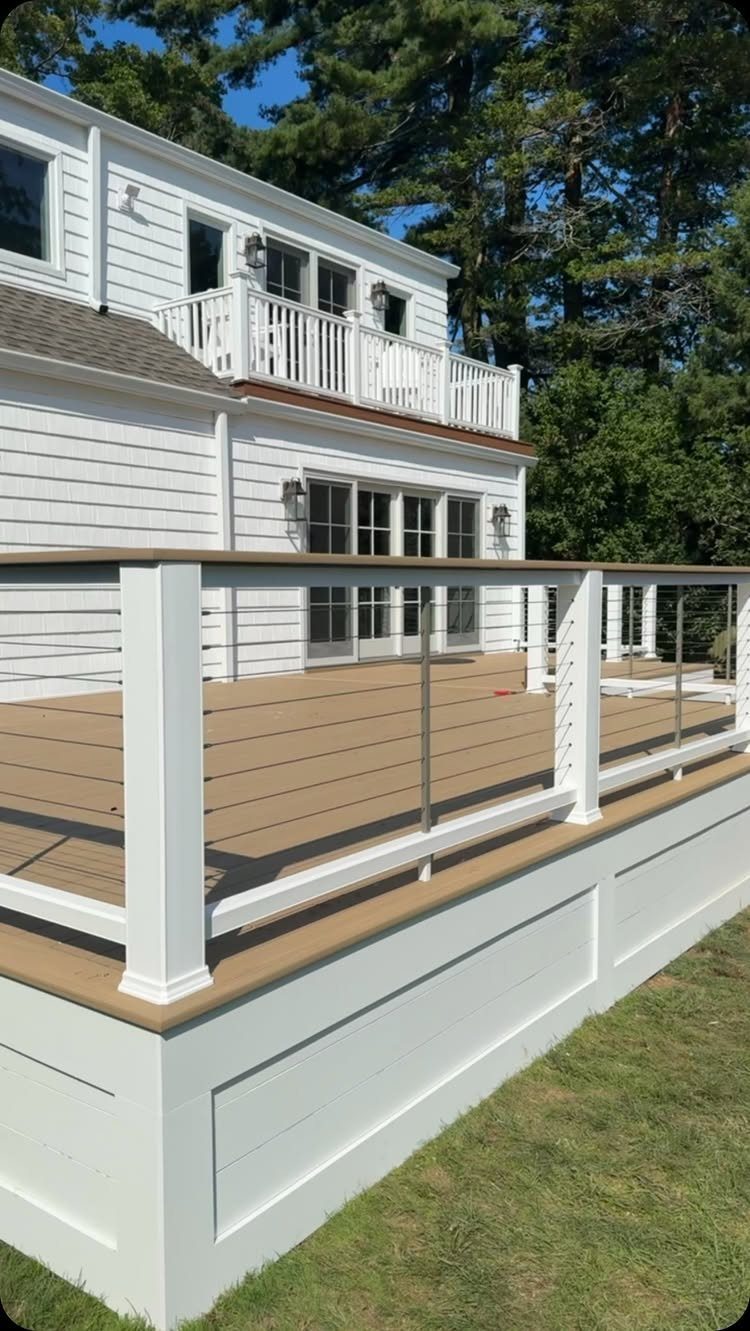
On a multi-level deck, one color carried across every level keeps the steps from looking chopped up. White panels do that here, running beneath each section and matching the railings.
The white house behind it makes the skirt blend into the structure. Green trees and grass around it give the white a lot to stand out against, so the deck looks crisp without any added trim.
Ventilation and Moisture
A fully sealed skirt traps water from rain and cleaning, and that moisture feeds wood rot, mold, and mildew. It can also damage composite decking and the joists underneath, so airflow matters no matter what the deck is made of.
Leave gaps or ventilation openings so air can move under the deck. A dry, airy space is also less inviting to insects and rodents.
If you plan to store things below, ventilation matters even more, since belongings left in damp air turn moldy. Lattice and metal mesh both pass plenty of air while still keeping pests out.
Lay a plastic sheet over the ground to cut moisture further. Add a door with a padlock so the space stays secure.
Choosing Materials and Design
Before buying anything, weigh 5 things: your home’s architecture, the deck’s design, your budget, how long you want the skirt to last, and how much upkeep you will actually do.
A skirt cut from the same boards as the decking, whether cedar, composite or pressure-treated pine, keeps one unbroken look from the handrail down to the dirt, and it is the pick I make when a deck has no other strong style cues.
Contrast works too: plenty of modern deck owners choose a bold, different skirt on purpose.
Budget and upkeep pull against each other, so I would settle the upkeep question first, since it is the one people underestimate.
Inexpensive options exist in both classic and modern looks, so a tight budget does not lock you into one style.
Frequently Asked Questions
What are some ways to enclose the area under a deck?
Wood or vinyl lattice, composite skirting boards, horizontal or vertical boards, board-and-batten panels, and river stone all work. Lattice is the classic pick because it hides clutter and still lets air through, and vinyl never needs repainting.
If you want to store mowers and tools, frame a proper enclosure with double doors instead. Skirting boards in the deck’s own color make the whole structure read as one piece.
What is deck skirting?
Deck skirting is the material or structure that runs around the bottom edge of a deck and closes in the space underneath.
It can be lattice, boards, composite panels, or a framed enclosure with doors. It hides the clutter below, and stone fill can do a similar job with no panels at all.
Should a deck have skirting?
Skirting is optional, and the decision depends on your taste, how high the deck sits, and your climate.
A skirt hides what’s stored below and can turn the gap into a storage space. Add vent gaps and the space underneath stays drier, which gives mice, chipmunks and insects less reason to move in.
Does deck skirting need ventilation?
Yes. Closed-in skirting holds the moisture from rain and hosing down, and that dampness rots wood, grows mold and mildew, and can harm composite boards and joists.
Lattice or metal mesh lets air move freely while still blocking animals, and panels spaced with open gaps work the same way. Tools, bikes or bins kept under the deck will mildew fast without good airflow.
How much does deck skirting cost?
Wood lattice and other budget picks start around $1–$5 per square foot, while composite or faux stone panels land closer to $10–$30.
Composite costs more up front than lattice, and vinyl lattice costs a bit more per panel than wood. Doing the install yourself cuts labor costs if you have the skills.
How do you install deck skirting?
Before buying anything, clear the area beneath the deck and measure each side; wood lattice, vinyl and composite panels are the usual choices.
Build a simple frame if the panels need something to attach to, cut them to size, and fasten them with outdoor screws or nails.
Build in small openings for airflow, and hang a hinged door in one section if you plan to keep storage underneath. Seal wood skirting when you finish; other materials just need cleaning.
How do you maintain deck skirting?
Upkeep depends on the material.
Wood lattice needs fresh paint or stain and sealing, while composite asks little after install and vinyl never needs a coat of anything. Clean non-wood skirts as needed, and keep air moving beneath the deck so moisture doesn’t build up.