
Chore charts here run from a whiteboard wiped clean every Sunday, to a kids’ grid with a reward column, to a notebook page titled "Adulting."
Who has to follow the chart decides which one fits: a young child needs the kids chart, adults sharing a home do better with the adult chart, and the section on choosing and sharing responsibilities helps sort out who takes what.
Format is a separate call, since a PDF prints cleanly but an editable file is easier to change.
[link-whisper-related-posts]1. Weekly Chore Chart
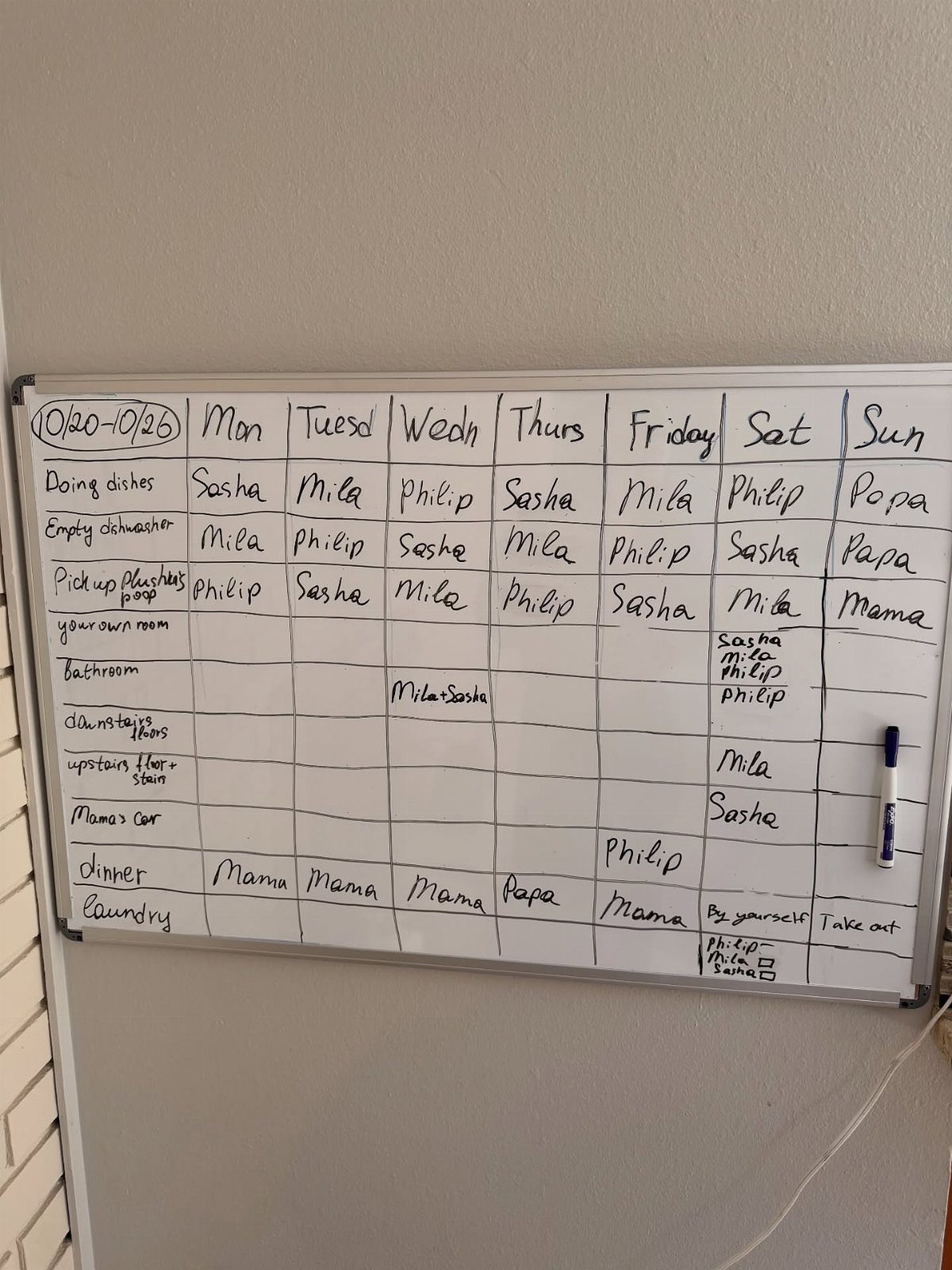
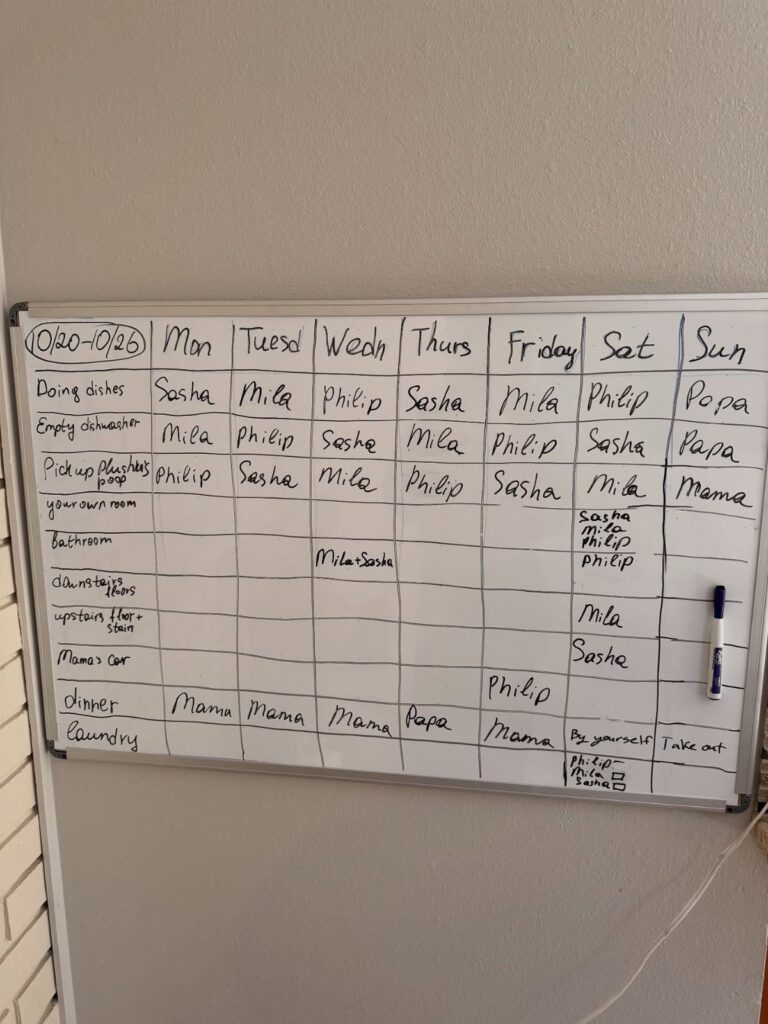
A whiteboard chart works because nobody has to open an app or find a printout.
Dry-erase markers let you wipe the grid clean every Sunday and reassign tasks, so the same jobs rotate instead of landing on one person for good.
Put each name next to a task and keep the chart where people pass daily, like the kitchen wall.
A free printable grid does the same job if a board won’t fit your wall; slip it into a clear frame and mark it with a dry-erase pen.
2. Kids Chore Chart
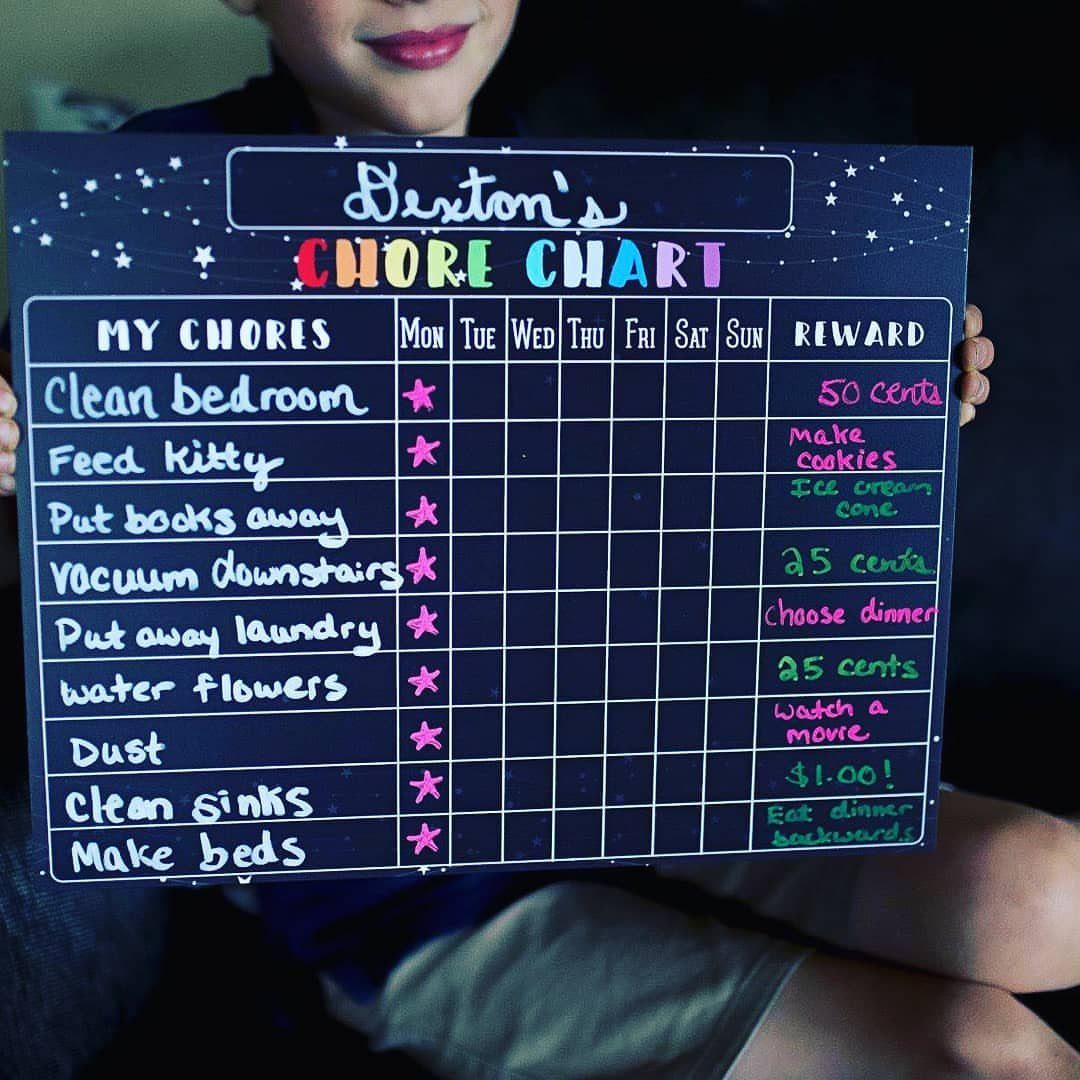
Younger kids respond better to a chart that looks like theirs. Writing the child’s name across the top and leaving a column for rewards makes the chart feel like a personal contract more than a to-do list.
Keep the chore list short, a handful of tasks at most, so a full week of checkmarks feels reachable.
A free printable with a weekly grid works if your handwriting isn’t up to marker lettering; let your child pick the colors and decorate it.
I’d set the reward before the week starts, so nobody negotiates on Friday.
3. Adult Chore Chart
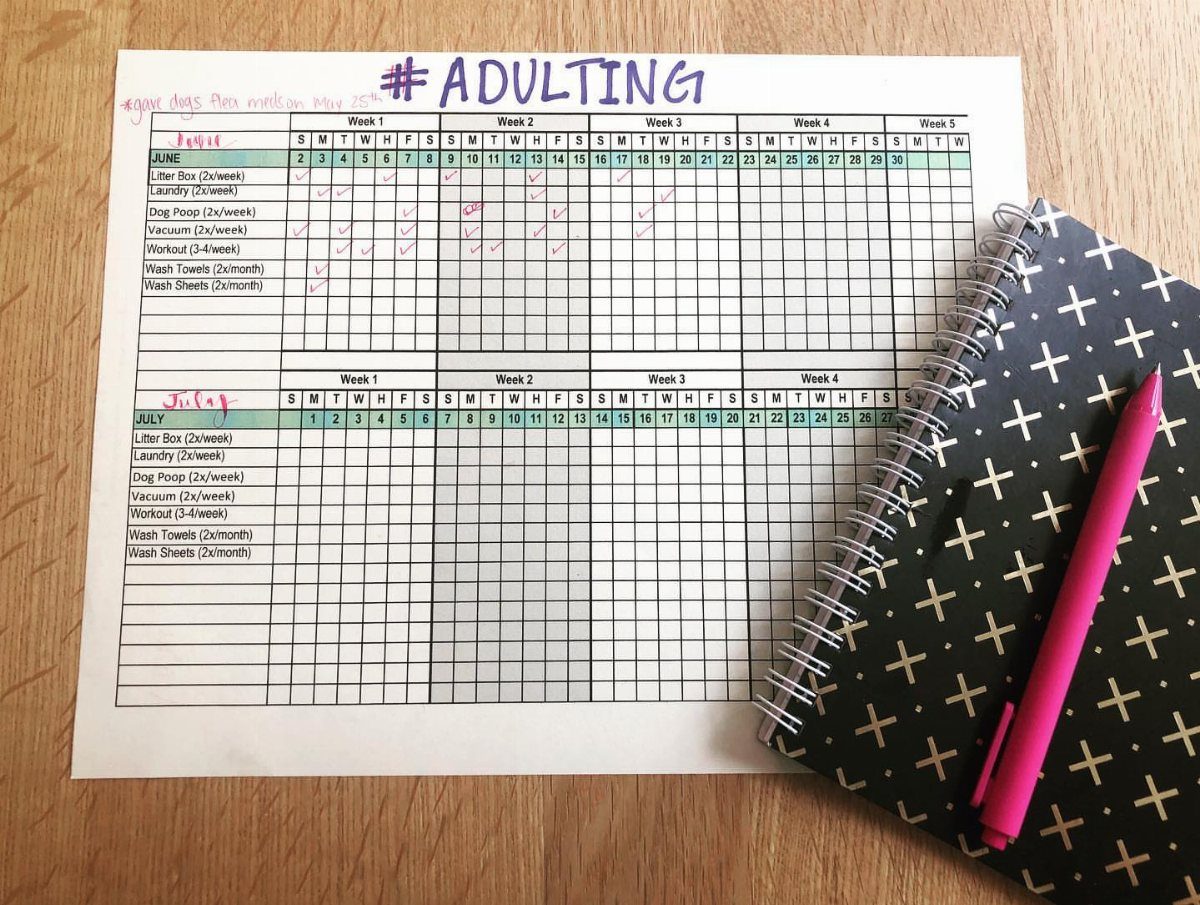
Grown-ups need a chart too, and a notebook page does it with no extra gear. Titling the list something tongue-in-cheek, like "Adulting," takes the nagging out of it and makes it easier to face.
Split the page by month and list each task once, then tick it off as it’s done. Shared households can add a column per person, which settles who did the bathroom last without an argument.
I prefer paper here over an app: a notebook left open on the counter gets seen, and a phone reminder gets swiped away.
Printable and Digital Chart Options
Pick the format by who will edit it. A PDF prints cleanly but is hard to change, while an editable document or spreadsheet lets you swap names and tasks without redrawing the grid.
Blank templates are the fastest route if your household doesn’t fit a standard layout, because you fill in your own chores and leave the rest empty.
Some free generators will build a print-ready chart from a plain-language description in about 10 seconds, and the better ones let you edit the result before you download it.
If you print, I’d laminate the sheet so it can be reused. Check the layout options and language choices first if your household speaks more than one language.
Benefits of Chores for Children
Kids who do chores learn that a home runs on shared effort, and that habit shows up later in friendships and family relationships. Researchers, including a University of Minnesota study by Marty Rossmann, have looked at this link.
Clear expectations also cut down on arguments. When everyone can see who handles what, power struggles with parents ease.
Pick chores that stretch a skill. Setting the table has a child counting utensils for each person, which is real math, and managing a short list teaches time management and self-control.
As kids get older, let them check the chart and mark off their own chores. That builds independence faster than reminders do.
Choosing and Sharing Responsibilities
Start with age and ability, then look at schedules and interests. A teenager with a late practice shouldn’t get the dinner cleanup, and a kid who likes cooking will do kitchen jobs with less pushback.
Fairness is about effort and time, not the number of tasks. Sit down together, let everyone weigh in, and compare how long each job takes.
Five-year-olds are often eager for responsibility. Good starter jobs include emptying wastebaskets, clearing the table, running a hand-held vacuum, washing plastic dishes, and washing fruit or vegetables for a simple meal.
Children develop at different rates, so if a job doesn’t fit yet, set it aside and try again later. Revisit assignments whenever schedules or abilities change.
Frequently Asked Questions
Where can I find a free template for a chore schedule?
A blank template is the quickest place to start: add your own chores and skip everything else.
A printable grid works for a wall or a clear frame, and some sites let you edit a template in your browser before printing.
What is a good weekly chore list?
A good weekly list puts one name beside each task and rotates the jobs every Sunday, so no one is stuck with the same chore for good.
A whiteboard grid wiped clean each week handles this well. If some chores happen daily and others only once a week, a template that holds both on one sheet keeps them together.
What is a chore chart?
A chore chart is a simple grid, usually posted on a fridge or wall, that lists each household job next to the person who owns it and lets you check it off.
Most include a task list, assigned names, and checkboxes for marking jobs done. It can be a whiteboard, a printed grid, or a plain notebook page.
Why use a chore chart?
A chore chart makes it clear who owns each job and how far along things are, which builds accountability and steady routines.
Once the assignments are posted where everyone can see them, nagging drops and the standoffs between parents and kids lose their fuel. Kids also pick up a lesson from it: a household stays running because everyone in it pitches in.