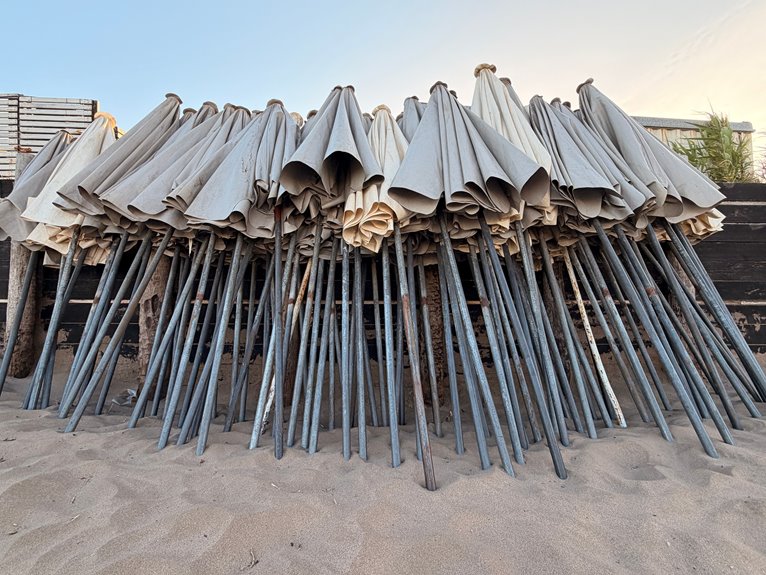
I stop my canopy from spinning by positioning it behind solid structures to block gusts, angling the canopy away from prevailing wind to reduce sail effect, and tightening all hardware before each season.
I add weight to the base, about 100 pounds total, and wrap rubber sheets around the pole base for extra friction.
When that isn’t enough, I’ll use a parasol ring to create a friction lock or partially close the canopy on windy days.
Additional methods can further reduce spinning if these basics prove insufficient.
[link-whisper-related-posts]Position Your Umbrella in a Wind-Sheltered Spot
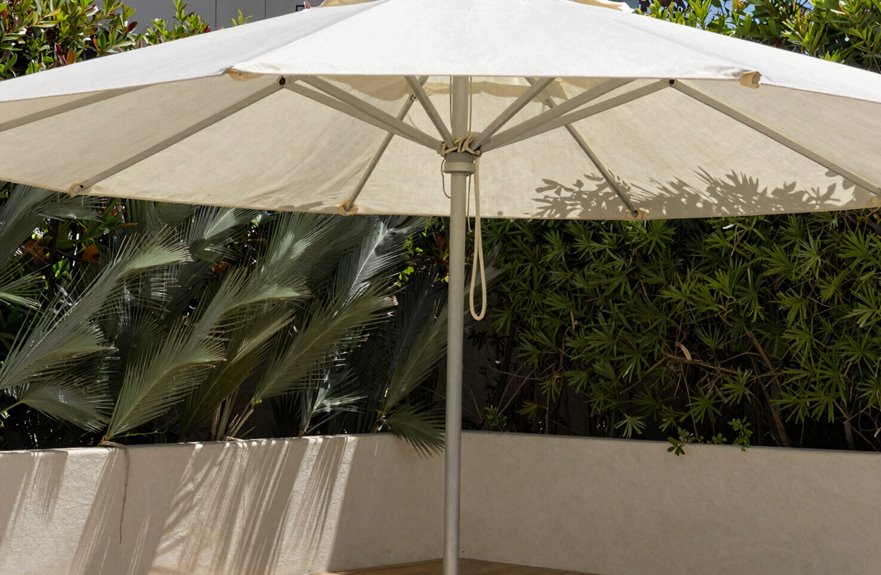
Where exactly should you place your canopy when the wind picks up? Tucking it behind a wall, railing, or any solid structure blocks gusts before they grab your shelter. Pull it back from open edges where wind runs free and creates that annoying sail effect. Align yours so the narrower edge faces the breeze; this cuts down on torque that spins everything wild. Check what’s nearby too; move or shield objects that whip up sudden eddies. Set up on the leeward side of your balcony, where the building itself breaks the wind. These small choices keep your outdoor space calm and comfortable.
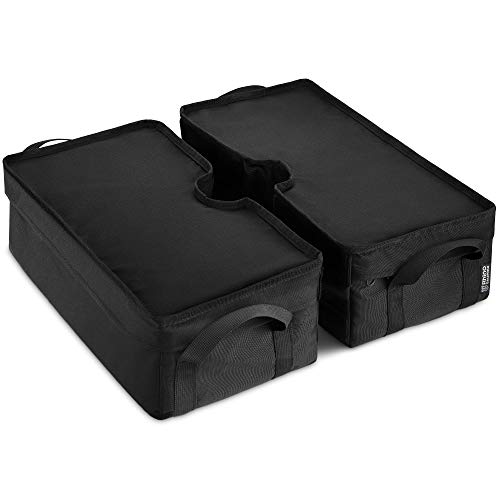
NO MORE TIPPING ON WINDY DAYS. Secure your outdoor umbrella with this umbrella base weight bag, designed to keep your umbrella stable even in strong gusts. Just fill it with sand and wrap it around the umbrella stand — no more wind-related mishaps.

EASY MOBILITY: A set of four wheels allow you to effortlessly move umbrella base back and forth and Two can stop the movement of fixed wheels while two locks keep your shading in place

【𝟭𝟬𝟬𝙄𝙗 𝙈𝙖𝙭𝙞𝙢𝙪𝙢 𝙇𝙤𝙖𝙙】The well-designed outdoor fillable sand bags for weight are designed to provide excellent solid support for a wide range of outdoor gear. This single empty sandbag can hold up to 50 lbs, which makes it suitable for diverse scenarios. For optimal stabilization, users can choose from a variety of fillers to adjust the weight of the sandbags. Recommended fillers include sand, small gravel and dirt.(Note: Sandbags are empty sandbags with no pre-filled sand.)
Angle the Canopy to Reduce Wind Catch
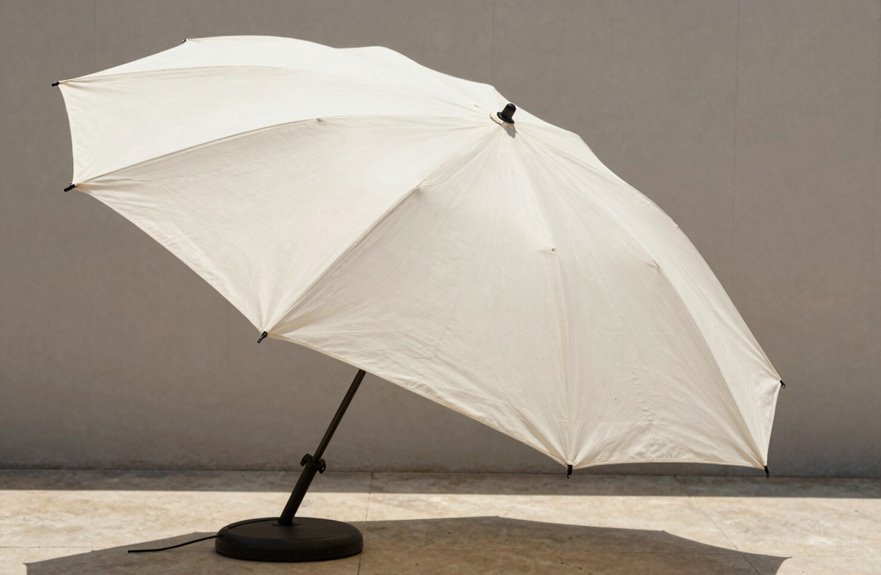
Once I’ve found a sheltered spot, I adjust the canopy angle to cut wind resistance even further. Tilting the canopy away from prevailing wind minimizes that sail-like force driving unwanted rotation. I regularly re-evaluate my angle since small shifts in wind direction considerably impact turnover risk.
Optimizing the setup involves these steps:
- Tilt away from gusts to reduce effective surface area catching wind
- Align wind flow with the shade structure for smoother passage
- Aim canopy edges toward wind to cut lift and boost stability
- Adjust steepness based on direction to lower torque on the pole
Getting the angle right prevents constant chasing of shade across the deck, keeping the canopy stable and in place.

Patio Umbrella Base Accessories: You will receive 6 pieces patio umbrella handle replacement parts, including 2 x M8 40 mm thread replacement hand knobs, 2 x 1.95" patio table umbrella hole rings and 2 x 1.55" patio table umbrella hole rings; A good quantity and well matched enough to meet your umbrella accessory replacement needs (please note that when you receive this set, the smaller sized umbrella hole base is placed inside the larger sized umbrella hole base for ease of transport) BASE NOT INCLUDED

Size Information: you will receive 12 pieces of patio umbrella stand base replacement parts including 4 pieces M8 threaded plastic knobs, 4 pieces patio table umbrella hole rings of 1.95 inches and 4 pieces patio table umbrella hole rings of 1.55 inches. (Please Note: the smaller size umbrella base stand hole ring is hidden in the bigger size umbrella base stand hole ring.) BASE NOT INCLUDED!

What You Can Get: you will get 1 piece of pool umbrella stabilizer sleeve, you can use them anywhere you need, such as on your garden, you can also send them to your friends
Tighten the Base to Stop the Spinning
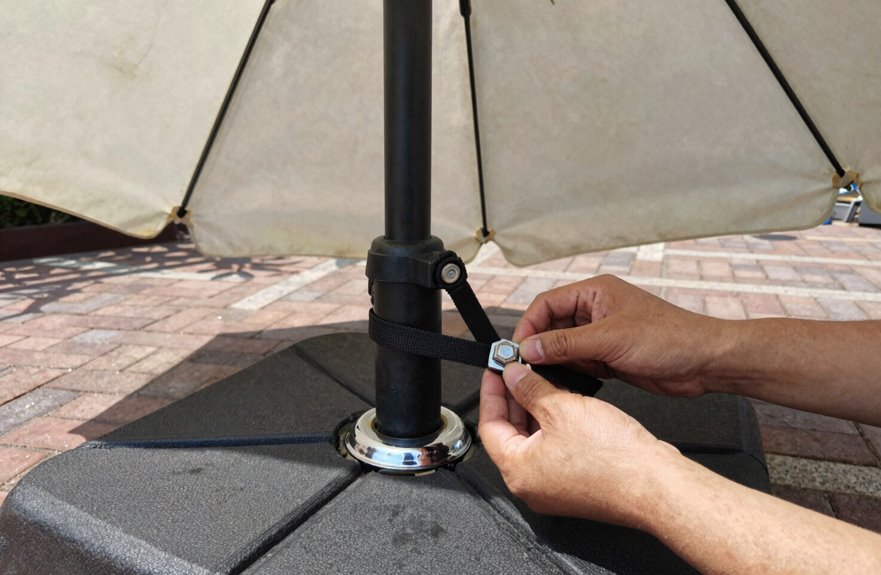
A loose base is the quickest way to watch your umbrella spin out of control. Tighten the wing nut or loop bolt as much as practical, increasing grip between the pole and base to fight wind-driven rotation. Even with a hollow base filled with water, this step is essential. Without proper hardware tightening, the umbrella spins when wind shifts the canopy.
Aim for about 100 lbs of total base weight to counter sail effects and prevent turnover, which also stabilizes everything. Start with moderate tightening to avoid damaging components, then test stability before applying more force.
A round base adapter or insert improves contact and friction, providing the security needed when hosting friends outdoors. Your umbrella stays put, and gatherings remain undisrupted.

Flexible & Soft Material - DGQ patio umbrella cone plug is made of high quality rubber material, soft, flexible & durable, not easy to fade or break. This umbrella wedge plug fits umbrella poles up to 1.5 inches / 3.8 cm in diameter. MEASURE YOUR TABLE & UMBRELLA POLE BEFORE PURCHACING !

Fits Sizes: umbrella wedge plugs fits umbrella poles up to 2”-2.5" in diameter. Please measure your table and umbrella pole before purchasing. patio table with umbrella hole beach umbrella umbrella stand.

Durable Material: Made from durable plastic to help stabilize umbrella poles, built to handle wind and rain, helping reduce potential accidents or umbrella damage.
Add Friction Where the Pole Meets the Base
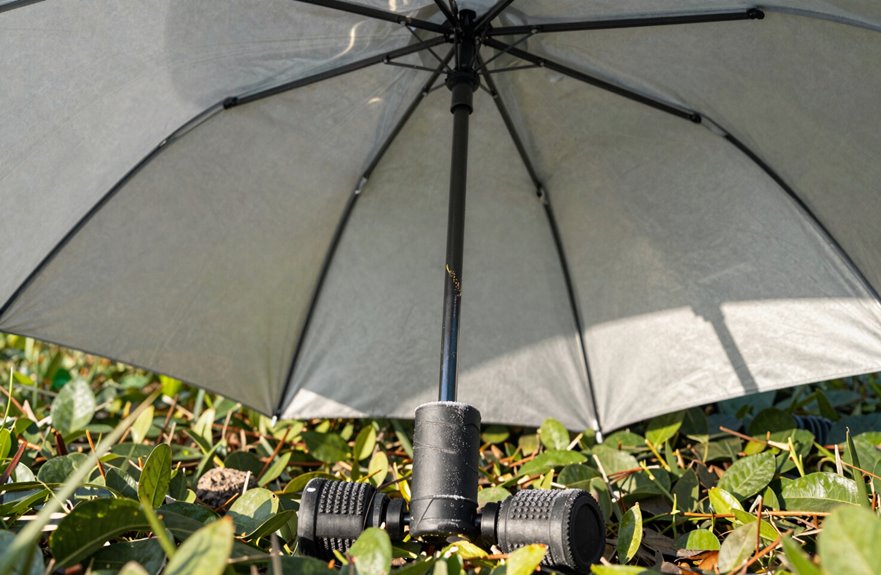
Some friction at the pole-base junction makes a significant difference when wind hits your canopy. Tightening alone won’t always prevent movement. You need grip where metal meets metal or plastic.
Consider these approaches:
- Wrap a rubber sheet or thin flexible material around the pole base before inserting it
- Glue rubber strips or grip film directly to the contact surfaces
- Drill through both base and pole, then bolt them together for a permanent fix
- Test materials first and avoid over-tightening; you risk damaging threads
Start with temporary solutions. You’ll notice immediately when the pole stops twisting against gusts. Different methods perform differently across seasons, so test what works for your setup.

Ring Buckle Umbrella : The novel carabiner handle design is very practical. The openable handle allows you to hang it securely on your backpack or belt, making it easy to carry when traveling, safe and not easy to lose

Package Include: You will receive umbrella hole ring plug and cap set, The thread is not easy to loosen, which is very helpful for you to use and replace

Standard Suitable Size For Patio Table Umbrella Hole Ring: Garden umbrellas hole ring suitable for those umbrella poles of 1.63 inch in inner ring diameter or smaller, Suitable for a 2 inch hole. Suitable for glass, iron and wooden desktops and can also be used as a desktop stringing box
Use an Umbrella Ring to Lock the Pole in Place
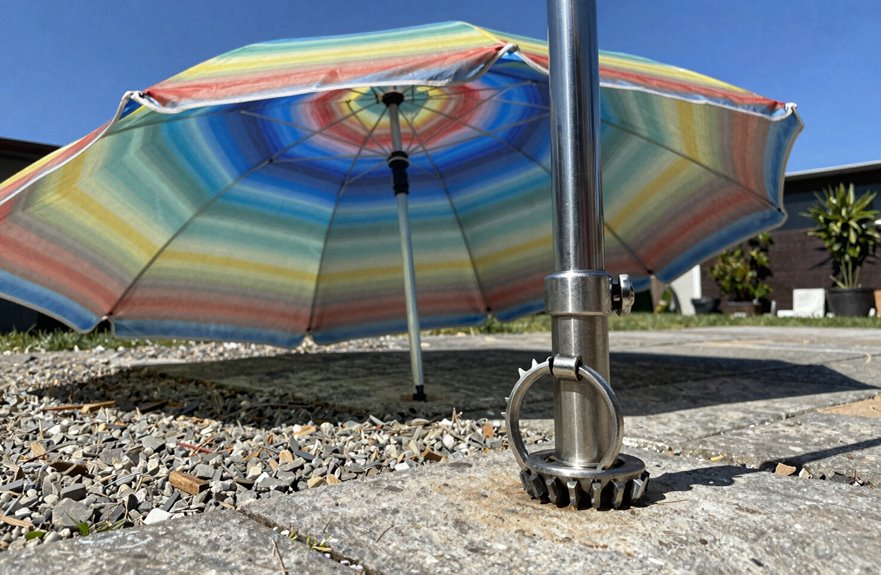
An umbrella ring creates a friction lock mechanism that grips the pole tight against the base. Installing one takes just a few steps: slide the ring over the pole, position it above the base opening, and tighten any securing hardware until it’s snug. Rings made from durable rubber or high-density plastic hold up best against sun exposure and repeated stress without cracking or losing grip.

Choose American. Choose Certainty. Eurmax Canopy is North America’s #1 factory store, stocking all canopies, accessories, and patio umbrellas right here in the U.S.

【Scenes to Be Used】No matter what type of parasol you have, cantilever or crank, our umbrella wind stabilizer straps can work with all of them. They keep the canopy attached to the tightly.

Choose American. Choose Certainty. Eurmax Canopy is North America’s #1 factory store, stocking all canopies, accessories, and patio umbrellas right here in the U.S.
Friction Lock Mechanism
When wind keeps catching my umbrella and spinning it around, sliding a simple umbrella ring around the pole at the base creates an effective friction lock without touching the base itself. This addition improves how we secure our outdoor spaces together.
The ring works by increasing contact surface between pole and base, boosting friction where torque hits hardest. To maximize this method:
- Position the ring near where the pole emerges from the base, targeting maximum wind-induced turning moment
- Tighten until snug, never crushed, to protect both pole and base integrity
- Pair with existing base weights for dual friction barriers
- Lighter base options become viable since the ring adds that crucial second resistance layer
Installation Process Steps
I start by sliding the shade ring over the top of the pole and working it down to where the pole meets the base. I position it tightly against the base insert or cap to maximize grip at the point of greatest friction. If my base is hollow or lacks built-in rotation prevention, I insert a solid round base adapter first. This provides a firm surface for the ring to press against. Next, I tighten the base hardware, whether it’s a wing nut or loop bolt, locking everything together. The ring increases friction between pole and base, reducing twisting when wind hits. Finally, I test in light breeze, then gradually simulate stronger gusts, confirming the pole remains stationary without slipping or rotating.
Material Durability Factors
Most umbrella rings are built from heavy-duty rubber, dense foam composites, or reinforced plastic polymers. These materials are chosen for their grip strength and weather resistance. Matching these materials to your specific setup is essential for keeping outdoor spaces secure.
When selecting a ring, prioritize these factors:
- Pole diameter compatibility – ensuring a snug fit without forcing the material
- Base cylinder geometry – verifying the hollow bottom accepts the ring tightly
- Weather exposure levels – choosing UV-stable compounds for sunny climates
- Torque resistance ratings – confirming the material withstands wind shear forces
This approach increases friction where it matters most, concentrating contact at the lower pole area without modifying base weight. It is a low-risk method that protects your investment while maintaining the functionality of your outdoor setup.
Weight Your Base for Maximum Stability
A base weighing at least 100 pounds makes the biggest difference in keeping your umbrella upright when gusts hit. You’ll also want to check that you’ve got the right hardware, like a bottom insert or adapter, to lock the pole firmly in place. Without sufficient weight and proper fittings, even a gentle breeze can turn your umbrella into a spinning sail.

ULTIMATE STABILITY: Replaces up to 400 lbs of sand, just add water to create a firm gel that resists tipping and blowing over; Replicates the stability and function of sand & water, but is mess-free, and doesn't slosh like water for enhanced stability

Maximum Stability: Filled with wet sand, this heavy-duty umbrella base weighs 100 pounds; adequate for up to 10-foot wide umbrellas in moderate climates (Filled with dry sand 85lbs., water only 60lbs., unfilled 8lbs.)

NO MORE TIPPING ON WINDY DAYS: Say goodbye to wind-induced umbrella mishaps. Just fill this weight bag with sand, wrap it around your umbrella pole, and gain peace of mind on blustery days.
Minimum Base Weight
While a breezy afternoon can feel invigorating, it quickly turns annoying when your parasol starts spinning like a top. Skimping on base weight leaves your umbrella acting like a sail, catching gusts and dancing uncontrollably. Community wisdom consistently points to 100 pounds as the minimum threshold for genuine stability.
What fellow outdoor enthusiasts recommend:
- Anchor with at least 100 pounds to prevent turnover in windy conditions
- Quadruple your base weight when positioning under tables for enhanced foundation stability
- Install round base adapters to improve grip between pole and base
- Test rubber inserts alongside heavy bases to maximize friction and minimize movement
A properly weighted umbrella base keeps your outdoor gatherings comfortable and uninterrupted. Inadequate weight forces you to constantly stabilize or reposition your umbrella. Investing in a substantial base ensures reliable performance during outdoor use.
Proper Base Hardware
How do you prevent a parasol from interpreting every gust as an invitation to whirl? Proper base hardware makes all the difference between joining the frustrated and becoming the neighbor others ask for advice.
| Problem | Solution |
|---|---|
| Hollow base spins freely | Add weight—quadrupling it works wonders |
| Pole wobbles in holder | Install round adapter for snug contact |
| Grip loosens over time | Tighten wing nut or loop bolt regularly |
| Wind torque builds | Combine 100+ lbs with secure hardware |
The community agrees: weight plus correct installation beats rotation every time. Tighten your hardware before each season. This keeps your outdoor spaces calm, stable, and genuinely yours.
Close Your Umbrella Partially to Reduce Wind Drag
Why fight the wind when you can simply give it less to grab. Partially closing your canopy transforms it from a spinning liability into a stable companion on breezy afternoons.
This approach works because you’re fundamentally changing how wind interacts with your canopy. The following techniques work best:
- Reduce exposed surface area to slash the windward force pushing against your ribs
- Lower the canopy angle to destroy that sail effect that torques the top
- Keep fabric taut to steady your center of gravity when gusts shift directions
- Pair with a heavier base when rotational movement still threatens
This technique is most effective on windy days when fully open canopies become uncontrollable pinwheels. It serves as a practical alternative before pursuing permanent solutions.

Stable Umbrella Support: This pool umbrella sleeve delivers dependable stabilization for pool umbrella for inside of pool reducing wobbling and tilting to enhance outdoor shading experience

Applicable size of umbrella pole and base: have two sizes of pistons can be used alone or in combination. When umbrella base hole diameter is 2.2", It can mount pole of umbrella with diameters of 1.4~1.9". If the diameter of the umbrella base hole is 1.9-2.0", only use a small piston, and pole of 1.4-1.5".

Material: Made of high quality plastic
Drill and Bolt for a Permanent Fix (Last Resort)
Partial closures and weighted bases handle most breezy afternoons, but chasing temporary fixes stops when my umbrella spins like a top with every gust. I’ve drilled through the base and pole, inserting a bolt to create a rigid, permanent connection. This is my last resort. I know I’m risking the warranty and potentially cracking materials, but I’m committed to this space.
| What I Risk | What I Gain |
|---|---|
| Base or pole damage | Zero rotation, ever |
| Voided warranty | True stability in our shared outdoor space |
| Misaligned holes | A setup that finally feels like home |
I layer rubber sheets between metal and plastic to prevent wear, and I countersink the bolt head so nothing snags. I checked compatibility first, and I’m not afraid to call a pro. This approach creates a lasting installation.

Size Information: you will recieve 1 piece black umbrella wedge plugs, which is suitable for umbrella pole diameter smaller than 1.5 inch / 38 mm, table hole opening hole diameter 2.0 to 2.5 inch. Please confirm whether our wedge plugs can match your umbrella pole and table hole openings before placing an order.

Fits Sizes: Umbrella wedge plugs fits umbrella poles up to 2”-2.5" in diameter. Please measure your table and umbrella pole before purchasing. patio table with umbrella hole beach umbrella umbrella stand

PREMIUM ALUMINUM CONSTRUCTION:Made of Rustproof Aluminum Alloy – Lightweight, durable, and built to last. Won’t rust, crack, or fade like steel or plastic. Perfect for patio, beach, and poolside use.
Upgrade to a Vented Canopy If Spinning Persists
When spinning persists despite my heaviest base and friction fixes, I look upward for the real culprit. The canopy itself creates a wind sail effect, trapping air and generating torque that overwhelms even sturdy hardware. Ventilation changes everything.
Consider what a vented canopy offers:
- Pressure release – wind escapes through vents instead of lifting and rotating the structure
- Reduced torque – less rotational force reaches the pole and base
- Lower turnover risk – studies show vented designs outperform solid canopies in identical conditions
- Balanced airflow – proper vent placement maintains stability without sacrificing shade
I choose canopies where vent design promotes even air distribution. This upgrade transforms my setup from wind-catching sail to wind-smart shelter. Proper ventilation prevents rotation when gusts arrive.

【Double Layer Windproof Structure】 Constructed with a double layer canopy and a sturdy ten rib frame to maintain its physical shape during heavy winds and provide reliable daily outdoor shelter

Package Includes: You will receive 2 pcs patio table umbrella hole ring plug cap sets suitable for umbrella rods with an inner ring diameter of 1.63 inch or less, fit most standard size table holes of 2 inch, it can also be used as a desktop stringing box.

Standard Suitable Size for Garden Parasols Hole: Garden umbrellas hole ring suitable for those umbrella poles of 1 1/2 inch in inner ring diameter or smaller, and 2 1/2 inches ring diameter as standard size fits most table umbrella hole. Beside, fit for 10 mm thickness tempered glass and tabletop
Skip the Umbrella: Wind-Safe Shade Alternatives
I’ve given up on fighting rotating shade umbrellas entirely, so I’m looking at fixed shade structures that stay put no matter how hard the wind blows. You might consider a retractable awning that mounts directly to your house. It’s secure, adjustable, and eliminates that twisting center pole problem completely. Both options trade portability for stability, which suits me fine on gusty afternoons when I’d rather not chase my shade across the patio.

Made of high-quality polyester material which is sturdy and durable.

THE HEAVY DUTY AMMSUN BEACH UMBRELLA SAND ANCHOR – Constructed in strong metal to offer solid wind resistance that can withstand winds up to 60MPH. The sand anchor does a wonderful job in strong ocean gusts and keeping the umbrella from blowing away in strong wind. With this you can now enjoy sunshine comfortably at the beach side instead of worrying of fixing a falling beach umbrella

Easy Installation: Installing our patio umbrella tie strap is a breeze and can be done by few steps.
Fixed Shade Structures
Why fight the wind when you can outsmart it entirely? Fixed shade structures offer our community a smarter path where we gather without worry. These permanent solutions replace flimsy umbrellas with pergolas, lattice screens, or rigid canopies that refuse to catch gusts like sails.
What makes them effective upgrades:
- Solid construction – rigid frames and non-flexible fabric eliminate the spin factor entirely
- Serious anchoring – concrete footings and reinforced posts keep structures grounded when storms hit
- Engineered airflow – ventilation features and wind-tunnel-tested shapes reduce lift
- Certified ratings – professional installation with hardware matched to your surface ensures protection
Moving beyond umbrella anxiety means choosing structures built to withstand weather conditions.
Retractable Awning Options
Fixed structures solve the problem permanently, but retractable awnings offer greater flexibility. Retractable awnings extend horizontally from your home, anchoring at the fascia or roofline to eliminate the sail effect that umbrellas create. The rafter system reduces wind exposure compared to vertical setups.
| Feature | Benefit |
|---|---|
| Wind sensors | Auto-retract before damage hits |
| Full retraction | Zero wind load during storms |
| Professional install | Secure mounting you can trust |
Many models sense gusts and pull themselves back automatically. When winds pick up, you can retract them completely, something no fixed umbrella allows. The upfront investment and need for expert installation provide secure anchoring and protection from wind damage. No spinning, no lifting, just shade that adapts to changing weather conditions.
When to Replace vs. Repair Your Wind-Damaged Umbrella
Sometimes I’m standing in my backyard, gripping a wobbling umbrella pole that’s spun sideways yet again, and I can’t tell if I’m looking at a quick fix or a lost cause. We’ve all been there, wondering if our patio crew would judge us for another failed repair attempt.
Here’s how I finally decide:
- I check the base weight first. If it’s under 100 lbs or missing that bottom round insert, I quadruple it under the table before calling it hopeless.
- I inspect the canopy. Vented designs handle gusts better; if mine’s non-vented and torn, replacement makes more sense.
- I try the combination fix. Rubber inserts, bolted poles, and reduced exposure together work better than one Band-Aid.
- I know when to quit. Repeated failures indicate it’s time to let go and upgrade with the group.