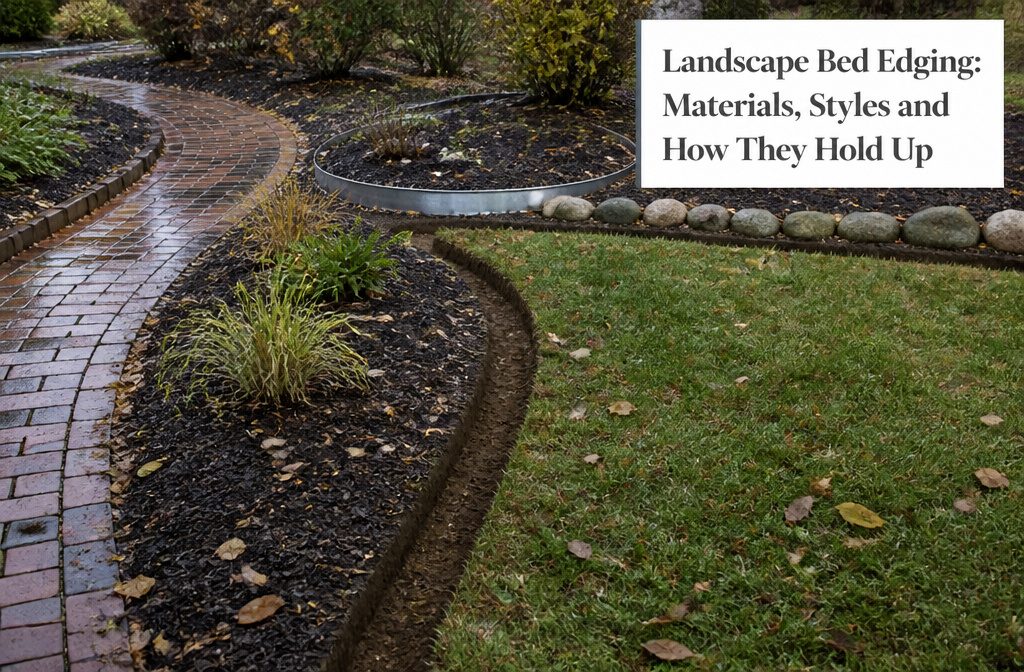
Edging is the border that separates a bed from lawn or walkway and holds mulch in place, built from stone, steel, concrete, plastic, brick, wood or a cut trench.
Each fails differently: plastic pops up in freeze-thaw climates, steel rusts unless galvanized, wood rots, and poured concrete is permanent. A trench cut about 3 inches deep costs nothing.
[link-whisper-related-posts]Natural Stone Edging
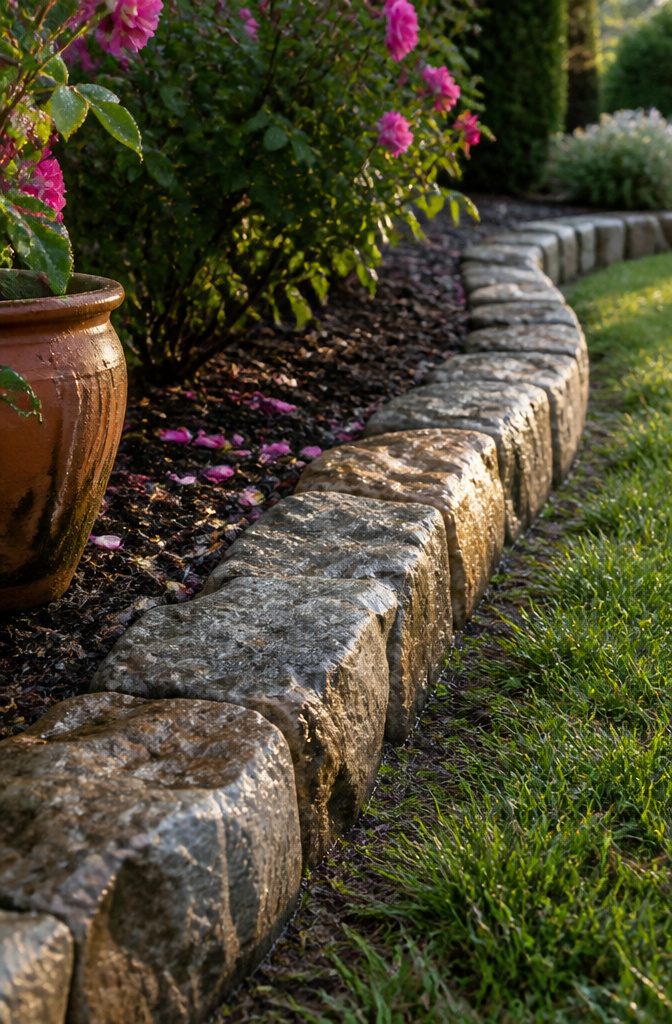
Natural stone gives a bed the classic, imperfect look that manufactured edging only imitates. No two pieces share an outline, so the line wanders a little, which suits cottage borders and farmhouse beds better than a tight, formal garden.
Stone also lasts. It won’t rot, rust or warp, and it will probably outlive the plants behind it.
The cost is that it’s the most expensive edging here, and the stones can be heavy. Installation is labor-intensive, since each piece is fitted by hand to keep the top reasonably level.
I’d call it a long-term choice for a home you plan to stay in. Renters should skip it: cheaper edging can move with you, and stone can’t.
Steel and Aluminum Edging
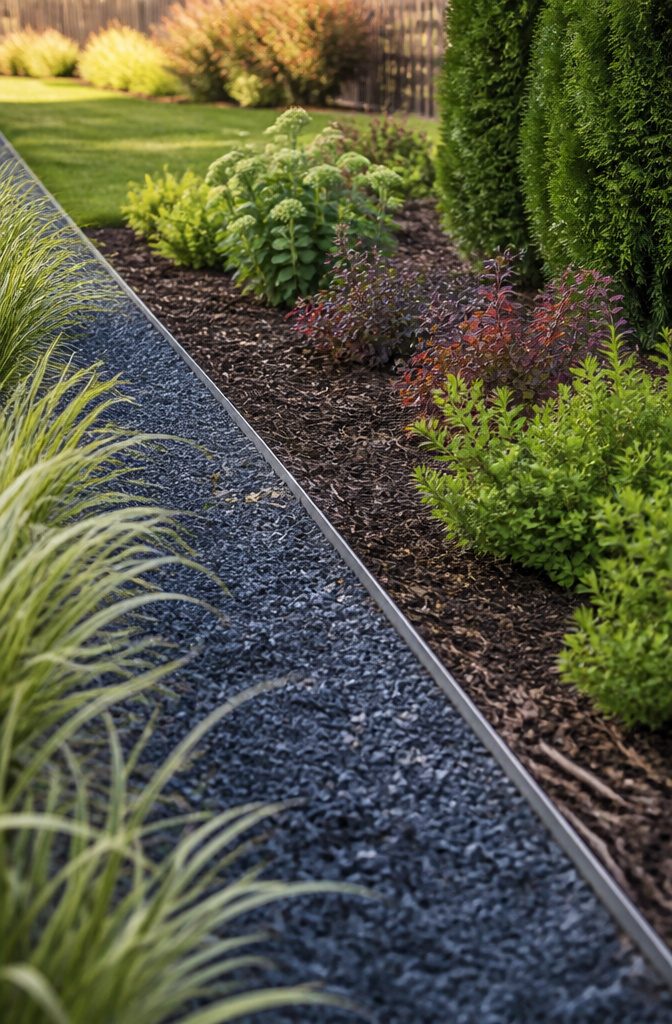
Steel and aluminum are the two metals used for landscape bed edging, and both hold a crisp, straight line that plastic and timber struggle to keep.
Steel in particular holds its shape and nearly disappears once installed, so the eye goes to the plants instead of the border.
I’d pick it for modern or minimalist yards, and for any spot where turf, gravel and mulch meet and need a clean break.
Weather resistance and low upkeep are the draw, but the costs are real. Metal edging runs more than plastic.
Steel can rust over time, so buy galvanized steel. Any exposed top edge can be sharp and unsightly, so set it low, close to the soil line, especially where kids or bare feet go.
Concrete Curbing
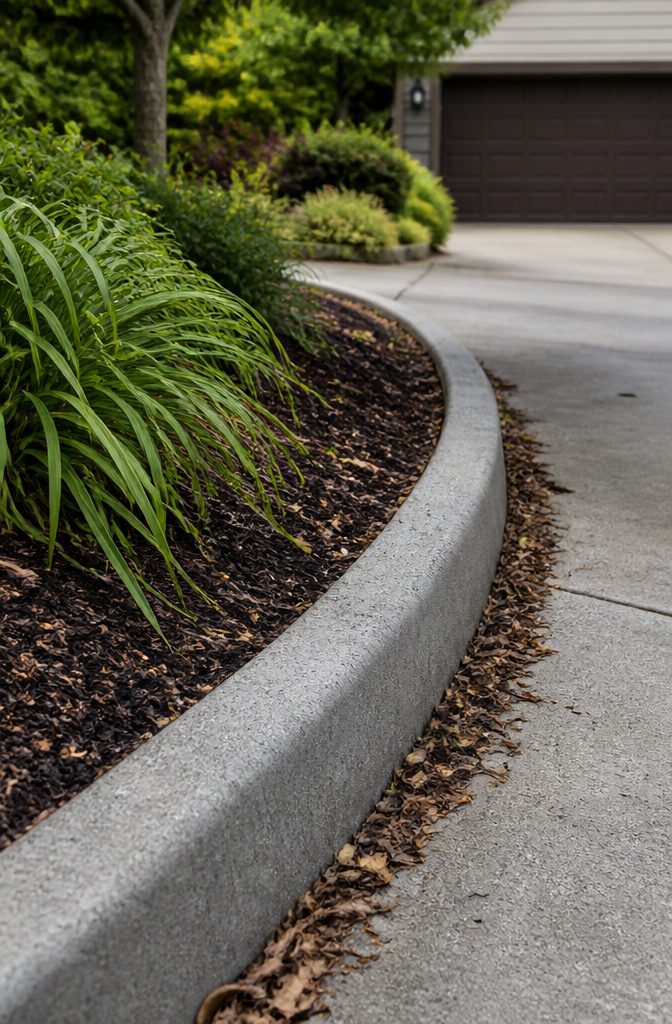
Concrete is the one edging that won’t shift or rot, which is why it suits large beds, driveway borders and raised planting areas better than anything you can lay by hand.
It can be poured in many shapes and finishes. Plain gray curbing is the simple, understated look, while stamped patterns and colored mixes turn the edge into a design feature of its own.
I’d choose it only for a bed layout you’re sure about. Once poured, concrete is permanent, so moving a curve or enlarging the bed later means breaking the edge out.
A clean, even curb also generally calls for a professional installer, and I wouldn’t treat it as a first weekend project. Renters should skip it entirely.
Plastic and Rubber Edging
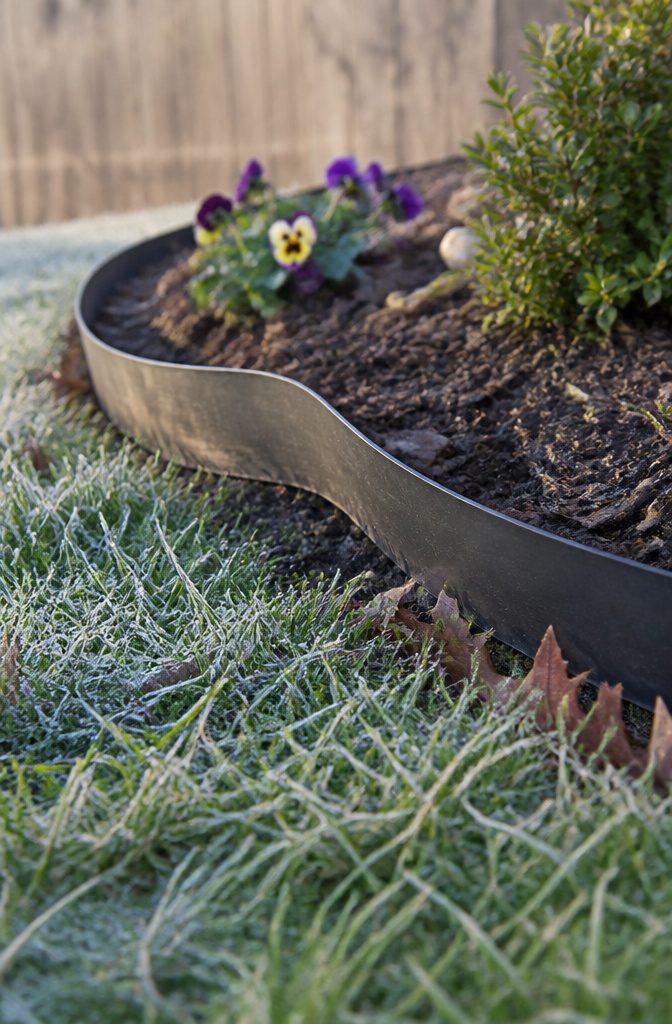
Plastic and rubber edging is the starter option for a basic bed, and on a small budget it is hard to argue with.
It’s affordable, lightweight and sold nearly everywhere. Because it bends, it follows a curved bed line without special tools, which is why I point first-timers toward it.
The weakness is time.
In areas with frequent freeze-thaw cycles, plastic edging tends to shift and pop up out of the soil, and sun can fade it or leave it brittle. Expect to press it back down now and then.
For a rental bed or a first-year garden I’d use it happily. For a front yard meant to look polished, I’d move up to stone or metal.
Brick and Paver Edging
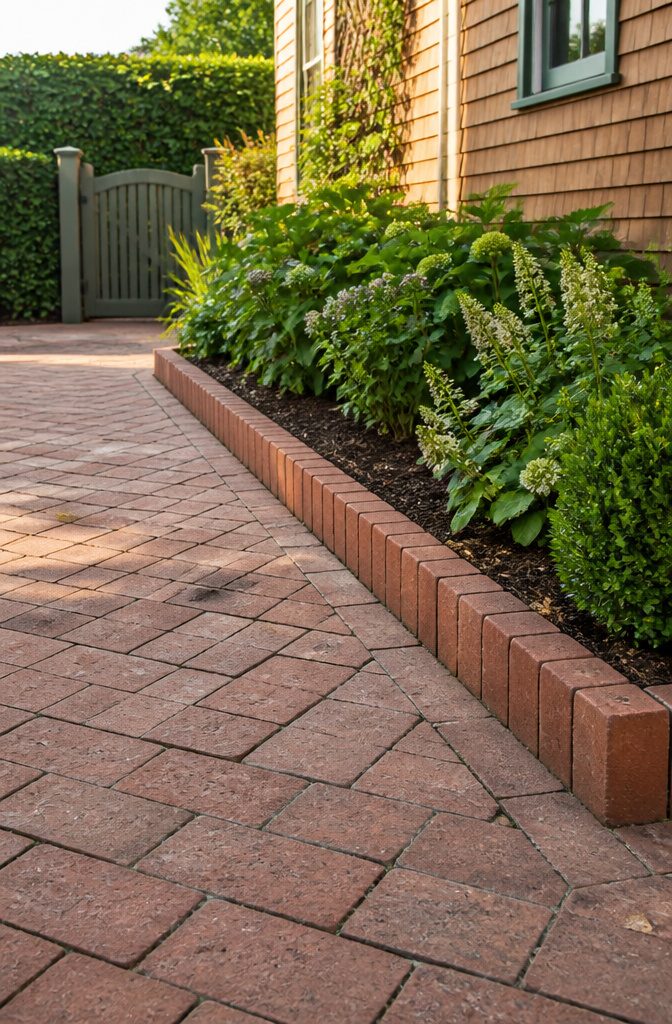
Brick or pavers make the most sense when the bed runs beside a patio or walkway, because the edge can match the hardscape and tie the two together.
The look is classic and suits traditional yards. It’s also semi-permanent, so this isn’t an edge you rearrange next spring.
Laid flat, the units give a subtle, low line. Set on edge, they add height and definition, which I’d choose wherever the bed needs a clear boundary.
Expect the job to take more time than most other edging options.
It’s also where brick goes wrong: a poorly installed edge can shift over time, and a row that drifts looks worse than a plain one because brick promises a uniform line.
Install it properly the first time, since a wobbly row means pulling it up and starting over.
Wood Edging
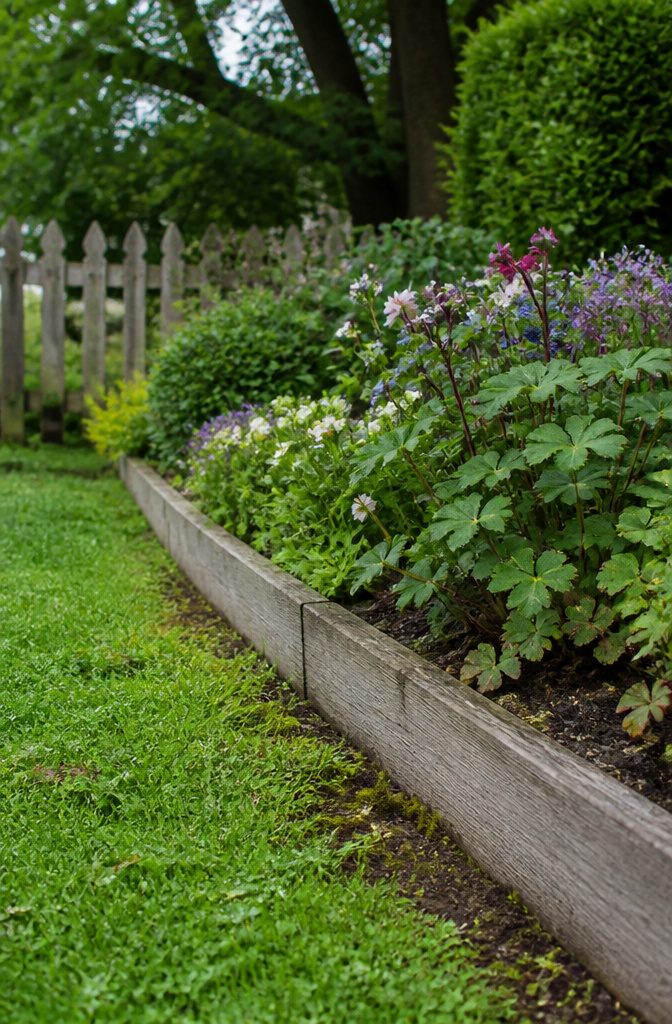
Wood gives a bed the softest, most natural edge of any material, and it blends into a farmhouse or cottage planting without calling attention to itself.
It also has a clock on it. Sitting against damp soil, wood eventually rots, so a wood edge is something you replace rather than install once.
Treated lumber lasts longer than untreated boards, but the chemicals in it can harm vegetables and other plants.
I would keep treated wood away from a vegetable bed entirely, since anything you plan to eat deserves a different material beside it.
For flower beds and shrub borders, untreated wood works if you accept the shorter life. I like it best where the look matters more than permanence, and where swapping a board in a few years won’t bother you.
Cobblestone Edging
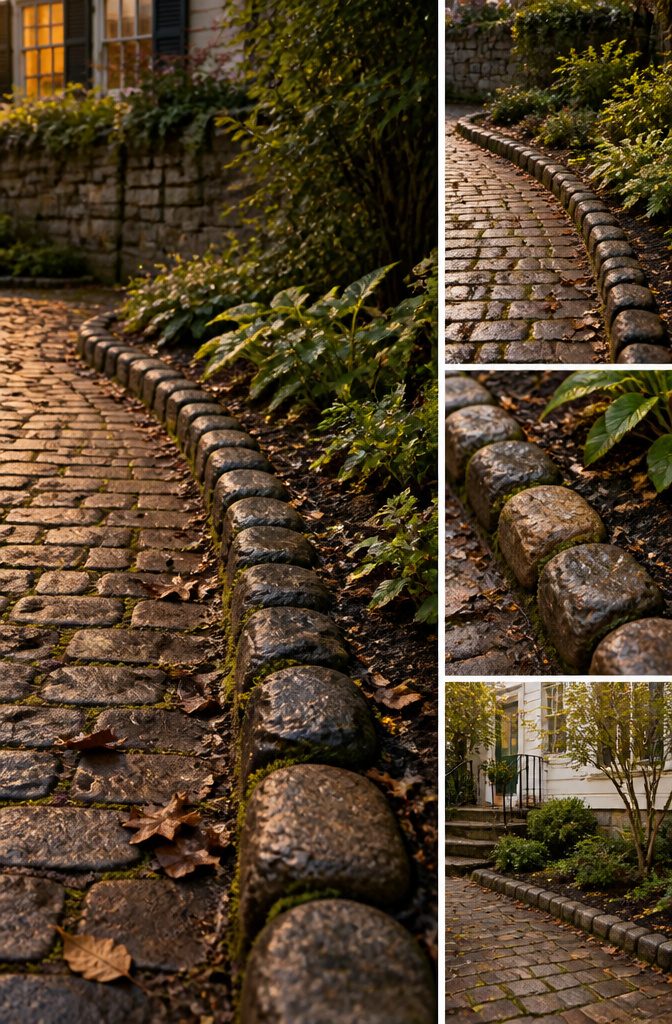
Cobblestone gives a bed the worn, old-world look of a European street, and it suits a historic home better than almost any other edge.
No two stones match, so the line picks up natural variation and texture. It is very durable, and it works along garden beds, walkways and driveways alike.
The cost is real.
Cobblestone runs more expensive than most edging, and setting it stone by stone is slow, labor-intensive work. The finished surface also sits uneven, which makes mowing alongside it awkward.
I’d skip cobblestone wherever a mower has to ride next to it and use it on beds that border a path, a driveway or a front walk, where the character shows and the wheels never touch.
The Victorian Trench Edge
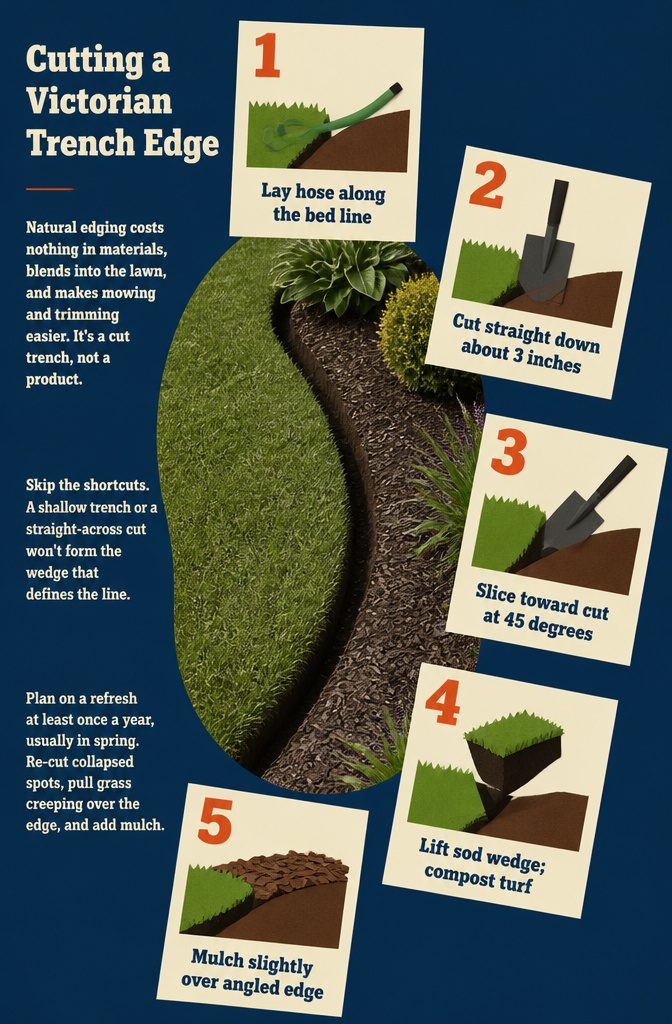
Natural edging costs nothing in materials, blends into the lawn, and makes mowing and trimming easier. It’s a cut trench, not a product.
- Lay a garden hose or rope along the line where lawn meets bed, and nudge it until the curve looks right.
- On the lawn side, push a flat-edged spade about 3 inches straight down along that line.
- From the garden side, cut toward the vertical slice at 45 degrees to form a wedge.
- Lift out the wedge of sod and soil, and compost the turf.
- Mulch the bed so it flows slightly over the angled edge.
Skip the shortcuts. A shallow trench or a straight-across cut won’t form the wedge that defines the line.
Plan on a refresh at least once a year, usually in spring. Re-cut collapsed spots, pull grass creeping over the edge, and add mulch.
What Edging Does for a Bed
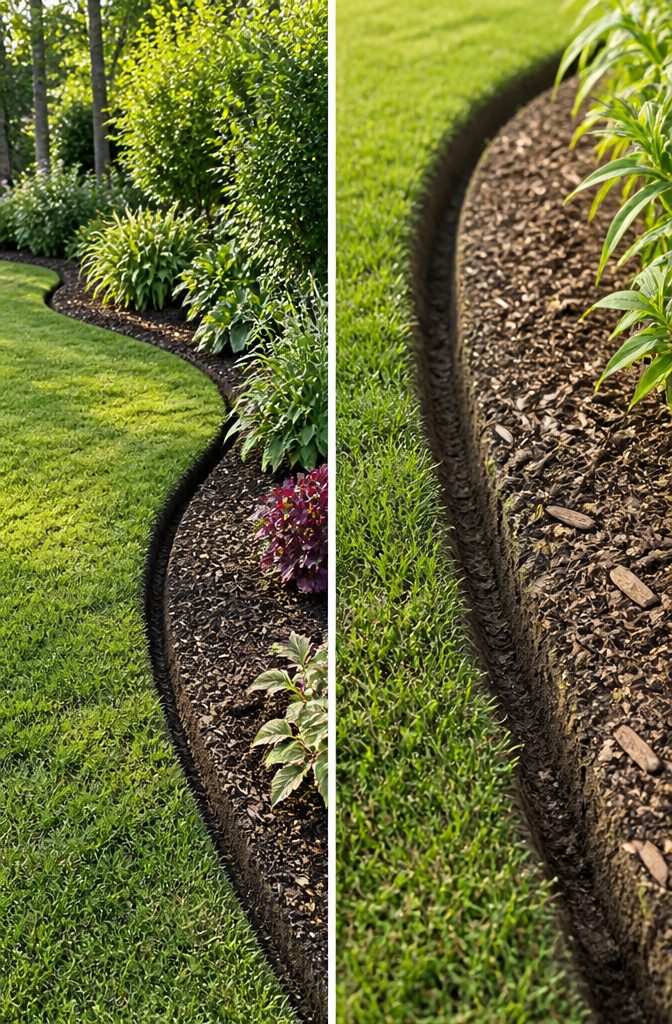
Every edging material, from steel to stone, does the same handful of jobs.
It draws a line between a bed and whatever sits beside it, whether that’s lawn, a walkway or another planting, so each area reads as its own space.
It also holds mulch, rock or soil where you put it instead of letting rain and foot traffic push it onto the grass. Plants that would otherwise creep in from the lawn run into a barrier.
The simplest version does all of that. A trench cut between lawn and bed divides the two, and it makes mowing and trimming easier too.
Add clean lines and some structure, and a bed looks planned rather than left over. I’d take a plain edge done well over a fancy one done sloppily.
Weighing the Trade-Offs
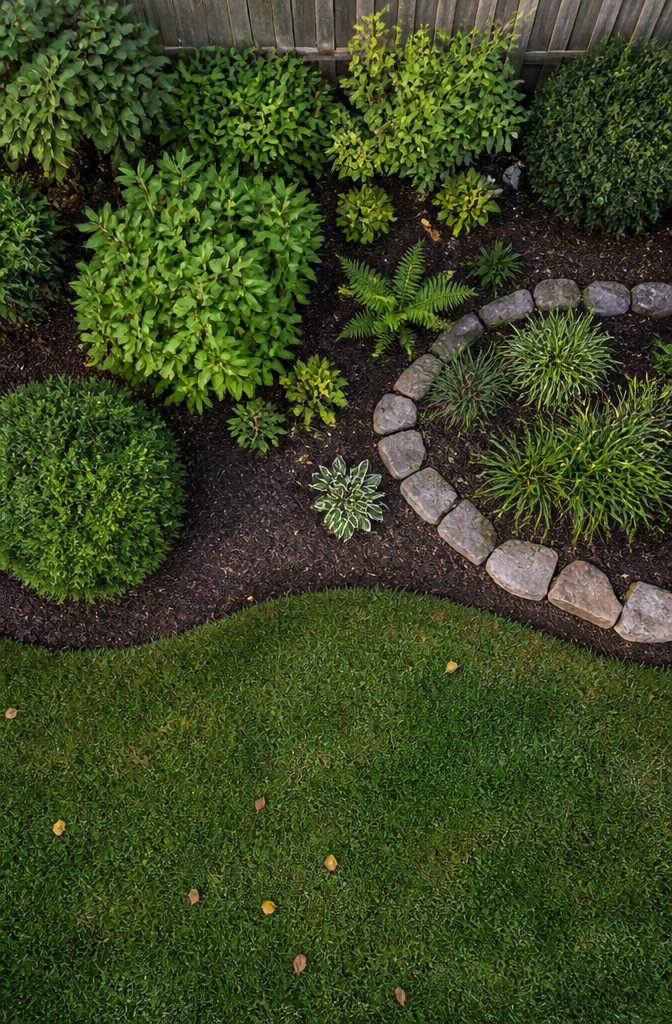
No single edging wins every yard, so match it to the goal. Stone is the pick for a permanent, high-end edge, and I’d pay its higher upfront cost only where the bed will stay put for years.
Plastic or steel defines a bed simply, poly fits a small budget, and the trench is the free option.
| Edging | Appearance | Cost | Installation | Permanence |
|---|---|---|---|---|
| Stone | Natural, high-end | Higher upfront | More labor | Extremely durable |
| Plastic or steel | Simple bed definition | n/a | n/a | n/a |
| Poly | n/a | Small budgets | n/a | n/a |
| Trench | Soft, organic | $0 | Cut by hand | No inserts to shift |
For renters, the trench is the easy call: it costs nothing but effort, and nothing is left in the ground when you move.
How Each Edge Holds Up
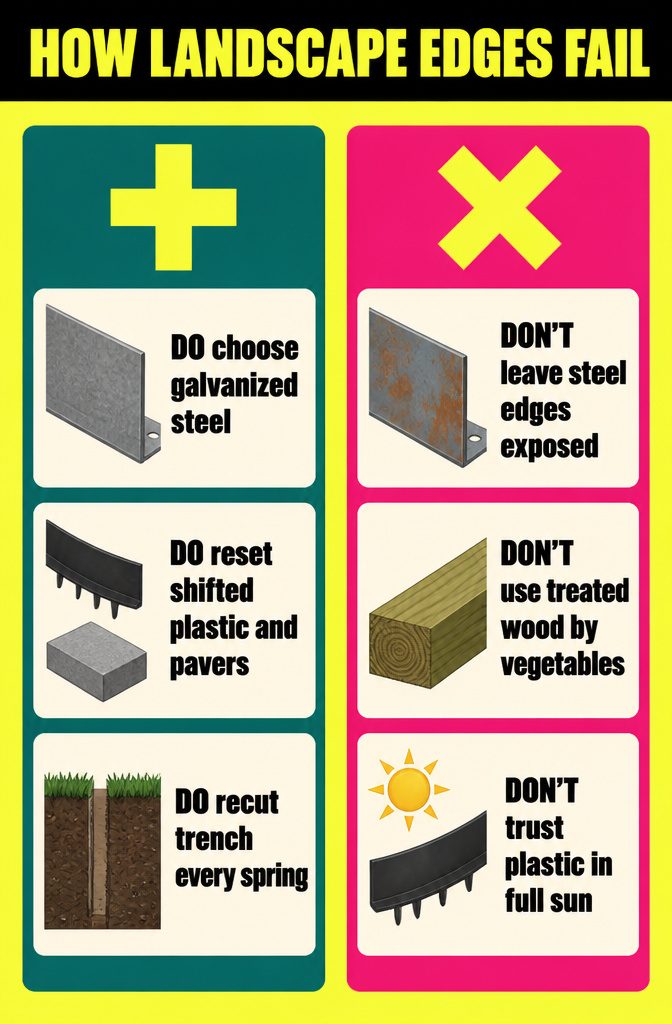
Every edge fails in its own way, so pick the failure you can live with:
- Steel rusts over time unless it is galvanized. Exposed top edges can also be sharp, which matters if kids or bare feet cross the bed.
- Plastic warps, and freeze-thaw cycles push it up out of the ground. Poly in full sun also fades and turns brittle.
- Plastic and pavers both shift as the soil settles, so expect to reset a few now and then.
- Wood rots and fights tight curves. Treated lumber is a concern next to vegetables, so I’d keep it out of edible beds.
- A dug trench has no material to fail, but it needs a fresh re-cut every spring or turf creeps back in.
Frequently Asked Questions
What are the different types of landscape bed edging?
The main types are natural stone, steel or aluminum, concrete curbing, plastic or rubber, brick or pavers, wood, cobblestone, and a hand-cut trench.
Stone, cobblestone and concrete are the most permanent, while plastic and wood wear out sooner because plastic heaves in freeze-thaw cycles and wood rots in damp soil. Metal holds the straightest line, and the trench costs nothing in materials.