
White room ideas run from textured bedding and a gold-framed mirror to terrazzo floors and marble bathrooms that are full renovations.
Which one is yours depends on the surfaces you’re allowed to change: renters get the most from bedding, gold-toned pillows, oversized artwork and a mirror, while owners can go as far as terrazzo or distressed white oak floors.
Even the bathroom ideas split along that line, with warm bulbs and a stone-look mat on one side and real marble on the other.
[link-whisper-related-posts]1. Textured White Bedding
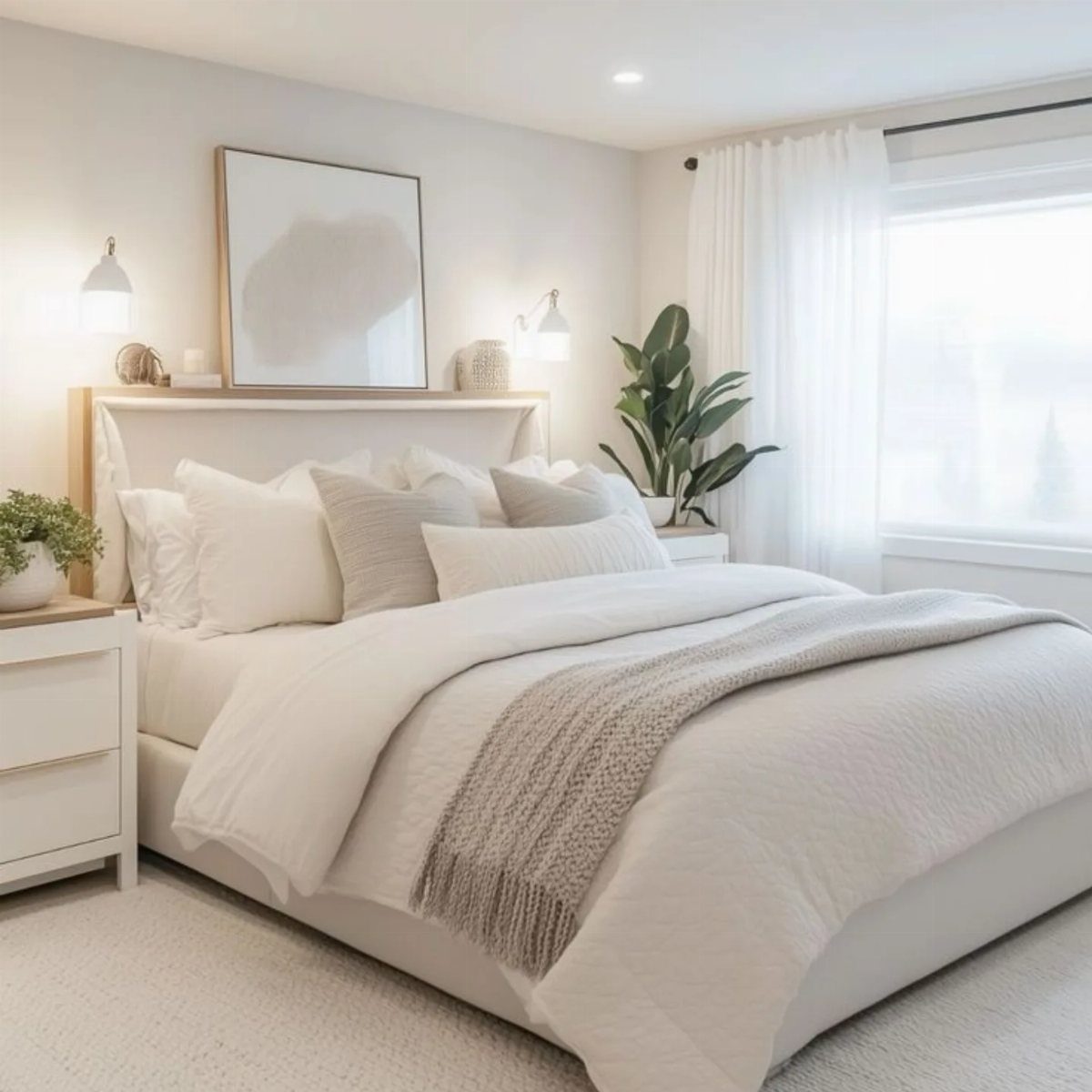
Layering is what makes an all-white bed look rich instead of flat. Pair a nubby or crinkled linen with a smooth cotton sheet, then drape a chunky knit throw at the foot, as in the grey one here.
Texture does the work color usually does, so choose fabrics that catch light differently. I would keep the throw one shade darker than the bedding; that small step gives the eye somewhere to land.
Of the many interior design misconceptions, one that’s especially deceiving is the idea that white equates to boring.
2. Choose White Tones
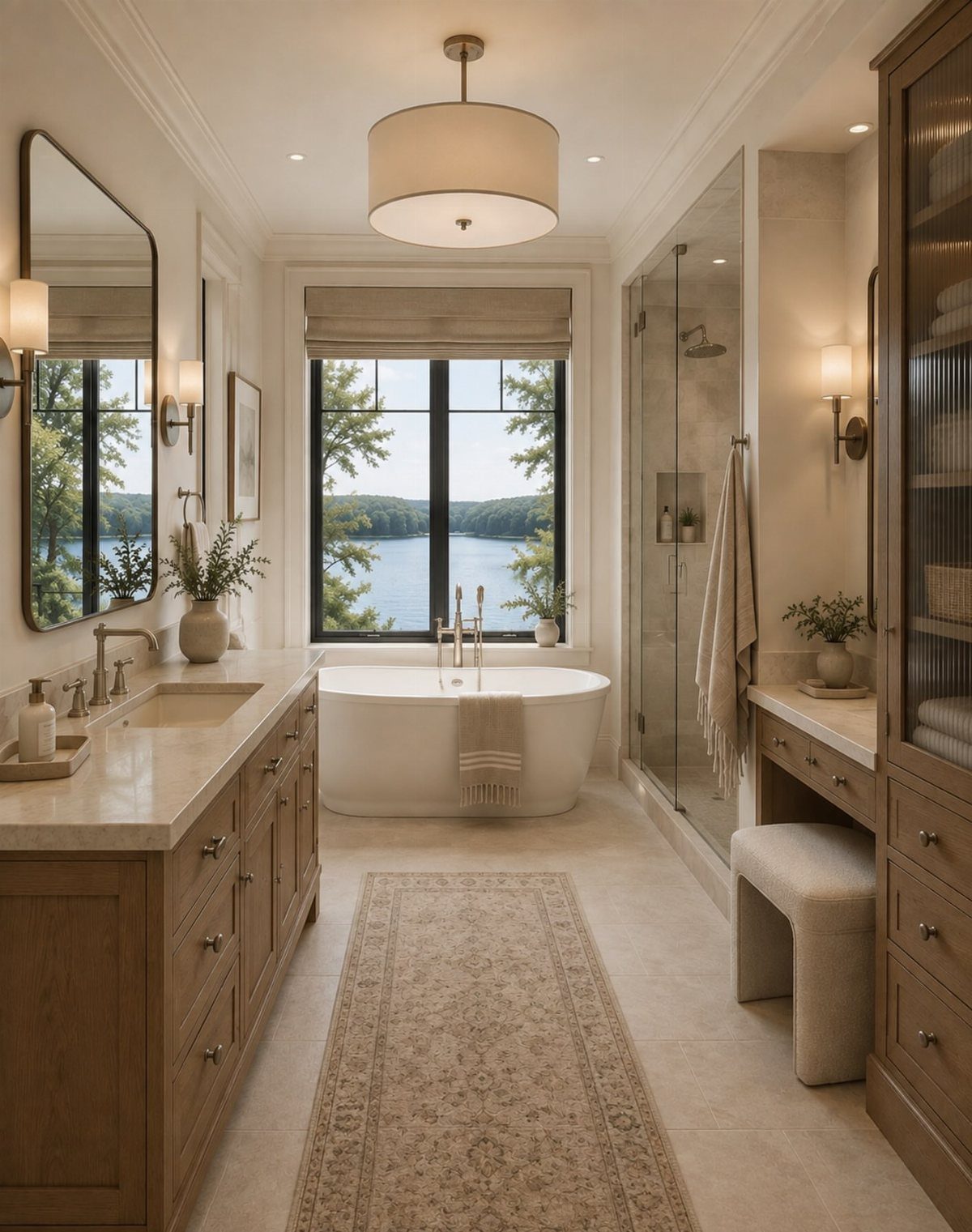
Not every white matches, and a bathroom is where mismatches show first.
Bright walls, a white tub and pale wood cabinets only read as one palette when their undertones agree, so hold paint chips next to the fixtures before you buy.
A warm, creamy white softens a room full of hard surfaces.
A cooler white looks crisper but can feel clinical beside light wood. For a rental, I would start with the tub you cannot change, then match everything else to it.
3. Oversized Artwork
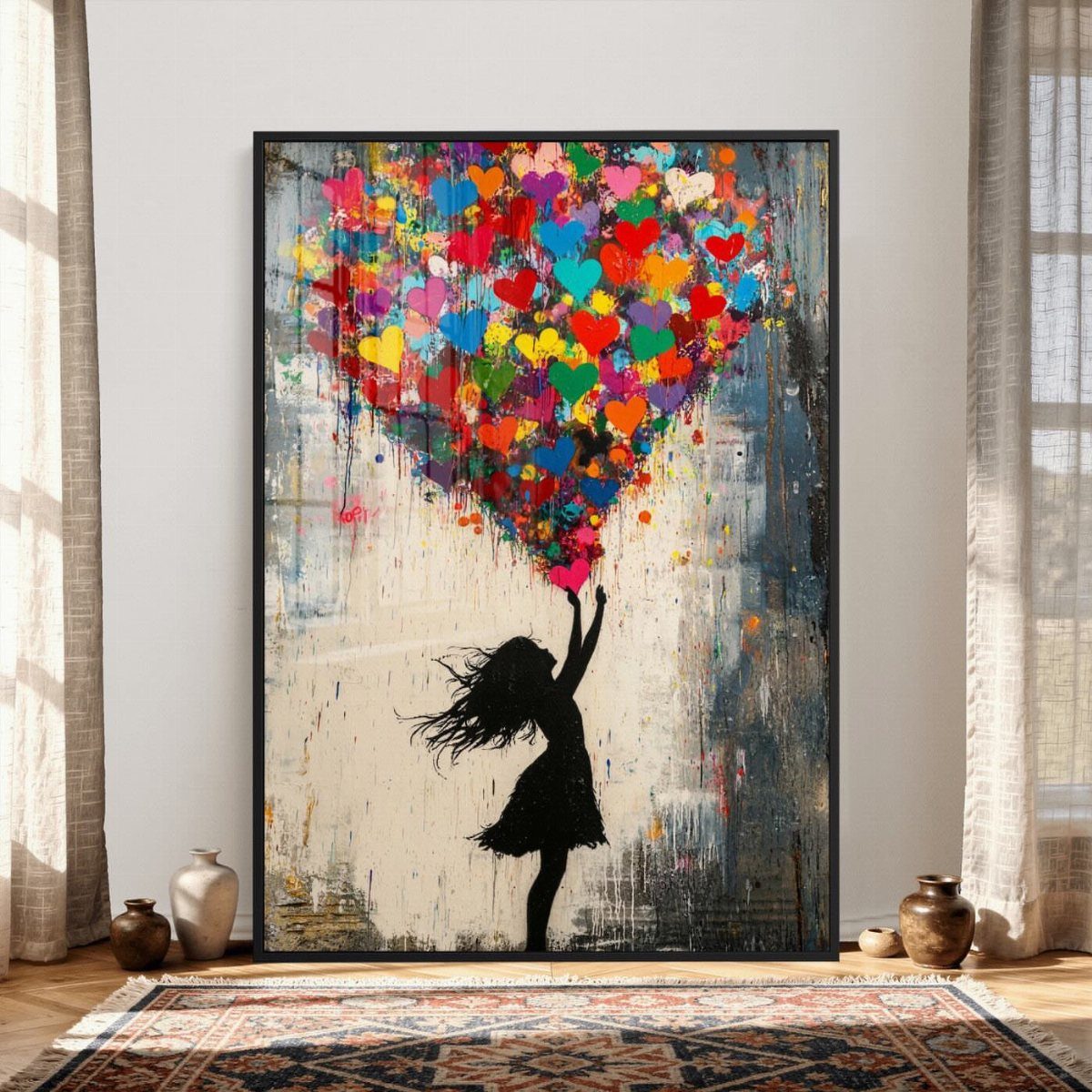
A single oversized canvas can do what a dozen small frames cannot: give a white room one clear focal point.
Lean it on the wall instead of hanging it, which skips the drilling and lets you swap pieces whenever you like.
Color works hardest against white, so pick a piece with a bold palette and keep the rest quiet.
Large artwork on a white wall leaves the floor looking bare by comparison, so ceramic vases and a patterned rug underneath it add the sculpture and pattern the walls lack.
For a renter, this is the lowest-commitment way to add personality.
4. Raw Wood and Greenery
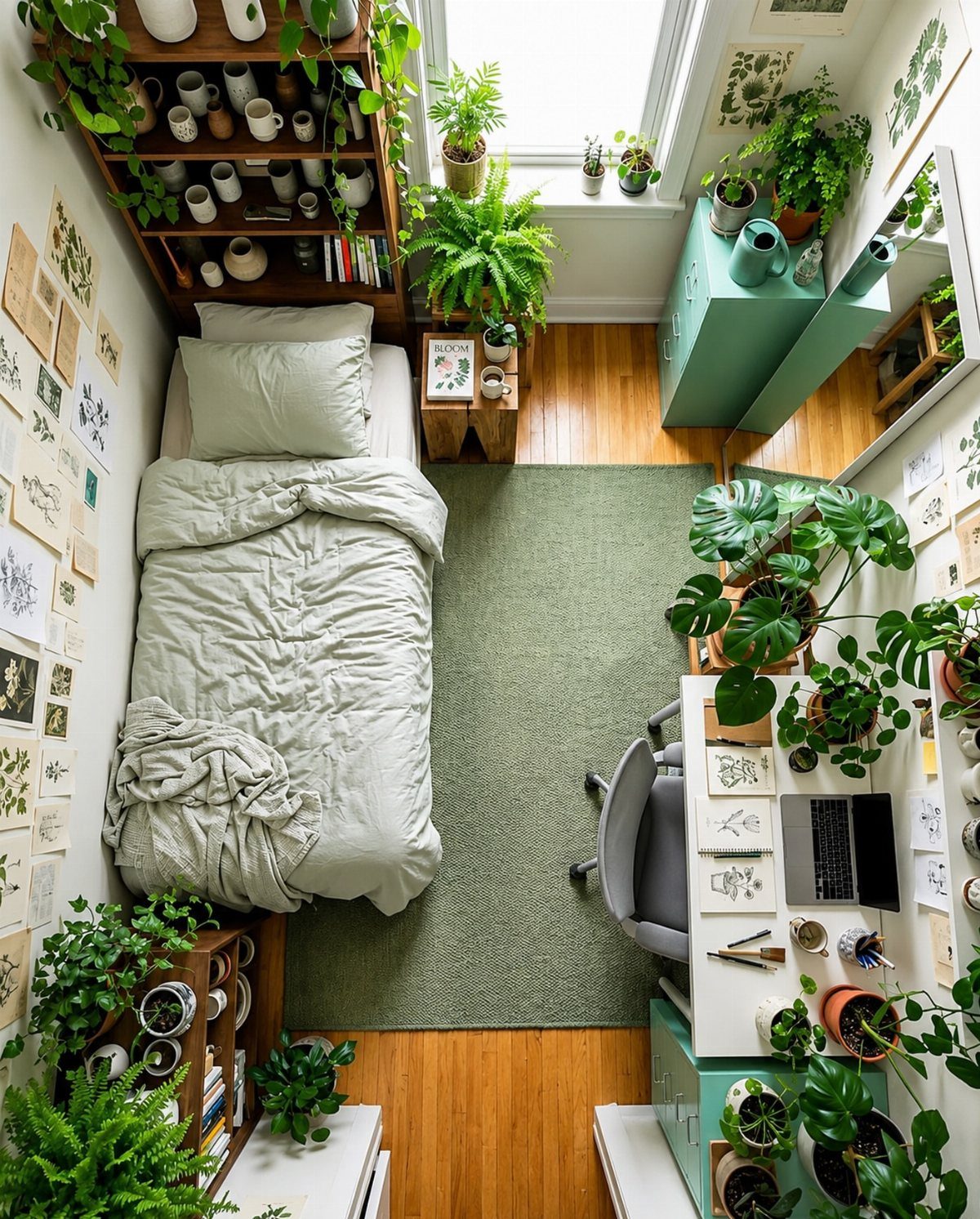
Pale walls leave plenty of room for plants, and a small bedroom can hold more of them than you would expect.
Group pots at different heights, using a dresser top, open shelving and the floor, so the greenery reads as a layered display and not scattered dots.
Wood shelving and light wood floors keep the look warm. I would pick plants with varied leaf shapes, trailing next to upright, because uniform foliage looks flat against white.
5. Create an All-White Room
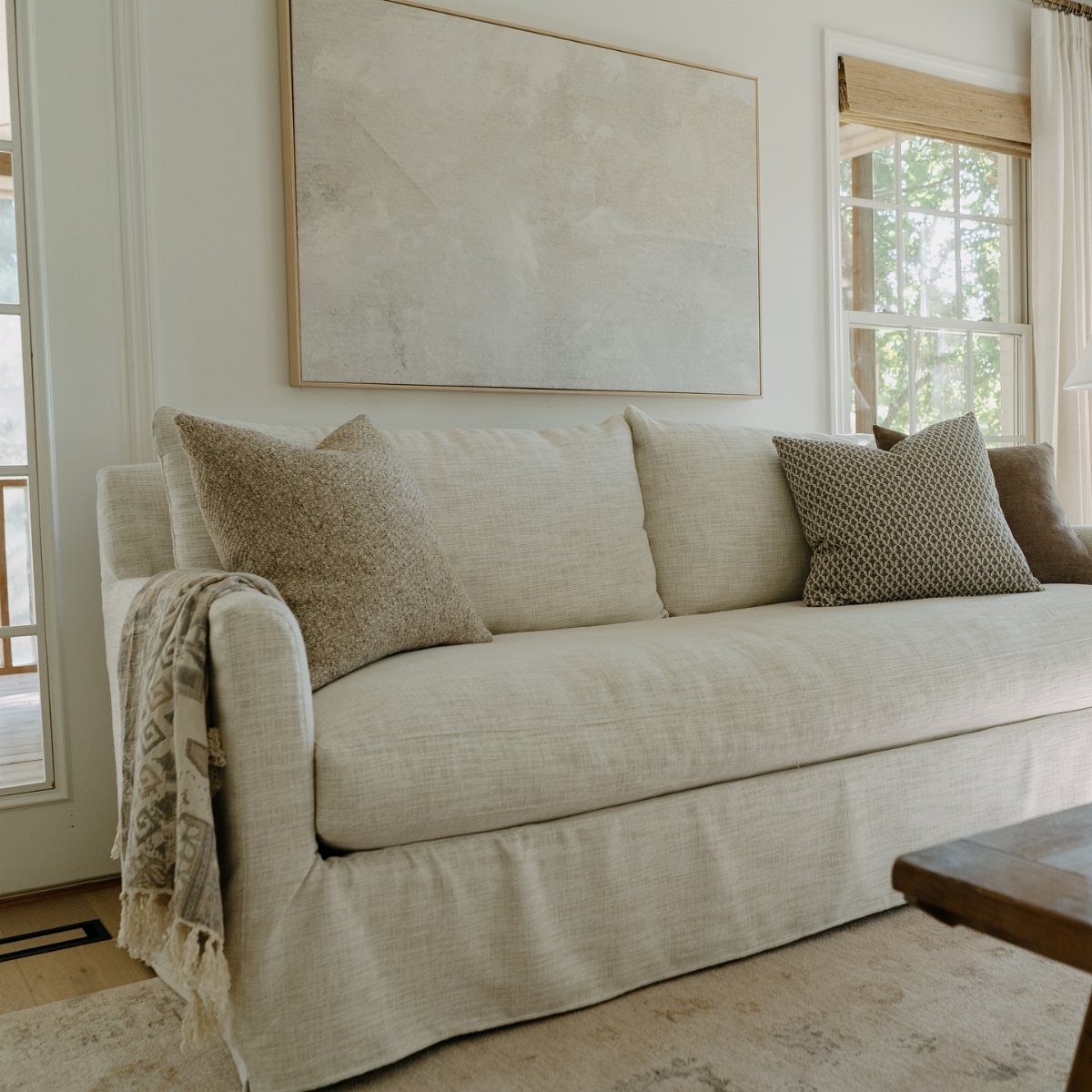
Sofa, art, throw and pillows all sit within a few shades of one another in a fully white living space, so the room relies on shape and fabric to stay interesting.
A slipcovered sofa suits it well: the loose, relaxed folds add depth that a tight upholstered cushion would not.
For an all-white room, a single big abstract canvas in sand or beige gives the wall one clear focal point without breaking the palette.
Keep pillows in related neutrals, mixing linen and wool, so the scheme feels layered and not sterile.
6. White Kitchen Cabinetry
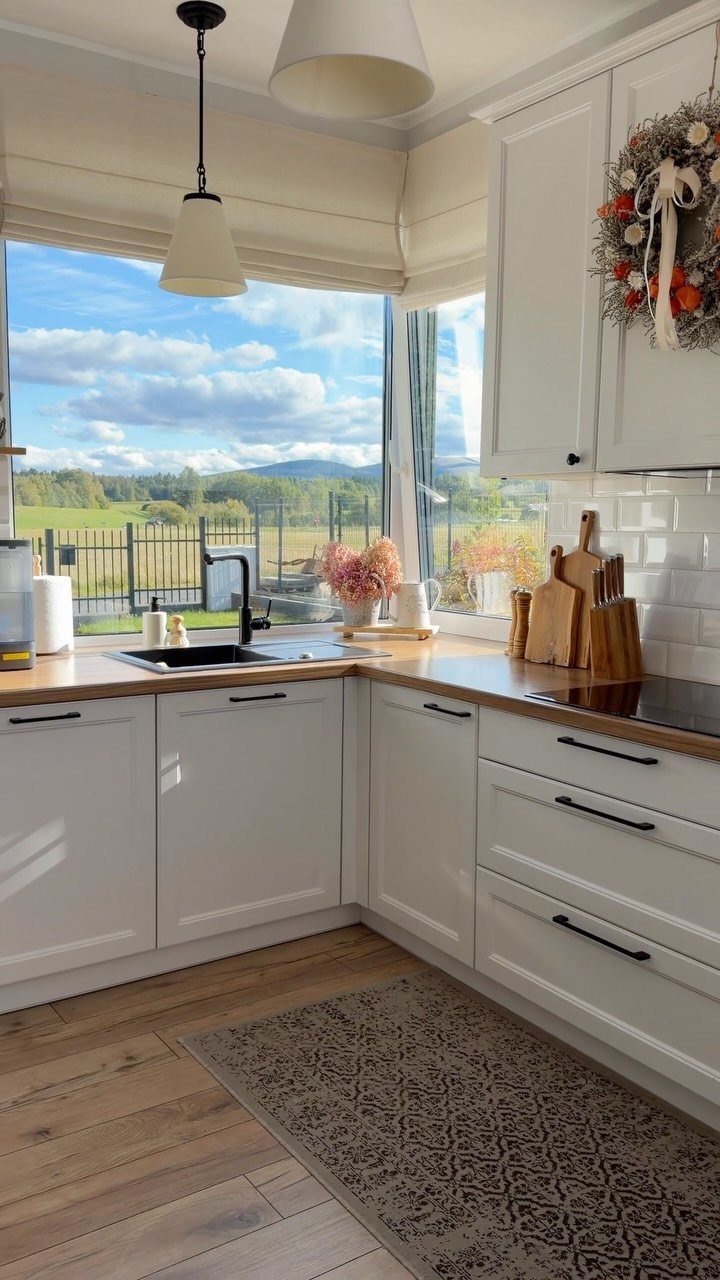
White cabinets brighten a kitchen quickly, especially near a big window where daylight bounces off every door. Black hardware and a dark sink give the room its outline, and light wood countertops keep it from feeling cold.
I like this mix because each element has a job: white for brightness, black for definition, wood for warmth.
If a full cabinet replacement is out of budget, painting existing doors and swapping the handles gets you most of the same effect. A seasonal wreath on a door adds a finishing touch for almost nothing.
7. Gold-Toned Pillows
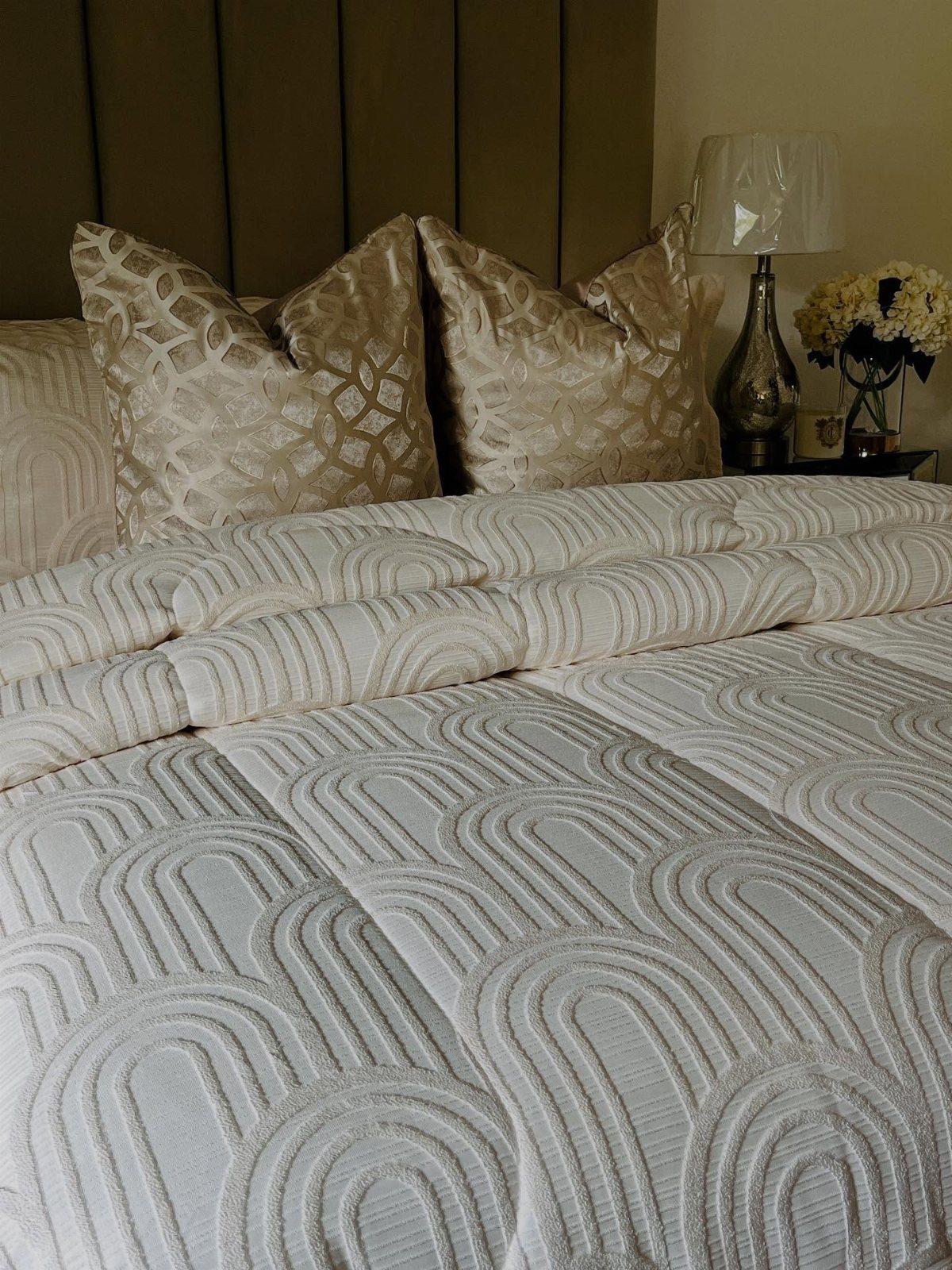
2 gold-toned pillows against a brown headboard give a white bed its warmest note. Metallic thread or a satin finish catches lamp light in the evening, so the pillows pick up the glow from the bedside table.
Keep the pair matching and put them in front of the sleeping pillows, not scattered across the bed. I would stop at two; a third gold piece starts to compete with the patterned comforter.
8. Minimalist White Room
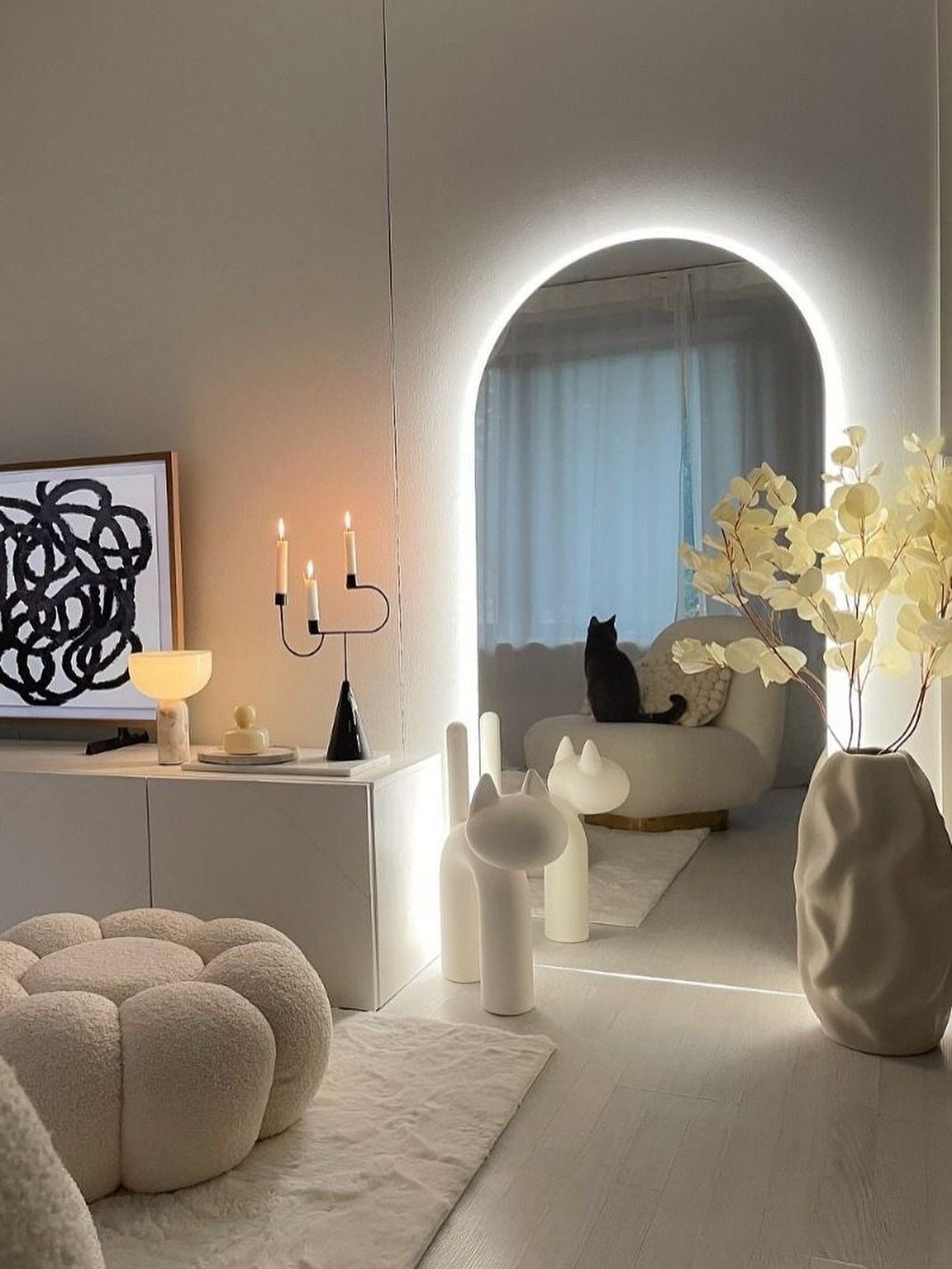
An arched mirror with a backlit edge does the job of a lamp and a piece of art at once.
In a room this pale, the glow gives the eye a destination, which is why the rest of the furniture can stay plain.
Keep the other pieces low and rounded, like a sculptural chair, a small side table and a nubby ottoman.
Curves echo the arch, and varied fabric stops all that white from going flat. I would add one dark object, a cat included if you have one, so the room has a point of contrast.
9. White Wall Panels
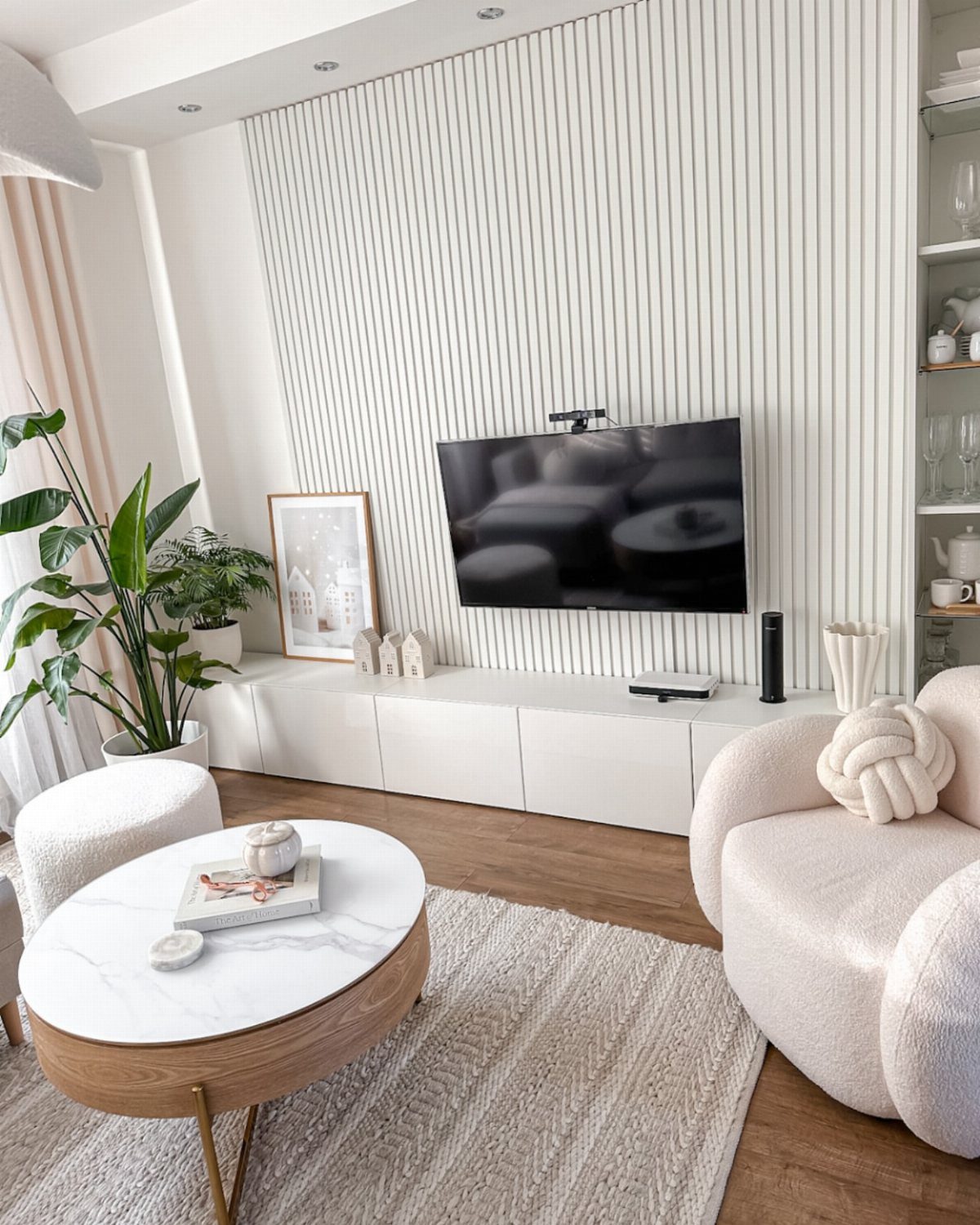
Slatted panels turn a flat white wall into something with rhythm. The vertical lines add height, and the shadows between slats give depth that paint alone cannot.
Behind a TV, they also soften the black screen by breaking up its big flat rectangle. Pair them with softer furnishings, like a bouclé chair and a marble coffee table, so the straight lines have curves to play against.
Painting the panels the same white as the wall keeps the effect quiet; a slightly different shade would make them stand out more.
10. Dark Wood Floors
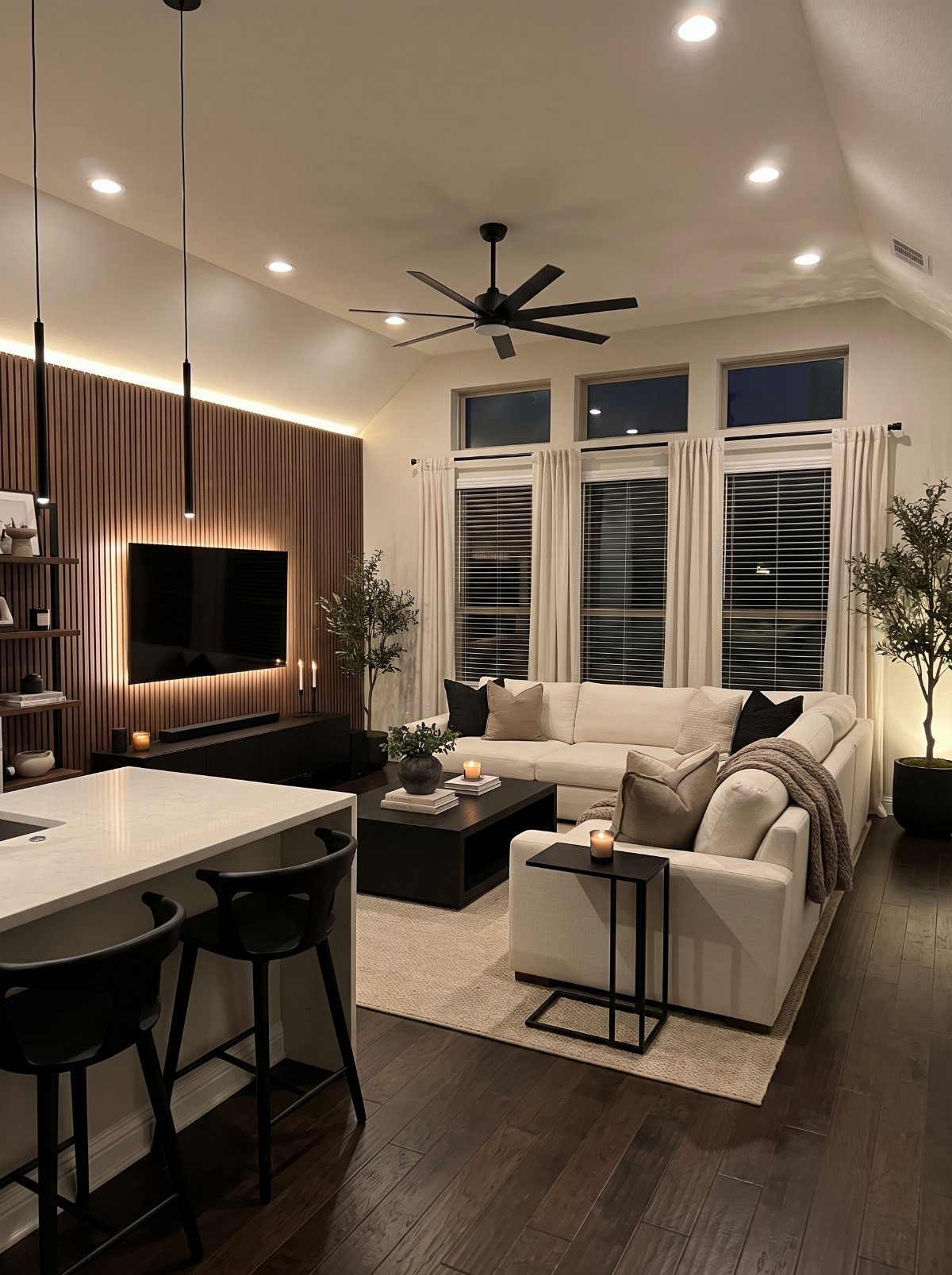
Dark brown hardwood under white furniture is the strongest contrast you can build into a room without touching the walls. The floor grounds everything above it, so a white sofa looks crisp instead of floaty.
Repeat the wood once higher up, as with a paneled TV wall or black stools at the island, so the floor doesn’t look like an isolated dark band.
I would keep rugs light and low in pile; a pale one lets the dark boards frame it.
11. Keep the Room Clutter-Free
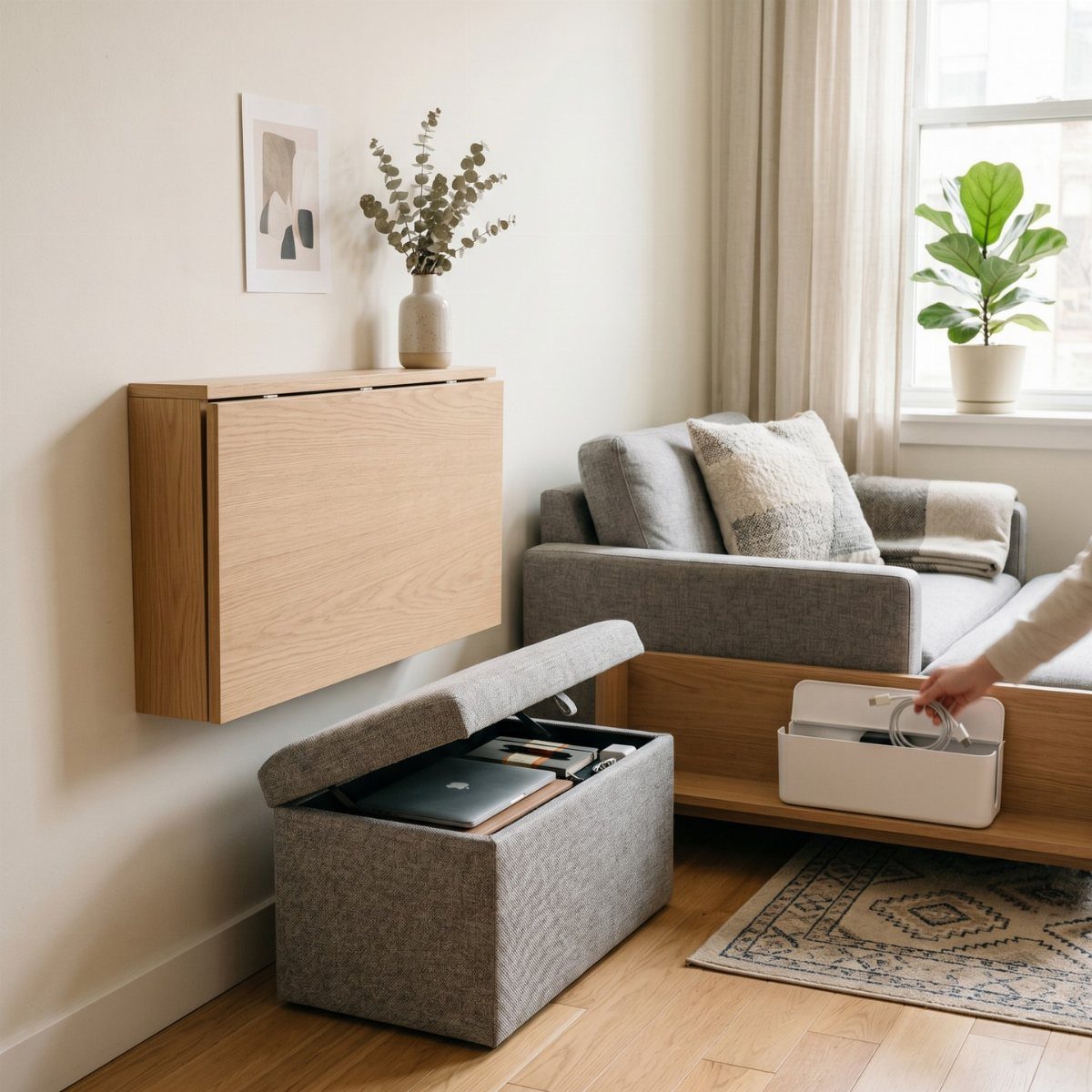
White organizer boxes inside a low wooden shelf hide the everyday pile-up (remotes, chargers, throws) behind a calm front. Matching boxes read as one surface, which is what keeps a white room looking pared back.
Give each box one category and keep it low enough to reach without moving anything else.
I would leave the top of the shelf mostly bare. Storage works best when it’s closed, and bins that are always in reach get used.
12. White Bed with Soft Contrast
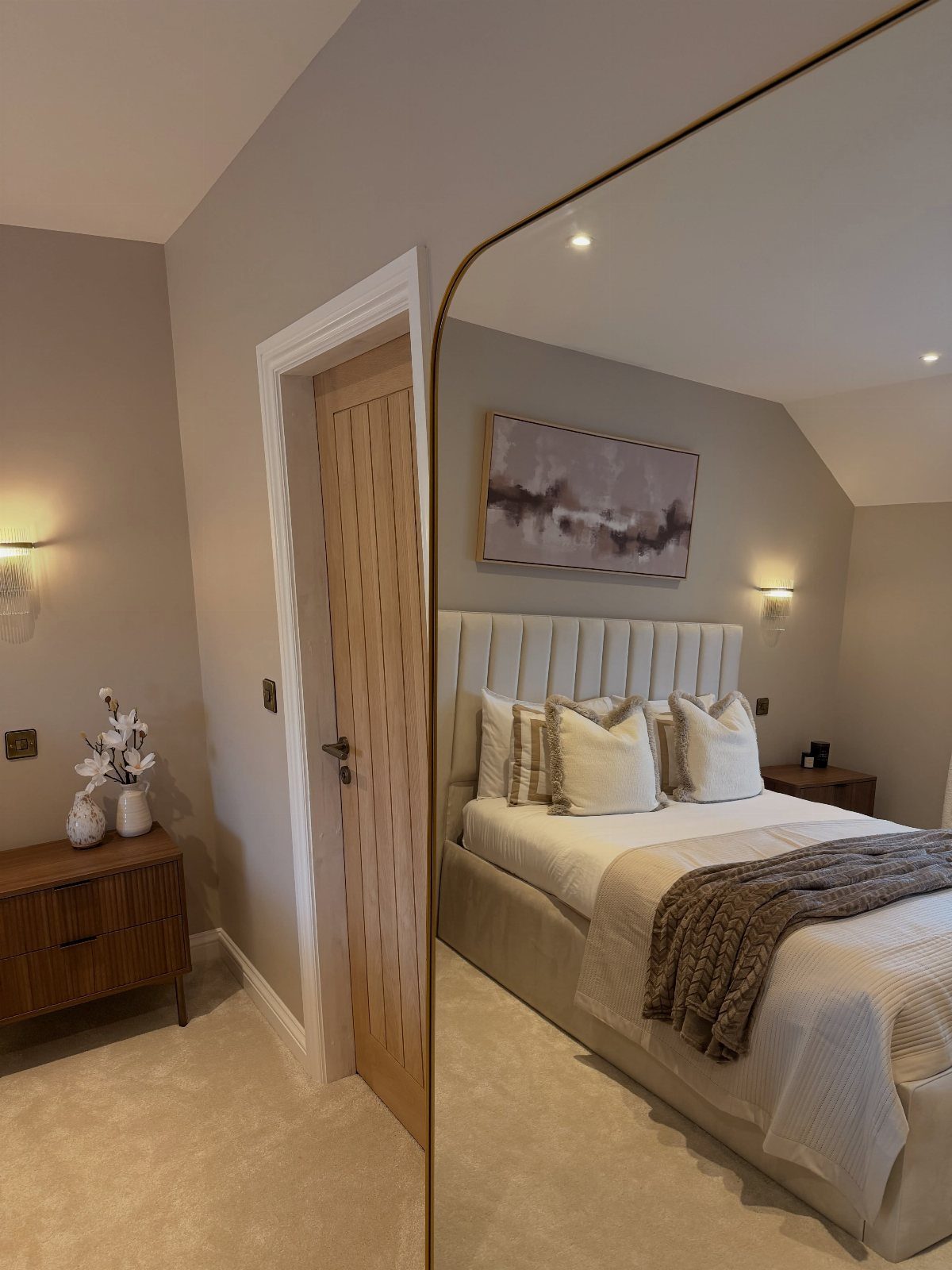
A brown throw folded across the foot of a white bed is enough to stop the whole scheme from washing out. Pick a tone close to the dresser wood so the contrast looks planned and not tossed on.
A fluted white headboard already adds shadow lines, so the bedding can stay smooth.
Reflect the bed in a large gold-rimmed mirror and the warm metal adds a second soft accent. I would keep it to those two: one brown, one gold.
13. Styled Bedside Table
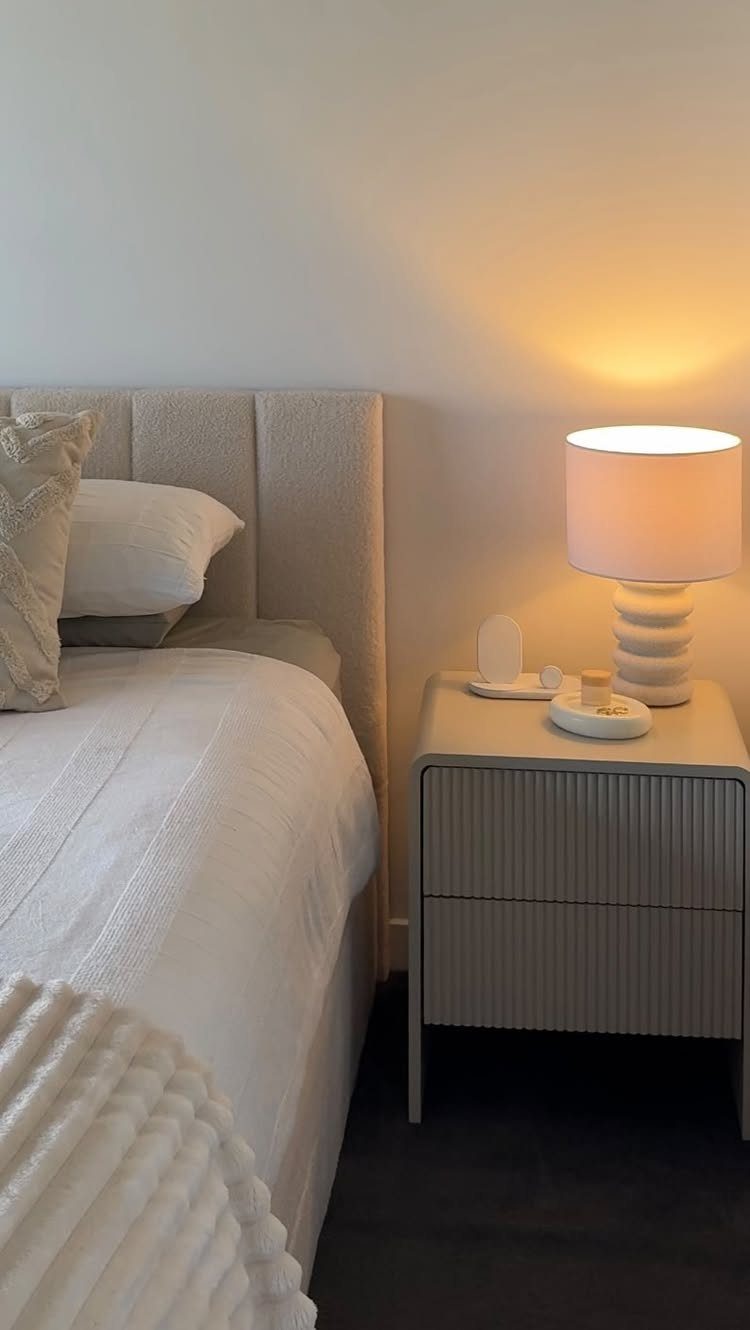
A ribbed lamp, a small tray and a candle are all a white bedside table needs. The lamp gives light to read by, the tray corrals whatever you set down at night, and the candle adds a soft glow.
Keep the tray in the same white as the table so the three pieces read as one group. I would hold the count at three; a fourth object turns a nightstand into a shelf.
14. Gold-Framed Mirror
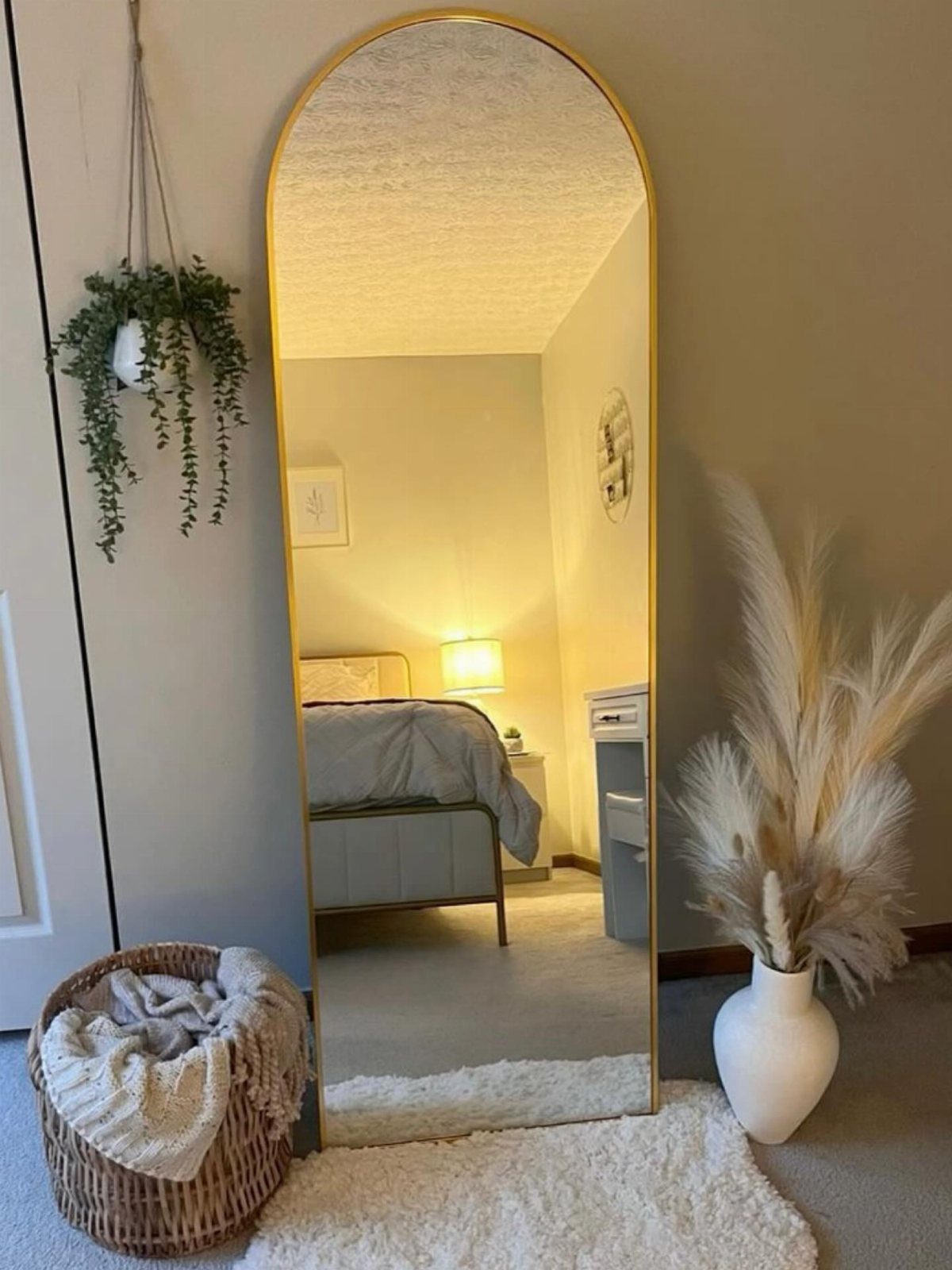
Leaning an arched gold-framed mirror against the wall puts a window’s worth of light back into the room without drilling a single hole. That makes it an easy call for renters, and you can move it whenever the layout changes.
Set it where it faces a light source, since a mirror can only bounce what it receives.
15. Floating Shelves
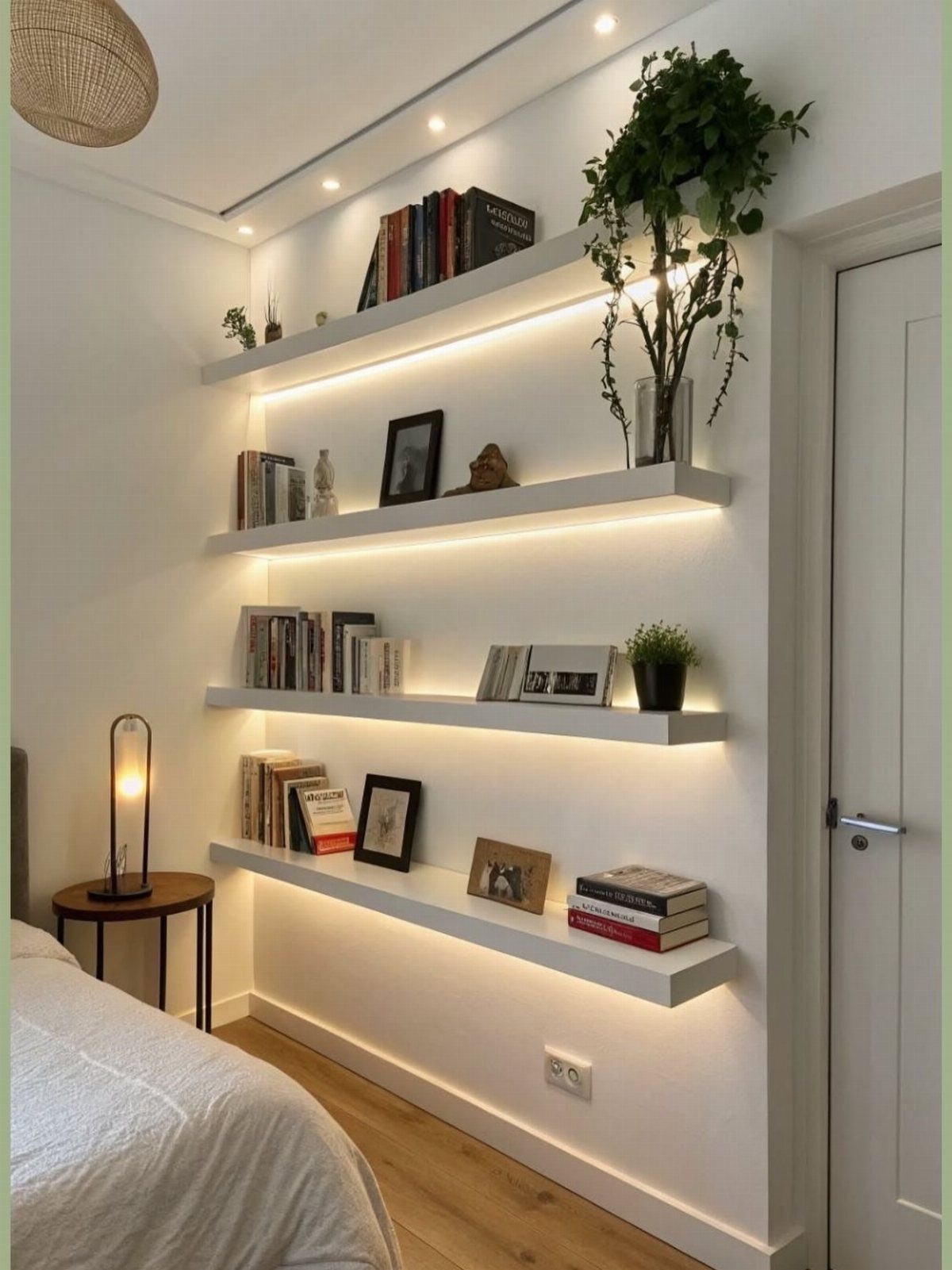
Four white floating shelves with built-in under-lighting hold books, plants and frames on a white wall, and the light is what makes the display glow after dark. White-on-white keeps the shelves from competing with what sits on them.
Treat each shelf as a small composition: a stack of books, one plant, one frame. I would leave a few inches of empty shelf between groups, because crowding is what turns a display into clutter.
16. Green Velvet and White Linens

Green velvet pillows on white linens give a bedroom a calm, leafy look that lasts well past the holidays.
A green knit throw repeats the color in a second texture, so the green feels layered and not like a single pop.
Pick a muted, deep green over a bright one; it sits more quietly against white sheets.
Winter art and a small tree turn this bed into a Christmas look, and once they come down the green velvet and white linens still work the rest of the year.
17. White, Brown, and Beige Room
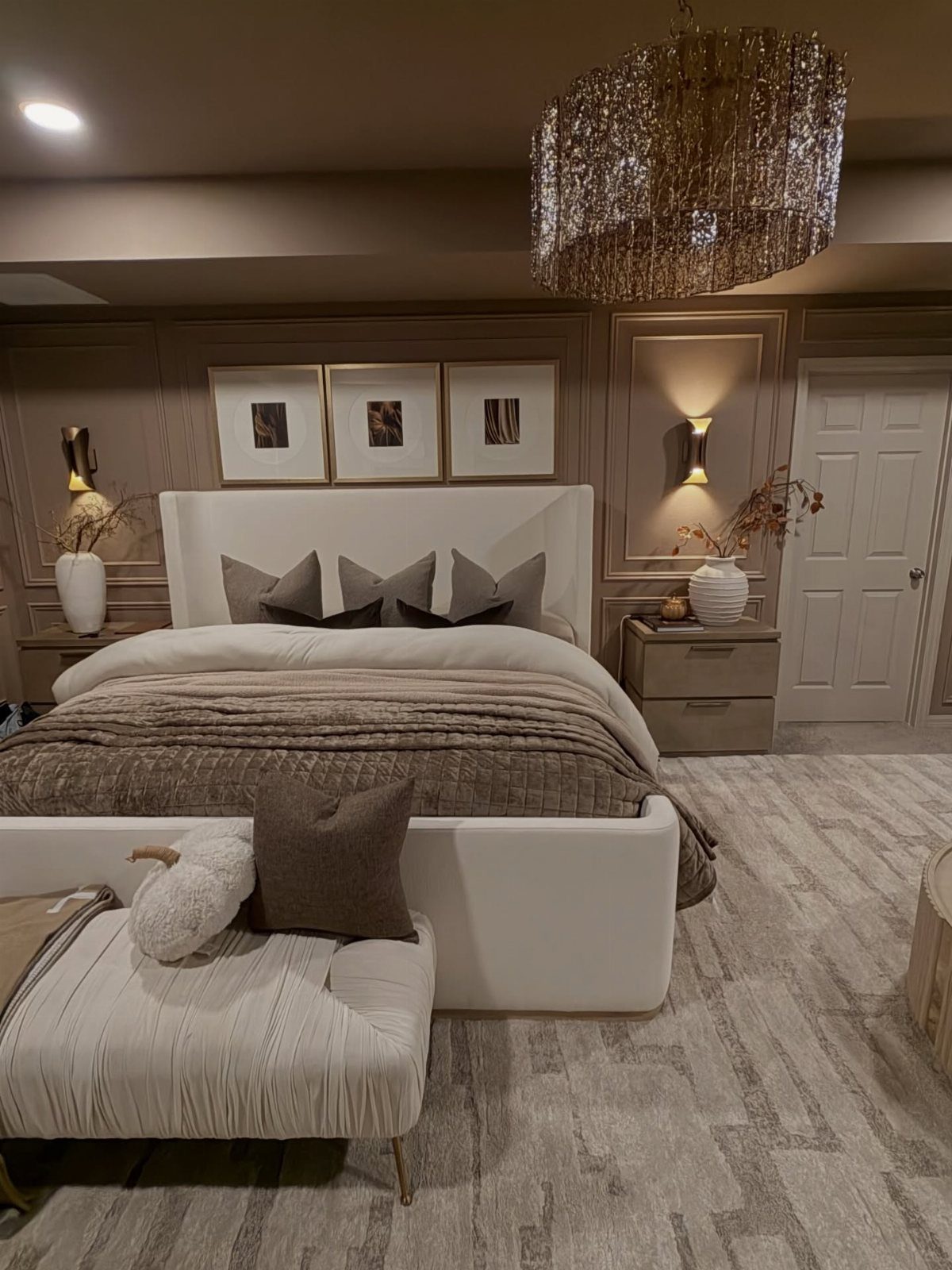
Brown bedding on a white bed, set against taupe walls with molding, is a three-tone scheme that stays warm without any bright color.
A white bench at the foot and a crystal chandelier overhead add a little shine to all that soft neutral.
Keep the 3 tones close in value so none of them dominates. I would let white and brown share the bed and leave beige to the walls, which makes the room read as layered and not patchy.
18. White Terrazzo Flooring
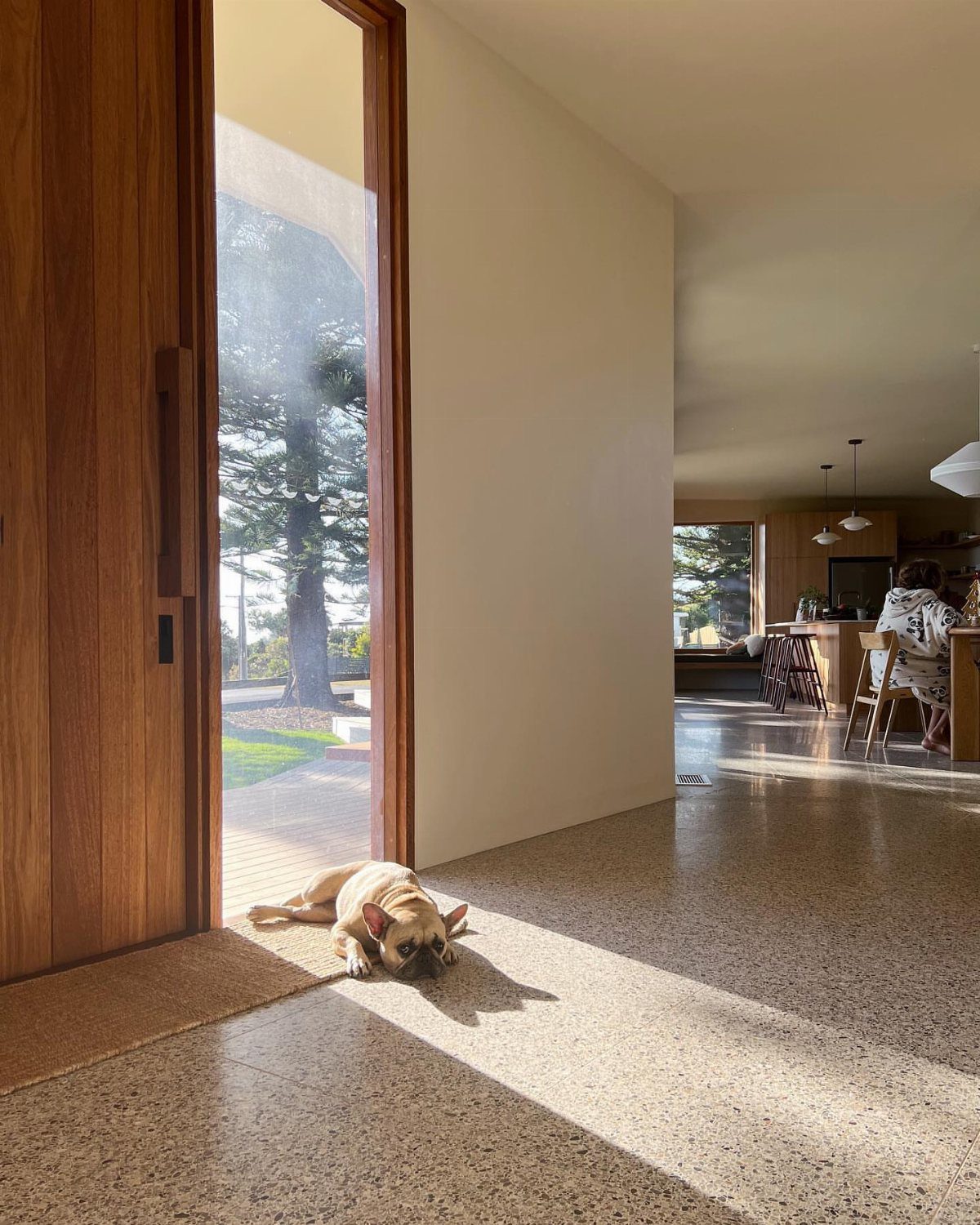
Terrazzo is a floor you notice for its speckled chips, and in a light-colored version it adds pattern to a white room without adding color.
A pale floor like this also keeps a bright space feeling open all the way to the kitchen.
It works best as the one busy surface, so I would keep walls and furniture plain and let the wooden door provide warmth.
Terrazzo is a flooring commitment rather than a weekend project, so it suits an owner more than a renter.
19. Distressed White Oak Floors
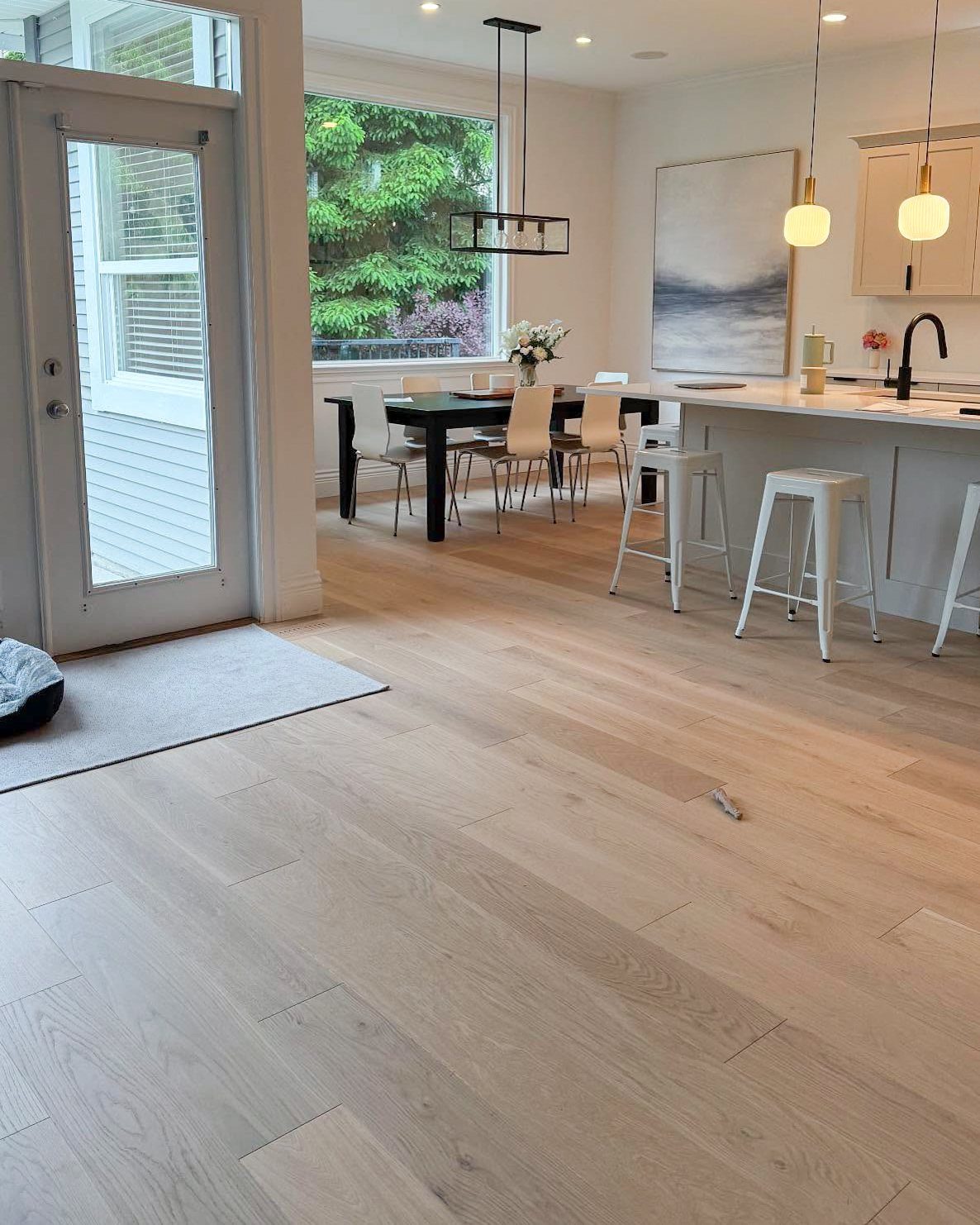
Wide planks in a washed, lightly worn white oak keep a white-and-grey kitchen from feeling like a showroom.
The finish carries a little grain and wear, which softens all that painted cabinetry and gives the black table something warm to sit on.
I would keep the grey in the cabinets or stools and let the floor stay the lightest, warmest thing underfoot. Flooring is a bigger commitment than paint, so check a large sample in your own daylight first.
20. Blue-and-White Vintage Plates
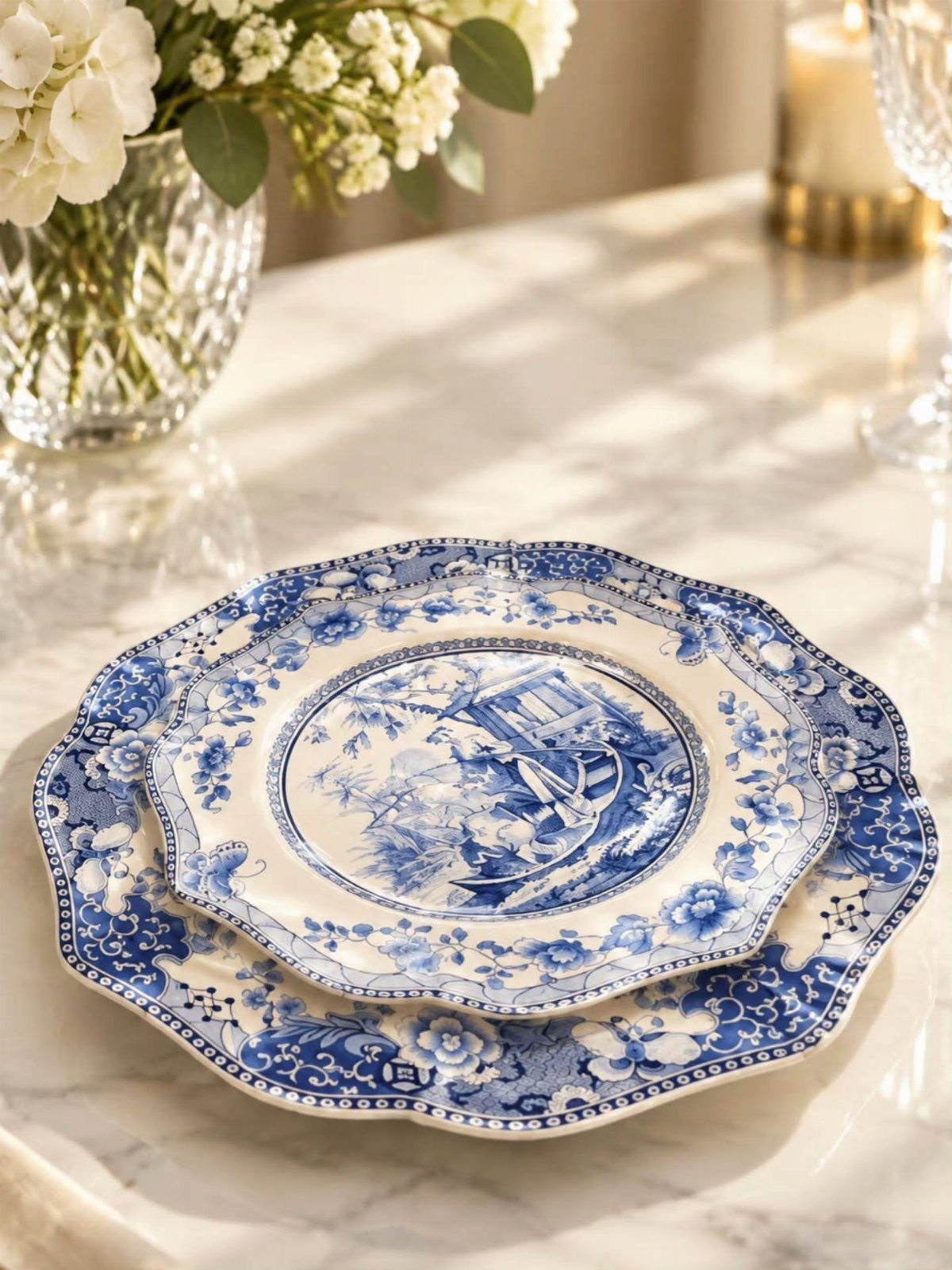
2 stacked plates are enough. Blue-and-white china is a small, collected color detail, and on a white marble table it reads as the one deliberate accent in the room.
Hunt for pieces at flea markets or in your relatives’ cupboards, and stack a pair with a similar pattern.
Beside white flowers and a candle, the blue stands out without adding another color. I would stop at one stack; a full plate wall turns a quiet white dining area into a collection.
21. White Home Office
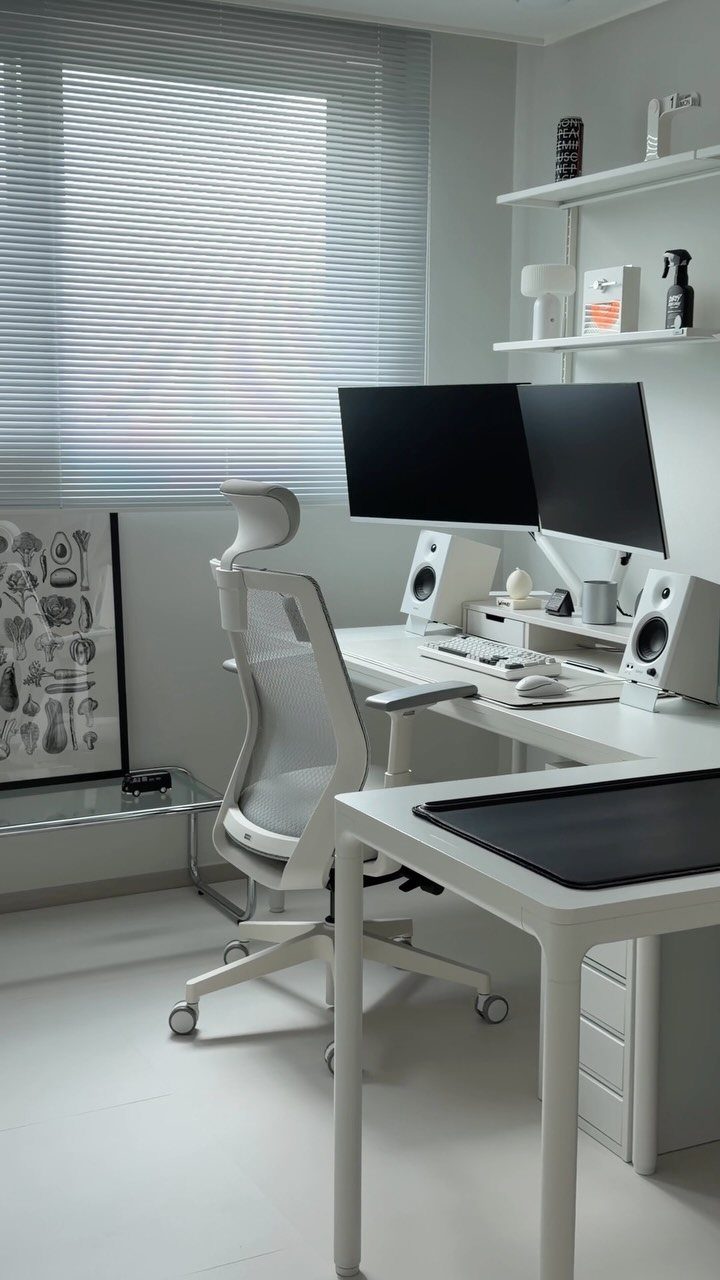
Keeping the desk, chair, shelving and even the speakers white makes a workspace recede into the walls, so the monitors become the only dark note, and that works best when you pick white cable covers and a white monitor stand to keep the contrast to the screens alone.
That balance keeps a home office from shouting at you at the end of a workday.
Use blinds to control glare on the screens, and keep cables off the desktop, since loose wires break up a pale scheme fast.
I would leave the shelving half empty. Fewer objects is what makes white feel calm instead of bare.
22. White Entryway with Art
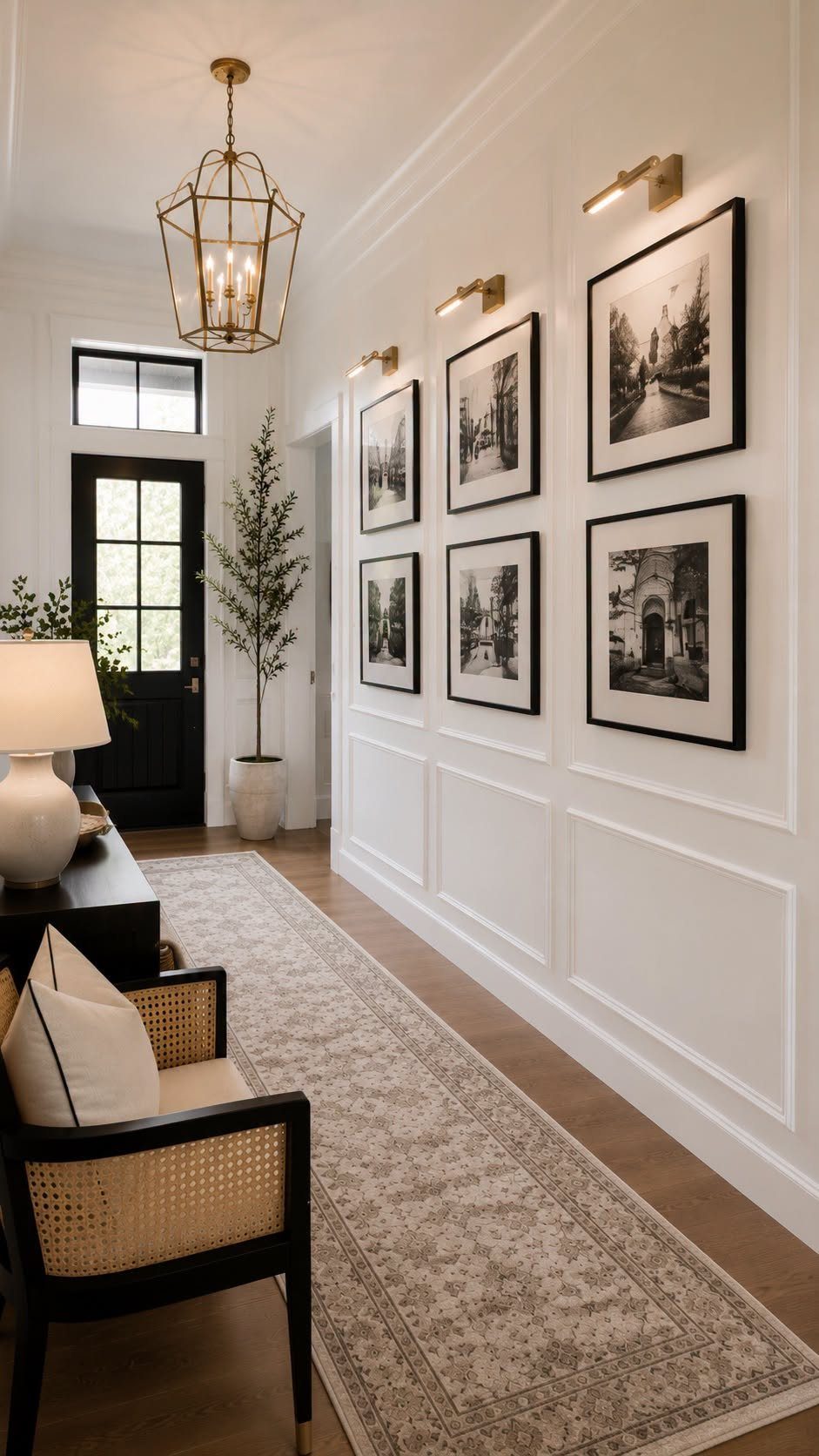
Bright white walls give art a clean stage, and an entryway is where that pays off, because everyone passes through it. Black frames in matching sizes read as a single, deliberate row against paneled walls.
Hang the frames at an even height and spacing, and add picture lights if the hall is dim.
A patterned runner keeps the long, narrow floor from looking blank. For a renter, picture ledges can replace nails, and I would pick that route if the lease is strict.
23. White Room with Botanical Gallery Wall
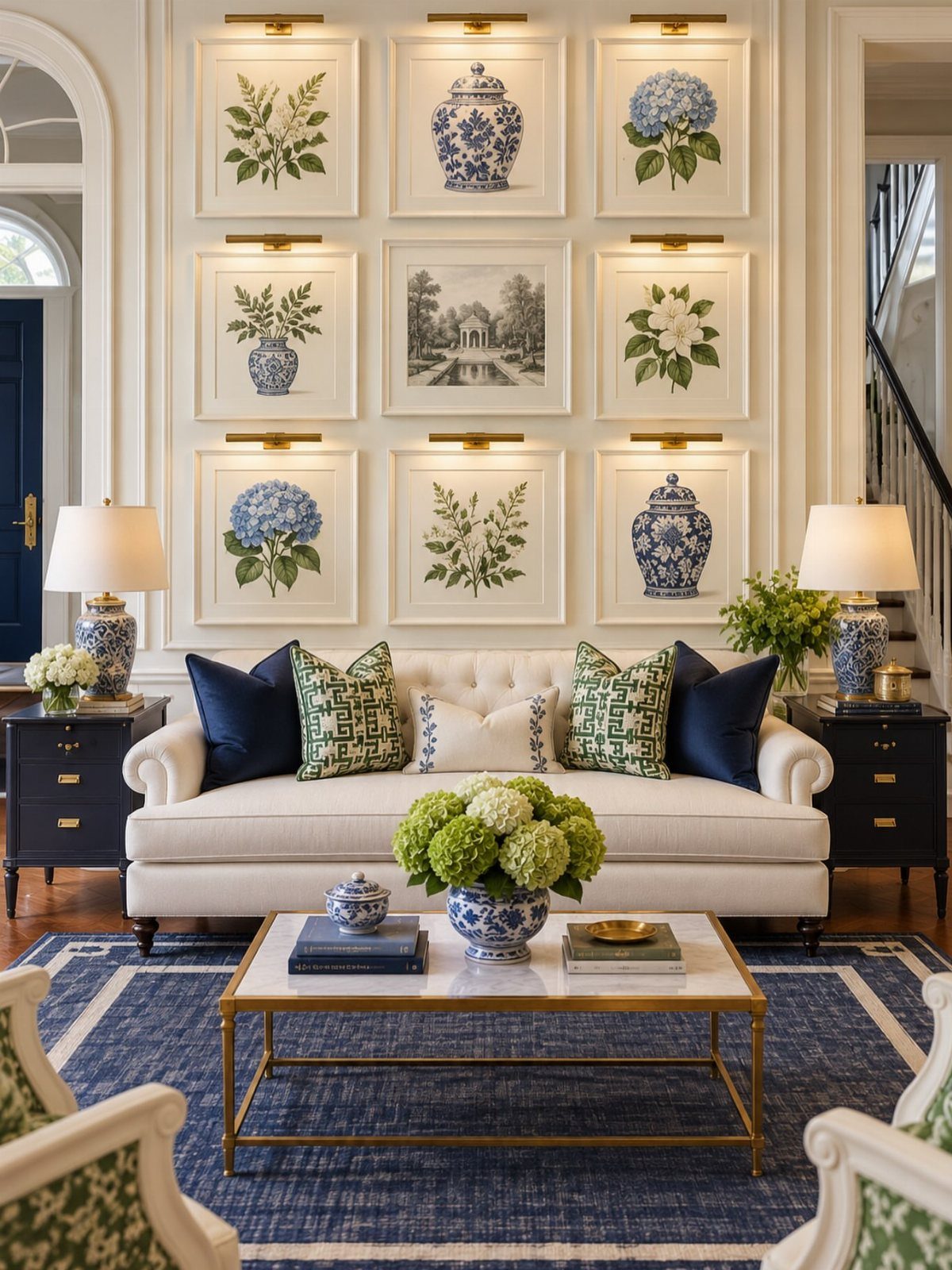
A white sofa leaves the wall above it free to carry the color. Botanical and architectural prints hung together make a gallery wall with variety, while blue and green pillows pull the same tones down onto the seating.
Mix the print subjects but keep the frames consistent, so the grouping looks planned.
Blue patterned rugs underneath repeat the palette at floor level. I would lay out the arrangement on the floor first, then hang it; moving paper templates is cheaper than patching nail holes.
24. White Bathroom with Marble and Warm Lighting
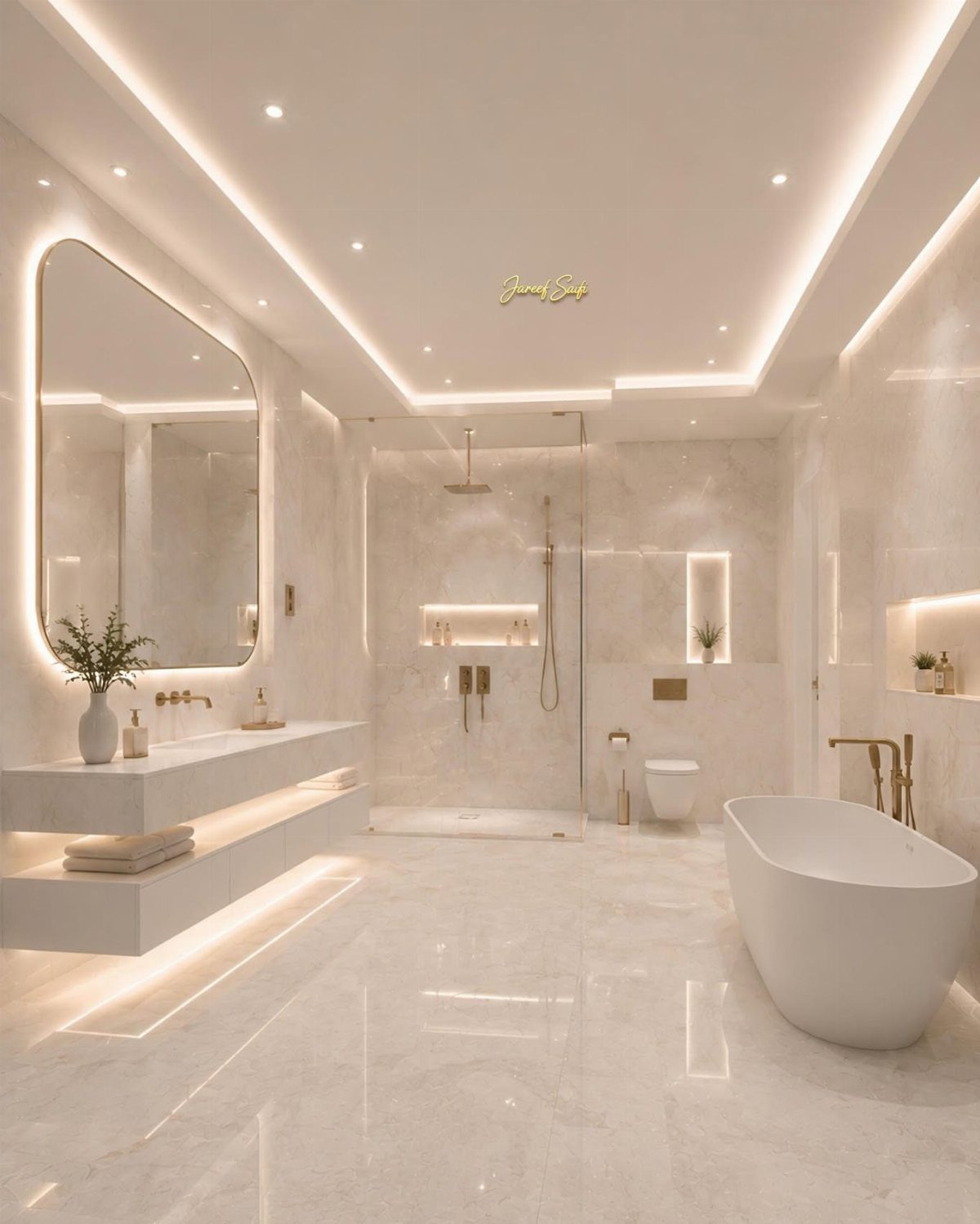
Marble on both walls and floor makes a bathroom feel like one continuous surface, and warm recessed lighting stops that much stone from turning cold. A warm LED tone is the detail I would pay the most attention to here.
A freestanding tub, floating vanity and glass shower keep the sightlines open, which helps a white space feel larger.
This is a full renovation, though, not a weekend job. Renters can borrow the effect with warm bulbs and a pale stone-look mat.
25. White Room with an Organic Mirror
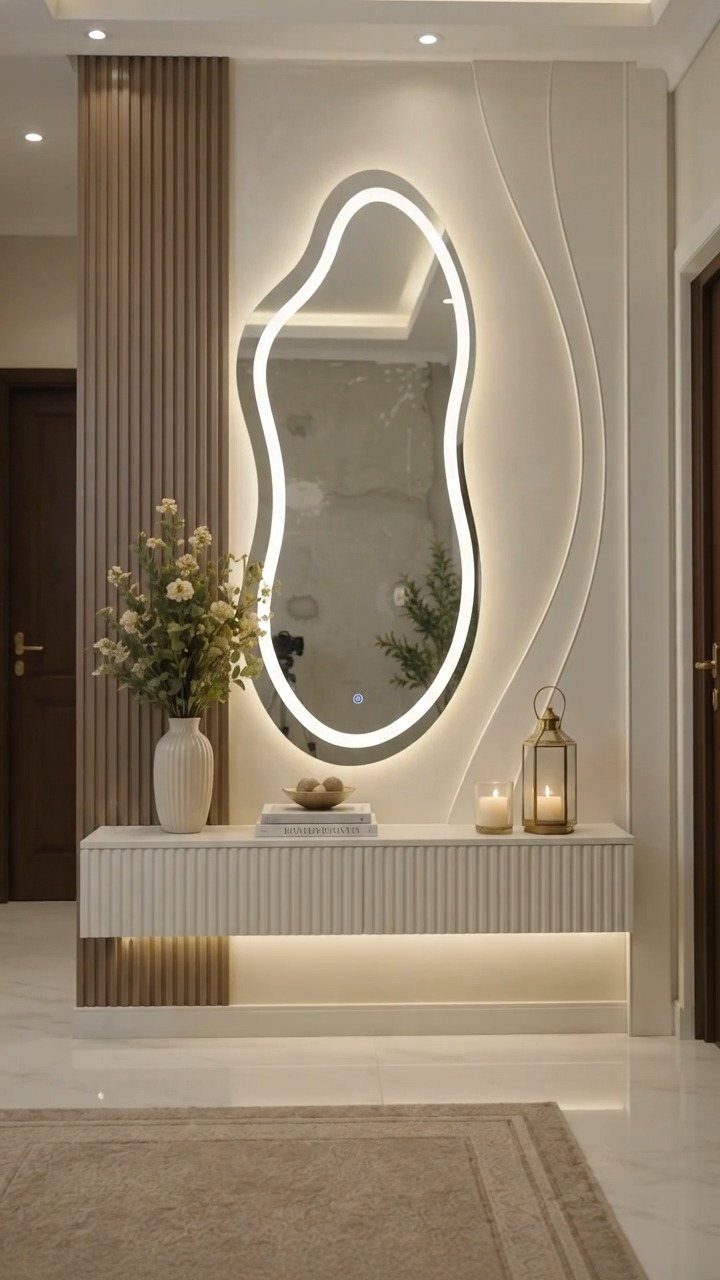
A backlit mirror with an irregular edge gives an entryway console a focal point, and the soft glow behind the glass doubles as a night-light.
The glow around the frame adds depth to a flat white wall, and the organic shape softens the straight lines of the fluted console below.
Match the console finish to the wall so the mirror holds attention.
A few stacked books and a small vase are enough on top; the mirror already does the decorating. Plug-in backlit mirrors need an outlet within a few feet, so measure before you buy.
26. White Room with a Japanese Screen
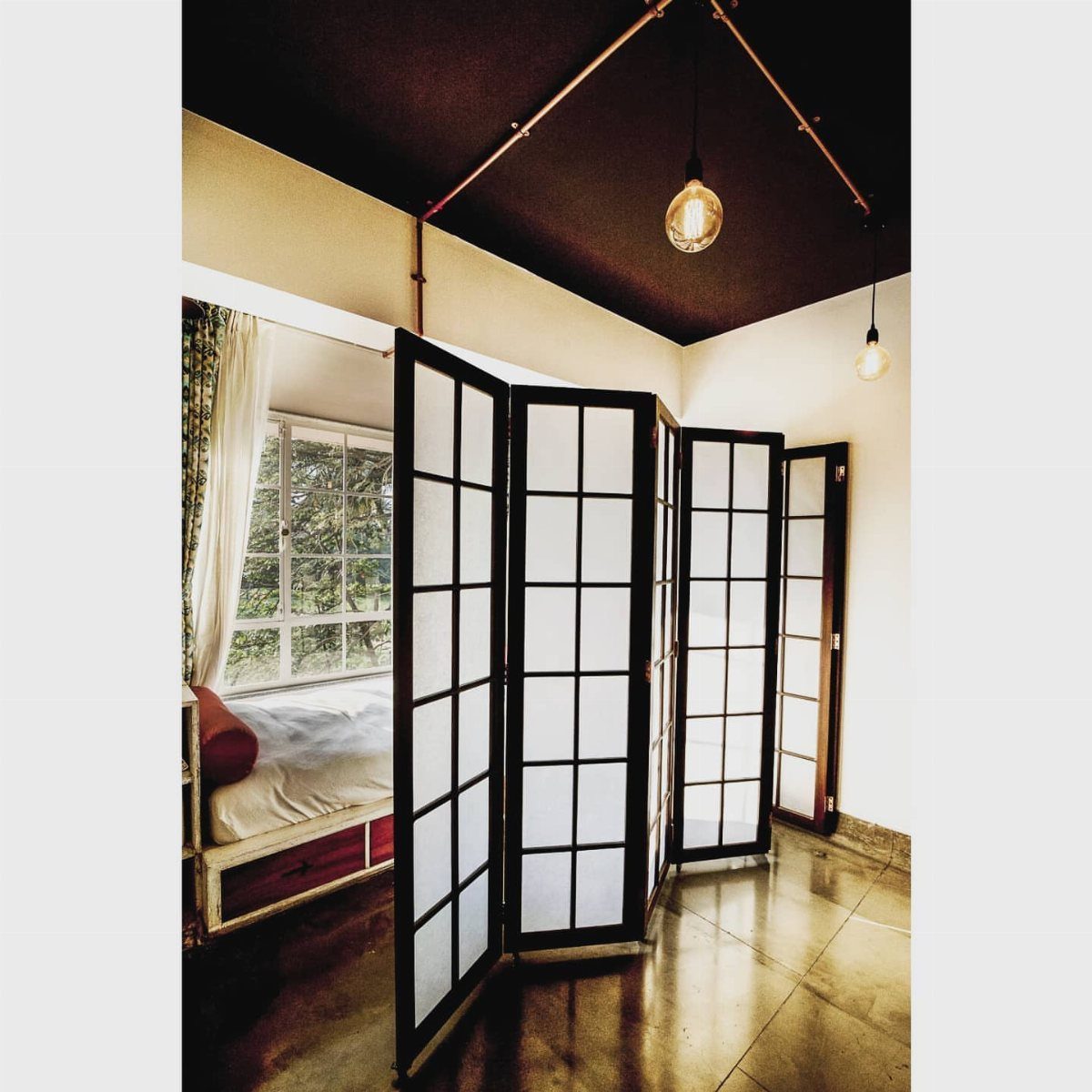
A black shoji screen splits a white bedroom into 2 zones without closing off the light. The black frame gives the room its strongest line, so the rest can stay soft and pale.
A screen is furniture, so set it at the spot that suits the room’s zones rather than the line a wall would take, and slide it over when the layout changes.
The paper panels glow when backlit, which is why a window nearby helps. I would keep the bedding white so the screen stays the single dark element.
27. White Bathroom with Beige Accents
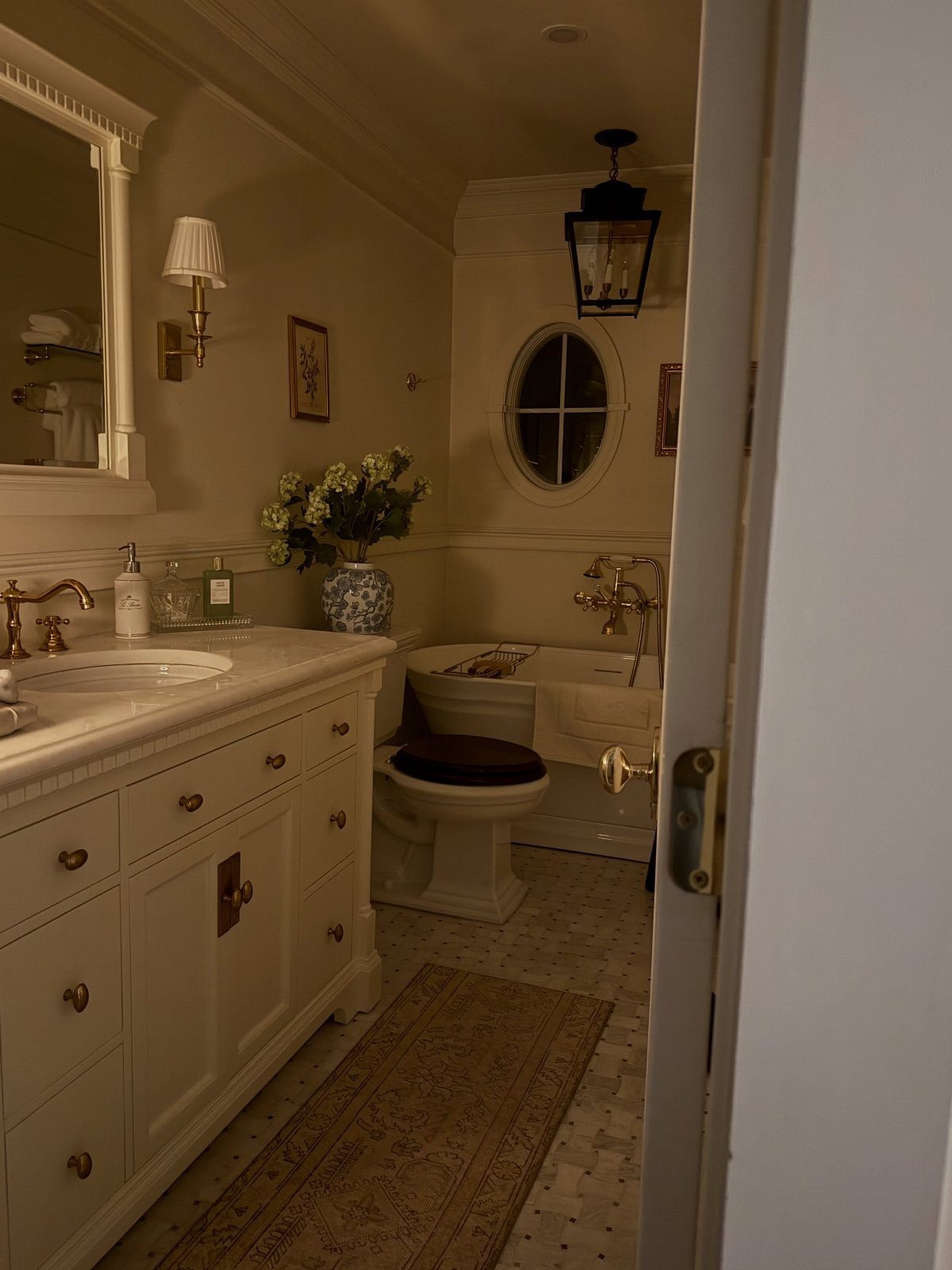
A beige patterned runner grounds a white bathroom between a clawfoot tub and a vanity with gold pulls. The runner adds warmth underfoot and repeats the gold in a softer way.
Gold hardware on white cabinetry is a small upgrade that makes the vanity look finished. I would keep the runner to the walkable center, not edge to edge, so the white floor frames it.
A clawfoot tub is original to older homes or added during a renovation, and refinishing one is an option if the porcelain is worn.
28. White Bathroom with Woven Textures
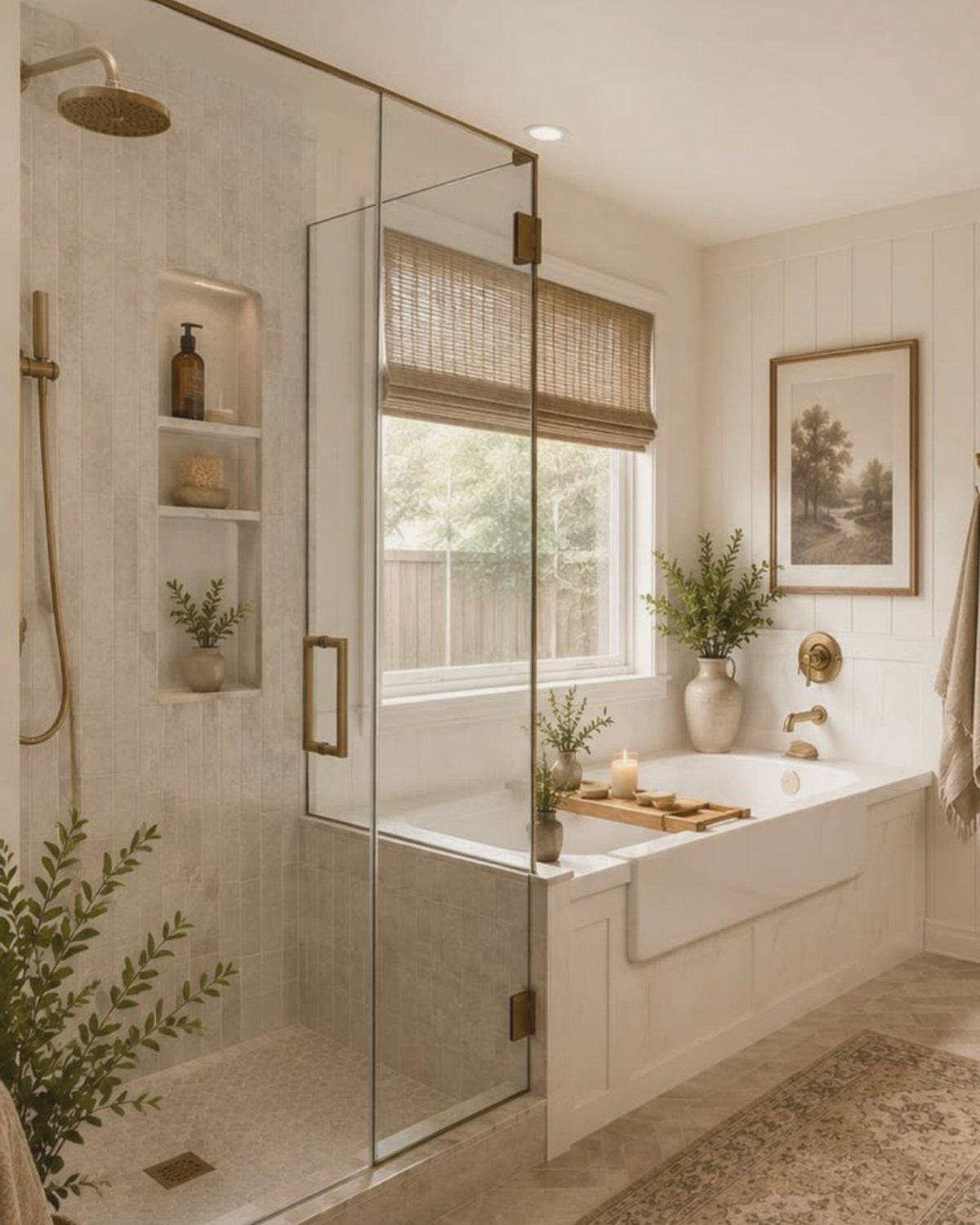
A woven shade at the window and a wooden tray across the tub bring natural texture into an otherwise smooth white bathroom.
The shade filters light without blocking it, and the tray holds what you want in reach while you soak.
Pick a shade in jute or bamboo, since both take bathroom humidity better than cotton.
A bath tray should span the tub without wobbling; measure the inside width before ordering. Small plants on the tray soften the look, but keep them low so they do not block the window.
White’s Versatility and Symbolism
White works as a blank slate, so it sits well beside almost any piece you already own. A hand-me-down dresser, a bold rug or a framed print stands out more against white than against a busy wall color.
The symbolism is part of the appeal. White reads as purity, innocence, new beginnings, cleanliness and clarity, which suits a first apartment or a room you are starting over in.
A bathroom, a bedroom, or a corner set aside for rest all suit it, since each calls for order and as little visual noise as possible.
In those spots, I would let white be the quiet backdrop and spend the budget on one or two pieces worth looking at. White acts as a foil, so art and furniture get the attention.
White Room Upkeep
White makes everyday clutter stand out, so upkeep is mostly a question of what you let stay visible.
A dark toaster, stand mixer or coffee maker interrupts a pale counter fast. Keep appliances in a cabinet and pull them out only when you use them.
Packaging is the next offender.
Printed boxes and bags add noise, so pour staples into matching jars. Ingredients in jars look good enough to stay on an open shelf; everything else belongs behind doors.
Cords need the same treatment. Bundle them with cable ties and route them behind furniture so no wire crosses a white wall.
Trend and Timeless Appeal
White is a shade that has never gone out of style, and white-toned bedrooms are expected to stay popular. Monochromatic spaces are also popular for 2026, so a one-color room is a current choice as well as a safe one.
A white bathroom is the classic safe pick because it ages well, and pattern keeps it from going dull.
Repeat one motif across different materials and change the scale, such as oversized chevron on a wood door against a tiny chevron mosaic.
Pattern alignment has to be precise where materials meet. A break between them, like a countertop, makes neat joins easier to get right.
Frequently Asked Questions
How to make a white room look good?
Layer textures, vary your whites and add one or two deliberate color accents.
A chunky knit throw against smooth linen bedding gives the eye something to catch, and a piece of bold artwork or a few green plants keeps the room from feeling flat.
Match undertones so your whites read as one palette instead of scattered mismatches.
What are the 2026 bedroom trends?
Monochromatic palettes, especially in pale tones with natural wood and greenery, are popular for 2026. Layered whites with texture and a few warm accents keep the look calm without feeling sterile.
How do I make a white room look cozy?
Pick a warm white with red or cream undertones, add natural textures like wood and woven fabrics, and layer soft materials.
A brown throw, a chunky knit blanket or a jute shade brings warmth that cool white alone cannot, and keeping the palette in related neutrals stops the room from feeling stark.