
A fast reset takes about 15 minutes, and a full declutter and deep clean closer to an hour.
Most people get it wrong by starting with sorting: haul out the trash and dirty dishes first, all the way to the outside bin, and the real floor shows up. Aim for done, not perfect.
[link-whisper-related-posts]1. Get Ready and Aim for Done
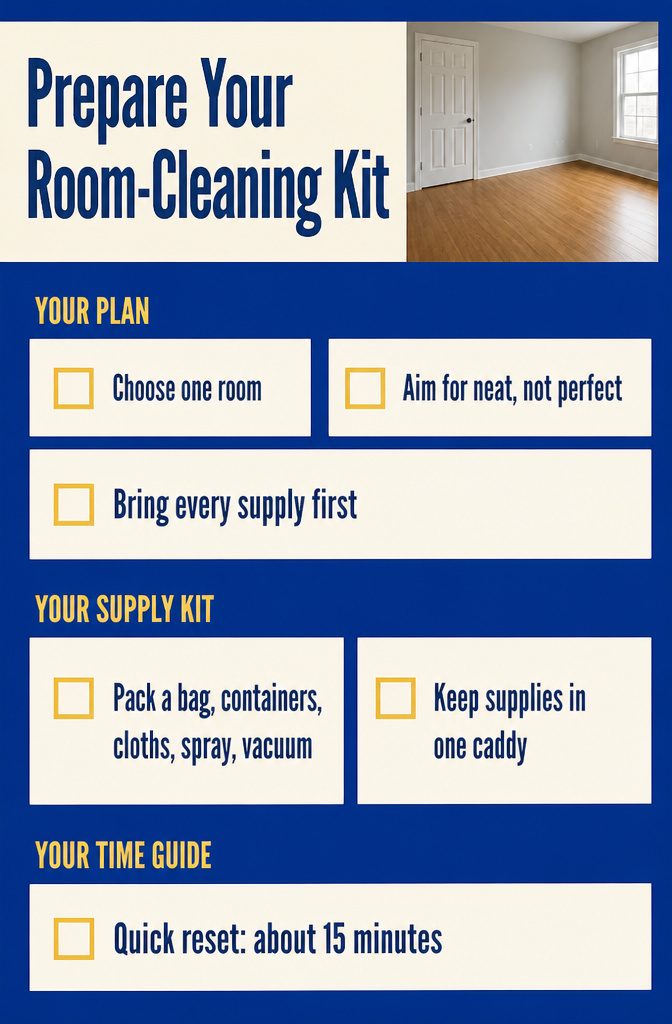
Set up before you touch a single sock:
- Pick one room. A finished small room beats three half-cleaned ones.
- Aim for done, not perfect. Neat counts, and the deep scrubbing can wait for another day.
- Carry every supply into the room before you start. Hunting for a cloth one trip at a time wastes more minutes than the cleaning itself.
- The kit: a trash bag or bucket, a few containers for sorting, microfiber cloths, multipurpose spray, and a vacuum with attachments.
- Put the sprays and cloths in a caddy. One handle to grab beats walking the house for each item.
- A short, repeatable cleanup runs about 15 minutes. A full declutter and deep clean takes closer to an hour. Room size and how long since the last reset will move both numbers.
2. Remove Trash and Dishes
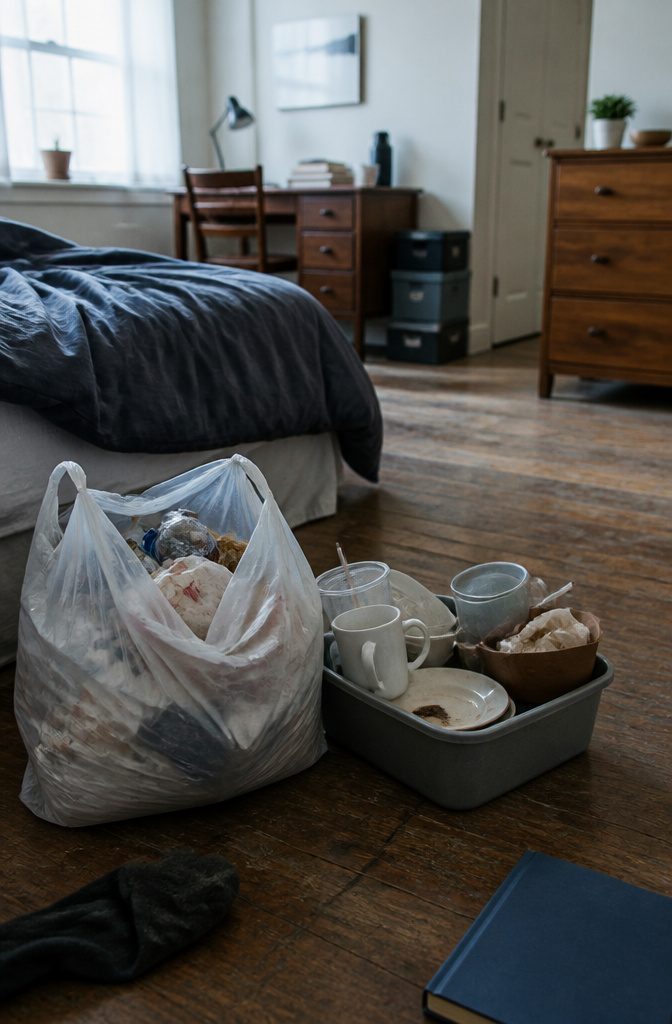
Take the trash out of the room before you touch anything else, and carry it all the way to the outside bin.
A bag parked by the door tends to slide back into the clutter. Wrappers, tissues, empty bottles, food packaging and scrap paper all go.
Dirty dishes and cups come next, and they hide in more places than you’d guess: under the bed, under the dresser, behind the desk and inside bedside drawers. Gather them into one load and carry it straight to the kitchen.
I put this ahead of any sorting because it’s the quickest visible win. With the junk gone, you can see the actual floor and the actual surfaces, so deciding what to do with everything left over gets much easier.
3. Collect Laundry and Bedding
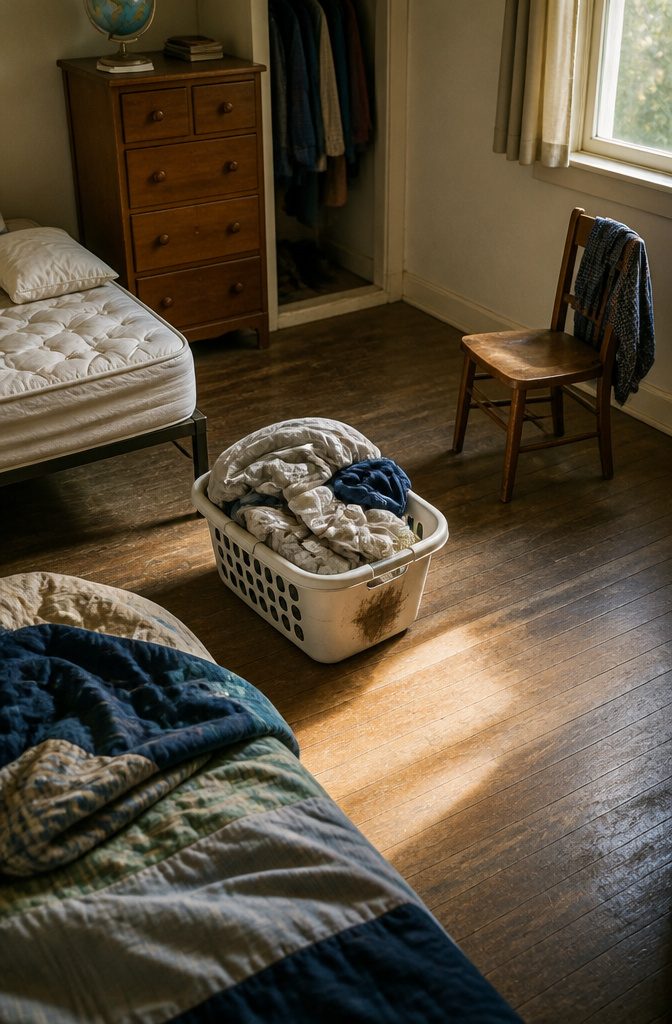
Grab a laundry basket and make one lap of the room, picking up every dirty item: the shirt on the chair, socks under the bed, the towel behind the door.
Don’t stop to unfold a sock or turn a shirt right side out.
Each of those little fixes slows the lap, and the washing machine doesn’t care. Then strip the bed, pulling off the sheets and pillowcases, and add them to the pile.
I’d take one overstuffed load over two trips, so switch to a hamper or a big bag if the basket fills up.
A child can do the hauling to the laundry room, and it’s a job they can finish on their own. Once the pile is gone, you can usually see more floor.
4. Remove Things That Don’t Belong
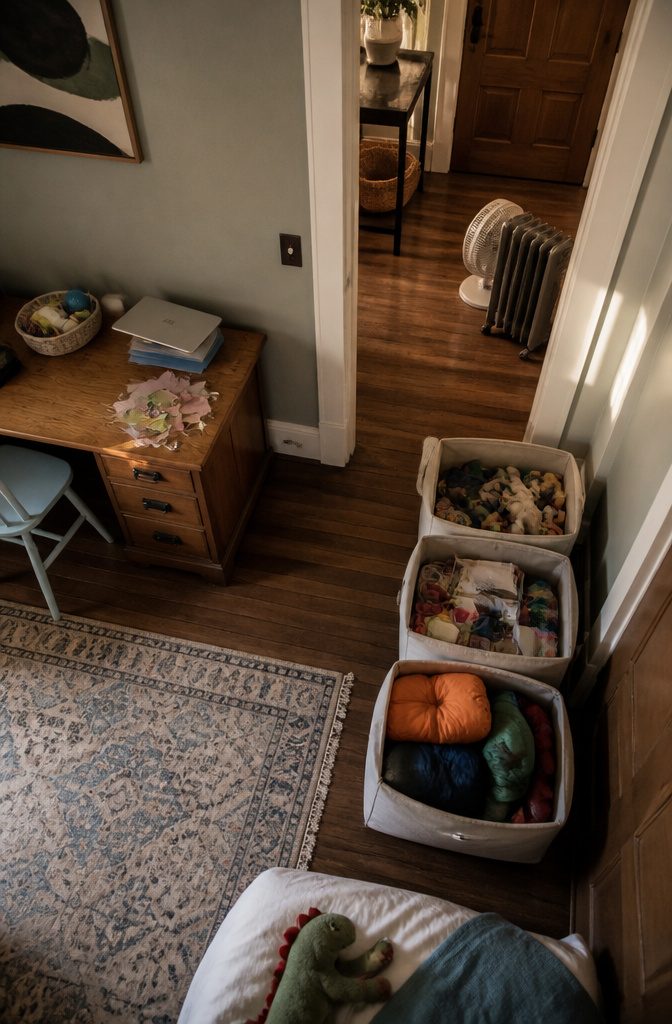
Anything that lives in another room goes out before you start putting things away.
Carry it to the doorway and sort it by destination: one tote for toys headed to the playroom, another for craft supplies, a third for sleeping bags or seasonal gear.
Bulky pieces like a space heater or fan can wait in the hallway. Grouping like with like turns the delivery into one loop through the house instead of a string of detours.
Younger children can skip the delivery. Have them set the full basket in the hall and leave the rest to an adult.
If speed is the priority, deferring the put-away is fine, and the room reads as clean once the basket leaves it.
The risk is a basket that never gets emptied, so sort it once a week or it becomes the new pile.
5. Put Belongings Away
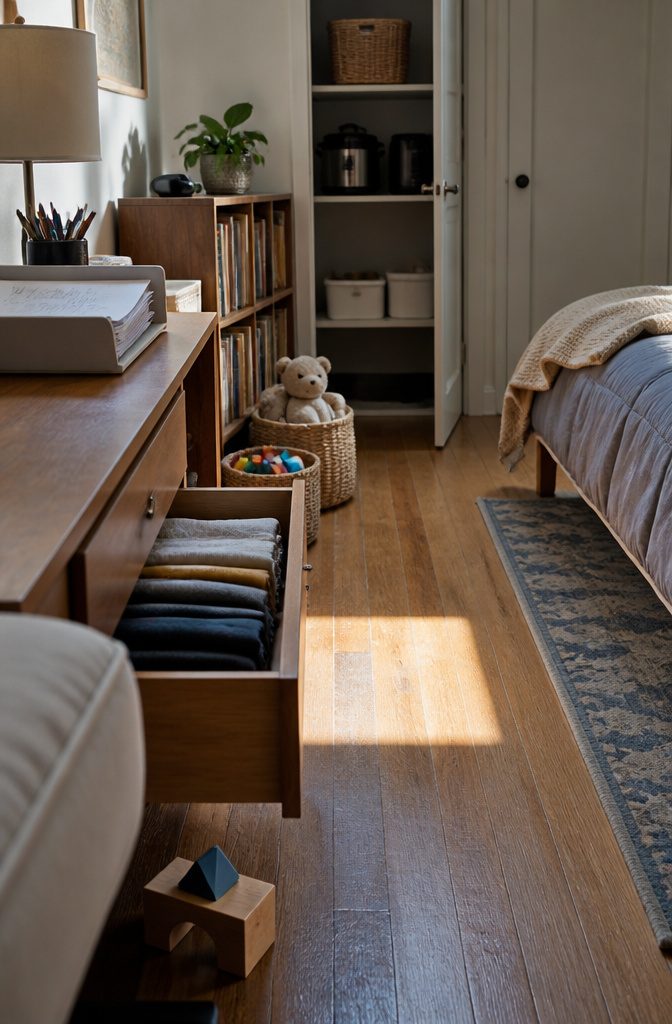
Everything that stays in the room needs a proper home, and this step takes longer than any other. Fold clean clothes into drawers or hang them in the closet, file work papers, and return small appliances to the cupboard.
Work category by category or zone by zone until you’ve covered the whole room. Hopping between piles just stretches the job out.
With a child, shrink it further: books first, then stuffed animals, then blocks. Offering a choice, like books or Barbies, gives them a sense of control and softens the resistance, but stop at two options, because more overwhelms them.
Turning the stuffed animals into basketball shots, two points per bucket, makes the pile disappear faster.
6. Dust and Wipe Surfaces
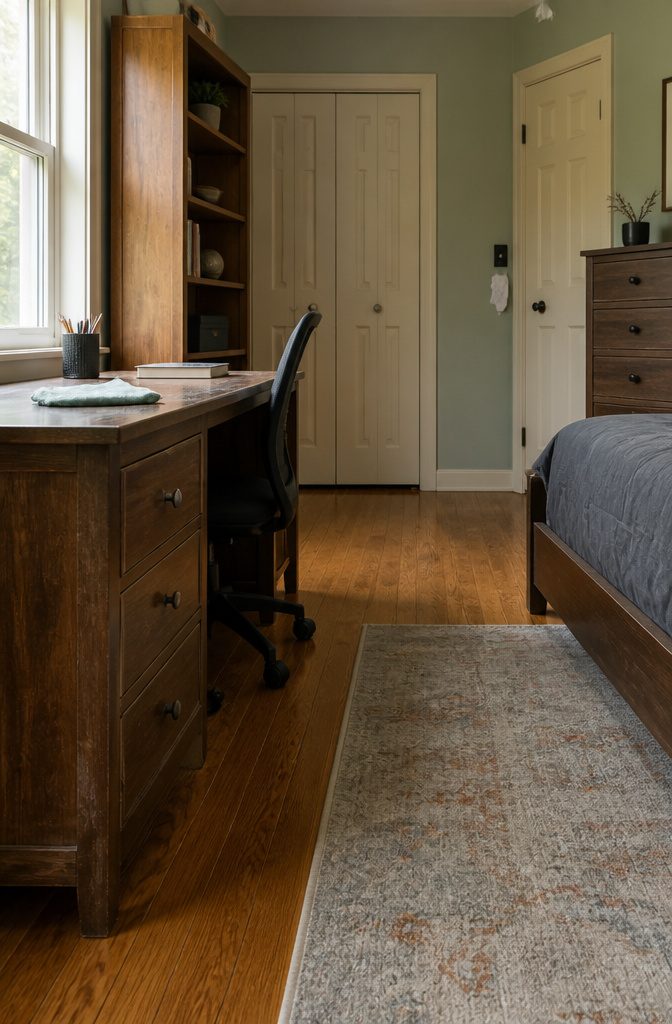
Work from the top down, so the dust you knock loose lands on surfaces you haven’t wiped yet. Shelves and the tops of bookcases come first, then the desk and dresser, then anything lower.
I’d skip the feather duster and use a damp cloth or a microfiber cloth, which holds onto dust instead of pushing it back into the air.
Once a week, run a disinfecting wipe over door handles and light switches, since those are the spots every hand in the house touches. Don’t clean outlets unless the circuit breaker is switched off.
Kids should ask a parent before going near one. Water and live wiring don’t mix, and a quick wipe isn’t worth the risk.
7. Clean Windows and Mirrors
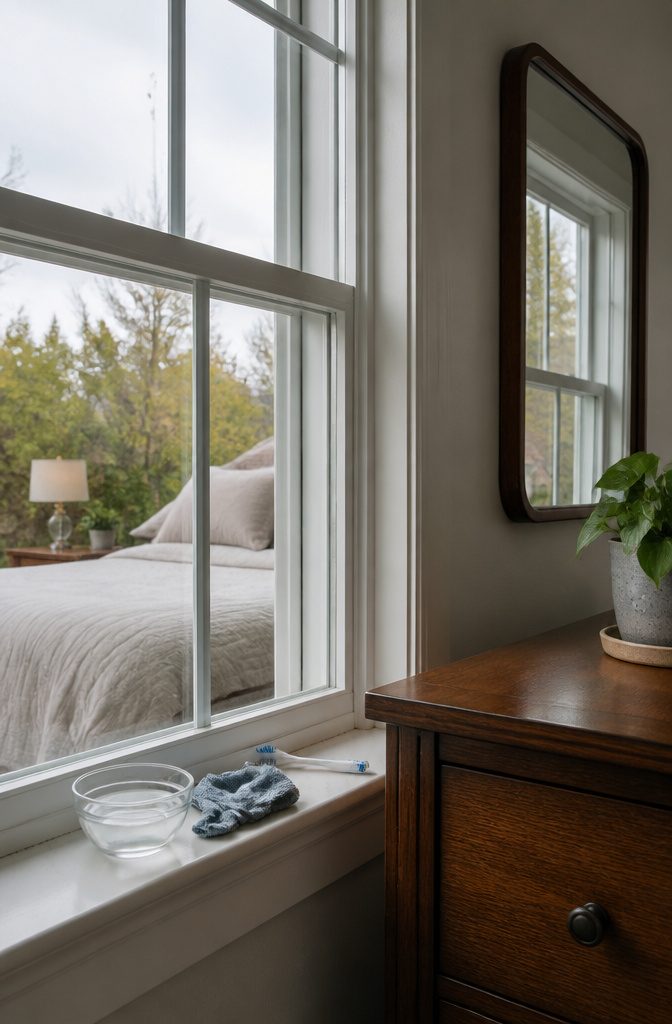
Glass cleaner and a cloth will handle most windows and mirrors, and a mix of water and vinegar does the same job. In a kid’s room I’d go with the vinegar mix, since many families prefer it for kids’ spaces.
Fingerprints and smudges build up quickly there, so expect to wipe the lower half of the glass and the mirror more than once.
Don’t stop at the pane. Wipe the sash, the grills and the sills too, because that’s where the dust sits once the glass is clear.
Window tracks are the stubborn part. An old toothbrush reaches into the corners a cloth can’t, and it’s worth keeping one for this job alone.
8. Clean the Floors
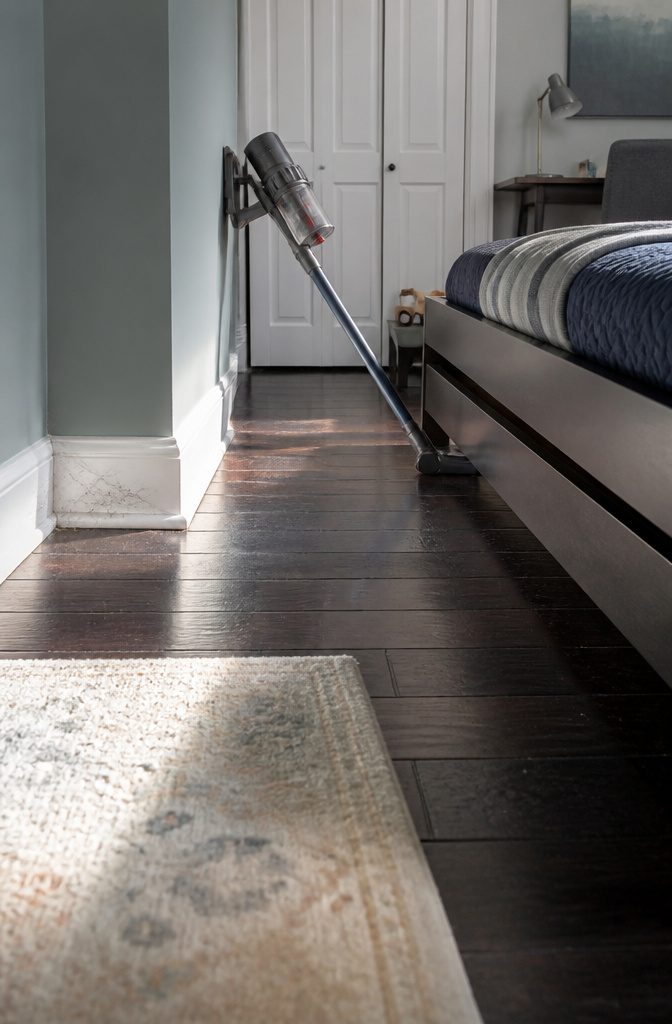
Once the floor is clear, vacuum or sweep it at least once a week, and more often if shoes come inside. Mop at least weekly too, after the loose dust is gone.
Make a quick pass over the whole room first, then work the edges: cobwebs in the corners and dust on the baseboards. Wiping baseboards goes faster when the loose dust is already vacuumed up.
With the clutter gone, slide the bed out and clean the space behind it, where dust mites collect. A crevice tool gets into that gap and along the baseboard.
I’d pick a cordless stick over a heavy corded vacuum. One Dyson V11 Animal, bought four or five years ago, is still loved because its attachments clip onto the stick, so the crevice tool is always within reach.
9. Make the Bed and Finish
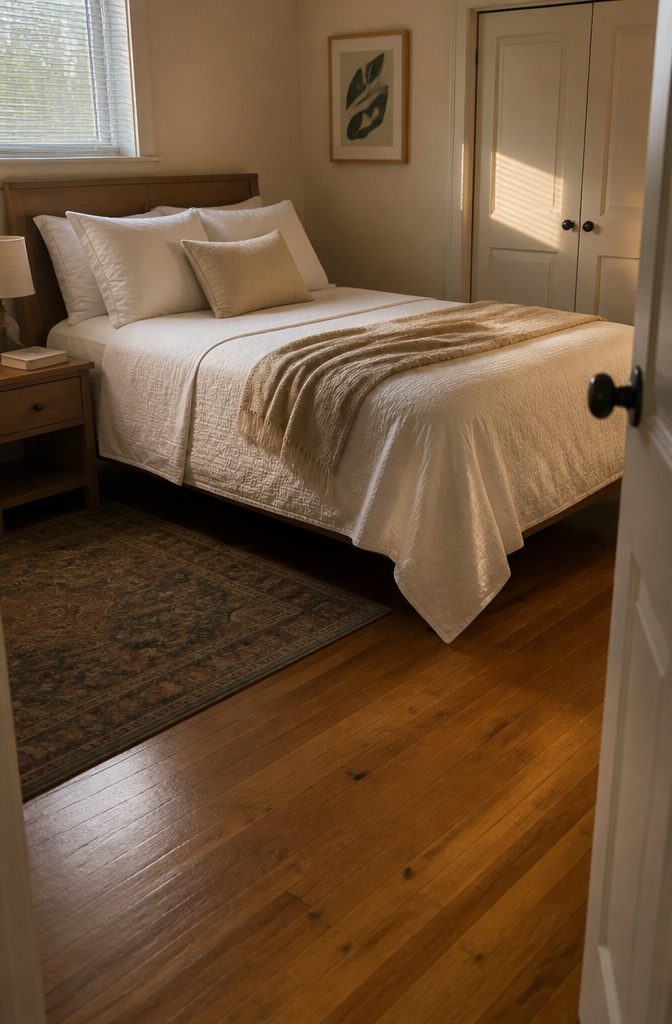
Make the bed last, after the floor is done and nothing else will shake dust onto it.
If the sheets went through the wash earlier, putting them on warm and clean is the best part of the whole job, and I’d call it the reward.
Smooth the sheet, pull the blanket or comforter flat, and fluff the pillows.
Step back and the bed looks neater, not necessarily better, but a neat bed is harder to lose things in. A child can handle this step, so hand it off.
Put the cleaning supplies away next, so the room doesn’t keep a reminder of the job. Then stand in the doorway for one slow look.
You’re checking for done, not perfect. If the floor is clear and the bed is made, close the door.
Cleaning With Children
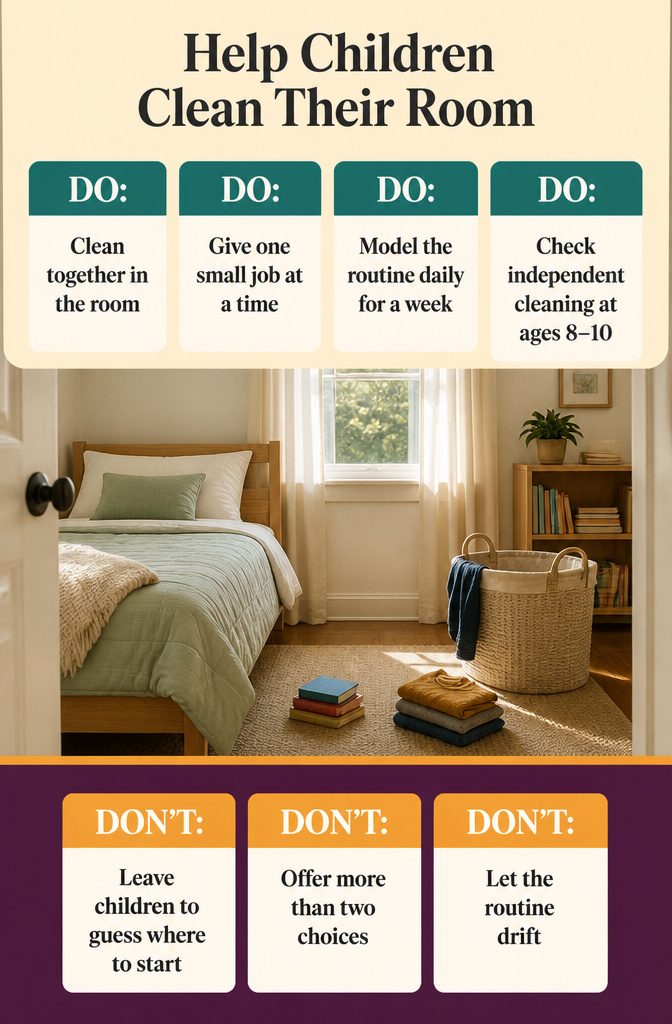
Kids often don’t see the mess, don’t know where to start, and drift off when left alone.
Say "let’s clean your room together," stay in the room, and hand out one small job at a time: "Do you want to make the bed or find the dirty clothes first?"
Sorting, laundry and bed-making are all fair jobs to share.
For a young child, model the routine with them every day for a week, and tape up a picture chart of the steps. Independent cleaning is realistic around ages 8–10, with a quick check afterward.
Family standards run from a nightly tidy to one thorough cleaning a week. Either works if the routine stays steady.
Keep It Motivating
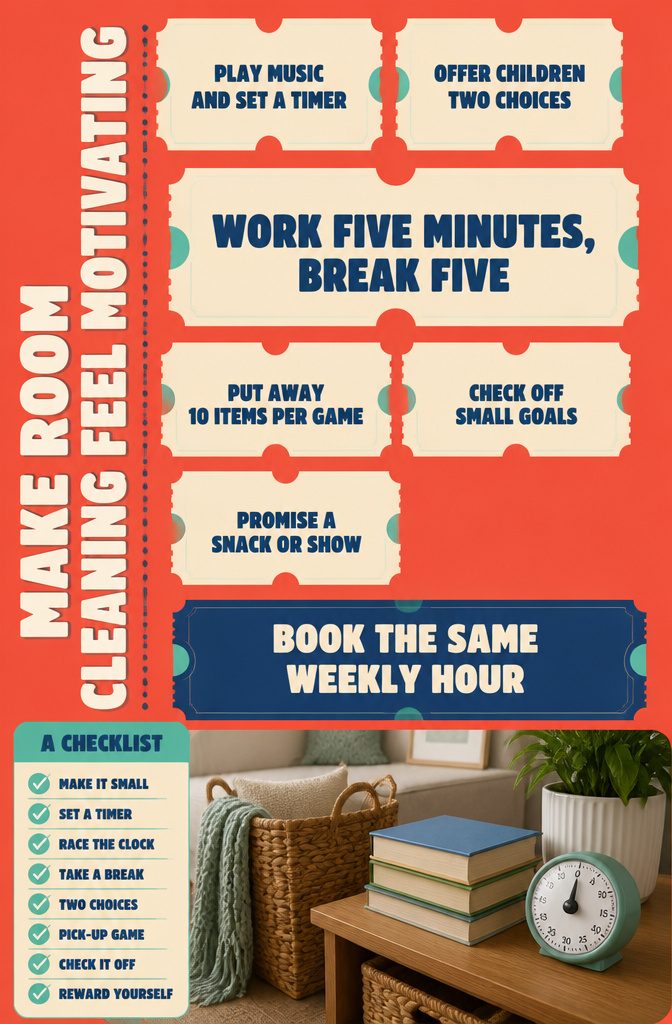
Resistance drops when a job feels small and has a visible end. These tactics do that:
- Play music you like and set a timer. The timer turns a vague chore into a race with a finish line.
- Work five minutes, then break for five. Agreeing to five minutes is easy, and starting is the hard part.
- Offer young children two choices at a time, like "books or blocks first?" More than two overwhelms them.
- Play a pick-up game: grab 10 items and put each one away.
- Set small goals and check off each task on a list. Crossing things out feels better than it sounds.
- Promise a reward at the end, such as a snack or a show.
Then book housekeeping time every week, same day and same hour. I’d pick the slot before the tasks, because a fixed time is what turns a routine into a habit.
Frequently Asked Questions
What are the steps to clean up a room?
Gather your supplies, then take out the trash and dirty dishes, collect laundry and bedding, and carry out anything that belongs in another room.
Put away what stays, dust from the top down, clean the windows and mirrors, and do the floors.
Make the bed last and put the supplies away. Clearing the junk first lets you see the real floor and surfaces, which makes every later step faster.
How do I get my kids to help clean their room?
Clean with them instead of sending them in alone. Stay in the room and give one small job at a time, such as asking whether they’d rather make the bed or find the dirty clothes first.
Music, a timer, small goals and a reward afterward keep it light. Cleaning at the same time every week turns it into a habit.
What can I use to clean windows and mirrors in a kid’s room?
Glass cleaner works, and so does a mix of water and vinegar.
Many families choose the vinegar mix for kids’ spaces. Fingerprints and smudges build up fast in a child’s room, so expect to wipe the lower half of the glass more than once.