
The tasks here run from a couple of minutes with a cloth on a stair railing to a handheld carpet-cleaning machine on the stairs, and on to booking a professional once 3 months or more have passed since the last visit.
Which method fits comes down to the surface in front of you.
Dark hardwood, painted white wood, white marble and a light bouclé weave each call for a different tool, and the wrong one leaves streaks, scratches or a soaked floor.
[link-whisper-related-posts]1. Cabinet Fronts
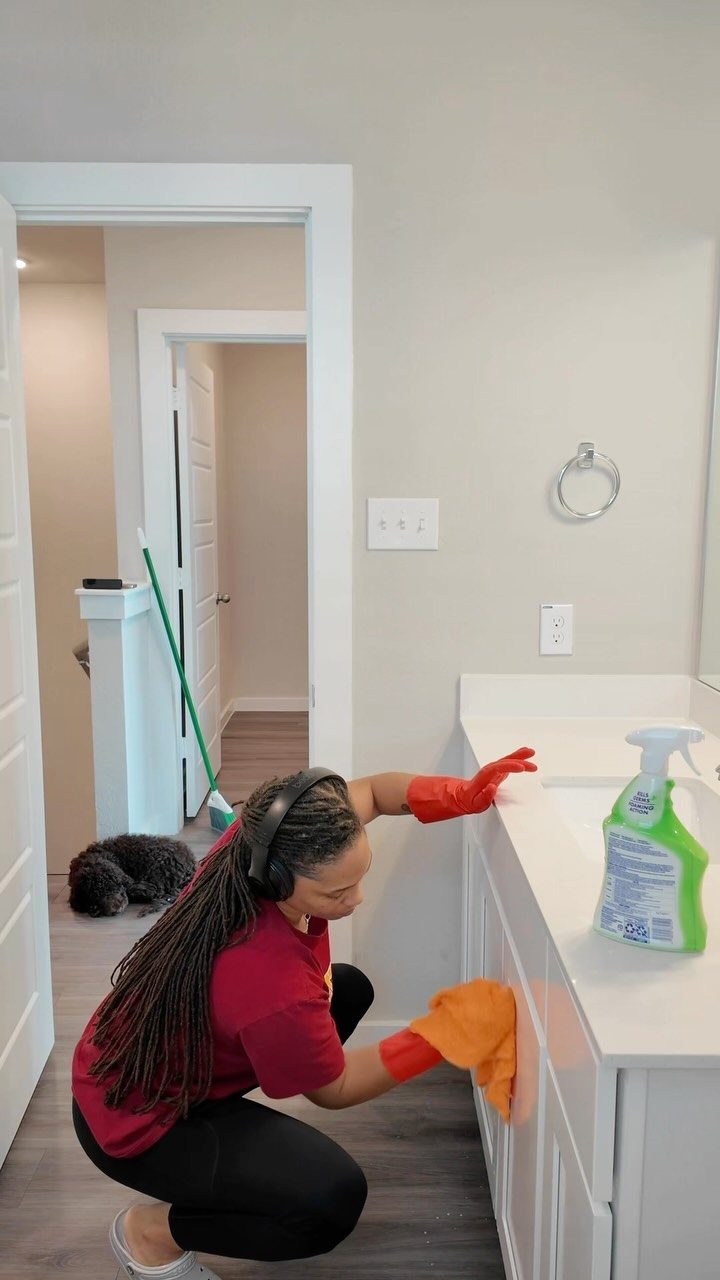
Kitchen cabinet fronts collect a film of cooking grease that plain water slides right over, so I reach for a degreasing spray before the cloth.
Spray the cloth rather than the door, which keeps liquid out of the hinges and seams.
Wipe from the top down and finish with a clean, damp cloth to lift any residue.
Bathroom cabinets rarely need the degreaser, so a gentle all-purpose cleaner covers them. Gloves are worth wearing for either job.
Do the handles last, since they get touched the most.
2. Furniture Dusting
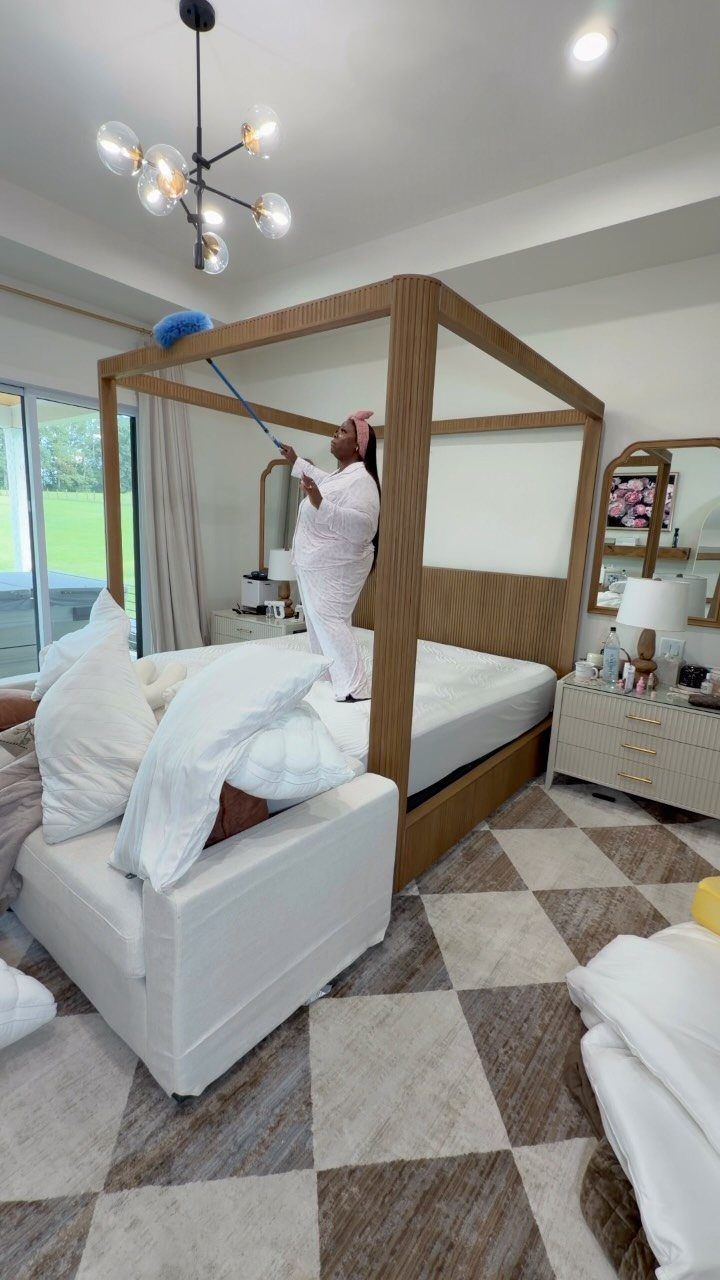
A long-handled duster earns its place on tall pieces like a four-poster bed, where the top rail and crossbars sit above eye level and dust piles up unseen.
Start there, because anything knocked loose drifts down onto surfaces you have not cleaned yet.
Then work lower: nightstands, dressers, shelves, the tops of bookcases. A duster handles the dry layer, and a slightly damp cloth picks up what is left on wood.
Dust before you vacuum or mop, never after.
3. Dusting Light Fixtures

Ceiling lights in a kitchen get a double dose of grime, since dust settles on them and cooking vapor makes it stick. Switch the fixture off and let any bulbs cool first.
Reach up with a dry cloth or duster for light buildup.
A sticky film calls for a cloth dampened with a mild cleaner. A sturdy step stool beats stretching on tiptoe, and it keeps the cloth flat against the surface instead of dragging dust across it.
Check every room, since hallway and bedroom fixtures are easy to forget.
4. Upholstered Furniture
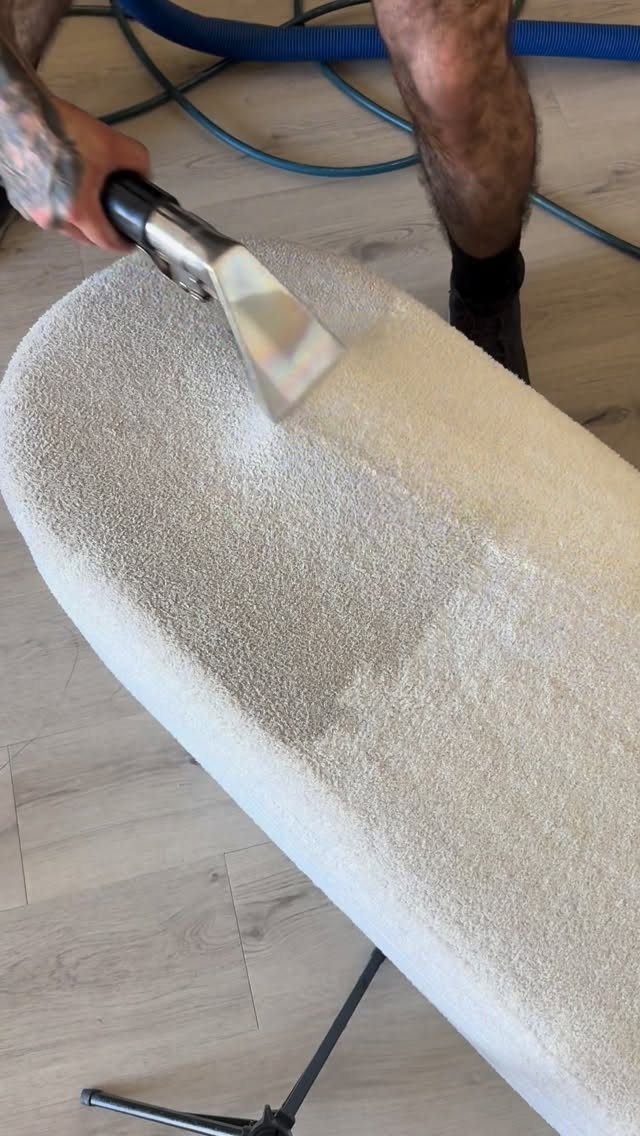
Sofas, armchairs and ottomans trap dust, dirt and allergens in the weave, and a steam or upholstery extraction tool pulls out far more than a quick vacuum does.
On a textured fabric, like a light loop or bouclé weave, the vacuum tool can reach down between the loops, where dust and crumbs settle.
Vacuum first to remove loose debris, then treat any minor stain before the deeper pass. Check the care tag before using water or steam on a piece.
Let cushions dry fully before anyone sits down. Open a window or run a fan to speed it up.
5. Stair Railings
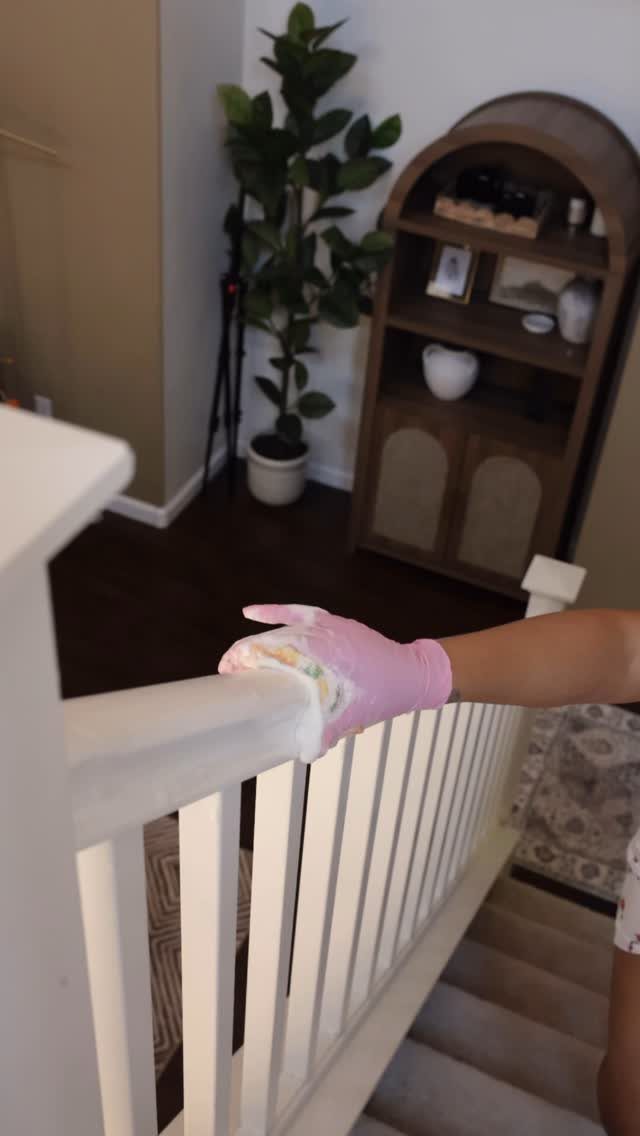
Hands land on a stair railing every trip up or down, which makes it one of the dirtiest surfaces in a shared building and one of the easiest to skip.
A cloth with a sanitizing spray, applied to the cloth first, handles it in a couple of minutes.
Wipe the full length in one direction, including the underside where fingers curl around. Painted white wood shows smudges quickly, so a damp second pass with plain water removes the streaks a cleaner leaves behind.
Go over the balusters and newel post too.
6. Laundry Appliance Exteriors
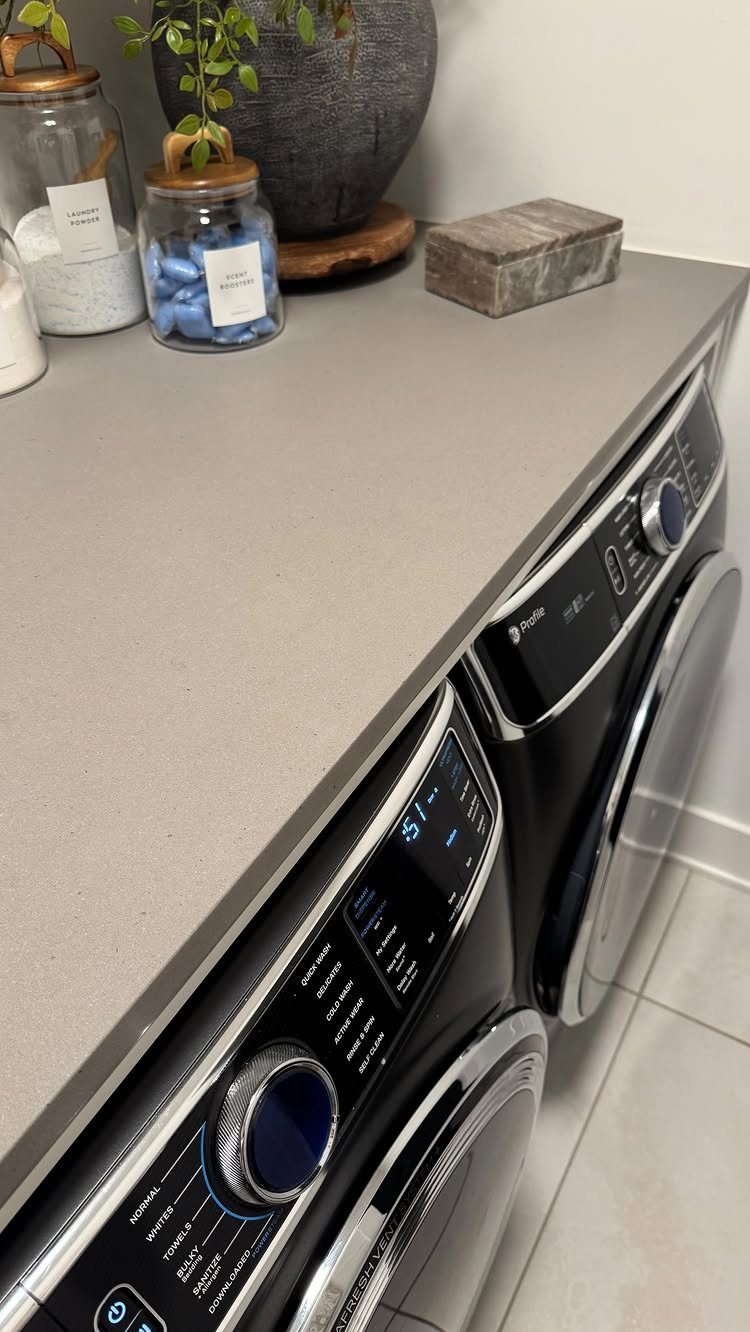
Washer and dryer exteriors collect lint, detergent drips and fingerprints, and the control panel takes the worst of it.
Wipe the top, front and sides with a damp microfiber cloth, then dry with a second cloth so no streaks are left on dark finishes.
Wipe the jars before putting them back.
Skip abrasive scrubbers near the display and buttons.
7. Laundry Shelving
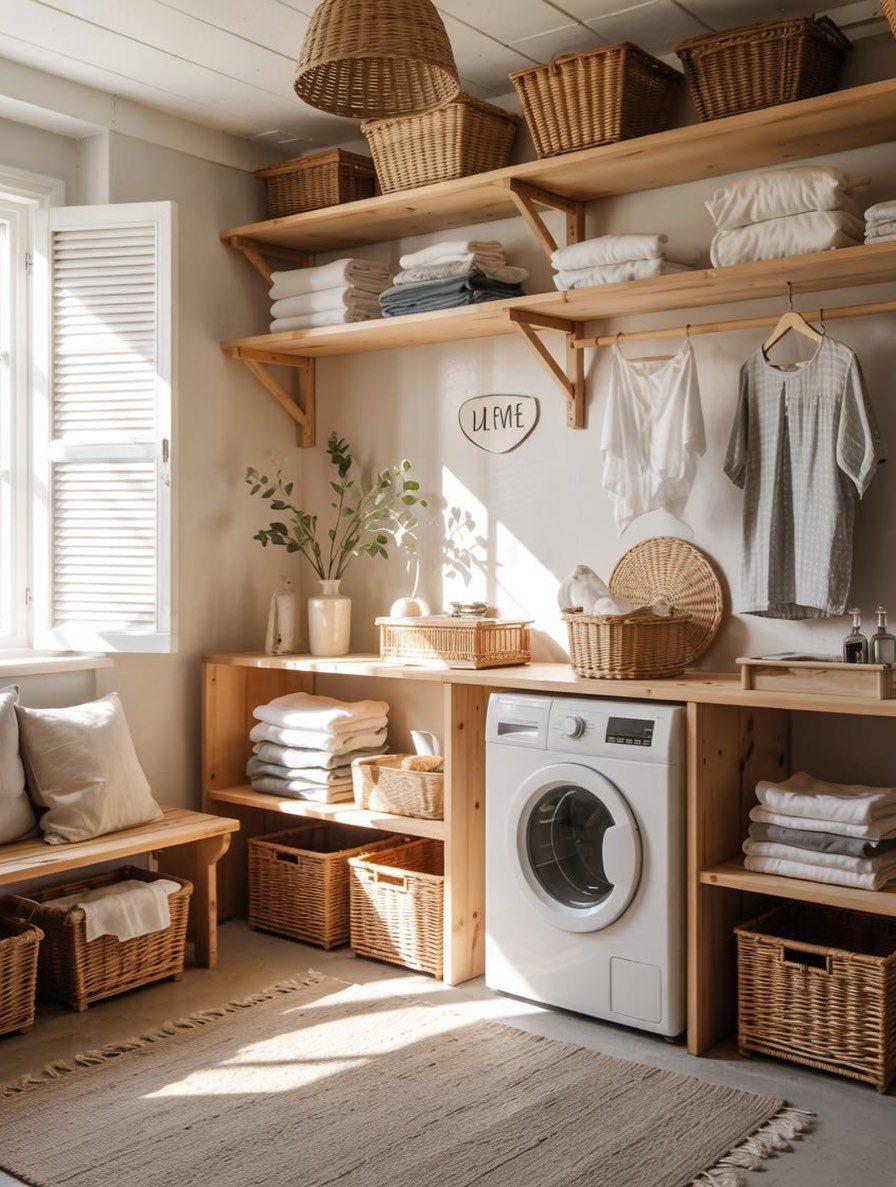
Open wooden shelves in a laundry area collect dust on every board and on the rims of the baskets sitting on them. Lift everything off first, so each shelf gets wiped in full instead of around the stuff.
Run a dry cloth or duster over the boards, then follow with a slightly damp cloth for the wood. Start with the top shelf and work down, since whatever falls lands on a shelf still to be done.
Shake out the folded towels before they go back.
8. Wall Spot Cleaning
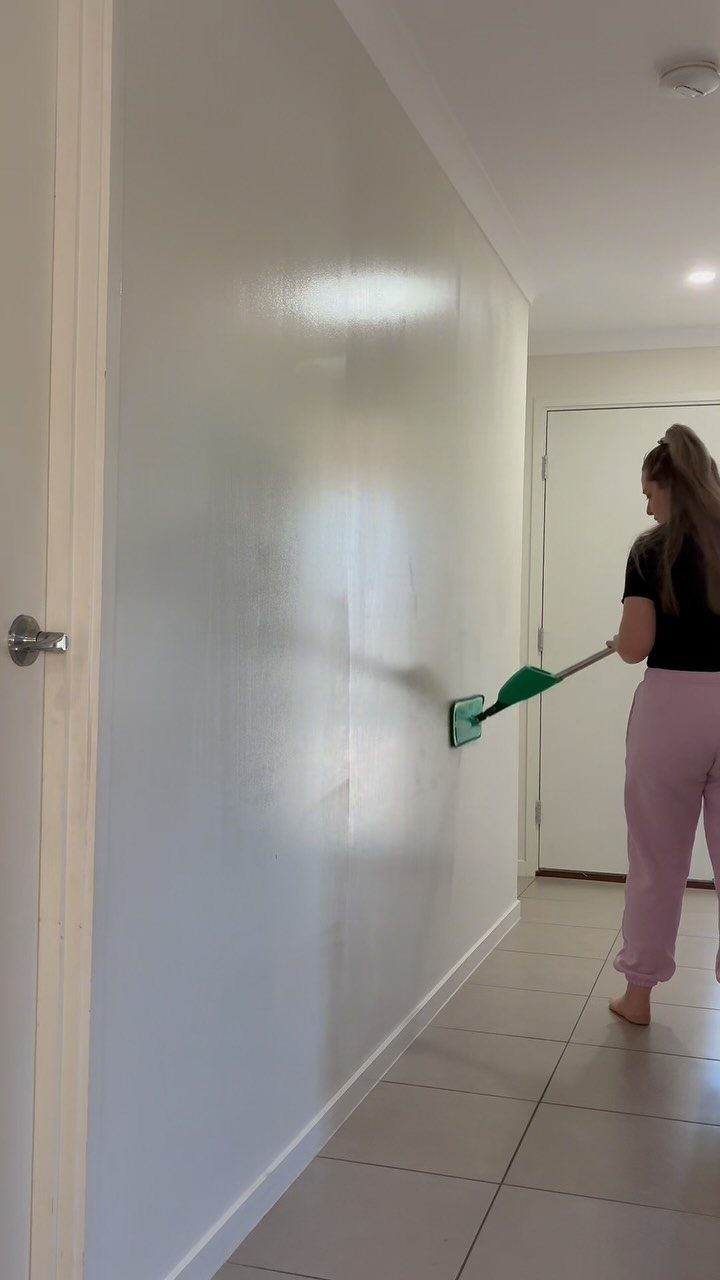
A hallway wall with a few scuffs rarely needs a full wash, and spot cleaning saves an hour. Run a dry duster or flat mop over the wall first, since a damp cloth on top of dust just smears it.
Then dampen a soft cloth with a little mild cleaner and dab each mark, using light pressure. Painted walls scratch and shine up when rubbed hard, so I stop as soon as the mark lifts.
Test the cleaner on a low corner before touching the main wall.
9. Washing Machine Seal Cleaning
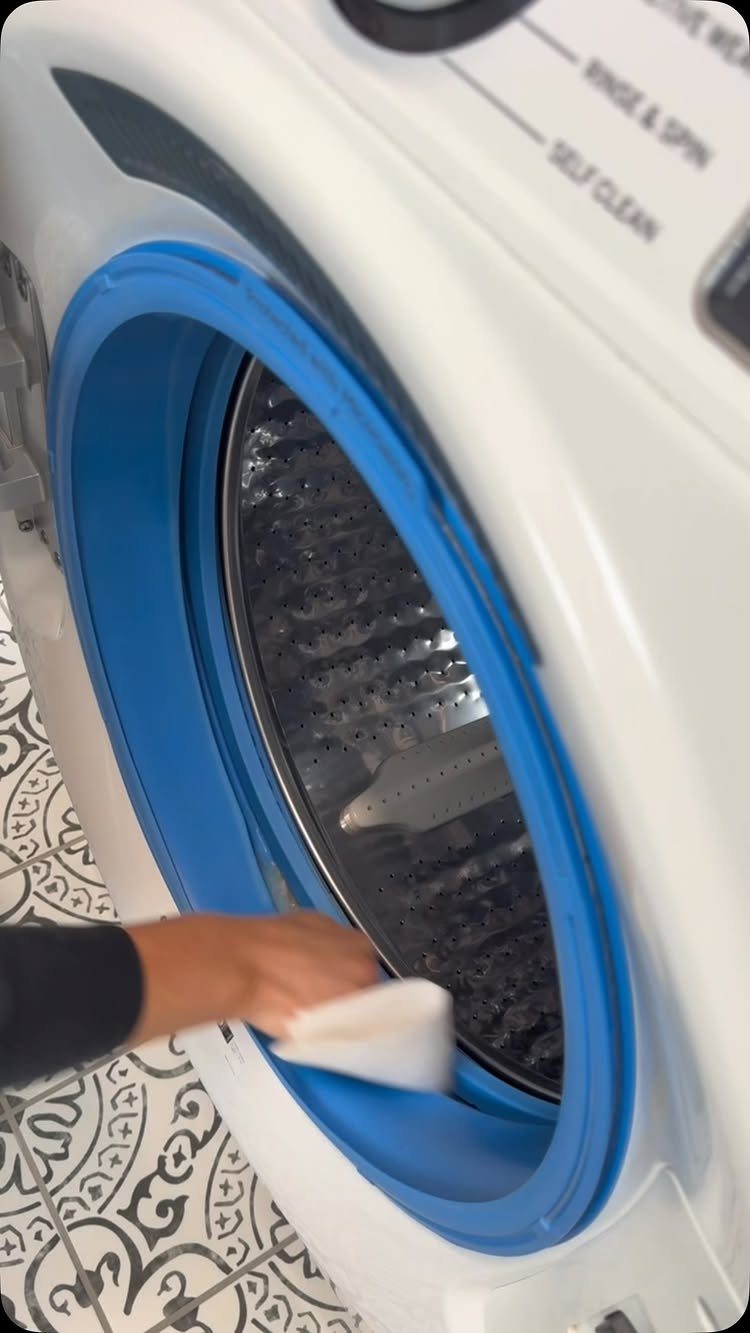
The blue rubber seal around a front-loader’s door is where lint, soap film and standing water collect.
Peel the rubber back by hand and wipe inside the fold, all the way around, with a damp cloth and a little mild cleaner.
Dry the seal with a second cloth afterward. Then leave the door ajar so the drum can air out between loads.
This machine also has a self-clean setting; check your manual for how often to run yours.
10. Vacuuming Rugs and Sofas

A handheld vacuum is the right size for a small apartment, since it comes out of the closet in seconds and handles both a sofa and a small area rug.
Take the cushions off and run the nozzle along the seams and under the edges, where crumbs end up.
On a rug, work in straight rows so no strip gets skipped. Use a crevice tool if yours came with one.
Light fabric shows every spot you missed, so make a last pass in good daylight.
11. Bathtub Scrubbing
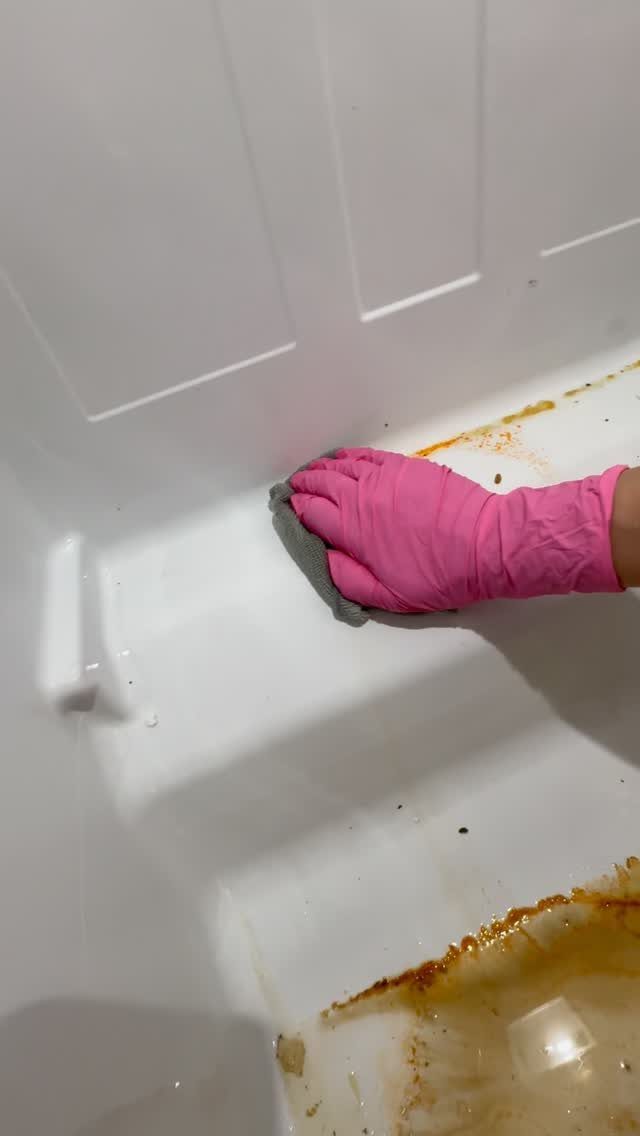
Rubber gloves and a non-scratch sponge are all a stained white tub asks for. Wet the surface first, then scrub the sides in small circles, working from the top down so runoff goes over the part still to be done.
Rinse thoroughly with clean water, because leftover cleaner leaves its own film. I keep one sponge just for the bathroom and replace it once it starts to fall apart.
Heavy staining may need a second round, so allow a few extra minutes.
12. Mopping Hard Floors
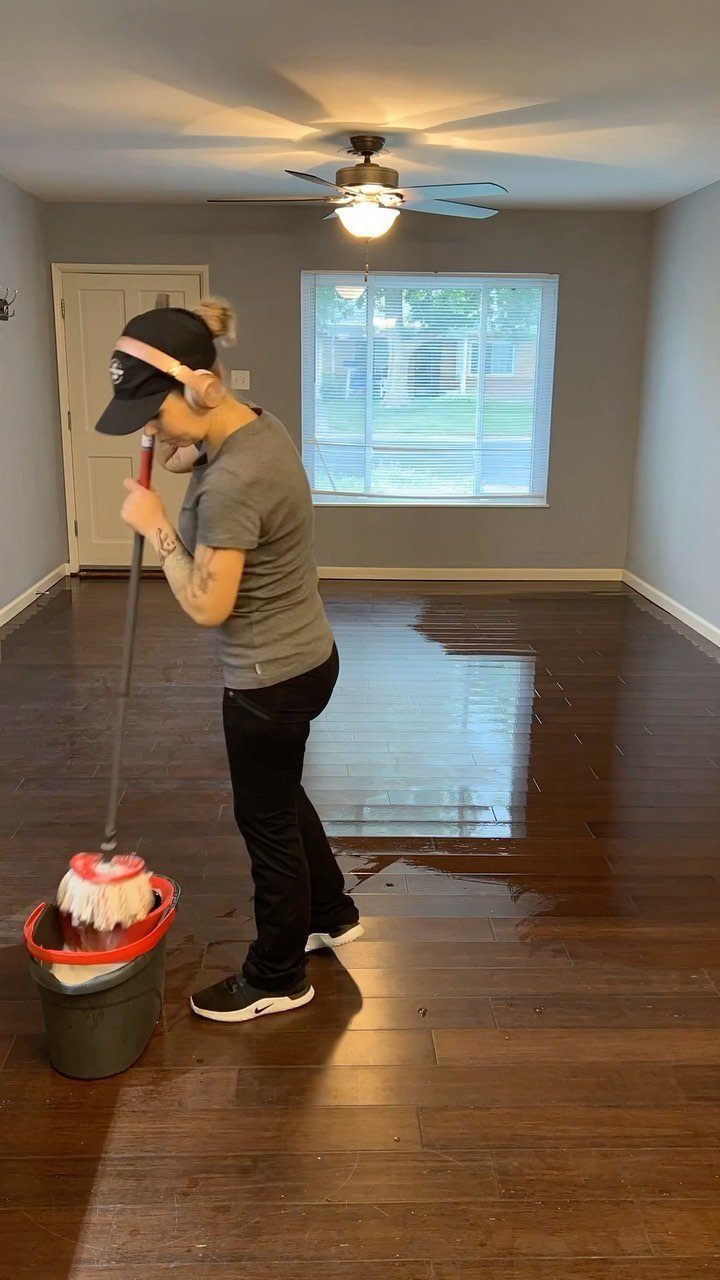
Dark hardwood shows every streak, so mopping comes after sweeping or vacuuming, never before. Wring the mop until it is barely damp, because standing water is hard on wood.
Start in the far corner and back toward the door, so you never step on a wet floor. Swap the bucket water when it turns grey, or you are just moving dirt around.
A quick dry pass with a clean cloth along the edges takes care of any leftover residue.
13. Deep-cleaning Carpeted Stairs
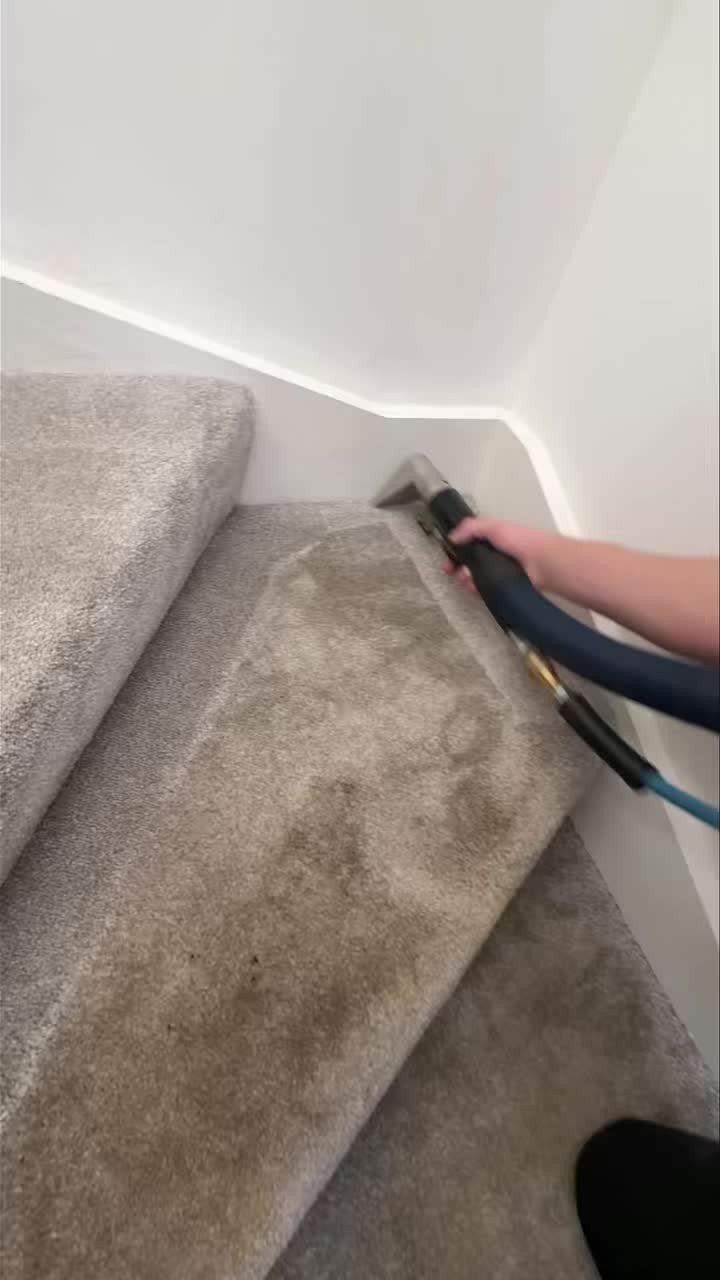
A carpet-cleaning machine pulls embedded dirt out of stair carpet, and a handheld unit suits stairs because it works one tread at a time. Vacuum each step first so the machine is not wasting water on loose grit.
Start at the top and finish at the bottom, so you never walk on a step you have just cleaned. Work the riser as well as the tread, since scuffs from shoes collect on both.
Dark stains may need a second pass. Let the carpet dry before anyone climbs, and keep the stairs closed off meanwhile.
14. Scrubbing Hard-surface Stairs
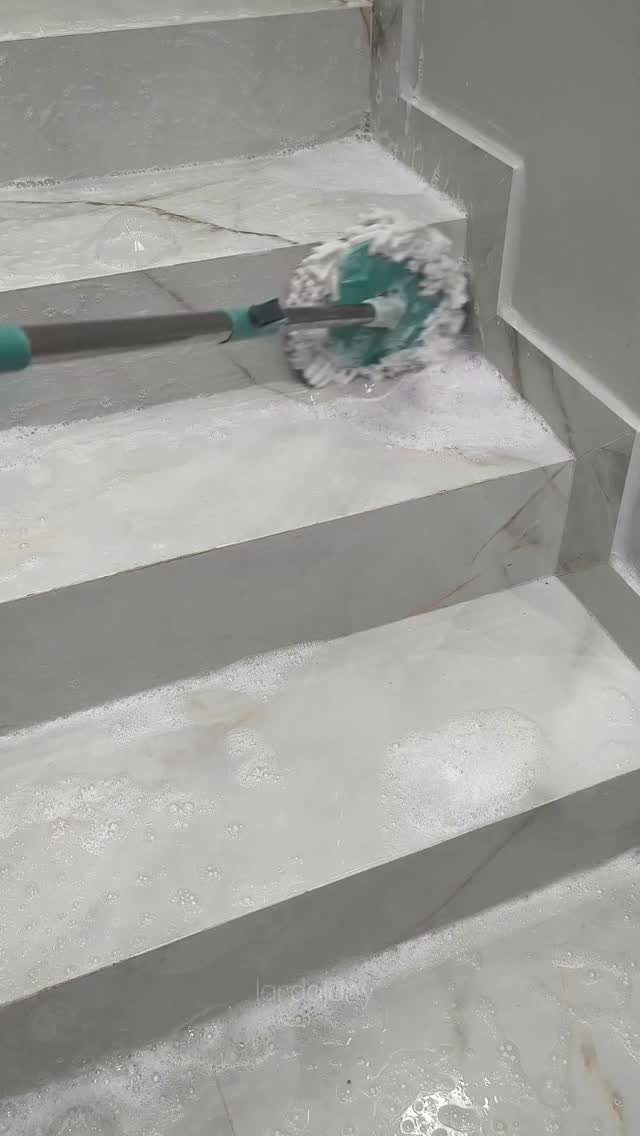
White marble stairs look best when the soap is scrubbed off rather than left to sit, and a long-handled brush lets you do it standing up.
Spread the foam over a few steps, then scrub each tread and riser with firm, even strokes.
Start at the top and move down, so runoff and dirty foam head toward steps still to be done.
A stiff brush works on a hard surface like this, though I would still test a corner first on a polished stone.
Rinse with clean water until no suds remain, then dry with a cloth so no one slips.
Booking and Service Assurances
A guarantee only helps if you know its window. Ask before booking how long you have to report a missed spot; one provider gives 24 hours and promises to return within 48 hours.
Do a walkthrough the same day the cleaners leave, with your phone out. Photos of anything missed make a report quick to send.
Booking online should also let you rebook the same cleaner if the first visit went well, or switch if it did not.
I would pick a company that lets you message the cleaner directly, since small requests like "please spend extra time on the bathroom" go better without a middleman.
Ask whether the cleaners are vetted and insured, and whether you can set a recurring schedule you can change later. Get an estimate in writing before you confirm.
When to Book a Deep Clean
2 timelines come up for hiring help.
If it has been 3 months or more since a professional cleaned your place, a deep clean is a fair call. At 6 months or longer, ask for heavy-duty service, because routine upkeep will not reach that much buildup.
Life events can shift the schedule. A move is the cleanest time to book, since the rooms are empty and every surface is reachable.
After a renovation, wait until the work is finished so dust has stopped falling. A seasonal reset or a party you are hosting also justifies a one-time visit.
If you expect to need help again, ask about a recurring plan before settling for a single appointment.
Customize Tasks and Pricing
Cost follows 4 things: the size of the home, its condition, how detailed the work should be, and any extra tasks you add.
Ask for a free quote, and tell the company what you want done rather than accepting a standard package.
If you handled the kitchen yourself, ask whether rooms can be skipped. Choose add-ons only for jobs you will not do on your own.
Flat-rate and hourly pricing work differently. A flat rate fixes the price for a defined list of tasks, while hourly billing follows the time spent, so a messier home costs more.
Before you confirm, ask for the scope and the total in writing, and ask whether any fees could be added later.
Frequently Asked Questions
Who needs cleaning services the most?
If 6 months or more have gone by since a pro last came through, you will get the most out of a visit, since regular tidying cannot cut through that much buildup.
A move, a wrapped-up renovation, a change of seasons or a party at your place can each make a one-off visit worth paying for. At 3 months since the last professional cleaning, booking is already a fair call.
How to clean out an apartment?
Work from the top down: start with high fixtures and tall furniture, then move to lower surfaces, so loosened dust lands on areas you have not done yet.
Wipe and dust the high surfaces first, since debris falls onto the floor, and leave vacuuming and mopping for the end.
How much should I pay a cleaner per hour?
Hourly billing follows the time spent, so a messier home costs more, while a flat rate fixes the price for a set list of tasks.
One company sets a 3-hour minimum for deep cleaning and charges only for the time worked. Either way, get the task list and full price written down, and ask whether extra charges could show up later.
What’s the difference between a deep clean and regular cleaning?
Regular cleaning covers high-use areas and routine upkeep, like vacuuming, wiping surfaces and tidying, on a weekly or biweekly schedule.
A deep clean happens less often and goes after overlooked spots: baseboards, behind and inside appliances, inside cabinets, grout, and dust both high and low.
Many people book a deep clean first to reset the home, then keep it up with regular visits.
How often should you get a deep cleaning?
It depends on your needs; some people book monthly, others quarterly or once or twice a year. Past the 6-month mark, ask for a heavier-duty service rather than a standard visit.
What are signs you need a deep cleaning?
Sticky kitchen floors, grimy bathroom grout, dusty ceiling fans, cobwebs in corners and drab-looking upholstery all point to buildup that routine cleaning is missing.
Can I ask for specific areas to be cleaned and others skipped?
Yes.
Ask whether rooms you already cleaned, like the kitchen, can come off the list. Pay for add-ons only on jobs you won’t tackle yourself; that keeps the bill lower.
Do I need to supply cleaning products or equipment?
Often not.
Many companies arrive with their own supplies and equipment, and at least one will bring greener products if you ask, at no added charge. Confirm this when you book so you know whether anything needs to be on hand.
Do I need to sign a contract for a cleaning?
Not necessarily.
Some companies treat a one-time cleaning as a standalone service with no contract attached. Before signing anything, check whether a repeating schedule is available and whether you can change or drop it later.