
A sofa cleaning hack that went viral on TikTok wraps a damp cloth around a pot lid, so the lid’s weight presses a soapy solution into the upholstery.
It only suits sofas with a W or S/W cleaning code; an X code means vacuum only. Expect the cushions to stay damp for a few hours.
[link-whisper-related-posts]Prepare a Fabric-Covered Lid
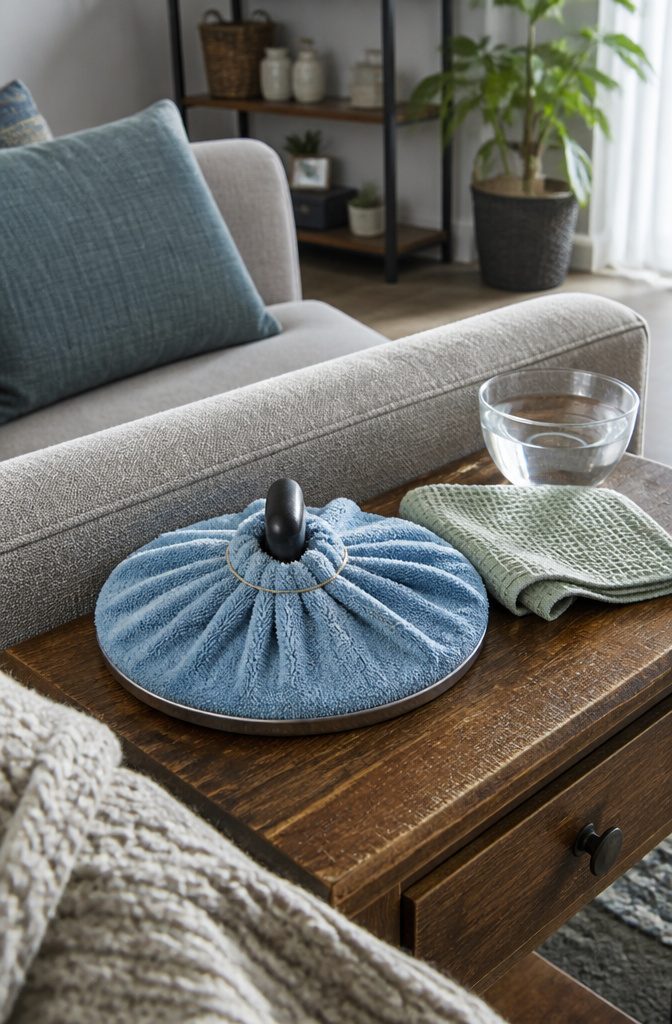
Set a damp dishcloth or large microfiber rag flat, center a pot or saucepan lid on it, and pull the edges up over the handle.
A rubber band holds them; if the cloth won’t reach, grip it against the handle as you work. When a dishcloth runs small for a bigger lid, switch to a smaller lid.
A bare rag can’t press hard enough on soft upholstery, so you lean in and soak the spot. Lifehacker explains it well:
The lid provides stability and works the solution in gently and evenly. It’s easy to push the lid along the surface of a couch or chair cushion, and the heft of the lid gives you some extra power.
The weight does the pressing, so the cushion ends up damp, not wet.
Wet the Cloth
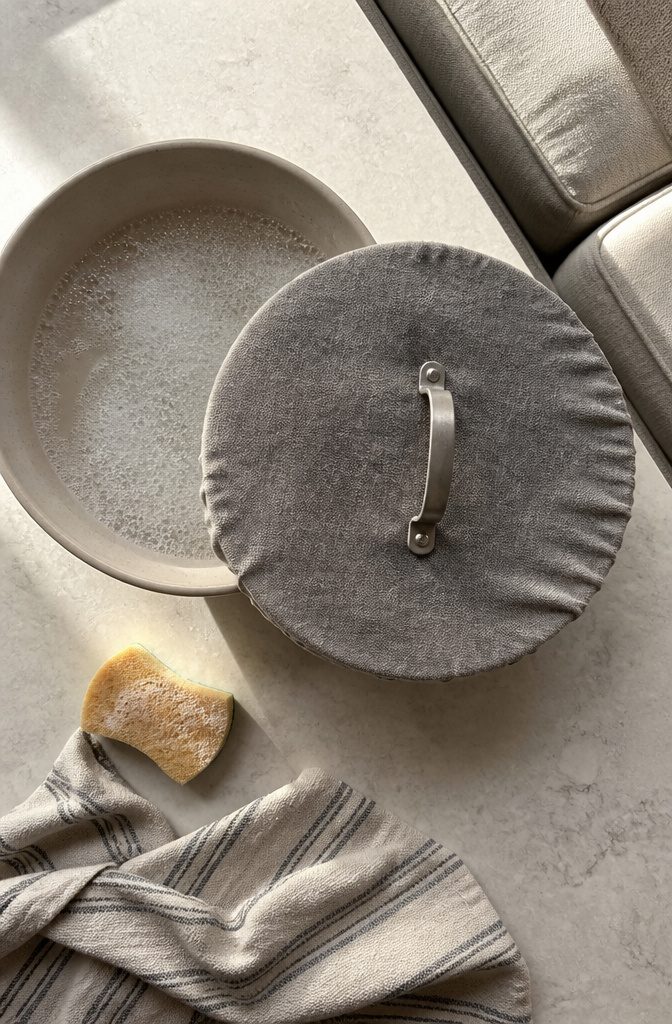
Pick one solution, dunk the covered lid, and wring it out.
- The original version uses hot water with 1 laundry pod. Dish soap or dishwasher tablets in the water are common swaps.
- The simpler version is a bowl of water with a squirt of dish soap. I’d start here, since it’s already under most sinks. A few drops of vinegar or vodka are optional.
- Store-bought upholstery cleaner also works in the bowl, and so does dish detergent mixed with baking soda.
- Submerge the whole covered lid, then squeeze out the excess. The cloth should feel damp, not dripping, because a soaked cloth leaves the cushion soaked too.
Work the Lid Over the Fabric
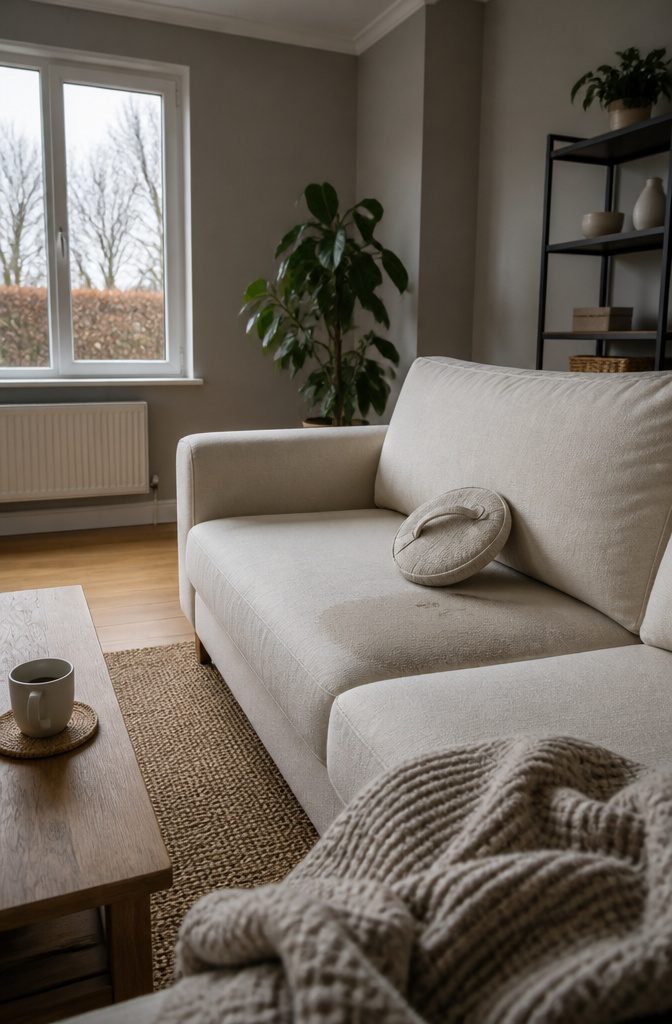
Hold the lid by its handle and push it up and down each cushion, then repeat on the back, the sides and the arms.
You can see the spots you missed as you go, so it’s easy to circle back. Dark spots need a couple of passes.
The lid’s weight does the pressing, so the cloth only needs to be damp. Aim for a damp refresh, not a soaked cushion, because a cushion that stays wet can turn musty or moldy.
Results so far are modest and personal. On a couch a year and a half old and used daily, the dark spots disappeared and the couch smelled fresh, though the cloth picked up little dirt.
On a roughly $200 Amazon couch, one round lifted leftover coffee. I’d treat both as encouraging single tests, not a promise for every fabric.
How Long the Couch Stays Damp
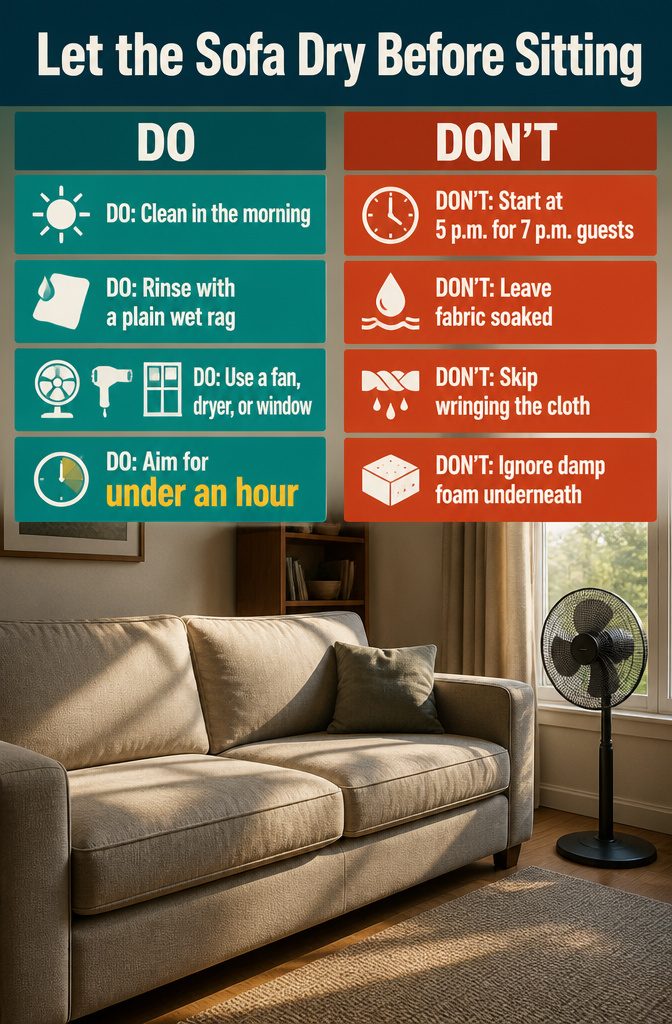
Plan on the couch staying damp for a few hours after the lid pass, so clean in the morning or well before anyone expects to sit down.
Starting at 5 p.m. with company coming at 7 is the mistake most people make.
After the soapy pass, go over the fabric with a plain wet rag to pick up leftover soap.
Then point a fan at it, run a hair dryer over the area, or open a window. Done this way, the couch can be ready to sit on in under an hour.
Wring the cloth out before you start, because a cushion that never dries fully can develop mold or a sour smell.
The fabric on top dries quickly, but the foam underneath holds water far longer. Keep everything lightly damp, never soaked.
Check the Cleaning Code
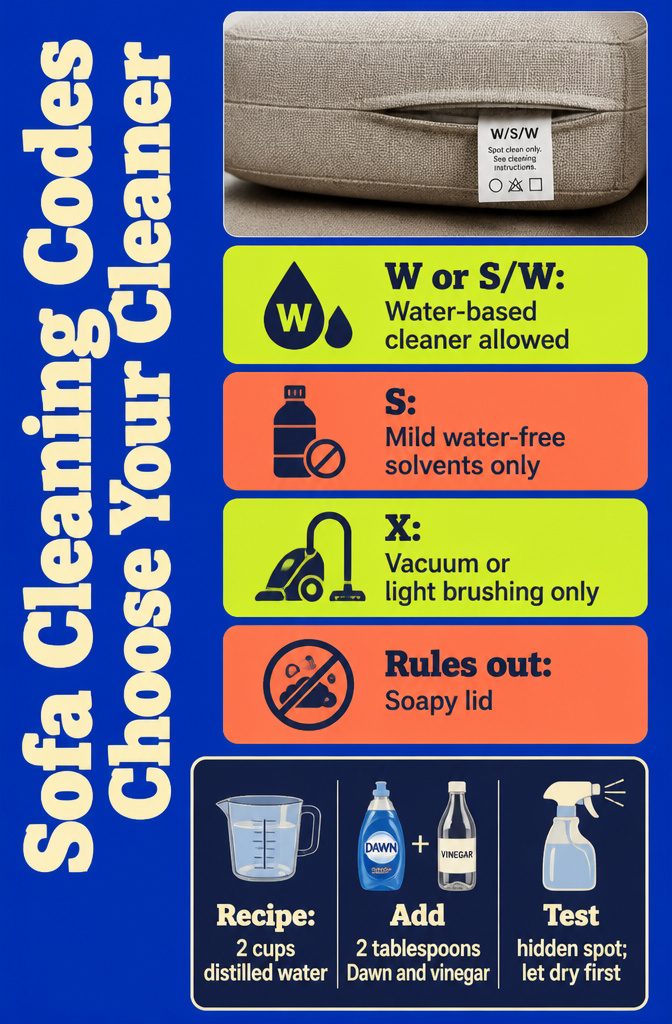
The cleaning code on your sofa’s label decides which cleaner you can use, so check it first. A W or S/W code means a water-based cleaner is fine, and distilled water is the better choice for both.
An S code allows only mild, water-free solvents, which rules out a soapy lid. X means vacuum or light brushing only, and I’d skip this hack entirely.
For W and S/W fabrics, mix 2 cups distilled water, 2 tablespoons clear Dawn and 2 tablespoons distilled white vinegar in a spray bottle.
Dish detergent with baking soda, water and vinegar also works, as does store-bought upholstery cleaner if you’d rather not mix anything. Test whichever you pick on a hidden spot and let it dry before you clean the whole cushion.
Frequently Asked Questions
What is the best way to clean a fabric sofa at home?
For a W or S/W fabric, wrap a damp cloth around a pot or saucepan lid and push it over the cushions, sides, back and arms.
The lid’s weight presses the cloth into the fabric, so you never have to soak it.
Read the cleaning code on the label first, and test your cleaner on a hidden spot before doing the whole sofa. If the code is X, vacuum or brush lightly and skip this hack.
What is the best homemade sofa cleaner?
A bowl of water with a squirt of dish soap is the simplest option, and it works well with the lid method.
For W and S/W fabrics, you can also fill a spray bottle with 2 cups distilled water, 2 tablespoons clear Dawn and 2 tablespoons distilled white vinegar.
Dish detergent mixed with baking soda, water and vinegar works too. Let any mix dry on a hidden spot before you use it on the full cushion.