

Skip the routine and dust mites and bacteria settle into the bed, showing up as sneezing, a sore throat and worse sleep.
A daily reset needs 5–15 minutes and the weekly pass 30–45. Seasonal jobs like rotating the mattress and washing curtains come around every 3–4 months, or closer to 3 with pets or kids in the room.
[link-whisper-related-posts]Daily Upkeep
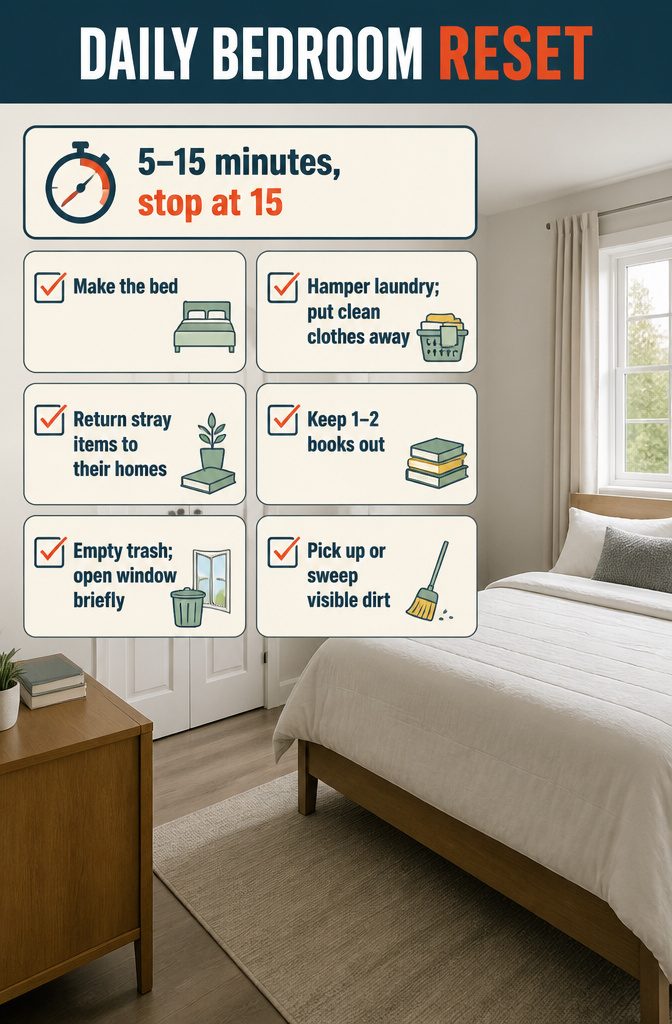
Daily upkeep takes 5–15 minutes, and I’d cap it at 15. Go in this order:
- Make the bed.
- Hamper the dirty clothes, then put clean ones in the closet or drawers.
- Return stray items to where they live.
- Wipe the nightstand and dresser; keep just 1–2 books or magazines out.
- Empty the trash.
- Open a window for a few minutes.
- Scan the floor and pick up or sweep any visible dirt.
A timer keeps the job from growing:
Try not to get too involved in cleaning or scrubbing. Instead focus on putting everything back in its place.
— OXO
Putting things back, not scrubbing, is the daily job.
Weekly Cleaning
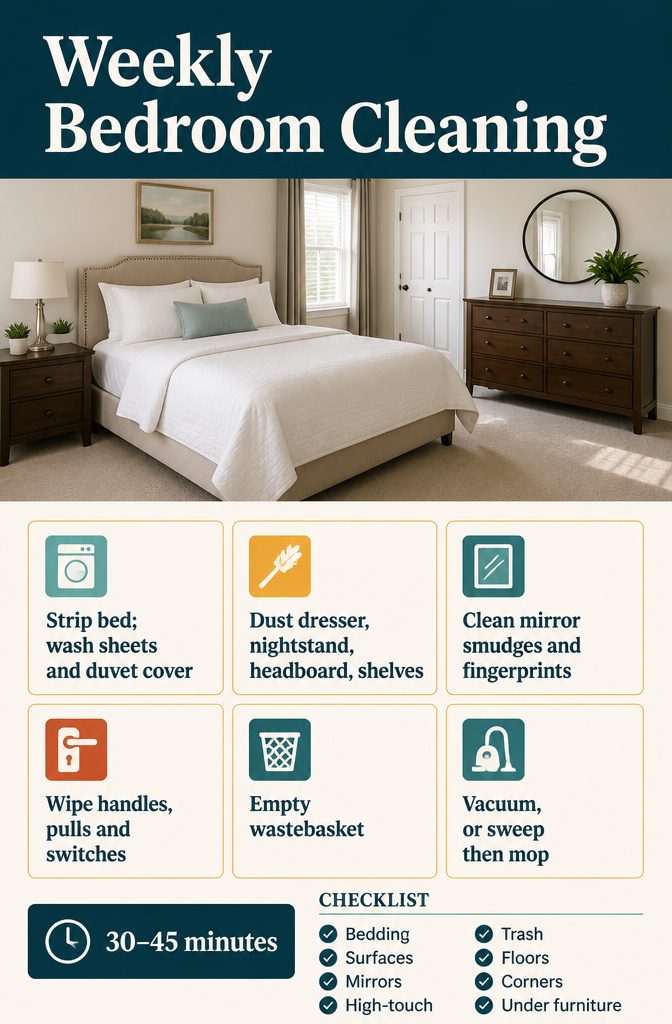
One weekly session goes fastest in this order, with the floor last so nothing you dust ends up on a clean surface:
- Strip the bed and start the wash: sheets, pillowcases and duvet cover. With a second set of sheets, the bed is made again right away.
- Dust the dresser, nightstand, headboard and shelves with a microfiber cloth.
- Wipe mirrors with glass cleaner to remove smudges and fingerprints.
- Wipe door handles, drawer pulls and light switches.
- Empty the wastebasket.
- Vacuum carpet, paying attention to corners and under furniture. On hardwood or tile, sweep, then mop.
Budget 30–45 minutes for this run.
A half-hour works if you trim it, and a thorough pass can stretch to an hour or two. Pressing tape over the bedding or floor edges picks up loose hairs that dusting misses.
Monthly Deep Cleaning
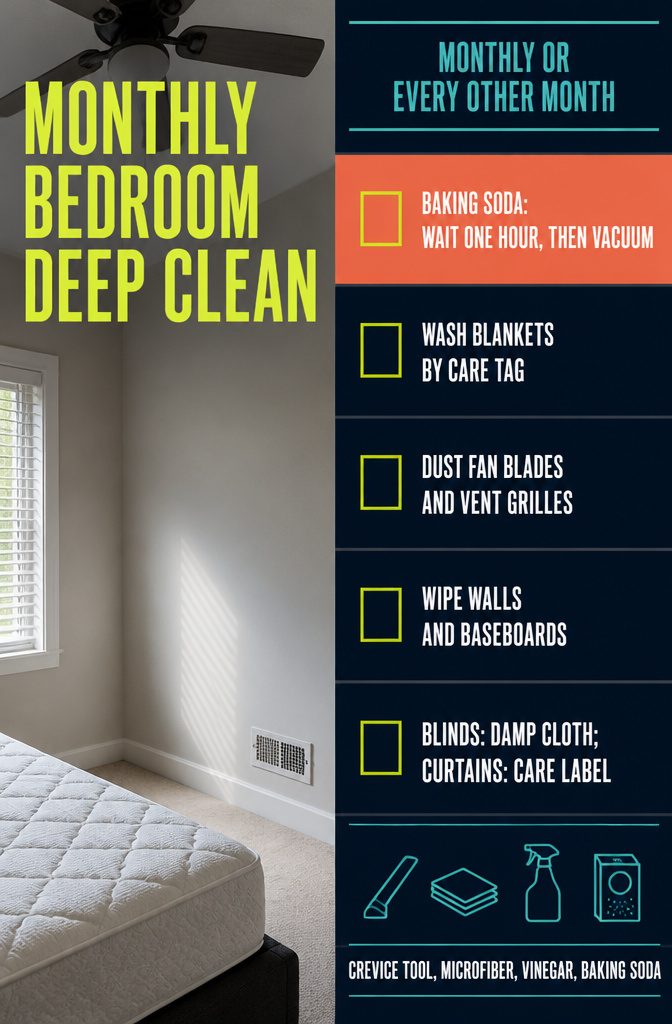
Monthly or every other month, these jobs go beyond the weekly pass. Grab a vacuum with a crevice tool, microfiber cloths, vinegar and water, and baking soda.
- Mattress: sprinkle on baking soda, leave it for an hour, then vacuum it up.
- Blankets and comforters: wash them by the care tag, because the fabric sets the cycle.
- Fans and vents: dust blades and grilles so the dust stays out of the air.
- Walls and baseboards: wipe stains on walls and baseboards with a damp cloth or the vinegar mix.
- Blinds: a damp cloth works. Curtains follow their care label.
Some lists move blankets and window treatments to a seasonal round, and that’s a fair call. I’d keep the mattress, fan and baseboard jobs monthly.
Seasonal Cleaning
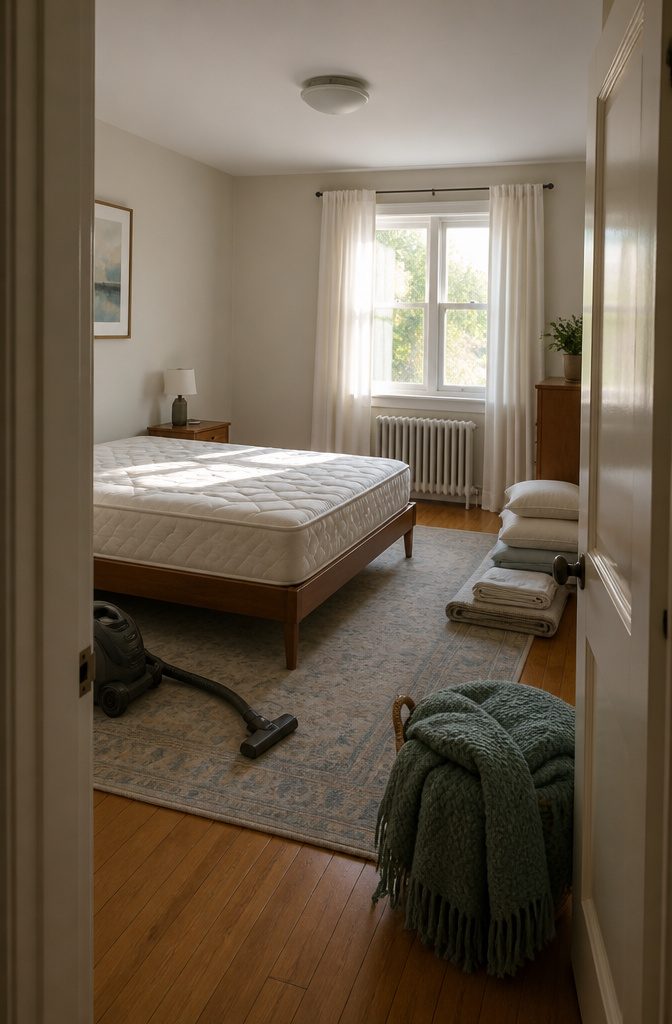
Use this checklist every 3–4 months, and move it closer to every 3 if pets or kids share the room:
- Rotate the mattress and vacuum the surface while the bed is stripped.
- Wash curtains and bedding in the same session. Check the tags first, since some pieces need dry cleaning.
- Wash pillows 2–3 times a year, not every season. Two tennis balls in the dryer keep them fluffy.
- Clean rugs or carpet. A carpet shampooer or handheld steamer helps, but both are optional.
- Vacuum under and behind the bed and other furniture.
- Sort drawers and closets, setting aside about an hour per drawer or closet. Donate anything you no longer wear.
Deep-Clean Order
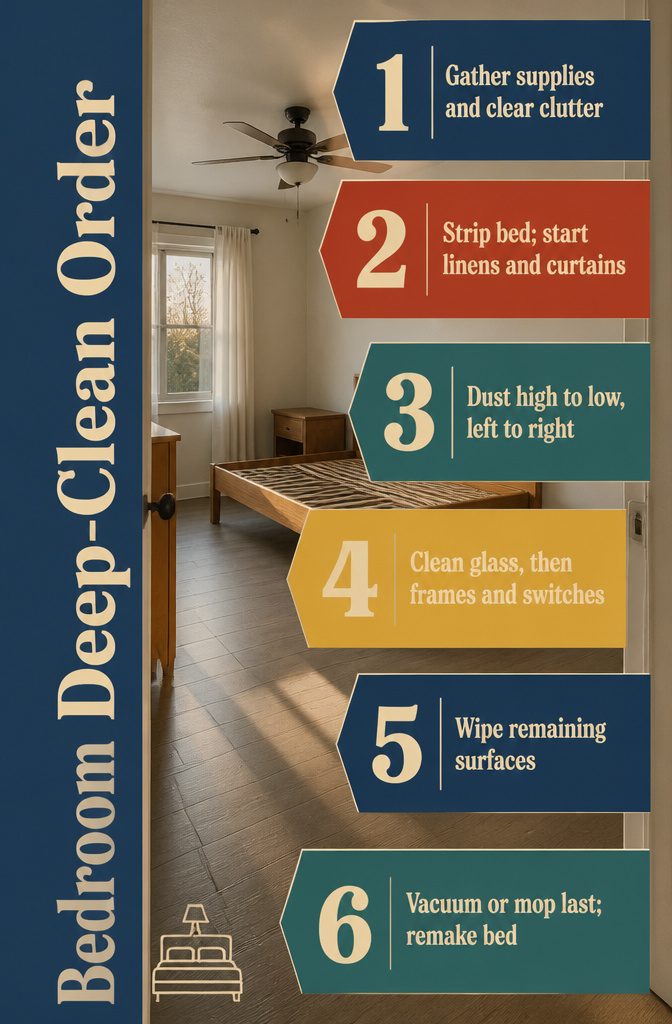
A full reset takes a few hours, and this order keeps you from cleaning anything twice:
- Gather supplies, return stray items to their homes and clear clutter so surfaces are bare.
- Strip the bed and start the linens and curtains washing.
- Dust from high to low: ceiling corners, fan, light fixtures, shelves. Go left to right as well, so you never drag dust over a spot you just cleaned.
- Clean windows, mirrors and glass, then wipe frames, doorknobs and light switches. Hydrogen peroxide clears streaky glass.
- Wipe the remaining surfaces: nightstands, bed frame, vanity.
- Vacuum or mop the floor last, since everything above drops dust onto it.
- Remake the bed with the clean linens.
Where to Start
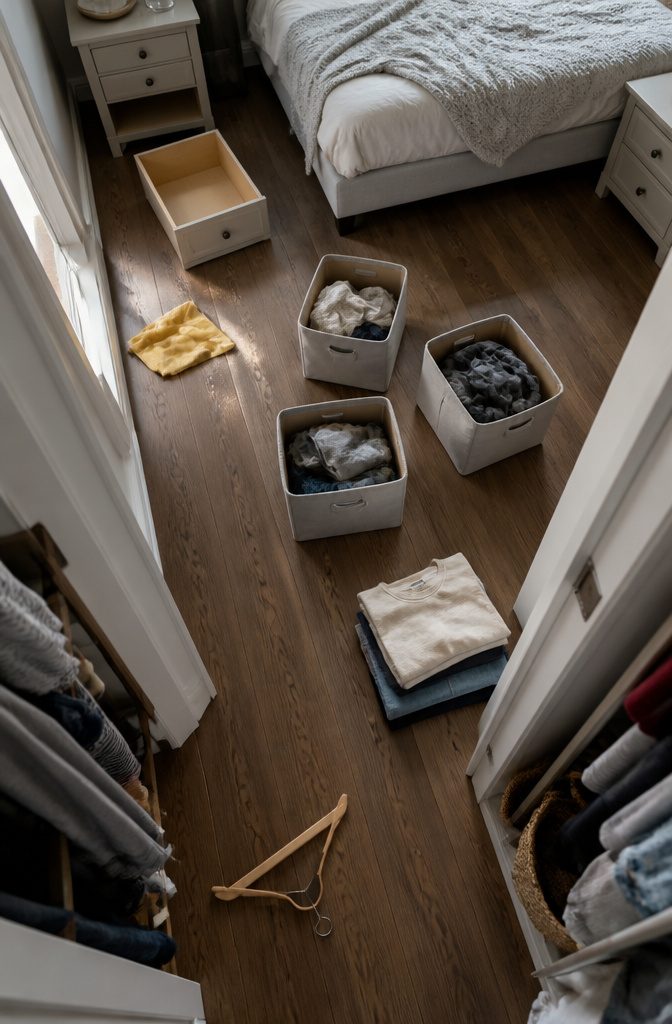
Start with the bed and nightstands, then work through the closet, drawers, surfaces and hidden storage, one zone at a time.
Set a timer for 25 minutes and sort that zone into Keep, Donate and Discard as you go, carrying trash out and donations to the car immediately.
Once a zone is empty, wipe the shelves, drawers and floor. Clean after sorting but before reorganizing, because cleaning around clutter means doing it twice.
Budget 3–6 hours for a moderately cluttered bedroom and 3–4 hours for a neglected closet.
A professional organizer runs $50–$150 per hour with a 3–4 hour minimum, or $500–$1,500+ for a full bedroom. I’d pay that only if a few timed rounds show the room is beyond a weekend.
What Skipping Costs You
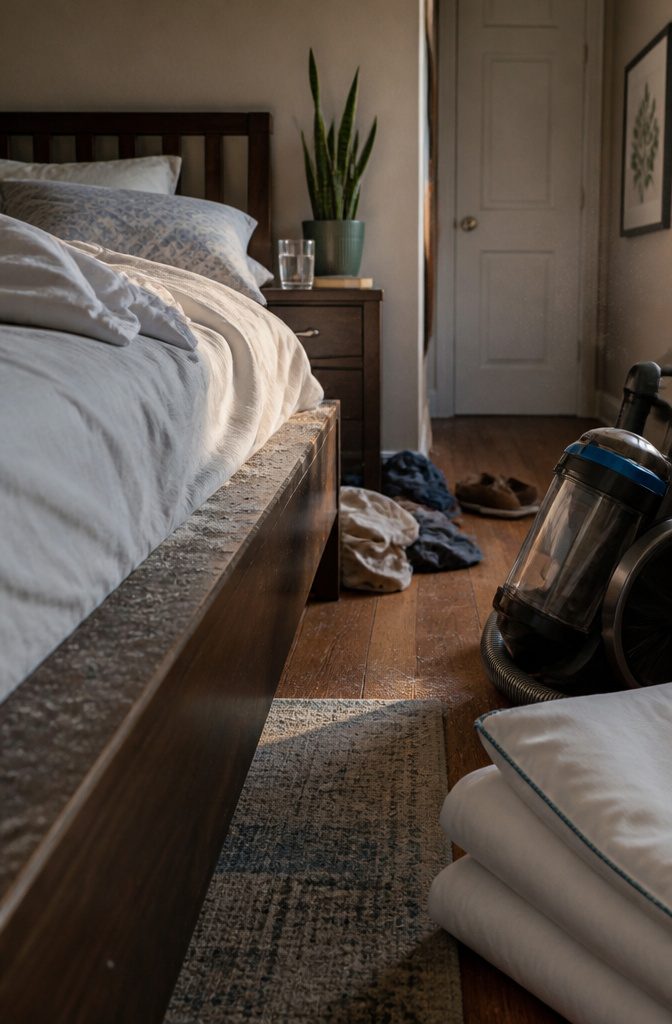
Dust mites and bed bugs settle into a bed that goes unwashed, and millions of bacteria thrive in a mattress that rarely gets cleaned. You feel it as sneezing, coughing, a sore throat and poorer sleep.
I’d treat weekly hot-water bedding washes and a mattress vacuuming at least monthly as the floor. If allergies are already in the picture, a HEPA-filter vacuum and hypoallergenic bedding are worth the switch.
Odors get harder to remove the longer you let them sit. Peace, snake or spider plants help keep the air fresher than an air spray does.
Clutter on the floor is the safety cost. It invites trips, and a pile in the wrong spot can block your way out of the room in an emergency.
Frequently Asked Questions
How long does it take to clean a bedroom?
Daily upkeep runs 5–15 minutes, the weekly session takes 30–45 minutes, and a full deep clean takes a few hours.
A thorough weekly pass can stretch to an hour or two. Keeping the daily round short is what stops the longer jobs from piling up.
What is the first step to clean a messy bedroom?
Begin with the bed and nightstands, then move through the closet, drawers, surfaces and hidden storage one zone at a time.
Set a 25-minute timer for each zone and sort what you find into Keep, Donate and Discard. Small zones keep the room from feeling like one giant pile.
What goes on a bedroom cleaning checklist?
Split it by how often each job needs doing. Daily covers making the bed, hamping dirty clothes, returning stray items and emptying the trash.
Weekly covers washing bedding, dusting, wiping mirrors and handles, and vacuuming or mopping. Monthly adds the mattress, fans and baseboards, and every 3–4 months you rotate the mattress, wash curtains, clean rugs and sort closets.
How do you deep clean a bedroom?
Clear the clutter, strip the bed and start the linens and curtains washing. Then dust from high to low, beginning with ceiling corners and the fan, and clean windows, mirrors and the remaining surfaces.
Vacuum or mop the floor last, since everything above it drops dust downward, then remake the bed with clean linens.
How long does it take to declutter a bedroom?
Plan on 3–6 hours for a moderately cluttered bedroom and 3–4 hours for a neglected closet by itself. Working in timed rounds on one zone at a time lets you spread that across a weekend without burning out.
Should I clean the bedroom before or after decluttering?
Clean after sorting but before reorganizing.
Once a zone is empty, wipe its shelves, drawers and floor, then put back only what you’re keeping. Cleaning around clutter means doing the job twice.
What should I do with items I no longer want?
Sort them into Keep, Donate and Discard while you work rather than afterward. Carry trash out right away and put donation bags in the car immediately so they don’t drift back into the closet.
Is it worth hiring a professional organizer for one bedroom?
It can be, if a few timed rounds show the room is beyond a weekend of your own work. Organizers charge $50–$150 per hour with a 3–4 hour minimum, or $500–$1,500+ for a full bedroom.
What should I watch for when cleaning my bedroom?
Dust from high to low and leave the floor for last, so you never drop dust onto a spot you just cleaned.
Check care tags before washing curtains and bedding, since some pieces need dry cleaning. Keep the floor clear too, because clutter there causes trips and can block your way out in an emergency.