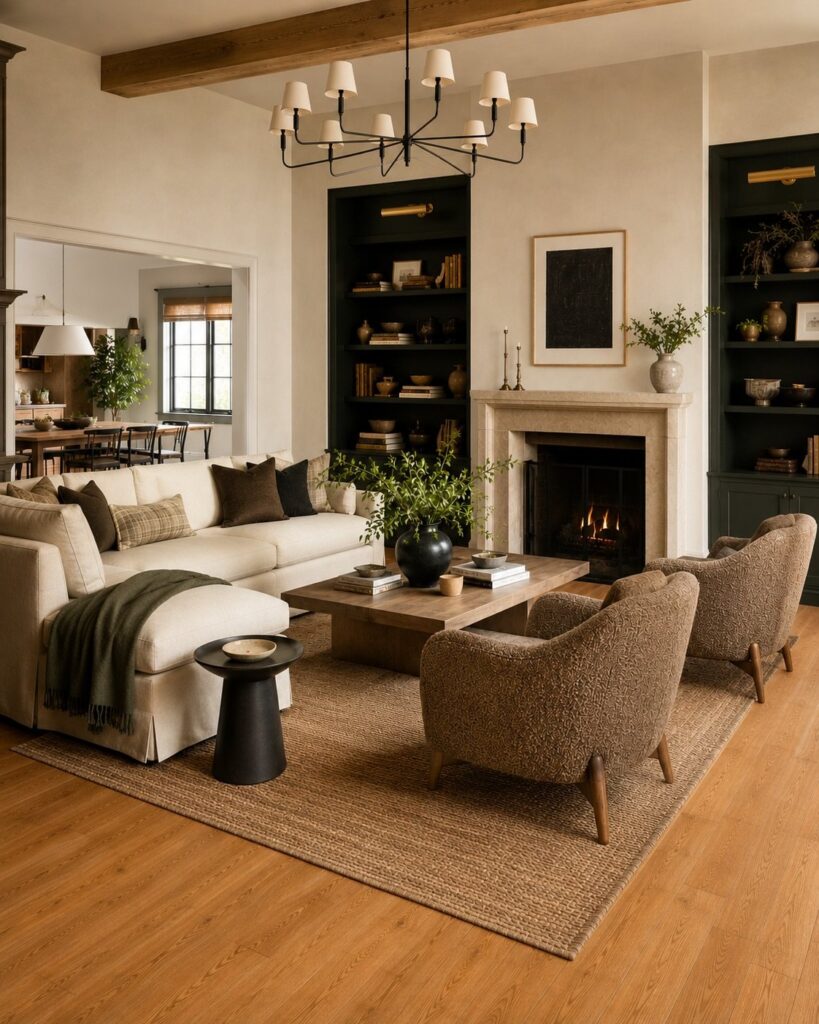
The ideas below range from a quick hardware swap to a full stair rebuild, and the right one depends on whether you are living with existing honey oak or starting fresh.
What ties them together is the same problem: this wood’s warmth can read dated or it can read intentional, and the difference is almost always what sits next to it.
[link-whisper-related-posts]1. Area Rugs
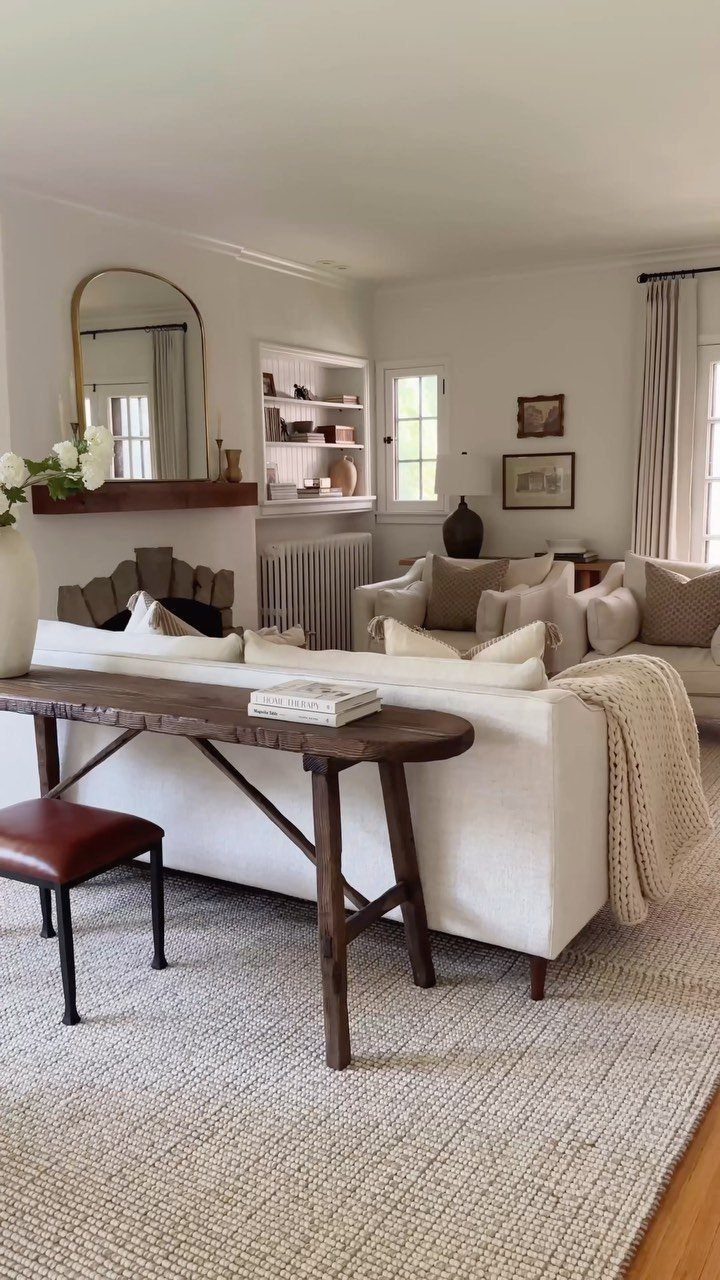
A rug that reads lighter than your floor does more than cover ground; it redirects the eye. The honey oak still shows at the edges, but the center of the room suddenly breathes.
Size matters more than pattern here. What looks generous in the store often shrinks once furniture lands on it, so I measure the seating area and buy up.
End-of-roll remnants from a carpet dealer can run larger than standard rugs for less money, and binding the edge at a local shop costs less than you might expect.
Texture hides the sins of a busy household. A flat weave vacuums easy; a looped wool forgives paw prints.
The wrong choice is anything the same value as the oak, which just muddies both.

Distressed box pattern with geometric elements creates a modern look that suits minimalist, eclectic, or transitional interior styles.

MACHINE WASHABLE RUG-Please note that compared to real 3D carpets, which are three-dimensional, bumpy and tactile, our carpets are 3D visual effects with a flat surface.The convenience of being able to easily clean your area rug in a washing machine is a considerable advantage. Especially for families with children and pets, simply toss it in the washer for a quick wash and dry it on the air-only setting
2. Warm Greige Flooring
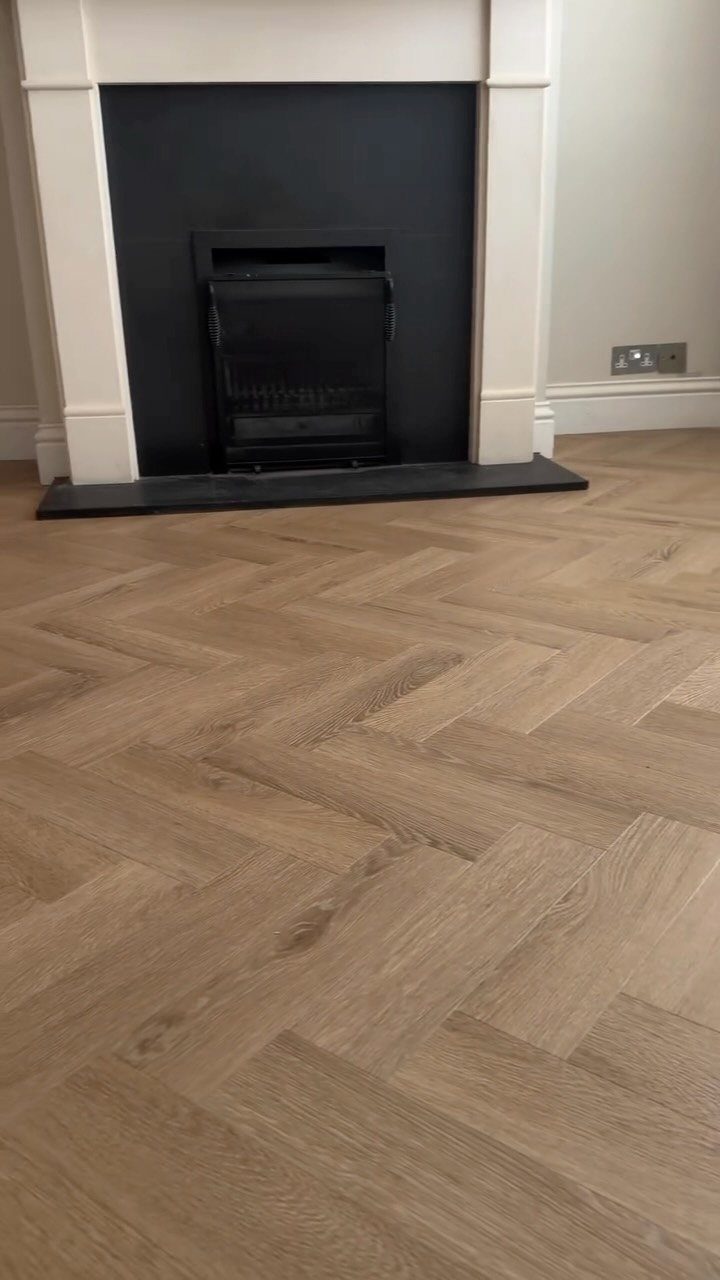
Greige sits where beige used to, and that in-between temperature is exactly why it works against honey oak. Too cool and the floor looks orange; too warm and the whole room collapses into soup.
Herringbone reads as movement without demanding attention, which is useful when the oak itself is doing the warm work. I would not lay this pattern everywhere; it costs more in labor and the zigzag can tire in a small room.
A kitchen, an entry, or a single open area carries it best.
If you are keeping existing oak elsewhere, the greige new floor becomes the neutral ground that lets the older wood be the accent. That pairing reads intentional rather than mismatched.
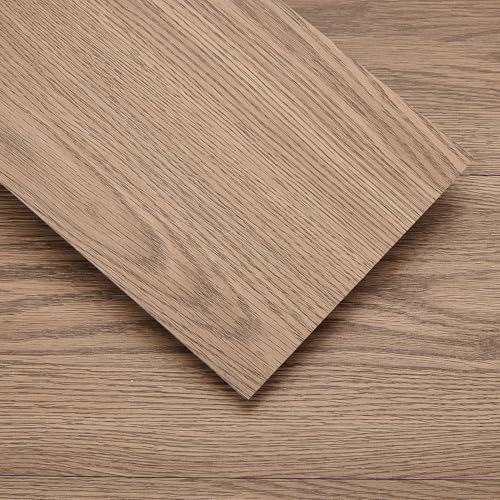
【Affordable Vinyl Flooring Set】The package contains 36 pack vinyl flooring tiles, each measuring 36x6 inches, providing a total coverage of 54 square feet, offering unbeatable value for an affordable flooring solution.

REALISTIC WOOD LOOK: Featuring luxury wood-grain texture, micro-bevel edges, and HD film prints, these luxury vinyl planks perfectly replicate real hardwood floors with a fraction of cost of wood flooring.

【Size】:Peel and stick floor tiles measure 36“ x 6” each and are 1.5mm thick, with the entire package covering 54 square feet
3. Black Hardware
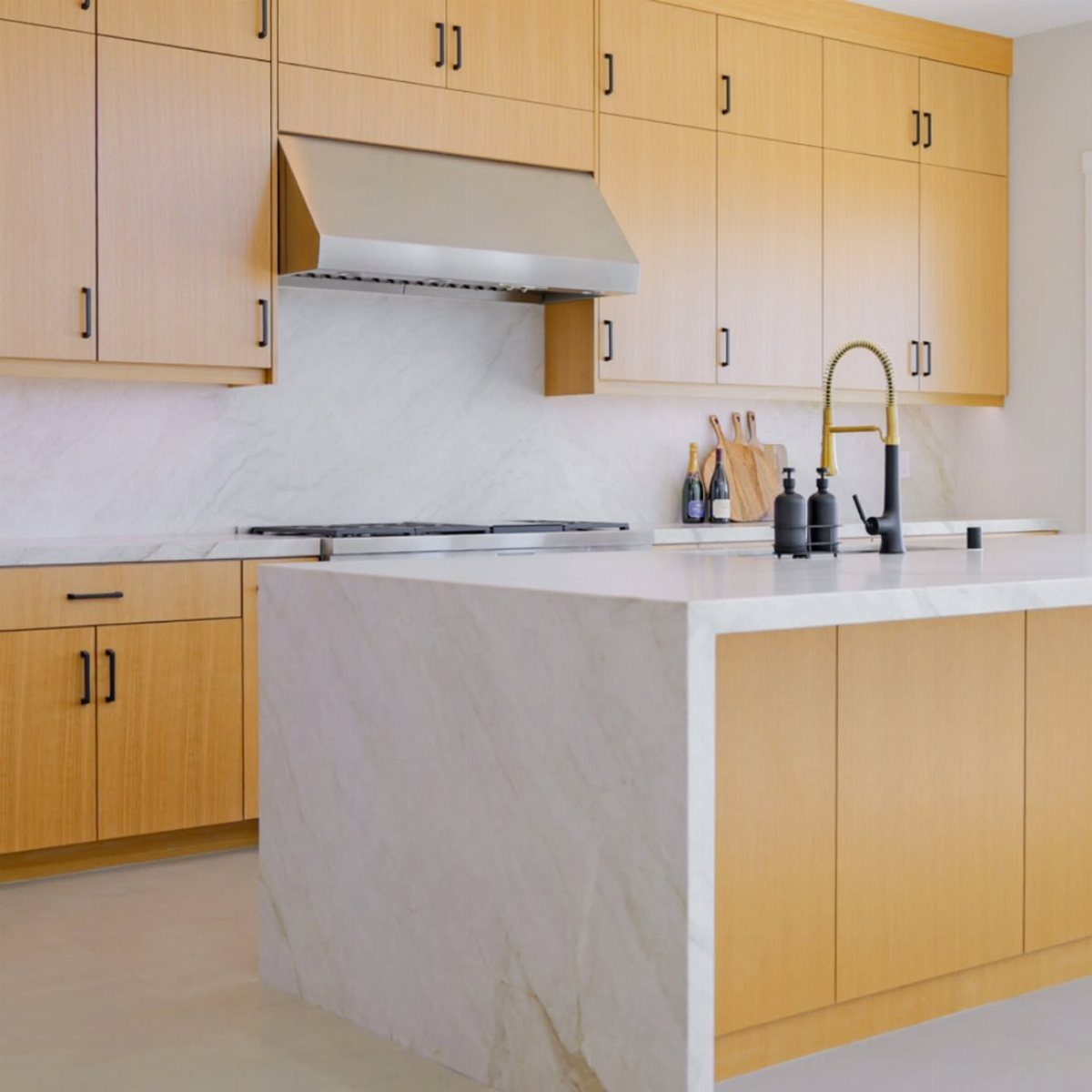
Black hardware on honey oak sounds like a small change until you see it. Black handles do not fight the cabinets; they draw a clean line across them, and that line is what reads as modern.
I would not mix finishes here. One black, everywhere: pulls, knobs, hinges if they show, appliance pulls if you have panel-ready pieces.
The consistency is what sells the choice.
Matte black hides fingerprints better than oil-rubbed bronze, which turns green at the edges in a kitchen anyway. Per-pull pricing depends on whether you need standard centers or odd sizes; older cabinets sometimes drilled their own spacing.

Dimensions of Knobs: The cabinet knobs are about 1.18 inches (30 mm) in diameter and 7/8 inches (22 mm) in height. Each knob comes with two screw sizes: a shorter one at M4*0.78 inches (20 mm) and a longer one at M4*1.75 inches (45 mm)(longer screws are packed in the bottom of the box)

Solid Zinc Alloy Construction: Crafted from zinc alloy, these cabinet knobs offer a sturdy, balanced feel and reliable performance for everyday use across kitchens, bedrooms, bathrooms, and offices

【Cabinet Pulls Description】 Kitchen hardware for cabinets made of high quality Metal, rust-proof, anti-corrosion, non-toxic heavy-duty solid cabinet pulls. It’s easy to clean and install.
4. Herringbone Pattern Oak Flooring
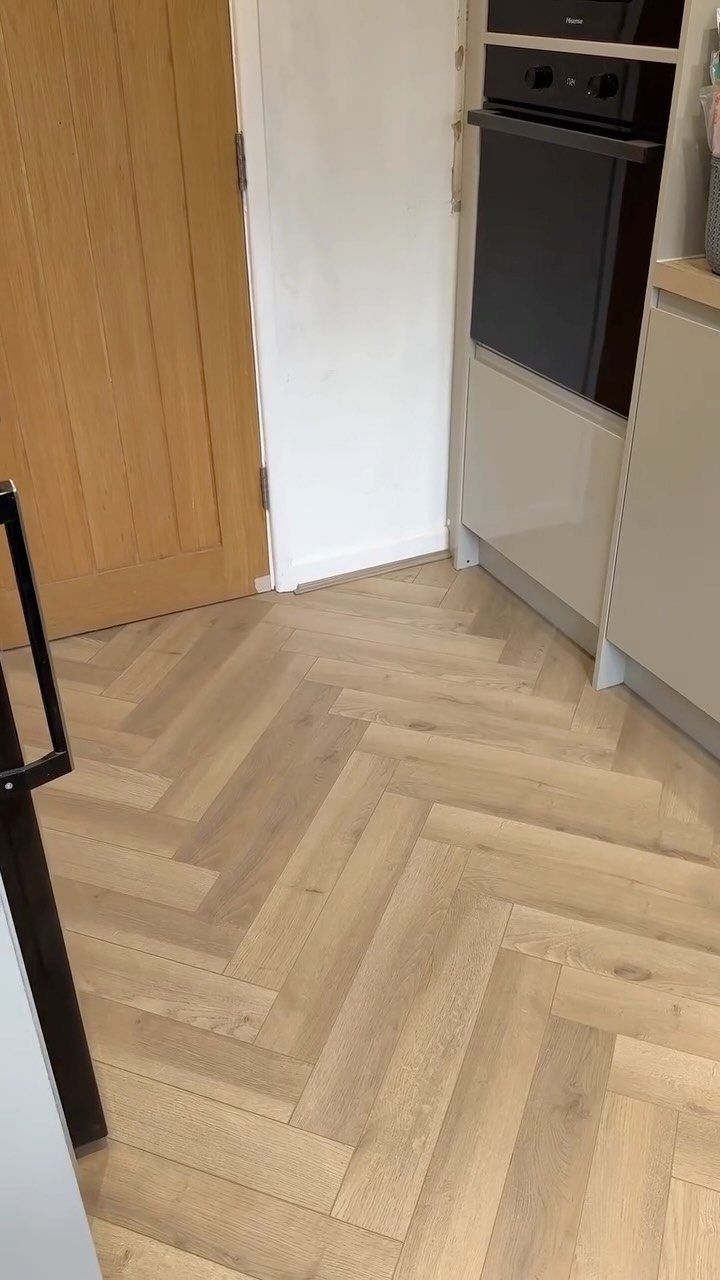
Herringbone oak is old parquet logic made current, and keeping the scale modest keeps it from feeling like dated hotel-foyer energy. The planks run small enough to read as texture from standing height, not as busy geometry.
Solid oak takes the pattern well because it mills cleanly at the angle; engineered works too but check that the wear layer can survive a few re-sandings. I would not attempt this as a first install.
The cuts must be exact or the gaps show, and the starting line wants a laser or at least a very long level.
A lighter tone helps; a darker herringbone can look like a chessboard from above.

Tips:Due to the different screen materials of different devices, the color of the product you see and the actual product may be inaccurate. Color appearance may vary due to screen calibration, lighting conditions. Please refer to the actual product


Textured & Versatile: Available in popular wood look with a natural matte finish that replicates the authentic feel of natural materials. The luxury vinyl plank flooring seamlessly complements Nordic, modern minimalist, industrial and other trending decor styles, instantly elevating the overall aesthetic of any space. Ideal for living rooms, bedrooms, kitchens and more.
5. White Walls and Cabinetry Pairing
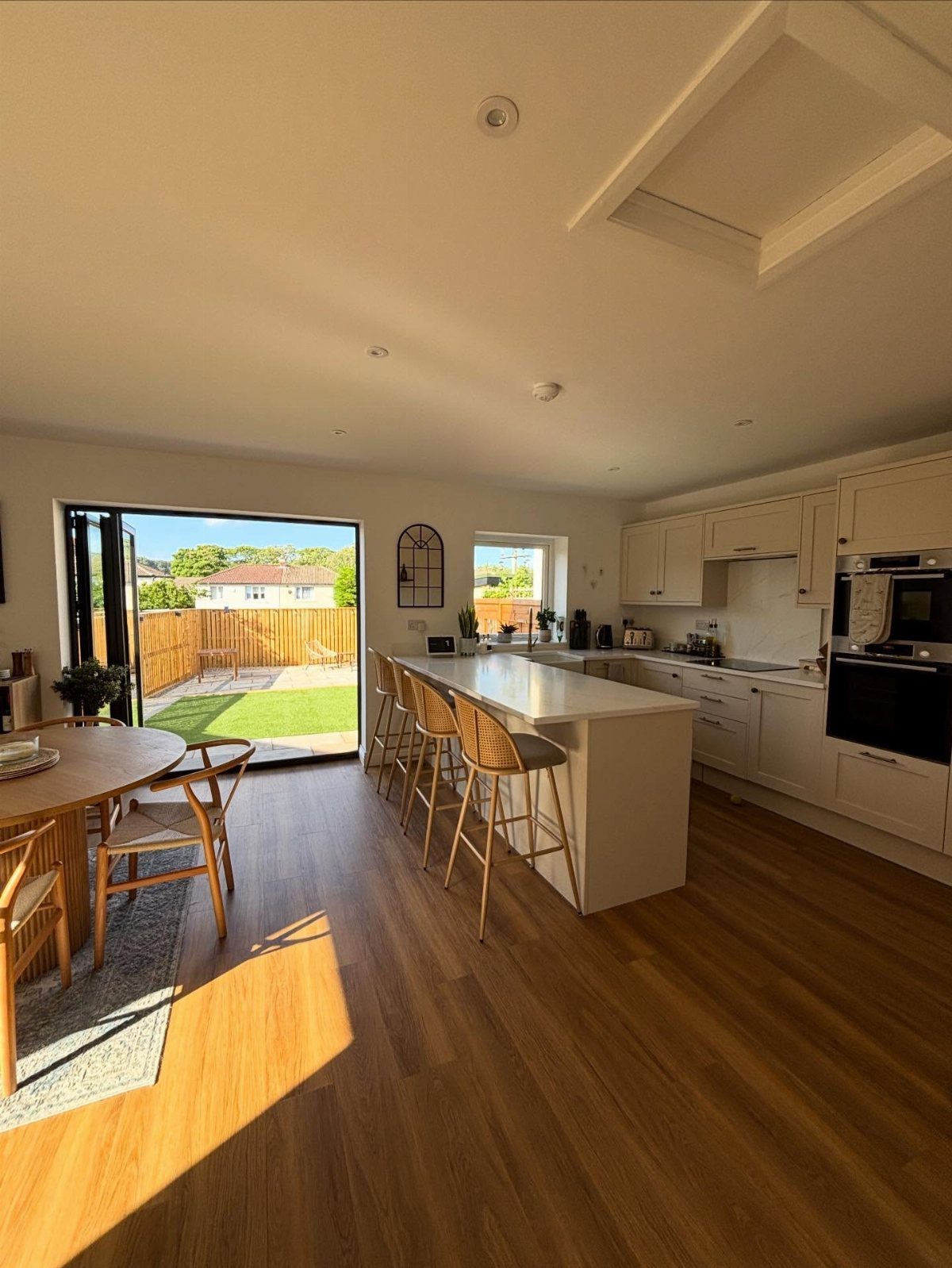
White against honey oak is not a contrast of color but of temperature, and that is why it holds up over time. Cream cabinets rather than stark white are the safer choice if your oak leans especially yellow.
I would paint the walls the same value as the cabinetry or a half-step lighter; two different whites fight each other. Trim can match or go crisper, but decide once and keep it consistent through the open space.
The risk is sterility. The oak needs to feel chosen, not leftover, so I would let it run at least one significant surface: a beam, a door, the floor itself.

Rustic Farmhouse Style for Cozy Spaces – Designed with softly weathered tones and a distressed wood-look finish, this 8x10 frame adds warm vintage character to farmhouse, cottagecore, and rustic-inspired homes.

From cold, plain white or simple solid, paint your garage door to look like wood in a single morning or afternoon with Giani Wood Look Paint for Garage Doors!

The 8 oz. Honey Oak Grain Coat is the finish coat included in the Giani Honey Oak Wood Look Paint Kit for Front Doors. It is the second step in our three-step application process.
6. Open-concept Modern Living Room
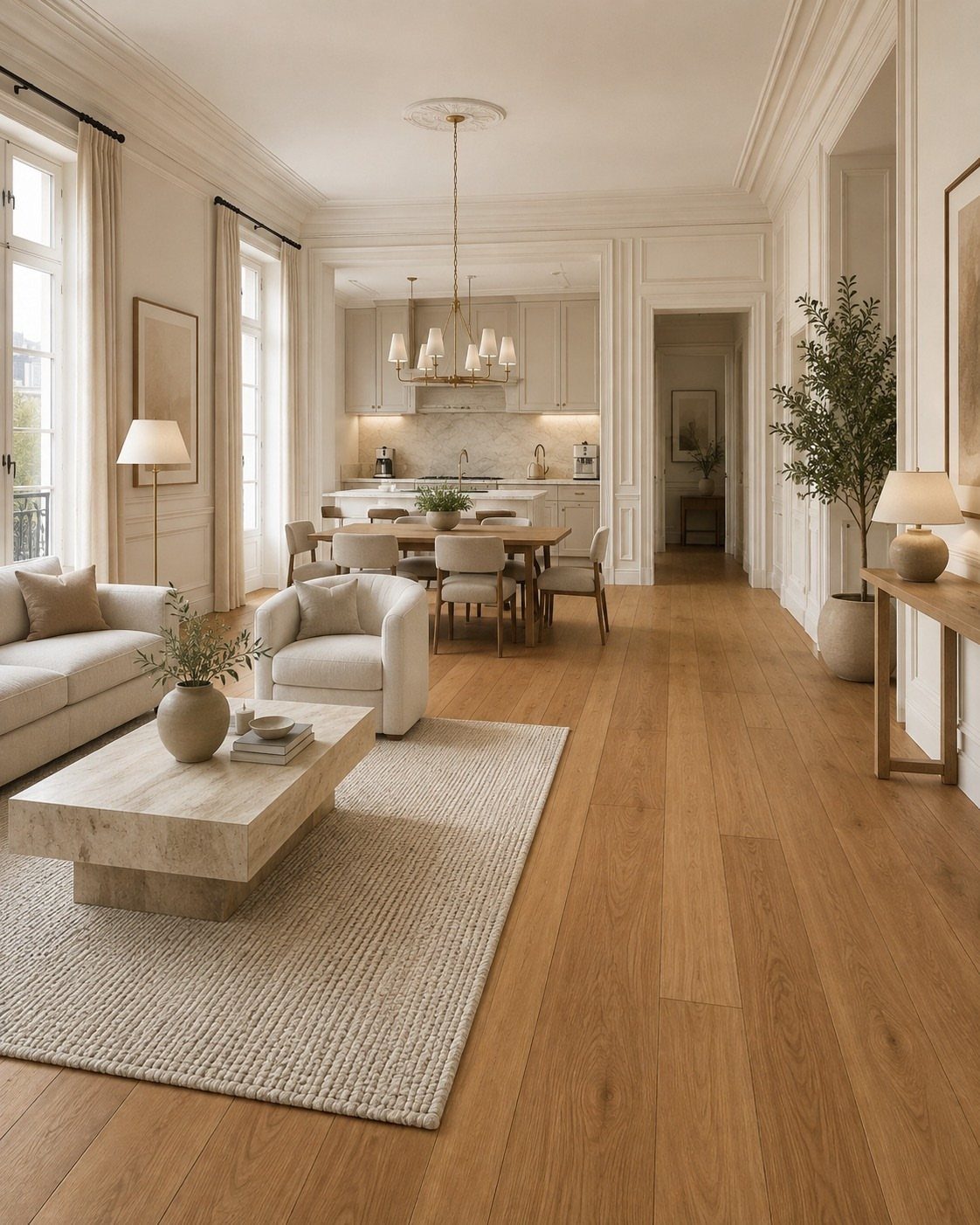
One floor running through multiple rooms solves the problem of what transitions where, and honey oak carries that continuity without darkening the open space. Neutral furniture that neither competes nor disappears is the balance that makes this work.
I would avoid a rug that sits only under the coffee table, which chops the room back into zones. Either a rug large enough for all seating legs, or none, keeps the openness honest.
Wide planks suit open plans better than narrow strips; the scale fills the room without busy repetition. Narrow boards can read as busy across a large area.
If you are choosing new, wider usually costs more per square foot but installs faster; the labor often closes the gap.

𝗘𝗙𝗙𝗢𝗥𝗧𝗟𝗘𝗦𝗦 𝗔𝗦𝗦𝗘𝗠𝗕𝗟𝗬: This versatile side table is designed for quick and easy assembly, taking just 5 to 10 minutes to set up, making it a convenient end table for your living room or outdoor spaces.

Tender Touch: Experience the ultimate in luxury with our low-pile polyester modern 8x10 area rug, providing a cozy cushioned surface that eliminates the need for extra padding. This soft ash gray and brown abstract rug insulates your floors, creating a warm and inviting atmosphere in your living room, bedroom, dining room

Neutral and Classic Area Rug for Living Room and More: The Winston Collection is a soft and durable area rug with a framed cross-hatch design in light, natural colors; expertly crafted by Loloi.
7. Coordinating Honey Oak Stairs
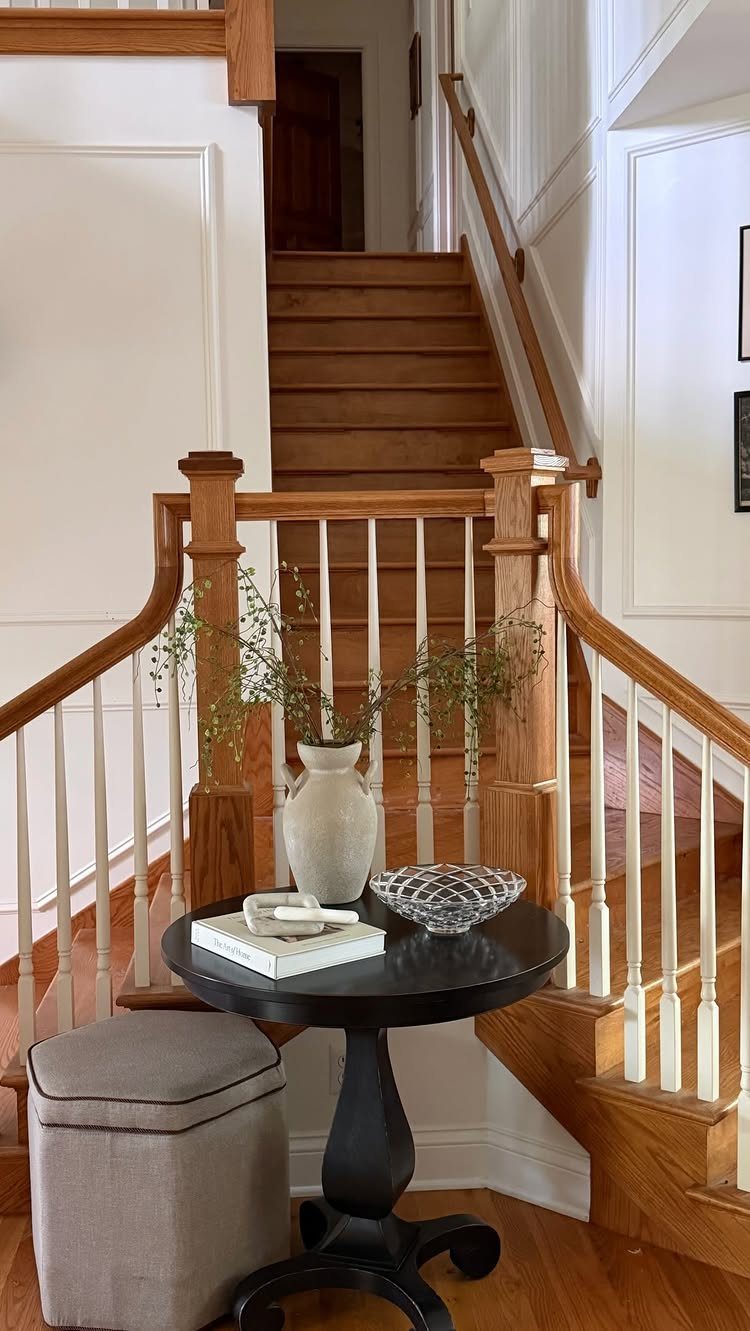
A split staircase in matching honey oak keeps the grain running through the whole entry instead of breaking it up with paint or carpet.
White spindles against the wood treads and handrail give the eye somewhere to rest, which matters in a foyer that already has a lot going on.
Getting the stain match close enough takes patience. If your floors are old, a new tread will need custom tinting, not an off-the-shelf can.
I would bring a floorboard to the finisher and test on scrap before committing. Prefinished treads save time but rarely match aged oak.
This suits houses where the stairs are the first thing you see. In a closed or side entry, painted risers do almost the same work for less.

🏠DETAILS: 15.8x78.8 Inch, total 8.65 sq.ft (40cmX2m) Made of durable thin vinyl, thickness: 0.015 In (0.4MM). Peel and stick wood planks vinyl flooring roll, brown shiplap planks color. Waterproof. Removable.

LUXURY WOOD-LOOK FLOORING: Authentic natural wood grain self-adhesive vinyl planks bring classic warm vibes to quick home refreshments and match all mainstream home decor themes
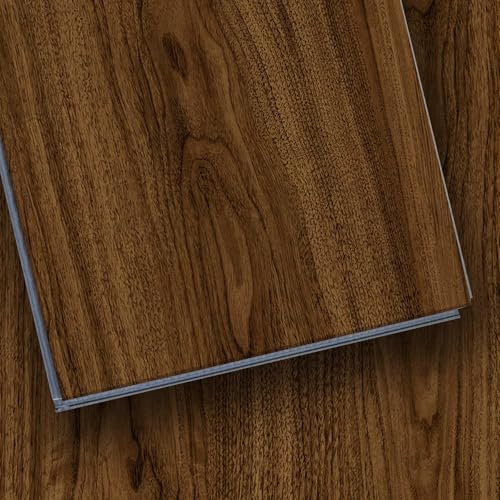
【Ultra-Durable & Pet-Friendly】With a 0.3mm wear layer tested over 15,000 abrasion cycles, this luxury vinyl plank flooring resists scratches, dents, and spills. Ideal for busy homes with pets and kids, it stays beautiful for years even in high-traffic areas.
8. Dark Built-in Bookshelves
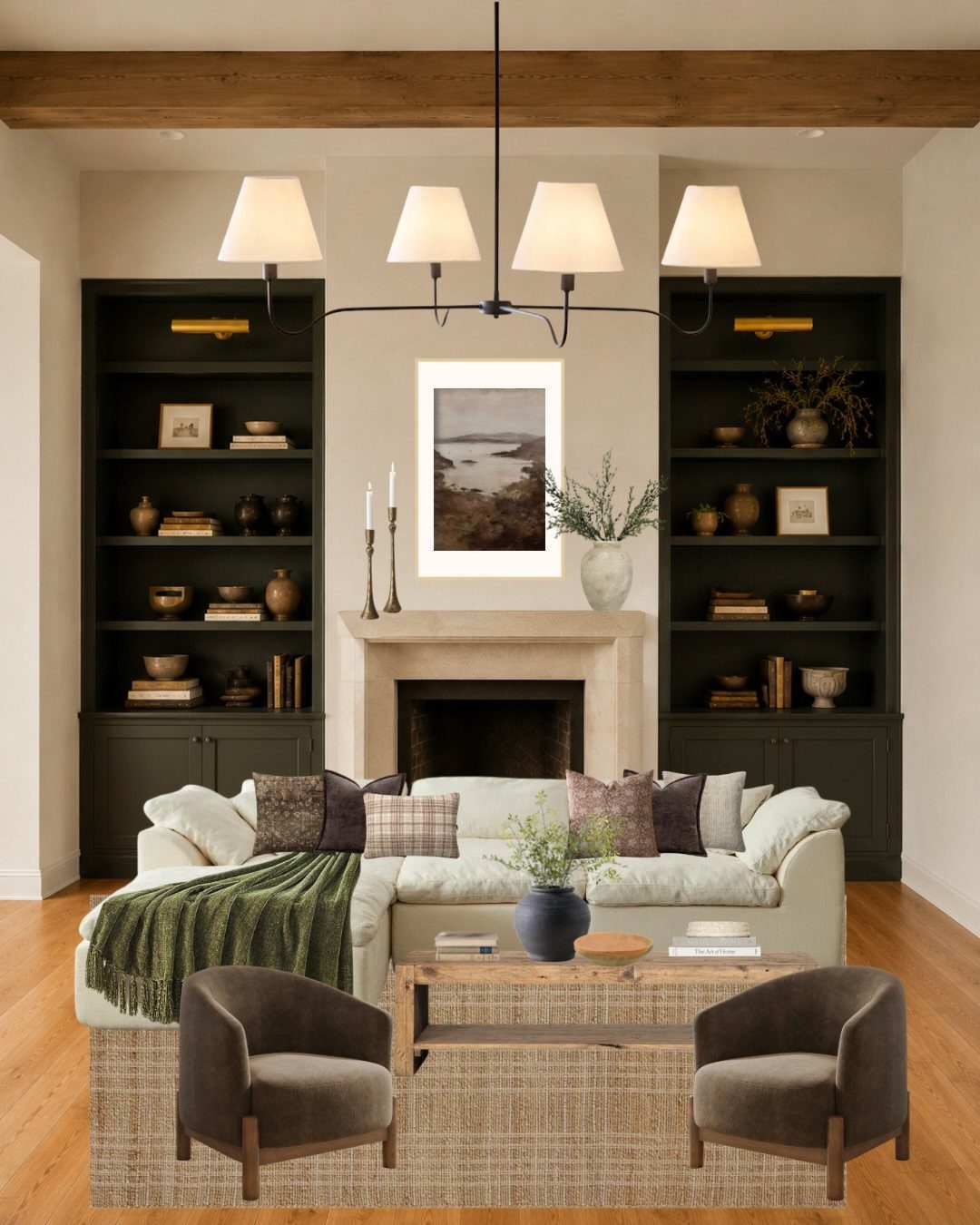
Built-ins in a deep charcoal or espresso frame a fireplace the way a dark mat frames a photograph, and honey oak floors become the warm middle instead of the whole story.
Built-ins painted dark let the floor stay visible without dominating a room.
Standard wall height works fine for this effect. Two tall bookcases flanking the hearth, run to the same depth, read as built-ins for lumber and paint costs that stay under what most pre-made units charge.
I would go satin or matte on the shelves; semigloss catches every dust mote and every uneven brush stroke.
Leave the oak trim around the firebox as-is. Painting it breaks the link between floor and surround, and that connection is what makes the dark shelving feel intentional rather than apologetic.

Exact Fit Dimensions: Hole centers at 3 inches (76mm), total length of 5 inches (127mm), diameter of 1/2 inch (12mm), and projection of 1-1/4 inch (32mm)

365-Day Experience Period: Our cabinet knobs and door pulls are crafted with high excellence. For your convenience, we offer ample time to explore our 3-inch drawer pulls

4-Piece Set. This bathroom hardware set includes a 24 inch towel bar, towel ring, toilet paper holder and towel hook.
Color Coordination with Honey Oak
Blue undertones in wall paint turn honey oak sour. The same cool cast that flatters gray cabinets makes warm wood look orange and cheap, so I would skip anything with a blue base no matter how muted the label reads.
Cream and greige walls do the steady work. They let the oak read as intentional warmth rather than leftover builder stock.
I would test paint at floor level, not up near the ceiling where the light differs. The same chip can shift two values against honey oak depending on whether morning sun or shadow hits it.

Sample Dimensions & Details: Each plank measures 29.5 in. x 5.9 in., and the sample pack includes 2 individual planks. This option allows you to evaluate the texture, thickness, and appearance of the material within your own space before committing to a full-sized project.

Chic Design & Wood Texture - Classic herringbone pattern with realistic wood grain texture, combining classic charm with the rustic beauty of natural wood, add a touch of earthy warmth to your interiors.

Sample Dimensions & Details: Each plank measures 29.5 in. x 5.9 in., and the sample pack includes 2 individual planks. This option allows you to evaluate the texture, thickness, and appearance of the material within your own space before committing to a full-sized project.
Flooring Material Considerations
Matching honey oak too closely floors you in wood from baseboard to cabinet crown. The effect is heavy and dated, not cohesive; contrast reads as choice, sameness reads as default.
Cool gray with a blue base is the other trap. Against warm orange undertones it pushes the oak toward pumpkin instead of balancing it.
Warmer gray or greige keeps both materials in conversation without either shouting.
Engineered oak with a thick enough wear layer handles the same stains as solid, and installs faster over concrete or radiant heat.
I would check the wear layer spec before buying; anything under 2 millimeters will not survive a sanding if you want to shift tone later.
Area rugs break the expanse without replacing the floor. The material matters less than the value: lighter than the oak, or markedly darker, never the same mid-tone.

Rustic Farmhouse Style for Cozy Spaces – Designed with softly weathered tones and a distressed wood-look finish, this 4x6 frame adds warm vintage character to farmhouse, cottagecore, and rustic-inspired homes.
Rustic Farmhouse Style for Cozy Spaces – Designed with softly weathered tones and a distressed wood-look finish, this 5x7 frame adds warm vintage character to farmhouse, cottagecore, and rustic-inspired homes.

Avoiding Dated Looks
Wall-to-wall wood in one tone flatlines a room. If your cabinets and floors share that honey cast, the ceiling line or a painted island has to step in with something else, or the space reads as one undifferentiated box.
Intense whites with gray undercurrents, Gray Owl or Wickham Gray among them, throw the yellow in aged oak forward until the walls read faintly blue. The effect is not crisp; it is discordant.
A warmer white, something with a drop of umber in the mix, keeps the peace.
I would not fight the oak by cooling everything around it. The modern move is to let the wood be warm and surround it with materials that acknowledge that warmth rather than try to neutralize it.
Stone-look tile with a warm base, brass or black metal, textiles in oatmeal and olive: these let honey oak belong to this decade instead of stranded in another one.
Honey Oak’s Design Resurgence
Honey oak never fully left; it went quiet while gray and white took the stage. What returns now is selective: a floor here, a built-in there, enough warmth to keep a pale room from feeling refrigerated.
The golden tone works best in doses against cooler surroundings. A honey oak floor under white oak cabinetry would compete; the same floor against painted cabinets or greige walls becomes the heat source in an otherwise neutral room.
I would not install it everywhere in a new build. The mistake was saturation, not the material itself.
One significant surface, the floor or a staircase or a kitchen island, carries the warmth without the period-piece overload.
Sustainability plays into the return. Keeping existing oak and working with it saves the waste of tear-out and the cost of replacement.
The environmental argument is practical, not aesthetic, but it matters to homeowners counting years in a house, not resale quarters.
Frequently Asked Questions
Are honey oak floors back in style?
Yes, honey oak is regaining popularity after years of being dismissed as dated. The warm golden tone adds something that cooler gray palettes often lack, and designers are using it intentionally rather than treating it as something to hide.
If your floors are still in good shape, keeping them is now a viable choice rather than a compromise.
What colors go best with honey oak floors?
Warm neutrals and deliberate contrasts work best.
Walls in cream or warm white keep the oak from looking accidental, greige flooring in the next room softens the transition, and built-ins in deep charcoal or espresso give the whole thing somewhere to land.
The mistake is matching too closely, same-value beiges and tans just muddy together.