
A weekend and a stack of pine boards gets you started; the list below runs from simple accent walls to exterior siding that needs a wind rating check.
Partial height leaves breathing room above, full height carries the eye floor to ceiling, and a shelf turns the top rail into something you can actually use.
James Hardie fiber cement and vinyl both enter the mix if rot and maintenance are the worry, not just wood.
[link-whisper-related-posts]1. Traditional Board and Batten
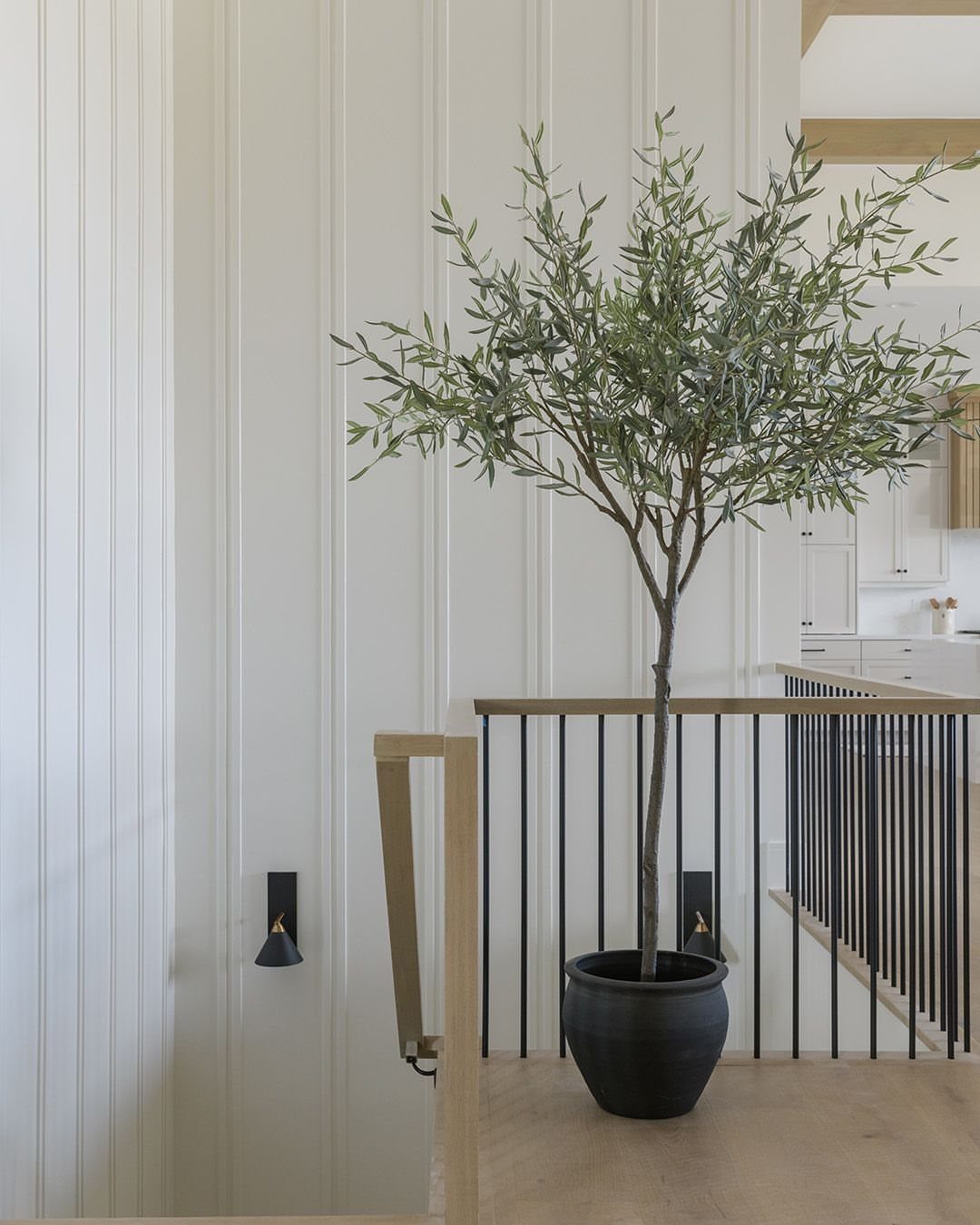
Wide vertical boards with narrow battens hiding every seam give you the look that started it all. Wood or engineered wood both work; the second saves you the rot and insect headaches down the line.
This shows up most on working farmhouses and real historic homes, not the ones just borrowing the style. If your place already has some age to it, this is the board and batten that belongs there.

All-in-One Design - Package of 20 premade molding trim slat + 4 decorative edge strip create instant board & batten walls
All-in-One Design - Package of 10 premade molding trim slat + 2 decorative edge strip create instant board & batten walls

Premade Board and Batten Paintable Wainscoting Kit: Package includes 20 premade molding trim slats, 4 decorative edge strips, and two pairs of gloves for convenient installation
2. Square Panel Board and Batten
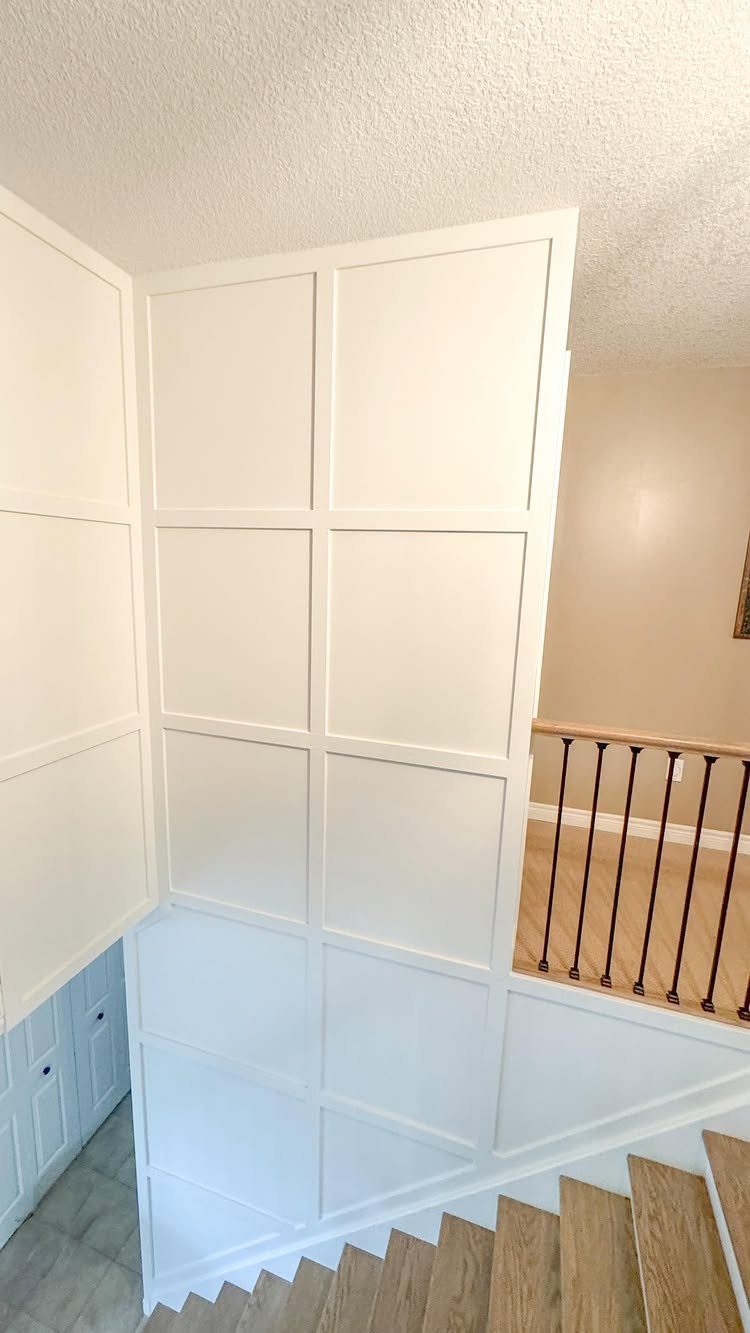
The grid of vertical and horizontal battens reads more intentional than random planks, and that structure lets it lean modern or traditional depending on your trim and paint.
The maker of this stairway went bright white for what they called a clean, timeless look, and I would too in a hallway this narrow.
Check your wall length against batten spacing before you cut; uneven end gaps ruin the whole effect. This one suits anyone who wants the texture without the rustic baggage.

Item Description: 10 1/2"W x 34"H Americraft Three Board (3 Batten) Exterior Real Wood Joined Board-n-Batten Shutters (Per Pair), Peaceful Blue

Item Description: 7"W x 34"H Americraft Two Board (2 Batten) Exterior Real Wood Joined Board-n-Batten Shutters w/ Z-Bar (Per Pair), Peaceful Blue

Dimensions: 19-1/2 in. Width x 1 in. Depth x 34 in. Height
3. Mixed Material Board and Batten
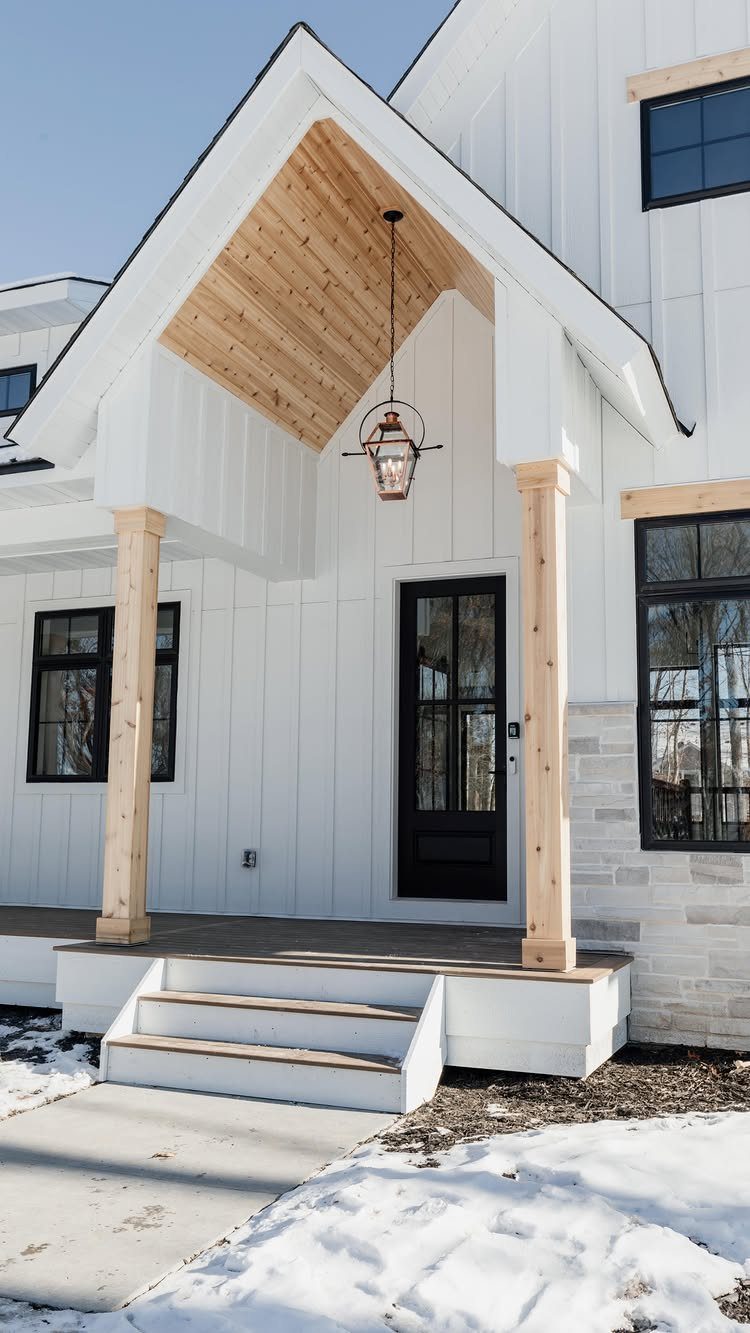
Stone, brick, or even horizontal siding laid beside the vertical boards breaks up a long wall and keeps the eye moving. Natural wood posts and ceiling boards against white siding warm up what could read as sterile.
James Hardie fiber cement mimics that wood grain without the maintenance, and vinyl runs cheaper if budget is the deciding vote. I would not mix more than two materials on one facade; three starts looking like you could not choose.

Quantity and Coverage: this board and batten wall panel kit includes 42 pre cut MDF strips, each approx 3.15"W x 0.35"T; The finished wall coverage is approx 157.5 x 94.5 inches/ 400 x 240 cm: simply measure your wall and order the exact number of kits needed

【Paintable Board and Batten Wall Panel Kit】Package contains 10 premade molding trim slats and 2 decorative edge strips, which can be spliced to form a 94.5 x 54 in accent wall

【Complete Wainscoting Kit】Board and batten wainscoting kit includes 23 premade MDF molding trim slat and 5 decorative trim strips, covering 220in x 51in to create sophisticated board and batten wall decor
4. 3/4-height Board and Batten
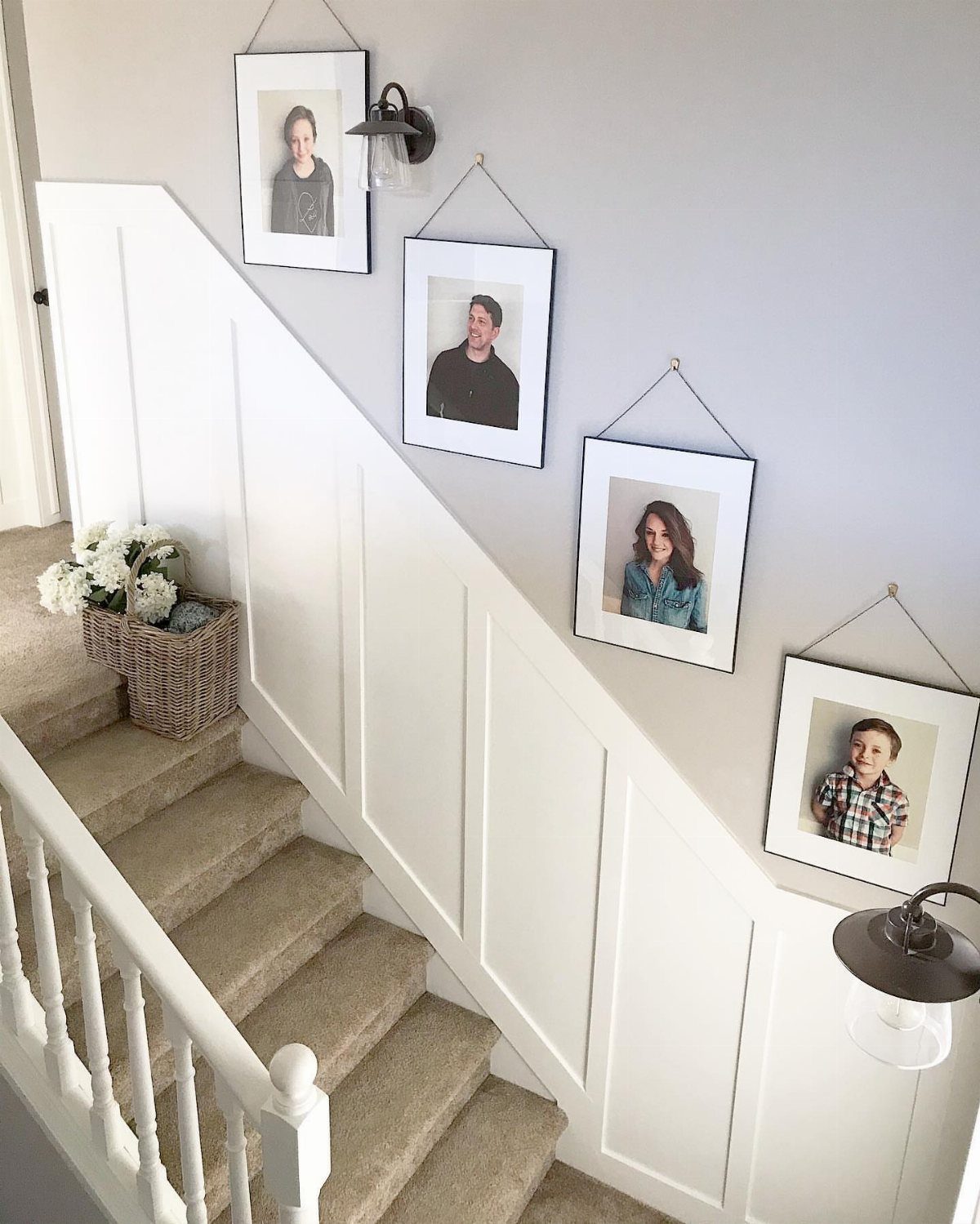
Stopping the boards at 3/4 height leaves room above for art, paint, or just breathing space in a small room. A light upper wall above the paneling leaves room for framed photos that would look crowded against full-height boards.
Paint the board and batten bold or neutral; either works because it is not dominating the whole wall. This is the choice for rooms where you want character without enclosure.

Complete Mixed Size Kit: this wood slat wall decor kit includes 37 pre-cut wood slats (each 1.6" wide x 0.4" thick) in 7 lengths: 8 pieces at 5.9", 8 at 7.9", 8 at 9.8", 4 at 11.8", 4 at 13.8", 2 at 17.7", and 3 at 21.7"; Also includes four 5.9 x 5.9 x 0.8-inch accent boards; Note: adhesive and hardware are not included

Package Includes: receive a complete package of 6 pre cut arch wall molding kits, each containing 3 pieces: one arch and two vertical strips, for a total of 18 pieces; You can choose how to decorate according to your needs; These 9mm thick panels seamlessly connect, adding an exquisite touch to doors or walls; Suitable for elevating any space, the arch wall panel molding meets your diverse decorative needs

Package Includes: receive a complete package of 12 pre cut arch wall molding kits, each containing 3 pieces: one arch and two vertical strips, for a total of 36 pieces; You can choose how to decorate according to your needs; These 9mm thick panels seamlessly connect, adding an exquisite touch to doors or walls; Suitable for elevating any space, the arch wall panel molding meets your diverse decorative needs
5. Vertical Board and Batten Siding
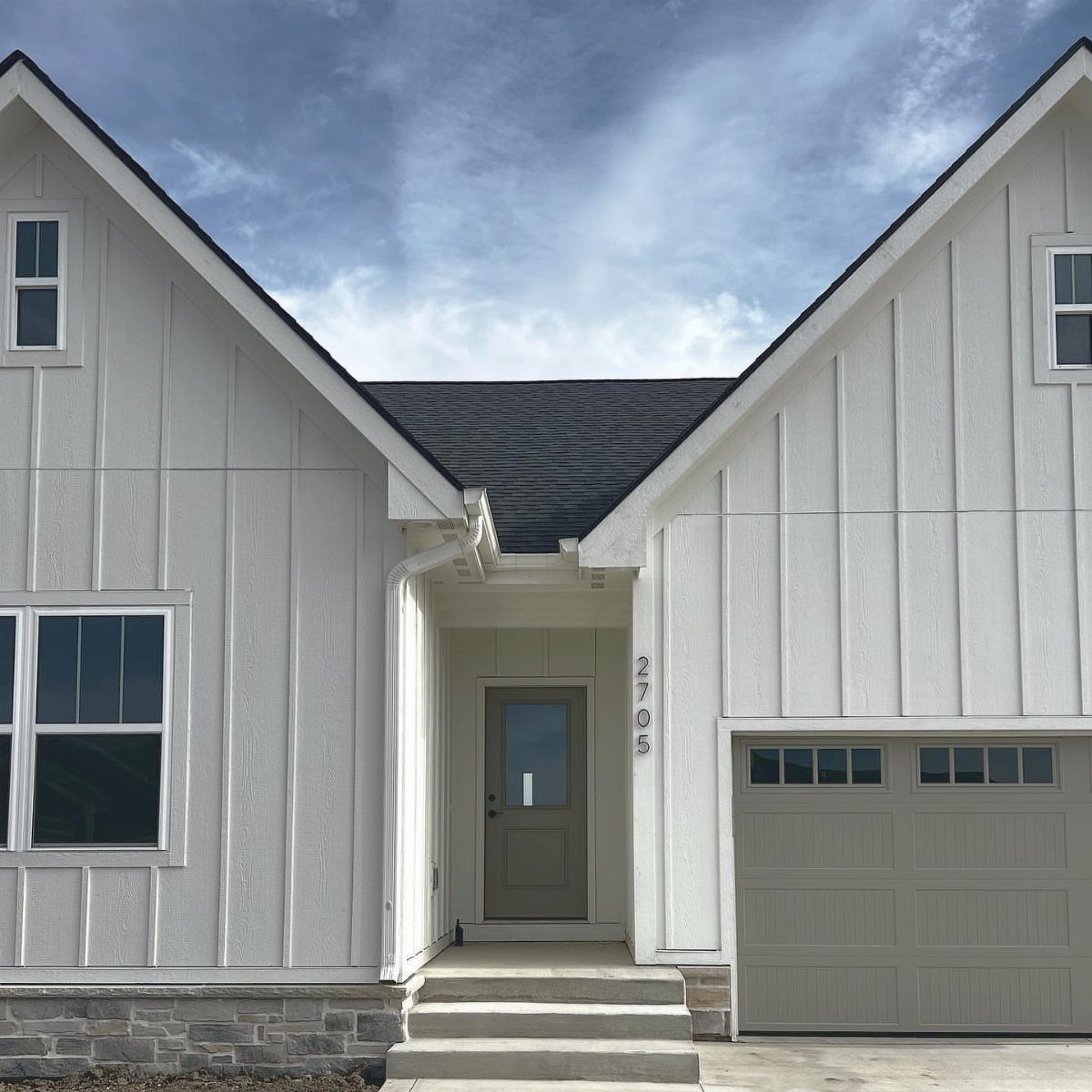
Running the boards and battens the full height of an exterior wall draws the eye up and makes a low roofline feel taller.
The crisp white against dark shingles and stone foundation here is a modern farmhouse cliche for good reason; it photographs well and sells fast.
Check your local wind rating before you commit to vertical siding on a large gable end, though. Battens can act like sails if the fastening is wrong.

Board and Batten Shutters are Decorative Shutters which fit Window Heights of 80in - 82in (Window not included)

𝗛𝗜𝗚𝗛, 𝗤𝗨𝗔𝗟𝗜𝗧𝗬 𝗗𝗘𝗖𝗢𝗥𝗔𝗧𝗜𝗩𝗘 𝗕𝗢𝗔𝗥𝗗 & 𝗕𝗔𝗧𝗧𝗘𝗡 𝗦𝗛𝗨𝗧𝗧𝗘𝗥𝗦: These Board and Batten home shutters offer a rustic ambiance and simplicity perfect for farmhouse and beach style homes. Please note that these shutters are non functional, and are decorative only.

6. Board and Batten with Shelf
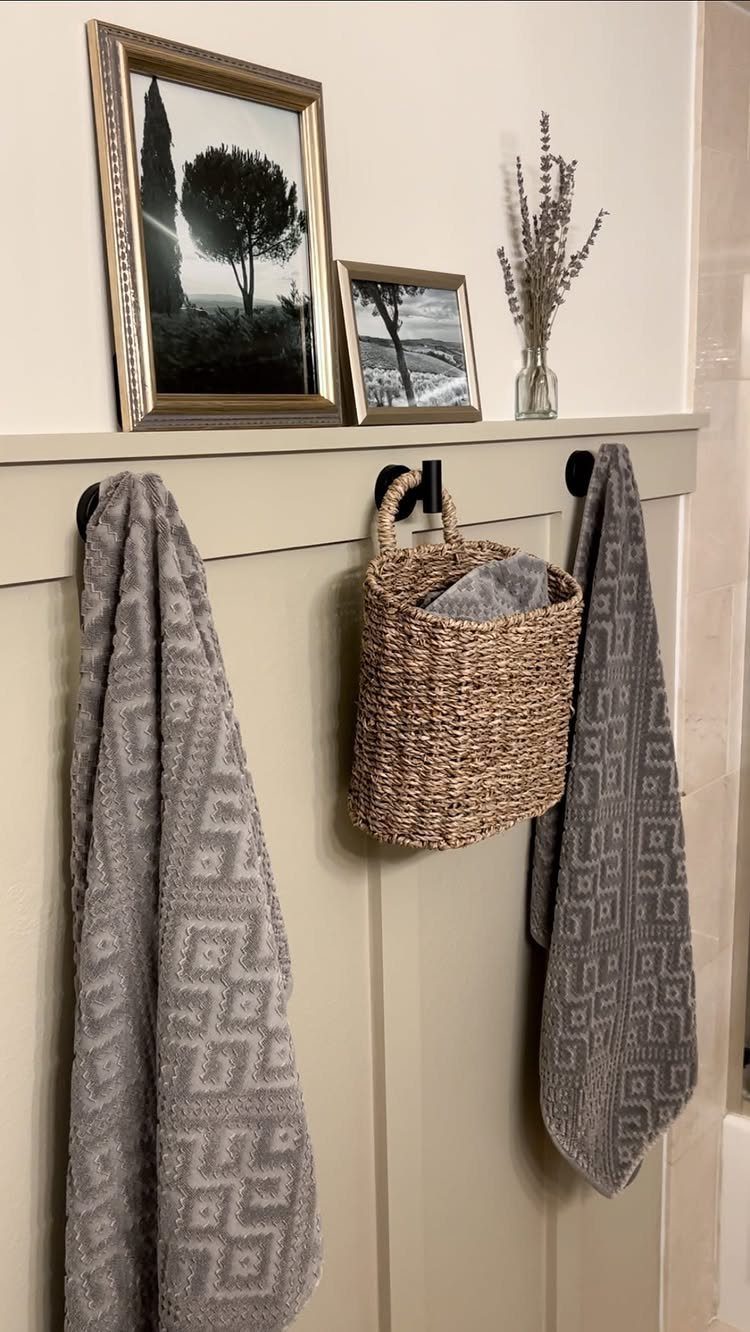
Capping the boards with a shallow shelf turns the wall into usable storage without losing the look.
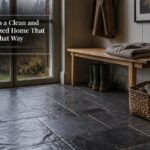
The hooks below in this entry hold towels and a basket, but I would use the same setup in a mudroom for keys and dog leashes.
The shelf depth matters more than you think; a shallow ledge fits frames and small vases without becoming a catch-all for clutter.
Paint it the wall color to keep the lines clean, or go two-tone if you want the shelf to read as furniture.
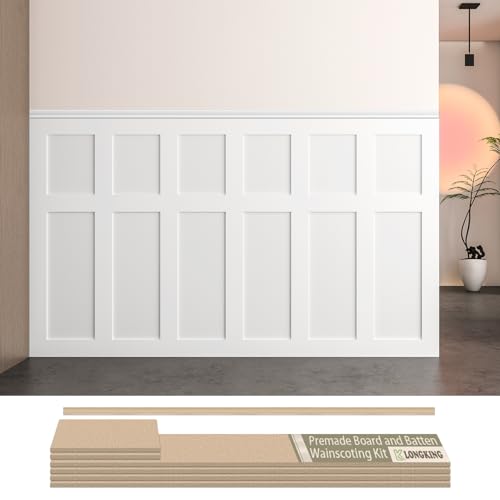
Board and Batten Wainscoting Kit – LONGKING pre-cut MDF wall panel kit is designed for easy DIY installation. Create a stylish accent wall with classic board and batten molding trim, perfect for modern and traditional home décor.

Premade Board and Batten Paintable Wainscoting Kit: Package includes 10 premade molding trim slats, 2 decorative edge strips, and two pairs of gloves for convenient installation

MDF Material for Lasting Use: this board and batten wall panel kit is made from MDF, offering sturdiness and water resistance; The surface is smooth, providing a comfortable touch for interior wall applications
7. Moody Dark Board and Batten
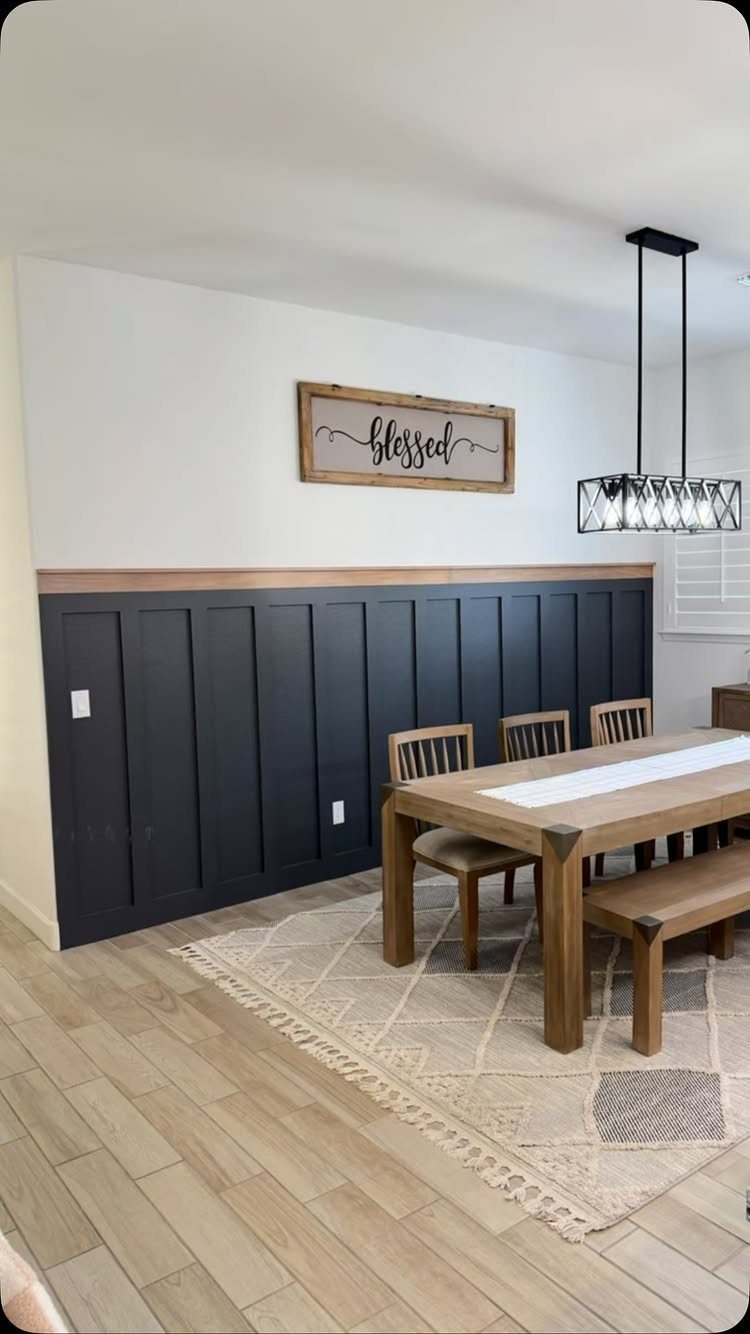
Dark navy board and batten reads as architecture rather than decoration, which is why it works in a dining room where you actually sit and talk instead of just passing through.
A wood top rail warms the look just enough to keep the room from feeling like a stage set; I’d skip that detail only if the rest of your furniture already runs warm.
This much pigment shows every joint and brush mark, so the boards need to be true and the caulking patient. A satin or eggshell finish catches less dust than matte in a room that sees gravy boats and red wine.
Best for south-facing rooms or spaces with several light sources; a single overhead fixture turns dark paneling into a void.

Item Description: 14"W x 73"H Americraft Four Board (2 Batten) Exterior Real Wood Joined Board-n-Batten Shutters w/ Z-Bar (Per Pair), Peaceful Blue

Dimensions: 10-1/2 in. Width x 1 in. Depth x 73 in. Height

Dimensions: 19-1/2 in. Width x 1 in. Depth x 34 in. Height
8. Sage Green Board and Batten
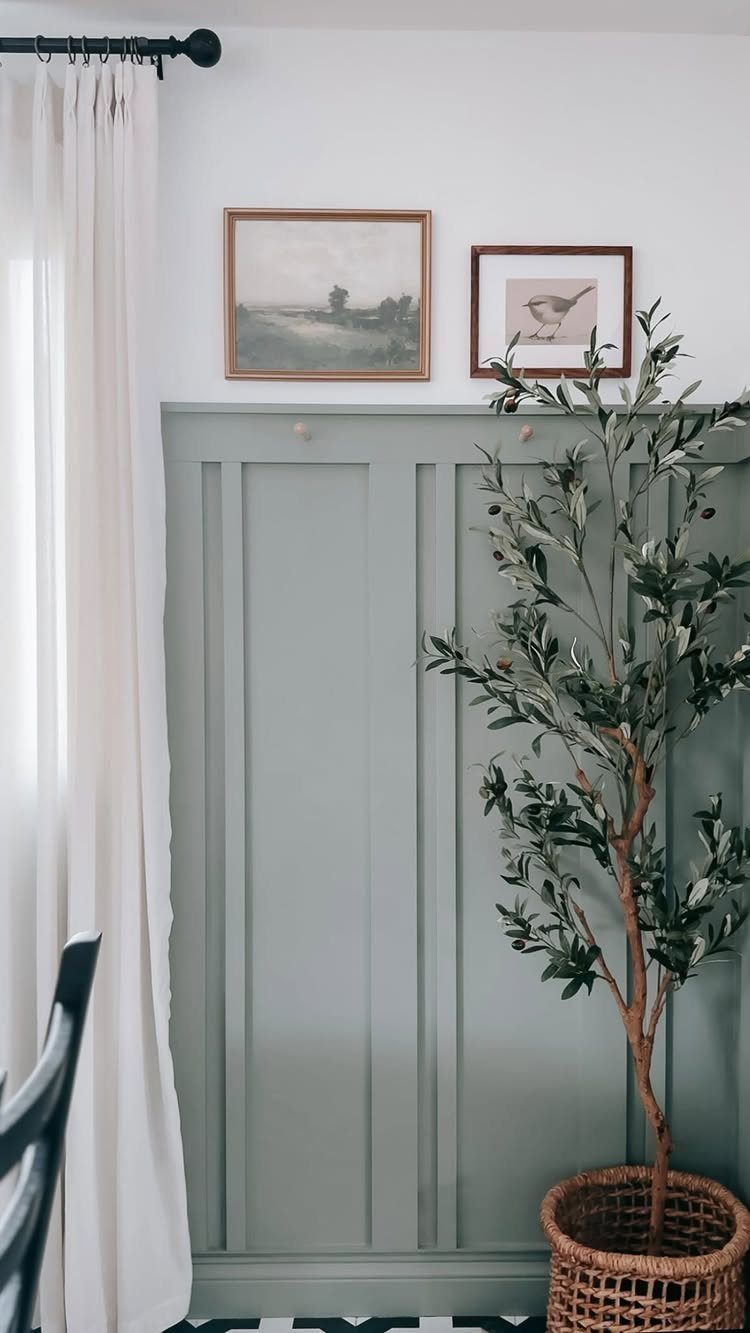
Sage green board and batten borrows from kitchen cabinets and garden sheds in the best way, familiar enough to feel settled without defaulting to white.
The maker behind the photo kept it simple: 1×4 boards for the wide verticals and top piece, 1×2 for the narrow battens and the ledge. Two sizes, no complicated cuts.
That simplicity keeps the cost in lumber and time low; a single free weekend and a short stack of pine boards is all it takes for a standard accent wall.
Prime before painting, since green pigments over raw wood can turn patchy where the grain drinks unevenly.
Pair it with warm metals and soft textures, not more cool colors, or the room goes flat.

Pre-Cut Arch Wainscoting Panel Board:A complete set of 4 pre cut arched wall decorative strips, each set containing 9 components: one arched component and 8 vertical strips, totaling 36 components; These 9mm thick panels can be easily connected, adding a delicate touch to doors or walls

Wall Molding Kit: the MDF board and batten wall panel kit includes 1 set of wall trim strips; The strips are 4cm wide and 9mm thick, consisting of 21 strips of 87cm width, 12 strips of 100cm width, and 6 strips of 75cm width, for a total of 39 strips; The finished size is 118 x 103 inches; You can paint, stain, or further decorate them according to your preferences to achieve your desired style and color

Board and Batten Wall Design : Include 10 premade molding trim slats and 2 decorative edge strip. No measuring or extra shopping. Everything you need for a accent wall, ready to assemble right out of the box
Installation Complexity
A weather-resistant barrier behind the siding stops water from finding its way in. Precise spacing and alignment matter for both looks and structure, and airflow behind the boards prevents mold from taking hold.
Experienced contractors handle the sealing right, which is worth the cost; cutting corners leads to warping, leaks, and siding that fails before its time.
Trend Longevity
Board and batten keeps coming back because it adapts. Historic charm, modern materials, and enough architectural interest to suit either a forever home or a sale.
The style resurfaces in cycles across residential and commercial builds, not as a comeback but as a constant. Proper installation gives you decades of service, which is why calling it a trend misses the point.

𝗛𝗜𝗚𝗛, 𝗤𝗨𝗔𝗟𝗜𝗧𝗬 𝗗𝗘𝗖𝗢𝗥𝗔𝗧𝗜𝗩𝗘 𝗕𝗢𝗔𝗥𝗗 & 𝗕𝗔𝗧𝗧𝗘𝗡 𝗦𝗛𝗨𝗧𝗧𝗘𝗥𝗦: These Board and Batten home shutters offer a rustic ambiance and simplicity perfect for farmhouse and beach style homes. Please note that these shutters are non functional, and are decorative only.
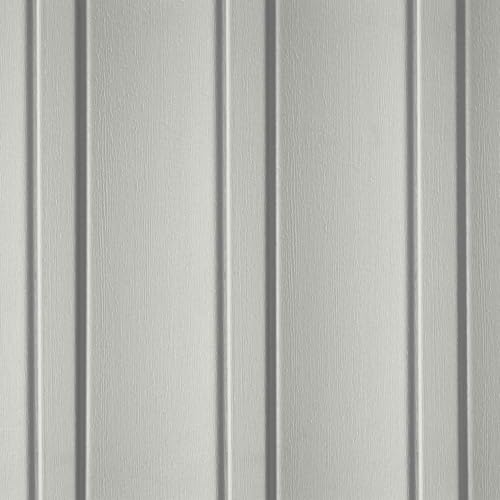
Most commonly used for whole house or accent applications

Tru-Lock state-of-the-art locking system, Random seams
Visual Impact
Vertical lines pull the eye upward, making a structure read taller than its actual height.
The same boards look right on a farmhouse or a modern build because the texture reads rustic and the lines read clean; you get the interest without the shouting. A facade gains presence from the contrast alone.
Frequently Asked Questions
What are the different styles of board and batten?
The main styles include traditional board and batten with wide vertical boards and narrow battens covering every seam; square panel, which adds horizontal battens for a grid that reads modern or traditional depending on trim; mixed material, pairing vertical boards with stone, brick, or horizontal siding; 3/4-height for interior walls that leaves upper space for art or paint; and vertical siding run full exterior height to draw the eye upward.
Each varies in material, proportion, and where you stop the boards rather than in the basic board-and-batten idea itself.
Is board and batten still trendy?
It has outlasted enough cycles to count as timeless rather than trendy.
The modern farmhouse wave pushed it hard, but the look predates that by centuries on actual working farmhouses and barns where the battens served a real purpose against wind and water.
It hangs around the way subway tile and white cabinets do: familiar enough to stop reading as trendy, flexible enough to keep getting used.
What are the downsides of using board and batten siding?
Installation demands more precision than standard horizontal siding; misaligned battens or poor sealing let moisture behind the panels.
More material and more labor than basic vinyl lap siding mean a higher bill from the start, and a facade crowded with windows, doors, and bump-outs turns into a trim carpentry puzzle that eats hours fast.
On large gable ends, battens can act like sails in high wind if fastening is wrong, so checking your local wind rating matters before committing to vertical siding.
What are the best board and batten siding options?
Vinyl runs cheapest and lowest maintenance, fiber cement such as James Hardie mimics wood grain without the upkeep and handles weather well, and engineered wood resists rot and insects better than solid wood at a moderate cost.
Traditional wood still works but needs the most attention over time. Material choice drives cost, maintenance, and how the wall performs in your climate more than the board-and-batten profile itself.