Living room panelling ideas run from brass trim and MDF strips you can glue up in an afternoon to full wall systems that need a nail gun and a level.
The deciding factor is how permanent you want the change to be: adhesive modular panels come down when your lease ends, while wide floor-to-ceiling boards become architecture, not decoration.
[link-whisper-related-posts]1. Reclaimed Wood Feature Wall
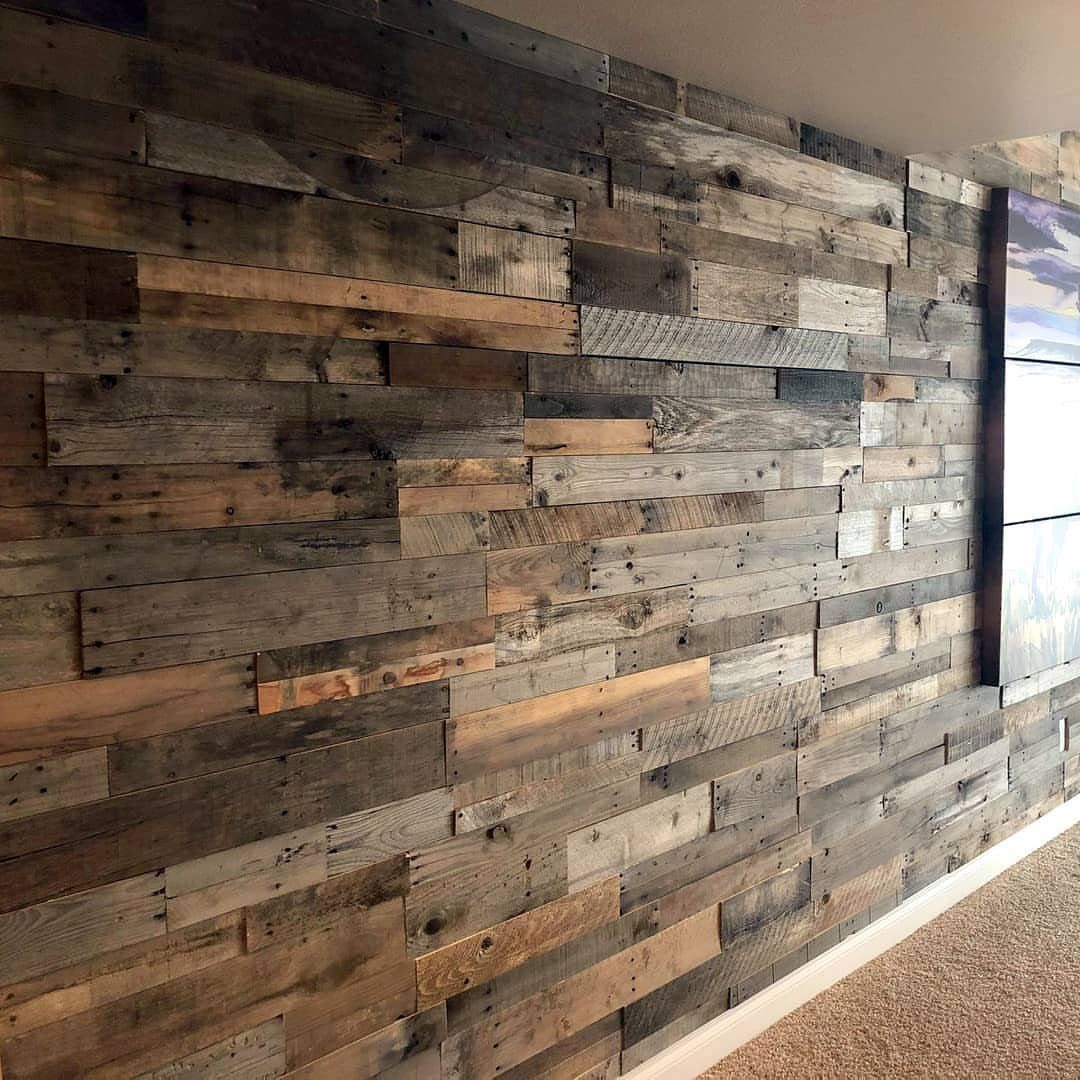
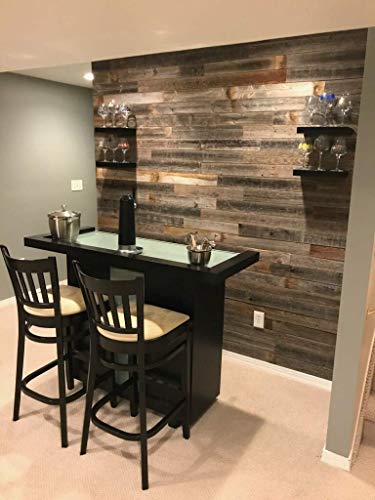
A reclaimed wood wall works best when it wraps a corner or defines a seating zone rather than stopping flat at one wall’s edge.
The mixed tones and widths in salvaged planks do the zoning for you; your brain reads the texture shift as a room’s edge.
Reclaimed boards run higher than new tongue-and-groove, and the hunt for a decent pile takes longer than a trip to the lumber yard.
Once the planks are up, a sharp trim along the gaps flattens the whole plane; after that, a clear coat works for a quiet hallway, but a proper seal holds up better where shoulders brush past.
Match nearby furniture to the wood’s undertone, or pull from the grey and tan streaks with stone or metal accents. The eco-friendly angle is real, not marketing; you’re using material already harvested.

High-Quality Wall Panels: Our acoustic panel set is crafted with high-density polyester fiber, premium medium-density fiberboard, and a solid wood veneer. This combination provides an elegant look, superior sound damping, and excellent sound deadening, significantly improving room acoustics
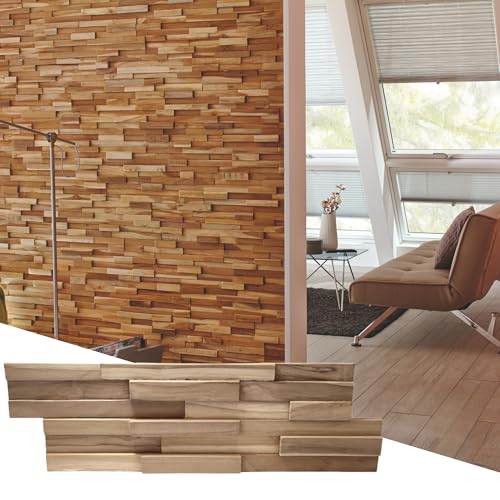
Premium real wood wall panels: beautiful hand-selected reclaimed and upcycled Asian teak wood wall panels
RECLAIMED WOOD ACCENT: Real reclaimed and recycled wood, naturally-weathered wood paneling adds a beautiful, rustic accent to your walls
2. Modular Wall Panels
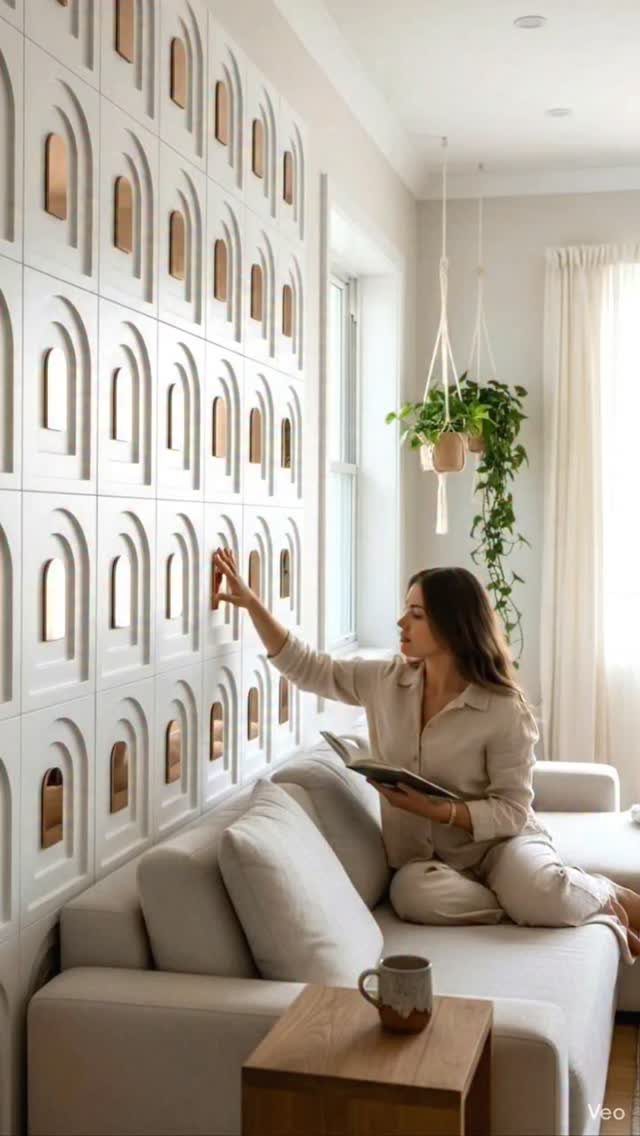
Modular panels suit renters and anyone who redoes a room every few years. The 3D forms clip or adhere without the commitment of permanent installation, and you can disassemble them when the lease ends or your taste shifts.
Check whether your chosen system needs adhesive, a track, or simple pressure fit; this changes what walls it can handle and whether you’ll patch paint later.
Weight matters too, especially for arched or recessed designs that carry more material than flat tiles.
Neutral rooms with good light let the panel shadows do the work. In a darker space, the recessed sections disappear and you lose the dimensional effect.
I’d skip these if the wall faces north or sits far from windows.

Modern 3D Wood Slat Wall Panel| realistic faux wood texture & soundproof design Transform any space with our premium wood slat panels! Featuring a 3D vertical slat design that replicates the look of real timber, these panels inject depth and warmth into walls, ceilings, or furniture. Integrated soundproof wall panels with acoustic layer for echo reduction—perfect for home theaters, offices, or bedrooms.

𝗠𝗼𝗱𝗲𝗿𝗻 𝟯𝗗 𝗧𝗲𝘅𝘁𝘂𝗿𝗲𝗱: 3D wood slat design creates depth and visual interest while enhancing sound absorption. Great for Bedroom, office to reduce echo and noise, both practical and stylish

【100% SATISFACTION SHOPPING】: 3D wall panels safety and environmental, brick pattern effect, simple and modern style. “Contact Seller” if you are not happy with the purchase or have any questions. Our Excellent customer service will leave you with no worries after you purchase it.
3. Jacobean Style Paneling
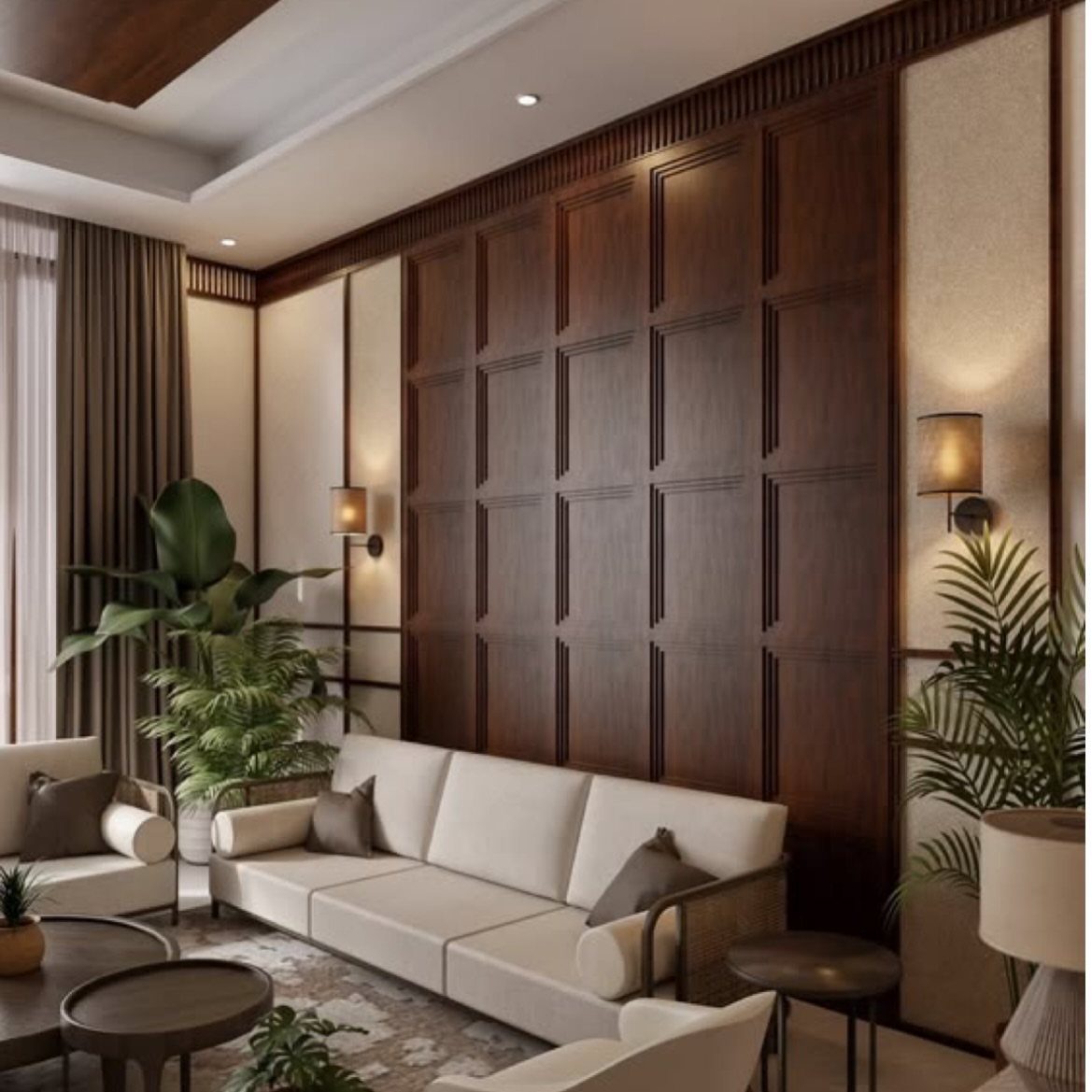
Jacobean paneling brings in the dark, ornate geometry of 17th-century English woodwork without requiring a historic house. The rectangular grid reads as furniture-scale detail; it suits rooms where you want warmth and weight rather than airiness.
Install it over simpler vertical boards for depth, or run the grid alone from chair rail to ceiling.
Running fixed boards low and opening into a wider Jacobean grid above pulls the eye upward in rooms that feel squat and forgotten.
The dark finish needs deliberate contrast. Without those offsets, the wall owns the room and the sofa disappears against it.

Premade Board and Batten Paintable Wainscoting Kit: Package includes 20 premade molding trim slats, 4 decorative edge strips, and two pairs of gloves for convenient installation

Wall Molding Kit: the MDF board and batten wall panel kit includes 1 set of wall trim strips; The strips are 4cm wide and 9mm thick, consisting of 21 strips of 87cm width, 12 strips of 100cm width, and 6 strips of 75cm width, for a total of 39 strips; The finished size is 118 x 103 inches; You can paint, stain, or further decorate them according to your preferences to achieve your desired style and color

ELEVATE ANY ROOM INSTANTLY: Transform boring walls into high-end architectural features. This classic wainscoting pattern adds sophisticated depth and texture, making it the perfect DIY accent wall for living rooms, bedrooms, hallways, stairwells, and dining spaces
4. Wide Floor-to-ceiling Panels
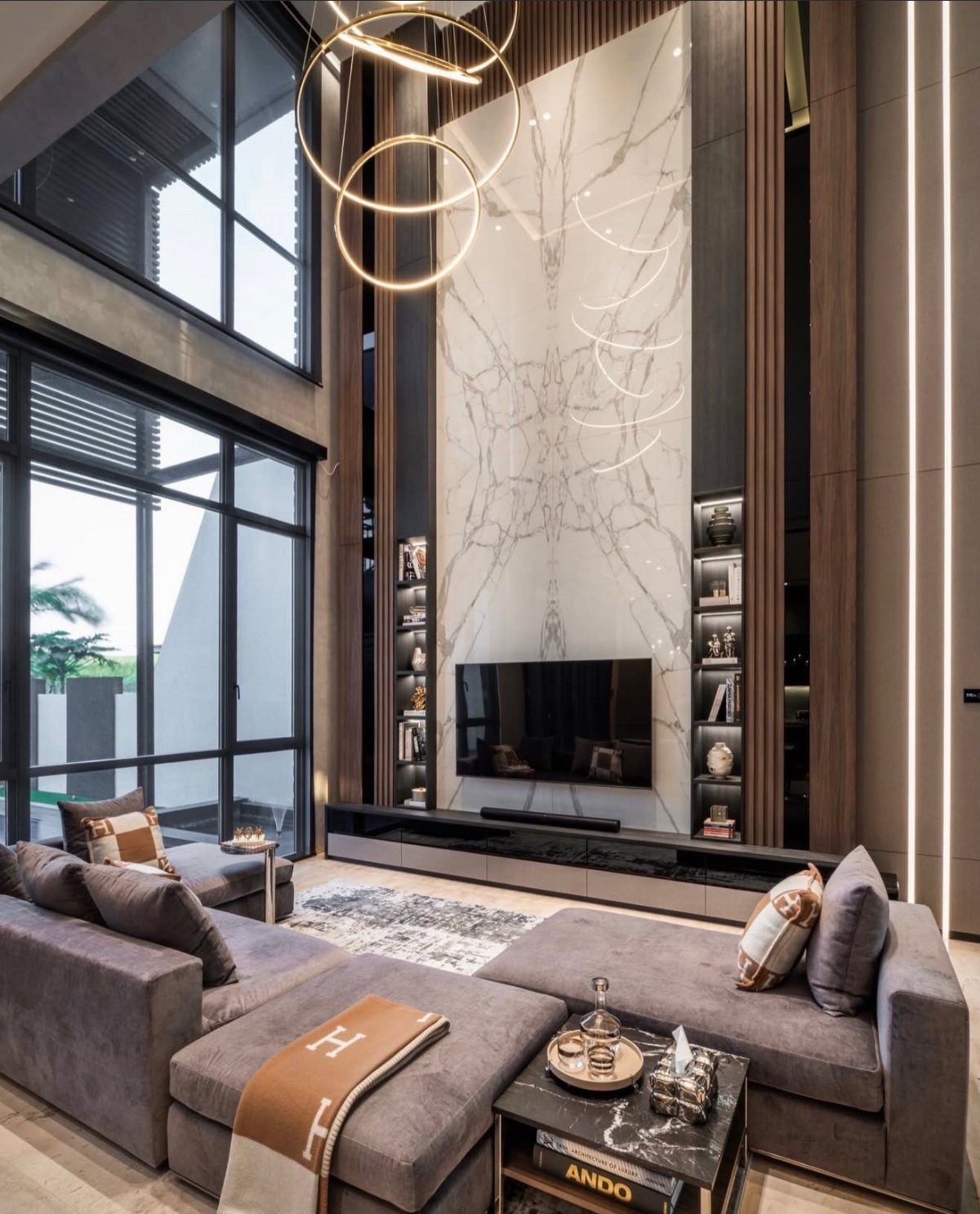
Wide panels that run from baseboard to crown do two jobs at once: they cover old plaster or uneven drywall, and they stretch the eye upward.
In a double-height space, the vertical seams echo the room’s proportions rather than fighting them.
Tongue-and-groove construction hides the seams and lets one panel lock into the next without visible fasteners. The full coverage reads as architecture, not decoration; a pantry door or media storage can disappear into the run if you match the hardware.
This is the most polished option on the list, and the most permanent. Budget for professional installation unless you’re confident with a level and a nail gun; crooked wide panels announce themselves from across the room.

RICH EVEN COLOR – Minwax Wood Finish is a deep penetrating, oil-based wood stain that provides beautiful color and enhances the natural wood grain in one coat. It’s perfect for interior staining projects such as wood furniture, cabinets, doors and more.

RICH EVEN COLOR – Minwax Wood Finish is a deep penetrating, oil-based wood stain that provides beautiful color and enhances the natural wood grain in one coat. It’s perfect for interior staining projects such as wood furniture, cabinets, doors and more.

【REAL WOOD】– Made of 100% dried fir wood imitating vintage reclaimed barnwood appearance for interior finish. The colors will vary from browns to grays depending on the batch.
5. White Tongue-and-groove Panels
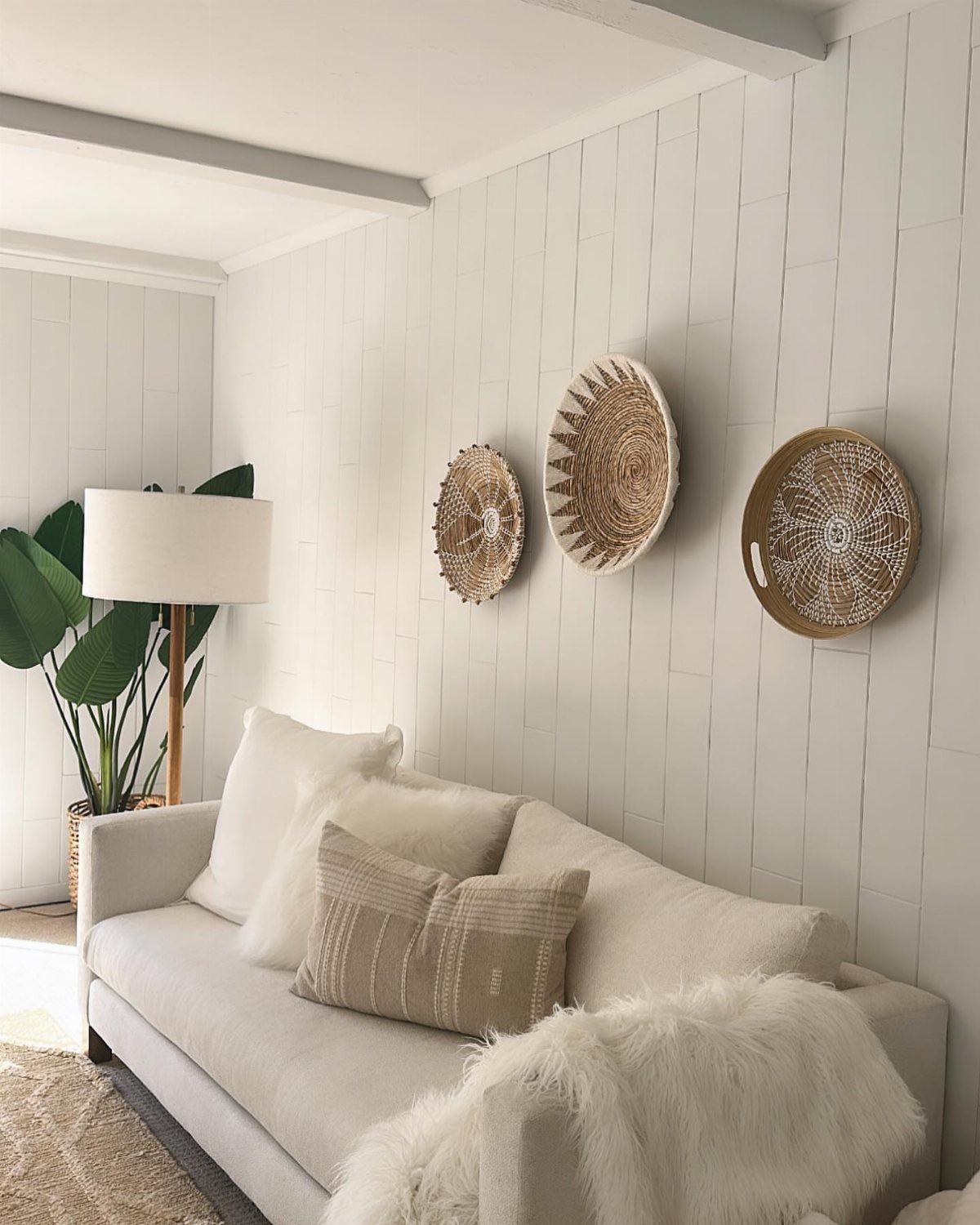
Vertical white boards with the thin shadow line of tongue-and-groove joints give a room the particular brightness of a screened porch at the shore. The paint reflects daylight, and the narrow channels break up the flatness of a solid wall.
Thin panels crosshatching walls and ceiling push the beach-house feeling further, though that full wrap is a bigger commitment. On one wall, the effect stays flexible; you can hang woven baskets, a floor lamp, or a sofa without competing finishes.
Sheer curtains or bare windows help the white work. In a north-facing room, the panels still brighten, but the coastal reference goes flat without some natural light to activate it.
I’d add a warm bulb in the floor lamp for evening.

[EFFORTLESS FREE INSTALLATION] Simply point the U shaped arm at your boards and push or pull the grip to draw them tightly together eliminating unsightly gaps. This allows you to nail or screw each board securely in place for a professional looking deck fence or floor every time without the need for extra prying tools or wrestling with stubborn planks.

[VERSATILE APPLICATION] This board decking tool is expertly designed for deck fence and mortise and groove plywood. It also works perfectly on woodwork materials such as floor tongue and groove ceiling wood board and paneling making it a must have for any project.

CONSTRUCTION APPLICATIONS: Perfect for the installation of tongue and groove hardwood flooring from 1/4" – 5/8", decorative trim, moulding, cabinetry, paneling, upholstery, insulation, plastic sheeting, window casing, furniture trim, picture frame assembly, and hobbies and crafts
6. Pink Painted Paneling
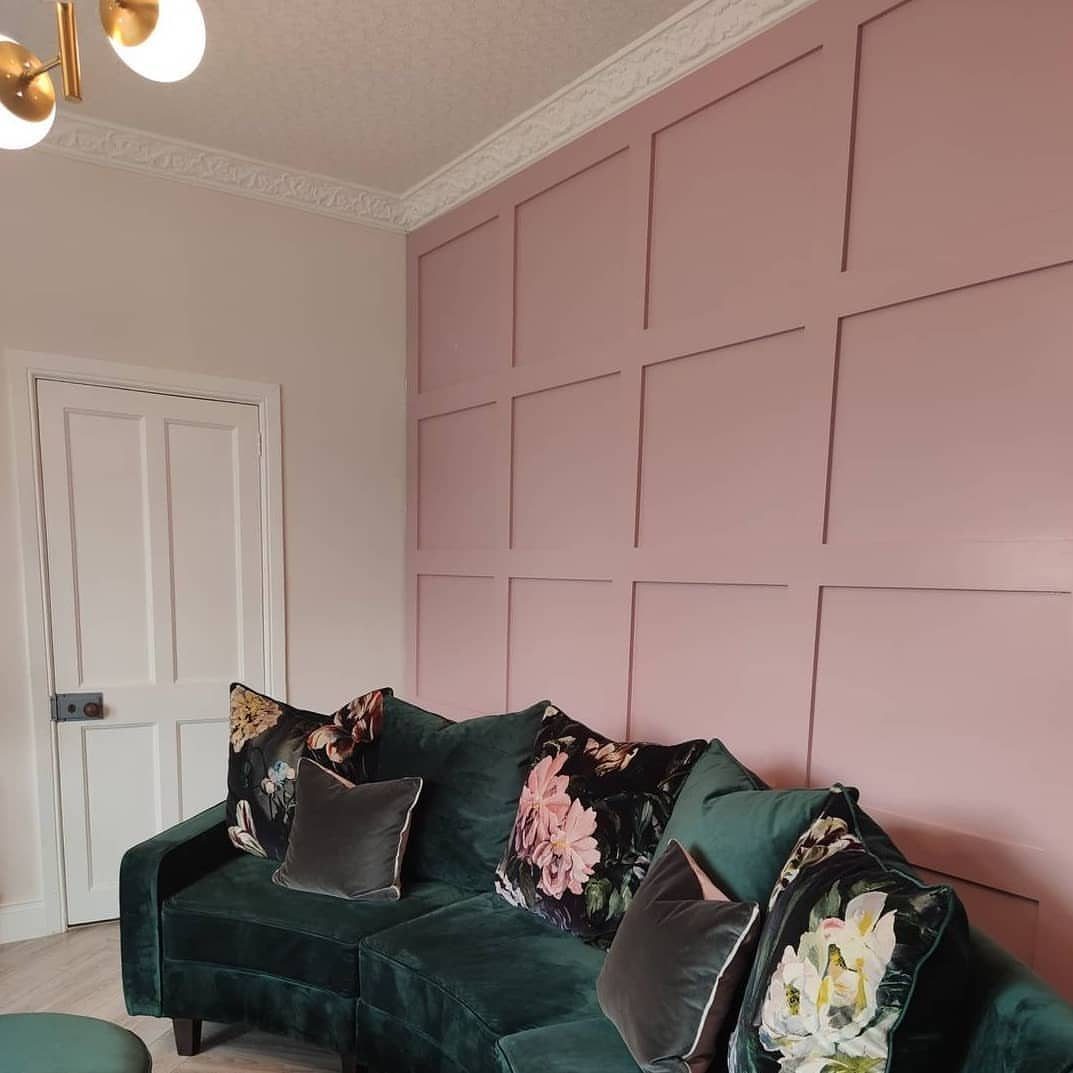
Pink grid paneling behind a dark sofa reads as deliberate, not tentative. The contrast between the pale wall and deep upholstery is what makes it modern; matchy-matchy pink elsewhere would tip into nursery territory.
MDF boards take paint evenly and cost less than solid wood, though they weigh more and need precise anchoring. Paint before installation, let it cure fully, then attach with carpenter’s glue plus nails or screws.
The pre-painted route avoids brush marks in the grooves and lets you lay out the grid on sawhorses.
Bright pink, light pink, or something with grey or coral undertone; the choice depends on what else lives in the room. A warm neutral sofa and floral pillows pull toward the softer end.
I’d paint a single patch of grid on the actual wall and live with it through morning light and evening lamp before mixing the rest.

Real Reclaimed Teak Wood Wall Panels: Crafted from genuine reclaimed teak wood, these wood wall panels showcase natural grain, warm tones, knots, and texture variations. Each panel has a unique look, bringing authentic wood character to interior walls.

Real Wood Wall Planks: 100% Real Barn Wood Wall Planks With Natural Knots and Dents, the Surface Of Wood Shiplap Planks Is Processed With High Temperature Carbonization, the Real Wood Wall Shiplap Planks Is Non-Toxic, Sterilized and More Safe For Children, Voc Free Process Ensures These Stick on Shiplap Planks For Walls Are Safe To Use In Home
Modern 3D Textured: 3D wood slat design creates depth and visual interest while enhancing sound absorption. Great for bedroom, living room, office to reduce echo and noise, both practical and stylish
7. Picture Frame Molding Panels
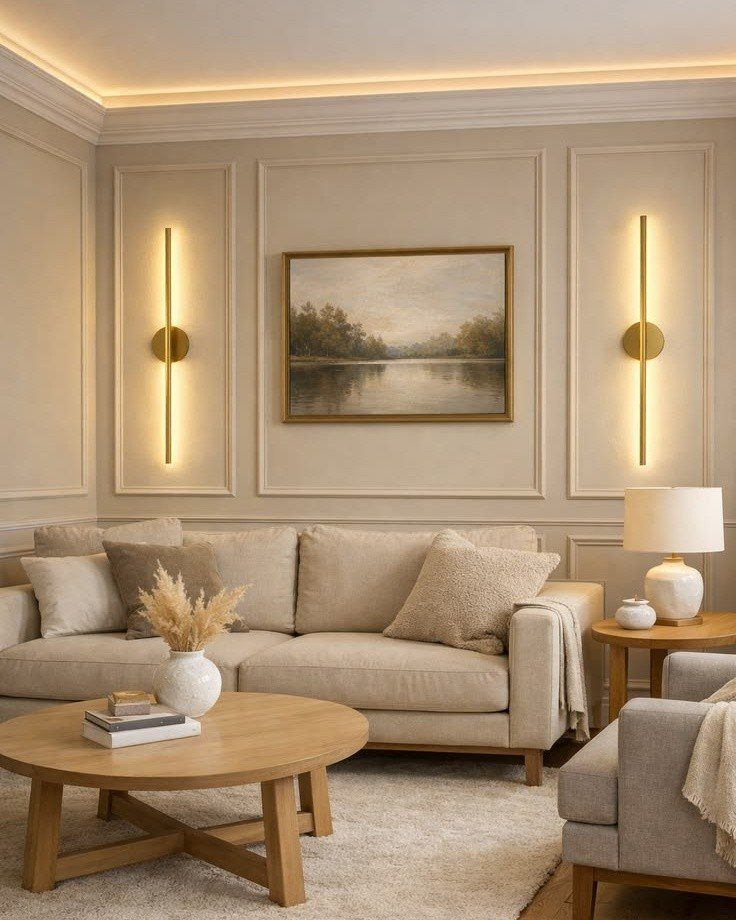
Picture frame molding turns a flat wall into a grid of shallow rectangles without swallowing floor space or budget.
Thin MDF strips, carpenter’s glue, and finishing nails are the whole material list; paint everything one color so the shadows do the work.
Spacing matters more than the strips themselves. 1.5–2 inches between panels keeps the grid reading as one continuous surface rather than isolated boxes.
Keeping the molding and wall in the same warm beige lets the sconces and art supply the contrast.
This suits renters who can patch nail holes later, and first-home owners who want architectural interest without tearing into drywall.

Real 3D Design: Diamond pattern with 1 inch raise design makes our wall panels more eye-catching. A box comes in 33 tiles, which covers 32.Sq.Ft.
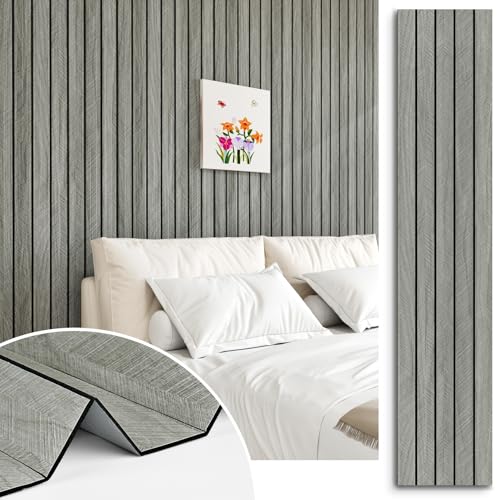
𝗠𝗼𝗱𝗲𝗿𝗻 𝟯𝗗 𝗧𝗲𝘅𝘁𝘂𝗿𝗲𝗱: 3D wood slat design creates depth and visual interest while enhancing sound absorption. Great for Bedroom, office to reduce echo and noise, both practical and stylish

3D Realistic Brick Visual Effect and Texture: The real texture of the 3d wall panels for fireplace is different from the flat wallpaper. After installation, you will be surprised by its real 3D effect, just like real brick, because the faux brick panels’ thickness is 1/4 inch.
8. Vertical Wood Slat Feature Wall
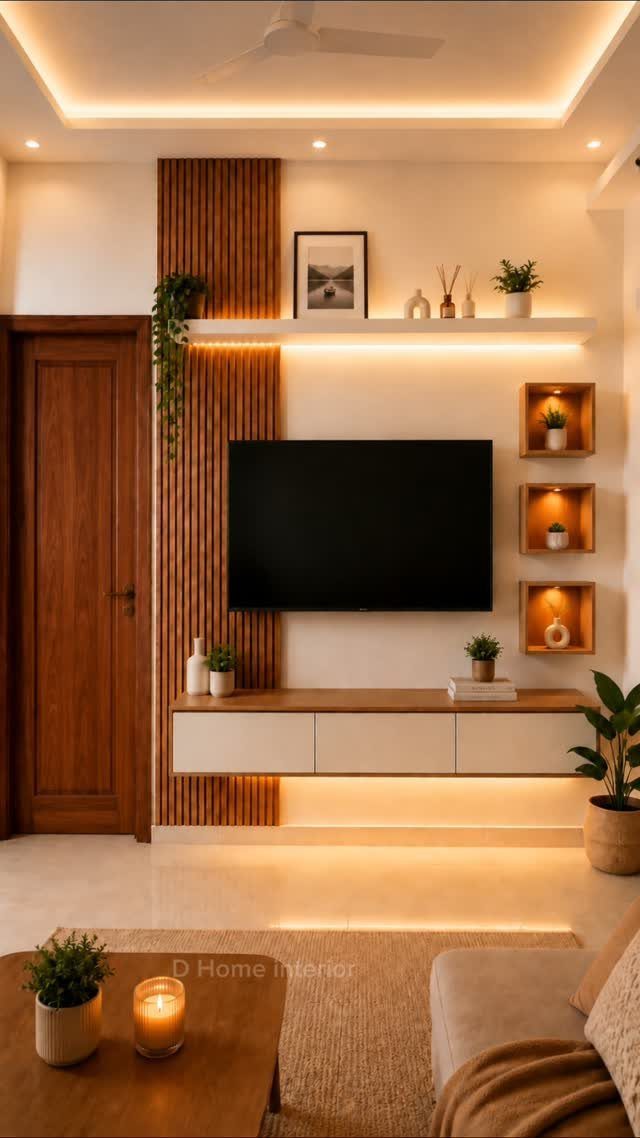
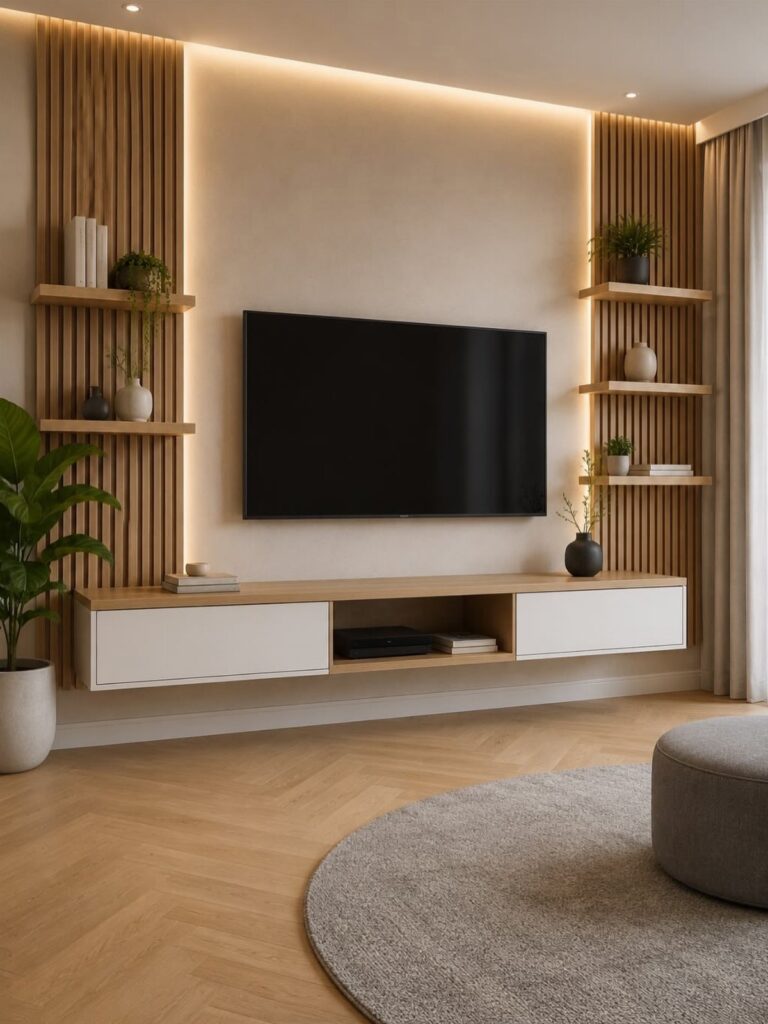
Vertical slats behind a television solve two problems at once: they hide cable runs and give the eye something better to land on than a black rectangle.
Recessed box shelves at the sides, sized to the slat rhythm, turn storage into part of the pattern rather than an afterthought.
Reclaimed wood works here if you have a source, though a specialist will charge more than standard tongue-and-groove boards. Clear coat keeps the grain visible; paint flattens everything into texture alone.
One flat accent wall, by itself, can feel like a stage set; turning a corner makes it architecture.

𝗠𝗼𝗱𝗲𝗿𝗻 𝟯𝗗 𝗧𝗲𝘅𝘁𝘂𝗿𝗲𝗱: 3D wood slat design creates depth and visual interest while enhancing sound absorption. Great for Bedroom, office to reduce echo and noise, both practical and stylish

What You Will Receive:Package includes 3 sets of pre cut peel and stick wall molding panels,totaling 30 pieces,which can easily create up to 6 standard frames!You also can experiment with different spacing and quantities,mix and match our different sizes to add variety to you space,dress up your room the way you want!Please measure your wall before ordering to ensure correct amont ordered
9. Marble Panels with Wood Slats
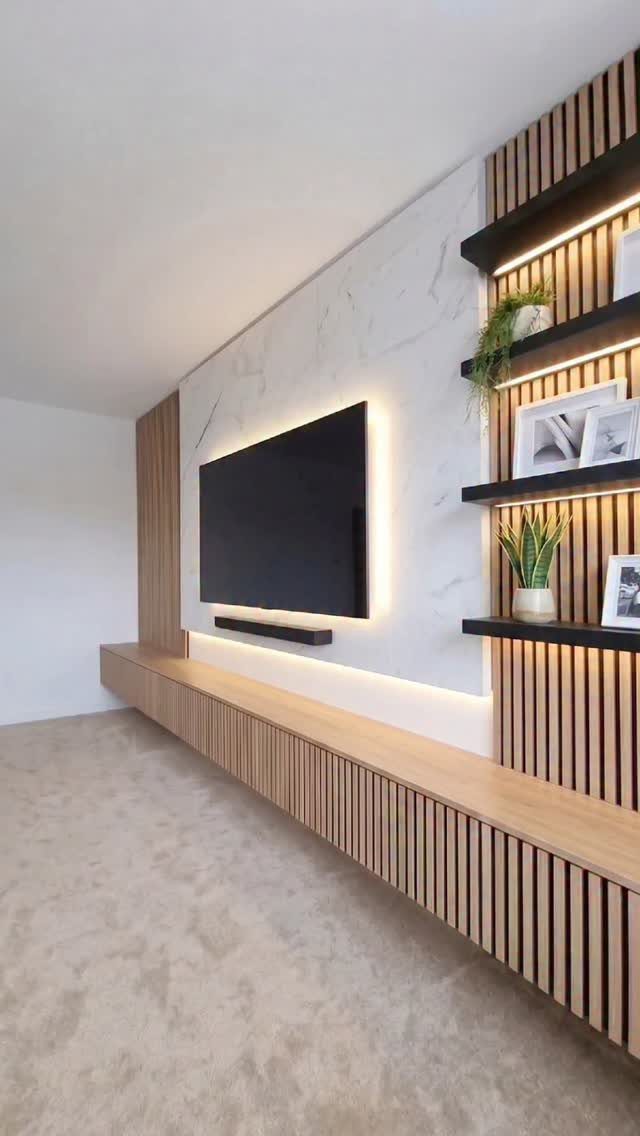
A marble-look panel centered behind the TV, flanked by vertical wood slats, splits the difference between luxe and livable.
The marble effect is laminate or large-format porcelain, not stone; that keeps weight down and eliminates the sealing and grout maintenance of real marble.
Backlighting in warm white separates the marble and wood into distinct layers. LED strips tucked behind the marble panel and under the floating shelves draw attention to the texture difference rather than the TV itself.
This asks for precise alignment: the marble panel and slats must meet at clean edges, so a level and a patient afternoon matter more than money.
MDF slats painted to match real wood tones keep the wall affordable if you source the marble-look panel from a home center remnant pile.
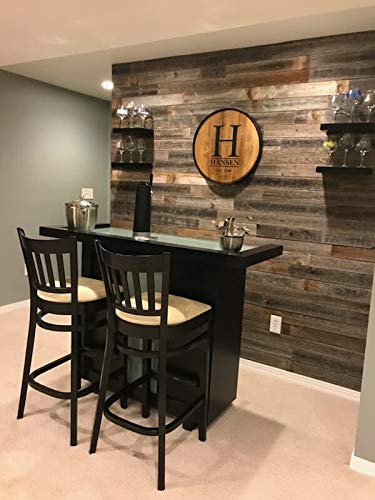
✔️100% REAL wood with adhesive strips on the back that are easy to install

RECLAIMED WOOD ACCENT: 100-percent reclaimed and recycled, naturally-weathered wood paneling adds a beautiful, rustic accent to your walls
10. Gold-trimmed Wall Paneling
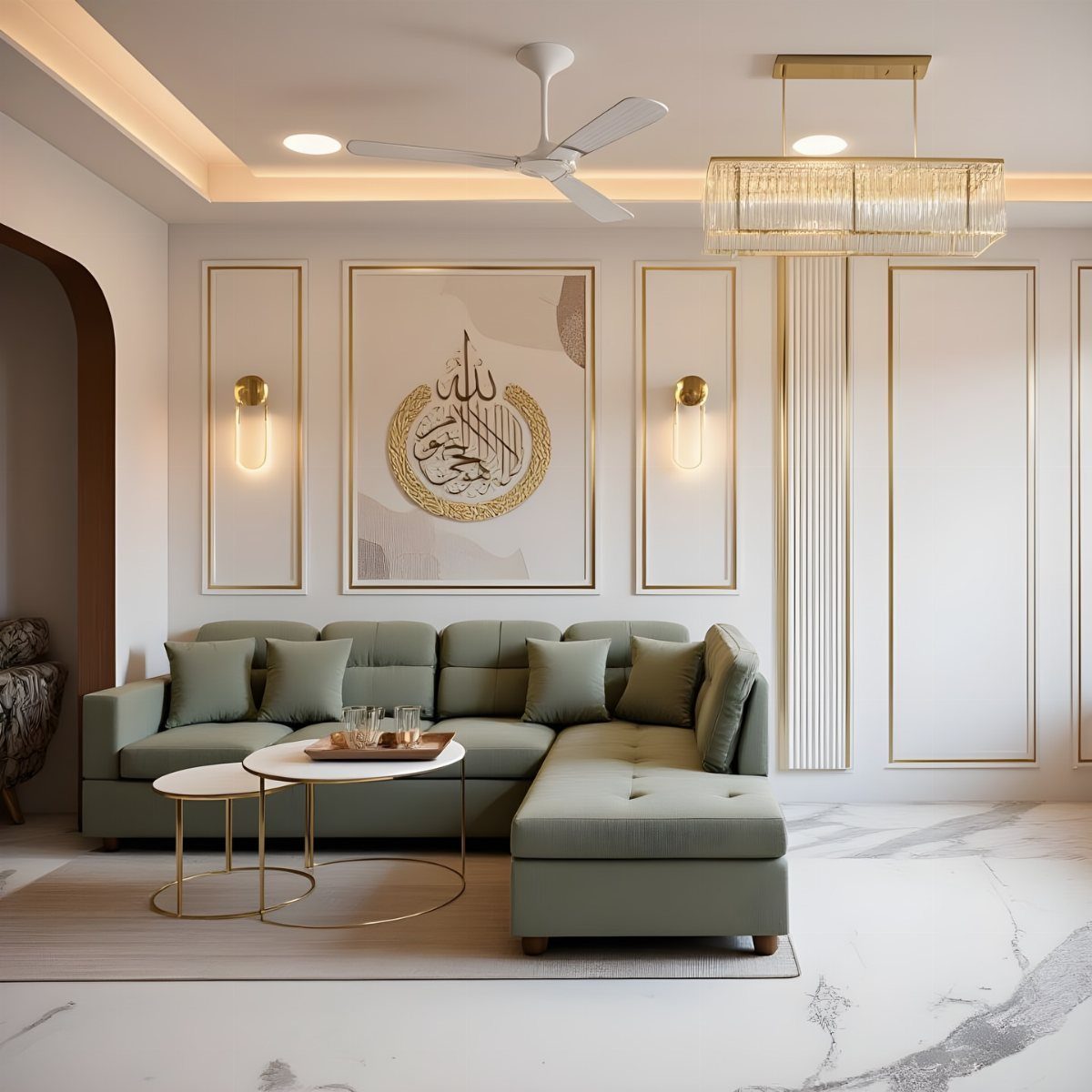
Gold trim on white or beige panels reads formal without the weight of fully gilded walls. The trim here is narrow, applied right at the outer edge of each rectangle; it catches light rather than announcing itself across the room.
Brass or gold aluminum angle trim from a hardware store, cut to length and adhesive-backed, sells by the foot.
Paint the panels and wall the same base color first, then apply the trim last so the adhesive grips finished paint rather than raw drywall.
A green sofa and marble floor keep gold trim from sliding into hotel-lobby territory. This needs at least one grounded, matte element nearby, or the gold starts to read as costume jewelry on the wall.
11. Molding Panels with Wallpaper Inserts
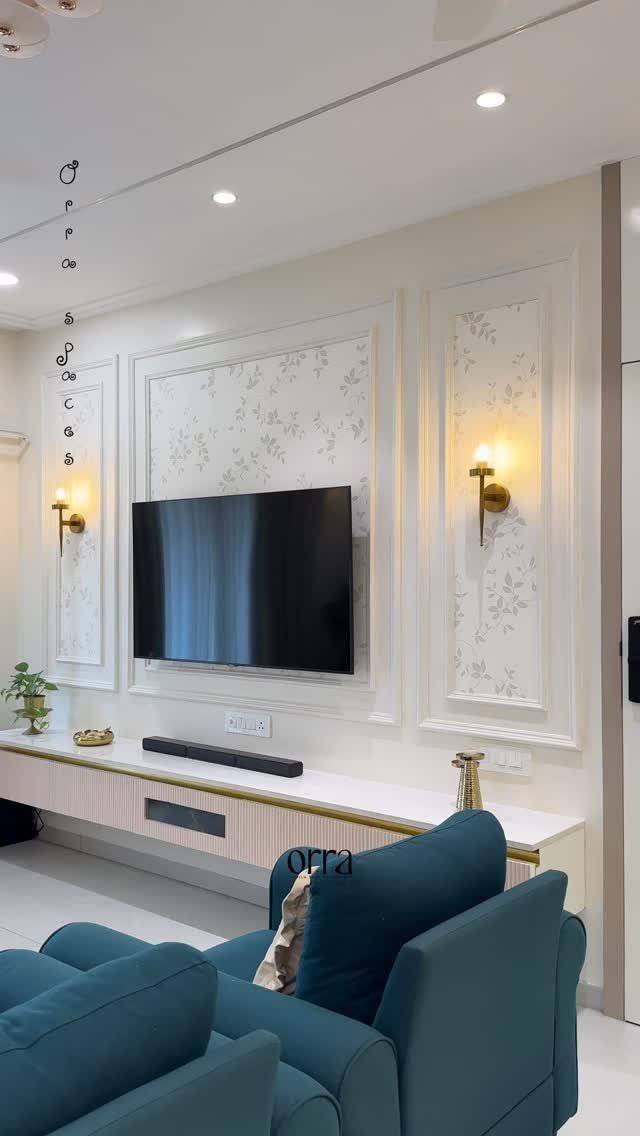
Molding frames filled with wallpaper give you pattern without commitment. Floral paper sits inside recessed panels, protected by the molding lip; swap it later without touching the woodwork.
White paint on the molding keeps the grid crisp even with busy paper. Measure your panel interiors before buying wallpaper, since a standard roll goes fast once you account for pattern repeat.
The TV panel in the center, left as plain painted wall, prevents the pattern from fighting the screen.
This 3BHK got the full treatment: a free estimate for your 3BHK. That line from the creator’s pitch tells you the job scales, though the DIY version needs only a miter box, adhesive, and a weekend.
Wallpaper paste over painter’s tape inside each panel lets you test papers before finalizing.
Importance of Wall Panels
Wall panels do more than dress up a flat surface. The right installation absorbs sound instead of bouncing it, which matters in open-plan living rooms where the television, kitchen clatter, and conversation all compete.
Solid wood or dense MDF breaks up echo; even shallow picture-frame molding scatters sound waves better than bare drywall.
Panels also scale a room psychologically.
A vertical run pulls the eye up in spaces with low ceilings; a dark grid or warm reclaimed wall brings the boundaries closer, making oversized rooms feel less like hotel lobbies and more like places where people actually gather.
The wall becomes part of the architecture rather than leftover space between windows.
The modern interior industry pushes furniture as the soul of a room, but the vertical plane controls how light, sound, and intimacy actually function.
Treating it as an afterthought leaves you buying bigger sofas to fix a problem the walls could have solved.
Trends in Wall Paneling
Sustainability now drives material choice more than veneer grade. Reclaimed boards, laminate marble-look panels from home-center remnants, and MDF made with recycled content all cut demand for new harvest.
Technology integration shows up in projection-ready surfaces and backlit installations. Interactive or projection-specific panels remain niche, but the wiring paths and flat planes that accommodate them are becoming standard in modular systems.
Personalized design means mixing rather than matching. The Jacobean-over-vertical combination, or molding frames filled with swappable wallpaper, lets a room evolve without tearing into drywall.
Pre-painted MDF grids in pink or warm beige move color onto the architecture itself, not just the accessories.
Paneling Installation Tips
Complex installations need professional help. Wide floor-to-ceiling panels, in particular, announce every deviation from level; crooked seams read from across the room.
A nail gun and a long level are the minimum, and the full-coverage look is the most permanent option on the list, so mistakes cost more to undo.
Simpler work stays in weekend territory.
Mixing styles adds interest without adding difficulty. Plan the transition line before you start, not at the wall.
Psychological Effects of Wall Textures
Textured walls tap into something older than interior fashion. Fragmented surfaces, floor-to-ceiling shelving, or even shallow picture-frame grids break up the flat plane our ancestors would have found alien.
The "plain white box" is recent history; for most of human habitation, walls carried story, shadow, and the sense of a boundary that protects.
That fragmentation reduces stress in ways measured and felt. A room with depth on its vertical planes reads as shelter rather than container.
Old libraries comfort partly because the walls disappear behind texture; the same principle scales down to a single slatted accent or a painted grid behind the sofa.
Walls matter as much as floors or ceilings in a room that feels finished. They join the conversation instead of waiting to be covered by it.
Drywall can carry weight, shadow, and warmth if you stop seeing it as something to cover and start seeing it as material to work with.
Frequently Asked Questions
Which wall panelling is best for a living room?
The best paneling depends on what you’re solving for. Wide floor-to-ceiling panels stretch the eye upward and cover uneven walls, while picture frame molding adds architectural interest without swallowing budget or floor space.
The shadow gap and how light hits it matters more than the material itself; I’ve seen MDF slats painted in deep matte tones read more sophisticated than expensive wood because the relief caught the light right.
Is panelling outdated in 2026?
Not in the approaches that are actually getting built right now: reclaimed wood feature walls, gold-trimmed rectangles, marble-look panels with wood slats, and another half-dozen directions that read current rather than borrowed.
What keeps paneling current is personalization that fits actual rooms: renters using modular systems, first-home owners building picture frame molding with a small MDF strip budget, or anyone solving a specific problem like hiding cables behind vertical slats.
Does panelling make a room look bigger or smaller?
It depends on direction and scale. Vertical panels that run floor to ceiling stretch the eye upward and emphasize height.
Horizontal grids or dark finishes without contrast can squat a room; Jacobean paneling in a dark stain needs deliberate offsets or the wall owns the space and the sofa disappears against it.
Is wall panelling still trendy?
Yes, though the trends that matter are practical ones.
Eco-friendly material already harvested for reclaimed wood, modular systems for people who redo rooms every few years, and wallpaper inserts inside molding frames so you can swap pattern without touching woodwork all point to where the interest is heading.
The personalization is in solving real constraints: rental leases, weekend timelines, a few hundred to a thousand dollars.