Parquet floor patterns range from simple layouts you can angle together with a miter saw to intricate designs that need exact subfloor prep and patience with every piece.
The deciding factor is usually room size and how much visual weight the floor needs to carry against your furniture.
A 9-by-9 inch mosaic panel shifts light across the day in a compact space, while a 45-degree chevron cut stretches a narrow room toward its longest wall.
[link-whisper-related-posts]1. Chevron
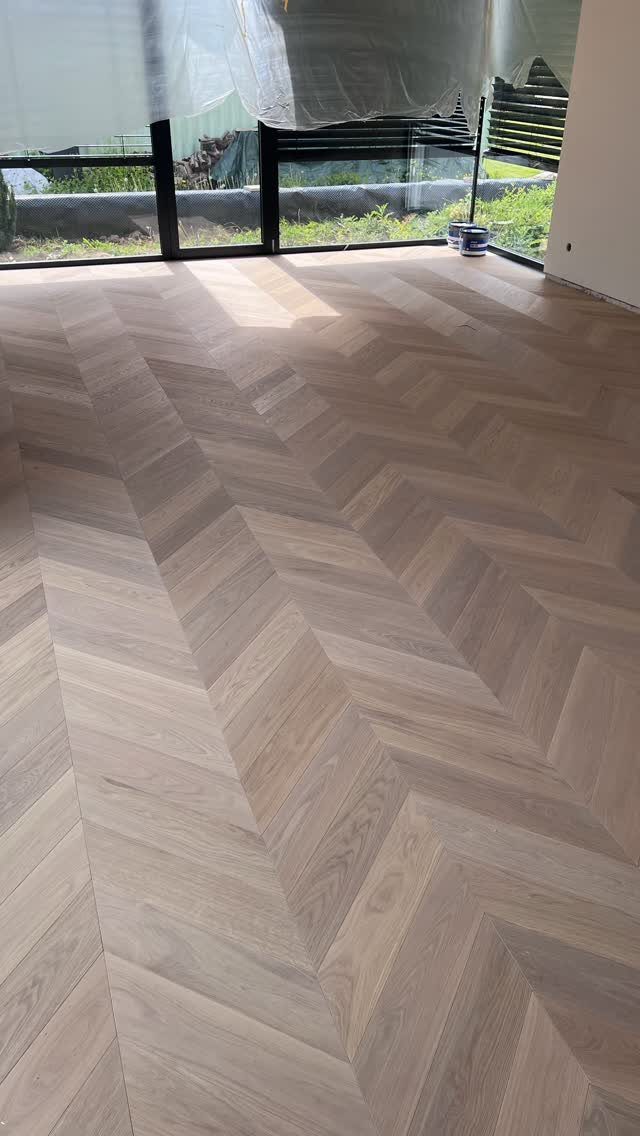
Chevron planks get their 45-degree cuts before they ever reach the room, so each piece meets the next in a clean point rather than overlapping.
That precision costs more than herringbone, but the uninterrupted zigzag reads as more modern and geometric.
In smaller rooms, the continuous V draws the eye outward and gives a sense of width you do not get from straight planks.
Run the planks parallel to the longest wall or toward the main window and the room stretches out more than it would crosswise.
Double chevron, 2 planks per side of the V, turns the pattern bolder and heavier. I would stick to single chevron in a small bedroom or narrow hallway; the pattern needs room to breathe or it turns into visual noise.

EASY DIY INSTALLATION: For the best and most durable results, we recommend using standard wood glue or PVA glue (white glue) to secure the planks. This gives you complete flexibility to position each piece perfectly before it sets, ensuring a perfect 1/12 scale dollhouse floor.

Wood inspired peel and stick floor tiles with a parquet design

2. Herringbone
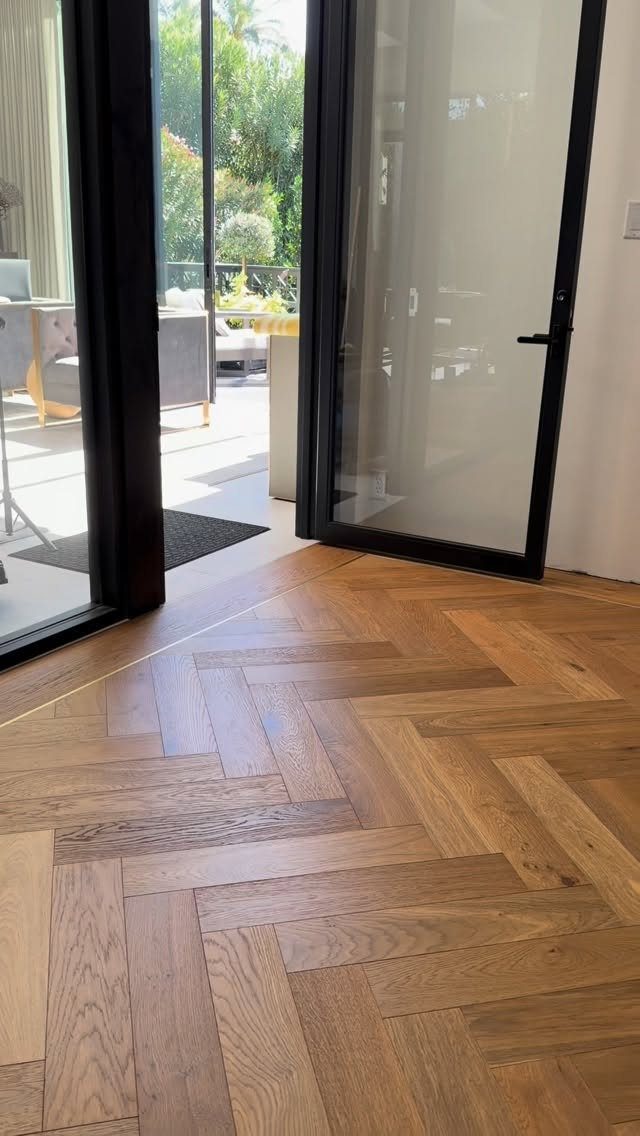
Herringbone keeps its planks whole, laid so each rectangle overlaps the next at a right angle to form a broken zigzag.
The V shape is softer than chevron, more heritage than graphic, and the installation labor runs lower since the cuts are standard.
Lay the pattern toward the window or along the longest wall to pull daylight deeper into the room and stretch the space visually.
Single herringbone stays quiet enough for most interiors; double herringbone, 2 planks per stroke, adds density that suits larger floors.
The precision matters more here than with plain plank flooring. A subfloor that is not flat will telegraph through the pattern.

Chic Design & Wood Texture - Classic herringbone pattern with realistic wood grain texture, combining classic charm with the rustic beauty of natural wood, add a touch of earthy warmth to your interiors.

Durable Acacia Hardwood Construction: These floor tiles are made from Acacia wood, known for its durability and natural resistance to outdoor elements. Our herringbone tiles not only provide strength and longevity but also bring a warm, elegant wooden finish that instantly enhances the look of patios, balconies, walkways, and more.

【Premium Thickened Vinyl Flooring Roll】Experience our 1.5mm thick vinyl flooring roll with 5 layers for enhanced quality. It's non-slip, non-fading, and provides thermal insulation. Measuring 23.6" x 196", it covers 32 sq ft without snap-lock installation, making it hassle-free and stylish.
3. Versailles
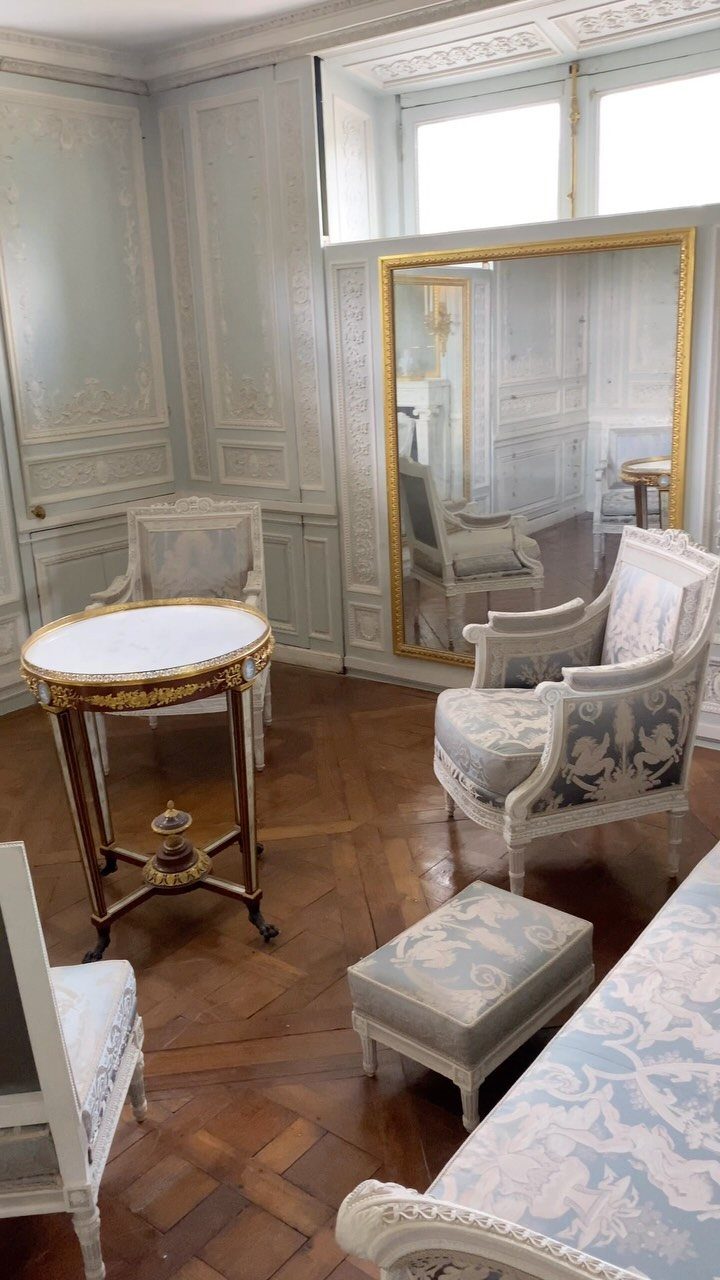
Versailles panels arrive as complete squares, each one a small geometry of interlocking bars framed at the edges, so the installer sets whole units rather than individual strips.
The scale demands room; in a cramped space the pattern chokes and the detail turns busy.
The diagonal layout within each panel pushes the walls apart visually, which helps in long narrow rooms.
Color tends toward medium to dark oak, the tone the Palace of Versailles established in 1776 when the mirrored halls were first floored this way.
This is not a weekend project. The panels cost more, the install runs slower, and the subfloor prep must be exact.
Large diagonal squares known as parquet de Versailles were introduced in 1684 as parquet de menuiserie ("woodwork parquet") to replace the marble flooring that required constant washing, which tended to rot the joists beneath the floors.

Sample Information: A sample of this product may be a partial piece cut from the full size tile in order to provide an affordable and convenient way for customers to judge...
4. Mosaic
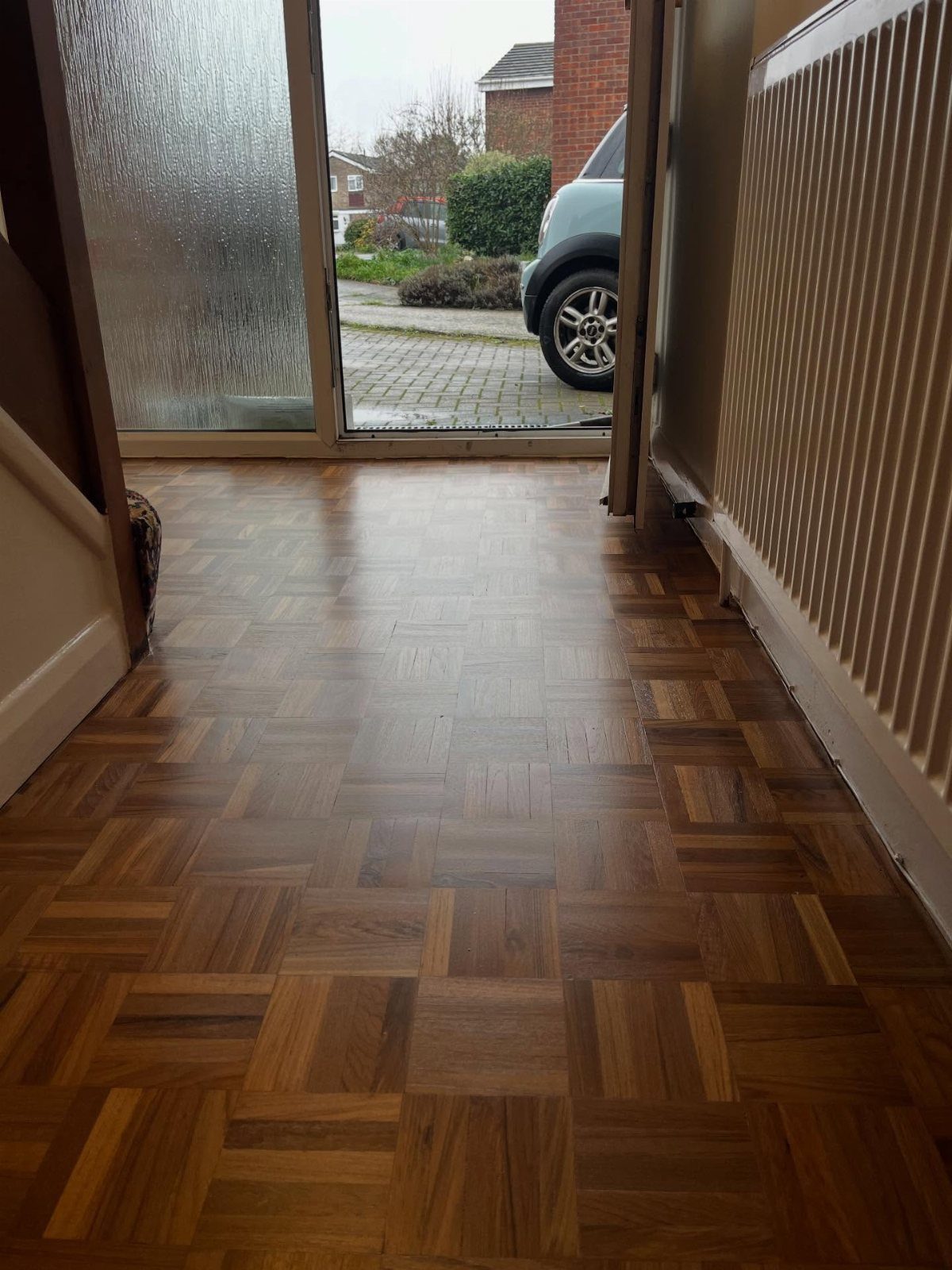
Mosaic parquet builds each square from short strips, some laid flat and some on the diagonal, repeated across the floor in a grid of small blocks.
The mix of directions catches light differently across the day, so the floor shifts as you move through the room.
In a smaller room, keep everything else quiet and let the wood do the work.
Czar Floors offers these in 9-by-9 or 12-by-12 inch panels, with custom sizes and exotic species available if standard oak does not carry enough contrast.


Single Piece Size: 9 in. width x 10 in. length x 0.25 in. thick
5. Checkerboard
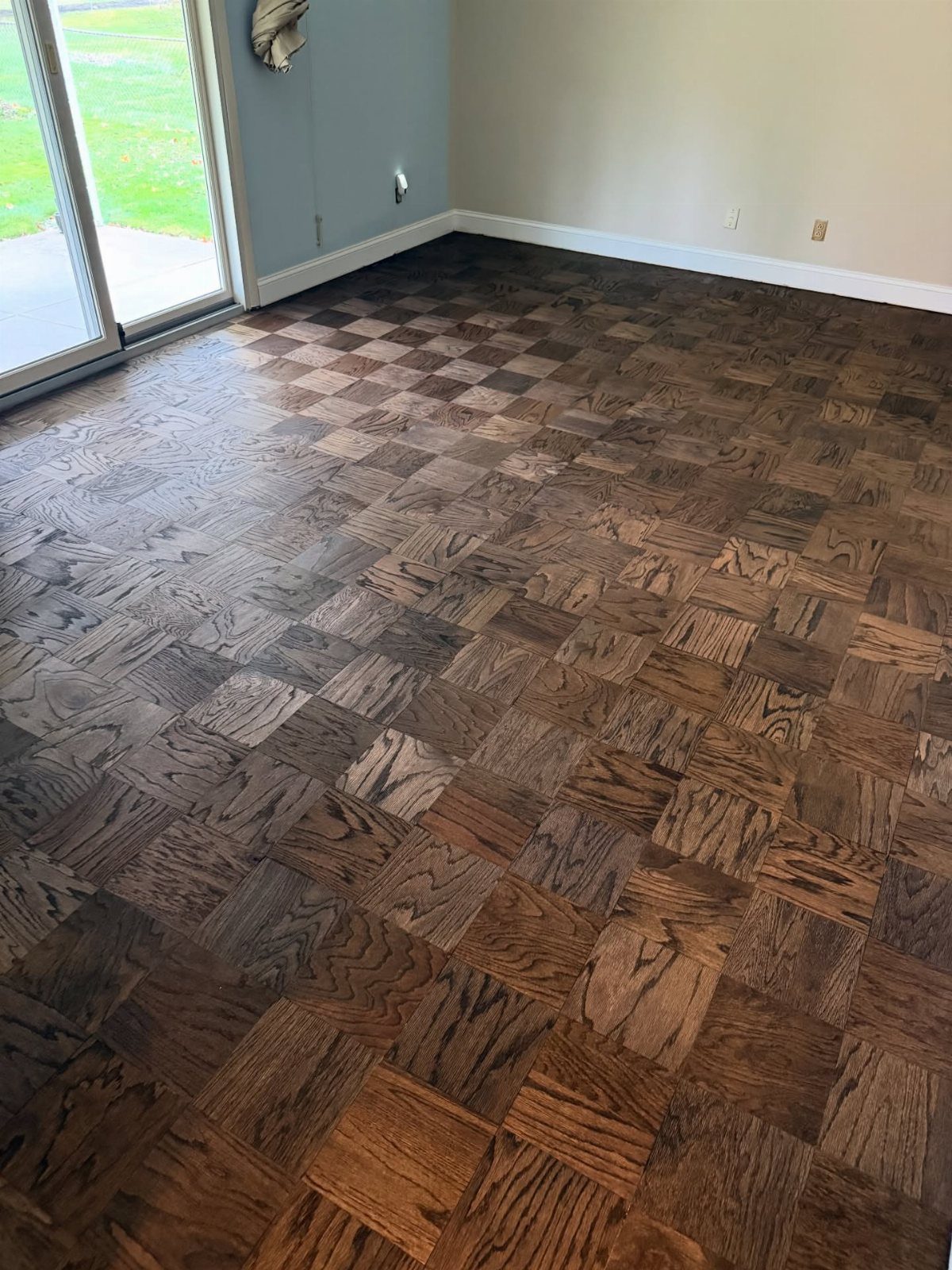
Checkerboard starts with herringbone planks cut into squares, then sets each square rotated against its neighbor so the grain runs opposite every other block. The effect is more graphic than woven, closer to tile than traditional parquet.
Two tones, one darker and one lighter, push the grid harder and suit a home office or hallway where you want the floor to anchor the space.
A single species in one stain reads subtler and works better in open living areas where the pattern competes with furniture.
The cuts generate waste; order extra material over your square footage to cover the losses.

THREE PATTERNS: Compares herringbone, chevron and basketweave flooring.
THREE PATTERNS: Compares herringbone, chevron and basketweave flooring.
THREE PATTERNS: Compares herringbone, chevron and basketweave flooring.
6. Marie Antoinette
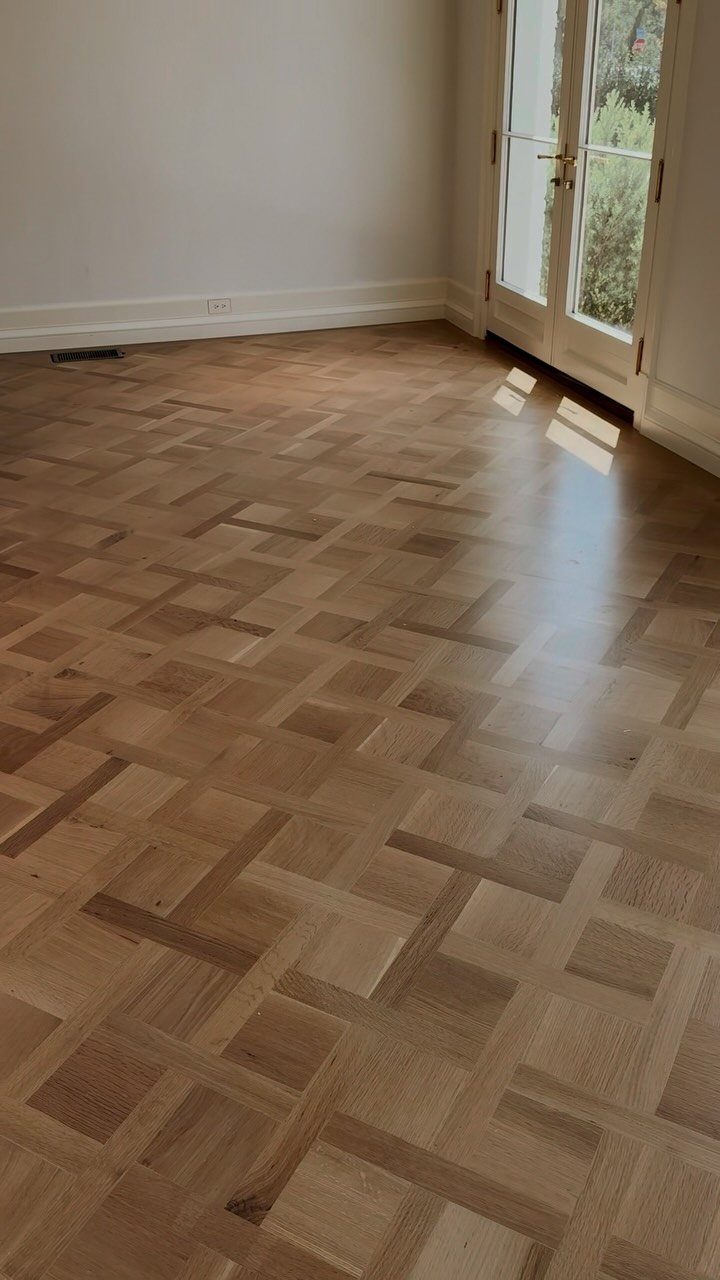
Marie Antoinette parquet frames a woven basket of interlaced planks inside a solid border, so each panel reads as a contained square rather than a repeating all-over pattern.
The history is French, the feel is settled and traditional, and the scale suits rooms where you want warmth without flash.
The frame around it gives each unit a finished edge that reads well in formal spaces.
I would use this where the furniture is traditional or the architecture has weight: crown molding, tall baseboards, paneled doors. In a stripped-down modern room the pattern fights the spareness.

【Premium Thickened Vinyl Flooring Roll】Experience our 1.5mm thick vinyl flooring roll with 5 layers for enhanced quality. It's non-slip, non-fading, and provides thermal insulation. Measuring 23.6" x 118", it covers 19 sq ft without snap-lock installation, making it hassle-free and stylish.

🏠 Wood flooring: Thickness is 0.06inch (1.5mm). Size 12x12 inch included 4 Tiles, made of vinyl. Light brown beige tan Laminate wood flooring, waterproof, removable, groutable, non slip, no special tools needed.
7. Interlocking Geometric Wood Parquet
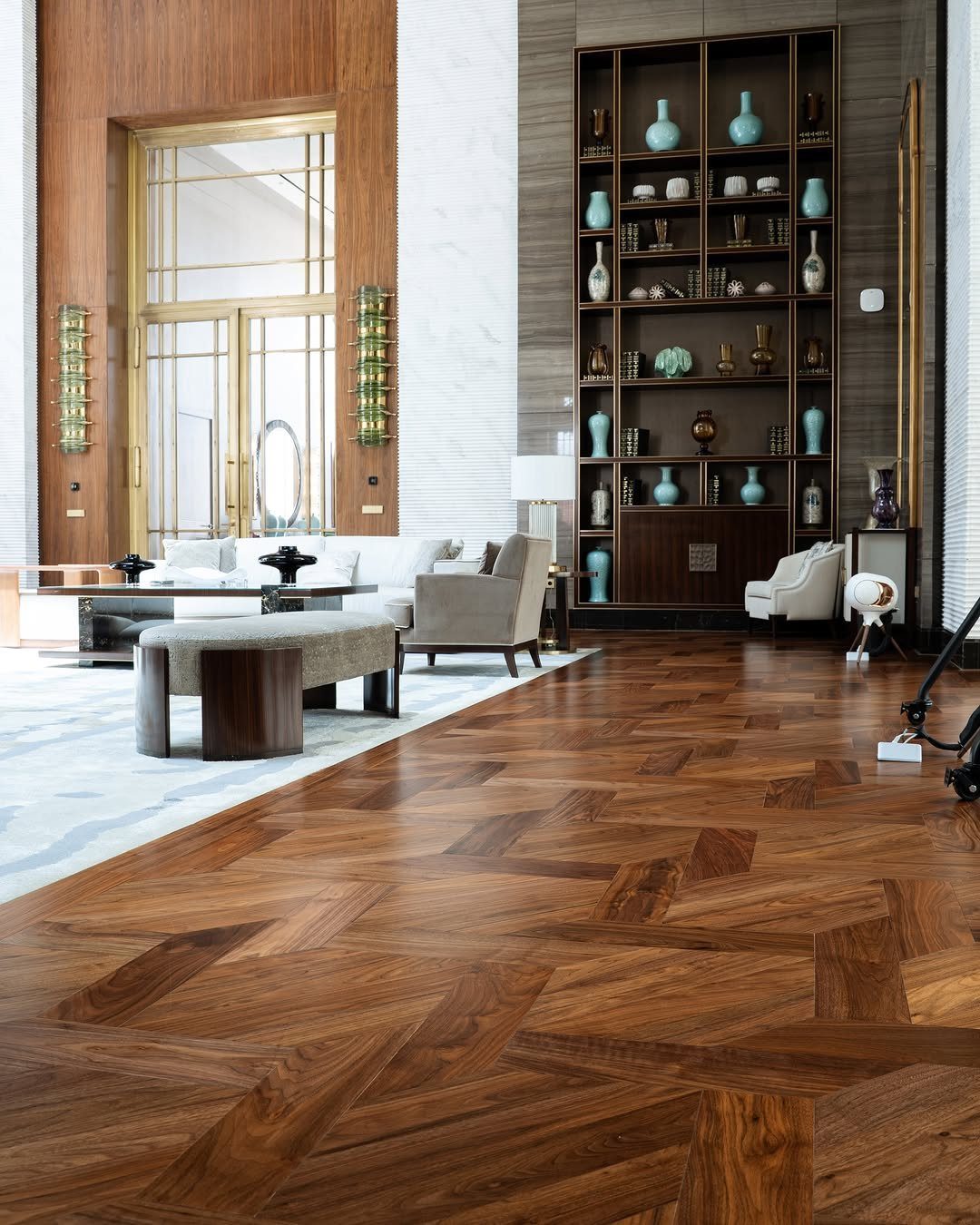
Interlocking geometric parquet builds a floor from repeating angular blocks that lock together like puzzle pieces, usually in dark-stained oak or walnut.
The pattern reads as a continuous lattice rather than rows, so it suits open living rooms where you want the floor itself to carry the design weight.
The geometry demands precision. Each block is cut to exact angles, and the installer must keep the pattern square to the room or the whole field drifts visibly off.
I’d steer toward this for a formal space with high ceilings and minimal area rug coverage. In a smaller room or one chopped up by furniture, the pattern gets lost and the investment feels wasted.
8. Basketweave Parquet
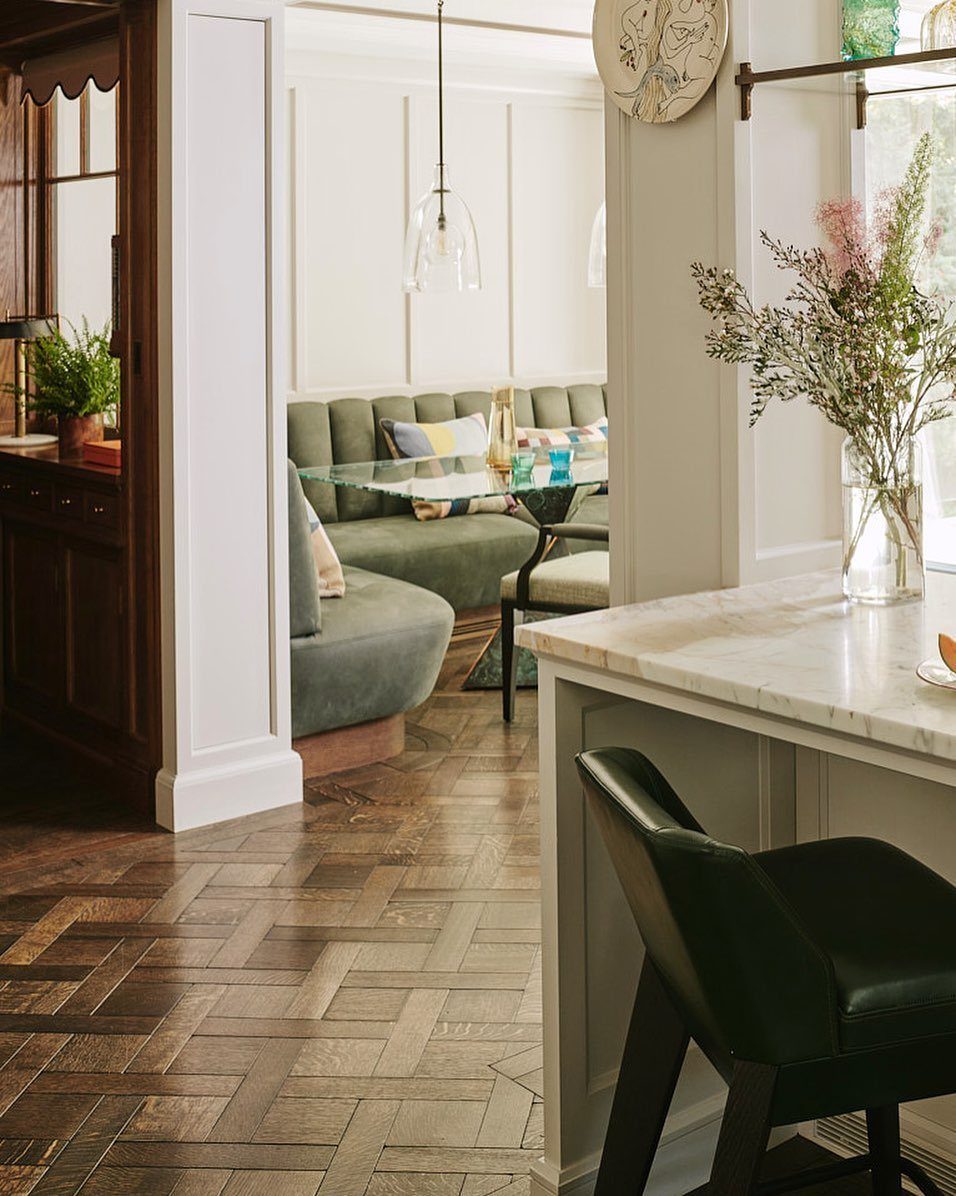
Basketweave parquet reads as small squares of wood woven over and under each other, though the planks are simply laid in alternating horizontal and vertical groups. The effect is textured and traditional without the flash of herringbone or chevron.
This pattern forgives more than most. The short plank runs hide minor subfloor flaws, and the grid structure makes installation straightforward for anyone comfortable with a miter saw.
The scale of the weave should match the room: smaller blocks keep compact spaces from feeling crowded, larger ones keep open areas from looking busy.
It pairs naturally with kitchens and dining nooks, where the woven texture echoes textiles and keeps wood floors from feeling too slick against stone counters or tile backsplashes.
Installation Methods
Glue-down installation is the traditional route: each tile is set directly to plywood or concrete with a flooring adhesive such as Bostik Best, face-taped and precision-cut from the supplier.
Click-fit systems have changed the timeline. What once took months now runs to days, with planks that slip together without individual cutting.
A licensed flooring professional can lay herringbone or chevron in a week rather than a season, which partly explains why more homeowners are choosing parquet now.
THREE PATTERNS: Compares herringbone, chevron and basketweave flooring.
THREE PATTERNS: Compares herringbone, chevron and basketweave flooring.
THREE PATTERNS: Compares herringbone, chevron and basketweave flooring.
Maintenance Tips
Water is the enemy.
Mopping with water or running a steam cleaner across parquet will lift the finish over time. Vacuum instead, as often as carpet, with the rotating brush turned off if the machine allows it.
For actual cleaning, use a product formulated for wood, such as Bona Wood Floor Cleaner.
Specialized solutions exist for a reason: household all-purpose cleaners leave residue that dulls the surface. The short runs of basketweave or mosaic hide dust less than long planks, so the schedule matters more with busy patterns.

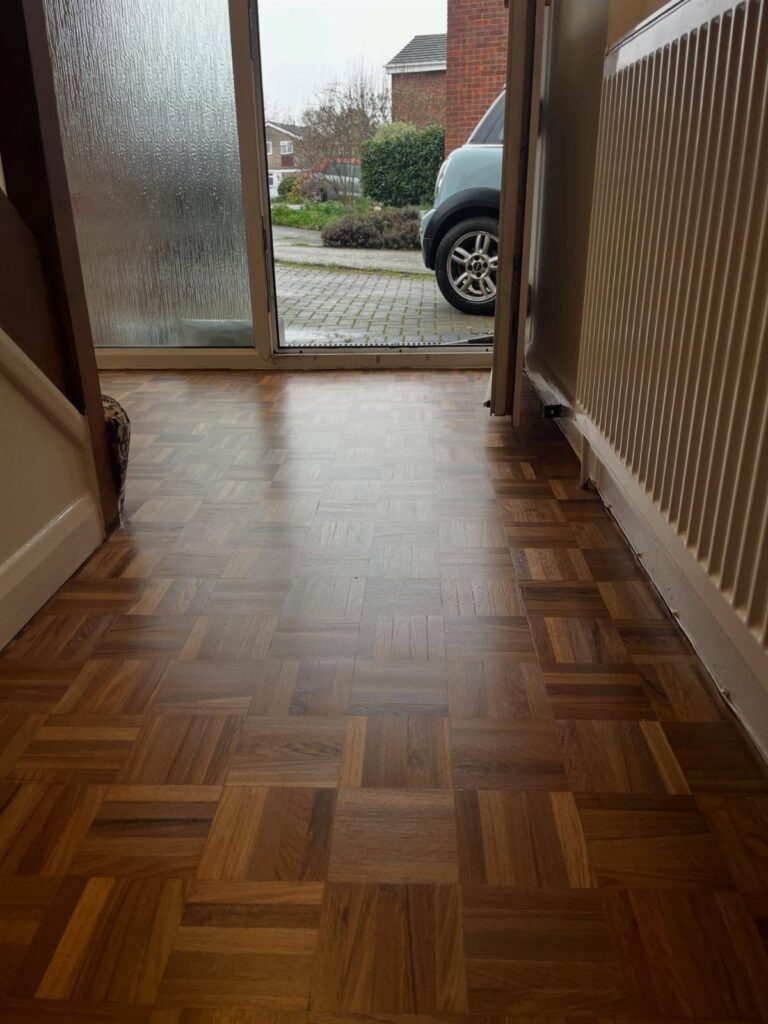
Genuine solid Teak wood (Tectona Grandis) in oil finish

Texture & Durability: Want to refresh your space fast but tired of peel and stick floor tiles that look fake or peel up after days? This one delivers realistic texture and stays put. With upgraded matte craftsmanship, the vinyl flooring replicates authentic wood grain to fit any home decor. and its high-quality multi-layer reinforced PVC makes it 100% waterproof, flame-retardant, scratch and abrasion resistant
Durability and Value
Hardwood parquet returns value at resale. Realtor.com puts the premium at up to 2.5% on sale price, and the floor often helps a property move faster.
Tight installation makes it strong in high-traffic areas. The wood itself resists warping in cold or humid conditions, and engineered or laminate options add sound insulation that helps in open living rooms.
Laminate parquet bonds layers of natural wood for easier installation and a textured surface, while keeping the visual warmth. The upfront cost runs higher than straight plank, but the refinishing cycles extend the value over decades.
Trends in Parquet Flooring
Parquet is back in 2025. Herringbone, chevron, mosaic, brick bond, and checkerboard are outselling the rest of the 12 common patterns after a decade when straight plank dominated.
The cycle is not new. Parquet spread to North America in the 1930s, then retreated under wall-to-wall carpet until the 1980s, when homeowners started pulling that carpet up.
Chevron and herringbone lead again now, the same 2 patterns that drove the earlier revival. The difference this time is manufacturing: click-fit and pre-cut panels put patterns within reach of a standard installation timeline rather than a months-long custom job.
Frequently Asked Questions
What is parquet flooring?
Parquet is the name for wood floors laid in repeating geometric shapes, each piece cut small enough to form the pattern.
The pieces are assembled into modules or panels that create repeating designs like herringbone, chevron, or basketweave. Hand-cut solid hardwood parquet showed up in France toward the end of the 1600s, glued straight onto concrete subfloors in estates and castles.
Is parquet floor outdated?
No.
Parquet fell out of favor in the mid-20th century when cheap synthetic carpet arrived, and many existing floors were hidden under wall-to-wall installations until the 1980s. Herringbone and chevron patterns led the return on Pinterest and in showrooms.
What are the trends in parquet flooring for 2026?
Herringbone, chevron, mosaic, brick bond, and checkerboard are the 5 patterns outselling all others right now.
The surge is driven by social media visibility and by prefabricated panels that bring labor costs down. Most homeowners choosing parquet in 2025 are skipping the all-over small-tile look in favor of larger-scale geometric patterns that read cleaner in modern spaces.
How long does parquet flooring last?
Solid hardwood parquet that starts out high-grade can outlast the house if you keep up with basic care.
A 25-year finish wear warranty is common from reputable suppliers, and the wood can be resanded and refinished two to three times to erase scratches or change stain color.
Does parquet flooring add value?
Yes, hardwood parquet can add up to 2.5% to a sale price according to Realtor.com data.
Buyers tend to view it as a premium material, and the durability means the floor will still look good decades later. The visual interest of a geometric pattern also helps a property stand out in listing photos.