A dropped false ceiling can use PVC panels at the low end or carved wood with integrated lighting at the high end.
Your ceiling height decides which treatments fit: below 8 feet, skip the drop entirely or keep it to a slim cove, while 10 feet and higher gives you room for coffers, exposed beams, or deeply recessed geometry.
[link-whisper-related-posts]1. Coffered Ceiling
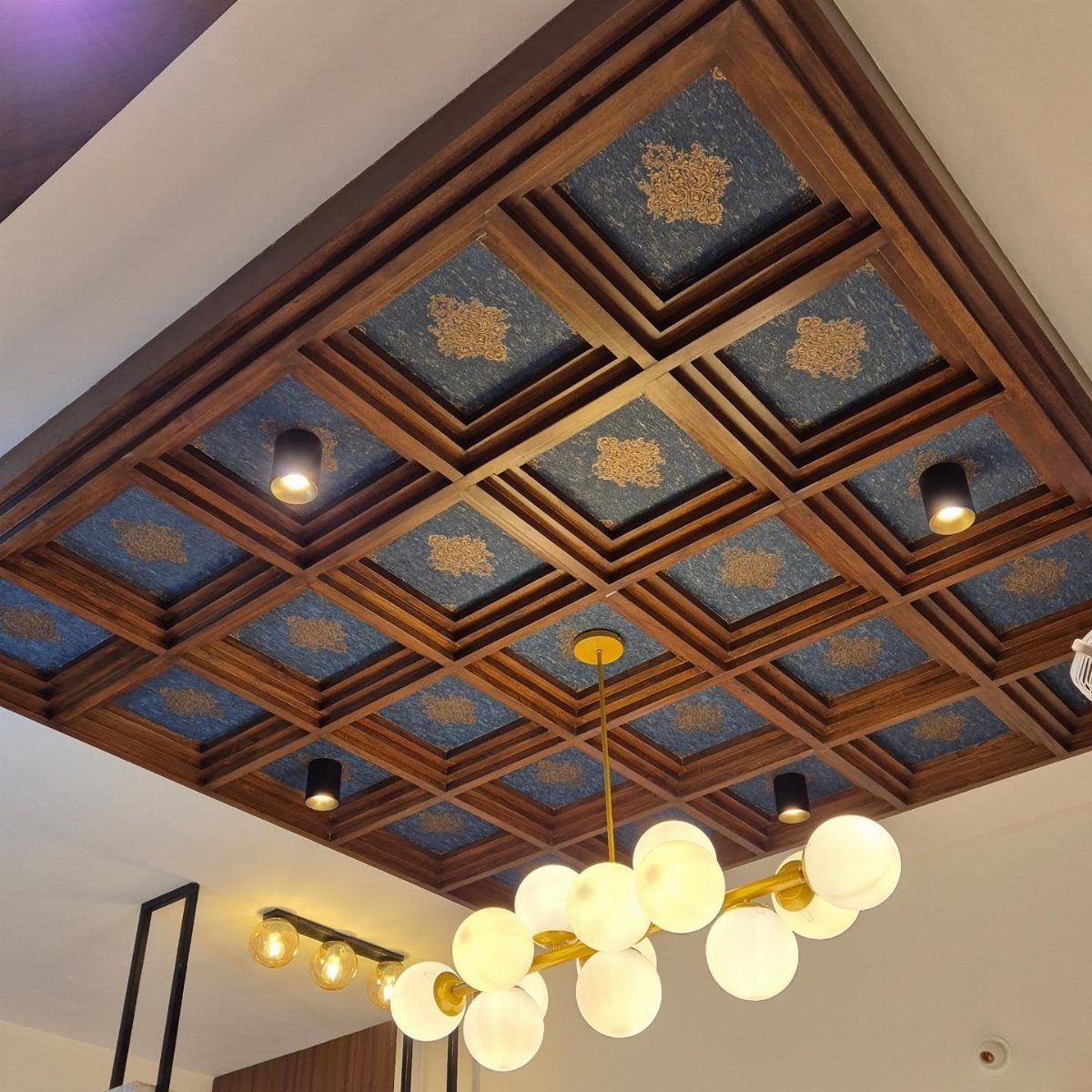
Recessed square panels set in a grid carve shadow and depth into an otherwise flat plane. The framed sections pull the eye upward and give a room with high ceilings a more finished look.
Coffered ceilings suit traditional and formal spaces. Recessed lights drop into the panels without breaking the pattern.
This treatment drops the ceiling by several inches, so you need enough headroom to spare.

【Premium Waterproof PVC】The Sunnyglade ceiling tile constructed using superior PVC, this product offers superior resistance to moisture, oil, rust, warping, and discoloration, ensuring long-lasting performance. The 5mm panels in thickness also with superior fire and heat resistance, enhancing safety while reducing space noise

8" x 8" ACCESS PANEL: The Watts SpringFit Access Panel, measuring 8" x 8", offers concealment for wires, cables, and plumbing. With its adaptable design, it seamlessly fits holes ranging from 5" x 6" to 8" x 8", ensuring hassle-free installation without the need for precise measurements.
2. Beam Ceiling
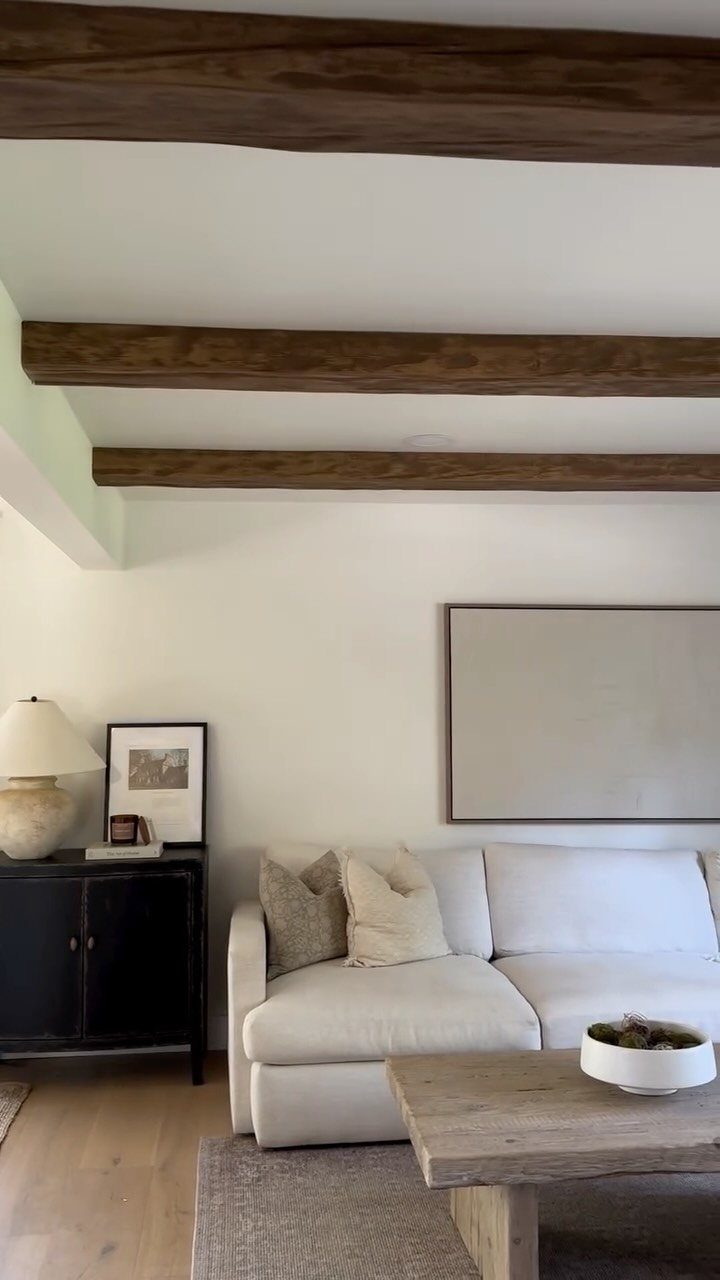
Exposed beams across a white ceiling bring texture and warmth without heavy construction. The contrast between dark wood and a light surface makes the beams stand out.
Real wood beams add weight and cost.
Hollow faux beams made from polyurethane or wood veneer install faster and weigh almost nothing, so they mount with construction adhesive and screws into blocking. Space them evenly or cluster them over a seating area to define the zone.
Beams drop the visual height by a few inches. In lower rooms, slim beams painted close to the ceiling color keep the overhead from feeling heavy.

Generous Coverage: 14 pcs of molding trim, each 3.9 ft, totaling 55 ft. Solves the common issue of insufficient quantity for full-room projects. Achieve a consistent look across your home without extra orders

State of the art Illumination- Illuminate your space with an impressive 480 lumens/ft of 3000K radiant warm white light, perfect for enhancing visibility and creating a cozy ambiance while only using 5.4 watts/ft of energy. Non-Dimmable.

Brilliant Illumination- Illuminate your space with an impressive 3220 lumens of 3000K radiant warm white light, perfect for enhancing visibility and creating a cozy ambiance while only using 42 watts of energy. Non-Dimmable.
3. Cove Ceiling
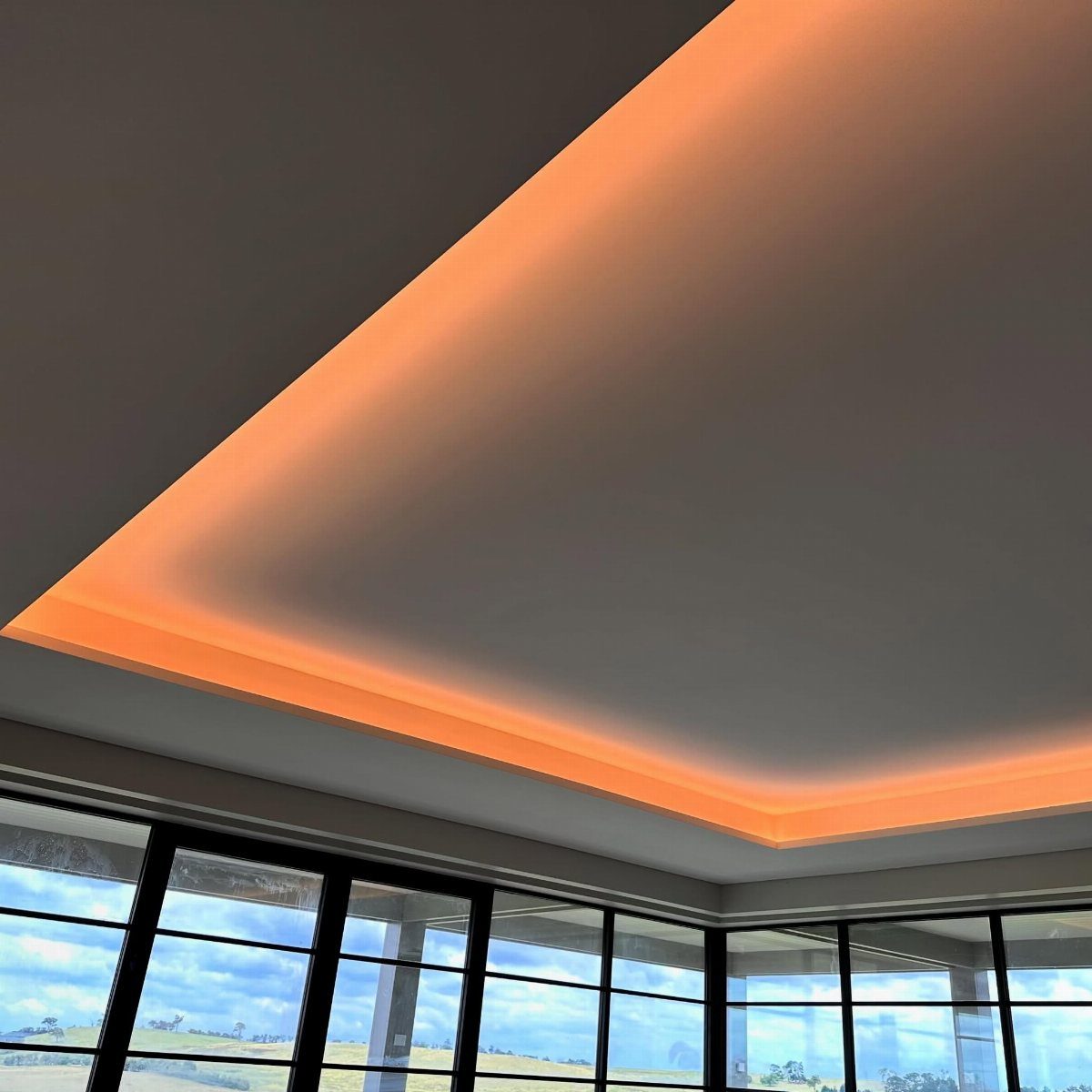
A recessed ledge around the perimeter of the ceiling hides LED strips that wash light upward. The glow softens the room and lifts the ceiling visually.
Cove lighting works in rooms with any ceiling height. Dimmable LEDs let you adjust the brightness for different times of day.
The recess itself is built with drywall or plaster, dropped a few inches below the main ceiling plane. Wiring runs behind the ledge, so plan the electrical rough-in before the drywall goes up.

PACKING QUANTITY: Come in box of 12 panels which cover 32 square feet, individual size is 19.7” X 19.7”

High-Quality PVC Material - Made from high-grade PVC, Art3d panels combining the benefits of being sturdy and lightweight for easy installation and long-time use. Also they are waterproof and paintable, allowing for customization to match any interior design

PACKING QUANTITY: Come in box of 12 panels which cover 32 square feet, individual size is 19.7” X 19.7”
4. Illuminated POP Ceiling
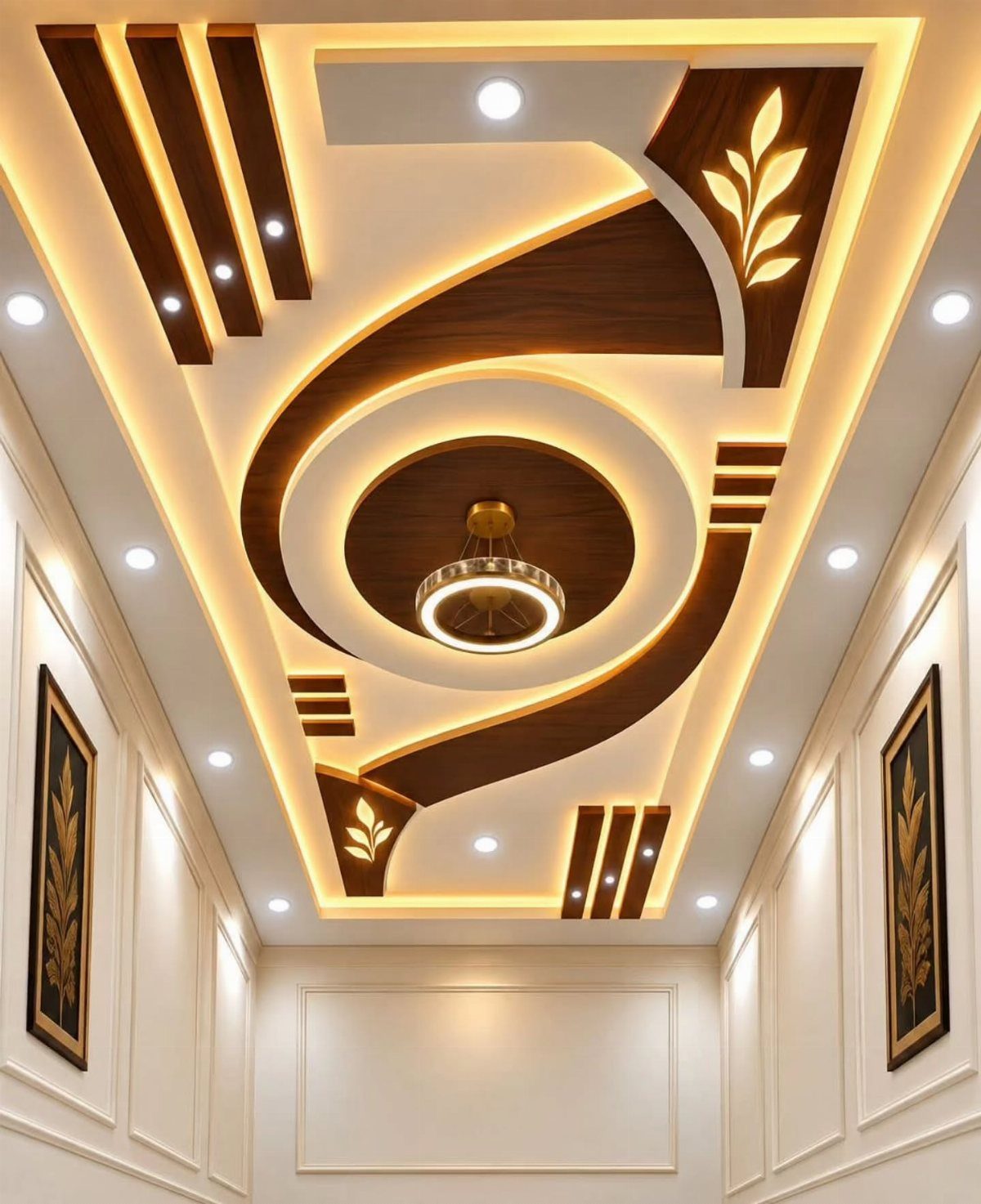
Plaster of Paris molded into curves and recesses hides LED strips that outline the ceiling’s shape. The integrated lighting highlights the custom forms and adds layers of brightness.
POP ceilings are built on site, so the design can fit any room layout.
Installers frame the pattern with metal channels, apply the plaster mix, then sand and paint the surface. LEDs drop into grooves cut for them, and the strips connect to a central driver and dimmer switch.
This treatment takes longer to install than flat panels. Plan for a week of work and some dust during application and sanding.
Requires one A19 bulb rated up to 60-Watts Max. (not included)
Eye protection: The brightness of the can lights can be smoothly adjusted from 10% to 100%, so you can choose the most comfortable brightness for your eyes. Note: This light is compatible with most dimmers on the market, except for the smart dimmer.

Increased diameter: The enlarged 7.2-inch diameter, fits 5/6-inch cans and perfect to covering rough drywall or hide oversized holes.
5. PVC Panels
Lightweight PVC panels snap together over a metal grid or furring strips. The material resists moisture and wipes clean, so it suits humid climates and rooms with less ventilation.
PVC panels come in a range of widths and lengths, so you can cover most residential ceilings without seams. You can skip the lighting and run panels in one direction for a simpler look.
Installation goes fast.
Cut panels with a circular saw or utility knife, then clip them into place. The finished ceiling sits a few inches lower than the original, depending on how deep you build the frame.

High-Quality PVC Material - Made from high-grade PVC, Art3d panels combining the benefits of being sturdy and lightweight for easy installation and long-time use. Also they are waterproof and paintable, allowing for customization to match any interior design


Immersive Acoustic Noise Reduction - High density polyester fiber effectively absorbs indoor echo and blocks daily noise, creating a calm, peaceful atmosphere in your home.
6. Wood PVC Ceiling
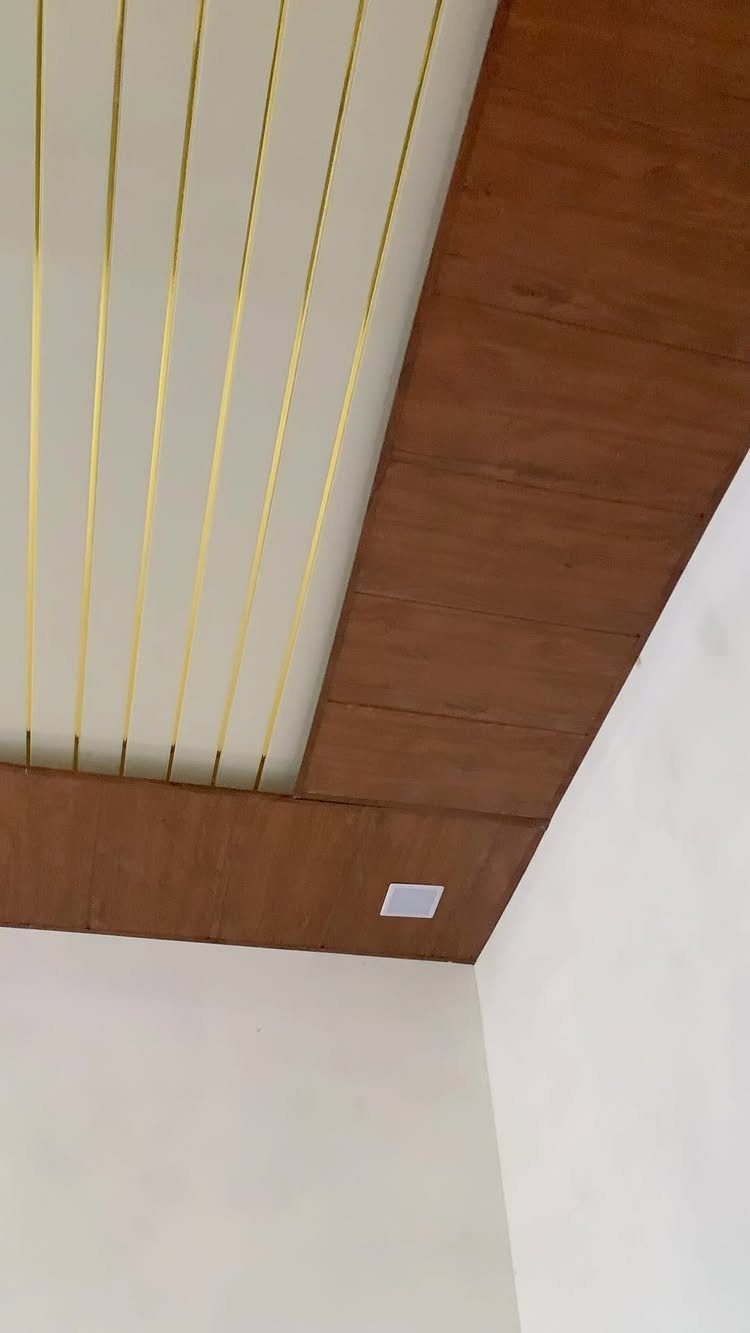
Wood-grain PVC panels deliver the look of a wood ceiling without the weight or moisture sensitivity of real lumber. The printed surface mimics oak, walnut, or teak grain.
Panels install the same way as solid-color PVC: over furring strips or a suspended grid. You can cover the entire ceiling in wood-grain panels or use them as a border treatment around a painted center.
PVC does not expand or contract with humidity, so it stays flat in basements and coastal homes where real wood would warp.

【Package Details】Each pack contains 24 pcs white slat ceiling tiles, with each tile measuring 24x48 inch, covering a total of 192 sq.ft. The ceiling panels are carefully packaged to ensure they arrive in flawless condition and are ready for installation straight out of the box

✂️ REQUIRED OPENING (CUT-OUT HOLE) IN THE WALL OR CEILING 5.94" x 11.85" ✂️

【Premium Waterproof PVC】The Sunnyglade ceiling tile constructed using superior PVC, this product offers superior resistance to moisture, oil, rust, warping, and discoloration, ensuring long-lasting performance. The 4mm panels in thickness also with superior fire and heat resistance, enhancing safety while reducing space noise
7. Tray Ceiling
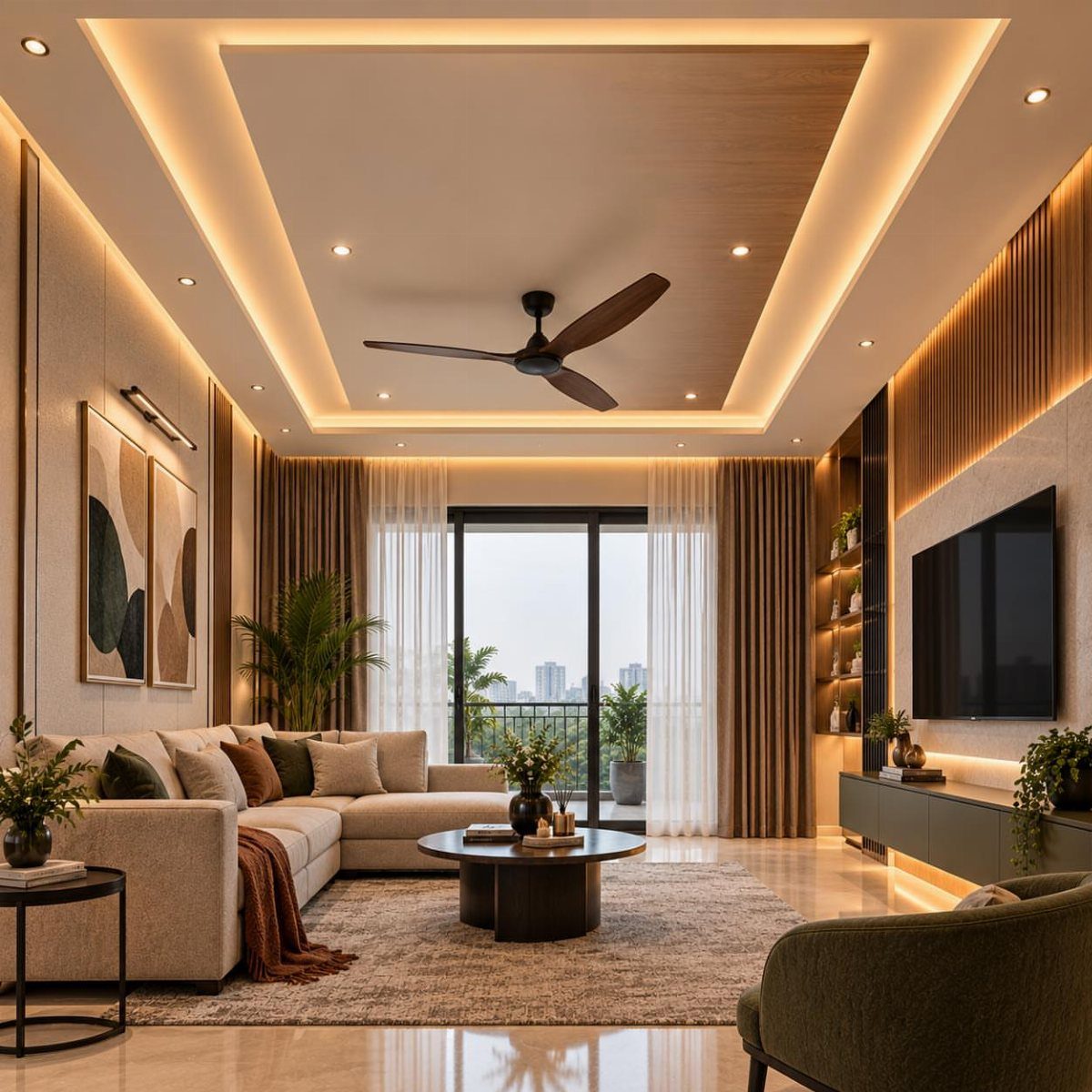
The center panel sits higher than the perimeter, giving the ceiling depth without taking up floor space. The border frames the room and adds visual height where the center drops.
Tray ceilings work in rooms with at least 9 feet of clearance. You can paint the recessed section in a contrasting shade or leave it white to match the rest of the room.
LED strips placed along the ledge wash light upward and soften the edges. Pair the recess with a ceiling fan or chandelier centered in the raised panel.

Brilliant Illumination- Illuminate your space with an impressive 2760 lumens of 3000K radiant warm white light, perfect for enhancing visibility and creating a cozy ambiance while only using 36 watts of energy. Non-Dimmable.

Brilliant Illumination- Illuminate your space with an impressive 690 lumens of 3000K radiant warm white light, perfect for enhancing visibility and creating a cozy ambiance while only using 9 watts of energy. Non-Dimmable.
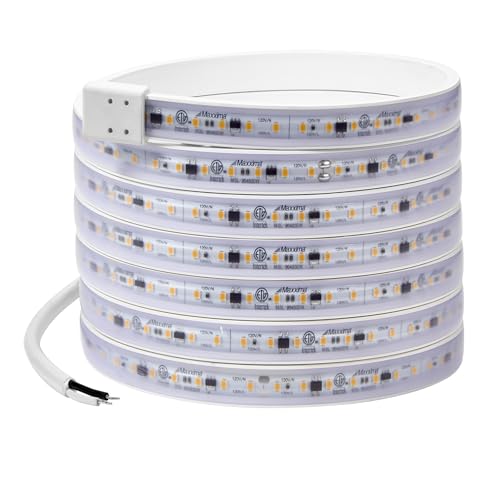
Brilliant Illumination- Illuminate your space with an impressive 3680 lumens of 3000K radiant warm white light, perfect for enhancing visibility and creating a cozy ambiance while only using 48 watts of energy. Non-Dimmable.
8. Textured Metal Ceiling
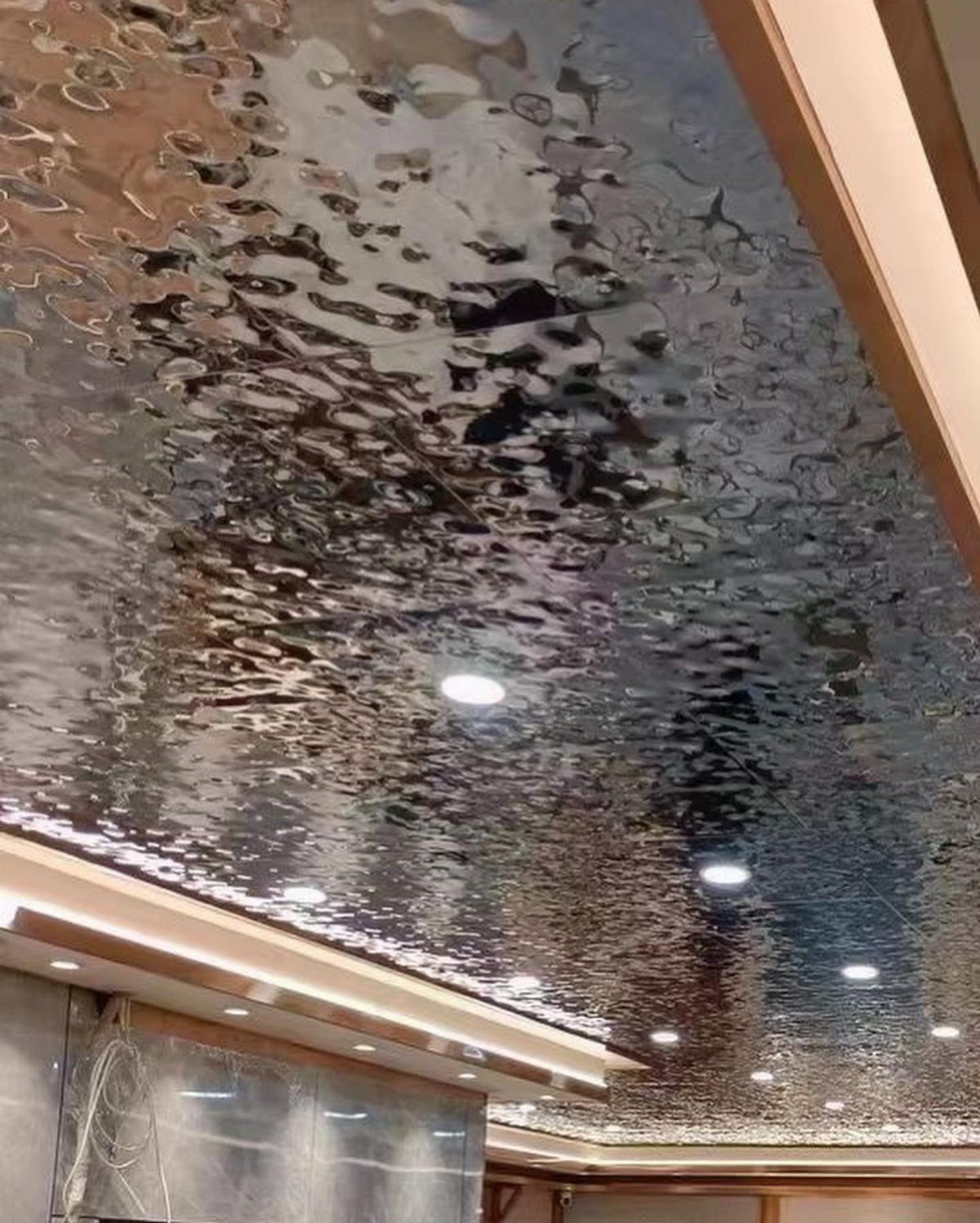
Pressed metal tiles with a hammered or embossed surface reflect light at different angles. The texture stands out most in rooms with recessed lighting aimed at the ceiling.
Standard tiles cover a lot of ground quickly, so you won’t spend the afternoon cutting around every joist. Aluminum and steel tiles resist moisture and last decades without sagging.
Textured finishes show fingerprints and dust, so wipe them down every few months. Polished metal brightens a room but can glare under direct light.

Pack Size: Pack of 24 ceiling tiles with size 2ftx2ft. 3D pattern with raise design makes our ceiling panels more eye-catching.


【Complete Kit with Adhesive Lenses】: This set includes 12 well-packed PVC ceiling tiles (19.7" x 19.7" each), providing 32.3 sq ft of coverage. There are also 12pcs golden acrylic lenses - size 7.7 "x7.7".Made from high-quality, durable PVC, these tiles are waterproof, flexible, and resistant to moisture, ensuring long-lasting performance.(Note: The surface of the golden lens has a protective film, and removing the protective film will reveal a smooth and clear lenses.)
9. Geometric Ceiling
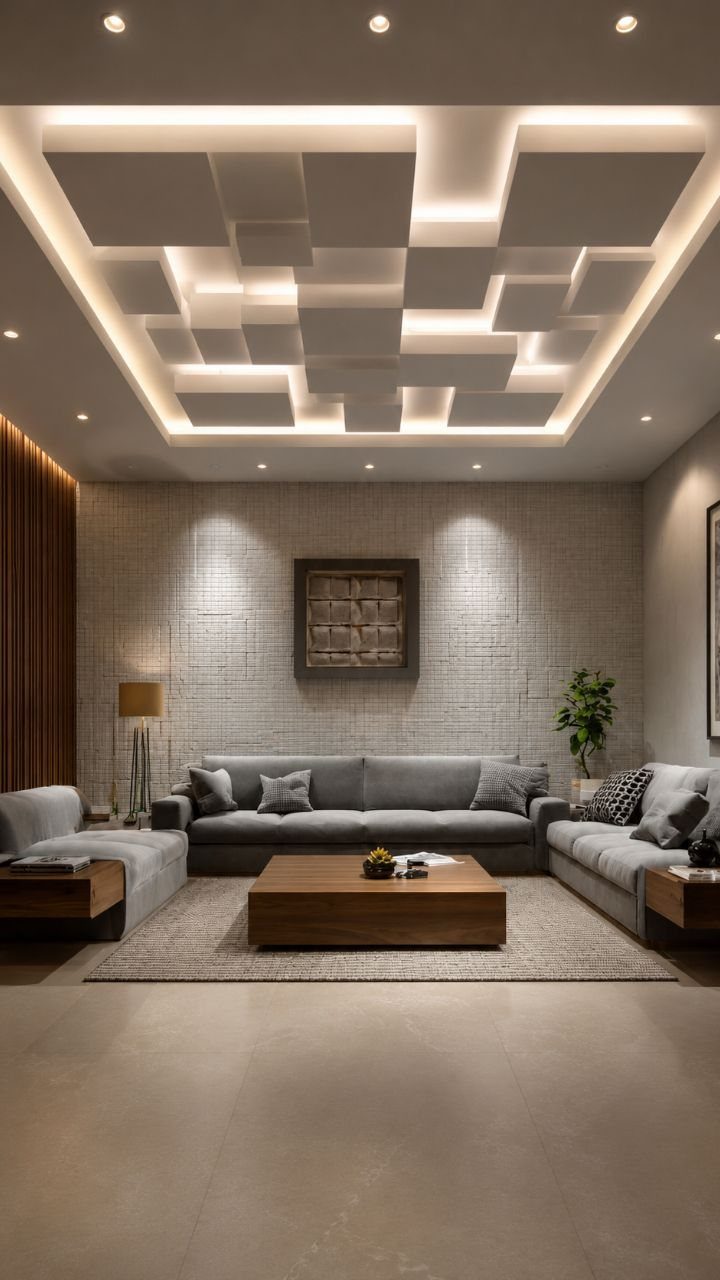
Overlapping shapes or repeated angles turn a flat ceiling into a pattern that defines the room. A grid of squares, triangles or staggered rectangles gives a modern room the structure it needs without adding softness.
Build the geometry with gypsum board or plywood mounted to a framework of furring strips.
Each section drops at a different depth, and the layered edges form the pattern. Recessed lighting fits into the spaces between shapes or sits flush with the lowest plane.
Plan the layout on paper first. Symmetry reads cleanly, but an asymmetric composition can balance a large piece of furniture below.

Requires one BR40 or PAR38 bulb rated up to 150-Watts Max. (not included)

Requires one A19 bulb rated up to 60-Watts Max. (not included)

Requires one PAR38 or BR40 bulb rated up to 150-Watts Max. (not included)
10. Layered Ceiling
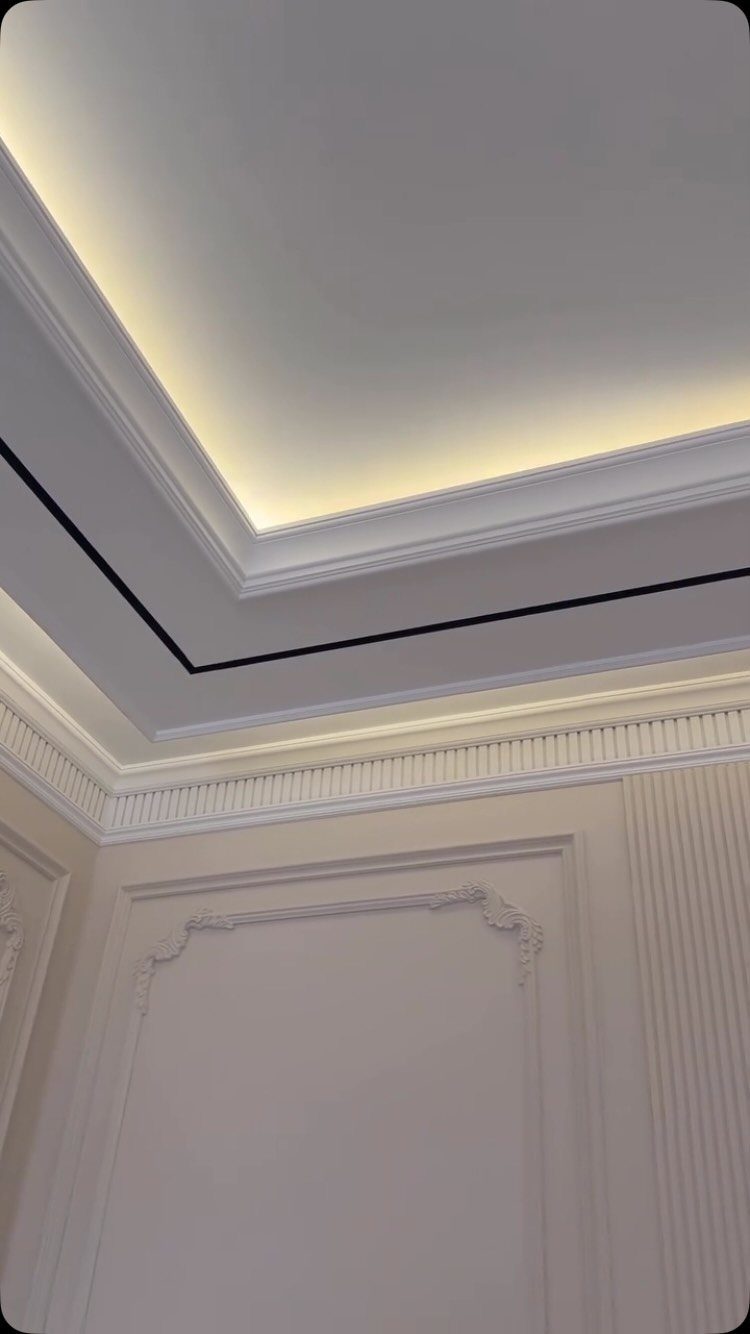
Stepping the ceiling down in sections creates distinct zones without walls. Each level sits a few inches below the next, and the transition adds dimension to a room that would otherwise read as a single flat surface.
Layered ceilings suit open-plan living rooms where you want to mark the seating area, dining space, or entry without closing them off. Run LED strips along the edges where levels meet to emphasize the breaks.
This treatment takes careful framing. Each drop needs blocking anchored to the joists, and the drywall hangs at precise heights to keep the steps even.

COMPLETE COVERAGE: Each pack of 24 tiles cover 96 sq.ft. Perfect for drop ceilings in basements, kitchens, living rooms, or offices.

INSTALLATION-Easily lay into a standard 15/16" T-bar drop ceiling grid system or glued over any flat substrates

For DIY Enthusiasts: Ultra-easy installation fits standard ceiling grids, so you can install 12 tiles (48 sq.ft) in minutes without tools or glue
11. Curved Gypsum Ceiling
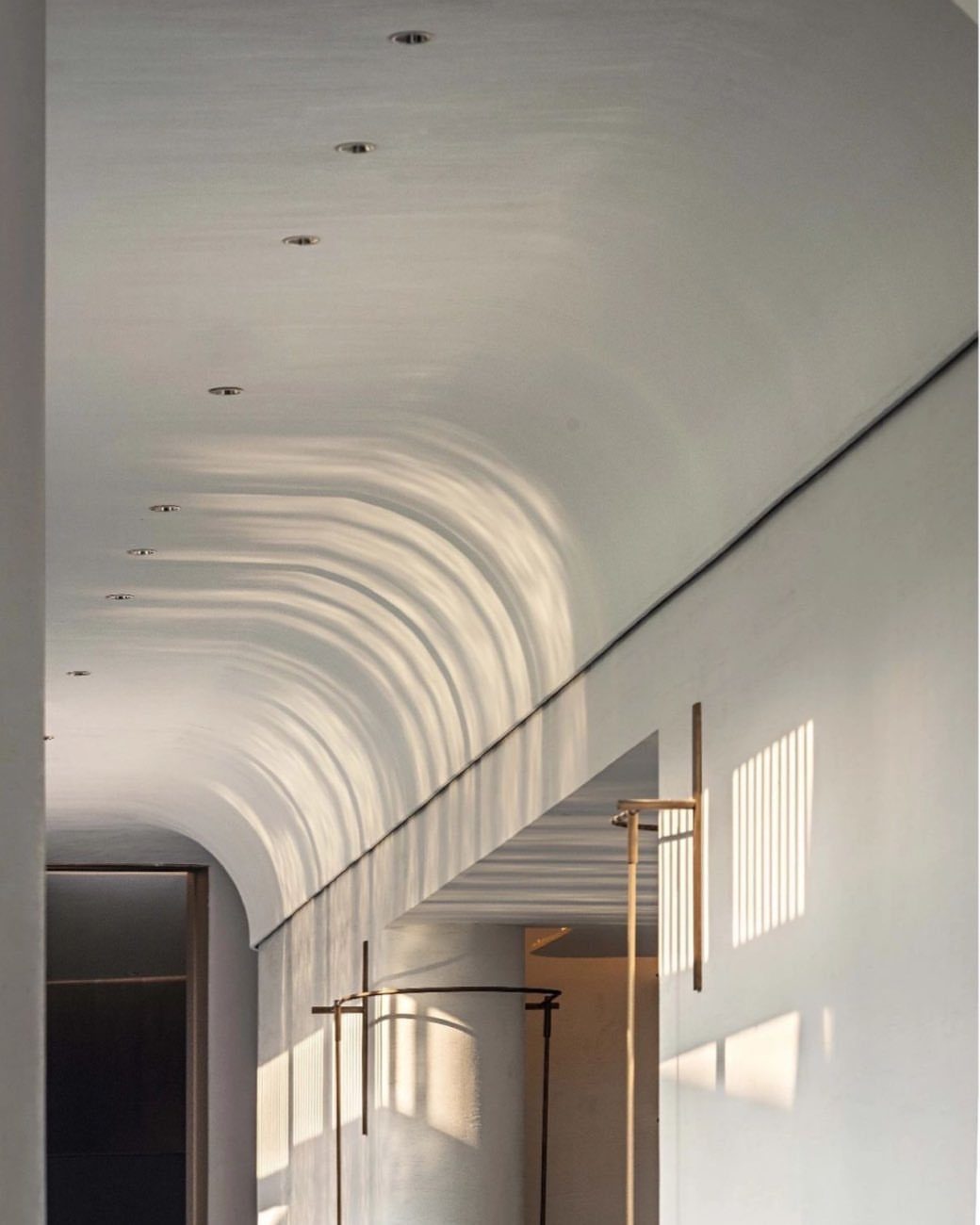
Smooth waves or arcs replace straight lines and right angles. Gypsum board bends around a curved frame to form gentle ridges or a single flowing sweep across the ceiling.
Curves soften a contemporary room and add movement without pattern.
The shape can follow one wall or run across the full width. Recessed lights placed along the curve emphasize the contour.
Bending gypsum board requires wetting the back or scoring it in shallow cuts, then fastening it to curved blocking. Taping and finishing the seams takes longer than on a flat ceiling, so budget extra time for sanding.
12. Multilevel Gypsum Ceiling
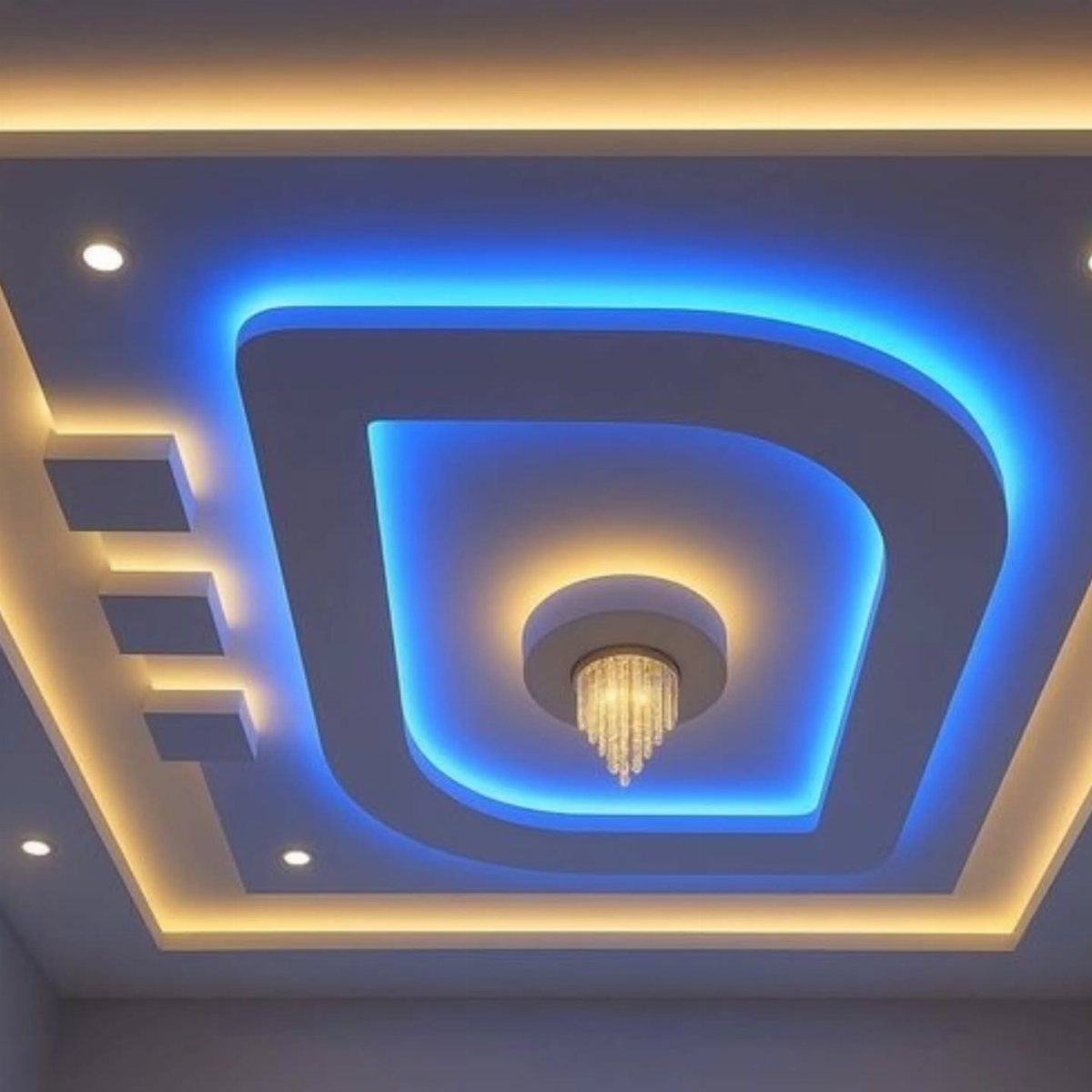
Gypsum sections at 2 or 3 different heights carve a ceiling into planes that step up and down. The shifts in level add depth and let you assign different lighting treatments to each zone.
The layered look suits large living rooms where a single flat ceiling would feel blank.
Framing the levels takes blocking at multiple heights, and each section needs its own drywall layer. Plan the wiring before the framing goes up so power reaches every LED channel.
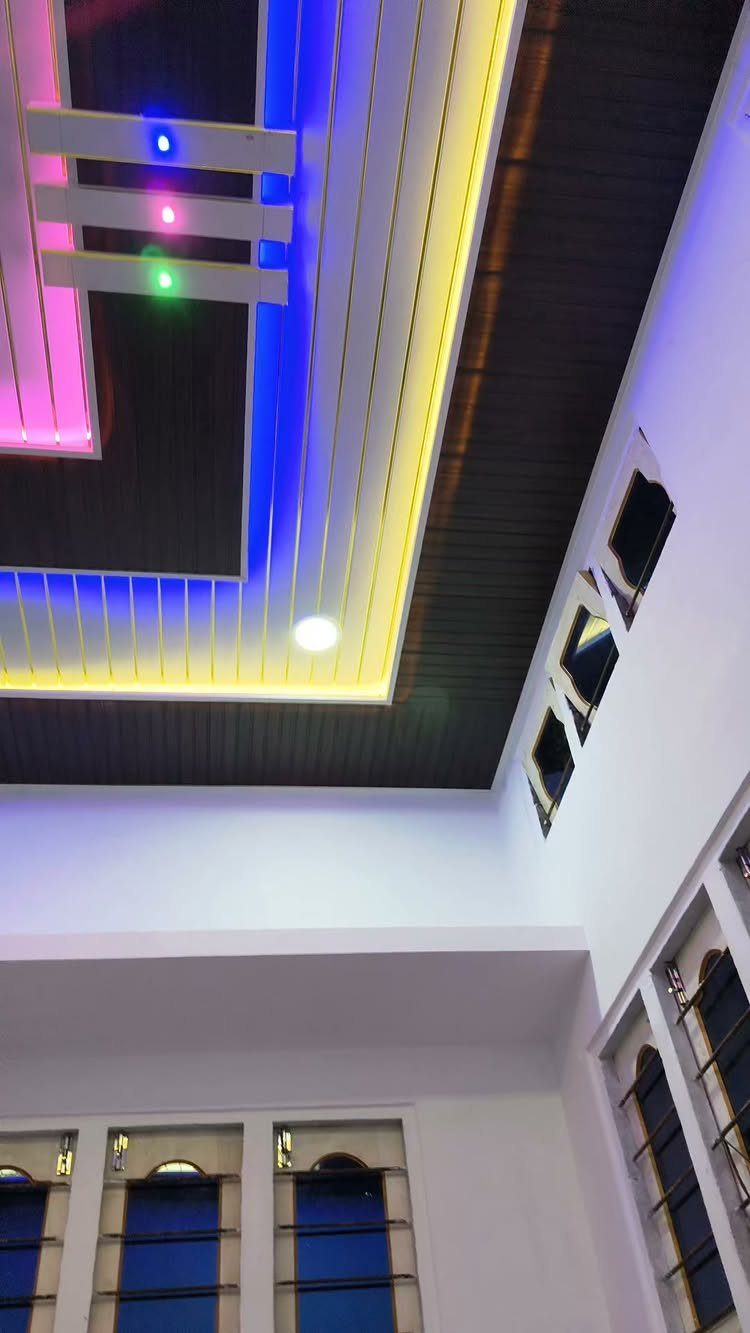
13. Colorful Neon Light Ceiling
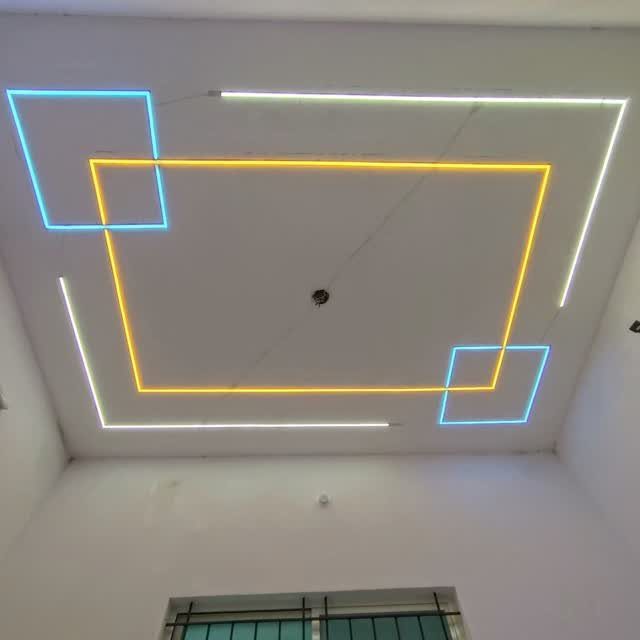
Neon light profiles in contrasting colors overlap across a white ceiling to form a floating graphic.
The channels sit flush with the surface or drop slightly below it, and each strip runs on its own circuit so you can control the colors independently.
This treatment suits contemporary rooms where color is part of the design language. The overlapping rectangles define zones without solid partitions.
Installation requires mounting tracks for each neon profile and running wiring to a controller. Standard LED neon flex bends around corners and cuts to length, so you can outline any shape the room calls for.
14. Recessed Linear Lighting Ceiling
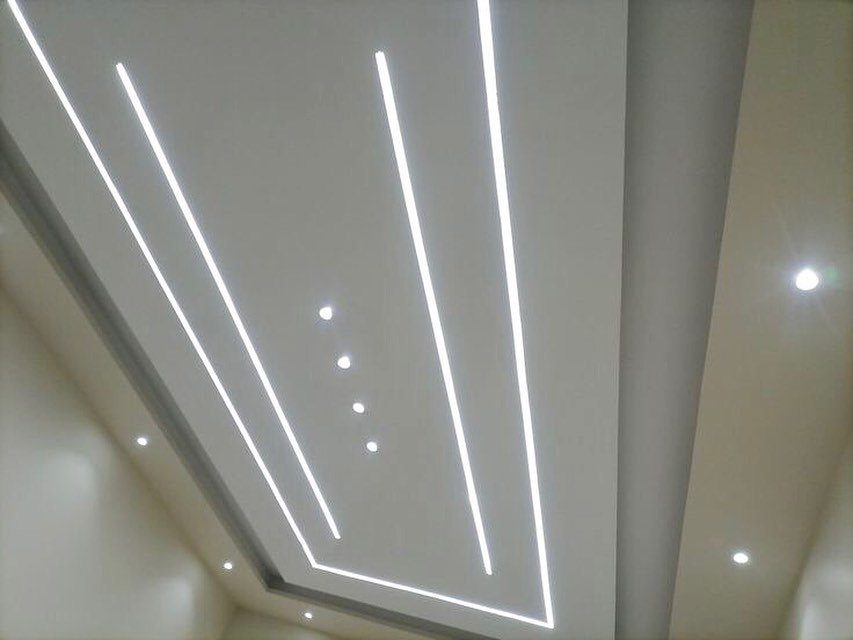
Continuous LED strips recessed into narrow channels form clean lines across a white ceiling. The light sits flush with the surface, so the glow reads as part of the ceiling rather than fixtures mounted below.
Recessed linear lighting works in rooms with any ceiling height. Pair it with circular spotlights to fill in task lighting over seating or reading areas.
The channels are cut into the drywall during framing, and the LEDs drop into aluminum profiles with diffuser lenses. Run them at equal intervals for a calm grid, or group them over the seating area to pull attention down.
15. Carved Wooden Accent Ceiling
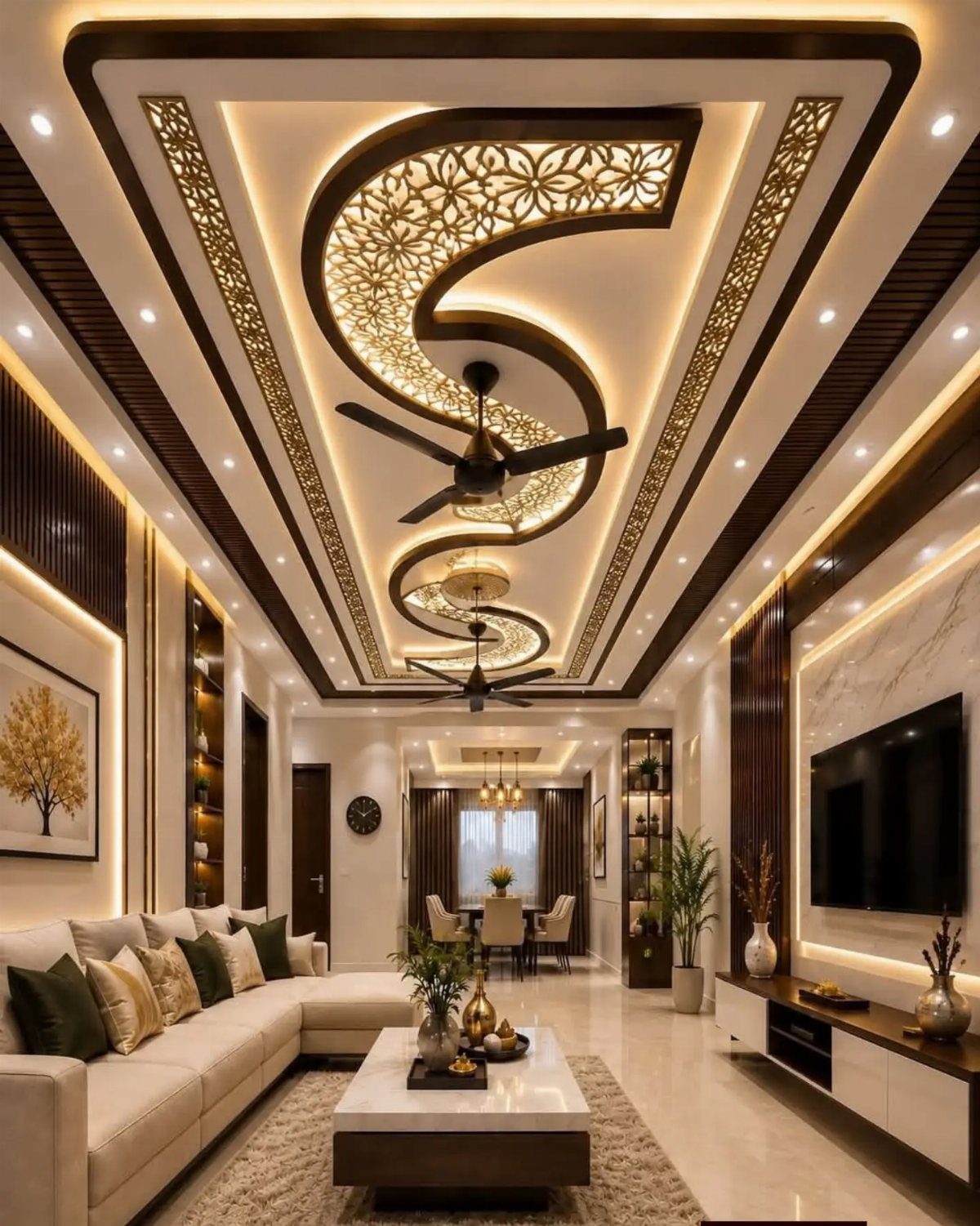
Carved wooden panels with flowing curves and repetitive patterns cover the ceiling and hide LED strips along their edges. The backlighting emphasizes the carved detail and adds warmth without exposing bulbs.
This treatment suits formal living rooms where the ceiling becomes a focal point. The carved panels take skilled labor and more time than flat molding.
Real wood panels are heavy, so the framework needs solid blocking into the joists.
Composite wood alternatives install faster and weigh less. The LED strips slide into routed channels at the edges, then wire back to a dimmer switch.
16. Black Recessed False Ceiling
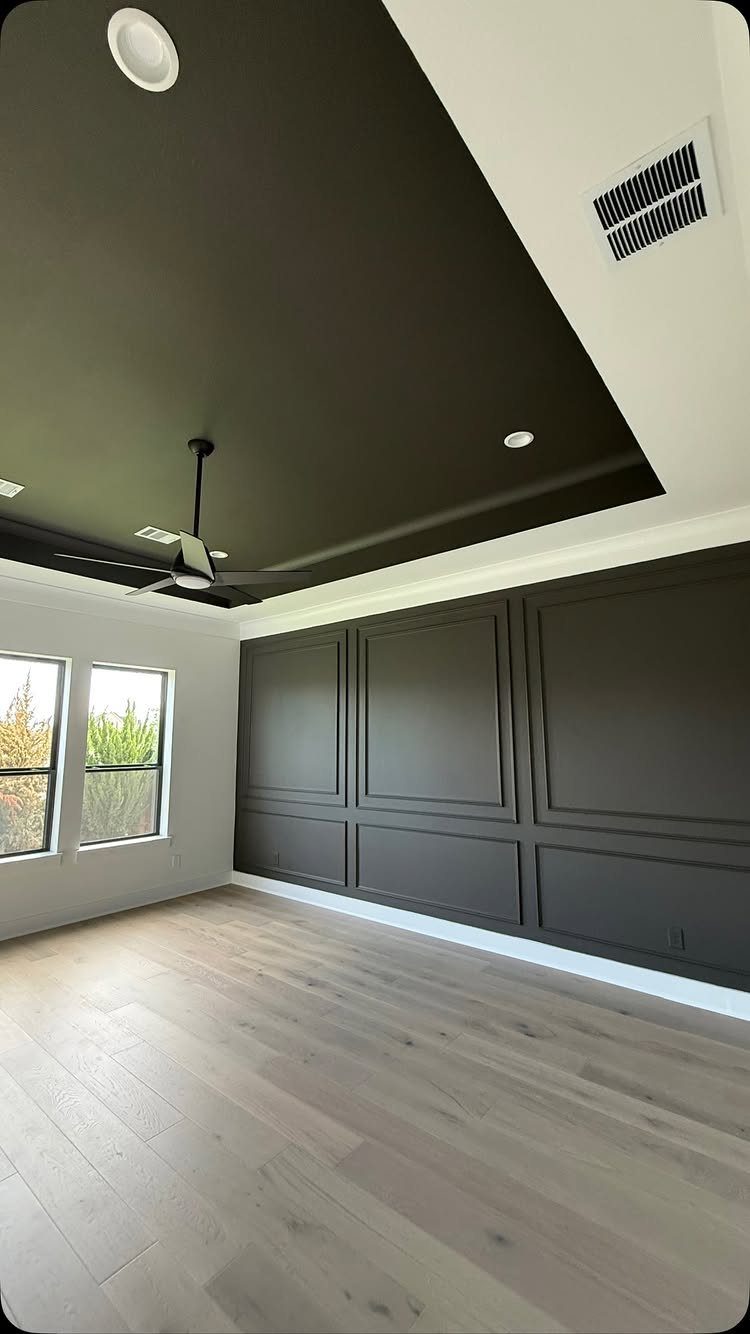
A black recessed panel drops the center of the ceiling and pulls the eye upward.
The dark surface makes the room feel taller when the perimeter stays white, and recessed lights or a ceiling fan mount into the lowered section without crowding the space.
Black ceilings fit modern rooms that lean on contrast over visual lightness. The dark plane absorbs light, so add enough recessed fixtures to keep the room usable after dark.
Paint the recessed gypsum section in a matte or satin black. Gloss finishes show every imperfection and reflect glare from windows.
17. Monochromatic Grid Ceiling
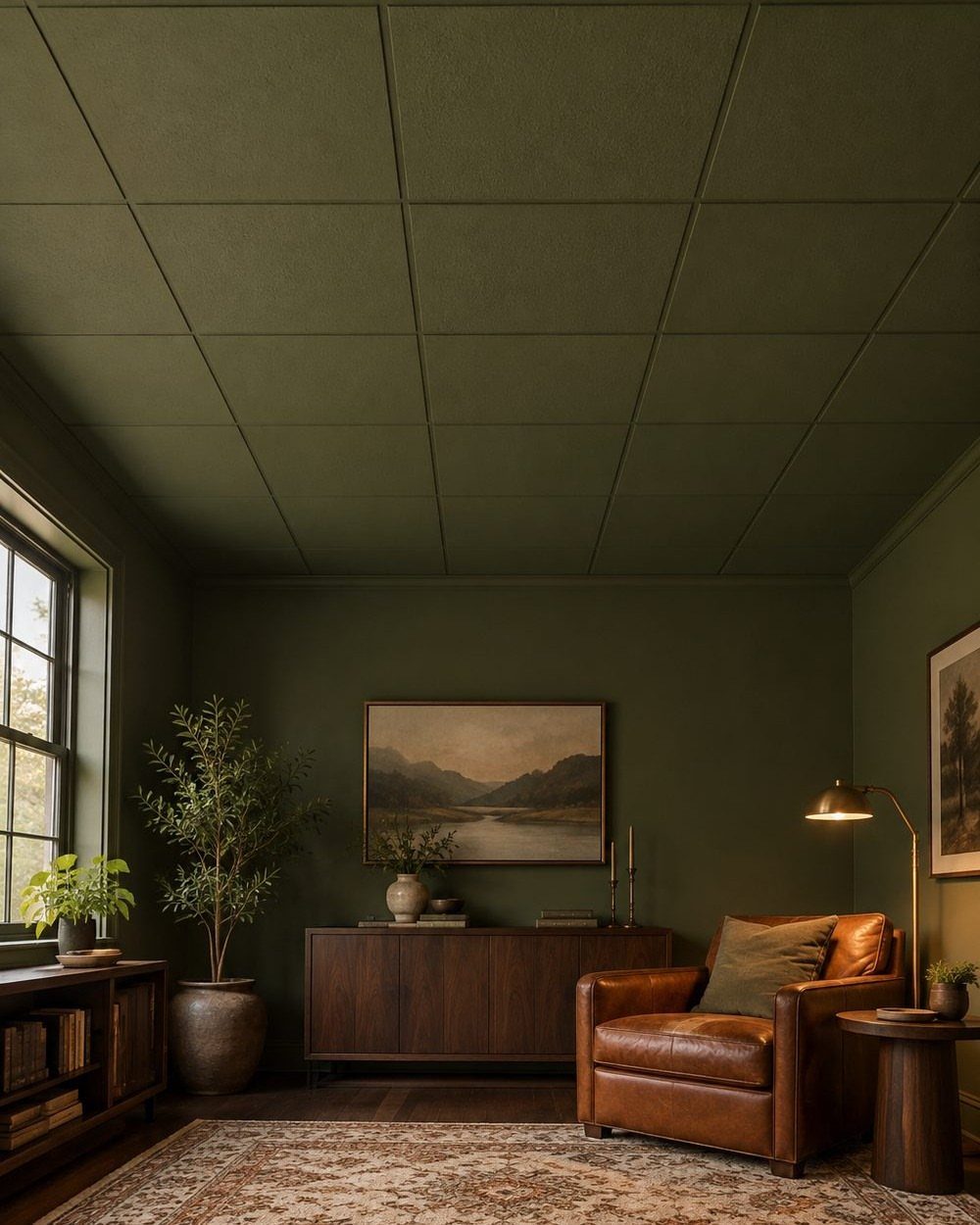
A grid of recessed squares or rectangles covers the ceiling and matches the wall color for a monochromatic look.
The grid adds texture without breaking the color story, and the repeated pattern gives structure to a room painted in one dark shade.
This treatment suits moody interiors where the ceiling should support the palette rather than interrupt it. The recessed sections drop a few inches below the main plane, and the joints form the grid.
Frame the grid with furring strips at staggered heights, then cover each section with drywall. Paint everything the same color, including the recessed areas, so the depth comes from shadow rather than contrast.
False Ceiling Material Comparisons
POP molds into any curve or custom shape because it goes on wet, but it takes days to apply and finish, and moisture from a roof leak will sag or stain it.
Gypsum boards cut installation time since they arrive flat and mount to a metal grid, though a flood or persistent humidity warps them the same way it does drywall.
Gypsum and PVC both give you a smooth surface, but PVC limits the shapes you can form since the panels are rigid.
POP develops hairline cracks over time if the installer rushes the drying or skips a bonding coat between layers.
Metal tiles handle moisture better than POP and hold up for decades, though they dent if something hits them and run about 40% more by area.
A properly installed POP ceiling is highly durable and can last for 15–20 years.
Choosing a Design by Ceiling Height
Below 8 feet of clearance, a dropped ceiling makes the room feel compressed no matter which material you choose. Paint the perimeter a shade darker than the field, or skip the treatment entirely.
At 8 to 9 feet, a single-step perimeter recess or a slim cove with hidden LEDs adds dimension without stealing headroom. Stop there; a second layer or a deep coffer will crowd the space.
The center can drop 6 to 8 inches and still leave clearance for a ceiling fan or pendant.
At 10 feet and higher, coffers, exposed beams, and deeply recessed geometric patterns all work. The extra height lets you layer textures or stack multiple planes without the ceiling pressing down.
Room Planning and Proportions
Measure the room before you settle on a layout.
Drop the tray step past 8 inches in a compact living room and it takes over, drawing attention up instead of letting the furniture hold the floor. Keep the step to 6 inches in spaces under 12 by 12 feet.
In living rooms under 150 square feet or so, a large medallion or hanging detail planted in the center makes the ceiling press down rather than frame the space.
Simple recessed panels or a single cove line suits a compact living room. Keep layered geometry and carved panels for spaces where you can stand at one end and take in the full pattern without tilting your head back.
Frequently Asked Questions
What are some simple ceiling designs for a hall?
A perimeter step or LED cove lifts a plain ceiling without eating more than a few inches of height.
Light colors make the space feel taller, and recessed spotlights keep the overhead clear instead of hanging fixtures that crowd the room. Single-layer layouts preserve headroom in compact halls.
What are some unique and quirky ceiling ideas?
Angled panels that meet at odd intervals or hexagons tiled across the plane give a room geometry that feels deliberate, not soft.
Neon tubes in two or three colors cross each other at angles, each on its own switch, so you dial the mood by mixing them. Pairing a flat finish with high-gloss paint in adjacent sections makes each plane read separately.
What is the purpose of a false ceiling in a living room?
A false ceiling hides wiring and ducts, improves acoustics, and supports integrated lighting without exposing bulbs or cables. It also lowers the visual height in rooms with overly tall ceilings.
How do I select the perfect design for my hall?
Match the ceiling treatment to your room’s height and proportions first. Anything deeper than 8 inches pulls your eye straight up, and in a small room that shift competes with the furniture.
Pull a tape before you commit, and save carved detail or interlocking shapes for a room long enough that you can see the whole grid from the doorway.
Which is better: gypsum or POP?
Gypsum comes in rigid sheets that screw to a metal frame, so you get a flat plane fast and the surface suits clean, modern trim.
Plaster of Paris goes on wet and takes any curve or relief you shape into it, which makes sense in rooms with arches or ornamental molding. Gypsum resists moisture better, but POP handles intricate detail more easily.
Is a PVC false ceiling good?
PVC sheds water and cleans with a wet rag, so it holds up in humid rooms or anywhere air does not move much.
The panels snap in quickly and hold their shape through humidity swings that would buckle solid wood, so they work in damp basements or near the coast.
The wood-look film reads like oak or walnut from below but weighs less and does not swell when the air gets wet.
Is a false ceiling easy to maintain?
PVC takes a wet wipe, and gypsum stays clean with a quick vacuum or dust cloth a few times a year.
POP develops hairline cracks if moisture reaches it, so keep it dry and dust it gently. Metal holds up through moisture and decades of use, though it picks up fingerprints and you will wipe it down regularly.
What is the lifespan of a false ceiling?
Metal tiles and properly maintained wood last 20 to 30 years, while gypsum holds up for 15 to 20.
POP lasts 10 to 15 years if the installer does not rush the drying, but it sags or stains if moisture from a roof leak reaches it. PVC stays flat for 8 to 12 years in humid environments where gypsum would warp.