
Wood-look LVP runs from a damp-mop clean to herringbone that eats a whole Saturday in click-lock wedges. The right choice depends on whether the room needs to stretch, cool down, or stop clashing with the floor next door.
A wear layer thick enough to keep its texture under traffic, not a printed pattern pressed flat, is what makes the best of it survive raking light from a window.
[link-whisper-related-posts]1. Real Wood Look Vinyl
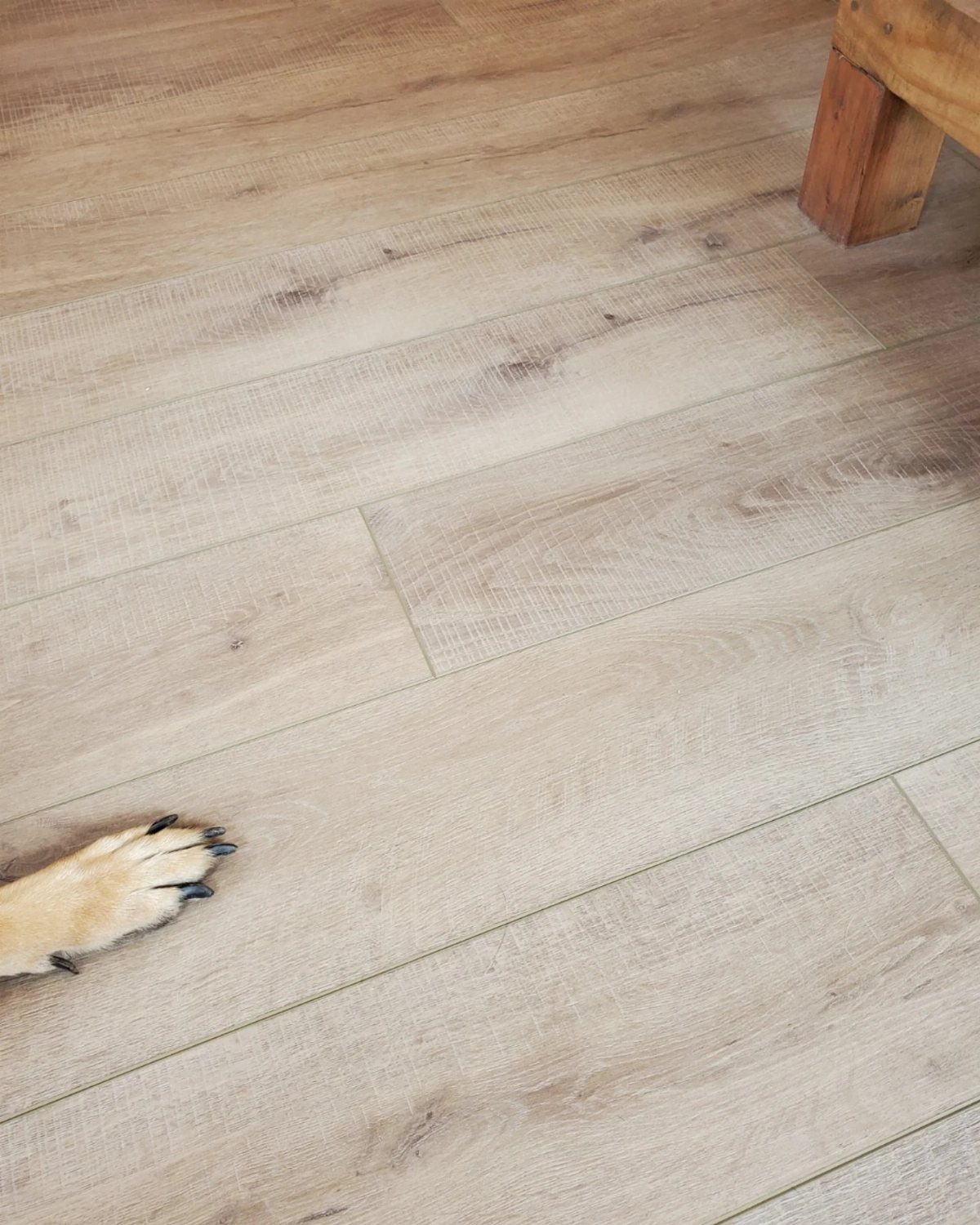
The best LVP fools you at a glance because the grain runs the full length and the surface carries actual texture under bare feet.
I look for planks with a pressed, not printed, pattern and a wear layer thick enough that the pattern won’t flatten where traffic runs heaviest.
What separates the convincing from the cheap is variation. Real wood never repeats identically; the better brands stagger their pattern repeats so two planks laid side by side don’t mirror each other.
Hold samples at an angle under a window before you buy. The ones that still look like wood in raking light are the keepers.
For kitchens or basements where real hardwood warps, this is the substitution that doesn’t feel like defeat.

【Ultra-Durable & Pet-Friendly】With a 0.3mm wear layer tested over 15,000 abrasion cycles, this luxury vinyl plank flooring resists scratches, dents, and spills. Ideal for busy homes with pets and kids, it stays beautiful for years even in high-traffic areas.

【Ultra-Durable & Pet-Friendly】With a 0.3mm wear layer tested over 15,000 abrasion cycles, this luxury vinyl plank flooring resists scratches, dents, and spills. Ideal for busy homes with pets and kids, it stays beautiful for years even in high-traffic areas.

Scratch & Wear Resistance: This vinyl plank comes with a 0.3mm wear layer that passes 15,000 abrasion cycle tests. It effectively guards against scratches and dents brought by rolling chairs. It keeps intact for years in high-traffic living rooms and fits families with pets and kids.
2. Cleaning LVP with a Damp Mop
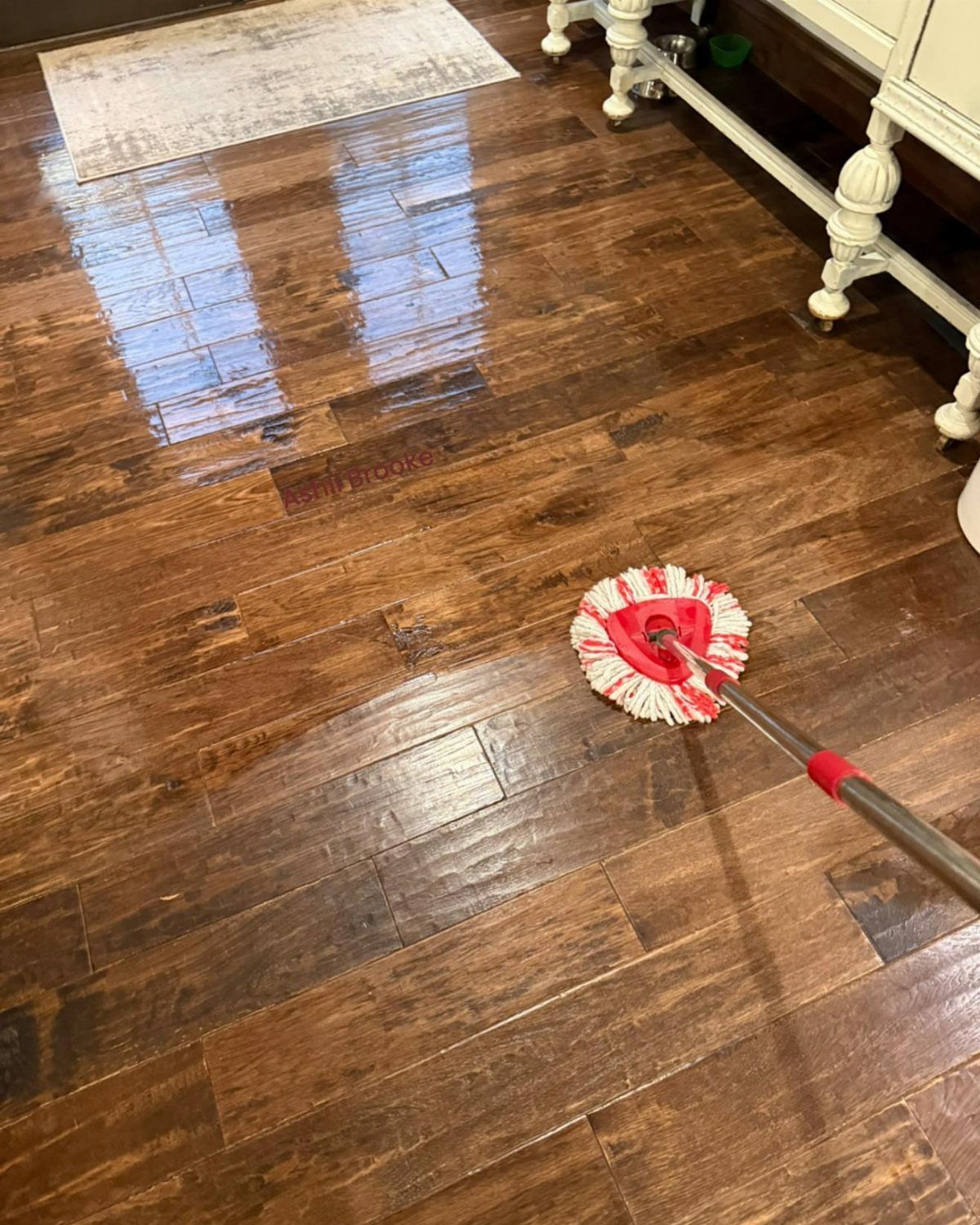
A spin mop with the wringer set to damp, not wet, is all the routine LVP needs. I run mine with plain water and a drop of dish soap; anything marketed for floors leaves a film that collects dust faster.
The real maintenance is what you don’t do. No steam, no vinegar, no abrasive pads.
The wear layer handles daily grit, but sand dragged under a chair leg will score it same as anything. I keep a broom by the door I use most and run it every evening, which saves the mop for Saturdays.
Skip the refinishing budget entirely. That time adds up fast in a weekend project house, and I would rather spend it on something else.

[Faux Shiplap Wallpaper] A roll of 17.5 "x 118.1" wood contact paper. cover is 13.7sq.ft.Wood self-adhesive wallpaper is a matte finish so it looks realistic. Pasting it in the bedroom has a very mysterious feeling, as if in a primeval forest

Realistic Wood Look: Brown wood wallpaper with authentic shiplap texture, matte finish brings a vintage yet modern feel to any room, making your space stylish

PEEL-AND-STICK: No tools, no glue. Just peel&stick, and transform your space in minutes. You can achieve professional wood-looking results even as a first-timer. Reposition during installation for perfect alignment — it's forgiving and foolproof. Many customers complete an entire room floor in just 1-2 hours.
3. Herringbone Pattern Wood-Look Planks
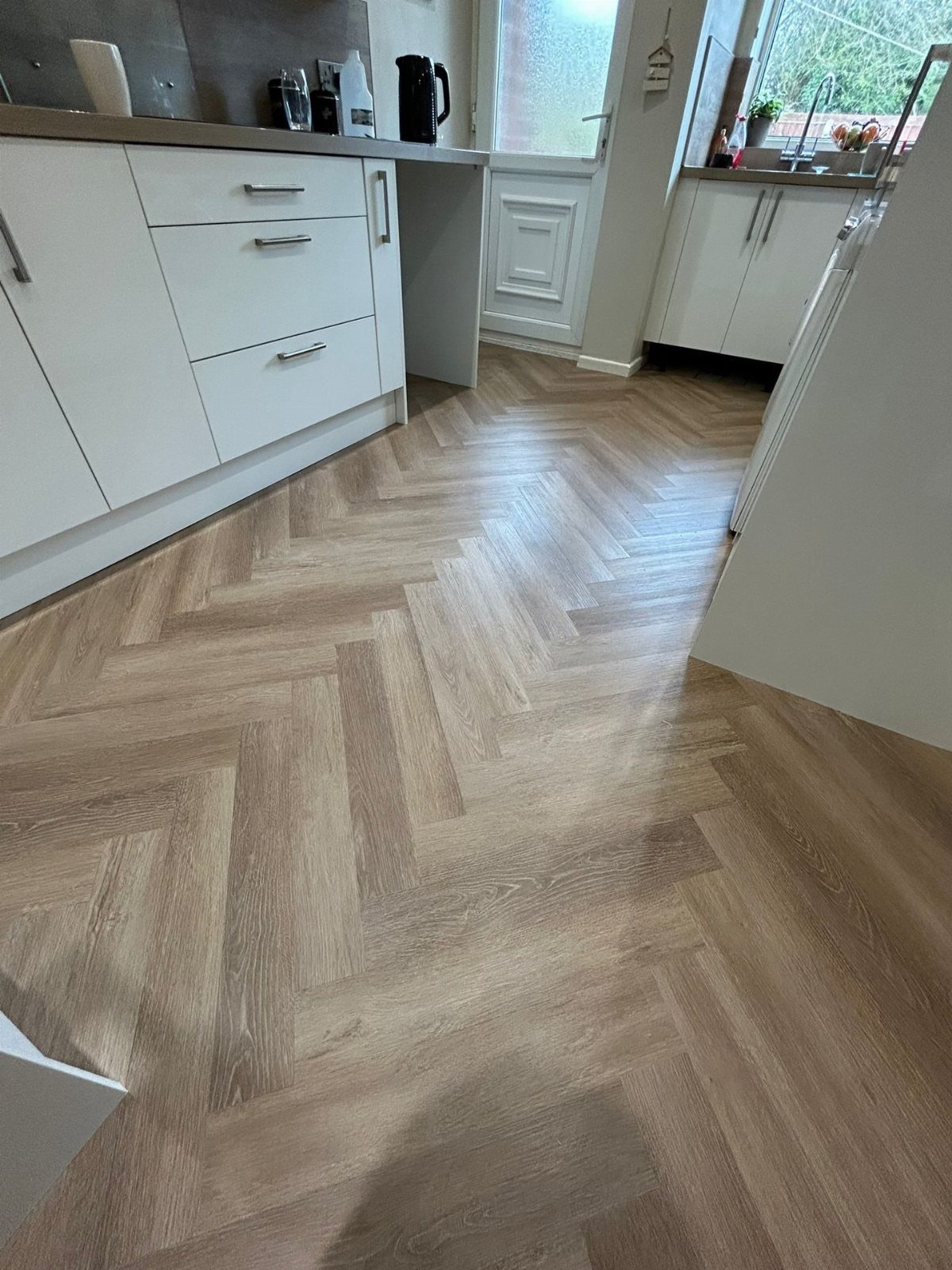
Herringbone reads custom because the labor cost always was, until LVP click-lock systems made the pattern a one-person Saturday job.
Buy planks short enough to turn without waste; standard lengths fight the geometry and leave you with a box of unusable offcuts.
I start from the center line and work outward in wedges, not rows. The first few hours feel slow, then muscle memory takes over and the floor starts to race.
White cabinets and pale oak keep the busy pattern from overwhelming a kitchen; darker tones turn the same layout moody and traditional.
Small rooms swallow the pattern whole. I’d save this for a floor that shows enough repeats to establish the rhythm.

KEEP CLEAN AND DIRTY WATER SEPARATE: Dual-tank system keeps clean and dirty water fully separate so you always mop with fresh water, improving cleaning results and reducing cross-contamination. Clean water tank cleans up to 650 sq ft per fill

✔️【 SAFELY DEEP CLEAN VINYL PLANK 】Our Microfiber Cinch Mop safely and quickly cleans your luxury vinyl plank floors. Excellent for larger areas, our mop covers a wide surface with each glide, so you'll use less effort and get your floors cleaner. Designed to effectively pick up dirt, dust, pet hair, crumbs and other stubborn debris. Great for absorbing water and spills, leaving your floors streak free and spotless!

DIRT DESTROYING CLEAN - Freshen up your floors from messes, toothpaste, pet drool, smudges, foot traffic, spills and more with this powerful tile and wood floor cleaner.
4. Light Oak Wide Planks
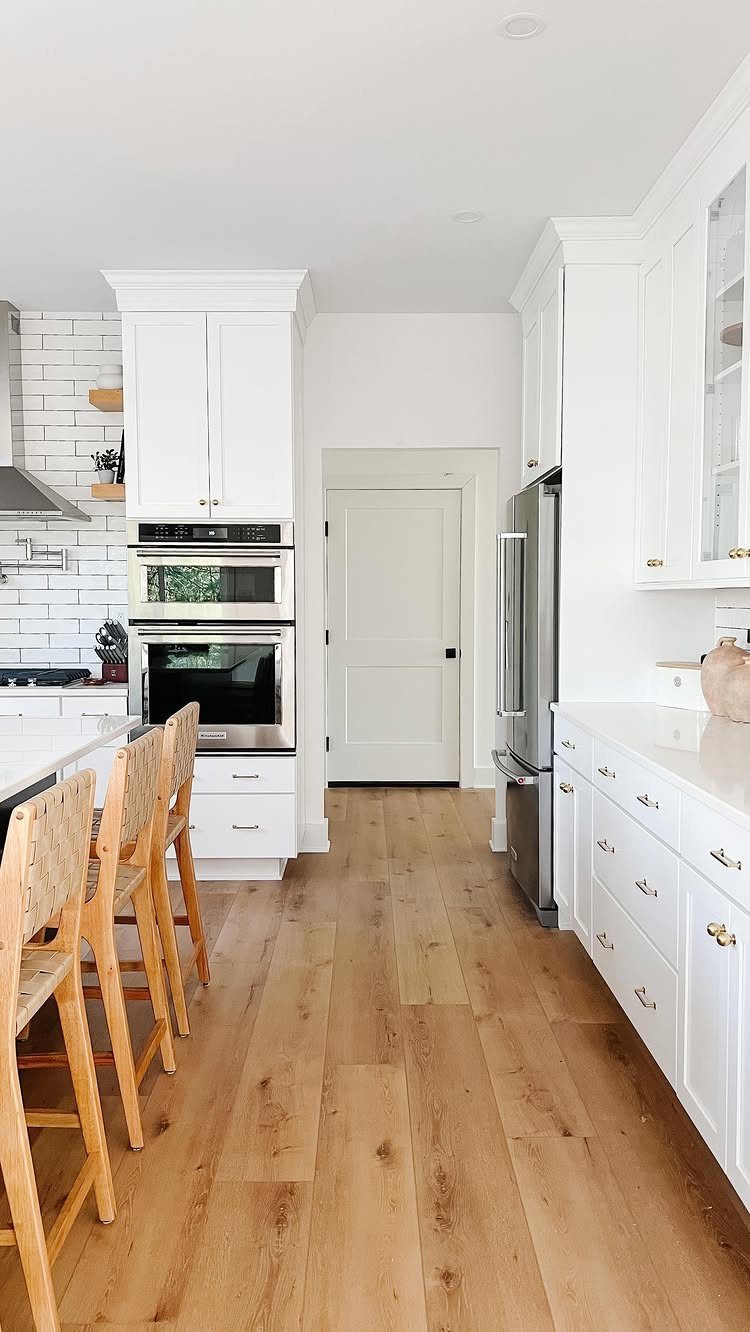
Wide planks in light oak do what narrow strips cannot: they let the floor read as boards, not boards pretending to be boards.
Seven inches across or more changes the scale of a room, stretching small galley kitchens and grounding open plans that would jitter with too many seams.
The tone matters as much as the width. Light oak carries daylight deeper into a space than medium or dark tones; I notice it most in hallways without windows, where the floor becomes the reflector.
Real grain variation keeps the pale color from reading as flat or institutional.
For a first home with white cabinets and stainless already chosen, this is the floor that ties without competing.

Chic Design & Wood Texture - Classic herringbone pattern with realistic wood grain texture, combining classic charm with the rustic beauty of natural wood, add a touch of earthy warmth to your interiors.
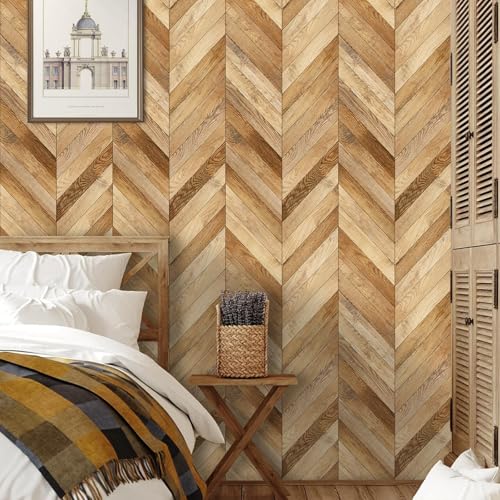
Elegant Decoration:This decorative wallpaper has a beautiful retro color design and amazing details, which can bring a simple and elegant texture to your home, and looks great when used to create a unique feature wall or decorate the entire room

【Size and Coverage】 Each peel and stick floor tiles measures 36 x 6 inches with a 0.05-inch thickness. One pack of 20 vinyl flooring covers up to 30 sq.ft., making stick on floor tiles a budget-friendly flooring solution. Packaged flat to prevent warping or damage, our flooring tiles arrive intact and ready for immediate installation.
5. Grey Wood-Look Luxury Vinyl
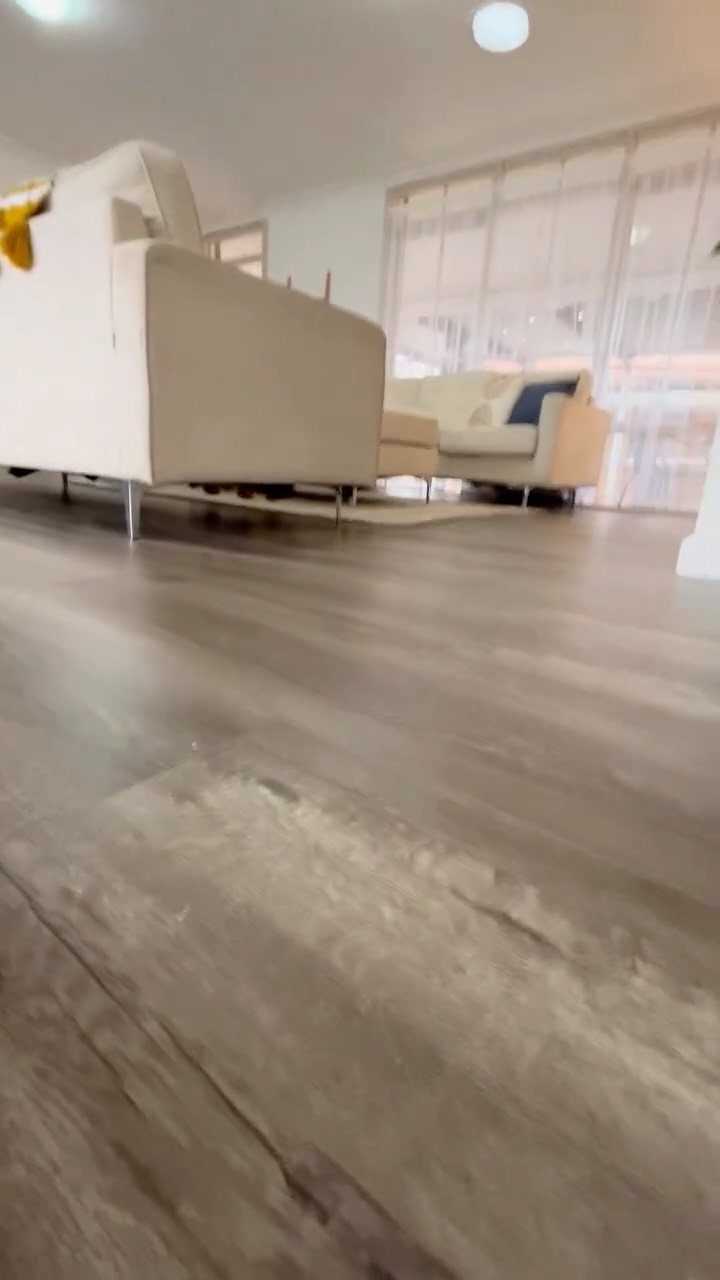
Grey wood-look vinyl splits the difference between warm and cool in a way actual grey-stained hardwood rarely manages.
The vinyl carries the tone evenly, no blotchiness where the grain drank more stain, and that consistency reads as intentional rather than tentative.
I like it best with furniture in oatmeal or cream, where the contrast stays soft and the room avoids the showroom feel of grey-on-grey. Large windows help; without natural light the tone can turn concrete-cold by evening.
Sheer curtains diffuse what light there is and keep the floor from flattening to a single note.
For a rental refresh where you cannot change the walls, this shifts the whole temperature of a room.

Premium Design-Led Aesthetic: Authentic wood visuals in extra-wide 9” x 72” planks deliver a high-end, modern finish that elevates any space. Enhanced-Beveled edges for a clean, seamless look.

Premium Design-Led Aesthetic: Authentic wood visuals in extra-wide 9” x 72” planks deliver a high-end, modern finish that elevates any space. Micro beveled edges offer a clean, seamless look.

Premium Design-Led Aesthetic: Authentic wood visuals in extra-wide 9” x 72” planks deliver a high-end, modern finish that elevates any space. Enhanced-Beveled edges highlight each plank for a premium look.
6. Tile to Wood-Look Transition
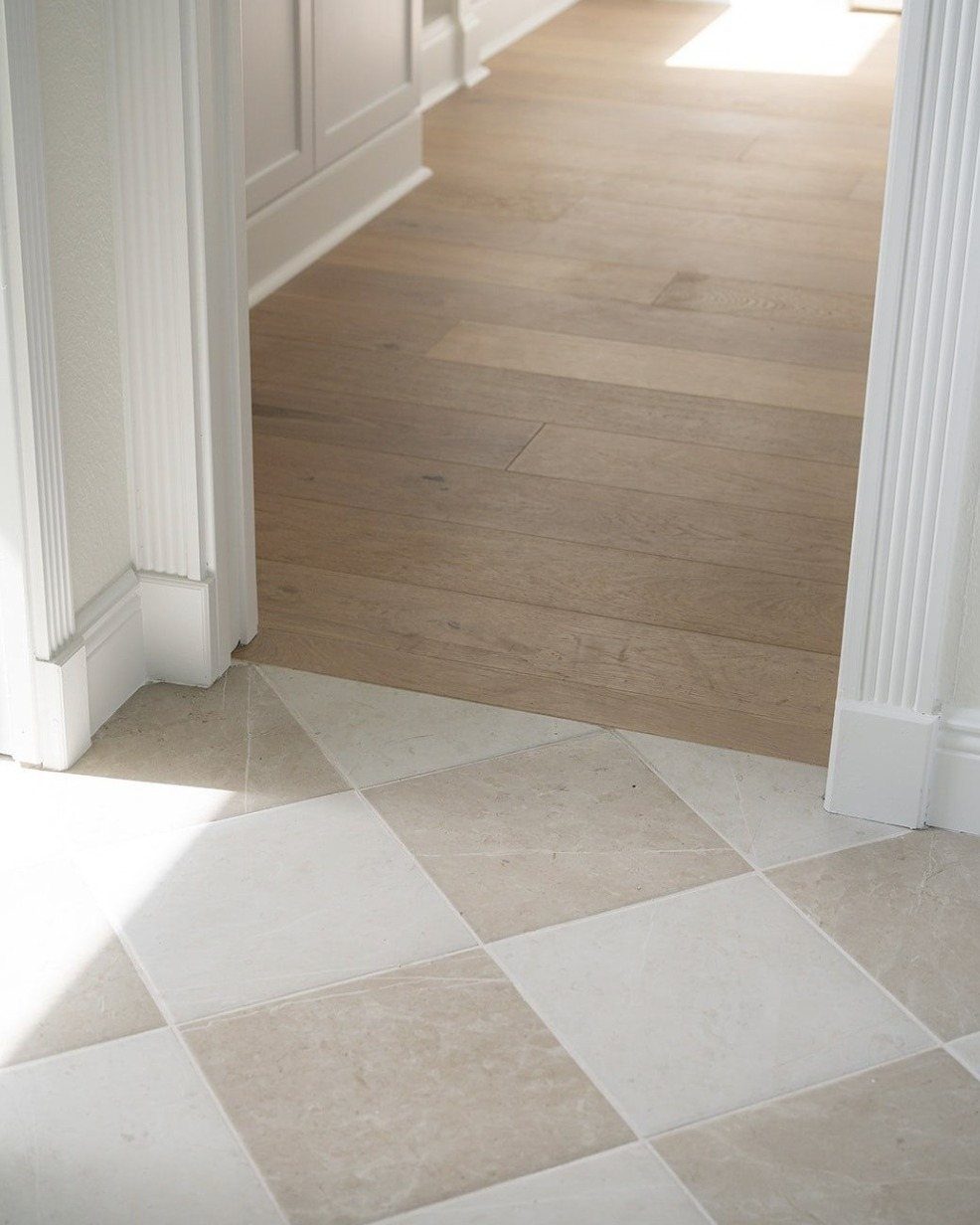
The threshold is where most flooring jobs confess their amateur hour. I learned to plan the transition before I laid either surface, not after, because the gap tolerance is narrow and the fix is destructive.
T-molding covers the joint but reads as an admission.
Better to butt the vinyl plank flush to the tile edge with a silicone bead the color of the grout; it flexes, it cleans, and the eye travels across without the interruption of metal or wood trim.
A checkered tile pattern already breaks the sightline, so the floor change lands as one more rhythm rather than a mistake to hide.
Height match is the hard part. Built-in underlayment on the LVP side often solves it without shims.

100% Waterproof Rigid Core Vinyl: Engineered ISOCORE construction ensures full water resistance for kitchens, bathrooms, basements, and laundry areas, with no acclimation required before installation

Scratch & Wear Resistance: This vinyl plank comes with a 0.3mm wear layer that passes 15,000 abrasion cycle tests. It effectively guards against scratches and dents brought by rolling chairs. It keeps intact for years in high-traffic living rooms and fits families with pets and kids.

MaxCore ULTRA Luxury Vinyl Plank Flooring — Wide-plank, wood-look LVP collection with 15 realistic hardwood designs + 2 monochromatic options, ideal for modern home flooring and commercial flooring; includes matching stair nose, step, and riser accessories for a seamless finish when available
Choosing the Right LVP
Color, texture, and durability matter, but start by deciding whether you want the look of wood or wood itself.
LVP and WPC use printed layers; they resist water and wear, yet once the pattern flattens or the wear layer scars, replacement is the only fix.
Finding the same color or locking system years later can be impossible if the product line changes.
Luxury Wood Plank, real solid hardwood engineered for basements and concrete, can be sanded and refinished when life catches up with it. The upfront cost runs higher, and the install demands more planning, especially over radiant heat.
For a weekend project house where the floor lives with rental traffic or kid schedules, LVP’s waterproofing usually wins. For a floor I intended to keep and restain in a decade, I’d save longer for LWP.
High-end houses use LVP now, sometimes to mimic protected species no mill can legally sell. That says something about how far the printing has come, but the plank still cannot be renewed.

【LIFELIKE TEXTURE】– This wood wallpaper is made from real wood scans, capturing the natural walnut grain in detail. Its subtle tactile texture adds depth and authenticity, while the organic grain and lightly aged vintage look highlight the warmth of real wood.

PEEL-AND-STICK: No tools, no glue. Just peel&stick, and transform your space in minutes. You can achieve professional wood-looking results even as a first-timer. Reposition during installation for perfect alignment — it's forgiving and foolproof. Many customers complete an entire room floor in just 1-2 hours.

1. Authentic Wood Grain & Textured Finish - Realistic wood look with natural knots, tonal variations, and deep embossed grain. Low-gloss surface adds timeless style to any room.
Matching with Existing Floors
I’d never try to match new 8-inch LVP to old 3-inch hardwood. The plank widths alone announce the difference, and most transitions look like exactly what they are: a patch, not a plan.
A smooth transition from fir boards in the bedrooms to new vinyl in the kitchen can read as the same floor until you look closer. The secret was not mimicry; it was distance.
The rooms were separate enough that the eye never compared them side by side, and the tones shared the same undertone rather than the same stain. The LVP was not pretending to be aged fir; it was simply quiet.
If you must bridge old and new, let a doorframe or a change in direction do the work. Abut two honest materials rather than forcing one to impersonate the other.

Compatible with Bona mops. Close-fitting and soft.

DIRT DESTROYING CLEAN - Freshen up your floors from messes, toothpaste, pet drool, smudges, foot traffic, spills and more with this powerful tile and wood floor cleaner.

Microfiber Mops for Floor Cleaning: Flat floor mop with adjustable long handle, flexible lightweight but sturdy, great for housewives, the elderly, children or any home with pets
Installation Tips
LVP floats. No nails, no glue, no tearing up the tile underneath if the surface is flat and level.
That saves a Saturday and the cost of hauling debris.
Most planks carry built-in cork or rubber underlayment, which handles minor subfloor irregularity and adds some warmth. Still, I check the substrate with a long level and a straightedge.
High spots get ground down; low spots need patch, not hope, because the click-lock edges telegraph every hollow.
Acclimate the boxes in the room before you cut anything open. The planks shift with temperature, and even a tiny gap at each joint compounds across the full run of a room.
The real advance is the cushioning. Early sheet vinyl felt like hospital corridor; modern LVP gives under a dropped plate the way a floating floor should.
For concrete slabs in basements, that combination of forgiveness and moisture immunity is why the category keeps growing.
【Size and Coverage】 Each peel and stick floor tiles measures 36 x 6 inches with a 0.05-inch thickness. One pack of 36 vinyl flooring covers up to 54 sq.ft., making stick on floor tiles a budget-friendly flooring solution. Packaged flat to prevent warping or damage, our flooring tiles arrive intact and ready for immediate installation.

【Size and Coverage】 Each peel and stick floor tiles measures 36 x 6 inches with a 0.05-inch thickness. One pack of 20 vinyl flooring covers up to 30 sq.ft., making stick on floor tiles a budget-friendly flooring solution. Packaged flat to prevent warping or damage, our flooring tiles arrive intact and ready for immediate installation.

THIS IS A FLOORING SAMPLE - Cut from an actual full-size Zurich Herringbone White Oak plank so you can see the true color, natural oak tone, and wire-brushed texture before purchasing.
Frequently Asked Questions
What LVP looks most like real wood?
The convincing planks carry a pressed pattern that runs the full length of the board, with texture you can feel under bare feet.
Raking light is the real test; I tilt samples under a window and the ones that still look like wood, not plastic, are the ones I bring home.
Better brands stagger their repeats so two planks side by side do not mirror each other, because real wood never repeats identically.
What is the best vinyl flooring that looks like wood?
A pressed grain and a wear layer above 12 mil are what I watch for, since that is where the pattern holds up once the hallway gets daily use.
The best brands invest in variation: staggered repeats, actual texture, and color that shifts like real wood rather than sitting flat.