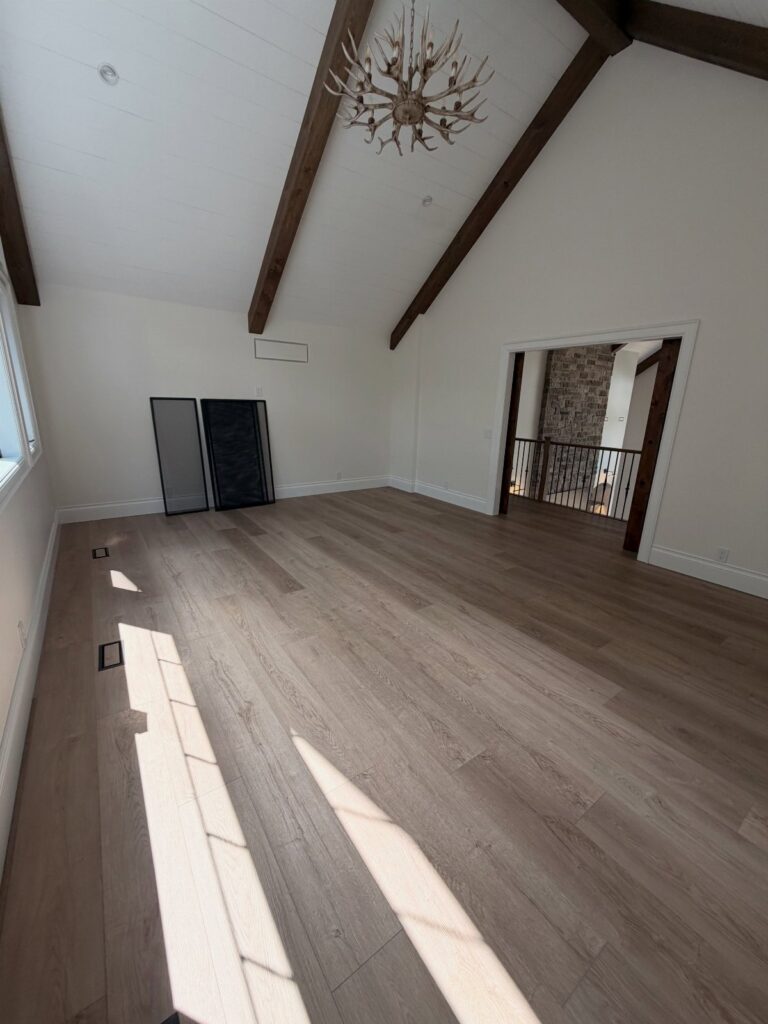
Light LVP flooring comes in enough formats to fit most rooms in the house: narrow planks for smaller spaces, wide-plank runs that carry straight through kitchens and wet zones without a transition strip, and a range of colors and grains that read differently as the daylight moves.
The sections below walk through light oak tones, natural grain patterns, and how the material holds up in bathrooms, kitchens, and living rooms, plus what to know about installation, durability, and keeping it clean.
[link-whisper-related-posts]1. Light Oak Color
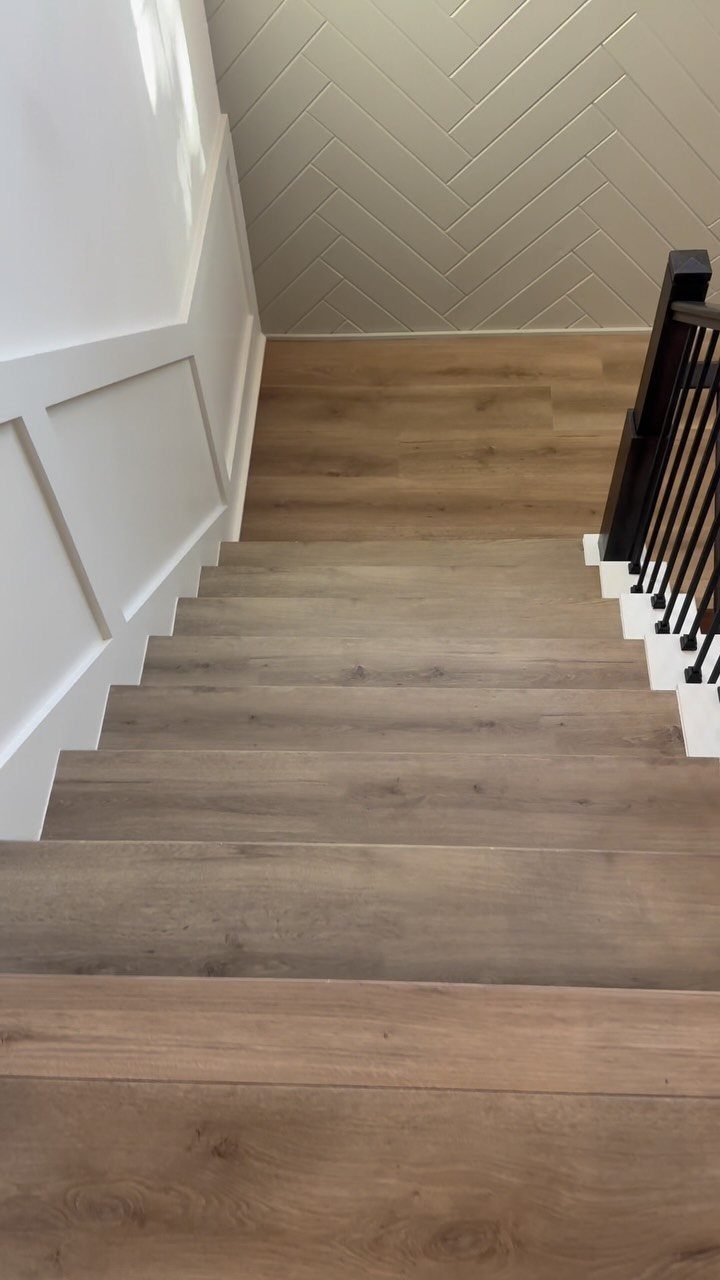
Light oak LVP reads warmer than gray or white-washed options, and it bounces daylight around a room without looking like you tried too hard.
I like it in hallways and staircases where the boards run the length of the space because the eye travels farther and the area feels larger than it is.
The tone sits right in the middle: not so yellow it fights cool wall colors, not so pale it goes flat against white trim.
If your room gets strong afternoon sun, a mid-tone oak like this hides dust and small scuffs better than anything lighter.
Pair it with matte or eggshell walls; semi-gloss trim reflects too many competing highlights and the floor loses its anchor.
Stagger the joints by at least 6 inches between rows. The staggered pattern breaks up the seam lines and keeps the eye moving, which matters more in long, narrow spaces where you see the whole run at once.

Use on wood, cork, tile, resilient, and other hard surface floor coverings.

Ideal to fill gaps, nicks and scratches on wood, laminate and vinyl flooring

BRAND--Since 2018, HEROAD brand was specially created for WOOD GRAIN series wallpapers.
2. Natural Grain Patterns
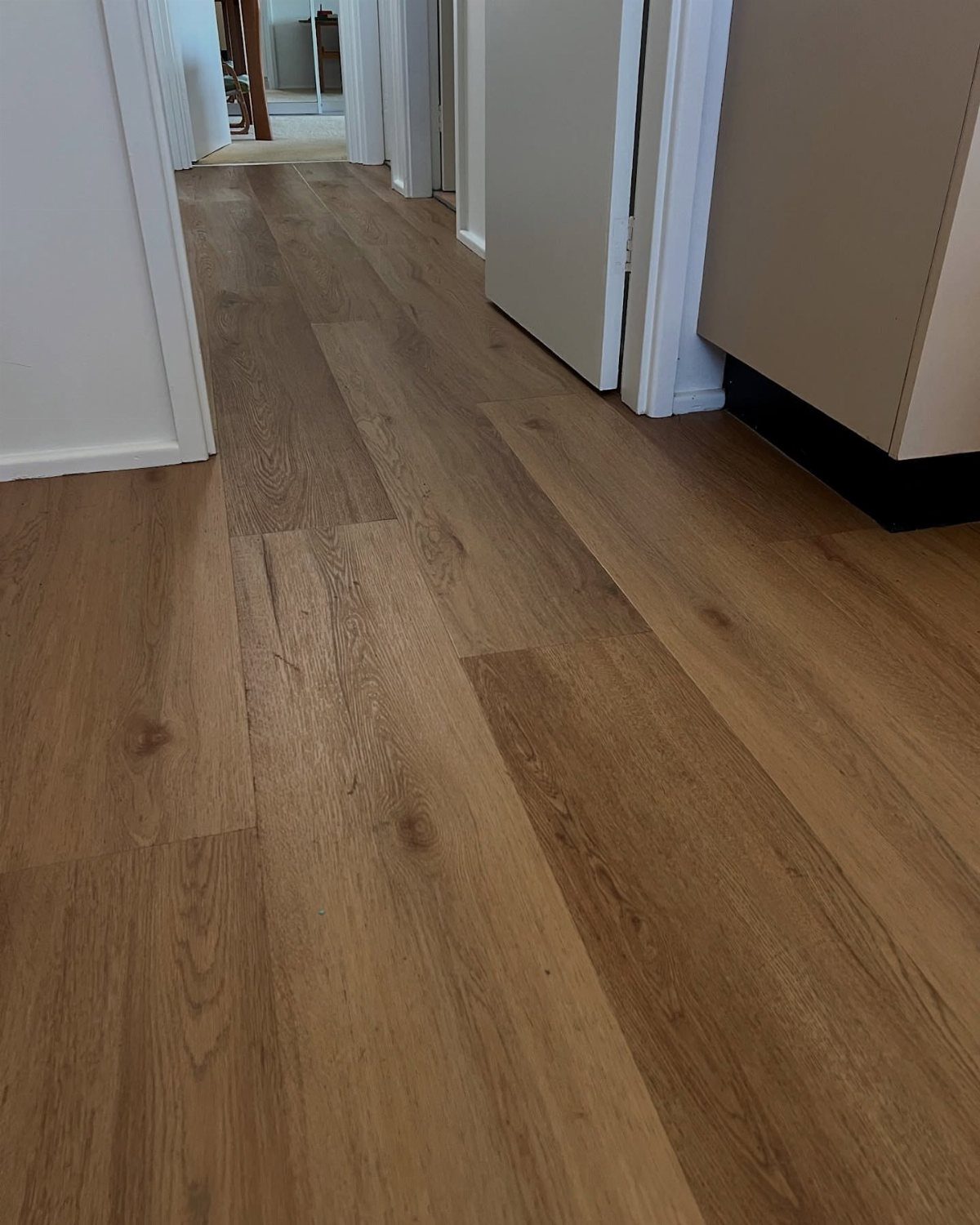
The grain pattern on good light LVP is printed in layers, and the best boards vary the knot placement enough that two boxes laid side by side do not repeat.
Look for planks with five or more unique prints per box; anything less and you will spot the pattern by the third row.
Texture matters as much as print. Embossed-in-register grain, where the surface texture lines up with the printed pattern, catches light the way real oak does.
Cheap vinyl looks flat because the gloss layer sits on top of a smooth print. Run your hand across a sample in the store; if the ridges do not match the darker grain lines, keep looking.
I would not put heavy-grain LVP in a small, dark room. The knots and swirls that look natural in a bright hallway turn busy and restless where the light does not reach.
For those spaces, pick a plank with minimal variation and a tighter, more uniform grain.

Tivoli Wood-Look Floor Planks: Transform your floor for a low cost and no hassle with the Tivoli Vinyl Floor Planks. These planks can be used in any room in your home. No messy glue or adhesives needed. Includes 10 vinyl planks.

Sterling Vinyl Planks: Refresh your home for a low cost and no hassle with the Sterling Vinyl Floor Planks. Our planks can be used in any room in your home from the kitchen to the bedroom. No messy glue or adhesives needed. Includes 10 vinyl planks.

Looselay Vinyl Planks: Transform your floor for a low cost and no hassle with the Looselay Vinyl Floor Planks. These planks can be used in any room in your home. No messy glue or adhesives needed. Includes 8 vinyl planks.
3. Light LVP Flooring in Bathrooms
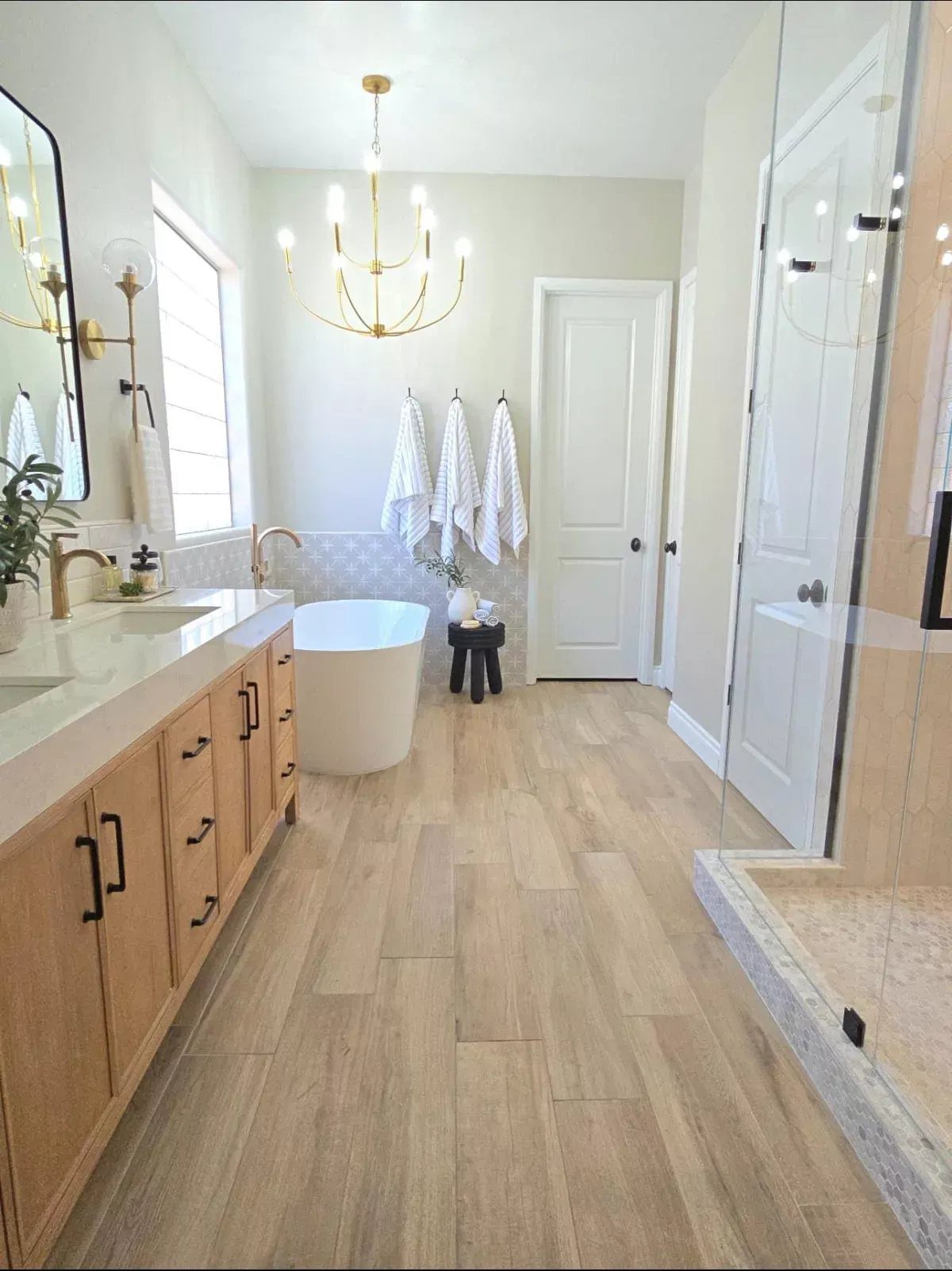
Bathrooms kill real wood and they test laminate at the seams, but vinyl plank handles standing water if you buy the right construction.
A wide-plank install can run straight through a wet zone without transition strips, which only works with a fully waterproof core, not water-resistant.
Check the label for waterproof, not water-resistant; the second one buys you time, not protection. The core should be SPC (stone polymer composite) or WPC (wood polymer composite), both of which swell far less than standard vinyl when soaked.
I would still wipe up puddles, but the floor survives the ones you miss.
Caulk the perimeter gap with silicone, not acrylic latex. The tub, the toilet flange, and any wall junction move with humidity shifts, and silicone flexes where rigid caulk cracks.
Leave a 1/4-inch expansion gap hidden under baseboards; bathrooms see the widest temperature swings in the house, and the plank needs room to move.

🏠DETAILS: 15.8x78.8 Inch, total 8.65 sq.ft (40cmX2m) Made of durable thin vinyl, thickness: 0.015 In (0.4MM). Peel and stick wood planks vinyl flooring roll, brown shiplap planks color. Waterproof. Removable.

Stylish - Authentic wood looking and grain texture, adding timeless features to your home

Premium Quality - Art3d Peel and Stick Vinyl Flooring Tiles are crafted with the high quality vinyl, ensuring durability and longevity. Each pack contains 30 tiles, each measuring 12x12 inches, providing a total coverage of 30 square feet - ideal for revitalizing any space
4. Wood Look Vinyl Flooring in Kitchens
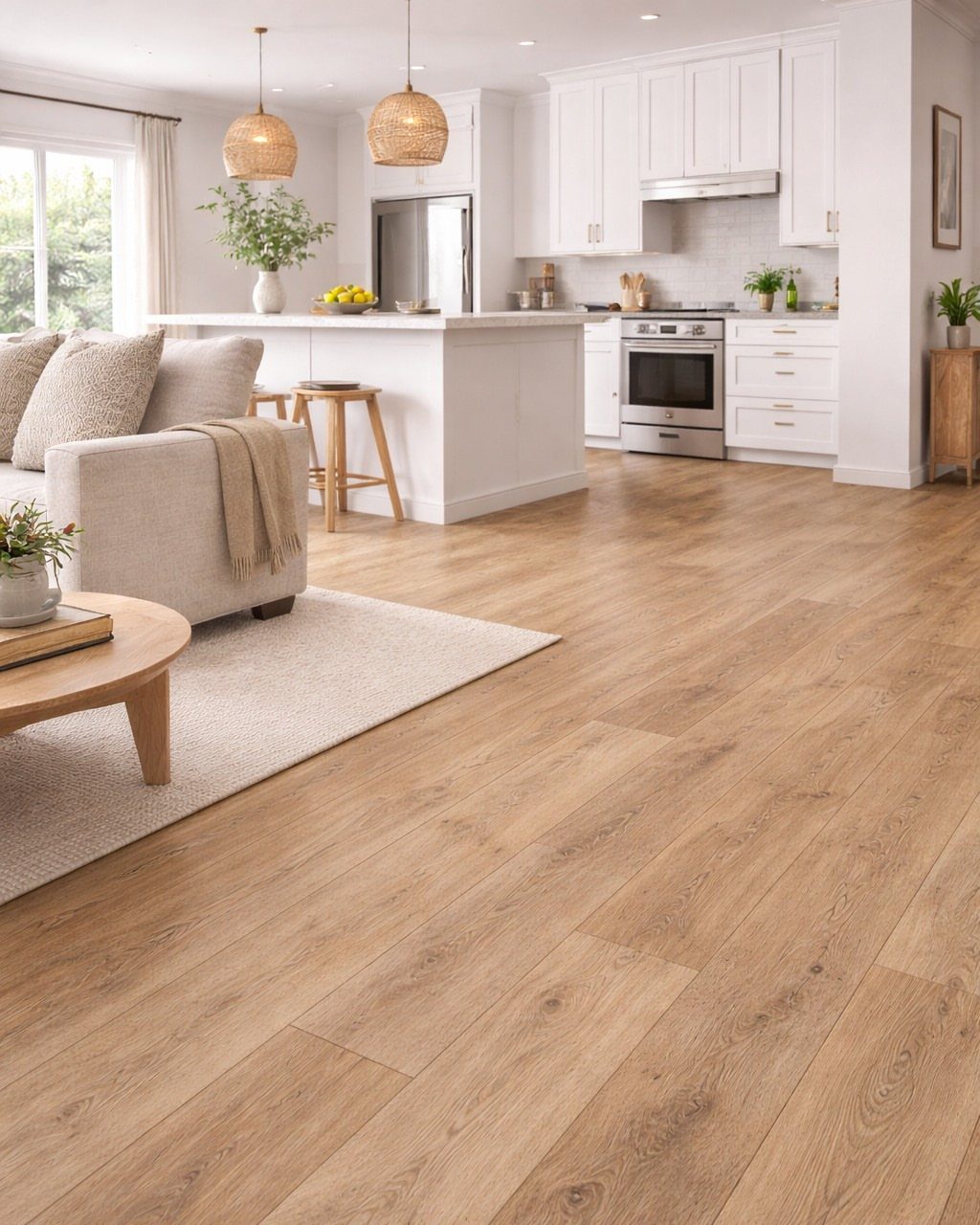
Kitchens demand a floor that survives dropped knives, dragged chairs, and the odd flood from a cracked dishwasher line.
Wood-look vinyl gives the warmth of oak without the refinishing bill, and the photo’s straight-run install in an open kitchen-living area keeps sightlines clean where a transition strip would chop the space in half.
The finish texture changes how it lives. A hand-scraped or distressed surface hides the dings from a cast-iron skillet better than a smooth, satin plank, which shows every impact within a month of real cooking.
I would pick the distressed option for anyone who actually uses their kitchen; save the sleek stuff for show kitchens and resale photos.
Underlayment is your call. Some LVP comes with attached padding, which saves height where cabinets already limit your clearance.
If the subfloor is rough concrete or old tile with grout lines telegraphing through, a separate cork layer smooths the ride. Test a few planks loose-laid before you commit; the click-lock edge should seat flat without rocking.
Currently, wood look vinyl flooring is trending toward natural, authentic styles that mimic real hardwood’s grain and texture. Blonde, beige and natural tones are especially popular, bringing a light, airy feel that brightens spaces and complements modern, minimalist interiors.

✅LAMINATE FLOOR CUTTER CUTS WIDE RANGE OF FLOORS: Cuts up to 13" or 330mm Width, Up to 5/8" or 15.80mm Thickness on Engineered Wood Floor, Multi-layer Flooring, Wood Panels, Parquet, VCT, LVT, SPC, PVC, LVP, WPC, Rubber Floor, Vinyl Plank Floor and Rigid Core Vinyl Plank, Rubber Concave Base, PVC Tile, Vinyl Tile, Carpet Tile, Leather, Rubber Base, Rubber Tile, Soft Plastic.

Flooring transition strip--the surface is scratch-resistant, , easy to clean, and not easy to stain,flat divider strip
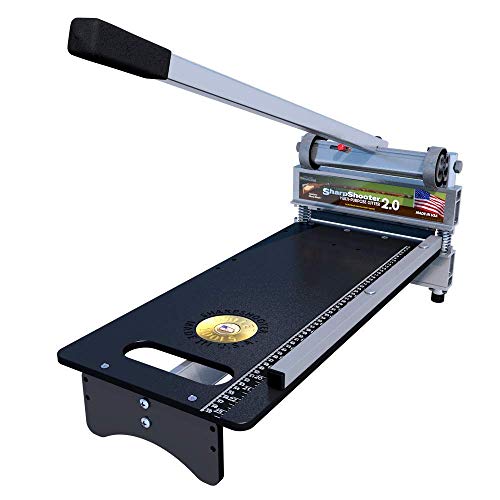
Cut materials up to 9 inches in width. Max rake/angle - 45 degrees on 6 inch board. Make cuts up to 9 inch. wide and 9/16 inch. thick
5. Light LVP in Living Rooms
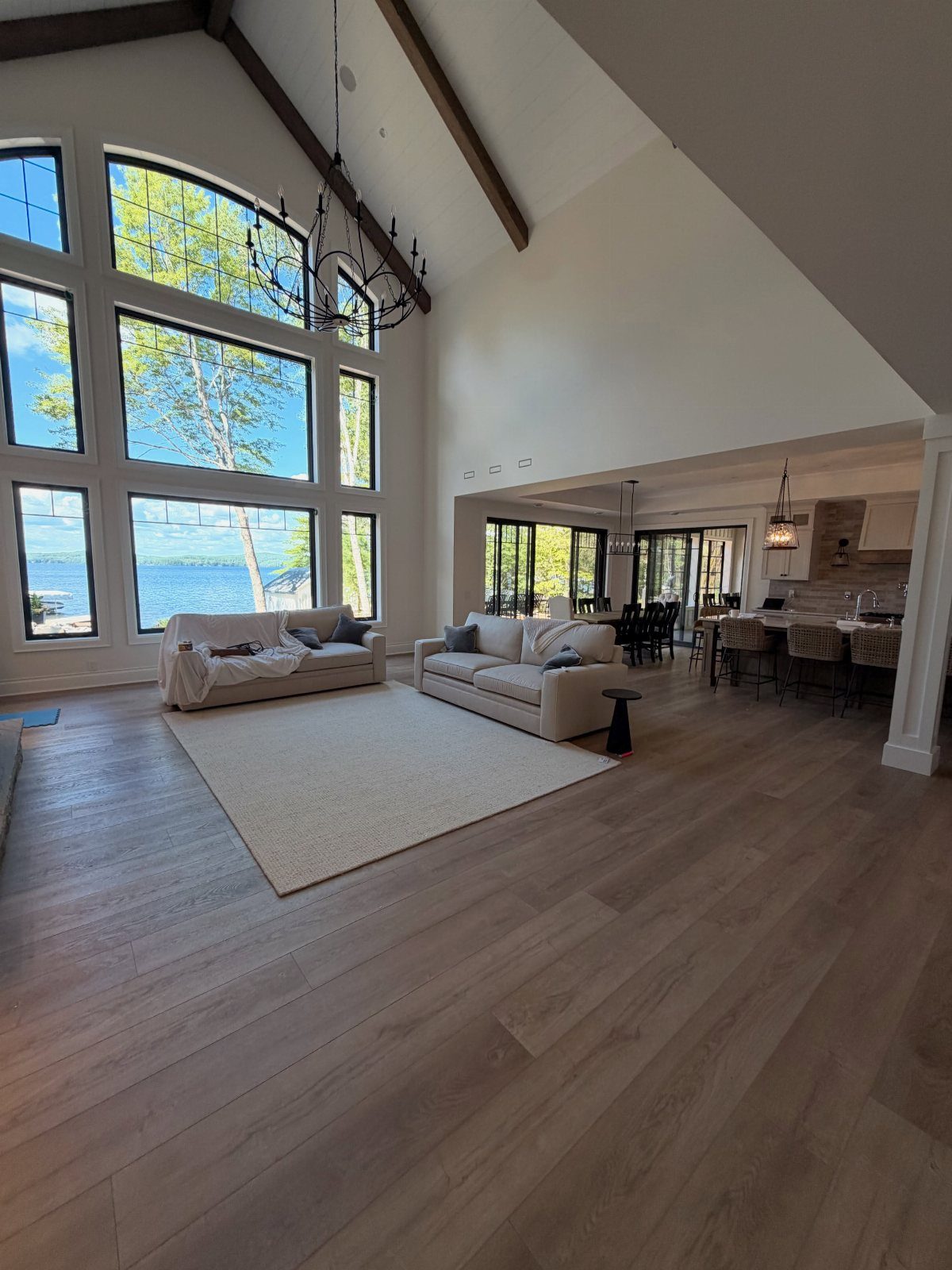
A living room with big windows and high ceilings can handle almost any floor, but light LVP keeps the focus on the view instead of competing with it.
Running the same plank straight through from kitchen to sitting area matters in open plans where every material break divides the space smaller than it is.
Warm oak with golden undertones pairs with cream and taupe furniture the way neutral, sandy tones pair with gray. I would pick warm for south-facing rooms that already get gold afternoon light; the tone extends what is there.
North-facing rooms read cooler, and a neutral oak with muted, sandy undertones keeps the space from feeling like a dated yellowed photo.
Wide plank looks right at living room scale; narrow strips turn busy and start to read like old sheet flooring.
Check the wear layer too: the thicker ones hold up to daily traffic, and you want the heaviest grade if you have dogs or host often.
Thinner wear layers scuff through to the print in high-traffic paths within a few years.

SEAMLESS TRANSITIONS WITH MAXIROC - Effortlessly bridge the gap between different flooring types with our advanced adhesive technology. No more tripping hazards or unsightly gaps. Achieve a professional finish.

Small Planks for Small Spaces & Repairs-17.7" x 6" compact vinyl planks are easier to handle than full-size flooring pieces. Ideal for quick repairs and updates around corners, cabinets, closets, toilets, RV floors, entryways, and narrow areas.
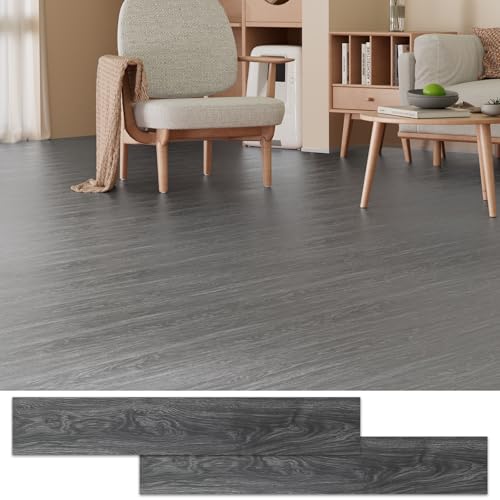
Textured & Versatile: Available in popular wood look with a natural matte finish that replicates the authentic feel of natural materials. The luxury vinyl plank flooring seamlessly complements Nordic, modern minimalist, industrial and other trending decor styles, instantly elevating the overall aesthetic of any space. Ideal for living rooms, bedrooms, kitchens and more.
Design Trends
The boards read as one continuous surface, and the eye moves across the space without a transition strip breaking the sightline.
White-washed and gray tones that dominated the last cycle have shifted warmer. The look sits between rustic and modern, which is where most first-home owners actually live.

WOOD CONTACT PAPER WOOD WALLPAPER PEEL AND STICK【Details】: Dimensions: 17.7"x118" (1.47 ft x 9.8 ft / Roll. It covers 14.5 square feet). Material: PET, It's not cheap vinyl

The 8 oz. Honey Oak Grain Coat is the finish coat included in the Giani Honey Oak Wood Look Paint Kit for Front Doors. It is the second step in our three-step application process.

【Authentic Wood Grain】This wood-grain wallpaper captures the natural beauty of North American ash wood, with clearly defined grains and a dedicated matte finish. Warm to the touch and free from any cheap, plastic feel, this wallpaper visually mimics real wood, restoring old furniture to its natural look and adding a warm, timeless touch to your space.
Installation Advice
Professional installation matters most where water risk meets an open floor plan.
A bathroom run that continues straight into a bedroom or hall leaves no threshold to stop moisture migration, so the seam at the tub and the caulk line at the perimeter have to be right the first time.
If you are doing it yourself, loose-lay a 3-foot square before you lock anything. In kitchens and baths, a level subfloor matters more than with other flooring; any dip or hump will telegraph through the planks over time.
Anything worse telegraphs through and stresses the lock system.

Looselay Vinyl Planks: Transform your floor for a low cost and no hassle with the Looselay Vinyl Floor Planks. These planks can be used in any room in your home. No messy glue or adhesives needed. Includes 8 vinyl planks.

Sterling Vinyl Planks: Refresh your home for a low cost and no hassle with the Sterling Vinyl Floor Planks. Our planks can be used in any room in your home from the kitchen to the bedroom. No messy glue or adhesives needed. Includes 10 vinyl planks.

Authentic Wood Look: American Oak’s honey hue carries a classic bright warmth through your space; Features beautiful wood-look grain and realistic knots across rich variations of blonde
Durability
The wear layer thickness on LVP ranges from 1 mil to 30 mil or greater, and that number determines how long the print survives in a busy house.
Heavy scratch resistance or maximum with extreme scratch warranty is the grade to look for if you have dogs or host often; moderate resistance shows wear in high-traffic paths within a few years.
Dent resistance is a separate spec. Most wood-look vinyl carries dent-resistant or dent-proof ratings, which matters when a cast-iron skillet drops or a refrigerator gets dragged across the kitchen.

【Versatile Usage】: Polish Light Grey marble peel and stick flooring stickers are very versatile in matching, can be blended with various interior decoration styles to create a stylish and comfortable space, such as modern light luxury style, modern minimalist style or art deco. Adhesive and peel-and-stick floor tiles are perfect for enhancing indoor floors and surfaces, including laundry rooms, living rooms, offices, furniture, cabinets, RVs floors and other flooring applications.

[Total Coverage & Value Pack] Includes 36 pieces of premium vinyl floor tiles, covering a total of 54 sq.ft. Each plank measures 36" x 6". This bulk pack is the ideal cost-effective solution for both large room renovations and small DIY projects like RV flooring or apartment upgrades

[Realistic Wood Grain with DIY Options]: With a super realistic wood grain appearance and various color options, these tiles meet personalized decorative needs. They are versatile enough for use in homes or commercial spaces, suitable for shop decoration, rental renovations, and RV flooring projects.
Maintenance Tips
Sweep or vacuum before you damp mop. Grit left on the surface acts like sandpaper under a mop head, and the wear layer protects against scratching, not grinding.
The cleaner bottle should say it is safe for vinyl; anything else risks clouding the surface. Skip the scrubbing pad, the wax, and the bleach-based sprays; they either dull the finish or leave a sticky layer that grabs dust.
Damp, not wet: standing water finds the perimeter gaps and the seams between planks even on waterproof cores.
Furniture pads under chair legs and coasters under sofa feet prevent the dents that the dent-resistant core handles once but not repeatedly. Mats at exterior doors catch the grit that would otherwise ride in on shoes.
Clean spills when you see them; the waterproof core survives the ones you miss, but the lock edges stain if juice or coffee sits.
Frequently Asked Questions
What colors are available for vinyl flooring?
Light oak, beige, and blonde are the most popular right now, with brown and deeper wood tones still common for traditional spaces.
Light oak bounces daylight around without looking forced, and it sits between yellow and pale so it works with both cool walls and white trim. High-variation planks with contrasting knots are also trending if you want more depth.
How much is 1,000 square feet of luxury vinyl plank?
Prices start around $1.29 per square foot, which adds up fast once you factor in underlayment, trim, and any labor you are not doing yourself.
Your total depends on whether you need a separate cork layer for a rough subfloor and whether the plank you pick has attached padding already.
Laying a few planks loose first to check for rocking saves more hassle than any price quote can predict.
Which brand of vinyl plank flooring is best?
COREtec, NuCore, DuraLux, and OptiMax all show up regularly, but the right choice depends on what your room actually needs.
Construction matters more than label: SPC or WPC core for wet areas, a wear layer thick enough for your traffic, and embossed-in-register grain that lines up with the print.