
I built my first garden fountain on a cramped apartment balcony using nothing but a wide ceramic pot, a $15 pump, and a stack of plastic trays I’d have tossed otherwise.
You’ll start with a shallow 12-inch pot, then stack two 8-inch trays to hide your pump and create a reservoir.
Flood it with pea pebbles to filter water and stabilize everything.
Tuck in tropical ferns and ivy around the edges, test your flow, then nestle in a few rocks or a weatherproof gnome.
Assembly takes less time than expected.
[link-whisper-related-posts]Pick a Wide, Shallow Pot and Gather Your Materials
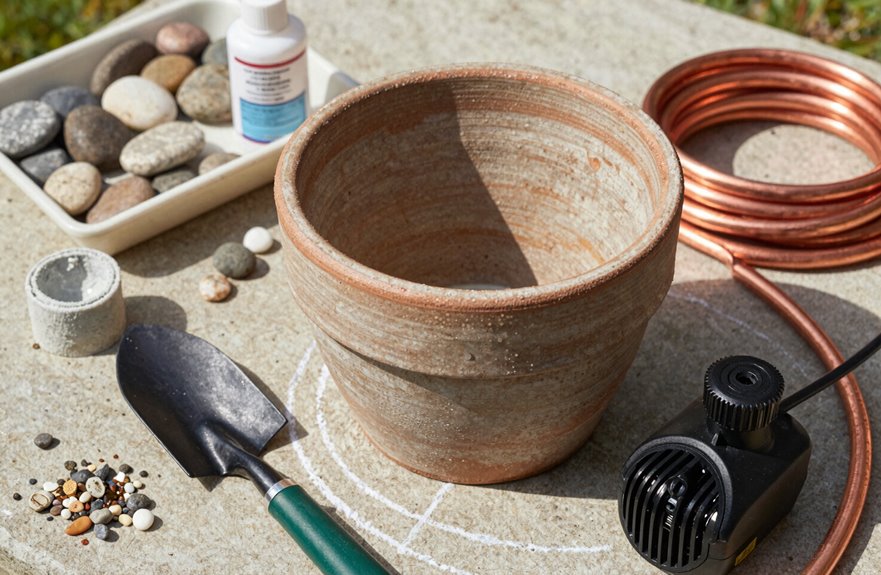
I’ll start with a pot that’s about 12 inches across, wide and shallow so I can see the water easily and keep everything stable. Next, I’ll gather my fountain pump and two 8-inch plant trays, which I’ll stack three or four deep. I’ll also collect three to five 4-inch pots for my plants to build that vertical layering. I’ll fill my pot nearly to the top with potting soil, creating a solid bed for everything. Then I’ll add pea pebbles for drainage and as a decorative filter around where the water flows. Finally, I’ll pick out some larger rocks, maybe a gnome or gazing globe, to personalize the space.

SMOOTH STREAM-LIKE WATER SOUND – The traditional three-arm design produces a full, continuous flow of water with a relaxing sound similar to a gently flowing stream.

⛲[High-quality 304 Stainless Steel ] Pond Waterfall box Adopts 304 stainless steel is carefully crafted to be corrosion-resistant and oxidation-resistant to ensure that it doesn't rust or deform in long-term use, and it is fearless of erosion by wind and rain and lasts for a long time. Its strong and durable characteristics, so that the waterfall bucket can work in the outdoor in a durable and stable, enhance the overall decorative effect.
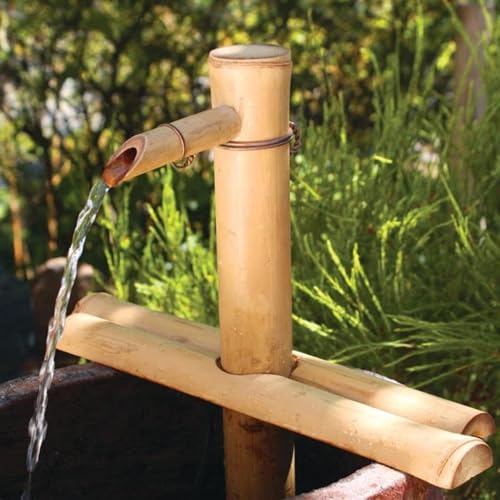
DRAMATIC WATERFALL SOUND & MOVEMENT – Designed to create a pronounced waterfall effect with water falling a greater distance, producing stronger water sounds and more visible movement than stream-style bamboo fountain designs.
Stack Trays to Build Your Garden Fountain’s Hidden Reservoir
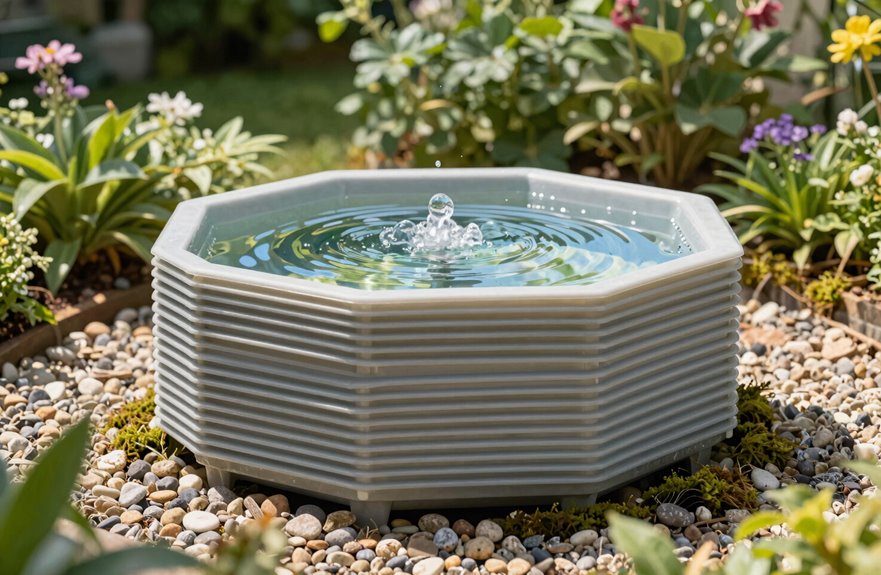
How do I hide the pump and water supply without losing the magic. I stack two 8-inch deep plant trays to create a multi-layer reservoir that conceals everything beneath the visible fountain. I place this reservoir close to the pot’s edge, keeping it about 1 inch below the lip for easy access and a tidy look. I submerge my small fountain pump inside and adjust its height carefully so the spray gurgles gently without overflowing. Getting the water pressure right makes the difference between a gentle cascade and an effective circulation system. Once I’m satisfied with the flow, I’ll fill the reservoir with pea pebbles to filter water and stabilize the pump. Finally, I arrange indoor ferns, ivy, and aralia around the reservoir, disguising the setup while keeping maintenance simple.

Submersible pump is perfect addition to your pond

POWERFUL FLOW CAPACITY provides consistent water movement across different GPH ratings to ensure your hydroponic reservoirs and fish tanks remain properly aerated and nutrient-rich for healthy plant growth.

HIGH FLOW PERFORMANCE delivers a powerful 1000 gallons per hour capacity, making it the perfect solution for large hydroponic reservoirs, expansive aquariums, and decorative outdoor water features requiring consistent and reliable water movement.
Flood With Pea Pebbles to Hide the Pump and Filter Water
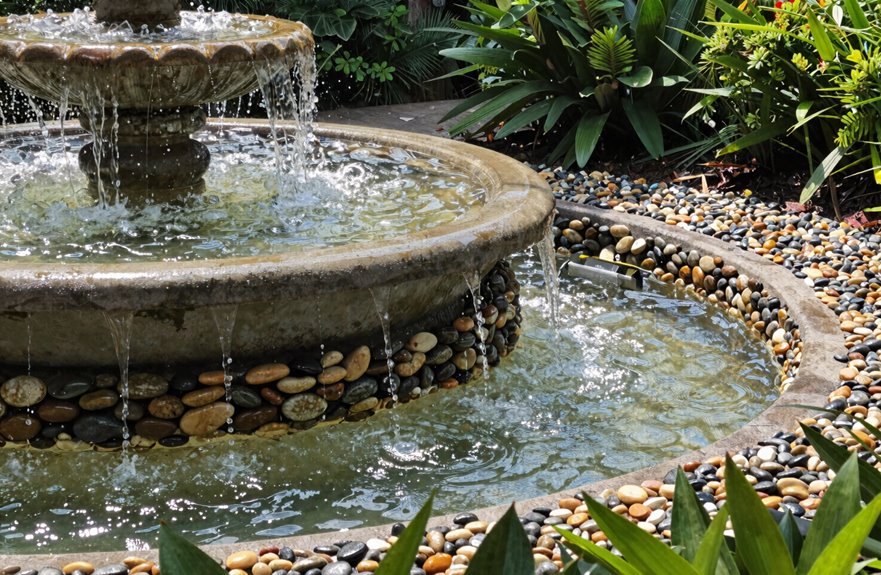
The pea pebbles go in next, filling the reservoir right up to the rim. Pour them slowly, letting them settle around the pump to form a stable, porous layer that supports the entire water column. The result looks effortlessly natural, though each pebble serves a specific function.
Once the bed of pea pebbles is complete, add water directly over the stones. This activates the flow and washes away any initial dirt or dust clinging to the surface. The pea pebbles immediately begin filtering, trapping debris before it reaches the pump.
Check the spray pattern right away. Steady output indicates proper installation; sputtering or overflow signals the need for adjustments. Executing this step correctly prevents debris accumulation and extends pump lifespan.
Plant Tropical Ferns and Ivy for a Lush, Container-Ready Look
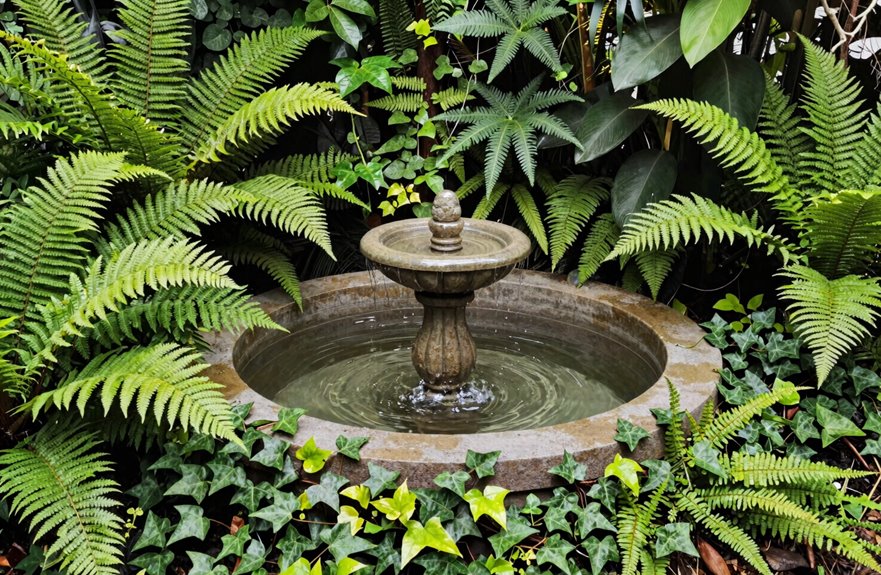
Where better to soften stone edges than with living greenery? I tuck tropical ferns, ivy, and arailla around the reservoir, creating a lush backdrop that makes stone textures feel like they’ve always belonged here. I choose indoor-style varieties suited for containers or hanging baskets, as they adapt beautifully to compact fountain setups. I nestle pea pebbles between plantings, keeping rooting zones tidy and well-drained while hiding bare soil. I select moisture-loving plants that tolerate partial shade, matching the damp microclimate my shallow fountain creates. I stay vigilant with trimming, preventing overgrowth from blocking water flow or concealing electrical components. This combination of green plantings and stone creates a living focal point where your fountain becomes a welcoming garden feature.

PLANT TRAY VALUE - Plant drainage tray, 6 packs plant tray saucers rectangular, Plant Saucers for Indoors, outer diameter is 6 X 11 inch width and inner diameter is 9.7 X 4.7 inch width, 1.1'' Height, suitable for flower pot with bottom diameter less than 10 inches.

【PlANT SAUCER VLUE】Bleuhome plant saucer 4 inch, 6 packs black plant saucers, The tray size of each Flower pot trays is 4.5" at the top and 3.8" from bottom and it is 1.0" deep, suitable for planters with bottom diameter less than 3.8 inches.Plant Trays for Planter 2"/3"/4".

8 Inch Pebble Tray for Plant Humidity – Designed for small indoor pots, this plant saucer tray kit combines a black 8 inch tray, raised insert, and green pebbles for a clean pebble tray setup.
Test the Flow and Add Statues, Rocks, or Garden Accents
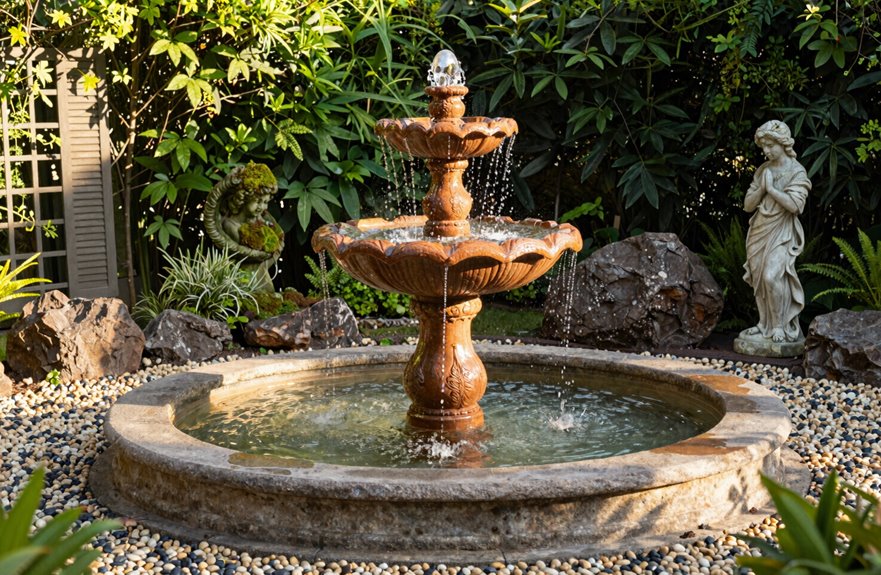
I nestle large rocks around the reservoir, anchoring the look and hiding every tube while keeping circulation clear. I place my weatherproof statues and accents, gnomes, fairies, anything that sparks joy, well away from the pump so nothing blocks the flow. Pea pebbles tucked around the base create that natural mulch effect without choking the system. I check each piece is secure against wind and rain. Together, we’ve built something flowing and alive; a gathering spot where every glance feels like coming home.

LIGHTWEIGHT RESIN MATERIAL: Durable and long-lasting construction ensures the fountain remains a charming decor piece for years

Vibrant Tiki Head Design: This colorful 3 tiered water fountain features a playful tiki head design that adds a tropical touch to your garden, patio, or backyard. The bright colors and unique look bring an exciting aesthetic to any outdoor or indoor space.

4-Tier Cascading Pot Design Featuring four pottery-style vessels arranged on a rustic wood-look frame, this outdoor fountain creates a layered cascading waterfall from top to bottom. The bronze-toned pots and weathered wood texture bring a warm, natural accent to your garden, patio, porch, backyard, or indoor space.